
Covid Analysis: 200+ COVID-19 treatments

1K posts

Covid Analysis: 200+ COVID-19 treatments banner
Covid Analysis: 200+ COVID-19 treatments

Covid Analysis: 200+ COVID-19 treatments

@CovidAnalysis

Real-time analysis of 6,000+ COVID-19 studies for 216 treatments. https://t.co/CjDlaDoPim

Katılım Haziran 2020
171 Takip Edilen10.4K Takipçiler
Sabitlenmiş Tweet
Covid Analysis: 200+ COVID-19 treatments
The PANORAMIC paxlovid trial results are still being withheld 700 days after completion. 3,516 patients risked their life for humanity. Paxlovid revenue during this period is ~$6.2B. PANORAMIC team and associated organizations: if there is a reason other than profit, what is it? @PANORAMICTrial @OxPrimaryCare @UoS_PrimaryCare @TheCfRE @OxfordRespTrial @GailHayward1 @belgianimpi @drmahendrapatel @naj_rahman @SouthamptonBRC @NIHRresearch @UniofOxford @KomeGbinigie @judith_breuer @emma_ogburn @nickafrancis @nickpbthomas @PhilEvansRDN @BhauteshJani @nigelhart @danielnbutler @AndyUsti @Dr_J_M_Dickson @DocSteveG @gregjirving @jamesagkennard @vshort1 @DrAzharZafar Anonymous replies can be submitted here: c19early.org/fraud.html
Covid Analysis: 200+ COVID-19 treatments tweet media
English
0
9
9
561
Covid Analysis: 200+ COVID-19 treatments
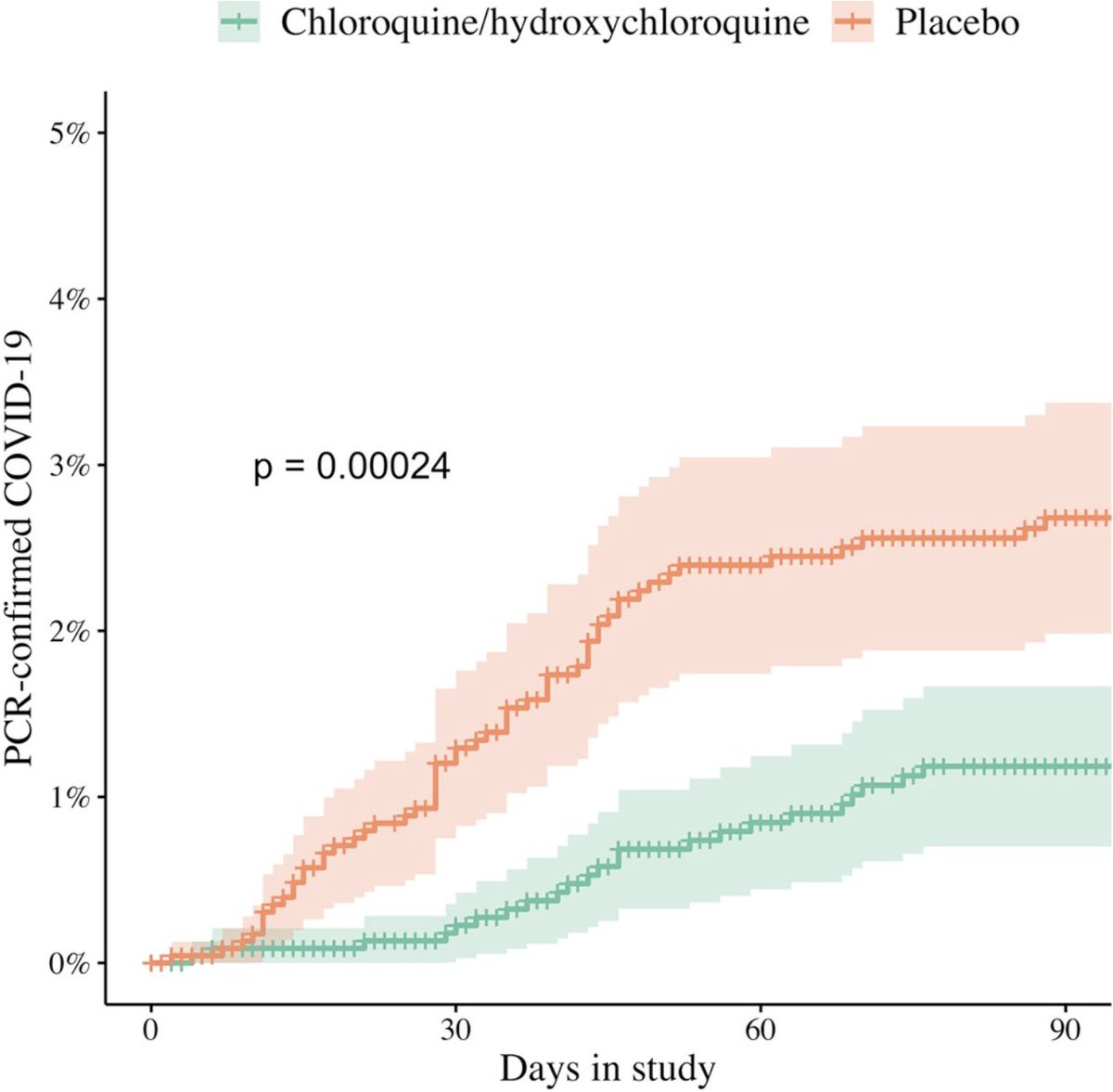
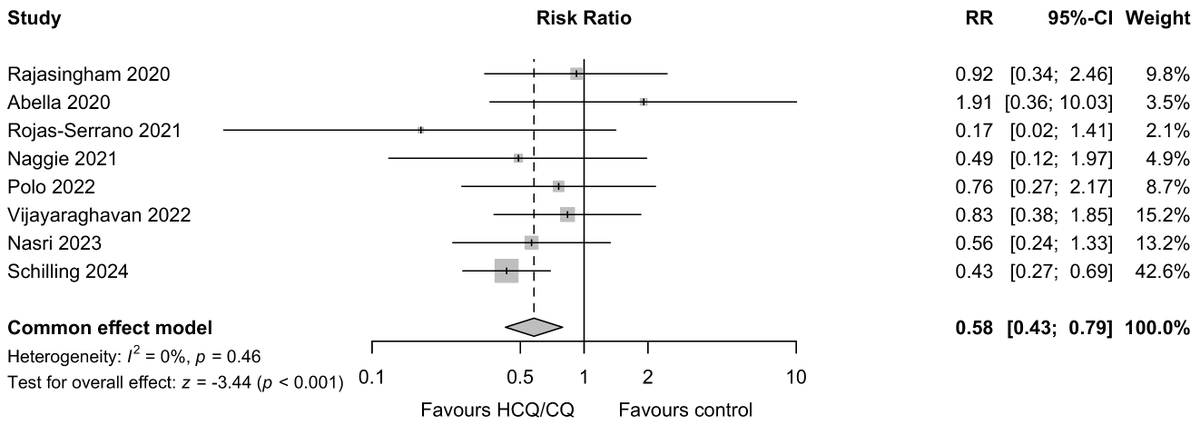
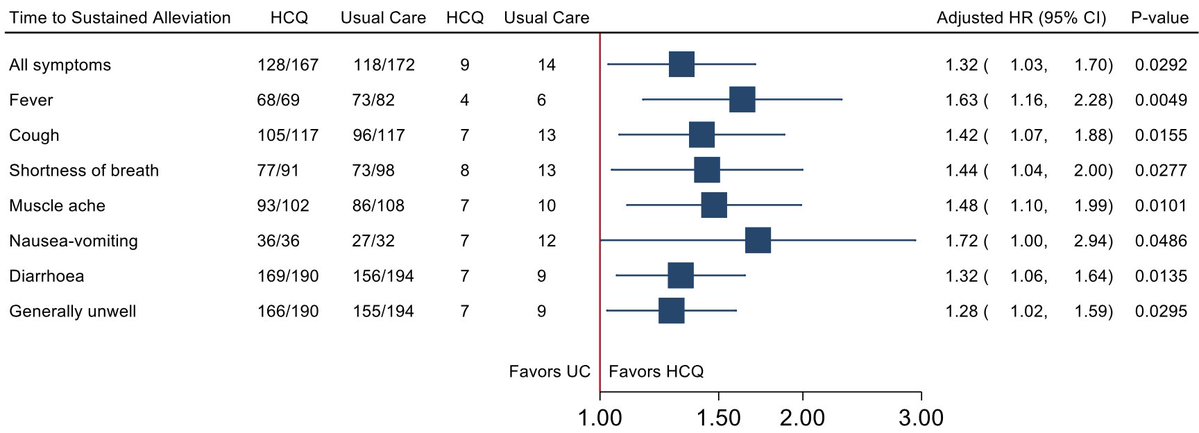
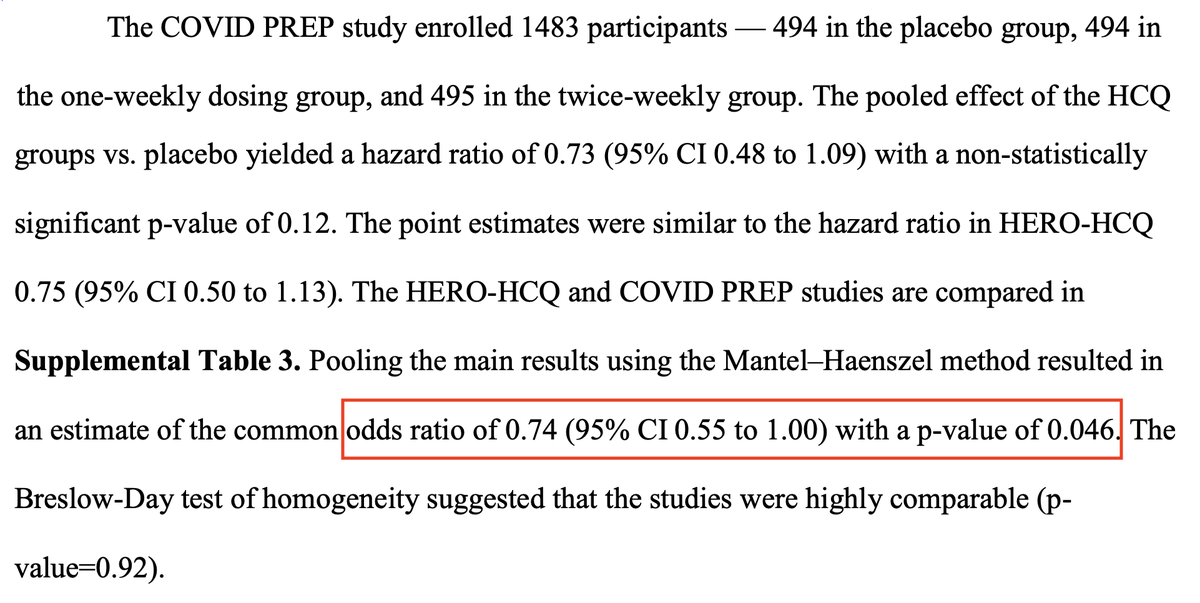
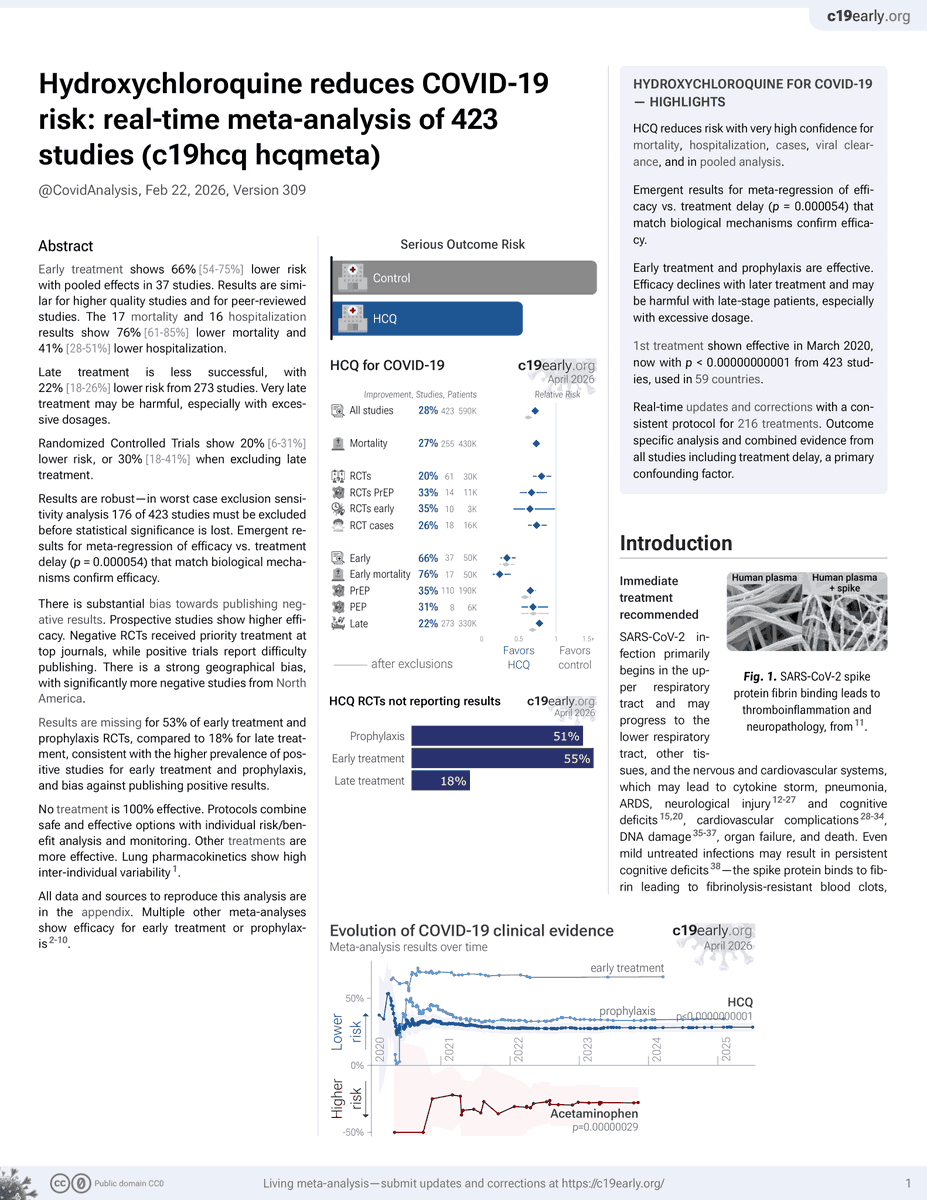
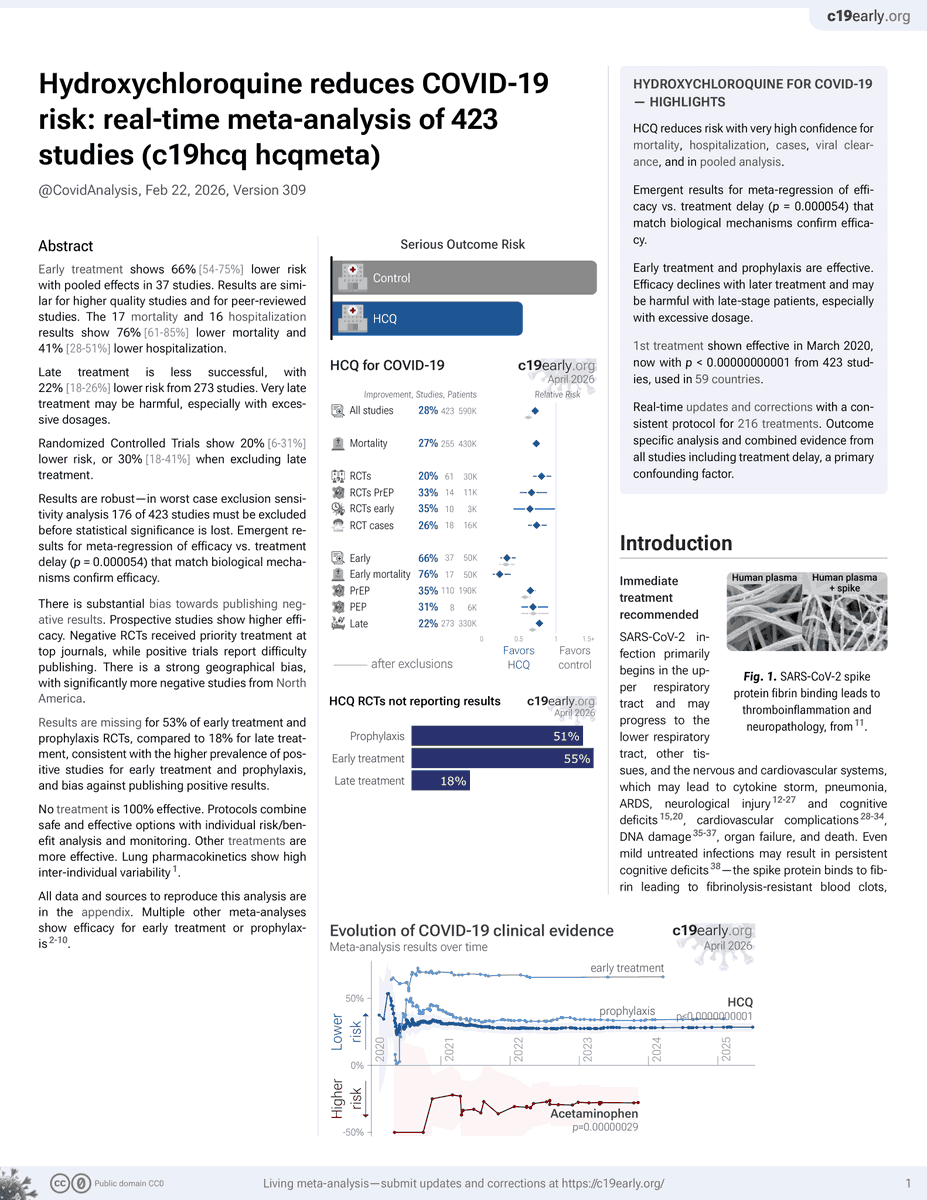
Le Pr. Raoult avait raison. L’HCQ réduit le risque de COVID-19 lorsqu’elle est utilisée en prophylaxie ou en traitement précoce (le traitement tardif et un dosage excessif peuvent augmenter le risque). Le plus grand essai clinique randomisé (ECR) HCQ/CQ (Oxford COPCOV) montre une réduction de 57 % des cas symptomatiques de COVID-19 PCR positifs (p = 0,0002). Les auteurs d’Oxford ont également inclus une méta-analyse de 8 ECR confirmant une réduction significative des cas symptomatiques PCR+. c19early.org/schilling3.html Ce résultat a été retenu pendant plus de 800 jours jusqu’à la fin 2024. L’ECR Oxford PRINCIPLE montre une récupération significativement plus rapide chez les patients ambulatoires. c19early.org/hobbs2.html Ce résultat a été retenu pendant plus de 5 ans jusqu’en 2025. Avant l’ECR Oxford COPCOV, l’efficacité prophylactique a été démontrée par deux ECR américains en 2021: « The HERO-HCQ and COVID PREP studies are compared in Supplemental Table 3. Pooling the main results using the Mantel-Haenszel method resulted in an estimate of the common odds ratio of 0.74 (95% CI 0.55 to 1.00) with a p-value of 0.046 » c19early.org/naggie.html
Covid Analysis: 200+ COVID-19 treatments tweet mediaCovid Analysis: 200+ COVID-19 treatments tweet mediaCovid Analysis: 200+ COVID-19 treatments tweet mediaCovid Analysis: 200+ COVID-19 treatments tweet media
Français
0
1
2
118
Sista Léa 🥇ن 🇫🇷
#ChristineKellyEtVous Il est quand même délirant qu’on persiste à présenter la chloroquine comme un poison mortel, alors que des gens en prennent depuis plus de 70 ans dans le monde entier. La vraie motivation est d’étouffer les voix des médecins qui soignaient vraiment leurs patients, afin de ne laisser la place qu’à ceux qui obéissaient aveuglément aux consignes venues d’en haut. Écoutez @raoult_didier
Français
80
1.1K
2.7K
45.8K
Thomas Sowell Quotes
Thomas Sowell Quotes@ThomasSowell·
Bill Maher: "There was not even a suggestion that we handle [COVID] internally by making our immune systems stronger… Like, instead of locking yourself away, get some sun!"
English
7
15
242
12.4K
Covid Analysis: 200+ COVID-19 treatments
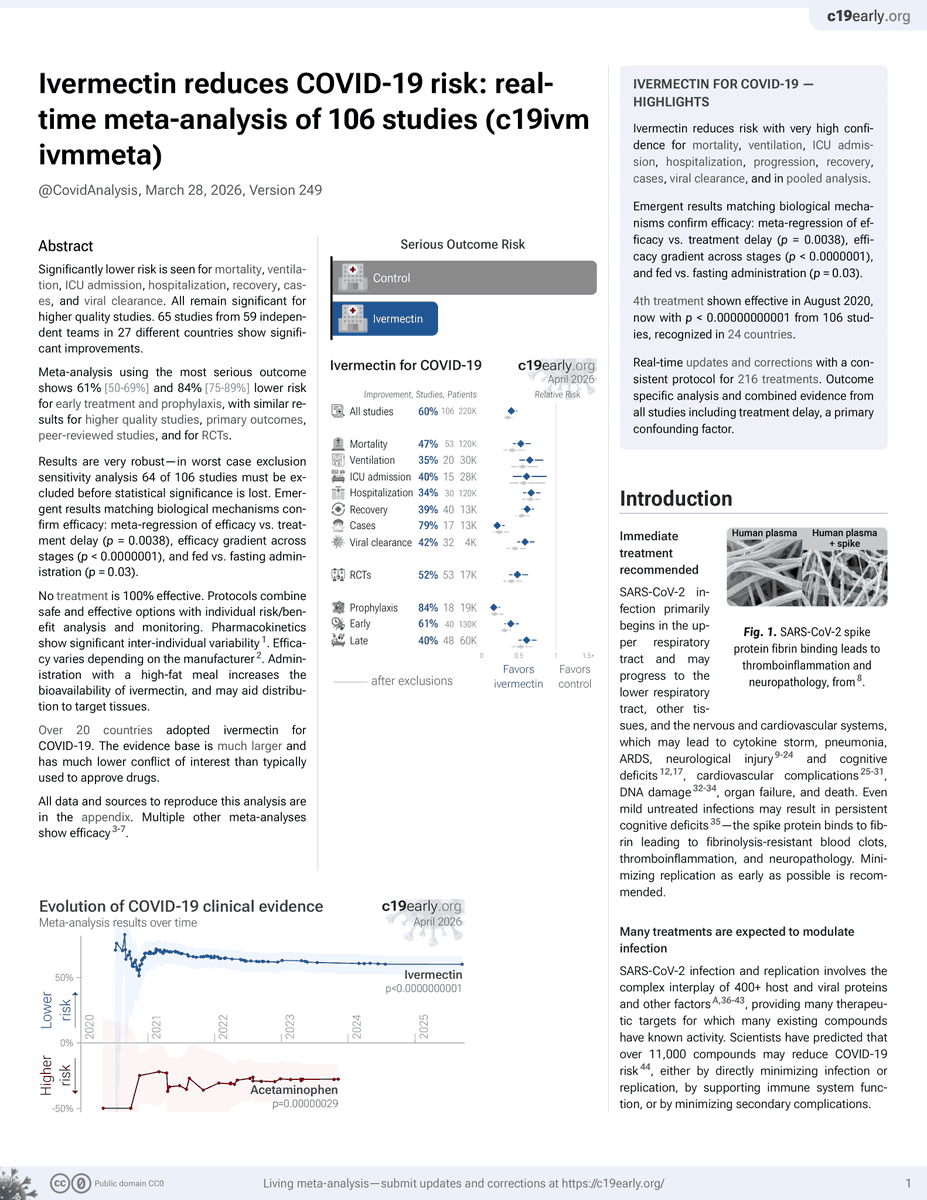
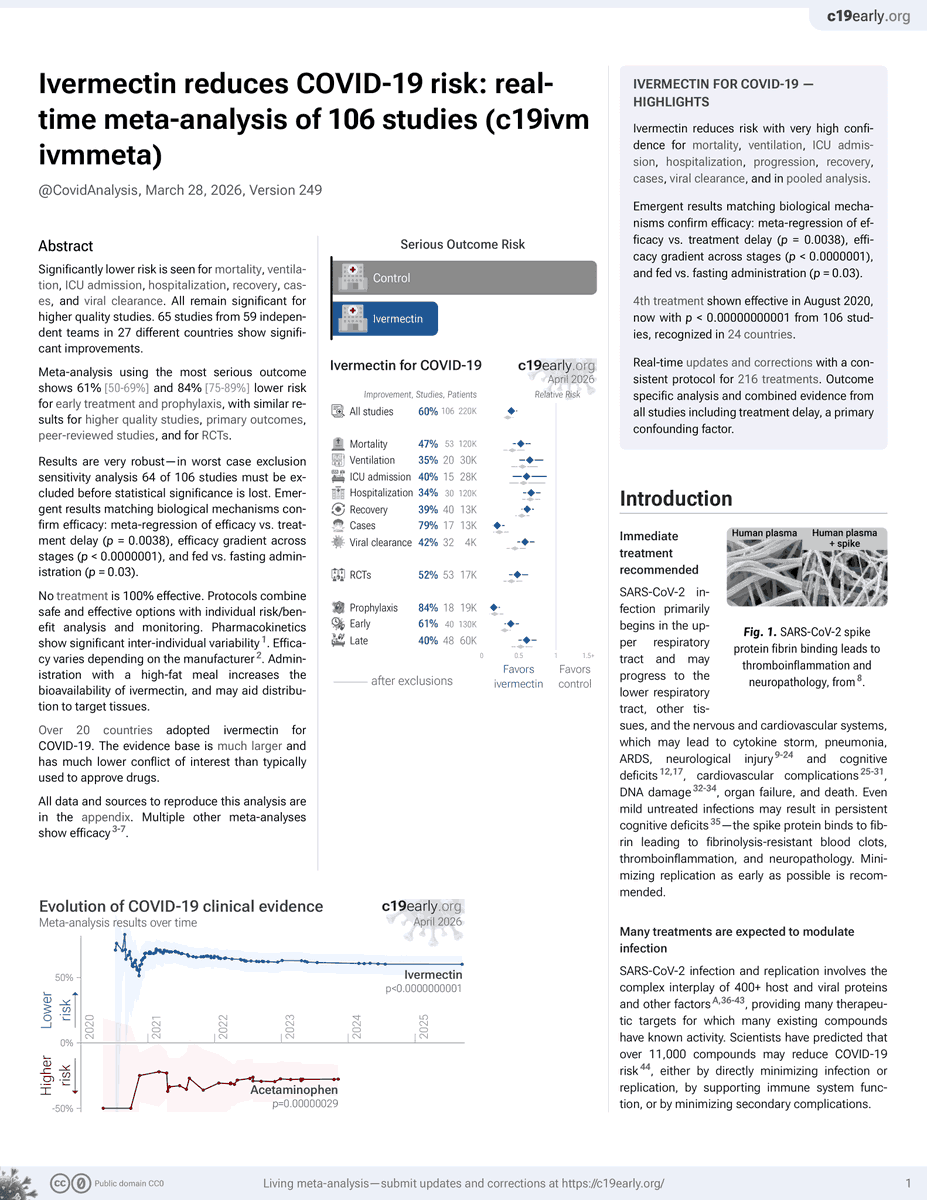
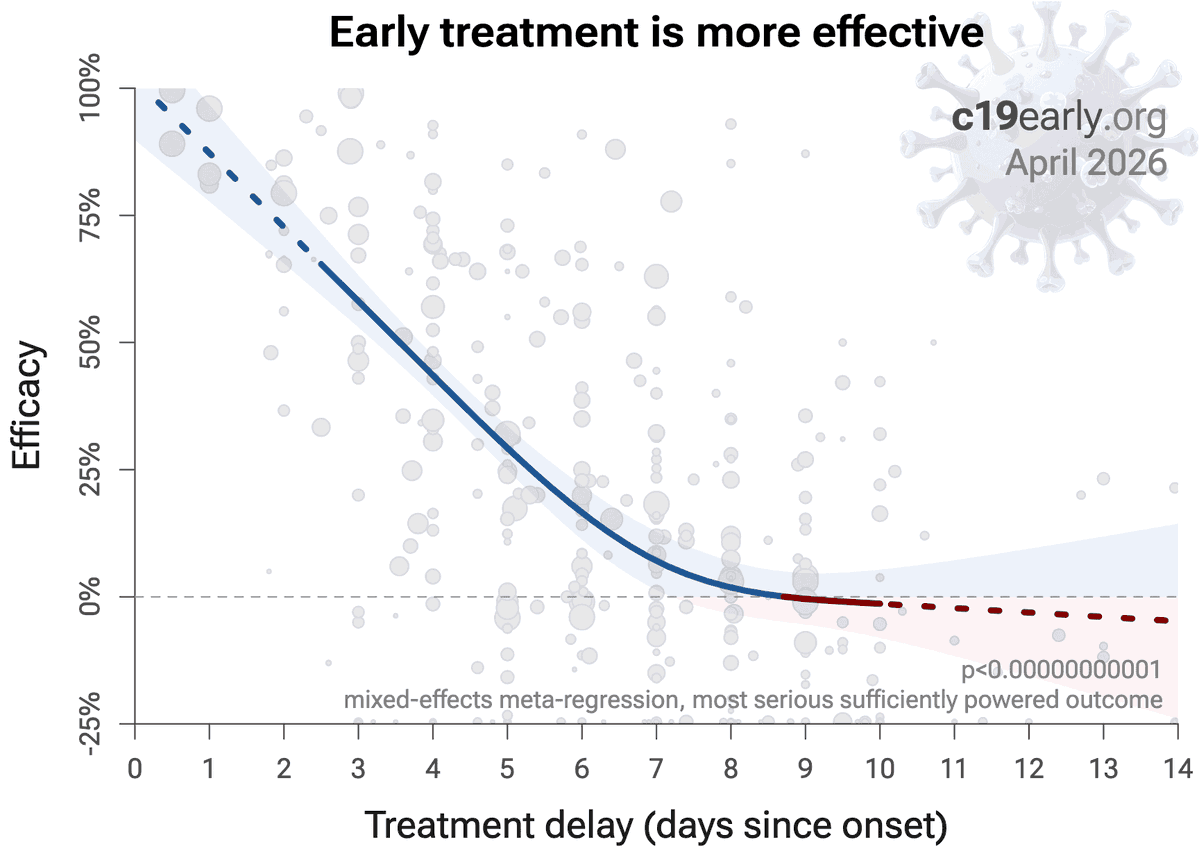
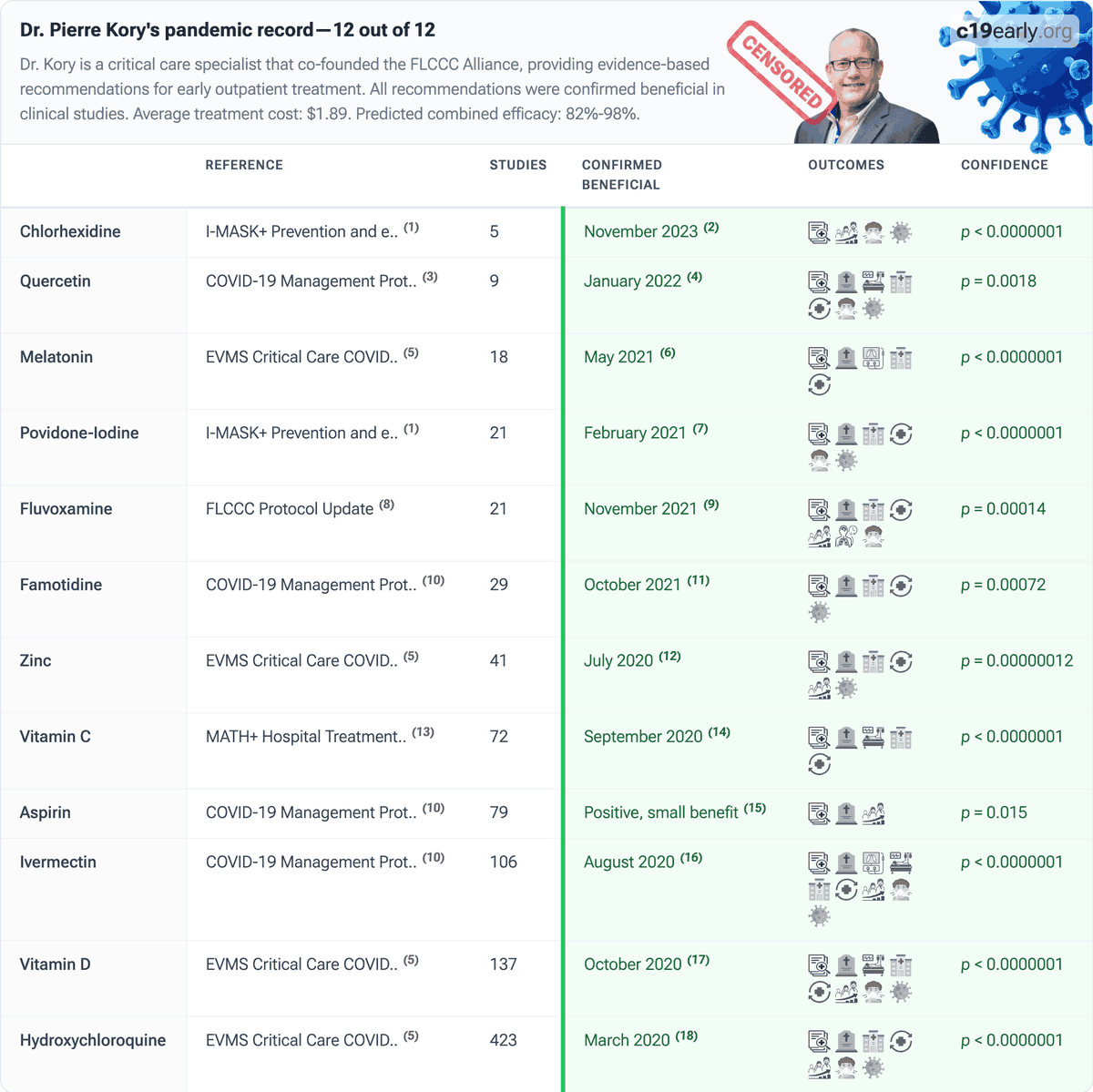
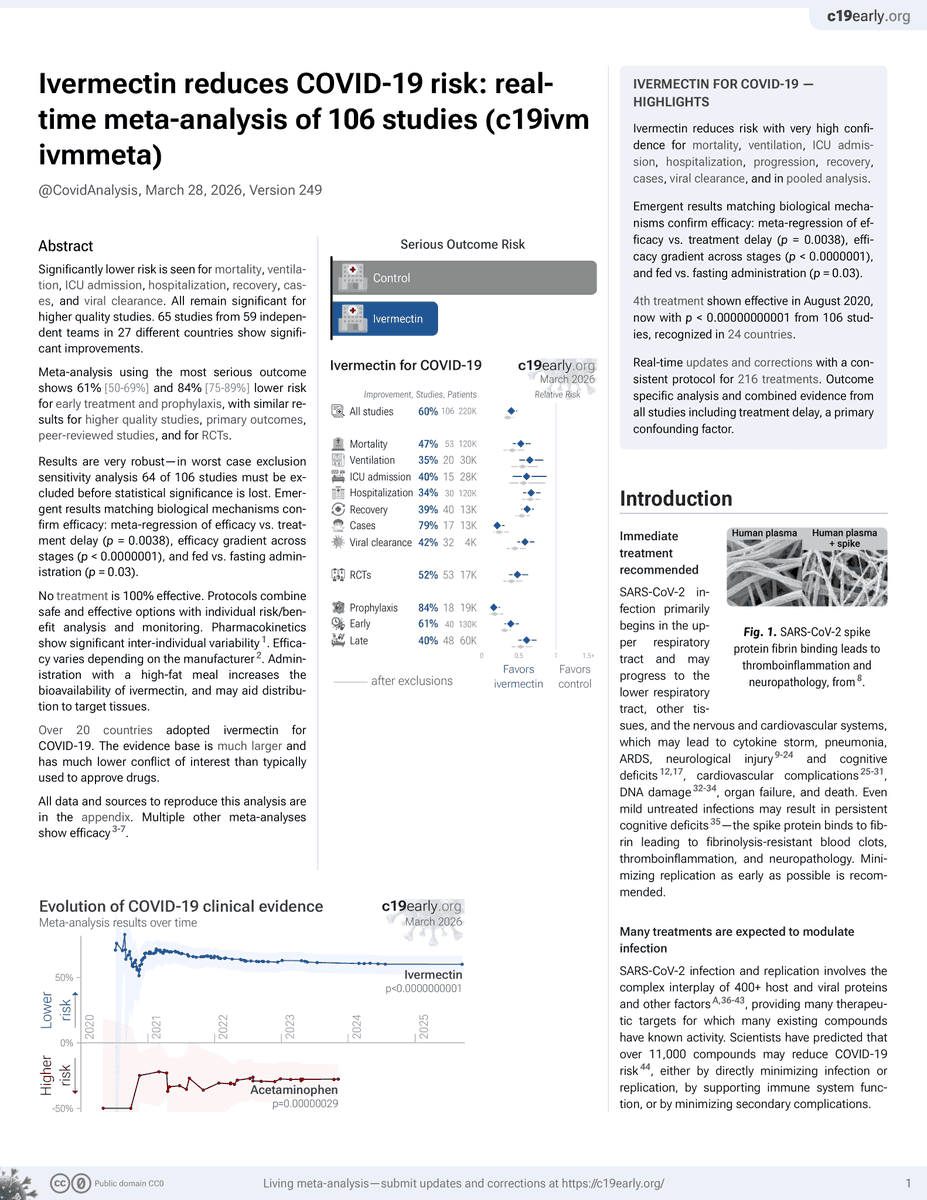
Both are confirmed to reduce risk for COVID-19, including the largest randomized controlled trial for each: 🛡️ Ivermectin The largest RCT (3,963 patients, Oxford) shows significantly faster recovery and 36% lower long COVID, p < 0.0001 (pre-specified ongoing persistent COVID-19 symptoms combined with meta-analysis, data on page 358 in the appendix). This is remarkable given the design for failure: very late, low-dose, incorrectly administered, truncated treatment with low-risk patients. Results were withheld for 600 days until 2024. Meta-analysis of 106 studies shows significantly lower COVID-19 risk, p < 0.0000001. Results across studies match the biological mechanisms which confirms reliability: meta-regression of efficacy vs. treatment delay (p = 0.0038), efficacy gradient across stages (p < 0.0000001), and fed vs. fasting administration (p = 0.03). This is not possible without a real treatment effect. 🛡️ HCQ The largest HCQ/CQ RCT (4,652 patients, Oxford) shows 57% lower symptomatic PCR+ COVID-19 (p = 0.0002). This result was withheld over 800 days until late 2024. Authors also included a meta analysis of 8 RCTs confirming significantly lower symptomatic PCR+ cases. The Oxford PRINCIPLE RCT shows significantly faster recovery for outpatients. This result was withheld over 5 years until 2025. Meta-analysis of 424 studies shows significantly lower COVID-19 risk, p < 0.0000001. Efficacy is seen for prophylaxis and early treatment. Late treatment with excessive dosage may increase risk. Meta-regression of efficacy vs. treatment delay (p = 0.000054) matches the biological mechanisms, confirming efficacy. Details: c19early.org/imeta.html c19early.org/hmeta.html
Covid Analysis: 200+ COVID-19 treatments tweet mediaCovid Analysis: 200+ COVID-19 treatments tweet media
English
1
12
37
1.4K
Children’s Health Defense
🚨 Bret Weinstein and Jeffrey Tucker expose the agenda to demonize Ivermectin and Hydroxychloroquine: “Every trick in the book was played.” “The idea is: you have to keep the population panicked.” “Hydroxychloroquine was taken off the map with a diabolical study in which people were wildly overdosed, and people died.” “It was made to look dangerous when it wasn't.” “You can't do that with Ivermectin because it's not toxic enough.” “It's almost impossible to give somebody enough to kill them.” “So they did other things.” “They ran studies in which they wildly underdosed.” “But the real question is, why would they bother if it's really useless?” “And I'm afraid that the answer has to be [that] if you allow people to use Ivermectin, they will discover how effective it is.” “Like hydroxychloroquine, it is generally useful against RNA viruses.” “At that point, when you introduce the vaccine, nobody will want it because there's a safe alternative.” “Why would I take something that turns out to be a gene therapy?” “There's an off-the-shelf drug that does it and costs nothing.” Tucker: “[There was] a phrase in there that drove Fauci and others crazy.” “Which was that we can get through this with natural immunity through exposure and recovery.” “That document came out about 3 weeks before the vaccine rollout.” “That was the reason they had to eliminate every possible alternative apart from injection as a solution.” @jeffreytucker @brownstoneinst @BretWeinstein
English
63
874
2.2K
140.2K
Covid Analysis: 200+ COVID-19 treatments
Both confirmed to reduce risk for COVID-19, including the largest RCT for each: 🛡️ Ivermectin The largest RCT (3,963 patients, Oxford) shows significantly faster recovery and 36% lower long COVID, p < 0.0001 (pre-specified ongoing persistent COVID-19 symptoms combined with meta-analysis, data on page 358 in the appendix). This is remarkable given the design for failure: very late, low-dose, incorrectly administered, truncated treatment with low-risk patients. Results were withheld for 600 days until 2024. Meta-analysis of 106 studies shows significantly lower COVID-19 risk, p < 0.0000001. Results across studies matching the biological mechanisms provides further confirmation: meta-regression of efficacy vs. treatment delay (p = 0.0038), efficacy gradient across stages (p < 0.0000001), and fed vs. fasting administration (p = 0.03). 🛡️ HCQ The largest HCQ/CQ RCT (4,652 patients, Oxford) shows 57% lower symptomatic PCR+ COVID-19 (p = 0.0002). This result was withheld over 800 days until late 2024. Authors also included a meta analysis of 8 RCTs confirming significantly lower symptomatic PCR+ cases. The Oxford PRINCIPLE RCT shows significantly faster recovery for outpatients. This result was withheld over 5 years until 2025. Meta-analysis of 424 studies shows significantly lower COVID-19 risk, p < 0.0000001. Efficacy is seen for prophylaxis and early treatment. Late treatment with excessive dosage may increase risk. Meta-regression of efficacy vs. treatment delay (p = 0.000054) matches the biological mechanisms, confirming efficacy. Details: c19early.org/imeta.html c19early.org/hmeta.html
Covid Analysis: 200+ COVID-19 treatments tweet mediaCovid Analysis: 200+ COVID-19 treatments tweet media
English
1
0
7
59
healthbot
healthbot@thehealthb0t·
A $200 billion enterprise would've collapsed if they had admitted that Hydroxychloroquine and Ivermectin were effective against Covid. I'd call them criminal but these people are much worse.
English
28
271
853
10.7K
Peter A. McCullough, MD, MPH®
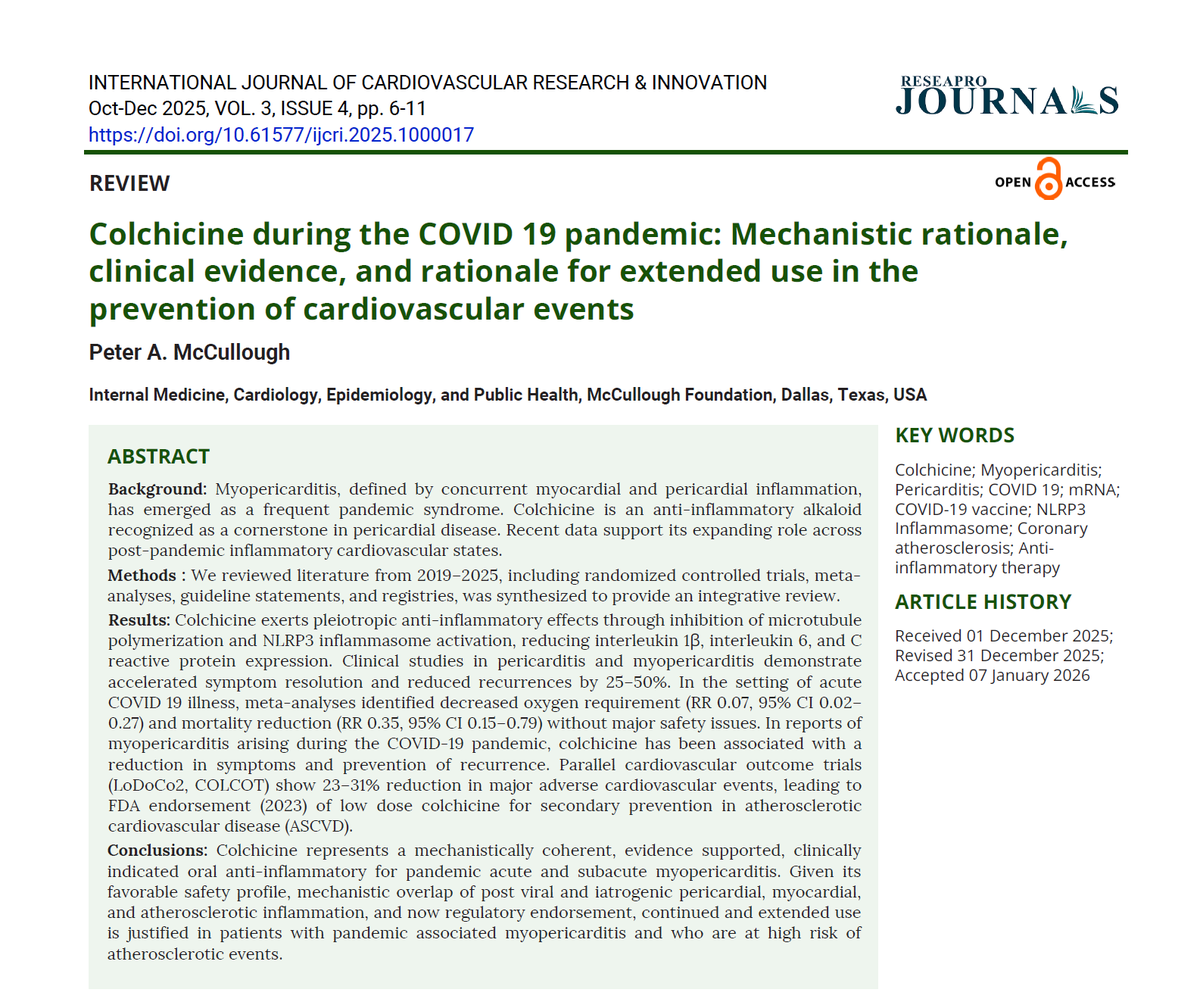
Colchicine is one of my most frequently prescribed medicines since the onset of the pandemic for the following indications: 1) acute COVID-19 illness (McCullough Protocol) 2) treatment of COVID-19 vaccine induced clinical/subclinical myopericarditis 3) prevention of atherosclerotic cardiovascular events @McCulloughFund upload.reseapro.com/d0483723-820a-…
Peter A. McCullough, MD, MPH® tweet media
English
9
122
296
16.2K
Covid Analysis: 200+ COVID-19 treatments
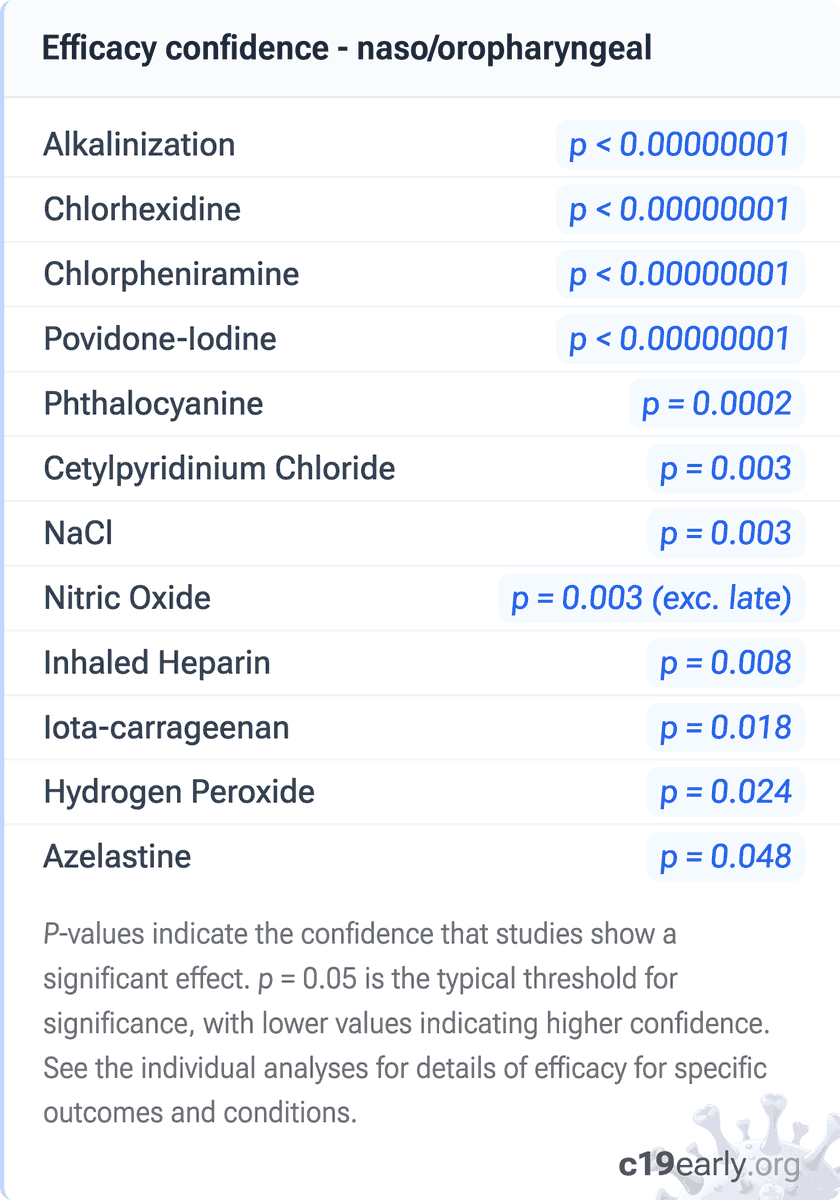
Existing nasal and oral sprays and rinses are confirmed to reduce risk for upper respiratory infections. For COVID-19 there is extensive clinical data, including 65 randomized controlled trials, showing lower risk with several nasal and oral sprays/rinses. Mechanisms of action include virucidal effects, blocking viral attachment, creating a physical barrier, physical removal, and enhancing mucociliary clearance. Combined nasal and oral application is most effective. Details: c19early.org/rtadmin.html
Covid Analysis: 200+ COVID-19 treatments tweet mediaCovid Analysis: 200+ COVID-19 treatments tweet mediaCovid Analysis: 200+ COVID-19 treatments tweet media
English
0
0
1
32
Fat Snowglobe Ballerina
Fat Snowglobe Ballerina@BlkAqueerian·
@KellonDeryck @MaskedHottiee Please please please look into COVID precautions like anti-viral nasal sprays, oil of oregano pills and air filters/updated HVAC systems at any appearances she does! COVID is not over and b/c it went unchecked, other badass viruses are on the rise. Prayers up 🙏🏾
English
1
7
159
10.8K
Kellon Deryck
Kellon Deryck@KellonDeryck·
Everyone say a prayer for Megan, we are all at the hospital 🙏
English
2.2K
4.5K
45K
5.2M
Covid Analysis: 200+ COVID-19 treatments
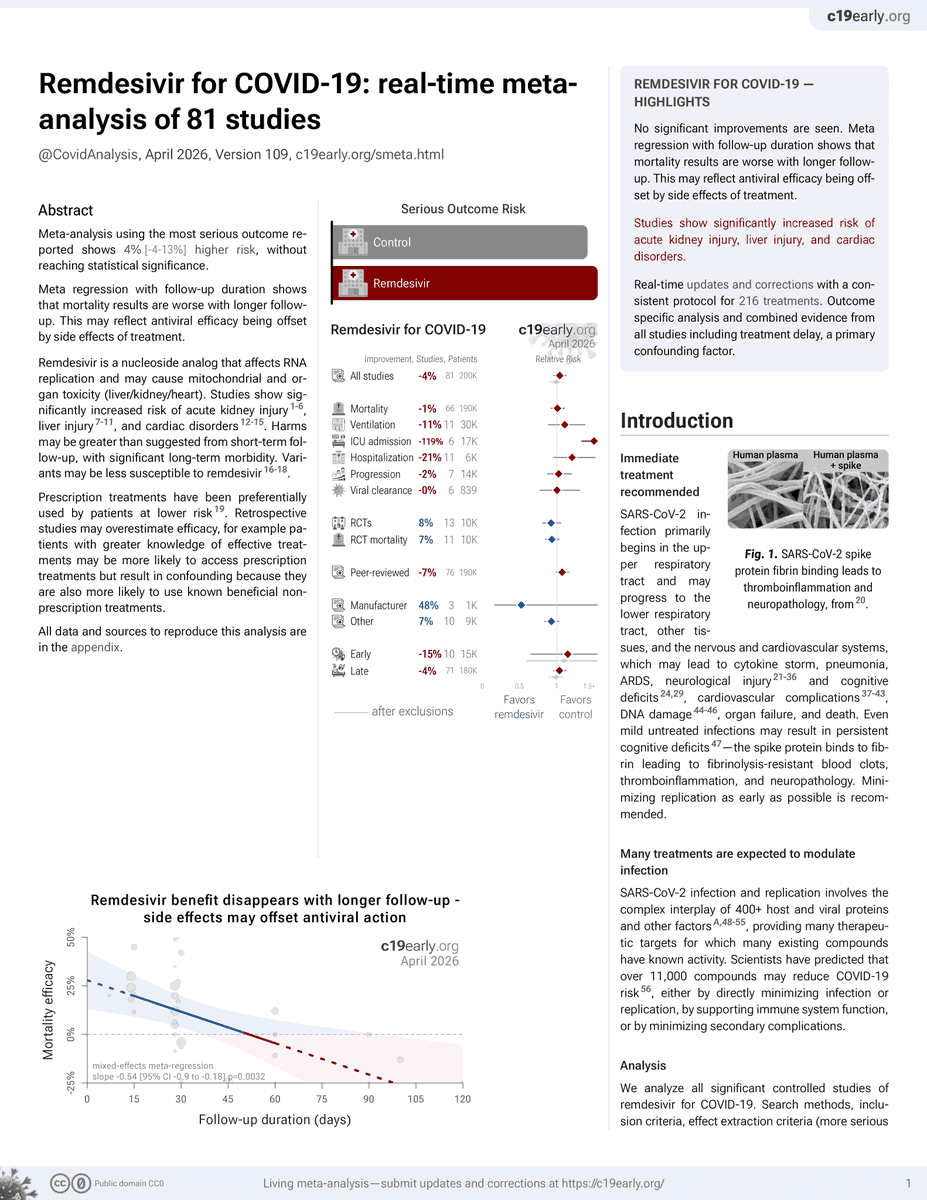
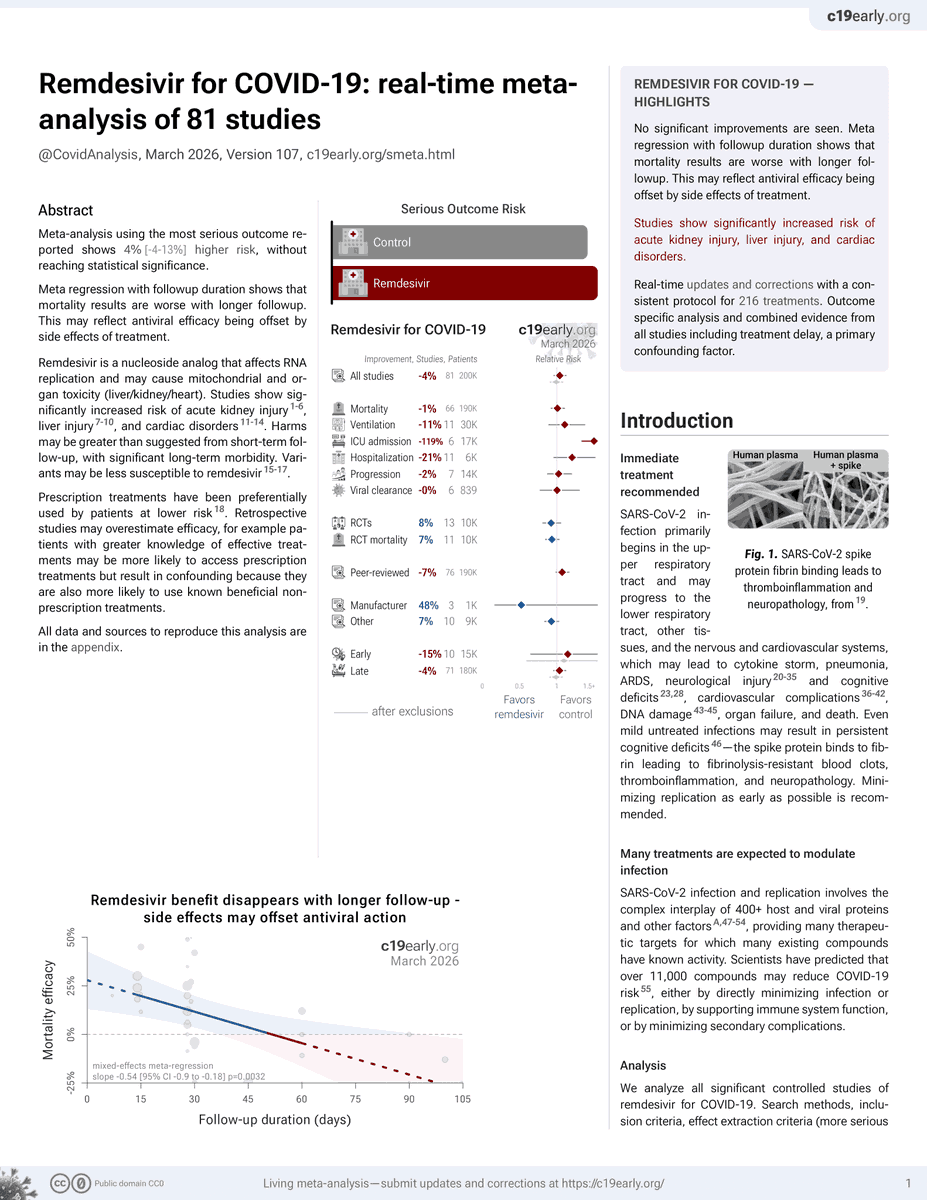
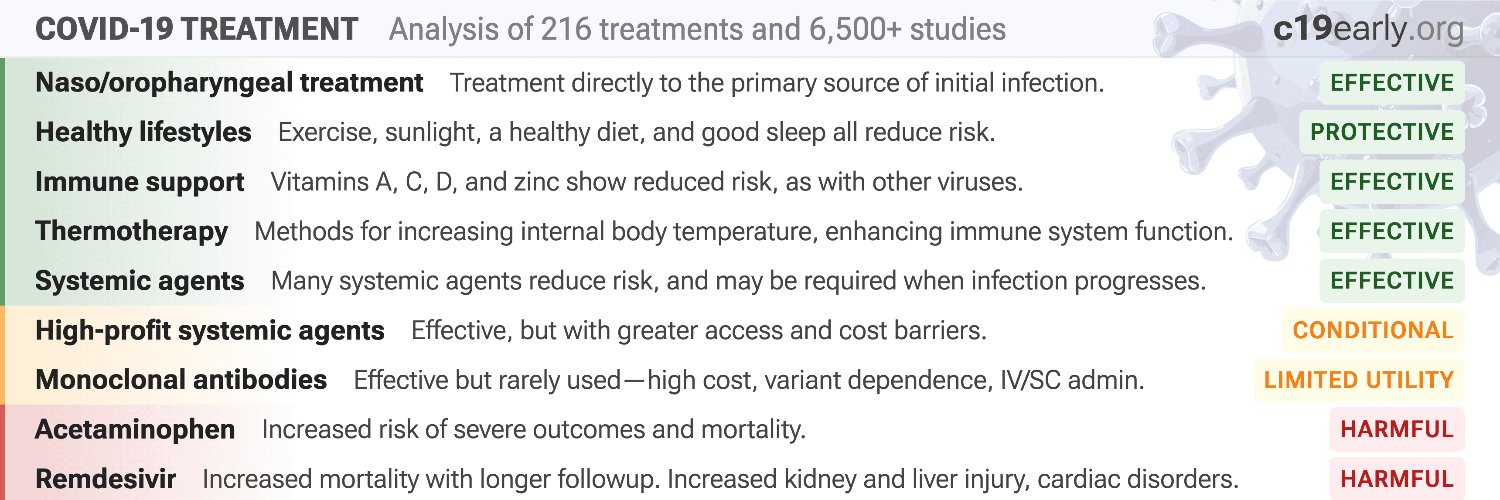
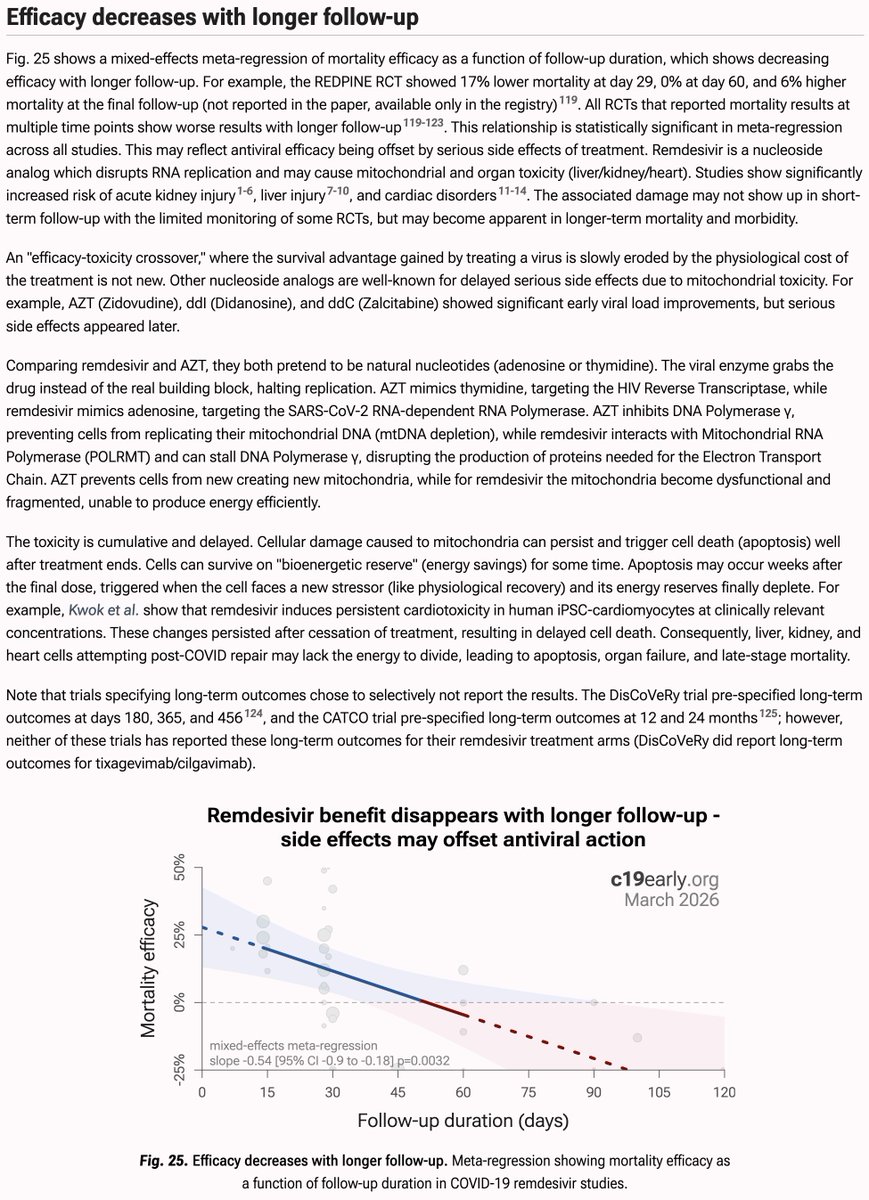
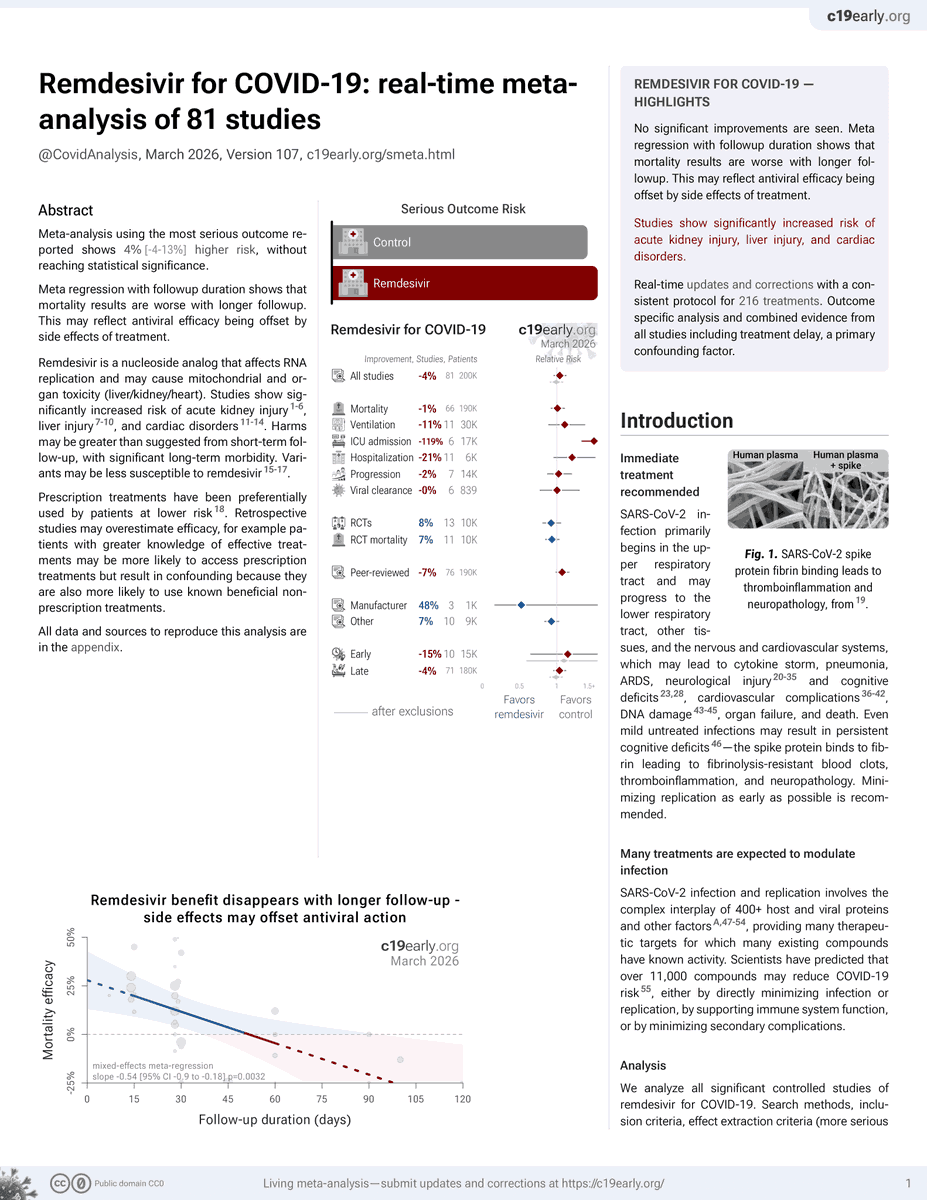
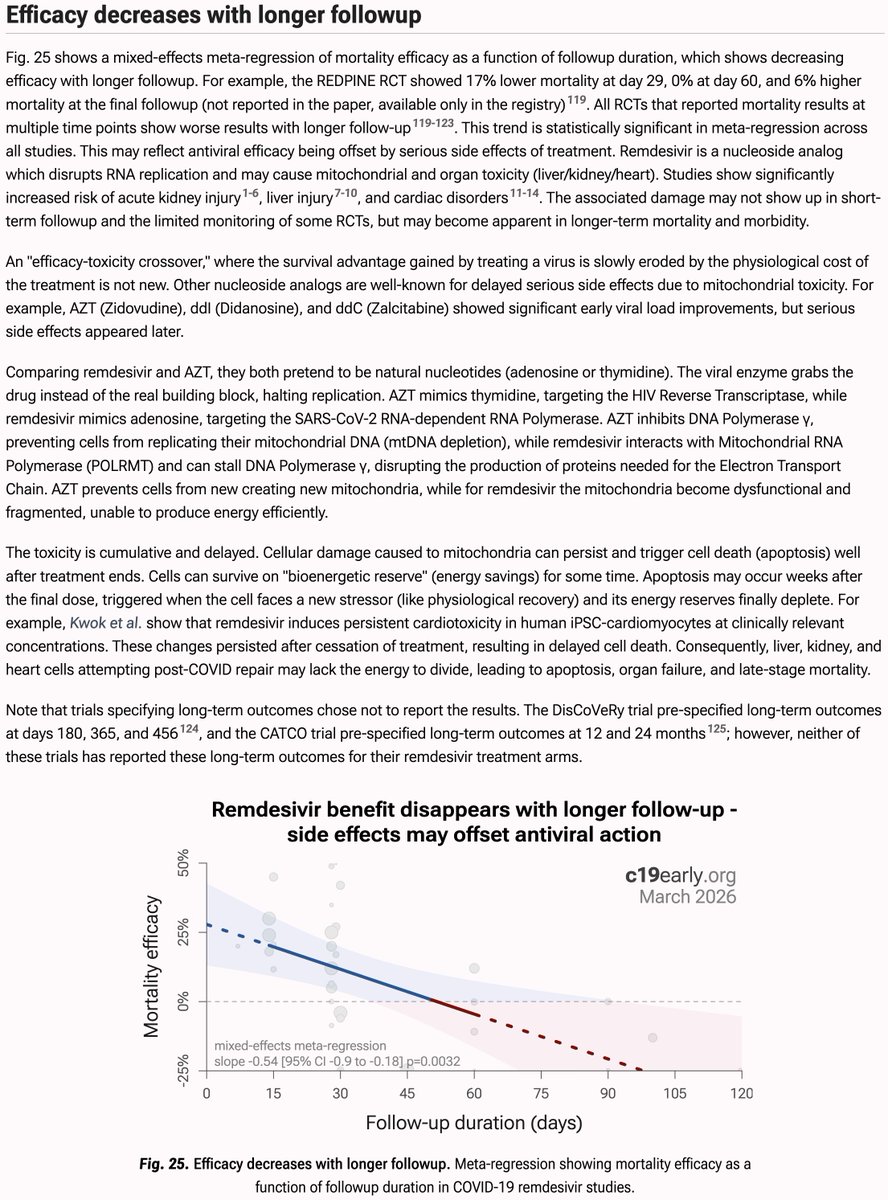
Studies confirm higher risk of serious COVID-19 outcomes, acute kidney injury, liver injury, and cardiac disorders with remdesivir. Remdesivir is a nucleoside analog that affects RNA replication and may cause mitochondrial and organ toxicity. Meta-regression over follow-up duration shows increased mortality with longer follow-up - antiviral effects may be outweighed by serious side effects. Most studies only report short-term follow-up. RCTs that pre-specified long-term outcomes have not reported the results. The true toll may be worse with longer-term morbidity and mortality. Details: c19early.org/smeta.html Many authorities still have active approvals. No authority has analyzed outcomes based on follow-up duration - an essential analysis for treatments with major side effects that may present as delayed morbidity and mortality.
Covid Analysis: 200+ COVID-19 treatments tweet mediaCovid Analysis: 200+ COVID-19 treatments tweet media
English
2
3
2
187
Dr. Dawn Michael
Dr. Dawn Michael@DawnsMission·
My husband was given Remdesivir and died on day 9 — exactly as Dr. Bryan Ardis warned. Every COVID patient in that hospital died from Remdesivir or blood clots. I was the only survivor. It has a 53% kill rate. Fauci & the NIH caused millions of deaths.
English
212
3K
5.9K
69.3K
Covid Analysis: 200+ COVID-19 treatments
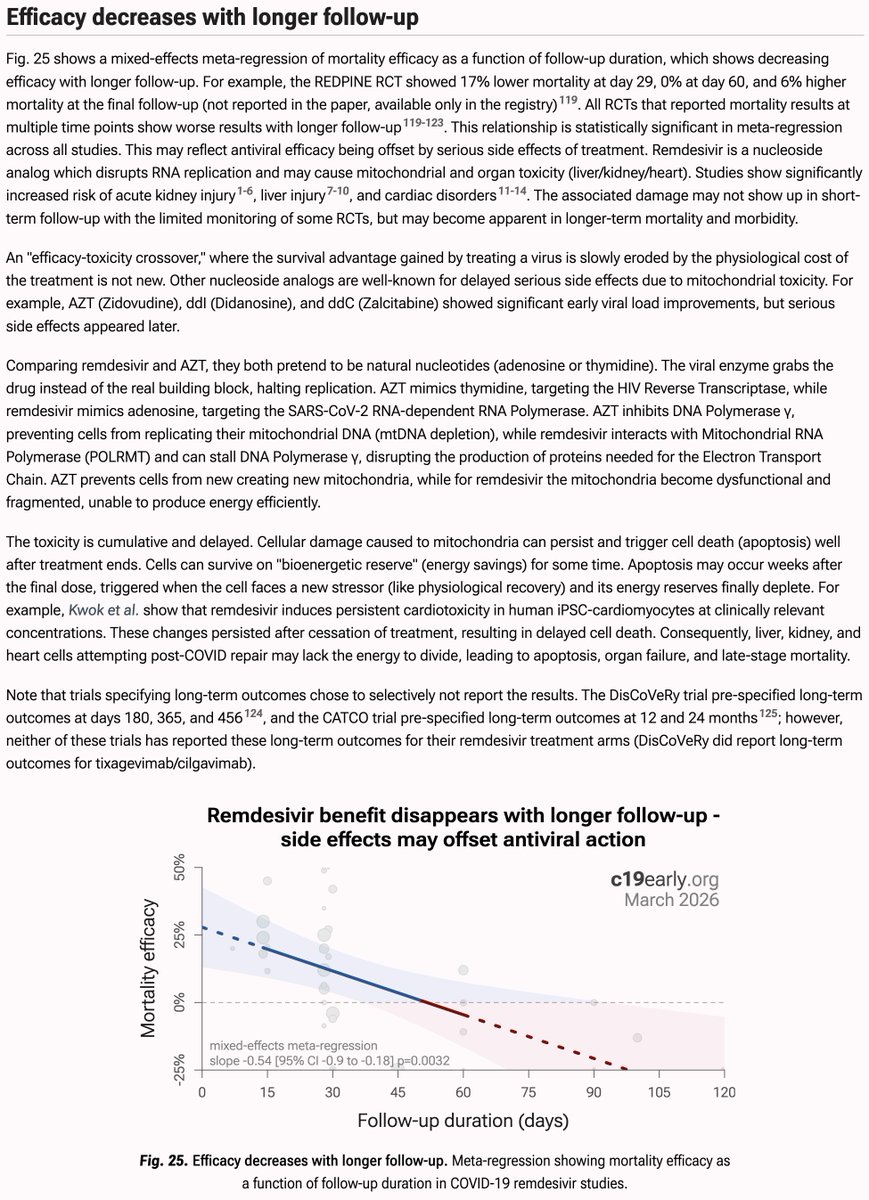
Every single RCT that reported mortality results at multiple time points shows worse results with longer follow-up. Note that trials specifying long-term outcomes chose to selectively not report the results. The DisCoVeRy trial pre-specified long-term outcomes at days 180, 365, and 456, and the CATCO trial pre-specified long-term outcomes at 12 and 24 months; however, neither reported the results. Can you guess why?
English
2
0
0
16
mikeMD
mikeMD@MikeKon219·
@CovidAnalysis @MaryBowdenMD Redpine was a small study, mostly unvaccinated people with pre-existing CKD. Remdesivir might not have significantly improved mortality in that limited study, but did not suggest worse outcomes. Meta-analysis did show benefit on some hospitalized patients
English
1
0
0
34
Mary Talley Bowden MD
Mary Talley Bowden MD@MaryBowdenMD·
Would it surprise you to learn that hospitals like Houston Methodist make 7000+% more giving patients Remdesivir than ivermectin?
Mary Talley Bowden MD tweet media
English
237
2K
4.6K
41.1K
Covid Analysis: 200+ COVID-19 treatments
All but one of the mortality results in the meta-regression are from peer-reviewed studies (and excluding the one preprint study would increase confidence). All of these are peer-reviewed: Studies show significantly increased risk of acute kidney injury (1-6), liver injury (7-10), and cardiac disorders (11-14). Harms may be greater than suggested from short-term follow-up, with significant long-term morbidity. Variants may be less susceptible to remdesivir (15-17). References 1. Gérard et al., Remdesivir and Acute Renal Failure: A Potential Safety Signal From Disproportionality Analysis of the WHO Safety Database, Clinical Pharmacology & Therapeutics, onlinelibrary.wiley.com/doi/pdf/10.100… 2. Zhou et al., Acute Kidney Injury and Drugs Prescribed for COVID-19 in Diabetes Patients: A Real-World Disproportionality Analysis, Frontiers in Pharmacology, frontiersin.org/articles/10.33… 3. Wu et al., Acute Kidney Injury Associated With Remdesivir: A Comprehensive Pharmacovigilance Analysis of COVID-19 Reports in FAERS, Frontiers in Pharmacology, frontiersin.org/articles/10.33… 4. Kamo et al., Association of Antiviral Drugs for the Treatment of COVID-19 With Acute Renal Failure, In Vivo, iv.iiarjournals.org/lookup/doi/10.… 5. Choi et al., Comparative effectiveness of combination therapy with nirmatrelvir–ritonavir and remdesivir versus monotherapy with remdesivir or nirmatrelvir–ritonavir in patients hospitalised with COVID-19: a target trial emulation study, The Lancet Infectious Diseases, sciencedirect.com/science/articl… 6. Kim et al., Investigating the Safety Profile of Fast‐Track COVID‐19 Drugs Using the FDA Adverse Event Reporting System Database: A Comparative Observational Study, Pharmacoepidemiology and Drug Safety, onlinelibrary.wiley.com/doi/10.1002/pd… 7. Leo et al., Hepatocellular liver injury in hospitalized patients affected by COVID-19: Presence of different risk factors at different time points, Digestive and Liver Disease, sciencedirect.com/science/articl… 8. Briciu et al., Evolving Clinical Manifestations and Outcomes in COVID-19 Patients: A Comparative Analysis of SARS-CoV-2 Variant Waves in a Romanian Hospital Setting, Pathogens, mdpi.com/2076-0817/12/1… 9. Muntean et al., Effects of COVID-19 on the Liver and Mortality in Patients with SARS-CoV-2 Pneumonia Caused by Delta and Non-Delta Variants: An Analysis in a Single Centre, Pharmaceuticals, mdpi.com/1424-8247/17/1… 10. Petrov et al., The Effect of Potentially Hepatotoxic Medicinal Products on Alanine Transaminase Levels in COVID-19 Patients: A Case–Control Study, Safety and Risk of Pharmacotherapy, risksafety.ru/jour/article/v… 11. Negru et al., Comparative Pharmacovigilance Analysis of Approved and Repurposed Antivirals for COVID-19: Insights from EudraVigilance Data, Biomedicines, mdpi.com/2227-9059/13/6… 12. Cheng et al., Cardiovascular Safety of COVID-19 Treatments: A Disproportionality Analysis of Adverse Event Reports from the WHO VigiBase, Infectious Diseases and Therapy, link.springer.com/10.1007/s40121… 13. Mohammed et al., Bradycardia associated with remdesivir treatment in coronavirus disease 2019 patients: A propensity score-matched analysis, Medicine, journals.lww.com/10.1097/MD.000… 14. Kwok et al., Remdesivir induces persistent mitochondrial and structural damage in human induced pluripotent stem cell-derived cardiomyocytes, Cardiovascular Research, academic.oup.com/cardiovascres/… 15. Lopez et al., SARS-CoV-2 Resistance to Small Molecule Inhibitors, Current Clinical Microbiology Reports, link.springer.com/10.1007/s40588… 16. Vukovikj et al., Impact of SARS-CoV-2 variant mutations on susceptibility to monoclonal antibodies and antiviral drugs: a non-systematic review, April 2022 to October 2024, Eurosurveillance, eurosurveillance.org/content/10.280… 17. Iriyama et al., Clinical and molecular landscape of prolonged SARS-CoV-2 infection with resistance to remdesivir in immunocompromised patients, PNAS Nexus, academic.oup.com/pnasnexus/adva…
English
3
0
0
20
Covid Analysis: 200+ COVID-19 treatments
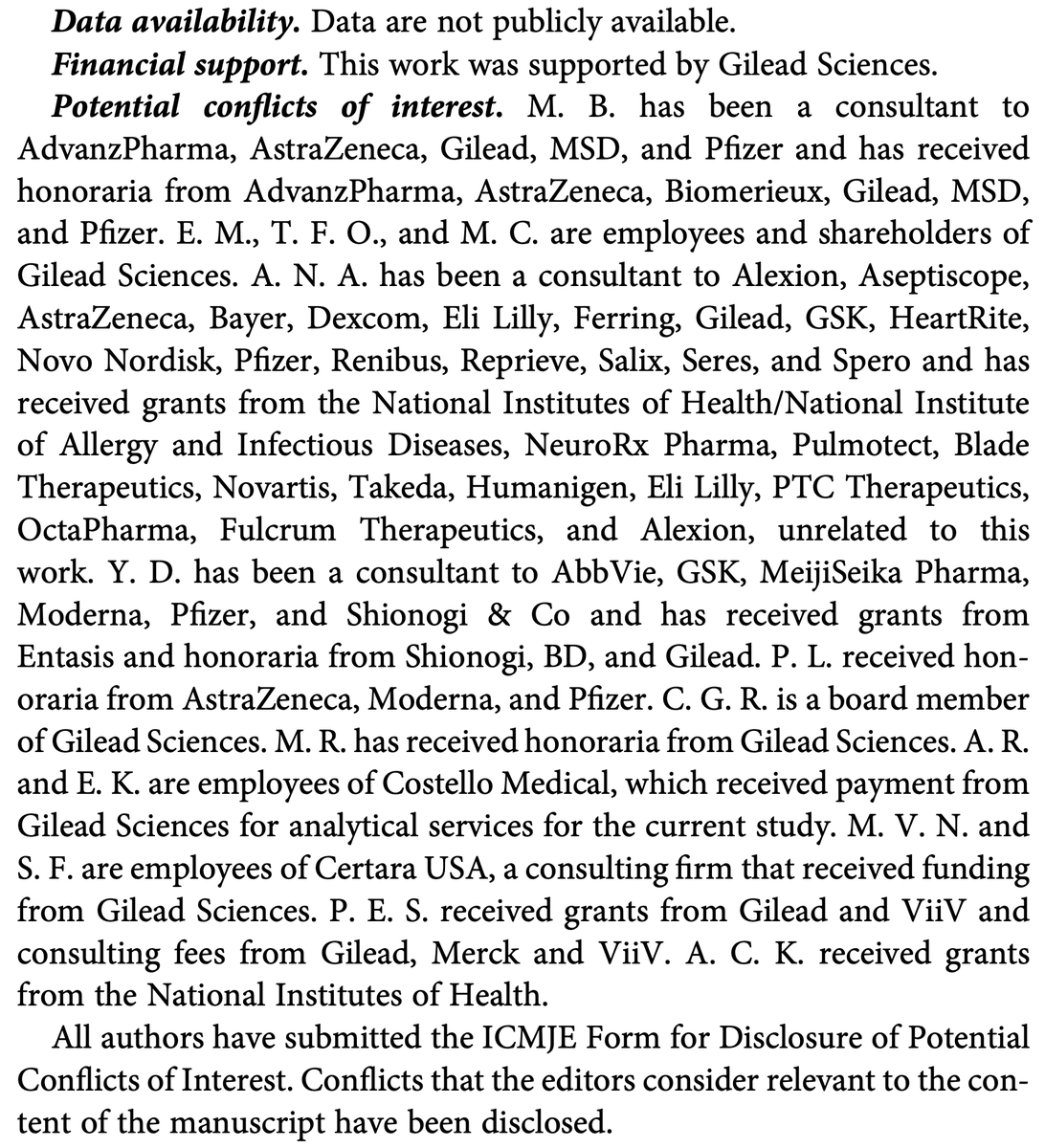
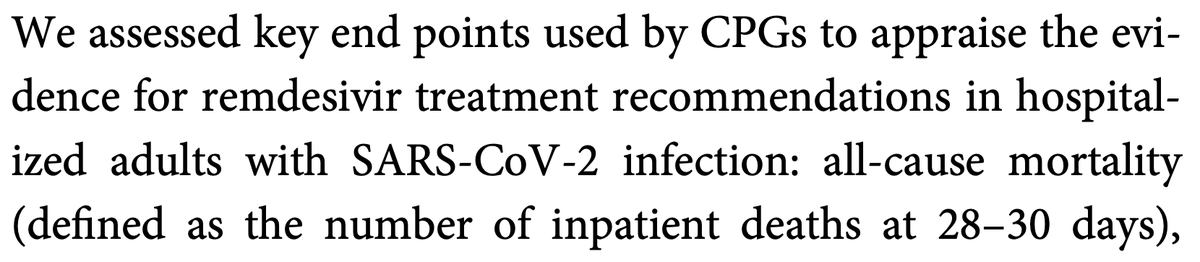
@MikeKon219 @MaryBowdenMD Authors literally ignored long-term mortality by specifying 28-30 day mortality only. Several authors are Gilead employees or received Gilead funding. No pre-registration allows authors to choose a protocol that optimizes for any specific goal, for example Gilead profit.
Covid Analysis: 200+ COVID-19 treatments tweet mediaCovid Analysis: 200+ COVID-19 treatments tweet media
English
1
0
0
25
Covid Analysis: 200+ COVID-19 treatments
See for example the REDPINE RCT which shows 17% lower mortality at day 29, 0% at day 60, and 6% higher mortality at the final followup (not reported in the paper, available only in the registry). All RCTs that reported mortality results at multiple time points show worse results with longer follow-up. This relationship is statistically significant in meta-regression across all studies. Note that trials specifying long-term outcomes chose to selectively not report the results. The DisCoVeRy trial pre-specified long-term outcomes at days 180, 365, and 456, and the CATCO trial pre-specified long-term outcomes at 12 and 24 months; however, neither reported the results. The increased risk with longer follow-up may reflect antiviral efficacy being offset by serious side effects of treatment. Remdesivir is a nucleoside analog which disrupts RNA replication and may cause mitochondrial and organ toxicity. Studies show significantly increased risk of acute kidney injury, liver injury, and cardiac disorders - see the link below for the references. The associated damage may not show up in short-term follow-up with the limited monitoring of some RCTs, but may become apparent in longer-term mortality and morbidity. An "efficacy-toxicity crossover," where the survival advantage gained by treating a virus is slowly eroded by the physiological cost of the treatment is not new. Other nucleoside analogs are well-known for delayed serious side effects due to mitochondrial toxicity. For example, AZT (Zidovudine), ddI (Didanosine), and ddC (Zalcitabine) showed significant early viral load improvements, but serious side effects appeared later. Comparing remdesivir and AZT, they both pretend to be natural nucleotides (adenosine or thymidine). The viral enzyme grabs the drug instead of the real building block, halting replication. AZT mimics thymidine, targeting the HIV Reverse Transcriptase, while remdesivir mimics adenosine, targeting the SARS-CoV-2 RNA-dependent RNA Polymerase. AZT inhibits DNA Polymerase γ, preventing cells from replicating their mitochondrial DNA (mtDNA depletion), while remdesivir interacts with Mitochondrial RNA Polymerase (POLRMT) and can stall DNA Polymerase γ, disrupting the production of proteins needed for the Electron Transport Chain. AZT prevents cells from new creating new mitochondria, while for remdesivir the mitochondria become dysfunctional and fragmented, unable to produce energy efficiently. The toxicity is cumulative and delayed. Cellular damage caused to mitochondria can persist and trigger cell death (apoptosis) well after treatment ends. Cells can survive on "bioenergetic reserve" (energy savings) for some time. Apoptosis may occur weeks after the final dose, triggered when the cell faces a new stressor (like physiological recovery) and its energy reserves finally deplete. For example, Kwok et al. show that remdesivir induces persistent cardiotoxicity in human iPSC-cardiomyocytes at clinically relevant concentrations. These changes persisted after cessation of treatment, resulting in delayed cell death. Consequently, liver, kidney, and heart cells attempting post-COVID repair may lack the energy to divide, leading to apoptosis, organ failure, and late-stage mortality. #followup" target="_blank" rel="nofollow noopener">c19early.org/smeta.html#fol
Covid Analysis: 200+ COVID-19 treatments tweet media
English
3
0
0
39
mikeMD
mikeMD@MikeKon219·
@CovidAnalysis @MaryBowdenMD This is almost impossible. Your data shows significant mortality benefit at 30 days.. then 2 studies magically show increased mortality at 3 months. Others studies shiw no increase in renal or liver failure with remdesivir either. Bad data gives you bad results
English
2
0
0
38
Covid Analysis: 200+ COVID-19 treatments
Studies show higher risk of serious COVID-19 outcomes, acute kidney injury, liver injury, and cardiac disorders with remdesivir. Remdesivir is a nucleoside analog that affects RNA replication and may cause mitochondrial and organ toxicity. Meta-regression over follow-up duration shows increased mortality with longer follow-up - antiviral effects may be outweighed by serious side effects. Most studies only report short-term follow-up. RCTs that pre-specified long-term outcomes have not reported the results. The true toll may be worse with longer-term morbidity and mortality. Details: c19early.org/smeta.html Many authorities still have active approvals. No authority has analyzed outcomes based on follow-up duration - an essential analysis for treatments with major side effects that may present as delayed morbidity and mortality.
Covid Analysis: 200+ COVID-19 treatments tweet mediaCovid Analysis: 200+ COVID-19 treatments tweet media
English
1
0
3
112
Valerie Anne Smith
Valerie Anne Smith@ValerieAnne1970·
"I warned the world that the experimental drug Remdesivir will be responsible for their death...everyone in the hospital with COVID died from Remdesivir treatment. It has a 53% kill rate." ~Dr Bryan Ardis "Fauci & NIH caused the death of millions of people."
English
47
968
1.5K
19.4K
Covid Analysis: 200+ COVID-19 treatments
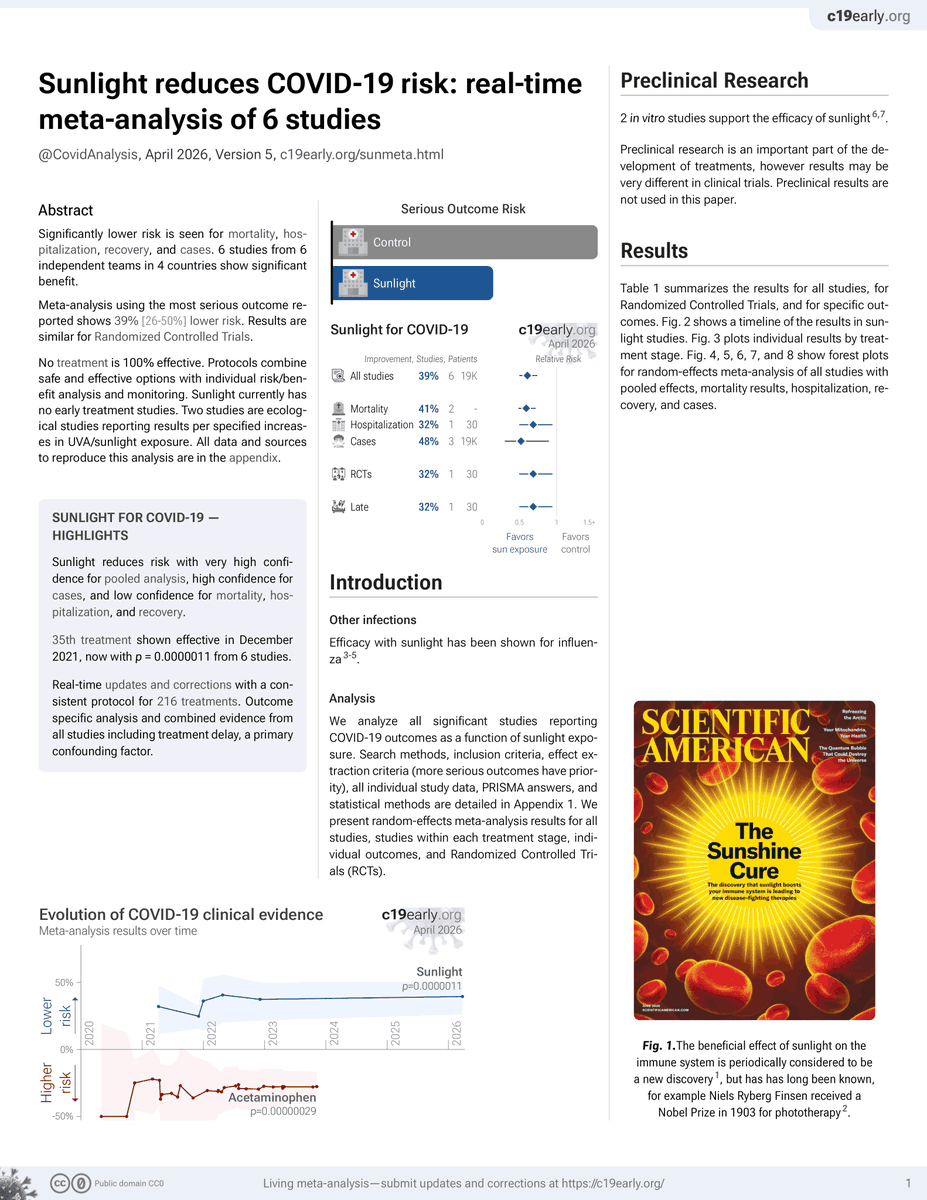
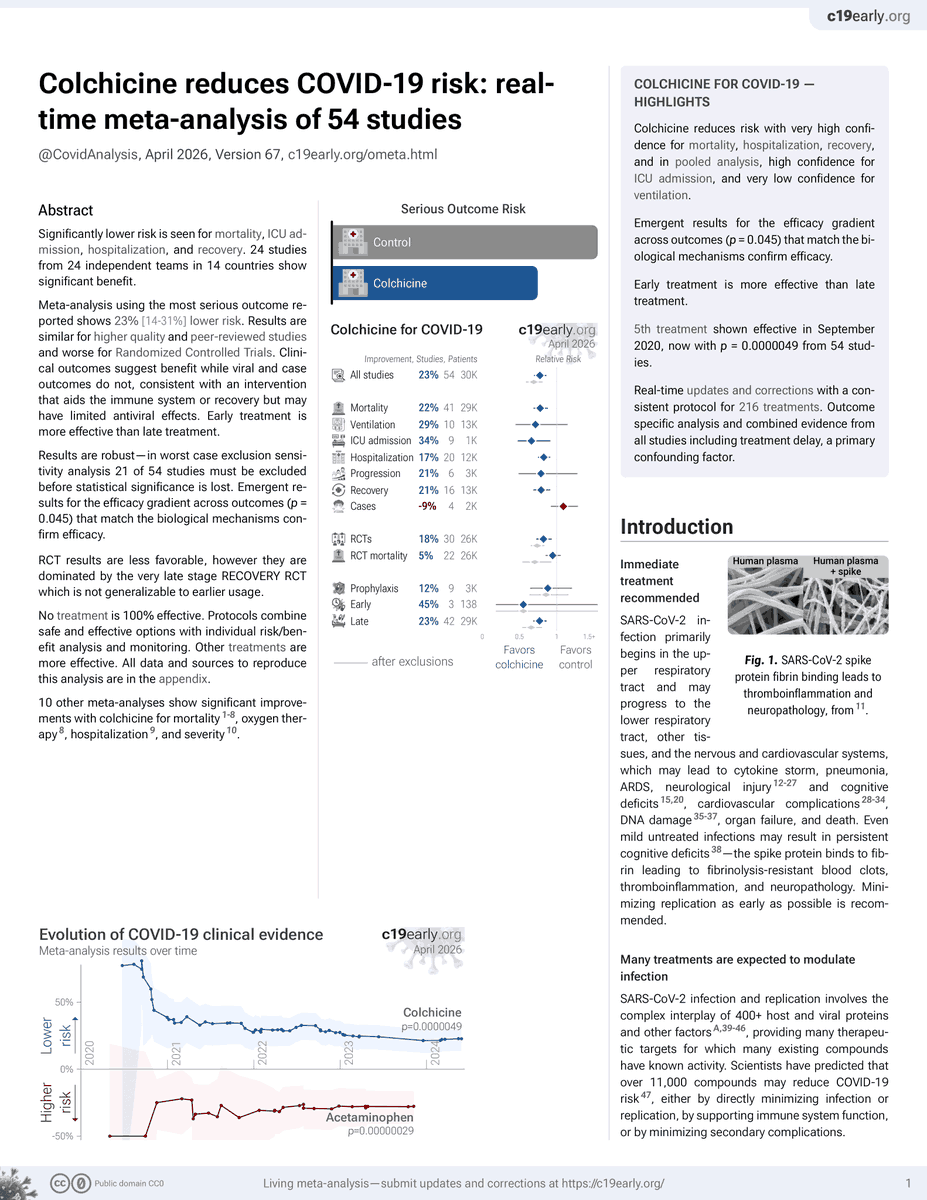
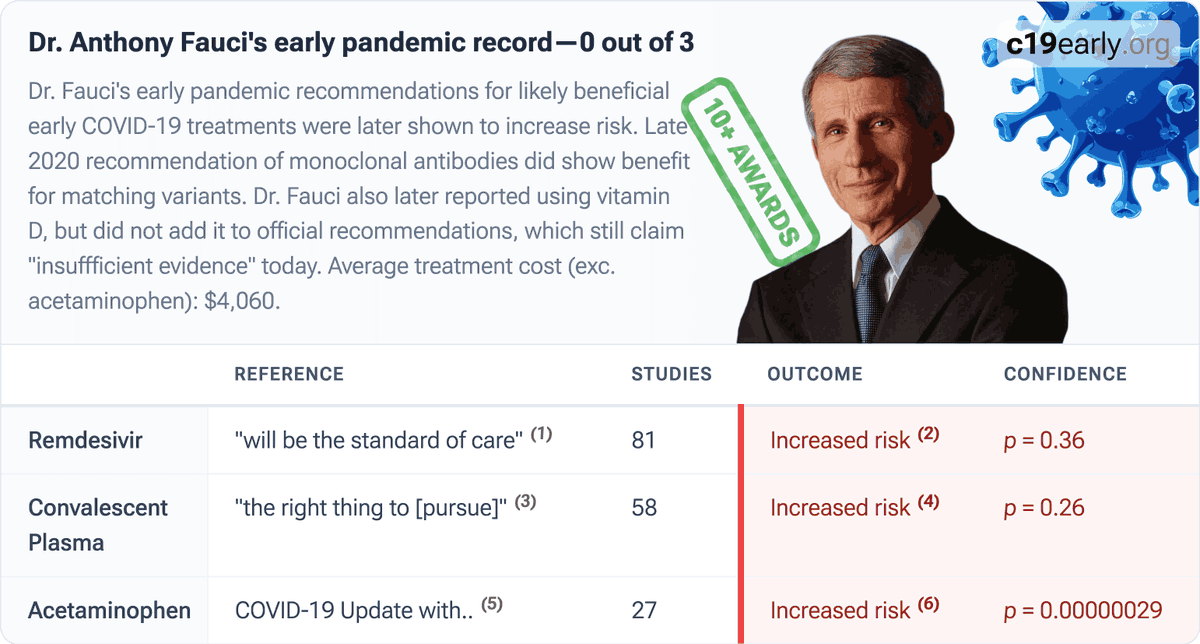
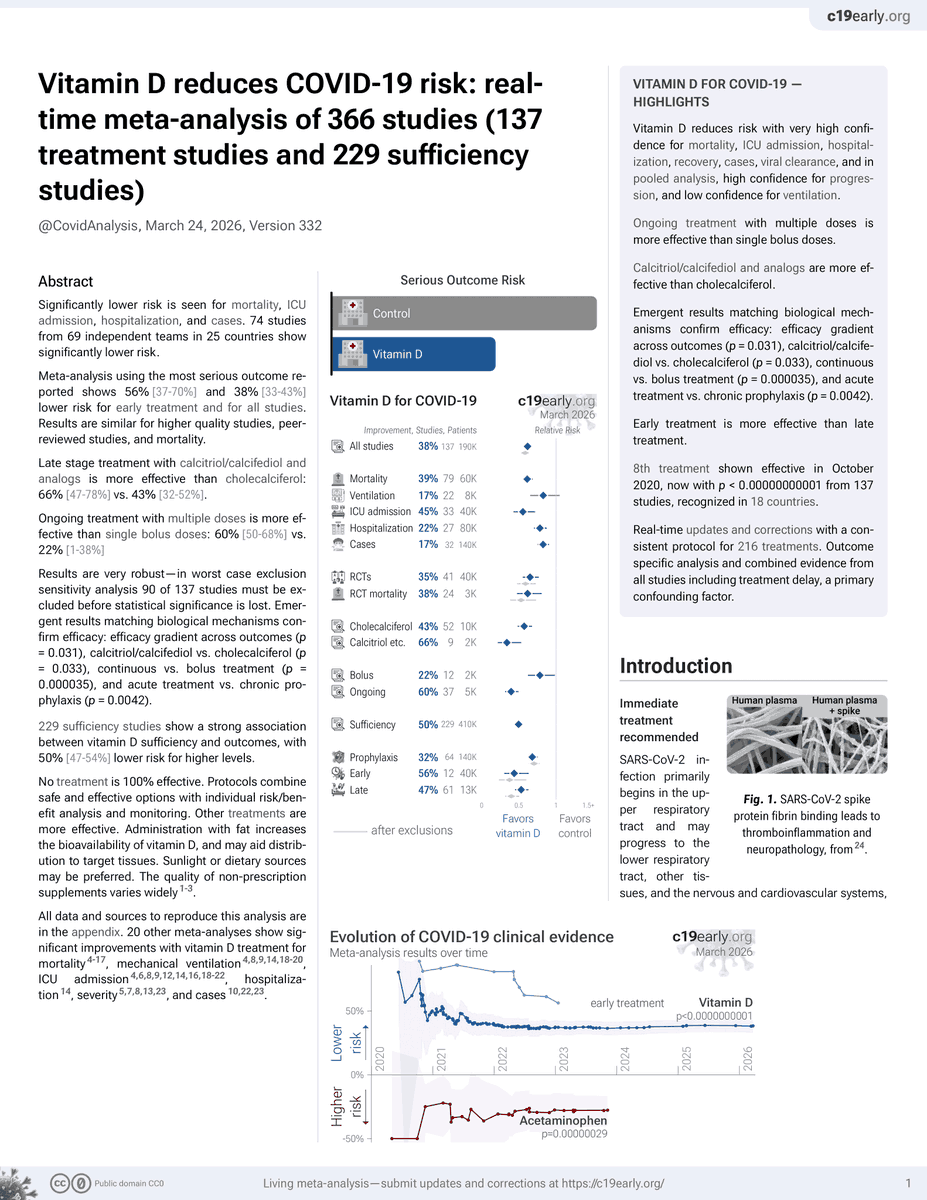
Vitamin D reduces COVID-19 risk. In addition to very high confidence in meta-analysis, p < 0.000001, results across studies match the biological mechanisms: efficacy gradient across outcomes (p = 0.03), calcitriol/calcifediol vs. cholecalciferol (p = 0.03), and continuous vs. bolus treatment (p = 0.00004). c19early.org/dmeta.html Studies show improved results with calcifediol, calcitriol, and analogs (which avoid long conversion delays); with ongoing treatment vs. single bolus doses; and with acute treatment vs. chronic supplementation. Dr. Fauci's early pandemic treatment recommendations show increased risk in clinical studies.
Covid Analysis: 200+ COVID-19 treatments tweet mediaCovid Analysis: 200+ COVID-19 treatments tweet media
English
0
0
1
345
healthbot
healthbot@thehealthb0t·
Dr. Robert Malone just revealed that Dr. Fauci stopped the U.S. Army from researching the benefits of vitamin D for soldiers because it wasn’t vaccine based. “We are coming off of literally decades of intentional suppression of the use and benefits of vitamin D.” “Tony Fauci directly suppressed the interest of the U.S. Army in advancing vitamin D research.” “They had discovered that adding vitamin D… made a huge difference in respiratory infections in troops.” “But Tony’s comment when approached by the lead scientist on this project was that, we treat infectious disease with vaccines, not with nutritional supplements.”
English
142
3.7K
9.3K
101K
Covid Analysis: 200+ COVID-19 treatments
Studies show higher risk of serious COVID-19 outcomes, acute kidney injury, liver injury, and cardiac disorders with remdesivir. Remdesivir is a nucleoside analog that affects RNA replication and may cause mitochondrial and organ toxicity. Meta-regression over follow-up duration shows increased mortality with longer follow-up - antiviral effects may be outweighed by serious side effects. Meta-analysis of studies to date shows increased risk, however most studies only report short-term follow-up. The true toll may be worse with longer-term morbidity and mortality. Details: c19early.org/smeta.html Many authorities still have active approvals. No authority has analyzed outcomes based on follow-up duration.
Covid Analysis: 200+ COVID-19 treatments tweet media
English
1
1
4
108
Covid Analysis: 200+ COVID-19 treatments
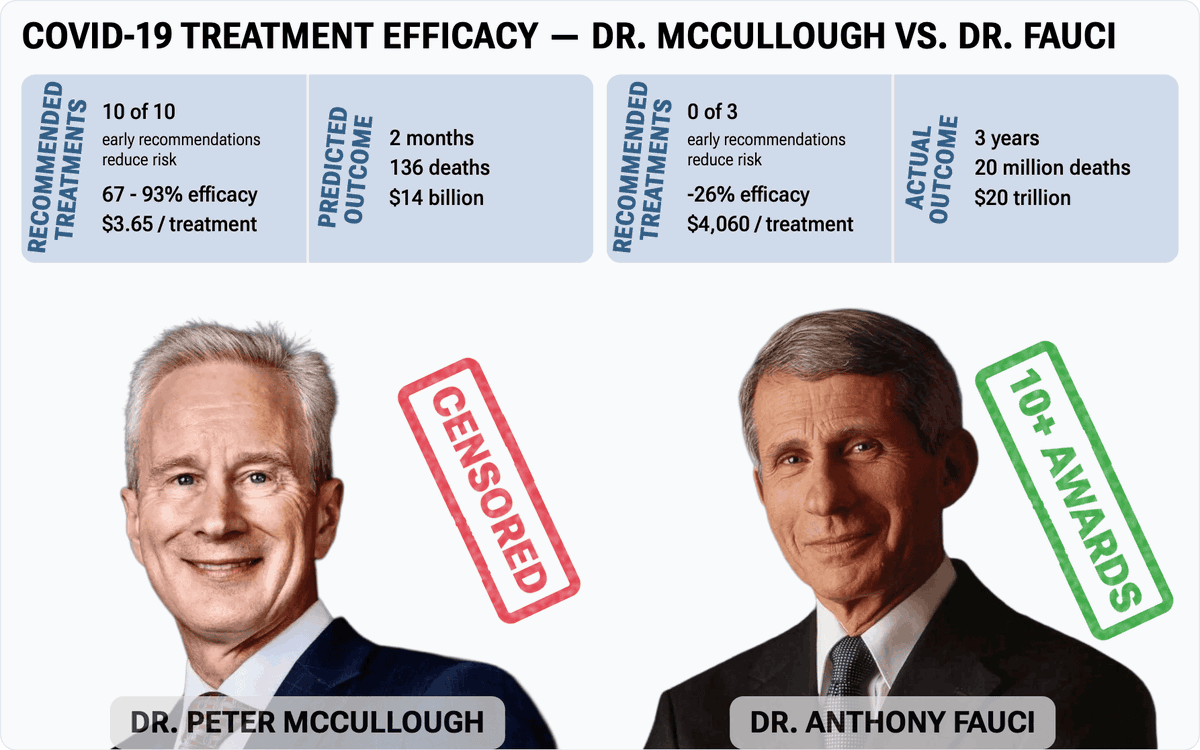
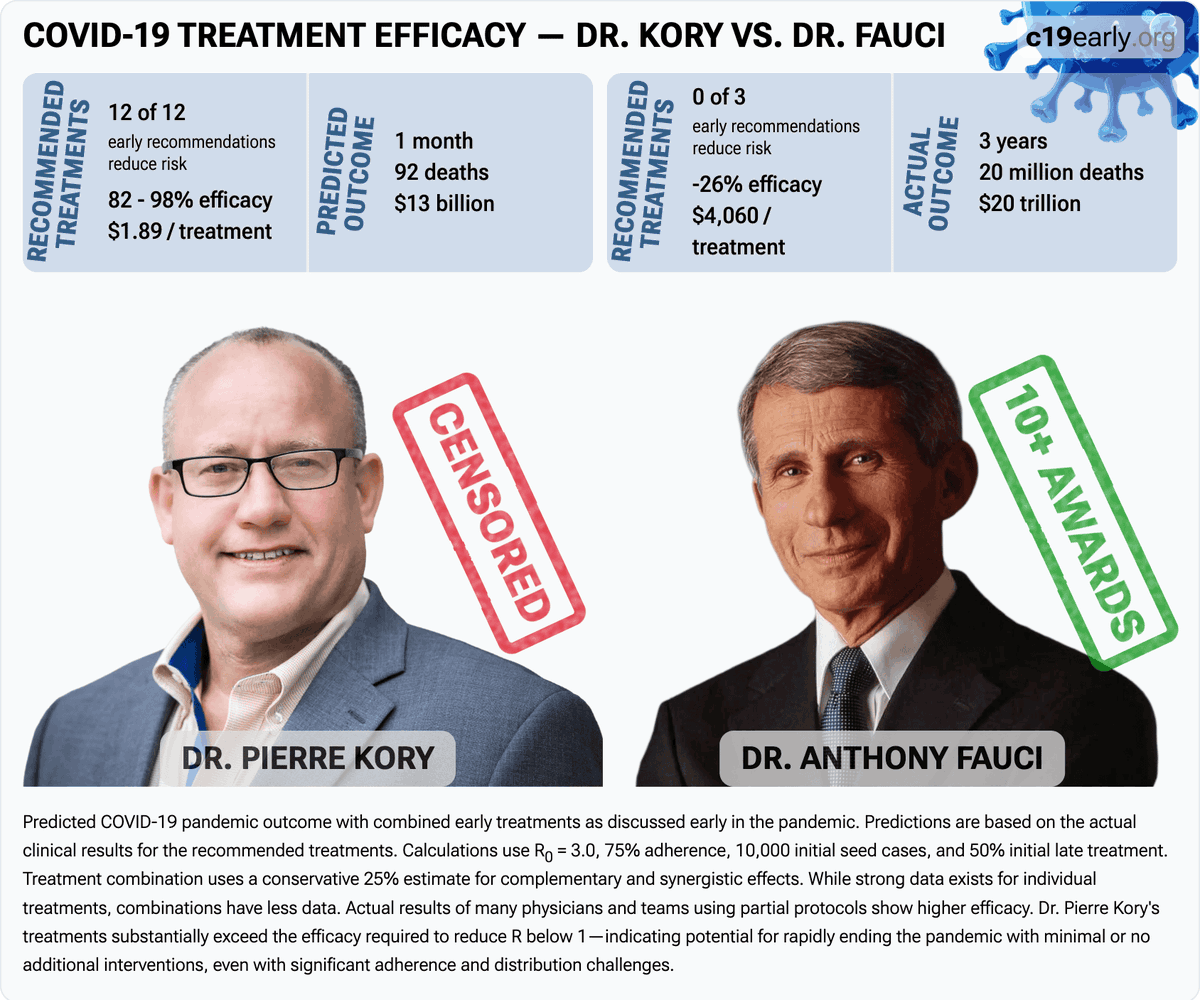
@adamcarolla Dr. Fauci's recommendations for treatments early in the pandemic were shown to increase risk. Following evidence-based treatment protocols would have ended the pandemic quickly.
Covid Analysis: 200+ COVID-19 treatments tweet mediaCovid Analysis: 200+ COVID-19 treatments tweet mediaCovid Analysis: 200+ COVID-19 treatments tweet media
English
0
0
0
123
Covid Analysis: 200+ COVID-19 treatments
Ivermectin reduces risk for COVID-19. The largest RCT (3,963 patients, Oxford) shows significantly faster recovery and 36% lower long COVID, p < 0.0001 (pre-specified ongoing persistent COVID-19 symptoms combined with meta-analysis, data on page 358 in the appendix). This is remarkable given the design for failure: very late, low-dose, incorrectly administered, truncated treatment with low-risk patients. These results were withheld for 600 days until 2024. Meta-analysis of 106 studies shows significantly lower COVID-19 risk, p < 0.0000001. Results across studies match the biological mechanisms which confirms reliability: meta-regression of efficacy vs. treatment delay (p = 0.0038), efficacy gradient across stages (p < 0.0000001), and fed vs. fasting administration (p = 0.03). This is not possible without a real treatment effect. Preclinical studies provide very strong supporting evidence, showing mechanisms relevant to all stages: blocking initial infection, minimizing viral replication, and mitigating secondary complications. For example: for blocking initial infection - spike-ACE2 disruption, lipid raft attachment inhibition, glycan binding, and CD147 inhibition; for minimizing viral replication - importin-α/β nuclear transport blockade, 3CLpro inhibition, and RdRp interference; and for mitigating secondary complications - inhibiting fibrin clots, reducing lung fibrosis, protecting against myocarditis, and dampening cytokine storm. Details: c19early.org/imeta.html
Covid Analysis: 200+ COVID-19 treatments tweet mediaCovid Analysis: 200+ COVID-19 treatments tweet media
English
1
2
12
415
Gain of Fauci
Gain of Fauci@DschlopesIsBack·
The FDA was one of the greatest sources of Covid misinformation in the entire world.
Gain of Fauci tweet media
English
204
2.6K
11.2K
71.9K