Cringe retweetledi
Cringe
509 posts

Cringe retweetledi
Cringe retweetledi
Cringe retweetledi
Cringe retweetledi
Cringe retweetledi

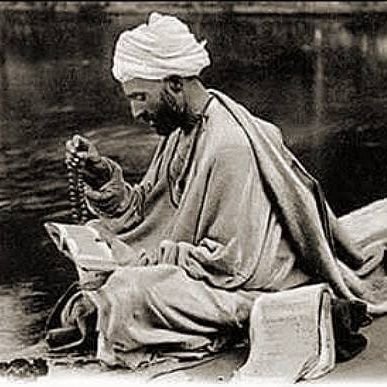
I’ve been reading the Vedas a lot recently, and what’s stood out is how it doubles as an encyclopedia as well as a religious text. Astronomy, medicine, mathematics, metallurgy, linguistics, are all woven through hymns and rituals as one body of knowledge. Simply calling it “religious” forces it into a Western category that didn’t have the apparatus to recognize what it actually was. It’s closer to a tradition of formalized epistemology in which metaphysics, observation, and language form one continuous inquiry, which as a result led Indian civilization to develop along a fundamentally different path because of it.
You can see the effect most clearly in the sciences. Around 600 BCE, the Vedic record describes a surgical procedure that matches modern rhinoplasty and is still foundational to reconstructive surgery today. Centuries before Western Europe stopped treating eclipses as supernatural, Indian scholars had calculated the circumference of the earth within 0.2% and explained eclipses as shadows. Centuries before Plato and Aristotle rejected atomism, the Vedic tradition already held that matter is composed of indivisible particles combining into binary and triatomic compounds, transformable by heat. The first formal rules for zero and negative arithmetic appear in the Vedas, along with infinite-series derivations of π, sine, and cosine centuries before Newton and Leibniz.
The interesting question is how did they get so much right, so early? My best guess is language.
The Vedic tradition is unique compared to other oral traditions as it demanded letter-perfect oral transmission across generations. Around 500 BCE, scholars composed a generative grammar of Sanskrit called Panini so rigorous it anticipates Backus-Naur form, the notation that defines programming languages today, by 2,500 years. Sanskrit is recursive, rule-based, and built to minimize ambiguity. It reads more like mathematics than English.
When you think in a language built like that, the precision of the language becomes the precision of your reasoning. The West didn’t formalize this until much later. Kant argued our categories of understanding shape what we can know, Wittgenstein wrote that the limits of language are the limits of one’s world, and Kripke showed that naming doesn’t just describe things, it constitutes what they mean and how we can reason about them. All three touch the same insight which is that thought is downstream of language.
The Vedic tradition operated on that insight thousands of years earlier. To the point that they built a whole language first and used it to think clearly about everything else after. I find that all really fascinating.
English
Cringe retweetledi

@online_a2z98400 @BJP4India Chutiye tu khud search maarle na kya mila gandu
हिन्दी

@BJP4India Modi visited many times foreign countries,
Why did Modi visit there ?
What did the public get after visiting foreign?
Modi ji you will have to answer the public,
You spent crores rupees of the public tax,
Your scheme always fails
Don't waste the public tax money,
Gaddar BJP🚫
English

A suicide bomb has killed dozens in Pakistan. Two of the train carriages overturned and caught fire due to the force of the blast, sending thick black smoke into the air, according to footage online.
trib.al/D4tL0QV
English

Why are we living? What is the purpose? What comes after this life? Why does anything exist at all? There are no universally accepted scientific answers to these questions.
The most common material explanation can feel emotionally unsettling: that life is simply a temporary biological process. One day it ends, consciousness disappears, and you cease to exist. Not only do you die, but your awareness itself vanishes. You won't even know that you no longer exist because the very thing that experiences, remembers, and feels would be gone.
For many people, that thought creates an existential vacuum. Belief in God fills that vacuum with meaning. Life becomes a journey rather than a random event. Suffering can have purpose. Death becomes a transition rather than absolute erasure. Instead of "I exist briefly and then disappear forever," it becomes "I am here for a reason and my existence has meaning beyond the physical."
Whether God exists or not is a separate debate, nor am I urging anyone to believe in God, but psychologically it is understandable why faith can make people happier. It offers answers where uncertainty can feel frightening, and certainty itself gives the mind rest.
English
Cringe retweetledi
Cringe retweetledi

Pakis are so jealous of Iranians because they wish they were 1% of us. Pakistan has no culture, no history, no empires. Pakistan’s own anthem is in Persian because Urdu is a copy and paste of any Indian language. Pakistan will only be know as India’s bitch. The only other nation worse than Pakistan is Bangladesh, because those retards chose to be Pakistan’s bitch out of all countries.
English