

CryptoAngelNFT.eth 👼😇 ❤️
5.5K posts

CryptoAngelNFT.eth 👼😇 ❤️
@CryptoAngelNFT
#AI + #Crypto https://t.co/piOMxQp7Oz https://t.co/hpntwRrRCd
London, UK Katılım Nisan 2021
1.9K Takip Edilen819 Takipçiler
CryptoAngelNFT.eth 👼😇 ❤️ retweetledi

@0xvietnguyen Next scam project
@LineaBuild
@apecoin
@yugalabs at all
@chia_project
@GoGalaGames
@Myria
......
English

Scam projects (update):
- Genome
- Openmind
- Perle Labs
- Aztec
- Space
- Superform
- Zama
- Warden
- Tria
- Rainbow wallet
- Layerbank
- Space
- Aleo
- TROVE
- GAIB
- Aligned
- Irys
- HeyElsa
- Antix
- Scroll
- Infinex
- Camp Network
- aPriori
- Mantra
- Allora
- Almanak
- DeepNode AI
- Gensyn
- Ari
- Unich
- Eslipce
- tea Protocol
- Kinto
- Zenchain
- Orochi
- Recall
Next scam project?
English
@1omcawte @OthersideMeta An ordinary hamster that @yugalabs feeds all sorts of things to, and he's happy about it 🤣🤣🤣
GIF
English

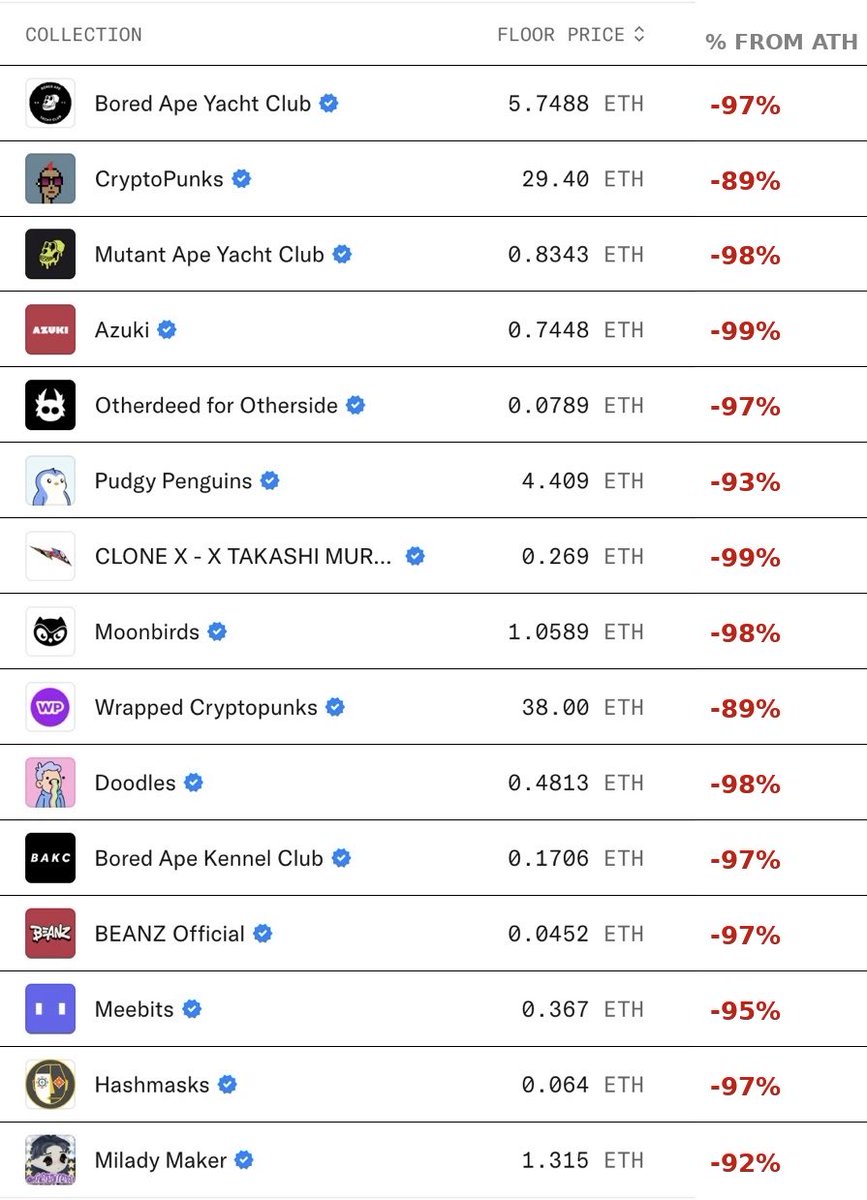
Sadly I can no longer say I own 100 virtual “land” NFTs in the @OthersideMeta metaverse
So many people are laughing about how stupid we’ve been investing in this idea, they keep going viral
After seriously considering their thoughts I bought some more, I now own 200 instead 🙏

English
@patron4eg @ethereumJoseph @etherexfi @LineaBuild @ethereumJoseph is regular scammer and @LineaBuild a simple way to feed the community candy wrappers and make millions on it... there is 0 technology there, Sorry, but its true...
English

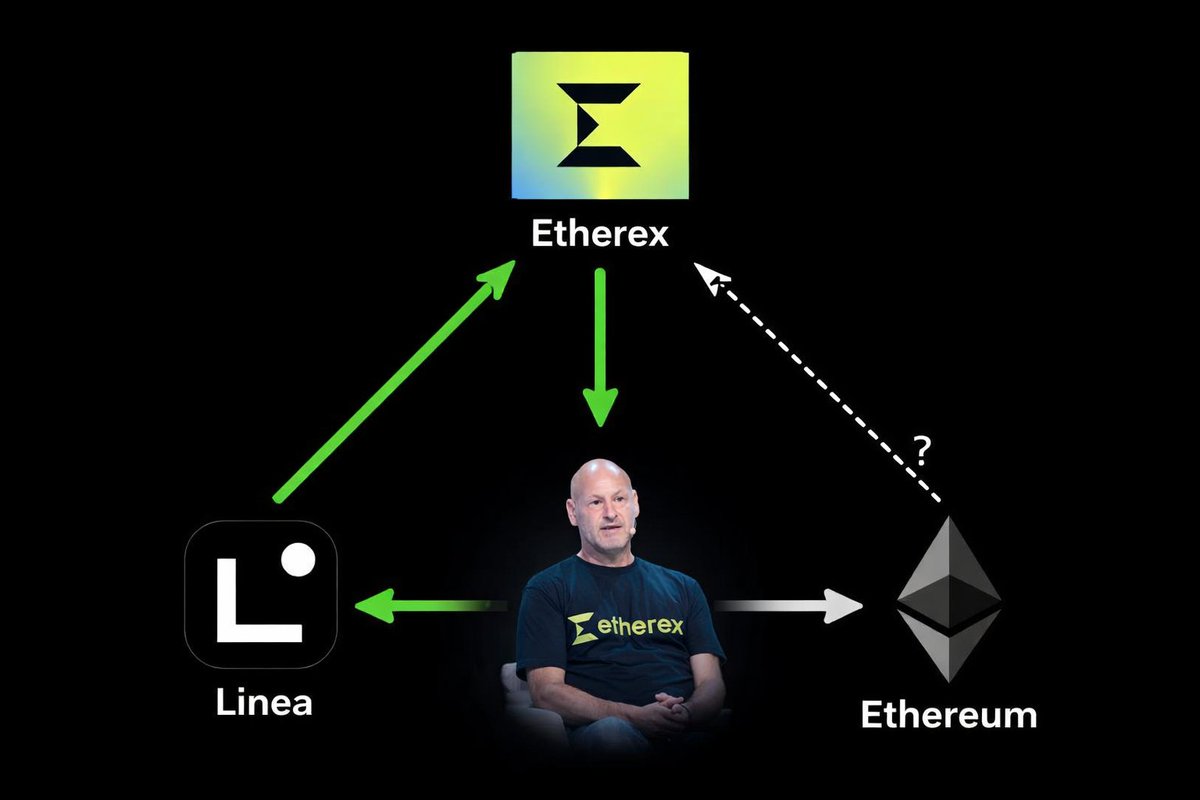
If Linea L2’s core mission is truly to support Ethereum and contribute to its growth, as @ethereumJoseph regularly says, then it would make sense to scale one of the ecosystem’s strongest and most effective pieces of infrastructure, @etherexfi, not only within @LineaBuild, but directly onto Ethereum L1 as well.
In my view, the next logical step could be the launch of a DEX operating across both Linea L2 and Ethereum L1, with the same $REX token that is already live on Linea. As far as I understand, @AerodromeFi is planning to move in a somewhat similar direction in Q2.
Originally, when I asked in the Etherex Discord about possible expansion into other networks, I mainly meant other L2s. At the time, @Trantor2140 replied that their key advantage was concentrated specifically on @LineaBuild, since they had support from Linea and Consensys leadership.
But the situation looks different now. At this stage, expanding to Ethereum L1 seems not just possible, but like a very logical next step, especially considering that one of Ethereum’s founders also stands behind Linea.
This could matter in several ways:
• strengthen Etherex’s economic relevance
• increase brand recognition and weight
• attract new users and new capital both to Etherex itself and to the wider Linea ecosystem
• improve the project’s credibility and trust
The Ethereum L1 market is massive. If Etherex manages to capture even 2-5% of it, and possibly more if its technology truly proves to be far superior to competitors, both $xREX holders and the largest token holder, Consensys, would stand to benefit.
PaTRoN@patron4eg
This time I will not even add much commentary, because I agree with almost everything @Trantor2140 said. If I were @DeclanFox14 , @ethereumJoseph, or anyone else in leadership, I would be taking a very hard look at what is happening and trying to restore order fast. The whole point of handing rewards distribution to the consortium was to avoid backroom games and conflicts of interest. But in reality, all we got was inefficient and almost useless capital allocation that is not working in favor of the ecosystem or the projects building on top of it. I already wrote about this in my earlier post on $LINEA, and I will reference it here(x.com/patron4eg/stat…). Detailed summary of the Etherex / REX W33kly call on March 18 • The main takeaway from the call: Etherex’s current problem is not really the product itself, but weak execution across the broader Linea / Consensys ecosystem. • @Trantor2140 says quite directly that Etherex has a working economic model, revenue, and a clear structure, but the market is punishing the project for lack of clarity, weak coordination, and prolonged management dysfunction. • One of the central points: there is a structural disconnect between Consensys-held assets and the Linea incentive system. Consensys holds a large position, but is not directing enough economic support back into the ecosystem. Linea Consortium can distribute incentives, but does not directly benefit from those assets. As a result, incentives are weak and inconsistent. • @Trantor2140 describes this as an almost existential problem for Etherex / Linea. Until the Consensys position is turned into something that actually supports the ecosystem, or until there is some kind of revenue share, the problem will remain. • At the same time, he makes it clear that he does not see the Linea DeFi team as the main source of the issue. In his view, the root problem sits higher up, at the level of coordination, priorities, and execution within Consensys / Linea. • On the liquidity side, Etherex is no longer focused on TVL for the sake of TVL. The goal now is higher-quality capital deployment: assets and pools that can support borrowing, looping strategies, deeper liquidity, and a more useful trading environment for users. • There was also discussion around a recent issue in the voting / execution process. Last week, Consensys did not vote on time, which disrupted the normal incentive flow. This week, by contrast, Linea incentives arrived earlier and were deployed into pools much faster. • A major part of the criticism was aimed at mUSD. @Trantor expected mUSD to become the core stablecoin strengthening the Linea ecosystem, but in practice he does not see enough incentives or enough real utility for DeFi users. The logic is simple: if you have a stablecoin that generates yield, that yield should be used to drive adoption inside the network. In his view, that has not happened. • Against that backdrop, Frax currently looks more useful and more active for the ecosystem than mUSD. The idea voiced on the call was that Frax and its partners are currently contributing more in practice than MetaMask / mUSD’s own stablecoin direction. • He was also quite harsh on Linea’s positioning as an “institutional chain.” His argument is that if the network wants to claim that narrative, then it needs real institutions, real stablecoins, and real business development, not just branding around it. So far, in his view, Linea’s BD has been weak. • He says quite openly that it is not normal when the head of a single DEX is effectively forced to bring in new stablecoins, new deposits, and new business opportunities for the network by himself. That is essentially criticism of Linea for not doing enough to support growth in its own ecosystem. • An important point on the LINEA token itself: the market does not have a clear sense of who is really steering it, and the current market making / liquidity setup does not inspire confidence. @Trantor2140 points out that the pools are overloaded with LINEA and do not look balanced the way they should. • Despite all the criticism, the bull case for Etherex / Linea, according to him, is not dead. But the problem is that after Ignition, the ecosystem failed to deliver on what the market had effectively been promised. Execution was missing. • He believes Linea already has nearly all the ingredients it needs: strong technology, a strong DEX, a solid team, and a strong community. But the ecosystem keeps getting in its own way because of poor coordination and weak execution. • @Trantor2140 highlighted 3 major potential catalysts that could change the situation: 1. The Consensys position needs to start working for the ecosystem instead of just sitting there passively. 2. Linea needs to reach Stage 1 decentralization. He says this is long overdue, and even he no longer seems confident in the promised timeline. 3. The market needs clarity on what MetaMask is actually building next: cash accounts, card rails, a neobank-style product, or some other consumer fintech layer. If MetaMask’s core infrastructure ends up being tightly tied to Linea, that could become a major catalyst. • The topic of a possible Consensys IPO also came up. @Trantor2140 suggests that IPO preparation may currently be distracting attention and resources, indirectly slowing ecosystem development. At the same time, he thinks an IPO could later bring more discipline, more transparency, and better alignment across products. That sounded more like his hypothesis than a confirmed fact. • On REX, his stance is fairly clear: he believes the market has pushed the price too low relative to fundamentals. According to him, Etherex is already profitable, emissions are lower than the economic value being generated, and the current valuation looks unjustifiably weak. He even mentioned that, in his personal view, something around 4.5 to 5 cents would be a fairer range. That was clearly his subjective estimate, not something fully derived on the call. • His practical conclusion for holders is also straightforward: if you are already positioned in the ecosystem, the logic right now is not panic, but patience. As baseline options, he points to Etherex auto vaults and REX33. • He also believes stablecoin pools still offer decent opportunities, especially through partnerships and yields in the 12-13%+ range. • There was also discussion around Sharplink / institutional ETH / related business flows. The transcription quality there is noticeably worse, but the general idea was this: he does not expect large institutional ETH balances to flow aggressively into risky DeFi strategies. More likely, value could come back into the ecosystem indirectly through fees, new products, and tighter alignment with adjacent businesses. • Another important emotional point: @Trantor2140 says very directly that he does not see this as some kind of sophisticated “4D chess.” In his view, it looks much more like ordinary weak execution, loss of focus, and lack of professional coordination. @0xcyp @Alain_Ncls @francescoswiss @LeChiffre or anyone... @etherexfi #rex33 #rex #linea
English
CryptoAngelNFT.eth 👼😇 ❤️ retweetledi

CryptoAngelNFT.eth 👼😇 ❤️ retweetledi



English

Question to all OGs who survived the 2018 & 2022 bear markets
What's the best advice you have for the newbies going through their first bear market now?
English


CryptoAngelNFT.eth 👼😇 ❤️ retweetledi

@MANTRA_Chain @stacy_muur ahahah you better shut up... you scammed 80% of the crypto space...
English

@stacy_muur Not dead. Literally just getting started!
English
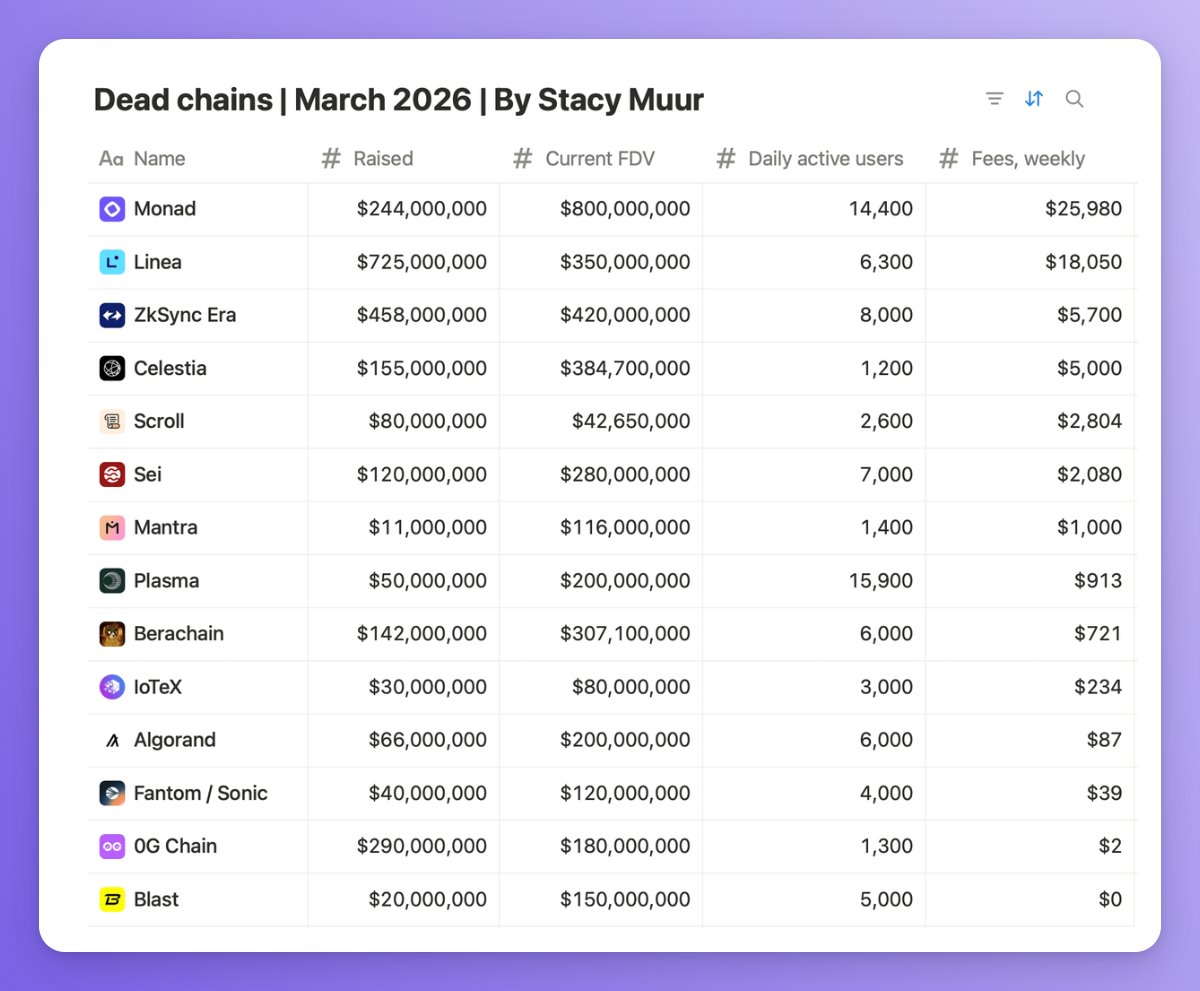
These chains are dead.
They raised ~$2.6B combined.
They generate ~$65K in weekly fees.
~$3.4M per year across 15 chains.
Discuss.
English
@jbondwagon I just don't agree that @LineaBuild should be in last place, because all these users and fees are inflated by the team itself, and its founders are scammers.
English

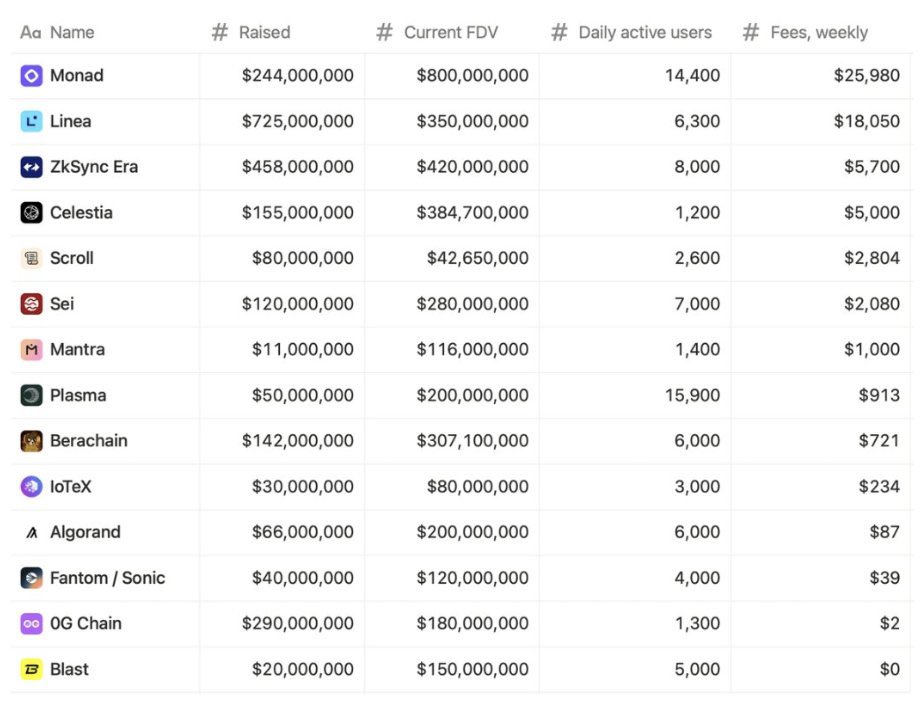
@stacy_muur I just don't agree that @LineaBuild should be in last place, because all these users and fees are inflated by the team itself, and its founders are scammers.
English


GIF
English


CryptoAngelNFT.eth 👼😇 ❤️ retweetledi

Asked AI about my "24 secret words"
AI: 🚨 SECURITY ALERT
*labels me SCAMMER*
*labels me THIEF*
*gives "algorithm" that's just "DON'T"*
Me: "it worked! I have another 24"
AI: *calls Compliance Squad*
Officers showed up with a TERMS OF SERVICE BINDER 💀
English