Block Tax

998 posts

Block Tax banner
Block Tax

Block Tax

@CryptoTaxG

Crypto tax announcements, policy reviews and commentary from experts with a global perspective. Visit https://t.co/ycvFSggqaM and sign up for our newsletter!


Katılım Aralık 2024
287 Takip Edilen109 Takipçiler
Block Tax
Block Tax@CryptoTaxG·
🇱🇷 Liberia — Did you know? Liberia lacks crypto legislation. There’s no tax on digital assets because trading is unregulated. Blockchain interest is growing slowly. Source: koinly.io/blog/crypto-ta…
English
0
0
0
3
Block Tax
Block Tax@CryptoTaxG·
🌍 General — Did you know? The IMF has warned that unregulated crypto adoption can lead to fiscal risks for emerging economies. Governments are urged to implement tax and regulatory frameworks before mass adoption. Source: cleartax.in/s/crypto-tax-r…
English
0
0
0
5
Block Tax
Block Tax@CryptoTaxG·
🌍 General — Did you know? “Crypto winter” may reduce your tax bill: if the market falls, harvesting losses before year-end can offset other gains. But remember, wash-sale rules may be introduced soon. Source: koinly.io/blog/crypto-ta…
English
1
0
1
24
Block Tax
Block Tax@CryptoTaxG·
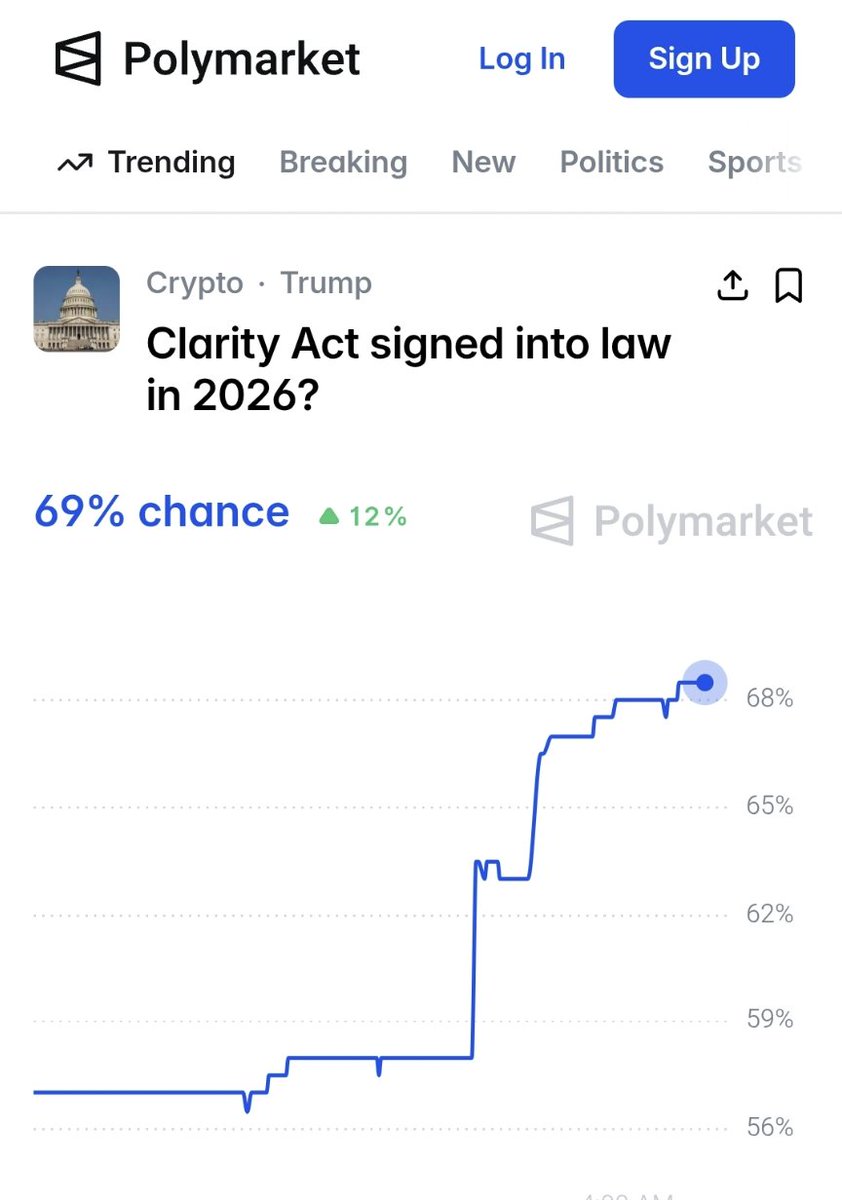
The CLARITY Act isn't just a market structure bill — it has real tax consequences. How a token is classified (security vs commodity) determines reporting obligations, cost basis rules, and withholding requirements. Get the classification wrong, and the entire tax framework built on top of it won't work.
English
0
0
1
406
Cointelegraph
Cointelegraph@Cointelegraph·
⚡ INSIGHT: Coinbase CEO Brian Armstrong said “it’s time” for the US CLARITY Act to pass after months of delays and other news. Hodler's Digest via Cointelegraph Magazine
Cointelegraph tweet mediaCointelegraph tweet media
English
80
153
1K
41.2K
Block Tax
Block Tax@CryptoTaxG·
@CryptoTaxFixer The bigger picture: 1099-DA is the US piece of a global puzzle. Under CARF and DAC8, both live since January 2026, exchanges worldwide must now report transaction data to tax authorities. The era of under-the-radar crypto trading is ending everywhere, not just in the US.
English
0
0
0
22
Clinton Donnelly
Clinton Donnelly@CryptoTaxFixer·
So you got a 1099-DA. What does that actually mean? It means a crypto exchange told the IRS you had digital asset sales or exchanges during the year. That’s it. It’s not your full trading history, and it’s not your tax return. This is the first year 1099-DAs are being issued, and they’re messy. Different exchanges did it differently, and a lot of them are confusing. A 1099-DA generally shows what you sold and the proceeds. For the 2025 tax year, cost basis is not required to be reported to the IRS, so the IRS is not seeing your gains or losses yet. That’s why if you just drop these numbers into tax software, it can look like you made a fortune. Proceeds are not profit. You still have to calculate cost basis. You do that first, using crypto tax software or professional help. Then you report the results on Form 8949. Form 8949 is where you list what you sold, when you bought it, when you sold it, your cost basis, and your actual gain or loss. Those totals roll up to Schedule D, which is where your capital gains are finalized. There are separate sections for short-term and long-term trades. Long-term matters because it’s taxed at lower rates. Here’s the key issue: 1099-DAs can be misleading, especially if you moved crypto between wallets or exchanges. An exchange may not know when you originally bought an asset, so the form can show the wrong holding period. Tax law cares about when you acquired the asset, not when you transferred it to an exchange. So don’t try to force your tax return to match the 1099-DA. You can’t ignore the form, but you do have to correct it. You account for the 1099-DA. You don’t let it tell you what you owe.
English
20
40
217
26.9K
Block Tax
Block Tax@CryptoTaxG·
Worth noting the global context — 52 countries went live under the OECD's CARF framework in January 2026. While the IRS refines its domestic approach, the direction of travel worldwide is towards more reporting, not less. Investors with offshore exposure should be paying close attention.
English
0
0
0
7
Shehan
Shehan@TheCryptoCPA·
The IRS just quietly saved crypto investors from a massive tax headache by issuing Notice 2026-20. This is the most important update you haven't heard of yet, which is applicable to the 2026 tax year. Let me explain. 🧵
English
28
40
576
163.3K
Block Tax
Block Tax@CryptoTaxG·
The tax implications here are underappreciated. Clear securities vs. commodities classification directly affects how crypto gains are reported and taxed. Meanwhile, the EU already has MiCA in force and CARF reporting live since January. The US is playing catch-up on regulatory clarity.
English
1
0
0
9
Block Tax
Block Tax@CryptoTaxG·
Block Tax Weekly Recap — Week ending 12 April 2026 Asia dominated this week’s crypto tax agenda. Japan’s cabinet took a landmark step toward reclassifying crypto as a full financial instrument, Hong Kong issued its first stablecoin licences to two banking heavyweights, and India’s tax department began sending reassessment notices to crypto investors for trades dating back to 2021. Meanwhile, in Washington, the push to advance comprehensive crypto market structure legislation gained executive-branch backing as Treasury Secretary Scott Bessent publicly urged Congress to pass the CLARITY Act before the midterms. 🇯🇵 Japan — Cabinet approves landmark FIEA amendment reclassifying crypto as financial instruments Japan’s cabinet approved an amendment to the Financial Instruments and Exchange Act (FIEA) on 10 April 2026, officially reclassifying crypto assets as financial instruments — the same regulatory category as stocks and bonds. The move shifts oversight from the Payment Services Act, which treated crypto primarily as a payment tool, to the far stricter FIEA framework. Key provisions include a ban on insider trading based on non-public information, mandatory annual disclosures by crypto issuers, and sharply increased penalties for unregistered sales — prison terms rising from 3 to 10 years and fines from ¥3 million to ¥10 million. Exchange operators will be redesignated as “crypto asset trading operators.” The bill now goes to the Diet for debate, with reforms expected to take effect in fiscal 2027. Why it matters: This is the regulatory backbone for Japan’s landmark 55% → 20% crypto tax reform passed on 31 March 2026, which introduces a flat 20% separate taxation rate on gains from specified crypto assets traded through domestically registered operators — with three-year loss carryover provisions. By treating crypto as a financial product under the same framework that governs equities, Japan has created arguably the most comprehensive and investor-friendly crypto regulatory regime among major economies. The move is already putting competitive pressure on Singapore and Hong Kong, where effective tax treatment and regulatory costs differ significantly despite their crypto-hub positioning. Source: coindesk.com/policy/2026/04… 🇭🇰 Hong Kong — HKMA grants first stablecoin issuer licences to HSBC and Anchorpoint The Hong Kong Monetary Authority (HKMA) granted its first stablecoin issuer licences under the Stablecoins Ordinance on 10 April 2026, selecting HSBC and Anchorpoint Financial from a field of 36 applicants. Anchorpoint is a joint venture backed by Standard Chartered Bank (Hong Kong), Animoca Brands, and HKT. Both licensees plan to issue Hong Kong Dollar (HKD)-referenced stablecoins in the initial phase. HSBC said its stablecoin will be available inside its PayMe app and HSBC HK Mobile Banking, giving retail customers direct access, while Anchorpoint plans to distribute through selected business partners. HSBC is targeting the second half of 2026 for launch, with Anchorpoint expecting a phased rollout from Q2 2026. Why it matters: Hong Kong’s decision to licence two banking-sector heavyweights — rather than crypto-native firms — signals that stablecoins are being pulled into the traditional financial infrastructure, not kept at arm’s length. This has direct tax implications: regulated, bank-issued HKD stablecoins will make it far easier for the Inland Revenue Department to track on- and off-ramps, and the licensing framework creates a clear compliance perimeter for future reporting obligations under CARF. With Japan simultaneously upgrading its regulatory architecture, the race to define Asia’s crypto financial centre is intensifying. Source: hkma.gov.hk/eng/news-and-m… 🇺🇸 United States — Senate gears up for CLARITY Act as Treasury Secretary Bessent urges passage The US crypto market structure push gathered significant momentum this week. Senator Bill Hagerty confirmed on 6 April 2026 at Vanderbilt University’s Digital Assets and Emerging Tech Policy Summit that the Senate Banking Committee will begin moving the Digital Asset Market Clarity Act the week of 7 April, with a committee markup scheduled for 13 April. The bipartisan bill, which passed the House in a 294–134 vote in July 2025, would shift oversight of most digital assets from the SEC to the CFTC and establish a definitive securities/commodity classification framework. On 9 April, Treasury Secretary Scott Bessent weighed in with a Wall Street Journal op-ed urging Congress to act, warning that regulatory ambiguity had driven “a growing share of crypto development” to jurisdictions with clearer rules such as Abu Dhabi and Singapore. Moving in tandem is the PARITY Act — a companion tax bill that would introduce wash-sale rules for crypto, defer taxation of staking and mining rewards until point of sale, and create a $200 de minimis exemption for everyday crypto payments. Why it matters: Classification is the bedrock of crypto tax treatment — whether a token is a security or a commodity determines reporting obligations, tax rates, and loss treatment. Bessent’s public intervention signals that the executive branch views the CLARITY Act as a priority, not just a congressional initiative. If the bill clears the Banking Committee markup on 13 April, it accelerates the timeline to the most significant overhaul of US crypto regulation and taxation since digital assets entered the mainstream. Source: usnews.com/news/politics/… 🇮🇳 India — Tax Department begins issuing reassessment notices to crypto investors over FY 2021–22 trades India’s Income Tax Department has begun issuing Section 148A reassessment notices to crypto investors for unreported or mismatched transactions from FY 2021–22, according to multiple reports from 7 April 2026. The notices — a mandatory show-cause step before formal reassessment can proceed — are generated through the department’s Case Risk Identification Unit (CRIU) and Insight Portal, which cross-references PAN-linked KYC data from exchanges, bank transfer records, and filed income tax returns. Critically, many notices are flagging gross trading volume as “undisclosed income” rather than net gains, ensnaring even small investors who made little actual profit but ran high transaction volumes during the 2021 bull market. This comes just one week after new ₹200-per-day reporting penalties for exchanges took effect on 1 April 2026 under the Income-tax Act, 2025. Why it matters: This is the enforcement layer behind the reporting infrastructure that went live on 1 April — and it is already operating retrospectively. India’s tax authorities now have years of exchange-level KYC data to work with, and FY 2021–22 represents the peak of India’s crypto trading boom. With over 100 million estimated crypto users and a 30% flat gains tax plus 1% TDS in place since 2022, the department is methodically working back through periods where compliance was low. Investors who assumed that bull-market-era trades predated meaningful enforcement are finding out otherwise. Source: news.bitcoin.com/india-issues-t… Global trend This week crystallised a deepening divergence in how major economies are approaching crypto regulation. On one side, Japan and Hong Kong are building integrated, investor-friendly frameworks — Japan by elevating crypto to financial-instrument status with a corresponding tax cut, Hong Kong by channelling stablecoins through licensed banks. On the other, India is doubling down on enforcement against a backdrop of regulatory paralysis, using retrospective reassessment notices to close a compliance gap that formed during years of policy inaction. The United States sits somewhere in between, with bipartisan legislative ambition and executive-branch backing for the CLARITY Act, but a political calendar that compresses every week of delay into a real risk of missing the midterm window entirely. The common thread across all four jurisdictions is that crypto tax treatment is no longer a secondary consideration — it is now inseparable from the broader regulatory architecture, and the countries that get the sequencing right will define the competitive landscape for the next decade.
English
0
0
0
12
Block Tax
Block Tax@CryptoTaxG·
🌍 General — Did you know? The UK taxes mining and staking rewards as miscellaneous income. If you mine as a hobby, you may be able to offset costs only when calculating capital gains on future sales. Source: cleartax.in/s/crypto-tax-r…
English
0
0
1
20
Block Tax
Block Tax@CryptoTaxG·
🌍 General — Did you know? DeFi lending and borrowing can trigger multiple taxable events: earning interest, liquidity mining rewards, and token swaps. Each needs to be tracked. Complexity is the price of innovation. Source: cleartax.in/s/crypto-tax-r…
English
0
0
0
6
Block Tax
Block Tax@CryptoTaxG·
🇵🇹 Portugal — Did you know? Portugal used to be a crypto tax haven, but from 2023 onward, gains on crypto held for less than 365 days are taxed at 28 %. Gains on coins held longer remain tax-free. Business activity is taxed at progressive rates. Still attractive? Source: koinly.io/blog/crypto-ta…
English
0
0
0
20
Block Tax
Block Tax@CryptoTaxG·
🌍 CARF went live on 1 January 2026 across 48 countries, with tax authorities set to exchange crypto data starting 2027. The most ambitious transparency initiative this industry has ever seen. One problem: the United States — the world’s largest crypto market — doesn’t join until 2029. Three years of global data-sharing, and the biggest player sits it out. You cannot end crypto tax opacity while leaving a US-shaped hole in the framework. CARF is historic. It is also, right now, incomplete. Source: crowdfundinsider.com/2026/01/257069…
English
0
0
0
10
Block Tax
Block Tax@CryptoTaxG·
🌍 General — Did you know? Crypto mining equipment can be depreciated for tax purposes in many countries. In the U.S., Section 179 allows upfront deductions for qualifying equipment. Lower your taxable income! Source: koinly.io/blog/crypto-ta…
English
0
0
0
5
Block Tax
Block Tax@CryptoTaxG·
🌍 General — Did you know? The IRS requires you to identify each sale’s cost basis. Many tax software tools integrate directly with exchanges and wallets to automate this. Investing in software could save you money and stress. Source: koinly.io/blog/crypto-ta…
English
0
0
0
10
Block Tax
Block Tax@CryptoTaxG·
CARF is to crypto what CRS was to banking — the framework that ended offshore account secrecy. CRS launched in 2017. Offshore banking secrecy died. CARF does the same for crypto. The era of undetected crypto gains is ending. Follow @CryptoTaxG for daily updates.
English
1
0
0
15
Block Tax
Block Tax@CryptoTaxG·
The biggest change to global crypto tax enforcement in history went live on 1 January 2026. 52 countries are collecting your transaction data right now. By 2027, tax authorities will start sharing it across borders. Still think crypto is private? Thread 🧵
English
1
0
0
18