Philip J. Currie Dinosaur Museum

5.1K posts

Philip J. Currie Dinosaur Museum banner
Philip J. Currie Dinosaur Museum

Philip J. Currie Dinosaur Museum

@CurrieMuseum

The Philip J. Currie Dinosaur Museum showcases the palaeontology history of the Peace Region in Wembley Alberta, Canada. Open since September 2015.

Grande Prairie, Alberta Katılım Mart 2010
1.7K Takip Edilen4.1K Takipçiler
Sabitlenmiş Tweet
Philip J. Currie Dinosaur Museum
Philip J. Currie Dinosaur Museum@CurrieMuseum·
Get ready… AAA is back and bigger than ever! 😱 Welcome to Ancient Animal Absurdity: newly renamed and ready to rumble. Now drawing from the entire animal fossil record, this year the oceans will take over. It's MARINE MADNESS! 🌊 Coming this April... dinomuseum.ca/ancient-animal…
English
0
1
3
481
Philip J. Currie Dinosaur Museum
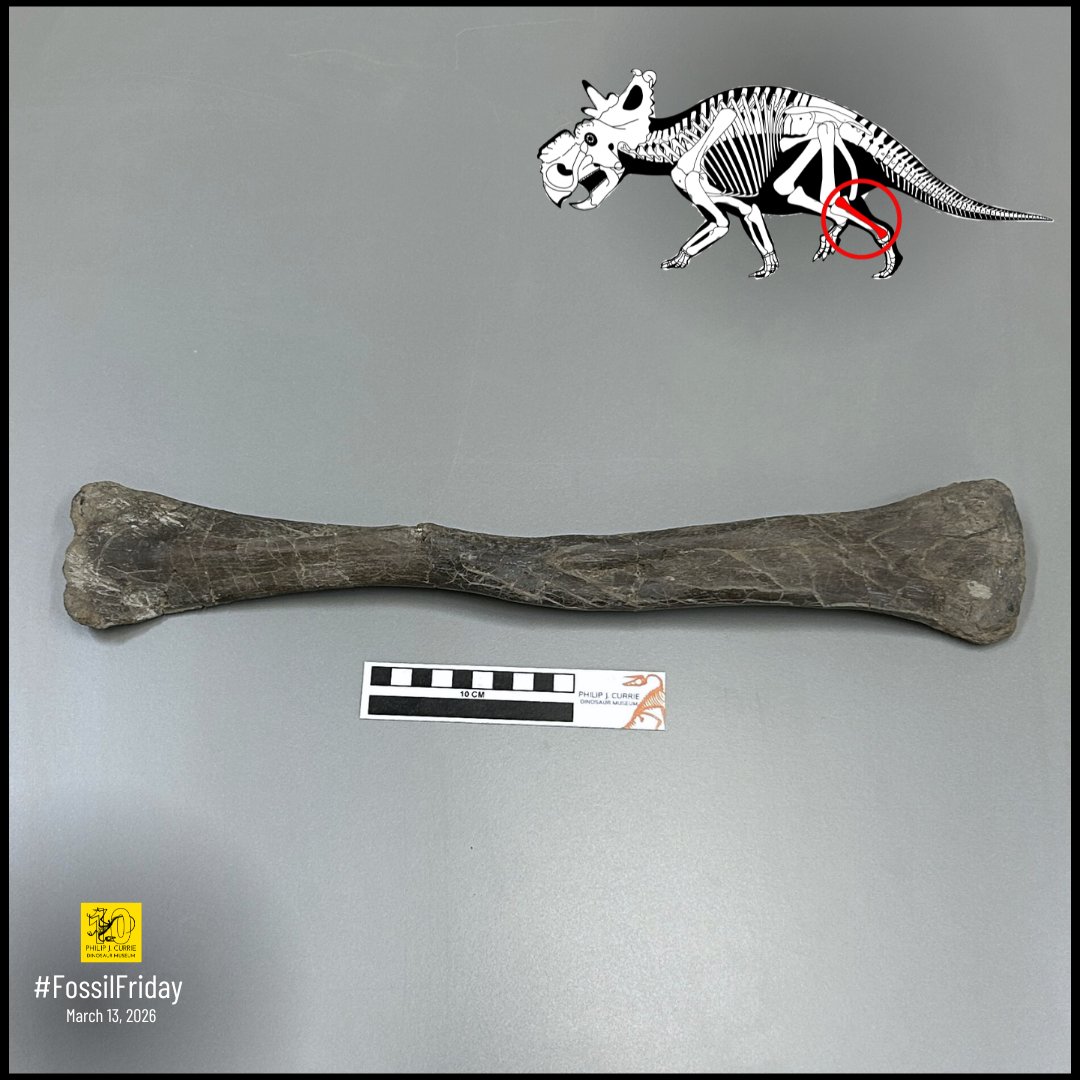
🦴 #FossilFriday This Pachyrhinosaurus lakustai fibula shows a fascinating story of taphonomy- the changes that happen to an organism after death. Buried for 72 million years, the bone developed a wave and bend. When this dinosaur was alive, this bone would have been straighter!
Philip J. Currie Dinosaur Museum tweet media
English
1
3
9
366
Philip J. Currie Dinosaur Museum
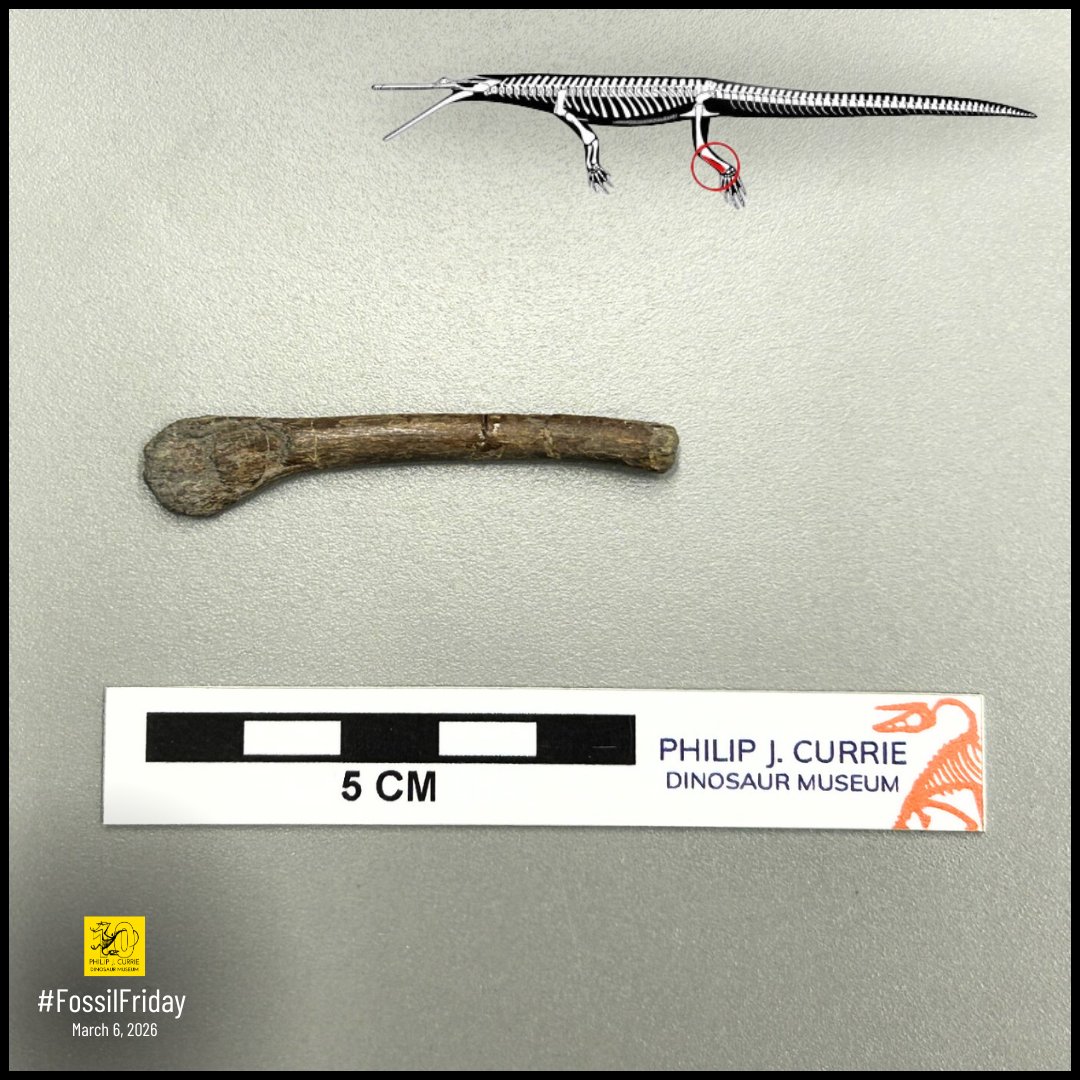
#FossilFriday! This bone is one of the most exciting we have found at Pipestone Creek. This fibula is a shin bone from an animal called a #champsosaur. These reptiles closely resembled crocodiles and had a similar lifestyle, but they were better adapted to colder environments.
Philip J. Currie Dinosaur Museum tweet media
English
1
7
42
971
Philip J. Currie Dinosaur Museum
Philip J. Currie Dinosaur Museum@CurrieMuseum·
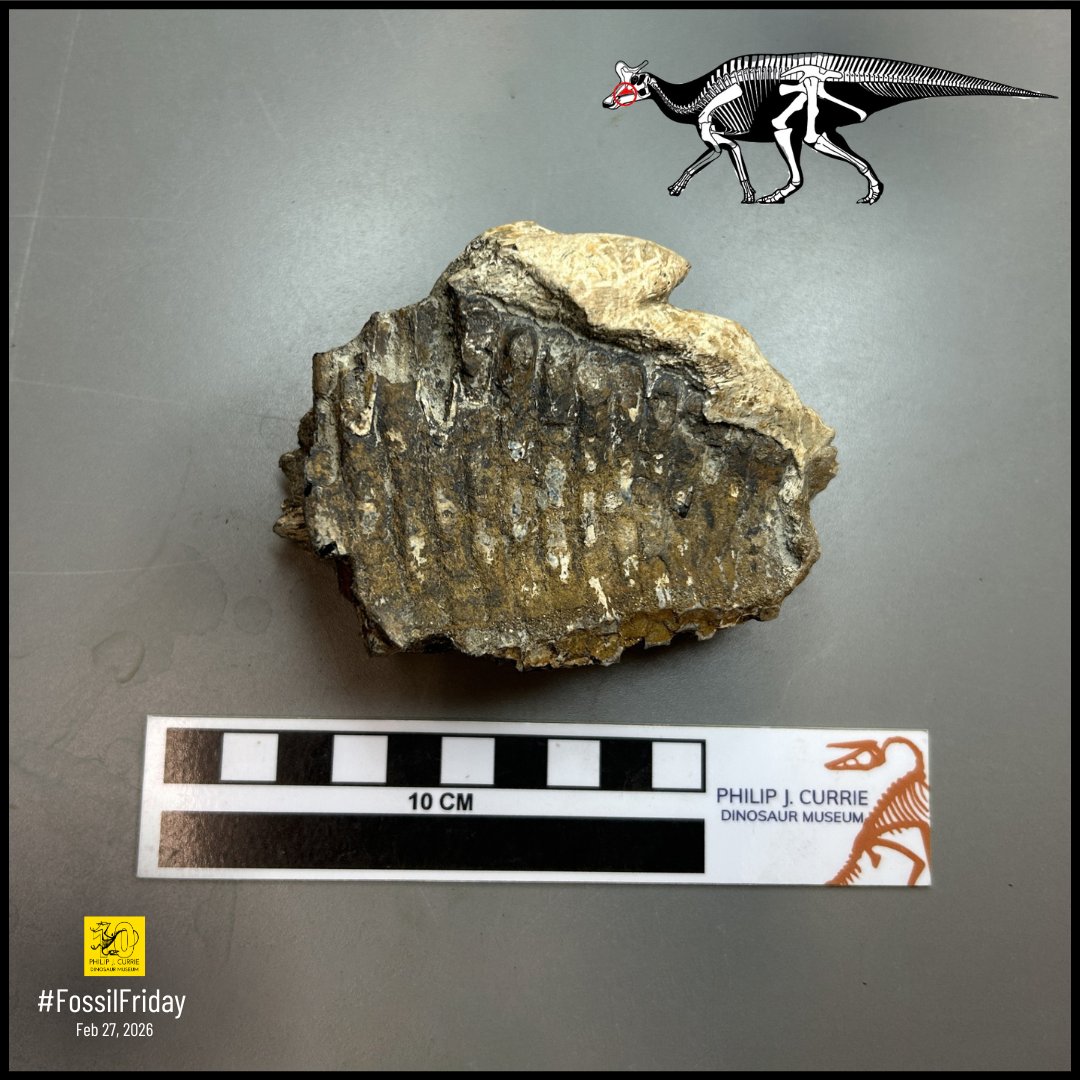
#FossilFriday! This partial upper jaw of a #hadrosaur shows an incredible feature of these dinosaurs. The inner surface of the bone has eroded, exposing the roots of the tooth row. Up to 90% of the tooth was root, demonstrating that these teeth were firmly set in the jaw!
Philip J. Currie Dinosaur Museum tweet media
English
1
4
23
578
Philip J. Currie Dinosaur Museum
Philip J. Currie Dinosaur Museum@CurrieMuseum·
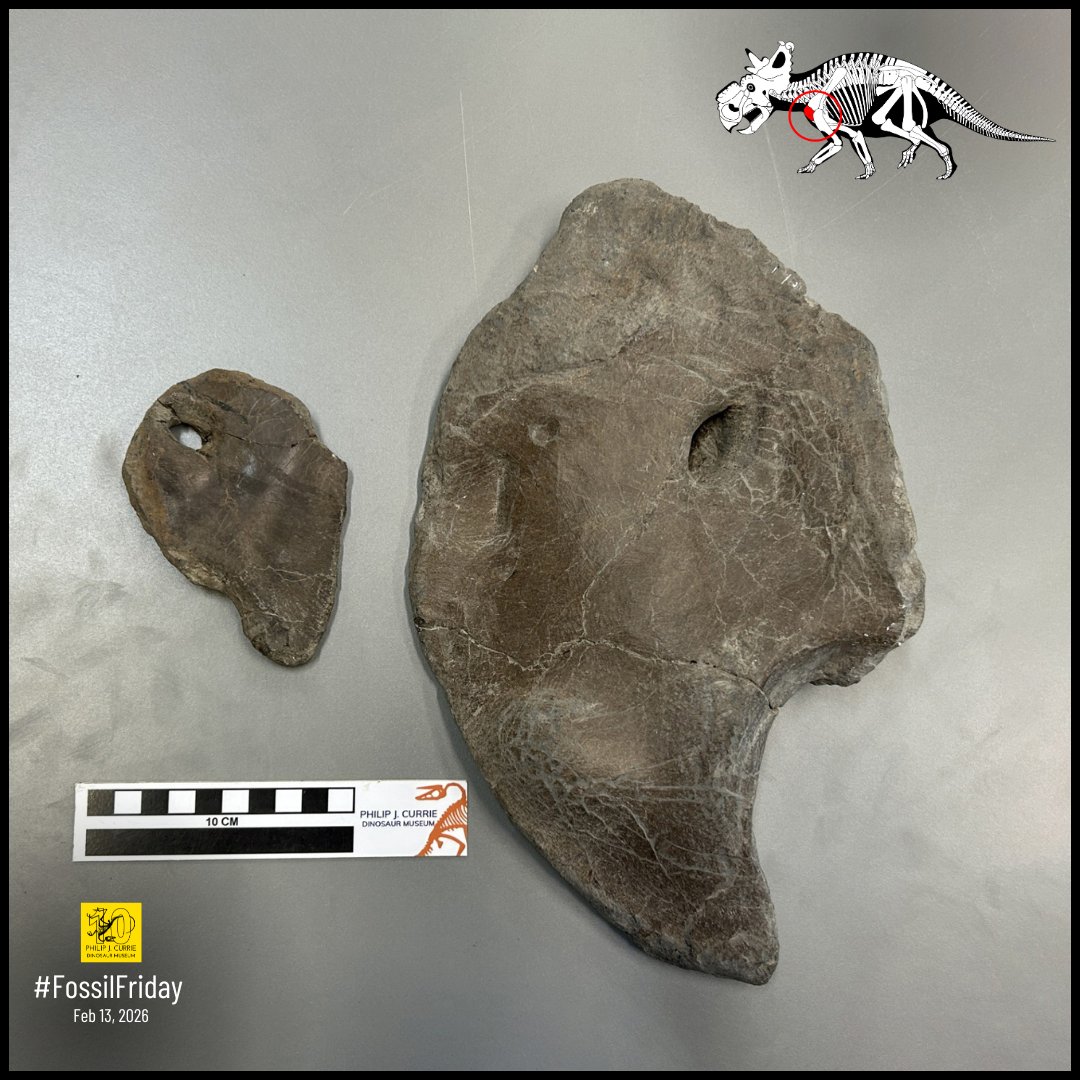
#FossilFriday! These two Pachyrhinosaurus coracoids are from the Pipestone Creek Bonebed. The coracoid forms part of the shoulder socket. These fossils span the size spectrum: the smallest we’ve found and one of the largest, an adult the size of a bison!
Philip J. Currie Dinosaur Museum tweet media
English
1
5
10
1.4K
Philip J. Currie Dinosaur Museum
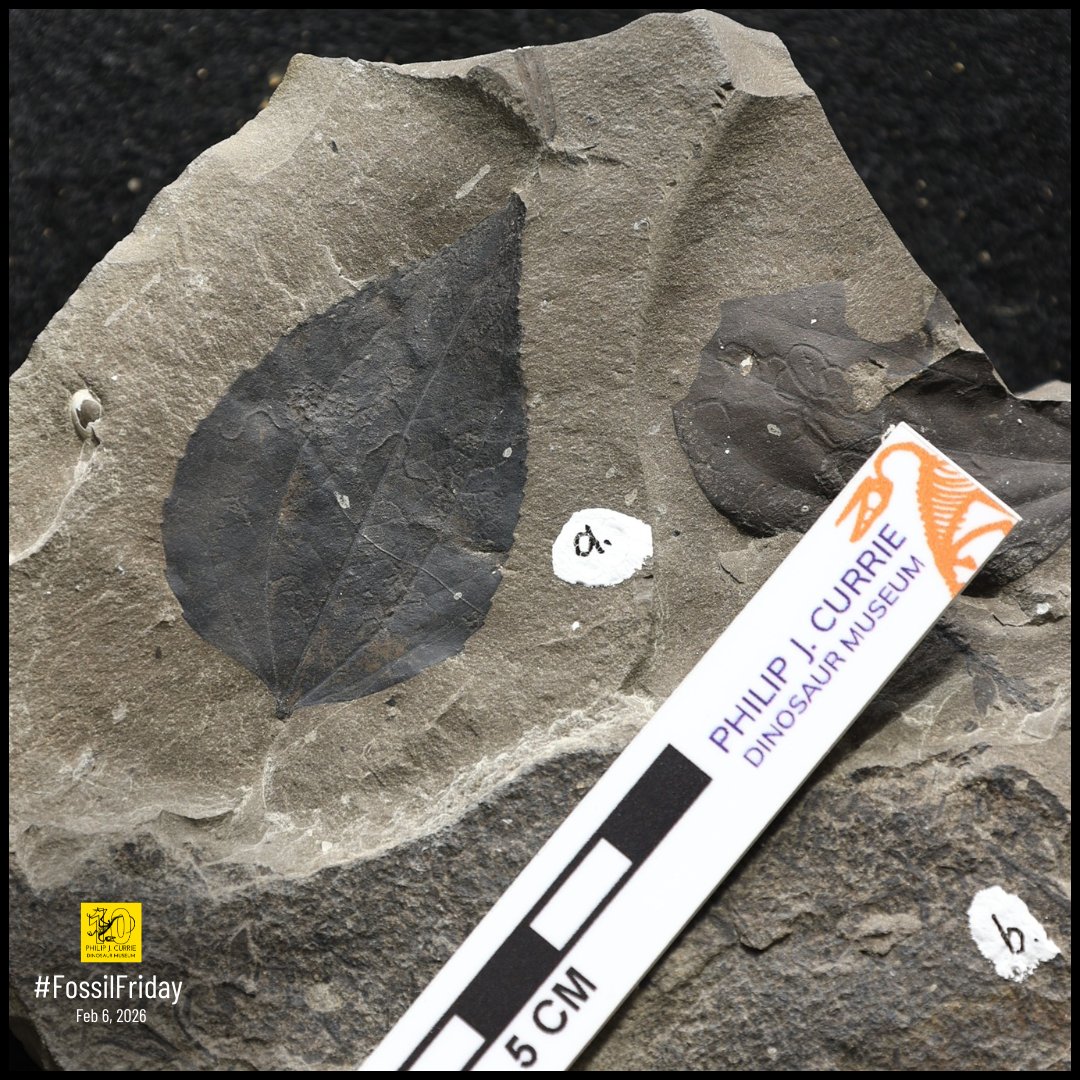
#FossilFriday! This leaf fell from a tree growing in one of the first forests in Alberta that arose following the K-Pg bolide event. The animals living in these central Albertan forests would have, for the first time in millions of years, experienced sub 0 winter temperatures.
Philip J. Currie Dinosaur Museum tweet media
English
0
3
16
353
Philip J. Currie Dinosaur Museum
#FossilFriday! This Elrathia trilobite dates back to the Cambrian Period, over 500 million years ago. Though only distantly related, trilobites closely resemble modern horseshoe crabs. Trilobites went extinct at the end of the Permian Period, about 252 million years ago.
Philip J. Currie Dinosaur Museum tweet media
English
0
6
16
492
Philip J. Currie Dinosaur Museum
#FossilFriday Dinosaur teeth, like this hadrosaur one, are common fossils because dinosaurs shed worn-out teeth during their lives. Occasionally, we find teeth with the root still attached, like this one, which typically means the tooth fell out of the jaw after the animal died.
Philip J. Currie Dinosaur Museum tweet media
English
0
4
14
359
Philip J. Currie Dinosaur Museum
#FossilFriday! Closely related to one of the most famous dinosaurs ever, T. rex, our local large carnivore Albertosaurus was smaller, but no less intimidating. More lightly built and proportionately leaner, this animal was an agile, quick predator with teeth up to 10 cm long!
Philip J. Currie Dinosaur Museum tweet media
English
0
10
35
1.2K
Philip J. Currie Dinosaur Museum
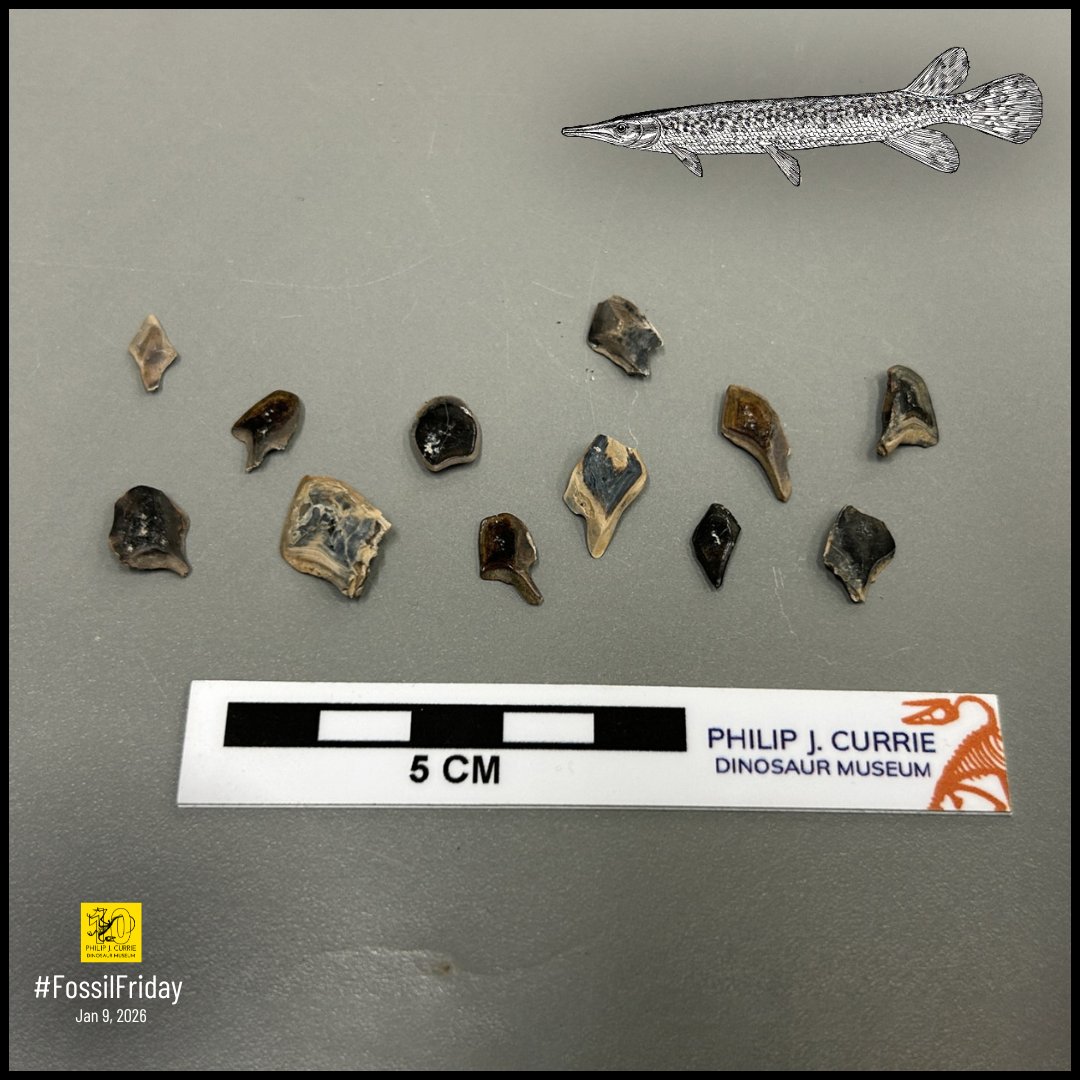
#FossilFriday! These gar scales from southern Alberta are part of our education collection. Gar scales are common fossils in many late cretaceous microfossil sites, but so far have been rare in northern Alberta. This means every fish fossil from the Peace Region is a great find!
Philip J. Currie Dinosaur Museum tweet media
English
0
2
10
629
Philip J. Currie Dinosaur Museum
#FossilFriday! With today’s snowy start to the new year, we’re highlighting our Ice Age fossil record. This baby mammoth tooth is softball-sized, but an adult’s could be as big as a volleyball! Mammoths had only four chewing teeth, but when they’re this big, they don't need more.
Philip J. Currie Dinosaur Museum tweet media
English
0
4
23
742
Philip J. Currie Dinosaur Museum
#FossilFriday! 2025 was an exceptional year of discovery. Our museum collected 1000+ fossils from the Peace Region, including dinosaurs, marine reptiles, and plants. Here are just a few of the dozens of dinosaur teeth we collected: three Albertosaurus teeth from small to large!
Philip J. Currie Dinosaur Museum tweet media
English
0
2
9
381
Philip J. Currie Dinosaur Museum
#FossilFriday! With the holidays right around the corner, this week we are highlighting a beautiful #metasequoia leaf block. This tree species is very closely related to modern redwoods and giant sequoia. Metasequoia are among the most common plant fossils we find in the region.
Philip J. Currie Dinosaur Museum tweet media
English
0
3
8
467