Center of Western Syria for Studies and Statistics

55 posts

Center of Western Syria for Studies and Statistics banner
Center of Western Syria for Studies and Statistics

Center of Western Syria for Studies and Statistics

@CwsSyria

An independent research institution established to provide a sound and reliable understanding of issues in central and western Syria.

New York, NY Katılım Aralık 2025
9 Takip Edilen822 Takipçiler
Center of Western Syria for Studies and Statistics
*إعلان هام | مركز غرب سوريا للدراسات والإحصاء* سعياً لحفظ حقوق السكان الأصليين ومحاربة التغيير الديموغرافي وتعزيز المؤسسات السياسية بالبيانات الصحيحة، يتابع مركز غرب سوريا للدراسات والإحصاء عمله في بناء قاعدة بيانات سكانية متكاملة في وسط وغرب سوريا؛ لذا ندعوكم للتواصل معنا وتزويدنا بالمعلومات الإحصائية المتوفرة لديكم بخصوص: - عدد السكان من مختلف الطوائف في قراكم، أحيائكم، والمناطق المجاورة. - المهجرون: أعدادهم وأماكن التهجير، واماكن انتقالهم.. - حالات التغيير الديموغرافي بمختلف انواعها. سيتولى الفريق الفني للمركز تدقيق كافة المعلومات ومطابقتها للواقع ولما لدينا من وثائق وبيانات لضمان أعلى درجات الدقة. *ملاحظات هامة:* - يرجى ذكر مصدر المعلومة دائماً (معلومات خاصة، مخاتير، بلديات، سجلات النفوس، موظفين، إلخ). - يرجى ارسال المعلومات بشكل واضح عند الإمكان لتسهيل عملية فرزها ومتابعتها. التواصل آمن وسري تماما، وعبر قنوات التواصل تحديدا وليس عبر التعليقات على وسائل التواصل. للتواصل: ايميل: Info@westsy-center.org فيسبوك: facebook.com/CoWSfSaS اكس: x.com/CwsSyria الموقع: westsy-center.org مركز غرب سوريا للدراسات والاحصاء
Center of Western Syria for Studies and Statistics tweet media
العربية
8
13
45
4K
Center of Western Syria for Studies and Statistics
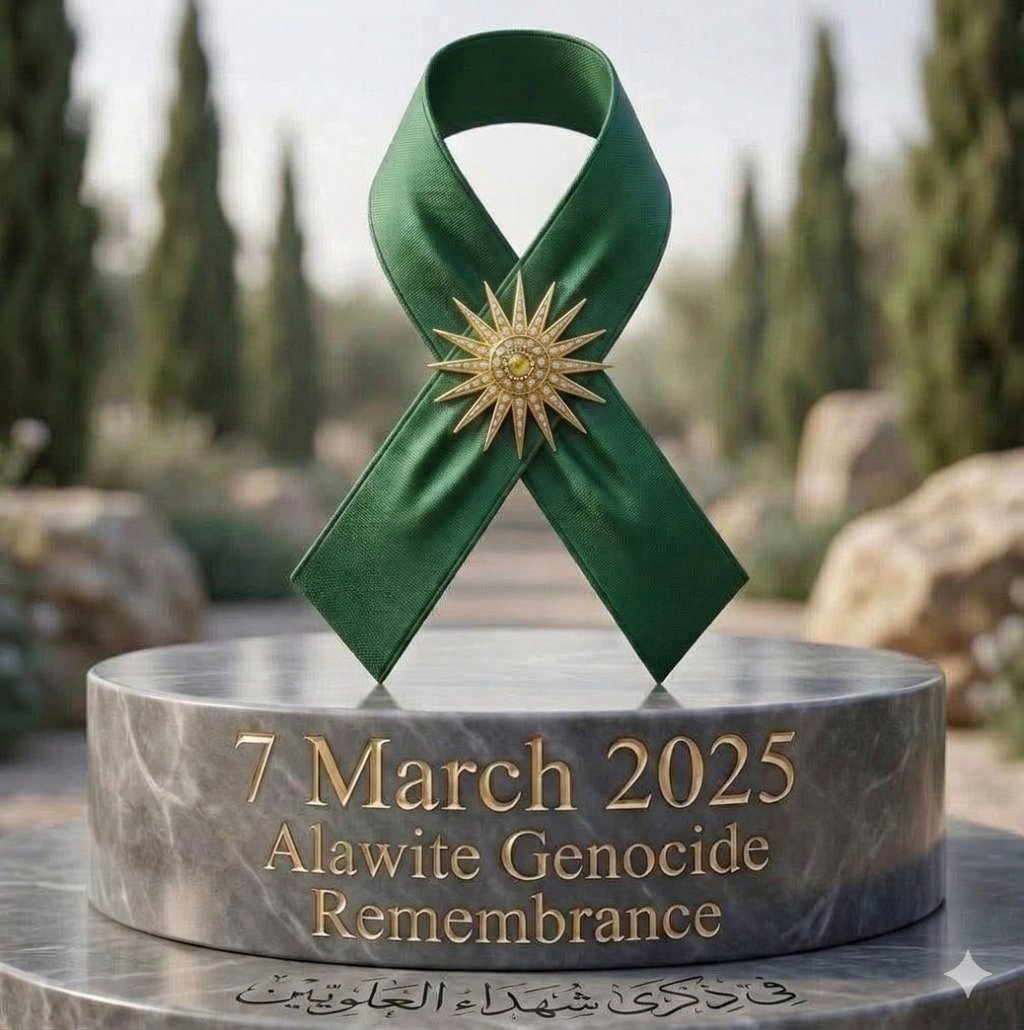
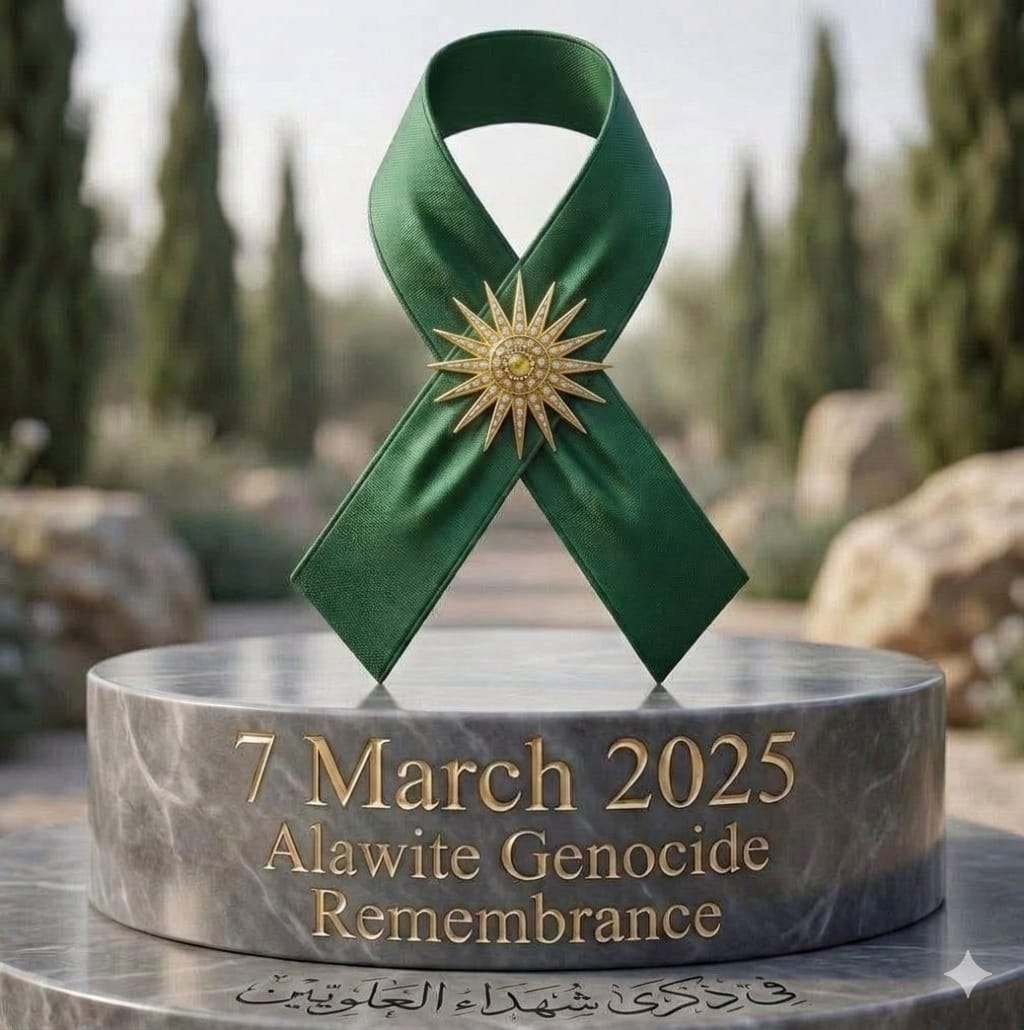
ينزف التاريخ من شقوق القرى الصامتة، حيث الأسماء التي كانت تُنادى يوماً بالحب، باتت الآن محفورة على حجر بارد. نحن لا نتذكر التواريخ فحسب؛ بل نتذكر الأحلام التي لم تكتمل، ضحكات الأطفال المسروقة، ورائحة الأرض الممزوجة بدموع الأمهات. الفراغ الذي خلفه الراحلون هو فجوة لا يمكن للزمن ردمها. الرحمة للأرواح التي لم تجد في الدنيا سلاماً، وعسى موازين العدالة ألا تنسى يوماً ثقل دماء الأبرياء - في الذكرى المهيبة للمجازر الإرهابية التي ارتكبتها السلطات الحاكمة المؤقتة في دمشق ضد العلويين -
Center of Western Syria for Studies and Statistics tweet media
العربية
2
14
83
1K
Center of Western Syria for Studies and Statistics
History bleeds through the cracks of silent villages, where names once called out in love are now etched in cold stone. We do not just remember the dates; we remember the unfinished dreams, the stolen laughter of children, and the scent of earth mixed with the tears of mothers. The void left behind is a canyon that time cannot bridge. May the souls of the departed find the peace that the world denied them, and may the scales of justice never forget the weight of their blood. - On the solemn commemoration of the terrorist massacres committed by the temporary ruling authorities in Damascus against the Alawites -
Center of Western Syria for Studies and Statistics tweet media
English
0
5
44
463
Center of Western Syria for Studies and Statistics
English below مع ختام عرض النتائج، يعلن مركز غرب سوريا للدراسات والإحصاء إسدال الستار على الموجة الأولى من استبيان "النبض العام لدى العلويين في سوريا" وهو جهد بحثي سعى إلى الإصغاء الجاد لصوت الناس كما هو، بدلا من وضع الافتراضات. في هذه الموجة حاولنا مقاربة أبرز القضايا والهواجس التي تشغل المكوّن العلوي في وسط وغرب سوريا، بمنهجية تقوم على الدقة العلمية والمسؤولية المهنية. وما نُشر لا يمثّل نهاية النقاش، بل بدايته؛ إذ إن المعطيات التي كشفتها النتائج تفتح أسئلة عميقة اكثر مما تقدّم إجابات نهائية، وهو ما يشكّل أساساً لعمل بحثي مستمر وأكثر عمقاً. يتوجّه المركز بجزيل الشكر إلى من شارك وأسهم في هذا الاستبيان، فبدون هذا التفاعل لا يكتمل أي جهد إحصائي أو بحثي. قسم أبحاث الرأي العام بإدارة: د. جود منصور، دكتوراه في الرياضيات التطبيقية وتحليل البيانات د. سام سلطان، دكتوراه في النمذجة الاحصائية وتحليل البيانات. مركز غرب سوريا للدراسات والإحصاء With the conclusion of the results presentation, the Center of Western Syria for Studies and Statistics announces the completion of the first wave of its "Syrian Alawites Pulse Survey". This research effort aimed to listen attentively to the voices of the people as they are, rather than relying on assumptions. In this wave, we attempted to address the most prominent issues and concerns of the Alawite community in central and western Syria, employing a methodology based on scientific rigor and professional responsibility. The published results do not represent the end of the discussion, but rather its beginning. The data revealed by the results raises deeper questions than it provides definitive answers, thus forming the basis for ongoing and more in-depth research. The Center extends its sincere gratitude to all who participated in and contributed to this survey. Without such engagement, no statistical or research effort would be complete. Public Opinion Research Department, managed by: Dr. Joud Mansour, PhD in Applied Mathematics and Data Analysis Dr. Sam Sultan, PhD in Statistical Modeling and Data Analysis Center of Western Syria for Studies and Statistics
Center of Western Syria for Studies and Statistics tweet mediaCenter of Western Syria for Studies and Statistics tweet media
العربية
0
4
35
829
Center of Western Syria for Studies and Statistics
ضمن برنامج المعادلة الصعبة، استضافت الإعلامية رشا موسى الأستاذ مازن محمد الناشط المدني وعضو مركز غرب سوريا للدراسات والاحصاء، للحديث عن عمل المركز ونشاطاته البحثية، فريق العمل، ودور المركز في رصد التغيرات الديمغرافية وعمليات التهجير التي شهدتها مناطق غرب ووسط سوريا، إضافة إلى قضايا وشؤون أخرى ذات صلة. #Alawites #Syria #CWS #SAPS2026 #العلويون #سوريا #مركز_غرب_سوريا #سابس2026 اللقاء الاول في رابط اليوتيوب ادناه youtu.be/Yb4KBUGGLqM?si…
YouTube video
YouTube
العربية
1
5
29
2.5K
Center of Western Syria for Studies and Statistics
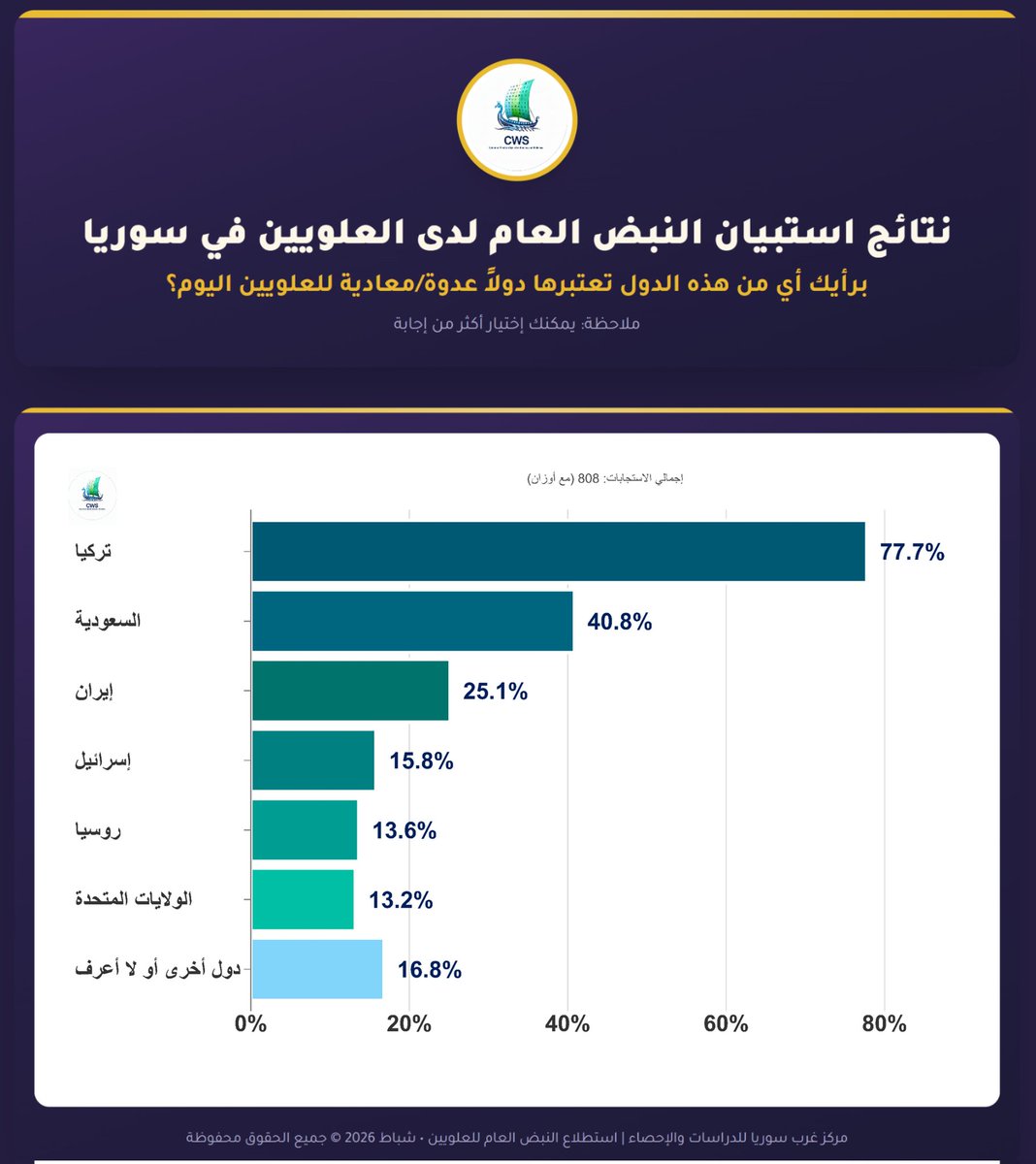
English below خريطة الخصوم: تركيا في الصدارة بفارق كبير… ثم السعودية وإيران Perceived Adversaries Map: Turkey Far Ahead—Followed by Saudi Arabia and Iran ضمن “استبيان النبض العام لدى العلويين في سوريا” الذي أجراه مركز غرب سوريا للدراسات والإحصاء، طُرح سؤال حول الدول التي يعتبرها العلويون دولاً معادية للعلويين اليوم، مع ملاحظة أن السؤال يسمح باختيار أكثر من إجابة. أظهرت النتائج أن تركيا جاءت في المرتبة الأولى وبفارق كبير (77.7%)، تلتها السعودية (40.8%)، ثم إيران (25.1%). وجاءت بعد ذلك إسرائيل (15.8%)، ثم روسيا (13.6%) والولايات المتحدة (13.2%). بينما اختار (16.8%) خيار “دول أخرى أو لا أعرف”. الدلالة الأبرز هنا هي الوضوح العالي في تحديد الخصم الأساسي: فنتيجة تركيا مرتفعة جداً مقارنة ببقية الخيارات، ما يشير إلى أن صورتها كطرف “معادٍ” تبدو الأكثر رسوخاً في ذهن شريحة واسعة من العلويين. وفي المقابل، توزعت بقية الإجابات على عدة دول بنسب أقل، ما يعكس أن مفهوم “العداء” لدى جزء من العلويين قد يكون متعدد المصادر وليس محصوراً بجهة واحدة. كما أن انخفاض خيار “دول أخرى أو لا أعرف” نسبياً (16.8%) يوحي بأن العلويين كانوا أكثر حسماً عند سؤال “من هو العدو؟” مقارنةً بأسئلة “من يتوافق مع مصالحنا؟” أي أن تحديد الخصوم يبدو أسهل وأكثر اتفاقاً من تحديد الحلفاء. As part of the “Syrian Alawites Pulse Survey (SAPS)” conducted by the Center of Western Syria for Studies and Statistics, respondents were asked which countries they consider hostile/enemy countries to Alawites today, with the note that the question allows multiple selections. Results show Turkey overwhelmingly ranked first (77.7%), followed by Saudi Arabia (40.8%) and Iran (25.1%). Lower shares selected Israel (15.8%), Russia (13.6%), and the United States (13.2%). Meanwhile, (16.8%) chose “other countries or don’t know.” The strongest signal is the high clarity around a primary perceived adversary: Turkey’s figure is far above all others, suggesting it is the most firmly established “hostile” actor in many Alawites’ perceptions. Beyond that, responses spread across several countries at lower levels, indicating that for some, hostility is seen as multi-sourced rather than tied to a single actor. The relatively lower “other/don’t know” share (16.8%) also suggests Alawites were more decisive when identifying adversaries than when identifying aligned countries—meaning perceived enemies are easier to name than perceived allies. #Alawites #Syria #Survey #CWS #SAPS2026 #العلويون #سوريا #استطلاع_رأي #مركز_غرب_سوريا #سابس2026
Center of Western Syria for Studies and Statistics tweet mediaCenter of Western Syria for Studies and Statistics tweet media
العربية
0
8
57
5.2K
Center of Western Syria for Studies and Statistics
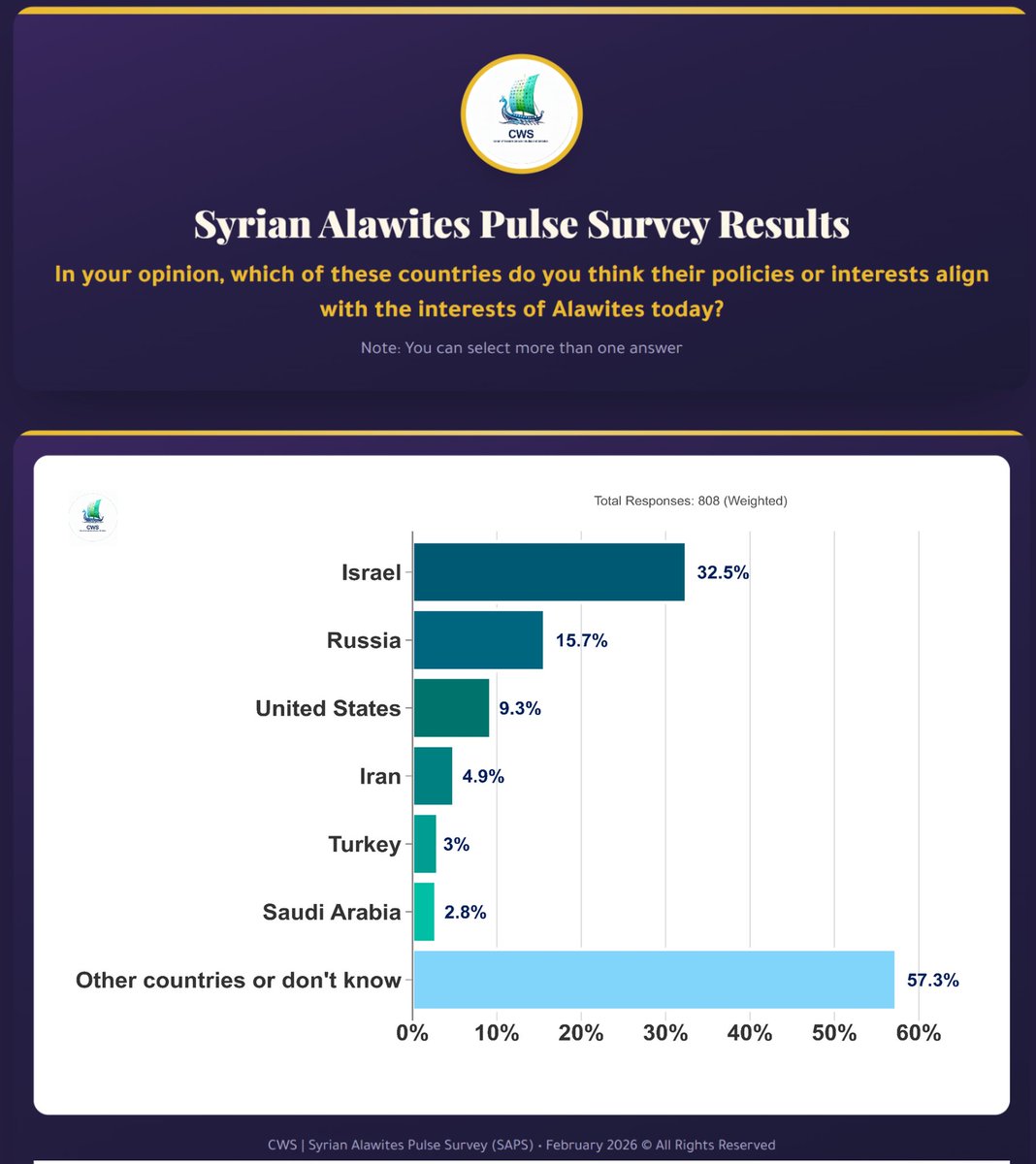
English below بوصلة المصالح الخارجية: أغلبية خارج القوائم… وأعلى اختيار يتجه نحو إسرائيل External Alignment Compass: Most Choose “Other/Don’t Know” — Israel Leads Among Named Countries ضمن “استبيان النبض العام لدى العلويين في سوريا” الذي أجراه مركز غرب سوريا للدراسات والإحصاء، طُرح سؤال حول الدول التي يعتقد العلويون أن سياساتها أو مصالحها تتوافق مع مصالح العلويين اليوم، مع ملاحظة أن السؤال يسمح باختيار أكثر من إجابة. أظهرت النتائج أن (57.3%) من العلويين لم يختارو دولة بعينها وفضّلوا إجابةً مفتوحة أو غير محسومة. في المقابل جاءت إسرائيل في المرتبة الأولى بنسبة (32.5%)، تلتها روسيا (15.7%)، ثم الولايات المتحدة (9.3%)، فيما حلت إيران (4.9%)، وتركيا (3.0%)، والسعودية (2.8%) في المراتب الأخيرة. تشير النتائج إلى صورة ذهنية غير مستقرة أو غير متفق عليها بشأن “الحليف الخارجي”، وربما إلى تفضيل عدم ربط المصالح بجهة دولية بعينها، أو إلى شعور بأن الخيارات المعروضة لا تمثل تصورهم بالكامل. من جهة اخرى، يظهر تصدُّر إسرائيل للنتائج بفارق واضح إلى أنّ جزءًا معتبراً من العلويين يرى في اسرائيل الجهة ذات المصلحة على تغيير المعادلات في المنطقة في اتجاهات يرونها أقرب لمصلحتهم. يضع العلويون روسيا والولايات المتحدة بعد اسرائيل كدول قادرة على التأثير لصالحهم، بينما لا يرون توافقاً في المصالح مع إيران وتركيا والسعودية. As part of the “Syrian Alawites Pulse Survey (SAPS)” conducted by the Center of Western Syria for Studies and Statistics, a question was posed regarding the countries whose policies or interests, Alawites believe, align with their interests today. It should be noted that the question allowed for multiple answers. The results showed that 57.3% of Alawites did not choose a specific country and preferred an open or undecided answer. In contrast, Israel came in first place with 32.5%, followed by Russia (15.7%), then the United States (9.3%). Iran (4.9%), Turkey (3.0%), and Saudi Arabia (2.8%) ranked last. The results point to an unstable or inconsistent perception of an “external ally,” perhaps reflecting a preference for not aligning interests with a specific international actor, or a feeling that the available options do not fully represent their vision. On the other hand, Israel's clear lead in the results indicates that a significant segment of the Alawites view Israel as having the interest and the ability to shift regional dynamics in directions they perceive as more favorable to their interests. The Alawites place Russia and the United States after Israel as countries capable of influencing events in their favor, while they do not see a convergence of interests with Iran, Turkey, and Saudi Arabia. #Alawites #Syria #Israel #USA #SAPS2026 #العلويون #سوريا #استطلاع_رأي #مركز_غرب_سوريا #سابس2026
Center of Western Syria for Studies and Statistics tweet mediaCenter of Western Syria for Studies and Statistics tweet media
6
12
61
3.9K
Center of Western Syria for Studies and Statistics
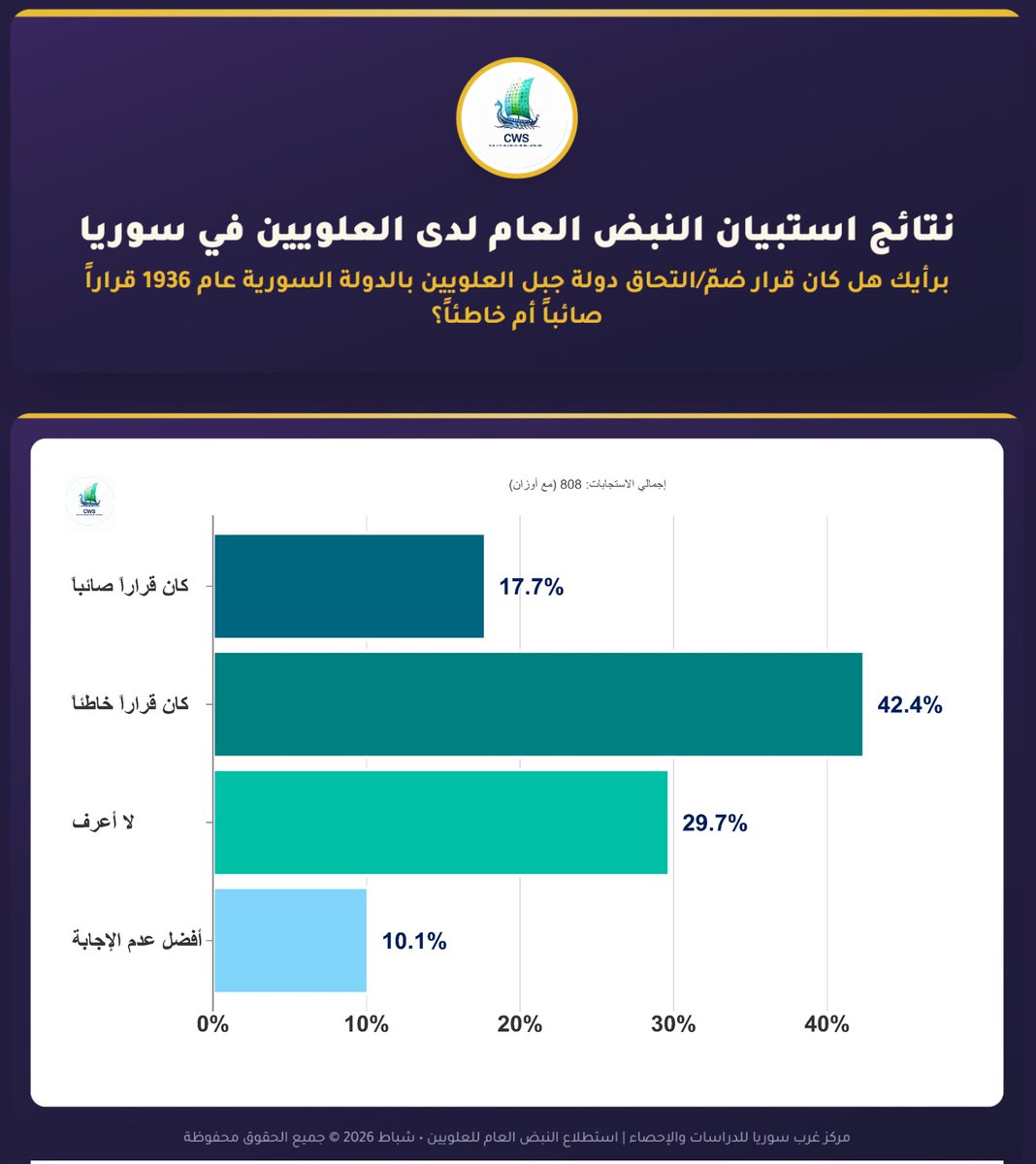
English below ضم دولة العلويين الى سوريا - إرث عام 1936 The Annexation of the Alawite State to Syria – The legacy of 1936 ضمن “استبيان النبض العام لدى العلويين في سوريا” الذي أجراه مركز غرب سوريا للدراسات والإحصاء، طُرح سؤال تاريخي سياسي مباشر حول تقييم قرار ضم دولة العلويين إلى لدولة السورية عام 1936. أفاد (42.4%) بأن القرار كان خاطئاً، فيما رأى (17.7%) أنه كان قراراً صائباً. في المقابل، قال (29.7%) بأنهم لا يعرفون الإجابة، وفضّل (10.1%) عدم الإجابة. تظهر النتائج ان من يعتبرون القرار خاطئاً تتجاوز بوضوح نسبة من يعتبرونه صائباً (فارق يقارب 24.7 نقطة مئوية)، ما يشير إلى أن جزءاً معتبراً من المجتمع العلوي يعيد النظر في “معنى” ذلك الخيار التاريخي على ضوء ما تلاه من نتائج وتحولات اللافت هنا أن النتيجة لا تعكس فقط “تقييماً سلبياً” للقرار، بل تكشف أيضاً عن مساحة كبيرة من عدم الحسم، فقرابة اربعين بالمئة لم يقدّموا حكماً واضحاً (لا أعرف + أفضل عدم الإجابة). هذا يدل على أن العلويين لم يتلقوا السؤال كمجرد تقييم تاريخي بارد، بل ربطوه بتجارب لاحقة ومعقدة، اصبحت معها الإجابة أقرب إلى موقف سياسي/وجداني وليس فقط قراءة تاريخية. As part of the “Syrian Alawites Pulse Survey (SAPS)” conducted by the Center of Western Syria for Studies and Statistics, a direct historical and political question was posed regarding the evaluation of the decision to annex the Alawite State to the Syrian state in 1936. 42.4% stated that the decision was wrong, while 17.7% considered it correct. In contrast, 29.7% said they did not know, and 10.1% preferred not to answer. The results clearly show that those who consider the decision wrong outnumber those who consider it correct (a difference of approximately 24.7 percentage points), indicating that a significant segment of the Alawite community is reconsidering the “meaning” of that historical choice in light of subsequent results and developments. What's striking here is that the result not only reflects a "negative assessment" of the decision, but also reveals a significant degree of indecisiveness: nearly forty percent did not offer a clear judgment (I don't know + I prefer not to answer). This indicates that the Alawites did not receive the question as a mere cold historical assessment, but rather linked it to subsequent and complex experiences, making the answer more of a political/emotional stance than simply a historical interpretation. #Alawites #Syria #Survey #CWS #SAPS2026 #العلويون #سوريا #استطلاع_رأي #مركز_غرب_سوريا #سابس2026
Center of Western Syria for Studies and Statistics tweet mediaCenter of Western Syria for Studies and Statistics tweet media
العربية
2
5
52
1.3K
Center of Western Syria for Studies and Statistics
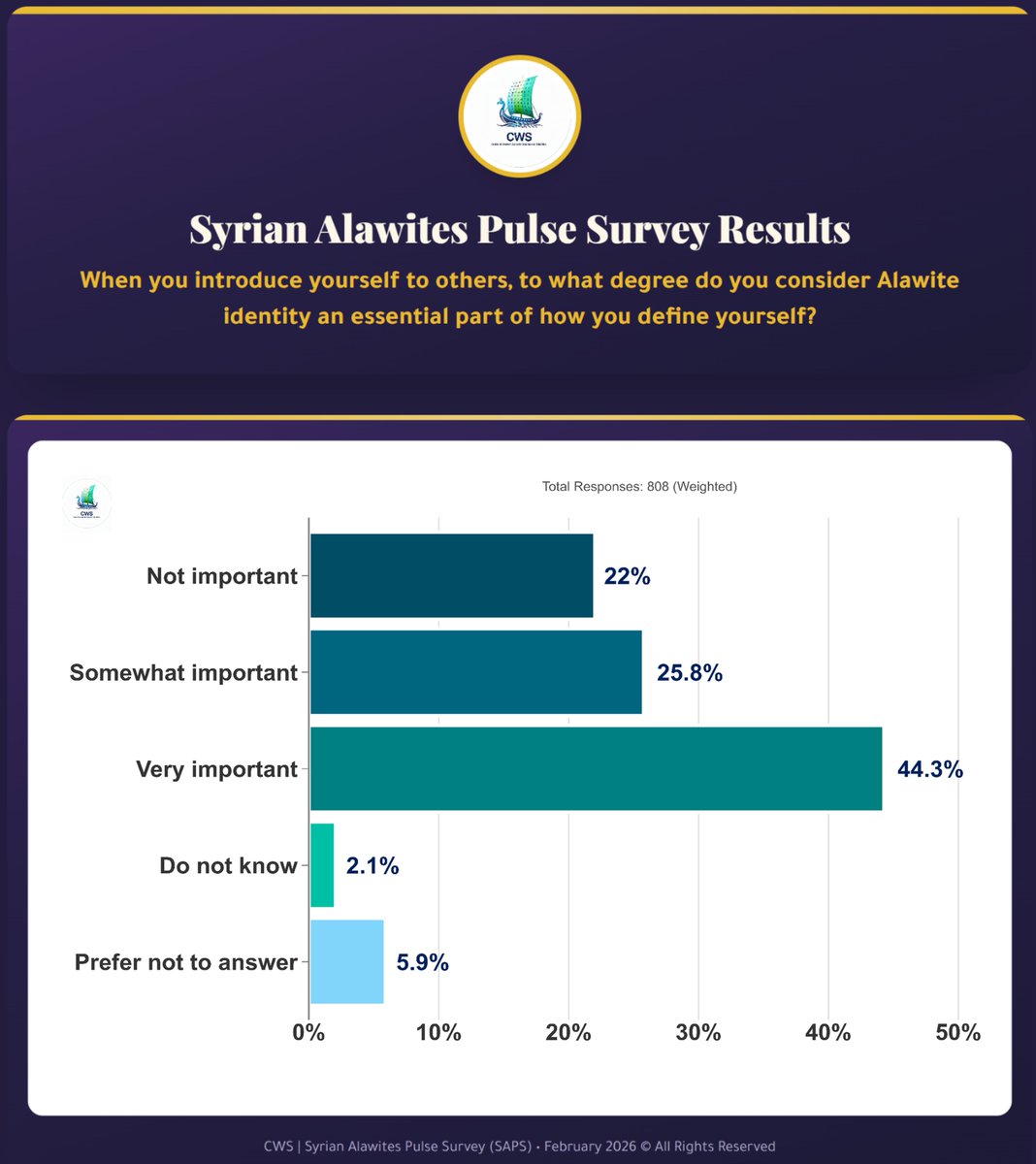
English below أهمية الهوية العلوية في تعريف الذات: صعود تحت الضغط… The importance of alawite identity in self-definition: Rising under pressure… ضمن “استبيان النبض العام لدى العلويين في سوريا” الذي أجراه مركز غرب سوريا للدراسات والإحصاء، طرحنا سؤالاً حول أهمية الهوية العلوية كجزء من تعريف العلوي لنفسه امام الآخرين. أفاد (44.3%) من العلويين بأن الهوية العلوية “مهمة جداً” في تعريفهم عن أنفسهم، و(25.8%) بأنها “مهمة إلى حد ما”. في المقابل أجاب (22%) بأنها “غير مهمة”. تُظهر هذه النتائج أن الهوية العلوية تحتل موقعًا بارزاً في تعريف الذات لدى الأغلبية (70.1% “مهمة جداً/إلى حد ما”)، مع بقاء شريحة معتبرة (22%) لا تراها عنصراً حاسماً. تصف هذه النتائج مرحلة يعيش فيها العلويون حيث نلاحظ عاملين متقاطعين معاً: من جهة، تتفق هذه النتيجة مع نتائج أخرى في الاستبيان تُبرز أولوية “صون الهوية والخصوصية الثقافية” لدى العلويين، وتظهر بالتالي كنتيجة لأثر للعنف والمجازر على التجربة الجمعية للعلويين، ما يدفع بطبيعة الحال إلى رفع وزن الهوية كآلية حماية لدى المجتمع. ومن جهة ثانية، لا يتحول التمسك بالهوية هنا إلى انغلاق كامل؛ إذ تُظهر نتائج أخرى استمرار نظرة إيجابية للتنوع الديني/المذهبي، وارتفاع قبول الزواج المختلط بدرجاته المختلفة. بمعنى آخر: الهوية تصبح أكثر حضوراً كحاجة دفاعية، مع بقاء مساحة معتبرة للانفتاح الاجتماعي. As part of the “Syrian Alawites Pulse Survey (SAPS)” conducted by the Center of Western Syria for Studies and Statistics, we posed a question about the importance of Alawite identity as a component of how Alawites define themselves to others. 44.3% of Alawites reported that their Alawite identity is “very important” in defining themselves, and 25.8% said it is “somewhat important.” In contrast, 22% answered that it is “not important.” These results show that Alawite identity occupies a prominent position in the self-definition of the majority (70.1% “very/somewhat important”). On the other hand, a significant segment (22%) does not consider it a decisive element. These results describe a phase in which Alawites are living, where we notice two simultaneous facts: On one hand, this result aligns with other findings in the survey highlighting the priority given to “preserving identity and cultural distinctiveness” among Alawites. It thus appears as a consequence of the impact of violence and massacres on the collective experience of the Alawites, which naturally leads to an increased emphasis on identity as a protective mechanism within the community. On the other hand, this adherence to identity does not translate into complete isolation. Other results show a continued positive view of religious/sectarian diversity and a high degree of acceptance of intermarriage. In other words, identity becomes more prominent as a defensive necessity, while a considerable space for social openness remains. #Alawites #Syria #Survey #CWS #SAPS2026 #العلويون #سوريا #استطلاع_رأي #مركز_غرب_سوريا #سابس2026
Center of Western Syria for Studies and Statistics tweet mediaCenter of Western Syria for Studies and Statistics tweet media
العربية
0
8
32
958
Center of Western Syria for Studies and Statistics
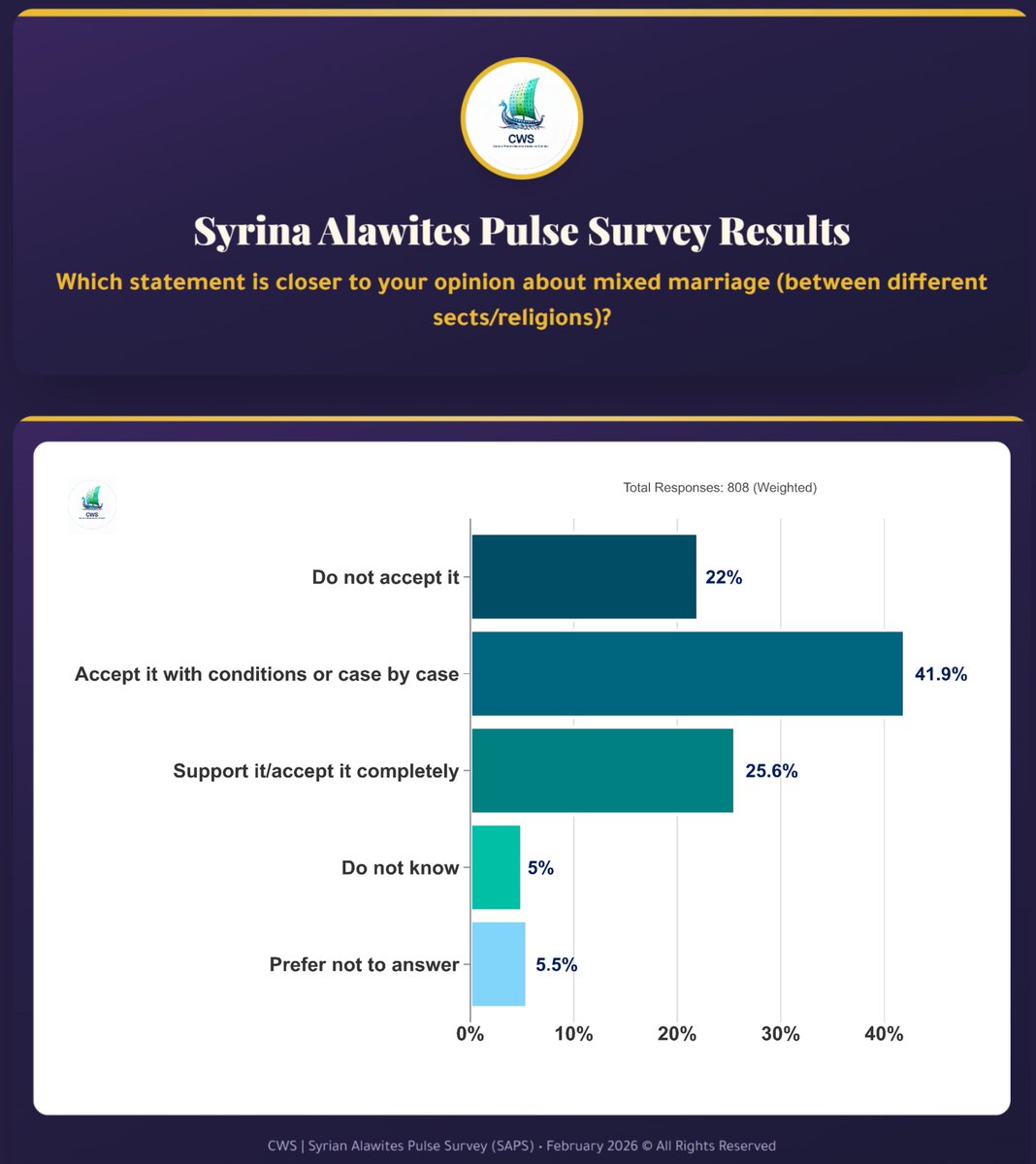
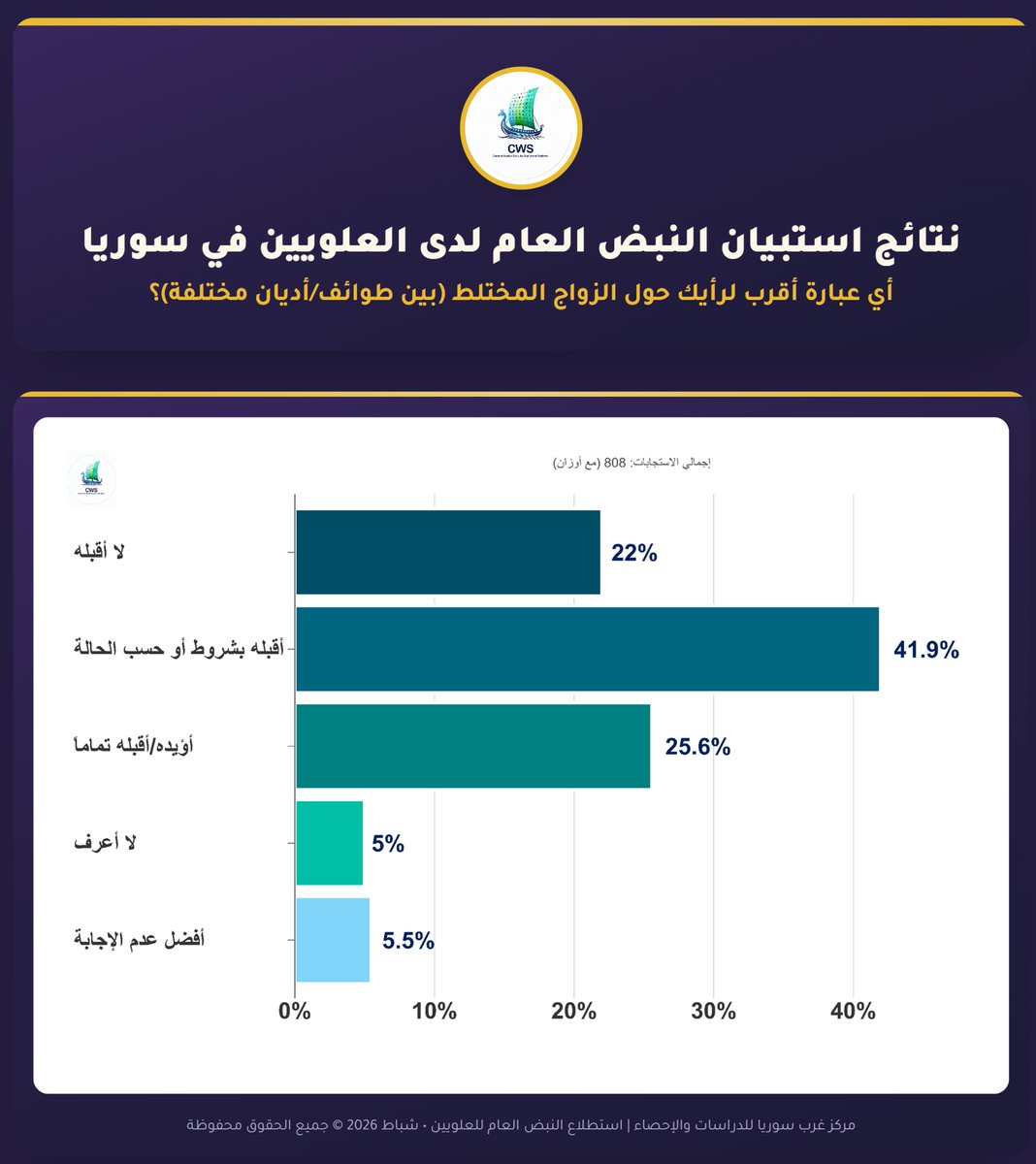
English below الزواج المختلط: انفتاح اجتماعي لافت Mixed marriage: Notable social openness ضمن “استبيان النبض العام لدى العلويين في سوريا” الذي أجراه مركز غرب سوريا للدراسات والإحصاء، سألنا عن رأي العلويين في الزواج المختلط بين طوائف/أديان مختلفة. أجاب (41.9%) بأنهم "يقبلونه بشروط أو حسب الحالة”، و (25.6%) بأنهم “يقبلونه تماماً”. في المقابل أجاب (22%) بانهم “لا يقبلونه”. النتيجة الأبرز أن القبول هو الاتجاه الغالب: نحو ثلثي العلويين (67.5%) يقبلون الزواج المختلط بشكل كامل او بشروط، والخمس يرفضونه (22%). اللافت أن هذا المستوى من القبول يظهر رغم ما شهدته سوريا من مجازر وتحولات كبرى كان من المتوقع أن تدفع باتجاه مزيد من الإنغلاق؛ ما يشير إلى أن الميل إلى الاختلاط لم يُغلق، بل تحوّل في كثير من الأحيان إلى صيغة “القبول المشروط”. بمقارنةٍ أولية مع أنماط مجتمعية أكثر تحفظًا في أجزاء واسعة من سوريا والمنطقة، تبدو هذه النسبة مرتفعة وربما من الأعلى؛ إلا أن تثبيت ذلك علمياً يحتاج بيانات مقارنة مباشرة ومنهجيات قياس متقاربة بين المجتمعات. As part of the "Syrian Alawites Pulse Survey (SAPS)" conducted by the Center of Western Syria for Studies and Statistics, we asked about the Alawites’ views on inter-sectarian marriage. 41.9% responded that they “accept it conditionally or on a case-by-case basis,” and 25.6% said they “accept it completely.” In contrast, 22% answered that they “do not accept it". The most striking finding is that acceptance is the prevailing trend: nearly two-thirds of Alawites (67.5%) accept interfaith marriage completely or conditionally, while one-fifth (22%) reject it. It is noteworthy that this level of acceptance emerges despite the massacres and major transformations that Syria has witnessed, which were expected to lead to greater isolation. This indicates that the inclination towards interfaith integration has not been suppressed, but rather has often transformed into a form of “conditional acceptance.” In a preliminary comparison with more conservative societal patterns in large parts of Syria and the region, this percentage appears high and perhaps among the highest; however, confirming this scientifically requires direct comparative data and similar measurement methodologies across the other societies. #Alawites #Syria #Survey #CWS #SAPS2026 #العلويون #سوريا #استطلاع_رأي #مركز_غرب_سوريا #سابس2026
Center of Western Syria for Studies and Statistics tweet mediaCenter of Western Syria for Studies and Statistics tweet media
العربية
8
7
27
1.1K
Center of Western Syria for Studies and Statistics
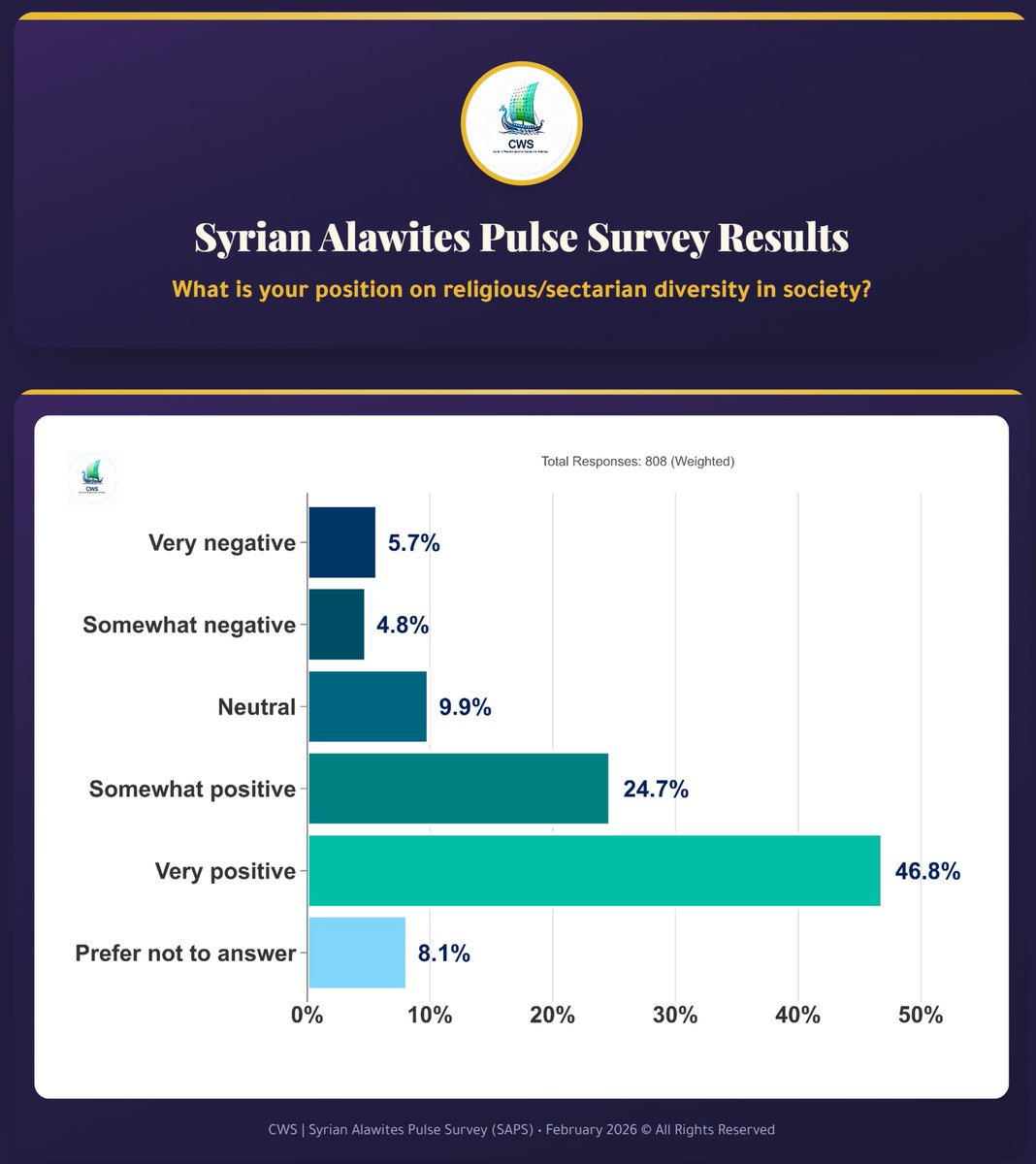
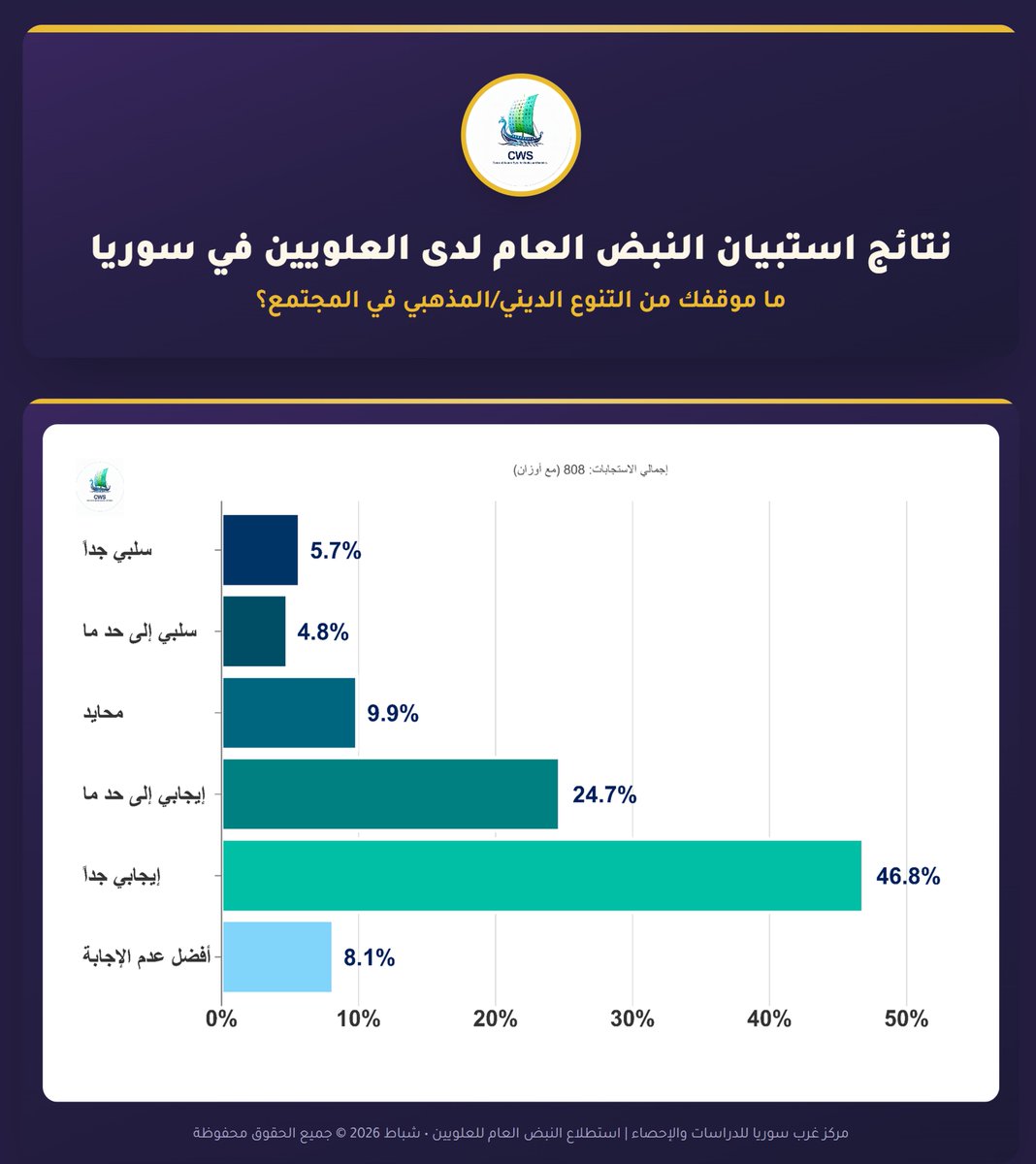
English below التنوع الديني: قيمة إيجابية رغم الظروف الصعبة Religious/Sectarian Diversity: Still Seen Positively Despite the Difficult Circumstances ضمن “استبيان النبض العام لدى العلويين في سوريا” الذي أجراه مركز غرب سوريا للدراسات والإحصاء، طُرح سؤال مباشر حول موقف العلويين من التنوع الديني/المذهبي في المجتمع. أفاد (46.8%) من العلويين بموقف “إيجابي جداً”، و(24.7%) بموقف “إيجابي إلى حد ما”. في المقابل اعطى (9.9%) موقفاً “محايدا”، (4.8%) “سلبي إلى حد ما”، و(5.7%) “سلبي جداً”، وفضّل (8.1%) عدم الإجابة. رغم ما شهدته سوريا من تحولات قاسية، ورغم آثار العنف والمجازر على المجتمع، ما تزال الغالبية من العلويين تنظر إلى التنوع الديني/المذهبي بإيجابية (71.5% إيجابي جدًا/إلى حد ما). وبالمقابل تبقى المواقف السلبية محدودة (10.5% بالمجموع). هذا يعني أن الصدمة والانقسام لم تُلغِ فكرة قبول التعدد لدى أغلب العلويين، حتى لو بقيت لدى بعضهم مساحة تردد أو تحفظ تظهر في نسبة الاجابات المحايدة او الامتناع عن الاجابة. As part of the “Syrian Alawites Pulse Survey (SAPS)” conducted by the Center of Western Syria for Studies and Statistics, respondents were asked a direct question about their position regarding religious/sectarian diversity in the society. (46.8%) of the responses reported a “very positive” view and (24.7%) “somewhat positive,” compared with (9.9%) “neutral,” (4.8%) “somewhat negative,” and (5.7%) “very negative,” while (8.1%) preferred not to answer. Despite Syria’s harsh upheavals—and despite the impact of violence and massacres on the Alawite society—the majority of Alawites still view religious/sectarian diversity positively (71.5% very/somewhat positive), while negative views remain limited (10.5%). This suggests that the shock and polarization have not eliminated the acceptance of diversity among most Alawites, even if some hesitation appears in the “neutral” and “prefer not to say” responses. #Alawites #Syria #Survey #CWS #SAPS2026 #العلويون #سوريا #استطلاع_رأي #مركز_غرب_سوريا #سابس2026
Center of Western Syria for Studies and Statistics tweet mediaCenter of Western Syria for Studies and Statistics tweet media
العربية
0
4
30
633
Center of Western Syria for Studies and Statistics
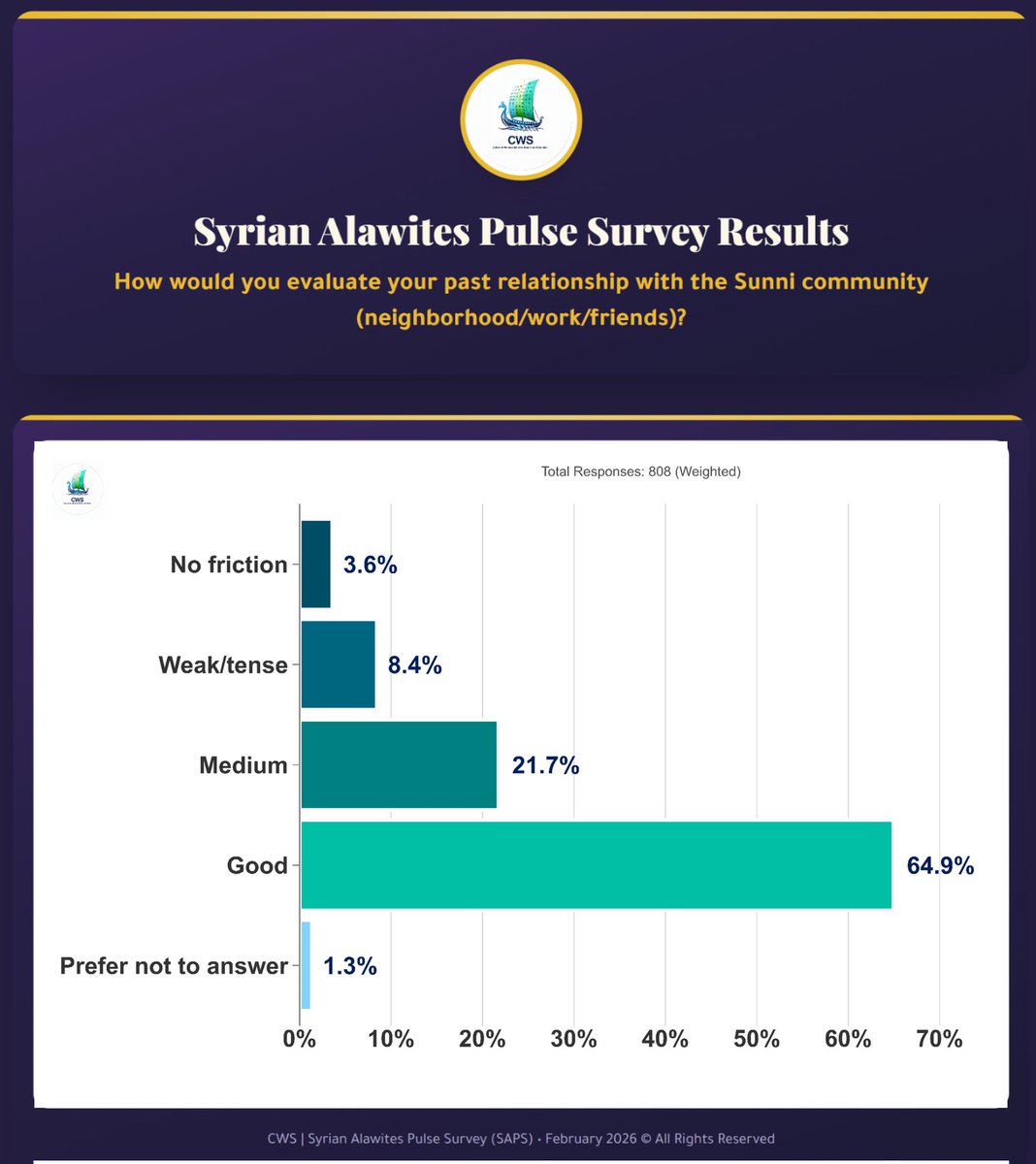
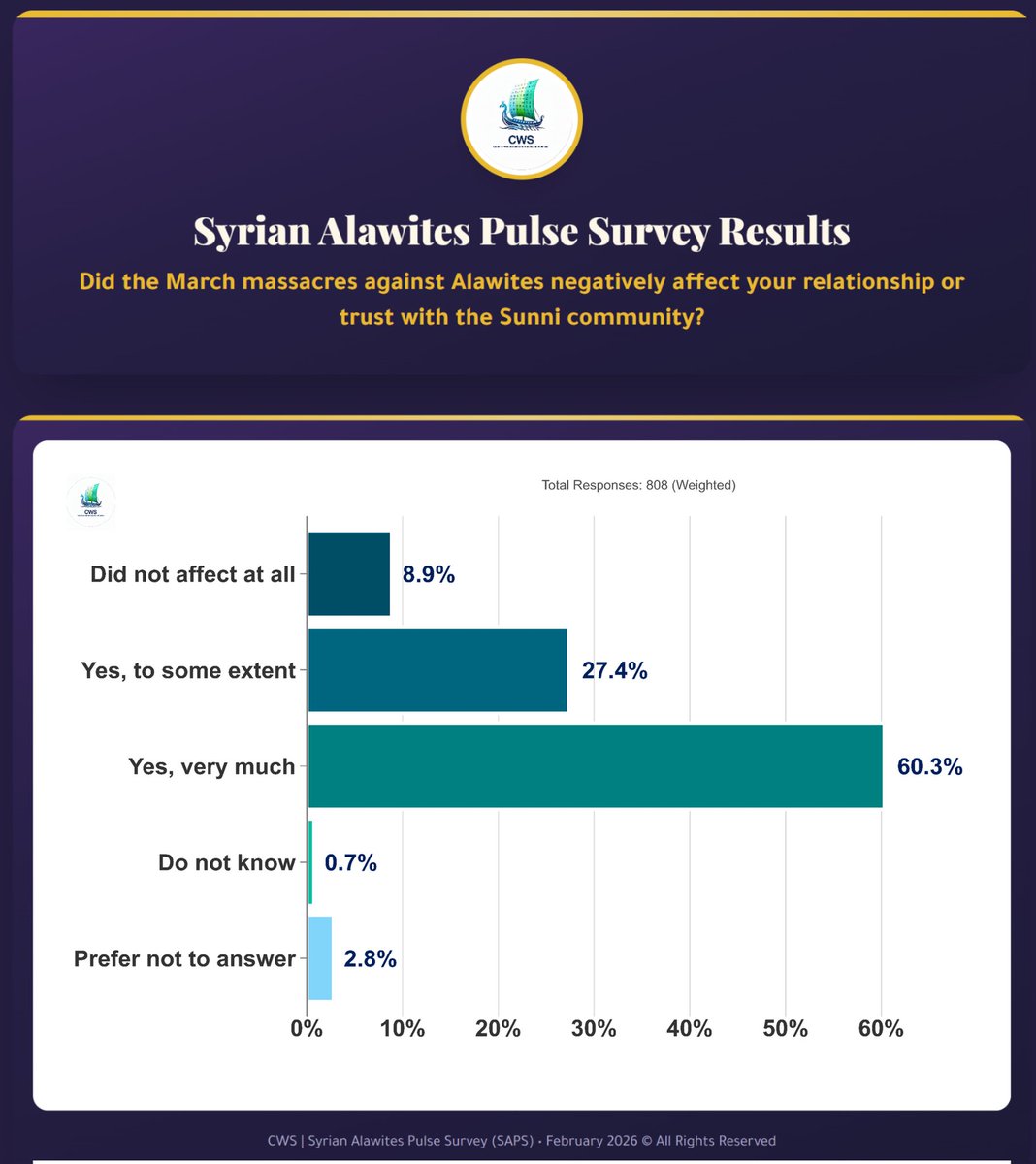
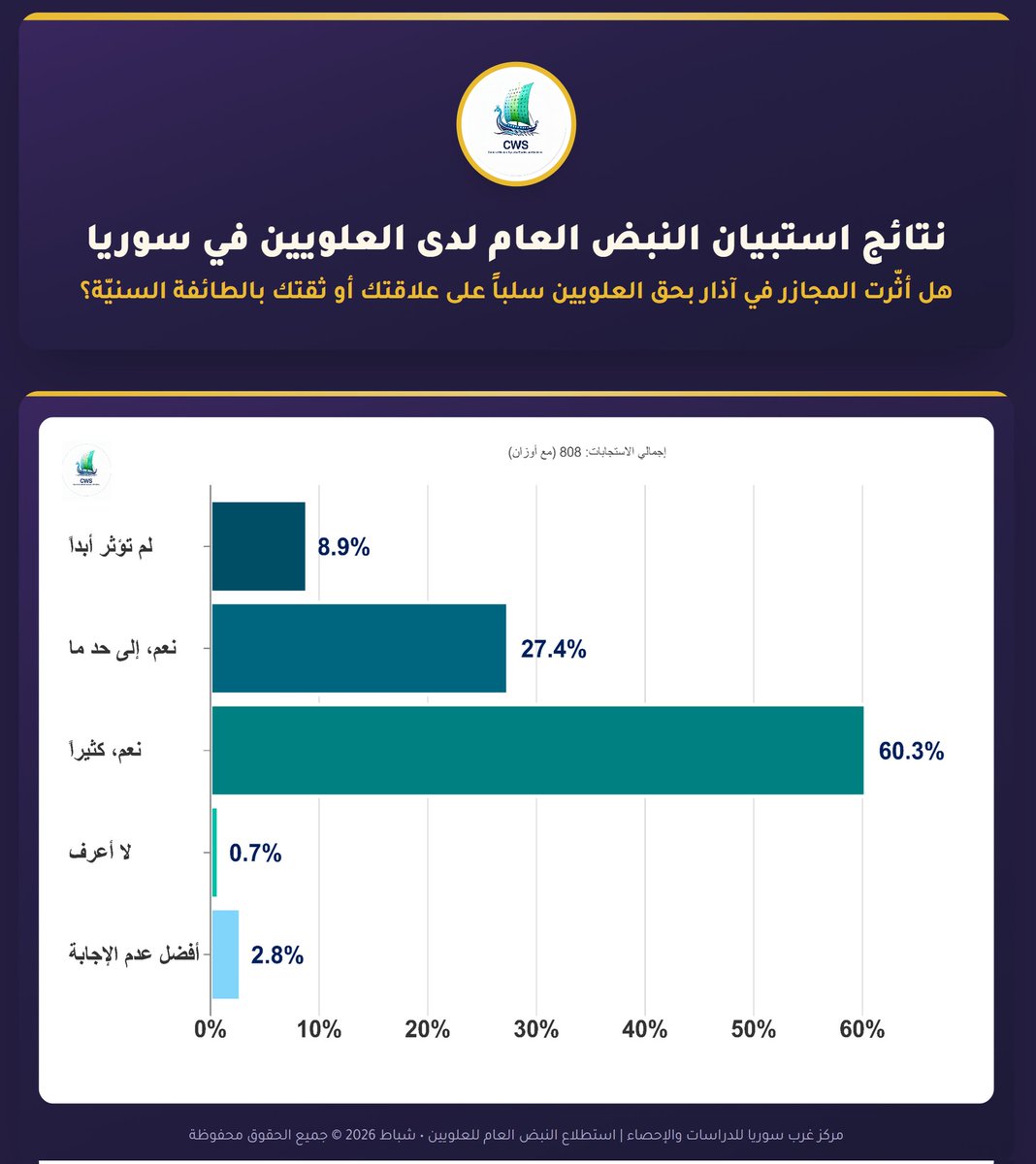
As part of the “Syrian Alawites Pulse Survey (SAPS)” conducted by the Center of Western Syria for Studies and Statistics, two closely linked questions were asked: the first on past relations with the Sunni community, and the second on the impact of the March massacres on those relations. First: How would you evaluate your past relationship with the Sunni community (neighborhood/work/friends)? Results were as follows: - Good: 64.9% - Medium: 21.7% - Weak/tense: 8.4% - No friction: 3.6% - Prefer not to answer: 1.3% Second: Did the March massacres against Alawites negatively affect your relationship or trust with the Sunni community? Results were as follows: - Yes, very much: 60.3% - Yes, to some extent: 27.4% - Did not affect at all: 8.9% - Do not know: 0.7% - Prefer not to answer: 2.8% Read together, the two findings point to a clear conclusion: before the March massacres, day-to-day relations with Sunnis were largely described as “good/medium” (86.6%). After the massacres, however, 87.7% reported a negative impact to varying degrees. This gap does not reflect a temporary shift in mood; rather, it points to a broad shock that altered the “rules of the relationship” itself. In this sense, the results can be understood as evidence of a practical tear in the social fabric. #Alawites #Syria #Survey #CWS #SAPS2026 #العلويون #سوريا #استطلاع_رأي #مركز_غرب_سوريا #سابس2026
Center of Western Syria for Studies and Statistics tweet mediaCenter of Western Syria for Studies and Statistics tweet media
English
0
3
18
550
Center of Western Syria for Studies and Statistics
ضمن “استبيان النبض العام لدى العلويين في سوريا” الذي أجراه مركز غرب سوريا للدراسات والإحصاء، طُرح سؤالان مترابطان حول العلاقة السابقة مع الطائفة السنية ثم تأثير مجازر آذار على هذه العلاقة. أولاً: كيف تقيّم علاقتك عبر الماضي مع الطائفة السنية (جوار/عمل/أصدقاء)؟ توزعت الإجابات على النحو التالي: - جيدة: 64.9% - متوسطة: 21.7% - ضعيفة/متوترة: 8.4% - لم يوجد احتكاك: 3.6% - أفضل عدم الإجابة: 1.3% ثانياً: هل أثّرت مجازر آذار بحق العلويين سلبًا على علاقتك بالطائفة السنية؟ جاءت النتائج كالتالي: - نعم كثيرًا: 60.3% - نعم، إلى حد ما: 27.4% - لم تؤثر أبدًا: 8.9% - لا أعرف: 0.7% - أفضل عدم الإجابة: 2.8% إذا قُرئت النتيجتان معاً، تبرز خلاصة واضحة: قبل مجازر آذار كانت العلاقة اليومية مع السنة في معظمها “جيدة/متوسطة” (86.6%)، لكن بعد المجازر أفاد (87.7%) بأن العلاقة تأثرت سلباً بدرجات متفاوتة. هذا الفارق لا يعبّر عن تراجع عابر في المزاج، بل عن أثر صدمة واسعة غيّرت “قواعد العلاقة” نفسها وبهذا المعنى، يمكن الحديث عن تمزّق في النسيج الاجتماعي بمعناه العملي. #Alawites #Syria #Survey #CWS #SAPS2026 #العلويون #سوريا #استطلاع_رأي #مركز_غرب_سوريا #سابس2026
Center of Western Syria for Studies and Statistics tweet mediaCenter of Western Syria for Studies and Statistics tweet media
العربية
1
6
42
1.1K
Center of Western Syria for Studies and Statistics
English below حجم تعرض العلويين لعنف مباشر او قتل جماعي تحت حكم السلطات الانتقالية الحالية في سوريا The Extent of Alawites' Direct Exposure to Severe Violence or Killing Under the Control of the Current Interim Authorities in Syria ضمن “استبيان النبض العام لدى العلويين في سوريا” الذي أجراه مركز غرب سوريا للدراسات والإحصاء، سألنا العلويين إن كانوا قد تعرضوا بشكل مباشر لعنف شديد أو قتل جماعي بعد سقوط النظام وسيطرة السلطات الحالية على السلطة. أفاد (23.4%) بتعرضهم المباشر أو تعرض أحد افراد أسرنهم لعنف شديد او للقتل ، كما أجاب (49.6%) بتعرض الدائرة القريبة منهم (قريب/صديق/حي سكني) للعنف او القتل، فيما أجاب (21.9%) بعدم تعرضهم للعنف او القتل، وفضّل (5.1%) عدم الإجابة. تُظهر هذه النتائج حجم التأثر الهائل للعلويين بالعنف تحت حكم السلطات الجديدة. إن تجارب العنف الشديد لا تظهر كحدثٍ استثنائي محدود الانتشار ضمن المجتمع العلوي، بل تتسع لتشمل أغلب العلويين ضمن دوائر متفاوتة القرب؛ إذ اشار 73% من العلويين في المجمل إلى تأثرهم بشكل مباشر أو قريب. ملاحظة منهجية: بحسب معطيات المركز وتقديراته الأولية، فإن معظم المنظمات والجهات العاملة في توثيق مجازر آذار الواسعة ومجزرة فاحل ومريمين والانتهاكات الكثيرة التي تلت سقوط النظام في مختلف مناطق العلويين لم تُفض بعد إلى أرقام نهائية لأعداد الضحايا على الرغم من جهودها الكبيرة، ما يعكس تعقيدات التوثيق وصعوبة الوصول إلى المعلومات في هذه المرحلة، في ضوء محاولة السلطات التعتيم على الأحداث والضغط على الضحايا لتغيير شهاداتهم او طمسها، وفي ضوء الإبادة التي تعرضت لها قرى او عائلات بكاملها. In the “Syrian Alawites Pulse Survey” conducted by the West Syria Center for Studies and Statistics, we asked Alawites whether they had been directly exposed to severe violence or mass killings after the fall of the regime and the current authorities’ assumption of power. 23.4% reported that they or a member of their family had been directly exposed to severe violence or killing. 49.6% reported that someone close to them (relative/friend/neighborhood) had been exposed to violence or killing, while 21.9% reported not having been exposed to violence or killing, and 5.1% preferred not to answer. These results demonstrate the immense impact of violence on Alawites under the new authorities. Experiences of severe violence are not limited to isolated incidents within the Alawite community, but rather extend to most Alawites within varying circles of proximity. 73% of Alawites overall indicated that they were directly or closely affected. Methodological Note: According to the center's data and initial estimates, most organizations and entities working to document the widespread March massacres, Fahel and Maryimeen massacres, and the numerous violations that followed the fall of the regime in various Alawite areas have not yet arrived at final figures for the number of victims, despite their considerable efforts. This reflects the complexities of documentation and the difficulty of accessing information at this stage, given the authorities' attempts to cover up events and put pressure on victims to change or obscure their statements, and in light of the extermination of entire villages or families. #Alawites #Syria #Survey #CWS #SAPS2026 #العلويون #سوريا #استطلاع_رأي #مركز_غرب_سوريا #سابس2026
Center of Western Syria for Studies and Statistics tweet mediaCenter of Western Syria for Studies and Statistics tweet media
1
11
51
1.4K