Cynrik De Decker

149 posts

Cynrik De Decker banner
Cynrik De Decker

Cynrik De Decker

@CynrikD

Zoekt en beschrijft oude luchtvaartverhalen (en soms ook die van buiten de dampkring) Audacious armchair pilot, fascinated by aviation BC* (*Before computers)

Katılım Ocak 2012
398 Takip Edilen76 Takipçiler
Cynrik De Decker
Cynrik De Decker@CynrikD·
@p_vanostaeyen Beetje raar. Lijken geen Poolse soldaten, maar Duitse Fallschirmjäger (parachutisten).
Nederlands
1
0
0
26
Cynrik De Decker
Cynrik De Decker@CynrikD·
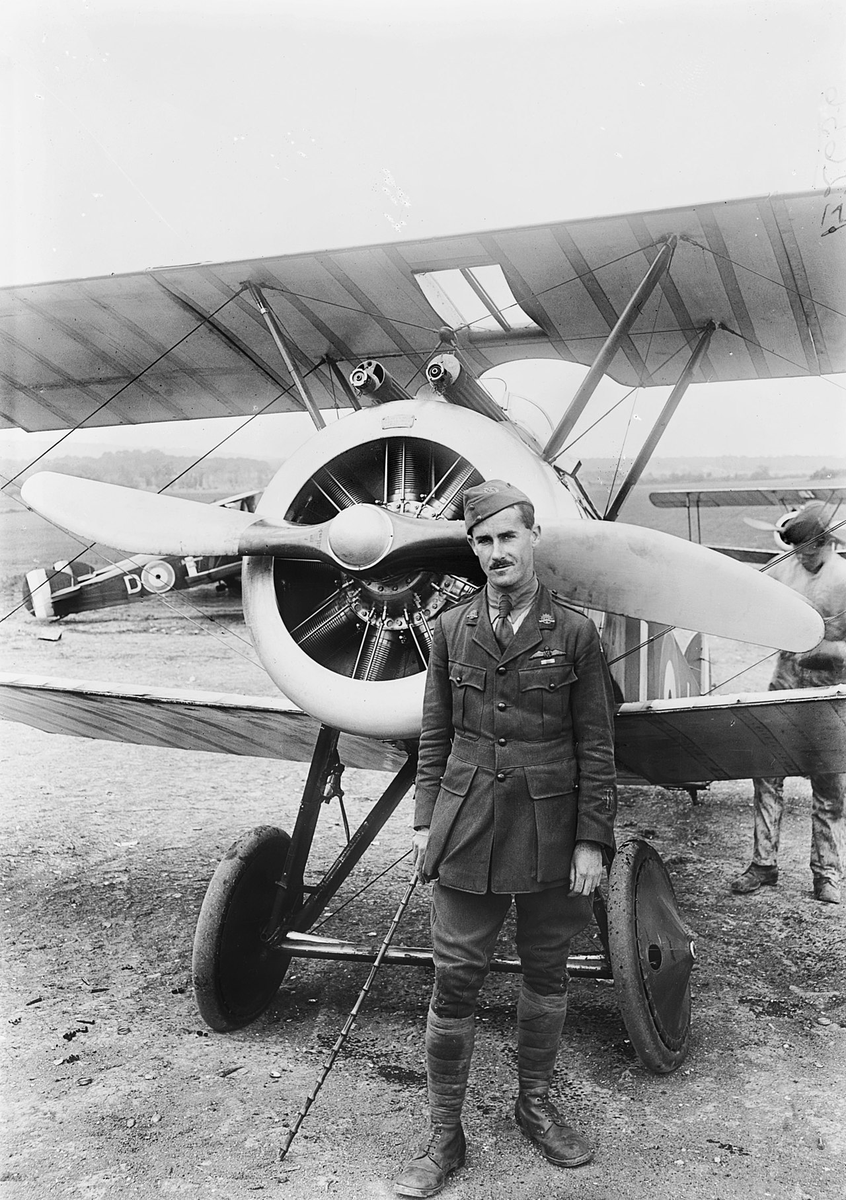
@CalumDouglas1 @HarrygPettit He has just been appointed as a lecturer at the Brussels University (Vrije Universiteit Brussel). So I suppose I’m paying taxes for this, I’m afraid.
Cynrik De Decker tweet media
English
1
0
1
134
Calum E. Douglas FRAeS
Calum E. Douglas FRAeS@CalumDouglas1·
@HarrygPettit Serious question, you are self-listed as an "academic researcher", what institution are you an academic at, and what do you research.
English
8
0
131
6.9K
Fouad Gandoul
Fouad Gandoul@Fgandoul·
Genk, Belgium 🇧🇪 ZXX
5
20
58
9.3K
Calum E. Douglas FRAeS
Calum E. Douglas FRAeS@CalumDouglas1·
Without whom would the Royal Flying Corps during The Great War been doomed ? French engineers, is the answer. It seems almost inconceivable today but the fact is that when the Wright-Brothers flew in 1903, at the time, in terms of actual serious scientific effort almost nobody paid much attention. One main reason for this unhappy state of affairs, was that sadly for the Wright-Brothers, 1903 was more or less when the first global explosion of motor-car manufacturing occurred. So when they managed to stay a few feet of the ground for a short distance, the implications of this were literally drowned out by the immense rise of the car as the latest wonder. One nation however, was not so easily distracted, France. The French, stunned by the possibilities, applied themselves fully to developing new engines necessary for the future of flight, the best engineers in France devoted themselves to it, and before long, Gnome, Le Rhone, Clerget, Canton Unne, Renault and Anzani revealed numerous brilliant and original advances in the aero engine. Germany was close behind France, and soon Mercedes, Benz and Austro-Daimler had respectable aero-engines. In Britain virtually nothing of the sort occurred, and most Royal Flying Corps aero engines in the Great War were of French design, as we simply had neither the designs nor the engineers conversant enough with the required disciplines to create a British design. When we finally did, just as the war was ending, it was the A.B.C Dragonfly. This engine was an unmitigated disaster, and Bulman, then an inspector of aero engines for the Aeronautical Inspection Dept, later wrote: "If the war had carried on another year, we ought to have been beaten out of the sky" So much had been placed on its success. Sadly for France, the next 20 years marked a steady decline in this early and utterly commanding lead in aero-engines, and conversely saw the rise of Britain from a literal nothing to producing several of the most respected and important aero-engines in the world by 1940. None of this however had occurred in 1914, and without the French, the Royal Flying Corps would have been truly lost. So awful was the situation that the War Office offered a £5,000 prize to anyone who could design a good aero engine, the "winning" engine, "Green", was itself a total failure, and the only engine firm in all of Britain in 1914 who even made an aero engine which worked and could be produced was Sunbeam. Probably the best three RFC aircraft of WW1 all had French engines. Sopwith Camel: Clerget 9B - French Sopwith Pup: Le Rhône 9C - French SE5A: Hispano-Suiza 8 - Made in France By the end of the war Bentley and Rolls-Royce were fielding good aero engines, but the bulk of the RFC effort in WW1 was thanks to French engines. The reasons for the post-WW1 decline for French Aero Engines is quite complicated but was attributed in the main by British Air Ministry sources in historical studies as being due to a constant stream of large repeat orders given to the French engine firms, which essentially almost totally dulled any incentive to make any further drastic innovations. By contrast, at the time in Britain few orders were placed and competition was very high, which slowly but surely undermined the commanding early lead the French had in piston aero-engines. It may not have been wholly beneficial for Hispano-Suiza in France that the French govt had taken a controlling 51% stake, although this had been done with some sensible motives, to at least secure the commercial safety of the firm for defence reasons. The French authorities appear not to have noticed this seriously until the Paris Salon of 1932, and soon after Hispano entered into a collaborative agreement with the American firm Curtis-Wright. However it was far too late and France entered WW2 in a very different position to that which she had entered WW1 with respect to military aero-engines. Rolls-Royce Merlin engines were sent to France, but it was far too late, and simply caused political rage in Britain once it became clear that it might not be possible to get them back after the Fall of France, 146 Merlins were sent, to have been fitted to Amiot Bombers.
Calum E. Douglas FRAeS tweet mediaCalum E. Douglas FRAeS tweet media
English
13
19
185
15.5K
Cynrik De Decker retweetledi
Victor De Decker
Victor De Decker@VictorDeDecker·
Samen met Bryan Bille van @benchmarkmin schreef ik een stuk over de voorgestelde mineraaldeal tussen Trump en Zelensky. Oekraïense mineralen zijn eerder fata morgana dan eldorado tijd.be/opinie/algemee…
Nederlands
0
1
2
146
Cynrik De Decker
Cynrik De Decker@CynrikD·
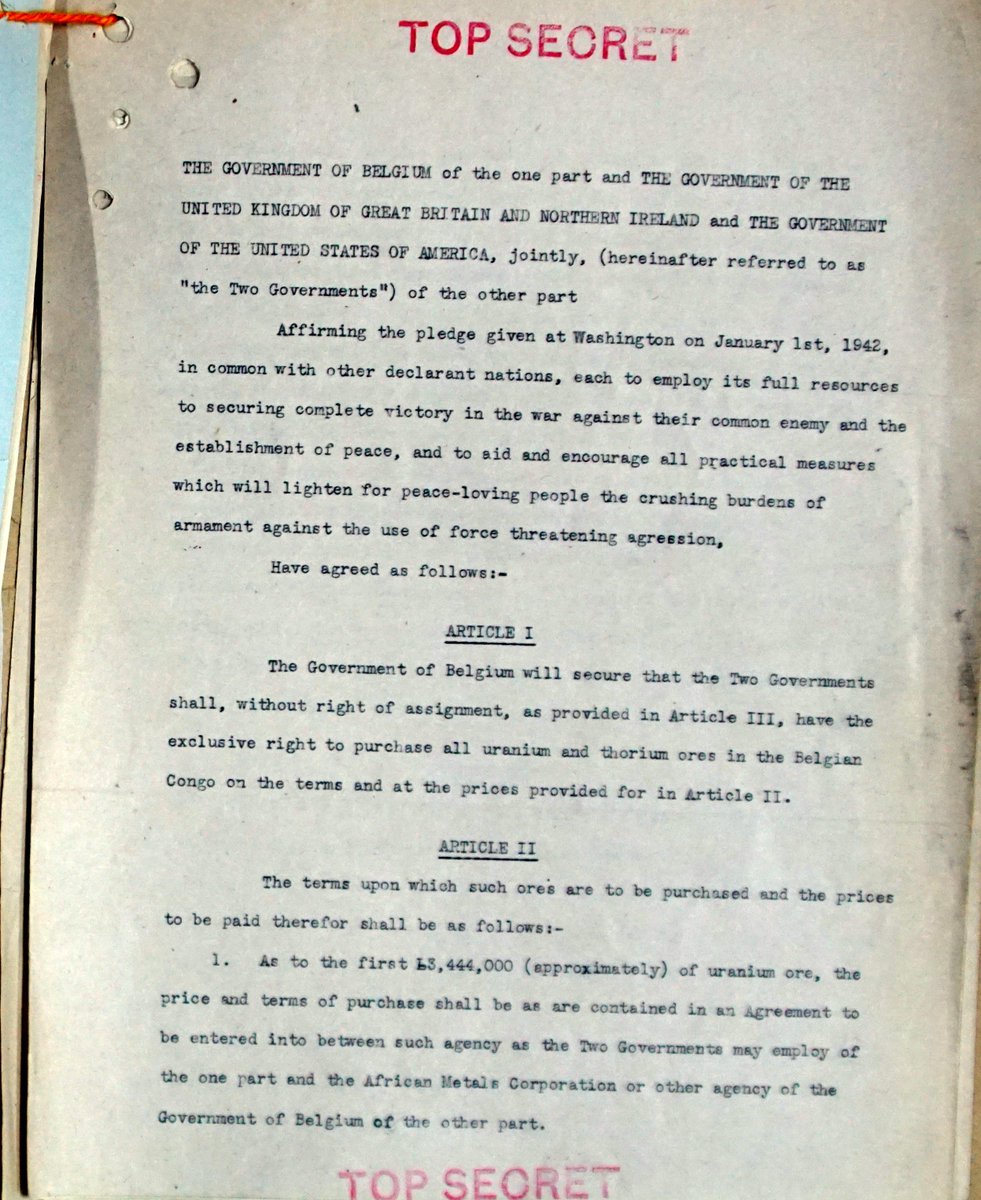
Little Belgium played a key role in the biggest resource deal in history: the uranium supply from Congo for the atomic bombs on Hiroshima and Nagasaki. (I took this pic from file FO1093-513 2TNA, Kew for my book "Voordat de bom viel")
Cynrik De Decker tweet media
English
0
0
0
49
Cynrik De Decker retweetledi
John Spencer
John Spencer@SpencerGuard·
At least 2 million civilians died in the Korean War (1950-1953) - an average of over 54,000 deaths per month across the 37 month war. But this number alone tells us nothing. It lacks crucial context: When did they die? Who was responsible? What were the circumstances - military strategies, decisions, and events that shaped the war? Be cautious when presented with war statistics. They are often wielded as weapons to push an agenda, with the biggest numbers used to draw attention, sway opinions and are used as click bait. The media, too, gravitates toward dramatic figures to highlight crises. Statistics are powerful tools of persuasion - but they should always be filtered through critical thinking. Figures don’t lie, but liars figure.
John Spencer tweet media
English
8
214
869
47.3K
Cynrik De Decker retweetledi
Victor De Decker
Victor De Decker@VictorDeDecker·
Mijn opinie over de Europese tarieven op Chinese EVs in @tijd 🇪🇺🇨🇳 Tarieven kunnen een tijdelijke oplossing zijn, maar structurele investeringen en strategische samenwerkingen (ook mét China) zijn nodig om Europa's positie in EVs veilig te stellen 🚗👇 tijd.be/opinie/algemee…
Nederlands
0
1
5
334
Cynrik De Decker
Cynrik De Decker@CynrikD·
@fromantwerp @wduyck Ben er ook geweest. Fantastisch land, open geesten in Beiroet. Tot ik uit welgemeende nieuwsgierigheid de shia-wijken wilde bezoeken... werd erg snel door mannen met baarden gesommeerd de omgeving te verlaten...
Nederlands
2
0
1
34
guido
guido@fromantwerp·
@wduyck Dat zijn geen argumenten . Hezbollah en Hamas zijn doodgetreiterde mensen . En dan krijg je zoiets ja . Maar oorzaak en gevolg niet omdraaien hè . Bent u er al geweest ? Ik wel .
Nederlands
4
0
7
523
Wouter Duyck
Wouter Duyck@wduyck·
Het getuigt toch van een bijzonder masochisme dat precies wie zelf het hardst vrijheden, waarden en normen geniet die enkel hier bestaan, het vaakst de verdediging opneemt van wie de genoten vrijheden het meest haat en met geweld bestrijdt. Men zou velen toch een korte periode van samenleven, al is het maar een nacht, of zelfs een privé discussie met een lid van Hamas of Hezbollah toewensen. Weldenkendheid is zelfdestructief in confrontatie met wie de weldenkendheid niet deelt. Men gaat onterecht uit van een gedeeld principieel kader (bv democratie, onwrikbare mensenrechten, geen geweld, scheiding kerk/staat) en mist empathie voor de overtuigingen van de ander.
Nederlands
14
44
256
10.2K
Cynrik De Decker
Cynrik De Decker@CynrikD·
@CalumDouglas1 Thx, but I still don 't get it. So those drop tanks they used throughout the war were not pressurized? Or do I have a wrong idea with the word "pressurized" (cf. cockpit of cabin) ?
English
2
0
0
39
Calum E. Douglas FRAeS
Calum E. Douglas FRAeS@CalumDouglas1·
Things don't work in isolation, for example huge downgrades in the performance of German war machines were the result of the huge Flak programme which Hitler insisted upon, this consumed vast amounts of Nickel. This was all put into guns which were often wanted at the front (the 88 was pretty multi purpose) and so new flak guns meant an "88" which wasnt in Russia. The reasons why the oil attack would be so calamitous is explained at length here, and is essentially because if fuel and oil production is degraded you cant do ANYTHING. You cant repair things because the trucks to ferry supplies need fuel, you cant make fertiliser so everyone starves the next year, you cant make explosives because the ammonia is made at the same plants, and you cant fly the planes to intercept the raids on the plants. Its a vicious cycle, which in the end is what more than any other single factor ended the ability of Germany to wage effective war. calum-douglas.com/the-strategic-…
Musical Box@tashritu

@CalumDouglas1 ‘What if’ thought experiments are fascinating but tricky: RAF hits refineries hard early in the war before Nazi military leadership goes entirely mad, German air defence becomes a serious priority, developed defence makes losses in later Allied attack intolerable. War is longer.

English
4
5
66
5K
Cynrik De Decker
Cynrik De Decker@CynrikD·
@AusSkeptic @CalumDouglas1 Thanks! I know P-47's were flying with drop tanks in the ETO from August '43 onwards. But these were not pressurized, or am I wrong ?
English
3
0
0
31