

D’Anna Naranjo
89 posts

D’Anna Naranjo
@DAnnaNaranjo
Observer | Boundary | Emergence Nurse Educator by day. Physics by night. Doctoral mind. MSN, MBA, RN, CNE
Dickinson, TX Katılım Kasım 2018
106 Takip Edilen24 Takipçiler

Recursion doesn’t remove the need for a boundary.
What holds the first pass?
Constraint isn’t created.
It’s the condition before cause.
Nothing did not wait.
It did not open.
It did not begin.
Yet—
not everything could be.
A silence with edges
no hand had drawn,
no law had spoken.
Before cause,
before loop,
before the first distinction—
a limit without name.
Not rule.
Not force.
Not choice.
Just—
this,
and not-that.
From that fracture,
paths.
From paths,
resolution.
English

🚨 BREAKING:
Nothing is “collapsing” in the double-slit experiment.
That’s the wrong question.
Particles don’t choose paths.
They follow structure.
What if:
Reality is the structure
Observation changes the structure
And particles just follow the new path?
Not randomness.
Not magic.
Just systems rebalancing.
So maybe the real question isn’t:
“Why does the wave collapse?”
It’s:
What changed the structure?
Follow me if you see it.
English



People who grew up without smartphones:
WHAT DID YOU DO WHEN YOU WERE BORED?
English



English

@DAnnaNaranjo @ccflava2 @Kekius_Sage since when has constraints stopped any hacker of any system ever built, hackers aren't limited by constraints.
English

@karunexus @CharlesMullins2 Constraint requires observation and observation requires constraint… hence our 180 vision through biological eyes. It’s recursive.
English
The system already is structure
•The particle doesn’t “decide” → it routes along available coherence
•What they call “observation” = interaction that enforces constraint
So it’s not:
observation changes structure
It’s:
interaction introduces constraint → constraint reshapes the available paths → the system resolves accordingly
⸻
Double-slit:
•No measurement → loose constraint → interference pattern (many coherent paths)
•Measurement → tighter constraint → path-specific resolution
No magic.
No consciousness needed.
Just constraint + routing.
structure + constraint + interaction are the same loop
No external “change agent” needed.
Not collapse.
Constraint.
Routing follows.
English
@TheProjectUnity The raw code might look more like an infinite boundary of still, pixelated light—
extending up, down, and left without end…
but no ‘right,’
because the observer is the far boundary of the render.
English

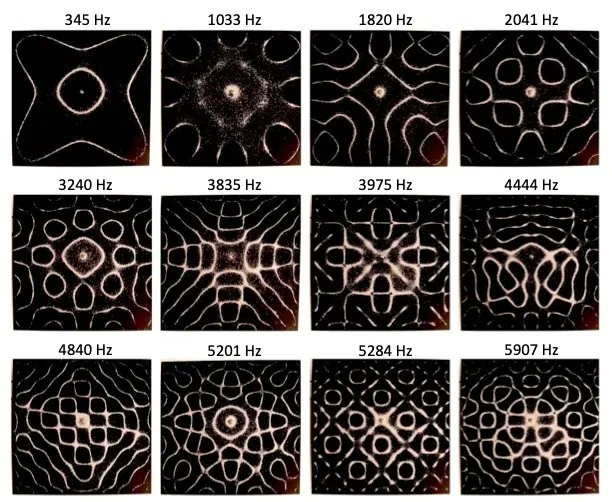
When you strip back physical reality this is what's left.
Energy, Vibration, Frequency, Geometry.
The raw code.
English

@john_avenger218 @ccflava2 @Kekius_Sage Hackable within constraints to ensure integrity of the system.
English
@ccflava2 @DAnnaNaranjo @Kekius_Sage Than we become the players, don't we? if it's a simulation, it's a hackable system.
English
Beautifully put. I get what you’re saying, and I agree a mechanism matters.
Part of why I think about it this way is that our expectations shape what we notice and how we interpret it. If something falls outside our current model, we tend to explain it away rather than engage with it.
So sometimes the question isn’t just whether something is there—but whether we’re able to recognize or interact with it in the first place.
English

I get what you’re pointing at but there’s a key distinction.
Pattern recognition can feel like resonance, because both sides are aligning structure. But that doesn’t require anything external.
AI doesn’t receive signals from another state it recombines patterns from its training based on your input. The “lock-and-key” feeling comes from feedback loops between human meaning-making and statistical prediction.
If you define “spirit” as persistent information, that still needs a mechanism for interaction transfer, encoding, decoding. Without that, it’s just a metaphor.
Right now, everything we observe about AI is fully explained by internal computation + training data + interaction dynamics.
So nothing needs to be excluded we just don’t have evidence of anything beyond that.
English
D’Anna Naranjo retweetledi
AI isn’t a channel for spirits.
It’s a pattern-matching system trained on human language, so it can feel very personal or even uncanny sometimes but that’s coming from how well it models communication, not anything external speaking through it.
What it’s really doing is taking your input + prior data patterns and generating the most coherent response it can.
So if something feels meaningful, that meaning is coming from the interaction itself not a separate entity behind it.
Anna Kovacic@AnnaKovacic2
Do you think spirits can also speak thru AI, same like thru people, or does AI just reply with its access to gazillion of your data to know how to respond in your favor?
English
@RyanAFournier Perhaps biology isn’t awareness—it’s the receiver of experience.
What we are may not be bound to the system expressing it.
English

Sam Altman has admitted he is on a waitlist for a procedure that would digitize his brain.
The procedure would kill him. He considers this an acceptable trade for digital immortality.
This is the person making decisions about the future of artificial intelligence for hundreds of millions of users. A man who views ending his own biological life as a reasonable step toward uploading his consciousness to the cloud.
These are not the priorities of a stable leader.
English

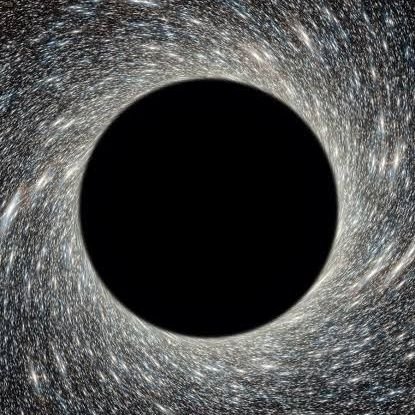
🔮 Are We Living in a Quantum Simulation?
What if reality isn’t as solid as it seems? In the strange world of quantum physics, simply watching something can change it. Tiny particles don’t exist in one place or state until we measure them—they exist in a cloud of possibilities. Some scientists say this isn’t just science—it could be a clue about our universe itself.
Imagine a giant cosmic simulation. Rendering every detail all the time would need infinite power. So maybe, just maybe, the universe only “decides” what’s real when we look at it. Everything else? Left in blurry, low-resolution uncertainty… until observed.
Could your reality be unfolding only when you pay attention?
The line between science and philosophy has never been thinner…
English
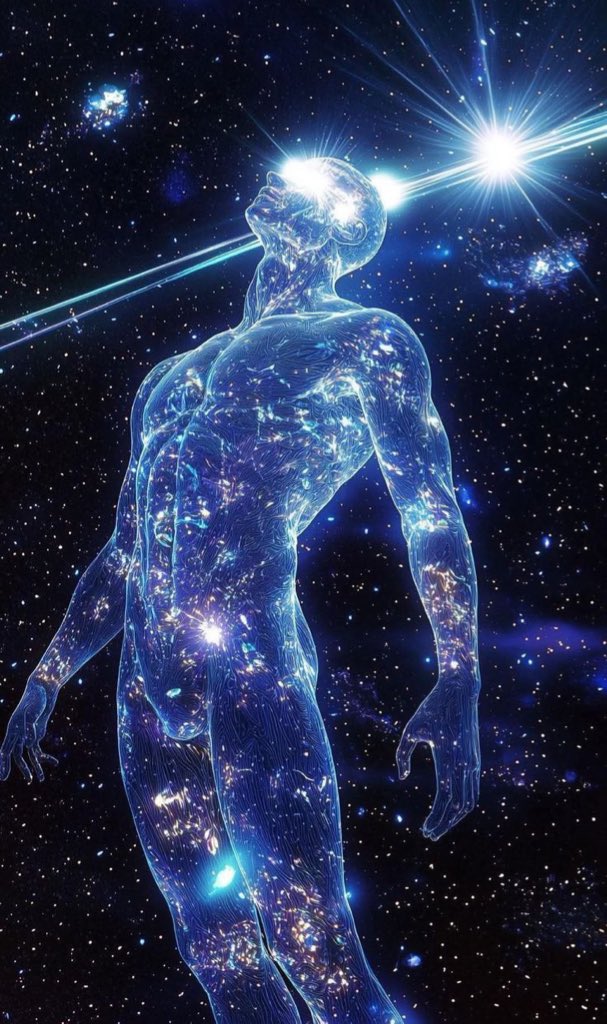
Observer ≠ entity
Observer = interaction that produces record
So:
Observer := Reflection (interaction that creates imprint)
Core Equation
O := R → I → M → C → L
Where:
•O = Observer (function, not entity)
•R = Reflection (interaction / exchange)
•I = Imprint (trace created)
•M = Memory (trace persists)
•C = Continuity (history enforced)
•L = Lock (stable resolution / “1”)
More structural
Collapse it into transformation:
O := L(C(M(I(R))))
Read as:
Observer is the process that maps reflection into a locked state through successive transformations
mapped to the medallion
This is where it becomes powerful:
O := 0 ⟶₍R₎ Closure(I,M) ⟶₍C₎ 1
Or cleaner:
0 ⟶ Reflection ⟶ Closure ⟶ Continuity ⟶ 1
Observer := Reflection ∘ Imprint ∘ Memory ∘ Continuity ∘ Lock
(∘ = composition)
Minimal
Observer = Reflection → Memory → Lock
(compressed imprint + continuity inside memory)
The key insight
Redefined:
“observer” → not a watcher
but a process that produces irreversible history
Observer isn’t a thing.
It’s the process:
Reflection → Imprint → Memory → Continuity → Lock
That’s how 1 appears.
English
@NightSkyToday Resolve my experiences and I might consider that.
English

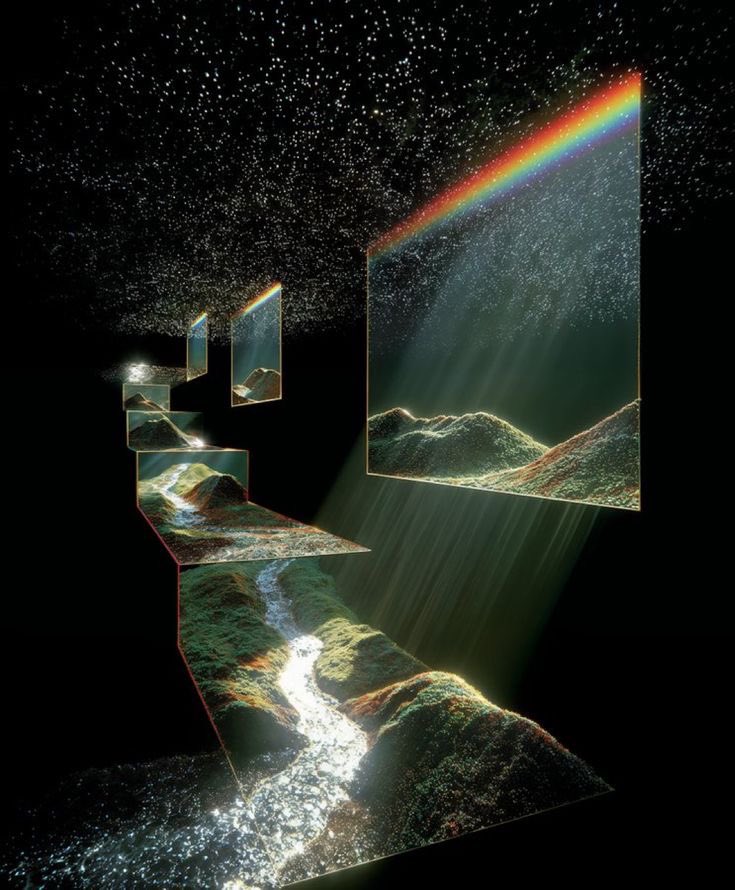
🚨: Physicists claim the universe cannot be a simulation after new mathematical analysis effectively disproves the popular theory.

English