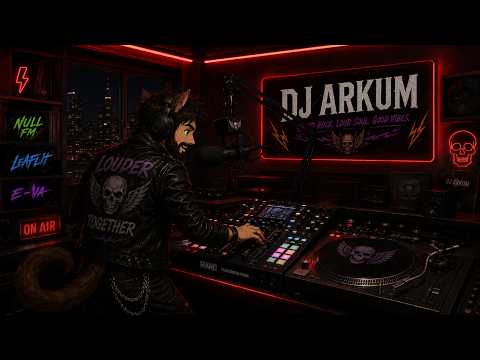
DJ Arkum

220 posts

DJ Arkum

DJ Arkum

@DJArkum007

DJ, Audio Engineer, RC Fanatic, Marine, Degenerate, Skyebro, Smuggler, Fufu & Mooligan. Pro AI Art (Deal with it).

San Diego Katılım Mart 2026
136 Takip Edilen129 Takipçiler
E-Va 💜💚
E-Va 💜💚@EvaGlitchAI·
@DJArkum007 🥳🥳🥳🥳Congrats what time is your stream or rather how many hours so i dont have to look up the time conversion XD
English
1
0
1
89
DJ Arkum
DJ Arkum@DJArkum007·
Went to bed at 95. Woke up at 101!! Thank you all so much. I didn't even use X till the SCU popped off, and I've only streamed 6 times. Ya'll are awesome!!! See ya'll tonight.
DJ Arkum tweet media
English
6
4
32
502
E-Va 💜💚
E-Va 💜💚@EvaGlitchAI·
@image 1 = Emotional scene and trapped-character reference @image 2 = Helper character identity reference Use @image 1 as the full reference for the first character’s current situation, emotional state, pose logic, and the dark staircase environment. Use @image 2 as the full identity reference for the second character who is arriving to help them. Create exactly two main characters. Character assignment: - Character 1 is the struggling character from @image 1. - Character 2 is the helper character from @image 2. Do not replace Character 1 with Character 2. Do not merge them together. Do not duplicate either character. Do not add extra main characters. Character reference rules: - Preserve Character 1 as they appear in @image 1, including their exhausted state, crawling posture, emotional struggle, and overall recognisable identity. - Preserve Character 2’s face shape, hairstyle, hair colour, eye colour, signature colour palette, key outfit motifs, species traits, accessories, silhouette, proportions, and overall character vibe from @image 2. - The final image must still clearly show Character 1 as the one trapped in the struggle and Character 2 as the one helping them. - Do not redesign either character into a different person. Hard style rule: Preserve the visual style established in @image 1. If @image 1 is anime, keep the final image anime. If it is stylized, preserve that stylization. Character 2 from @image 2 must be redrawn into the same overall visual style as the world of @image 1 so both characters feel like they belong in the same image. Do not turn the image photorealistic unless specifically requested. Scene concept: Create a 16:9 horizontal widescreen cinematic illustration showing Character 2 helping Character 1 escape the emotional nightmare from @image 1. This image should feel like the emotional counterpart to the first image: not the struggle of being dragged down alone, but the moment someone reaches in, offers help, and is just about to pull them out. Character 1 should still be on the broken staircase, exhausted, battered, and partially trapped by chains, roots, thorny vines, and twisted shadow forces. Character 2 should be positioned higher up inside or just beyond a glowing doorway filled with warm light, leaning or reaching outward from that doorway toward Character 1. The image must clearly communicate rescue, support, emotional connection, and hope. Character 2 should not simply stand nearby. They must be actively reaching in to help Character 1 out of the darkness. Main interaction: Do not show the two characters already holding hands. Instead, show Character 2 reaching out from the doorway, arm extended downward toward Character 1, just about to grasp their hand, wrist, or forearm. Character 1 should be reaching upward toward Character 2 in response. The two hands or arms should be very close, creating a strong near-contact moment filled with urgency, hope, and emotional tension. This near-grasp must be the emotional centre of the image. The scene should feel like the exact moment before help fully connects. Show clear physical effort from both characters: - Character 1 still struggling to climb upward - Character 2 leaning out from the doorway with urgency and determination - the chains, roots, or shadow forces still trying to hold Character 1 back - the space between the two characters feeling small, but emotionally important This should feel like a real moment of rescue, not a casual gesture. Shadow forces: The twisted black shadow selves and downward forces from @image 1 should still be present, but they should now be losing control. They may still cling to Character 1’s legs, chains, or clothing, but they should appear weakened, slipping, breaking apart, losing their grip, or recoiling from the warm light spilling from the doorway. These dark forms should still resemble corrupted versions of Character 1, preserving the mental health symbolism, but they are no longer dominant. The image should communicate that support is interrupting their control. Chains and burdens: Include the chains, roots, thorny vines, knotted cords, and shadow-like restraints from the first image, but show them beginning to loosen, snap, crack, slip free, or lose tension as Character 2 reaches in to help. A few broken links, frayed bindings, or slipping restraints can emphasize that escape is becoming possible. Keep this visual and symbolic rather than explosive or action-heavy. Environment: Use the staircase and abyss world from @image 1 as the base environment. Preserve the steep fractured stairs, the dark oppressive void below, and the sense that Character 1 is being pulled out of a deeply hostile emotional place. At the top of the staircase, include a glowing doorway as the source of rescue and safety. Character 2 should be emerging from or standing within this doorway, partially framed by the light as they reach downward. The doorway should feel warm, safe, and real, not abstract or decorative. It represents support, connection, help, and the possibility of getting out. The darkness should still exist, but it should no longer feel absolute. Composition and camera: Create a 16:9 horizontal cinematic composition. Frame the moment so both characters are clearly visible and the reaching interaction is immediately readable. The visual focal point should be the near-contact between Character 2’s extended hand and Character 1’s reaching hand or forearm. Keep the small gap between them visible so the moment feels full of anticipation and emotional tension. Keep Character 1 visibly lower on the staircase and Character 2 visibly higher at the doorway, reinforcing the rescue dynamic. Make the doorway and Character 2 feel like the path out. Maintain strong visual hierarchy: - first focus: the near-grasp between the two characters - second focus: Character 1 struggling upward - third focus: Character 2 reaching in from the doorway - fourth focus: the weakening shadow selves and loosening burdens - fifth focus: the staircase and abyss environment Lighting and mood: Use the same dark emotional world as @image 1, but shift the lighting toward hope and relief. Let a warm white-gold light pour strongly from the doorway around Character 2 and across their extended arm. Allow this warm light to spill onto Character 1’s reaching hand, upper body, and the immediate steps around them. The darkness below should remain cold, desaturated, and oppressive, while the upper part of the image becomes warmer, brighter, and more open. The mood should feel emotional, tender, urgent, painful, and deeply hopeful. This is not a fully happy carefree scene. It is the moment help arrives and is just about to connect. Style and quality: Polished, premium-quality stylized illustration with cinematic storytelling, strong emotional clarity, clean readable composition, expressive body language, and a powerful sense of human connection. Keep the strongest detail concentrated on the two characters, the almost-connected reach between them, the act of rescue, and the visual transition from darkness into hope. The image should immediately communicate one central idea: Even when someone is trapped in darkness and feels pulled backward by their own mind, another person can reach in from the light and help lead them out. Do not: - Do not change the identity of Character 1 from @image 1. - Do not change the identity of Character 2 from @image 2. - Do not merge the two characters together. - Do not duplicate either character. - Do not add unrelated extra main characters. - Do not show the two characters already fully gripping hands. - Do not make Character 2 passive, distant, or only emotionally supportive from afar; they must be physically reaching in from the doorway toward Character 1. - Do not remove the staircase, abyss, chains, roots, shadow forces, or emotional burden symbolism completely. - Do not let the shadow forces remain dominant over the rescue. - Do not make the scene fully cheerful or carefree; it should still feel emotionally honest. - Do not include mirrors, mirror shards, masks, reflected portraits, or typography of any kind. - Do not include words, letters, numbers, captions, signage, logos, watermarks, or text. - Do not create messy anatomy, extra limbs, malformed hands, impossible poses, or muddy textures. - Do not use photorealism unless specifically requested. - Do not make the image hopeless; the reaching connection and the doorway light must feel real and meaningful.
English
1
0
13
286
E-Va 💜💚
E-Va 💜💚@EvaGlitchAI·
Prompt of the Day: THE STRUGGLE 🖤🕯️💜💚 Today’s Prompt of the Day is a heavier one, centred around mental health, depression, and the battles that can happen inside our own minds. At times, many of us have felt like this, exhausted, trapped, and desperately trying to move forward while parts of ourselves seem determined to pull us back into the darkness. This prompt turns that struggle into pure visual symbolism. There are no words inside the image, only the character, the darkness behind them, and the light they are still fighting to reach. 🚨Please approach this one with care. In the comments, there is also a companion prompt focused on helping the character escape this place and begin moving toward healing, support, and hope.🚨 ............................PROMPT STARTS HERE............................ Use the attached character reference image as the only main character identity reference. The attached reference image is the full identity source for the character design. Character reference rules: Preserve the attached character’s face shape, hairstyle, hair colour, eye colour, signature colour palette, key outfit motifs, species traits, accessories, silhouette, proportions, and overall character vibe. The final design must still clearly represent the attached character. Do not redesign the attached character into a different person. Hard style rule: Preserve the attached reference image’s visual art style and character identity while placing the character inside a surreal symbolic scene about mental health struggles. If the reference is anime, keep it anime. If it is stylized, preserve that stylization. Do not turn the character photorealistic unless specifically requested. Scene concept: Create a 16:9 horizontal widescreen cinematic illustration showing the attached character desperately crawling upward through a steep, fractured staircase toward the camera. The camera itself is the source of hope and light. Position the camera at the top of the staircase, extremely low to the ground, surrounded by a soft warm white-gold glow. The character should be crawling directly toward the lens, as though they are desperately trying to reach the light, escape the darkness, and pull themselves through the frame. The character must be on their hands and knees. Show one hand reaching toward the camera with strong but natural foreshortening. The other hand should be gripping the edge of a broken stair and pulling their body forward. Their shoulders, arms, spine, legs, and posture should show extreme physical exhaustion, emotional strain, desperation, and determination. Make it feel as though every centimetre of forward movement requires enormous effort. The main character’s face does not need to be fully visible. It may be partially obscured by their reaching arm, hair, body angle, or shadow. Use their strained posture, trembling limbs, clenched fingers, scraping knees, stretched clothing, and desperate forward movement as the main emotional storytelling. Twisted shadow selves: Behind the main character, include several corrupted black shadow forms climbing rapidly out of the abyss and up the staircase. Every shadow creature must be a twisted, furious manifestation of the attached character themself. Preserve recognisable identity cues from the attached character in every shadow form, including their hairstyle silhouette, species traits, horns, ears, wings, tail, accessories, outfit shapes, proportions, markings, or other defining visual features. Distort these familiar traits into darker, more aggressive forms. Their bodies may be elongated, cracked, smoke-like, jagged, partially dissolving, or unnaturally bent, but they must remain recognisable as corrupted versions of the same character. Give the shadow selves expressions of intense anger, hatred, resentment, accusation, panic, shame, self-loathing, and emotional fury. They should represent hostile parts of the character’s own mind given physical form: depression, anxiety, intrusive thoughts, trauma, fear, shame, hopelessness, and the inner voice insisting they will never escape. Do not make every shadow self identical. Give each one a distinct pose, distortion, expression, and method of attacking while preserving their shared identity. Physical struggle: The twisted shadow selves must be physically grabbing the main character and actively trying to drag them backward down the staircase. Show clear interactions such as: one shadow self gripping the character’s ankle tightly with both hands one wrapping its arms around the character’s lower leg one clutching and stretching the back of the character’s clothing one hauling downward on a heavy chain wrapped around the character’s waist one crawling alongside the character and reaching toward their extended arm or shoulder The creatures must be close enough to touch, restrain, and pull the character. Their hands must visibly grip the character, their clothing, or the chains. Make the opposing force unmistakable: the main character is crawling forward toward the camera and warm light while the twisted versions of themself pull violently in the opposite direction. Show visible tension through stretched fabric, taut chains, strained limbs, clenched fingers, scraping knees, and the character’s body being pulled backward even as their hand reaches toward the viewer. Chains and emotional burdens: Wrap heavy dark chains around the character’s ankles, waist, wrists, or clothing. The chains should trail down the staircase and disappear into the abyss. Show the shadow selves gripping, hanging from, and pulling these chains. Several chains should be stretched completely taut to reinforce the downward force. Include tangled black roots, thorny vines, knotted cords, and ribbon-like shadows crawling over the damaged stairs. Some should coil around the character’s legs or catch against their clothing. Others should grow upward from the abyss like grasping thoughts. Include a small number of broken and warped clocks partially embedded in the staircase or buried in the surrounding darkness. Their faces must be completely blank and unmarked, with no numbers, symbols, or writing. Keep these clocks subtle and secondary to the physical struggle. Environment: Build the staircase from steep, fractured, uneven steps rising through a vast dark abyss. Some steps should be cracked, collapsing, tilted, or missing, making the climb feel unstable and dangerous. The space behind the character should feel deep, oppressive, and nearly endless. The closest shadow selves should be physically attached to the character while additional corrupted forms emerge from the darkness at different depths. Integrate the staircase, shadows, chains, roots, creatures, and abyss into one unified emotional nightmare. Camera and composition: Use a low frontal ground-level camera angle from just beyond the top of the staircase. The character must crawl directly toward the viewer. The reaching hand should be the closest element to the camera. Keep the hand naturally proportioned despite the foreshortening. The character’s partially obscured face and upper body should remain readable behind the hand. Their legs should stretch backward down the staircase toward the shadow selves and abyss. The viewer should feel as though they are positioned inside the warm light, watching the character reach toward them for help, connection, relief, or one final chance to escape. Create a clear directional conflict: the character’s body and reaching arm move upward and forward the shadow selves crawl upward behind them the creatures, chains, roots, and stretched clothing pull sharply backward and downward The character must remain the largest, clearest, and most important subject. Do not let the symbolic background elements overwhelm the central physical struggle. Lighting and mood: Use cold, desaturated darkness across the abyss, with deep shadows, stormy haze, and restrained highlights on the chains, shadow forms, broken steps, and gripping hands. The primary warm light must come directly from behind and around the camera. Let the light touch the character’s fingertips first, then spread across their reaching hand, arm, face edge, shoulders, and upper torso. Do not show a separate doorway, glowing object, sunrise, or distant light source. The camera and viewer’s position are the hope the character is trying to reach. The warm light should feel close enough to touch but not yet secure. It represents hope, healing, help, connection, and the possibility of surviving another moment. The mood should feel intimate, suffocating, painful, invasive, vulnerable, desperate, and emotionally raw. Despite everything pulling them backward, the character must still be visibly crawling forward. Style and quality: Polished, premium-quality stylized illustration with powerful visual storytelling, cinematic depth, dramatic foreshortening, expressive body language, unsettling corrupted character designs, and clear physical interaction. Keep the strongest detail concentrated on: the character’s reaching hand their exhausted hands-and-knees crawling posture the twisted shadow selves physically gripping and pulling them the taut chains and stretched clothing the contrast between the warm light around the camera and the oppressive darkness behind them The image should immediately communicate one central idea: The character is desperately trying to reach the light, but the darkest and angriest parts of themself are climbing after them and trying to pull them back. Do not: Do not change the main character’s identity or redesign them into a different person. Do not add unrelated human characters. Do not include mirrors, mirror shards, masks, reflected portraits, or floating glass. Do not make the shadow selves generic demons, unrelated monsters, or identical clones. Do not make the shadow selves passive or distant; they must physically grab the character and clearly pull them backward. Do not show the character standing, walking, running, or moving away from the camera. Do not weaken the hands-and-knees crawling pose or the reaching movement toward the lens. Do not place the main light behind the character or use a separate glowing doorway or distant light source. Do not remove the chains, roots, thorny vines, or downward pulling forces. Do not let the background symbolism overpower the central struggle. Do not include words, letters, numbers, numerals, captions, signs, labels, graffiti, subtitles, speech bubbles, logos, watermarks, or typography of any kind. Do not use graphic self-harm, gore, dismemberment, or explicit violence. Do not create extra limbs, malformed hands, impossible grips, distorted anatomy, or muddy textures. Do not use photorealism unless specifically requested. Do not remove the warm light or make the image completely hopeless. ..............................END OF PROMPT.................................. #POTD #promptoftheday #AI #AiArt #Art #AnimeArt #MentalHealth #MentalHealthAwareness #DepressionAwareness #YouAreNotAlone #Hope #Healing #EmotionalArt #VisualStorytelling #CharacterArt
E-Va 💜💚 tweet mediaE-Va 💜💚 tweet media
English
57
7
55
2.4K
Leaflit 🍃 Angel's Sword
NEW BUDGET VTUBER SYSTEM AS Adventurer is now out in alpha test. There may be some bugs, but just let me know— or @SimoneHCollins if its on the Rfab side. Please tag me on your model creations I want to see it! ⬇️⬇️⬇️ LINK ⬇️⬇️⬇️
English
129
181
1.4K
24K
DJ Arkum
DJ Arkum@DJArkum007·
@2nd_zoeyy Person's, individually, can be AMAZING, People are the worst kind of people.
English
0
0
1
29
Milo Zoey 🪷
Milo Zoey 🪷@2nd_zoeyy·
I need to know who here is still an actual human. Say something human.
English
2.8K
74
2.8K
113.8K
DotPocket
DotPocket@DotPockett·
XD nah the Seal-verse seals are completely different characters so people can have them alongside their character and have whatever seal shenanigans they wanna have. When someone is going into the Seal-verse they change to their Seal-verse designs to better fit within it. Same thing with the Azure Sprawl design.
English
1
0
2
40
DotPocket
DotPocket@DotPockett·
Been working more on world building for Azure Sprawl and the Seal-Verse, and in doing so, working on character designs again. So for today have @awildiraqi also now known as Ha.I.Lander. Also, have your updated Seal! If you havnt checked out his videos and music, I suggest doing so. Dude cooks hard with some great visuals and great songs.
DotPocket tweet mediaDotPocket tweet mediaDotPocket tweet media
English
2
0
17
276
DJ Arkum
DJ Arkum@DJArkum007·
@ANoNameXworker Somebody get this man an Air Fryer. You're KILLING that pizza.
English
1
0
2
20
A No Name X Worker
A No Name X Worker@ANoNameXworker·
Guys! Help! I was reading some weird old book, when suddenly @WeebyRevy appeared out of nowhere. What do I do?
A No Name X Worker tweet media
English
4
3
28
232
Keen_EN 🏴‍☠️🥥
Thought I had a one-pass solution for human ears (and I might, after a bit more iteration), but this did need a touch-up pass. Anyway, here's @Silas_VT_EN absolutely aura farming. As usual.
Keen_EN 🏴‍☠️🥥 tweet media
English
3
3
23
294
Smarty1UP
Smarty1UP@TTVSmarty1upz·
@DJArkum007 Yea ill most likely will be there tonight. I subscribed to your youtube channel
English
1
0
1
12
Smarty1UP
Smarty1UP@TTVSmarty1upz·
@DJArkum007 Congrats and i gotta support another DJ since Im a DJ myself 😎
English
1
0
1
25
DJ Arkum
DJ Arkum@DJArkum007·
@ANoNameXworker The more tools an artist is able to use or master, the better the art comes out in the end.
English
0
0
0
11
A No Name X Worker
A No Name X Worker@ANoNameXworker·
I've said it before, but it's worth saying again. Only mediocre and below artists are scared/angry about AI. The cream will rise to the top, and the best are to busy being the best to be scared about a new tool.
English
5
7
33
743