Dr. Joseph Warren Foundation

1.1K posts

Dr. Joseph Warren Foundation banner
Dr. Joseph Warren Foundation

Dr. Joseph Warren Foundation

@DJWFoundation

Celebrating the Life & Legacy of America's Founding Martyr

Katılım Şubat 2021
280 Takip Edilen1.5K Takipçiler
Sabitlenmiş Tweet
Dr. Joseph Warren Foundation
Dr. Joseph Warren Foundation@DJWFoundation·
The Dr. Joseph Warren Foundation strives to educate the public about his life & contributions to the American Revolution. We are rebuilding & celebrating his life & legacy along with others who contributed to early American History. Dr. Warren was a Boston physician, patriot & politician whose courage & passion helped shape our country. At age 34, he sacrificed his life for liberty, with his fellow patriots, at the Battle of Bunker Hill. We remember.
Dr. Joseph Warren Foundation tweet media
English
8
29
133
5.3K
Dr. Joseph Warren Foundation
Dr. Joseph Warren Foundation@DJWFoundation·
Old South Meeting House in Boston, Massachusetts was the largest building in colonial Boston and the stage for some of the most dramatic events leading up to the American Revolution. Built as a Puritan meeting house in 1729, Old South Meeting House stands today as one of the nation’s most important colonial sites. In colonial times, statesman Benjamin Franklin was baptized here. Phillis Wheatley, the first published Black poet, was a member, as were patriots Samuel Adams whose father served as a deacon, James Otis, Jr., Thomas Cushing, and William Dawes. When the British Parliament began to levy taxes on the American colonies and attempted to control colonial autonomy, Patriots and Loyalists alike flocked to Old South to debate the most pressing issues. They argued about the Boston Massacre, and they protested impressment of American sailors into the British Navy. On the night of December 16, 1773, some 5,000 angry colonists gathered at Old South to debate whether the taxed tea that arrived in Boston Harbor should be landed, and to submit pressure on the tea commissioners and the owners of the ships transporting that tea. When the negotiations failed, men disguised as “Mohawks” took action and destroyed over 342 chests of tea with a modern estimated value of $1.7 million. Four Boston Massacre Orations, commemorating the Boston Massacre that occurred on March 5, 1770, were delivered here: *Dr. Joseph Warren, 1772 *Dr. Benjamin Church, 1773, *John Hancock, 1774 *Dr. Joseph Warren, 1775 During the Siege of Boston, the British army turned Old South into a riding stable. They ripped out the pews, installed a bar in the first balcony, and used Old South as a riding school for the British cavalry. Though the British forces evacuated Boston in March of 1776, it was not until 1783 when the congregation at last restored Old South as a place of worship. Since 1877, Old South has served as a museum, historic site, educational institution, and a sanctuary for free speech.
Dr. Joseph Warren Foundation tweet media
English
1
8
32
289
Dr. Joseph Warren Foundation
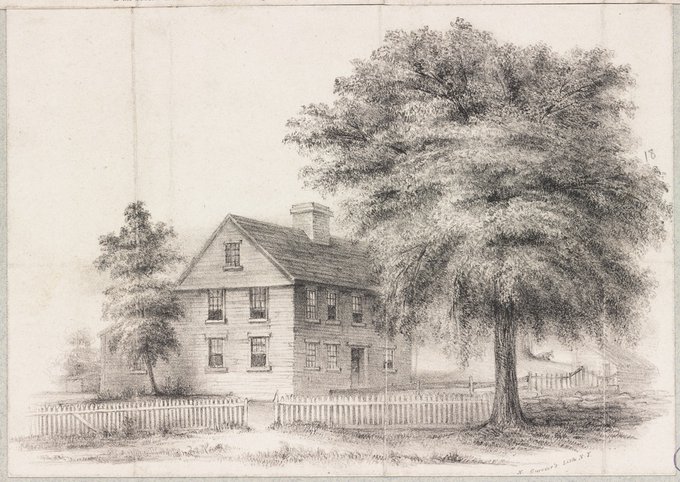
Joseph Warren’s father, Joseph Warren, had married Mary Stevens—who, at twenty-seven, was more than fifteen years younger than her husband—in the spring of 1740 and they began their new life together in their picturesque house. They soon expanded the property by purchasing sixteen acres of land from Mary’s father, Capt. Samuel Stevens. And just over a year later, on June 11, 1741, they welcomed the first of their four sons, Joseph Warren. *This nineteenth century sketch is the Warren’s eighteenth-century family home in Roxbury, Massachusetts. ~~From “Founding Martyr” by Christian Di Spigna.
Dr. Joseph Warren Foundation tweet media
English
0
2
28
228
Dr. Joseph Warren Foundation
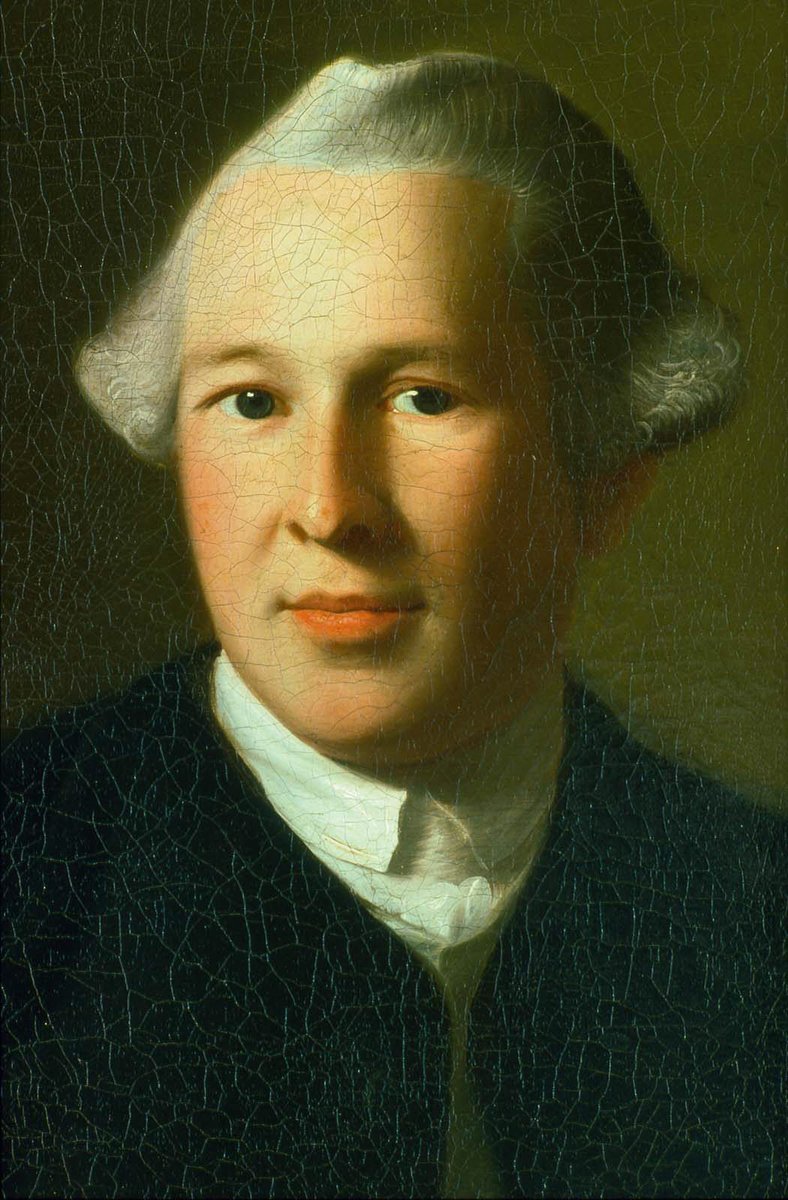
John Hancock was Joseph Warren’s friend, fellow Mason, patient, and fellow Son of Liberty. He served in the Massachusetts House of Representatives for many years and was often elected the moderator at town meetings which were important to how government was run. He was in tune with Samuel Adams and Joseph Warren whose Radical faction vehemently opposed the policies of Parliament and the Massachusetts royal government. But politically John tended to be somewhat more moderate. Unlike Adams and Warren, he wandered off the rebel course for a short time, but returned to the fold. John was one of the richest men in Massachusetts. When his Uncle Thomas Hancock died in 1764, John inherited the House of Hancock, a dynasty his uncle had built which included supplying the army during the French and Indian War, merchant ships, agents in London, warehouses, etc. that employed hundreds of people. His uncle’s wife, Lydia, signed over the mansion on Beacon Hill and all its contents to John on the condition that she could continue to live there. John loved his aunt very much. She was his guiding light and matchmaker and staged huge parties for him and his guests. While he was hiding in Lexington with Samuel Adams, his Aunt Lydia was with him as well as his fiancé Dorothy Quincy. John was extremely generous to the town of Boston. He paid to have a church completely remodeled, bought a fire engine, and often held parties on his lawn that were open to the public with fireworks and Madeira for all. John suffered from gout and tended to be a hypochondriac. Joseph Warren did his best to treat John’s symptoms and care for his friend with the limited medical knowledge of the time.
Dr. Joseph Warren Foundation tweet media
English
2
3
28
279
Dr. Joseph Warren Foundation
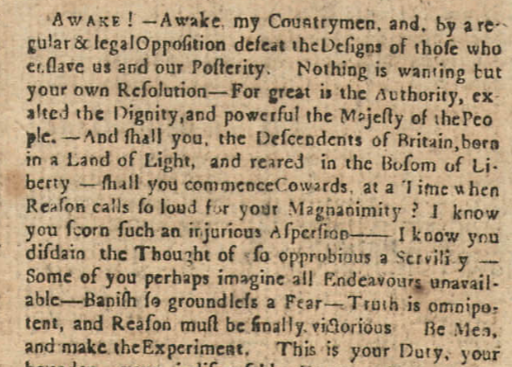
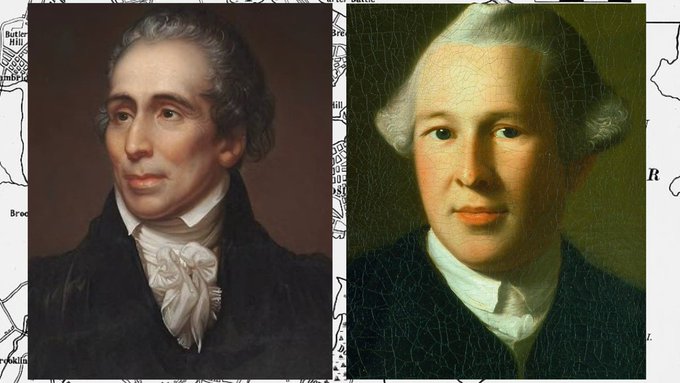
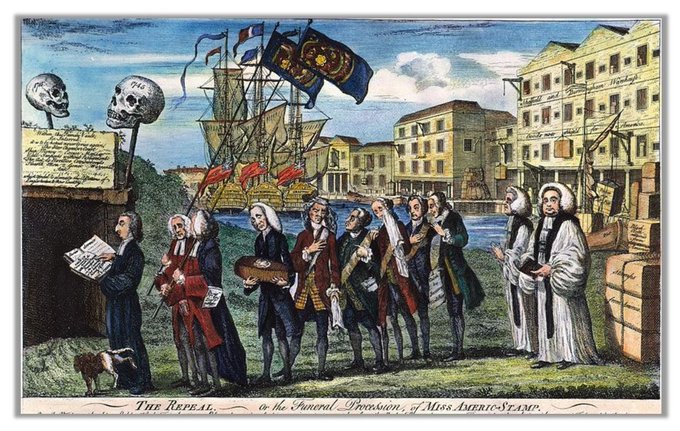
On February 27, 1765, while King George III was not disposed to communicate, Prime Minister George Grenville’s Stamp Bill passed the House of Commons with a large majority. It was a different type of tax from those imposed on the American colonies by the Sugar Act. It was an internal duty. The tax fell widely not only on all legal transactions and newspapers, but also on printed paper of all kinds—playing cards, pamphlets, wills, bonds, deeds, mortgages, and college diplomas, as well as dice. Moreover, it hit the very people likely to be most vocal in complaints such as merchants, lawyers, and journalists. The tax had to be paid in specie, of which there was a shortage in America, and it would have to be collected by special revenue officers. The Bill met with little real opposition in the Commons, and although several petitions were received against its provisions these were rejected. The Lords agreed to the Bill without amendment on March 8, and it received Royal Assent by commission, as George III was ill and unable to attend Parliament, on 22 March 1765. This was the driving force that caused Dr. Joseph Warren—who was only 23 with a burgeoning medical practice and a new wife and child—to become a member of the Sons of Liberty and opposition against Parliamentary taxes and control of colonial autonomy. This is where his rise to power and influence among the Radical faction was born. This is when he first wrote in protest under the pseudonym “B.W.” in the Boston newspapers. “Awake! Awake my Countrymen and by a regular and legal opposition defeat the Designs of those who enslave us and our Posterity. Nothing is wanting but your own Resolution—for great is the Authority, exalted the Dignity and powerful the Majesty of the People.”
Dr. Joseph Warren Foundation tweet mediaDr. Joseph Warren Foundation tweet media
English
1
10
32
859
Dr. Joseph Warren Foundation
When the British evacuated Boston on March 17, 1776, they also evacuated the Charlestown peninsula where the Battle of Bunker Hill was fought on Breed’s Hill. This opened the way for Dr. John Warren to search for the remains of his oldest brother, General Joseph Warren. On March 21, John wrote in his journal: “This day I visit Charlestown, and a most melancholy heap of ruins it is. Scarcely the vestiges of those beautiful buildings remain to distinguish them from the mean cottages. The hill, which was the theatre upon which the bloody tragedy of the 17th of June was acted, commands the most affecting view I ever saw in my life. The walls of magnificent buildings tottering to the earth below; above, a great number of rude hillocks, under which are deposited the remains, in clusters, of those deathless heroes, who fell in the field of battle. The scene was inexpressibly solemn, when I considered myself as walking over the bones of the many of my worthy fellow-countrymen, who jeoparded and sacrificed their lives in these high places. When I considered that, perhaps, whilst I was musing on the objects around me, I might be standing over the remains of a dear brother, whose blood had stained these hallowed walks, with what veneration did inspire me!”
Dr. Joseph Warren Foundation tweet media
English
0
9
57
513
Dr. Joseph Warren Foundation retweetledi
Christian Di Spigna
Christian Di Spigna@Martyr1776·
To many today is remembered as St Patricks or Evacuation Day-I will always think of 3/17 as when the search for Dr Joseph Warrens remains began on Breeds Hill. His brothers located his body a few weeks later. Today marks the 250 of Evacuation Day & the search for Warren's corpse
Christian Di Spigna tweet media
English
0
2
15
330
Dr. Joseph Warren Foundation
Dr. Joseph Warren Foundation@DJWFoundation·
On February 13, 1766, Benjamin Franklin was examined before the Committee of the Whole of the House of Commons to advocate for the repeal of the Stamp Act. He was asked 174 questions about trade, manufacturing, internal and external taxes, and who could afford to pay taxes. If the Stamp Act should be repealed would it induce the assemblies of America to acknowledge the rights of Parliament to tax them, and would they erase their resolutions? To this last he answered a resounding, “No.” Franklin’s refutation of taxes levied on America by Parliament influenced a repealing bill introduced on February 21 to repeal the Stamp Act. It passed both the House of Commons and the Lords. King George III gave royal assent on March 18, 1766. But he believed that it was a complete surrender to American blandishments, violence, and boycotts. The next day Parliament passed the Declaratory Act to reaffirm its right to legislate the colonies and people of America in all cases whatsoever. By mid-April 1766, unofficial word of the repeal of the Stamp Act began arriving in Boston by way of various ship captains who had been in England and Ireland. At eleven o’clock on the morning of Friday, May 16, 1766, Shuball Coffin, the captain of one of John Hancock’s trading ships, the brigantine Harrison, brought the glorious news of the total repeal of the Stamp Act. In celebration, John Hancock treated the populace with a pipe of Madeira wine and tables with food in the front of his mansion on Beacon Hill. He erected a magnificently illuminated stage for exhibition of his fireworks. He extended his celebration to host a dinner for twenty-nine at the Bunch of Grapes Tavern.
Dr. Joseph Warren Foundation tweet media
English
1
4
33
437
Dr. Joseph Warren Foundation
Dr. Joseph Warren Foundation@DJWFoundation·
Patrick Carr was the last and fifth victim of the Boston Massacre (a sixth victim, Christopher Monk died in 1780 as a result of his wounds). Mortally wounded, he died nine days later on March 14. He was buried on March 17, 1770 in Granary Burying Ground, together with the other victims. During the days he was dying, managed to talk about what happened on King Street that night. After arriving from Ireland, Carr worked in Boston in a leather business and was thirty years old in 1770 when the Boston Massacre occurred. On the night of the shooting, just like Samuel Maverick he heard the sound of bells on the street and decided to go outside. But unlike Maverick who thought it was a fire, Carr who was familiar with soldiers and street mobs probably knew that the trouble had something to do with the British – his neighbor persuaded him to leave behind a small cutlass before he headed to King Street. When the shooting erupted, he was wounded while crossing the street with his friend Charles Connor a shipmaster. For Carr, shot through his abdomen, death was inevitable. He was carried to his master’s house and was tended by Dr. John Jeffries. Carr refused to lay the blame for his agonizing death upon the soldiers. According to the doctor’s testimony during the soldiers' trial, Carr told him that he thought that the soldiers would have fired long before. Were the soldiers greatly abused? Yes, they were. Would they have been hurt if they had not fire? Yes. So they fired in self-defense? Yes, and he did not blame whoever it was that hit him. In Ireland he had seen mobs and soldiers called out to quell them, but "he had never in his life seen them bear half so much before they fired." And he had malice toward no one. Samuel Adams was not happy about the missed opportunity to use Carr for further stirring up anti-British sentiment among Bostonians.
Dr. Joseph Warren Foundation tweet media
English
0
2
26
374
HeritageBulwark
HeritageBulwark@hbulwark1·
@DJWFoundation Fantastic post! The contrast between Warren electrifying the crowd at Old South and British officers doing parody theater just a week later is peak revolutionary drama. Humans haven’t changed one bit lol. Petty and savage as ever, I love it
English
1
0
4
36
Dr. Joseph Warren Foundation
Dr. Joseph Warren Foundation@DJWFoundation·
On March 15, 1775, the British also ridiculed Dr. Joseph Warren’s Boston Massacre Oration that he delivered at Old South Meeting House on March 6. British officers and Loyalists gathered on King Street, and proceeded to the nearby British Coffee House, where they conducted a mock town meeting. Loyalist physician Thomas Bolton read a satirical lampoon of Warren’s oration. In addition to his assault on Warren, Bolton reviled other prominent Patriots including John Adams, John Hancock, John Rowe, General Charles Lee, William Molineux, Rev. Samuel Cooper, Josiah Quincy, and Dr. Thomas Young by saying: "I cannot boast the ignorance of Hancock, the insolence of Adams, the absurdity of Rowe, the arrogance of Lee, the vicious life and untimely death of Mollineaux, the turged Bombast of Warren, the treason of Quincy, the Hypocrisy of Cooper, nor the principals of Young." Bolton accused that William Molineux, a Son of Liberty who died in 1774, “through the strength of his own villainy, and the laudanum of Doctor Warren, he quitted this planet and went to a secondary one, in search of liberty.” Despite the Loyalist reaction, the town of Boston thanked Dr. Warren for the elegant and spirited oration delivered by him at their request.
Dr. Joseph Warren Foundation tweet media
English
1
5
34
718
Dr. Joseph Warren Foundation
Dr. Joseph Warren Foundation@DJWFoundation·
"There is nothing so fretting and vexatious, nothing so justly terrible to tyrants and their tools and abettors as free press. The time is coming, when they shall lick dust and melt away." ~~Samuel Adams, March 14, 1768
Dr. Joseph Warren Foundation tweet media
English
1
8
50
801
Dr. Joseph Warren Foundation
Dr. Joseph Warren Foundation@DJWFoundation·
DYK that Ronald Reagan admired Dr. Joseph Warren? In his 1981 inaugural address, Reagan said: "On the eve of our struggle for independence a man who might have been one of the greatest among the founding fathers, Dr. Joseph Warren, president of the Massachusetts Congress said to his fellow Americans: 'Our country is in danger but not to be despaired of. On you depend the fortunes of American, you are to decide the important question upon which rests the happiness and liberty of millions yet unborn. Act worthy of yourselves.' " The quote Reagan cited was from Dr. Warren’s 1775 Boston Massacre Oration.
Dr. Joseph Warren Foundation tweet media
History by Xyonz@Xyonzhistory

We're proud to honor President Reagan with his Official Portrait from 1981. This iconic image captures Ronald Reagan's strong leadership and vision for America, reflecting his optimism and dedication to freedom. His warm smile and confident gaze inspire us to uphold the values he championed. 🇺🇸🦅⭐ Celebrate USA 250! 🇺🇸 Celebrate USA 250 🇺🇸

English
2
7
37
708
Dr. Joseph Warren Foundation
Dr. Joseph Warren Foundation@DJWFoundation·
Happy Friday! We post this photo of Joseph Warren's statue at the Bunker Hill Monument now and again, but here's a little background on it. This seven-foot high Italian marble statue of Warren is in the lodge next to the Bunker Hill Monument in Charlestown, Massachusetts. The heirs of John Collins Warren, Joseph's nephew, contributed the pedestal of verd antique. The statue, sculpted by Henry Dexter, was dedicated on June 17, 1857, and placed in the lodge built specifically to house it. The statue does not depict him as doctor, but as a revolutionary leader and martyr.
Dr. Joseph Warren Foundation tweet media
English
2
4
35
572