
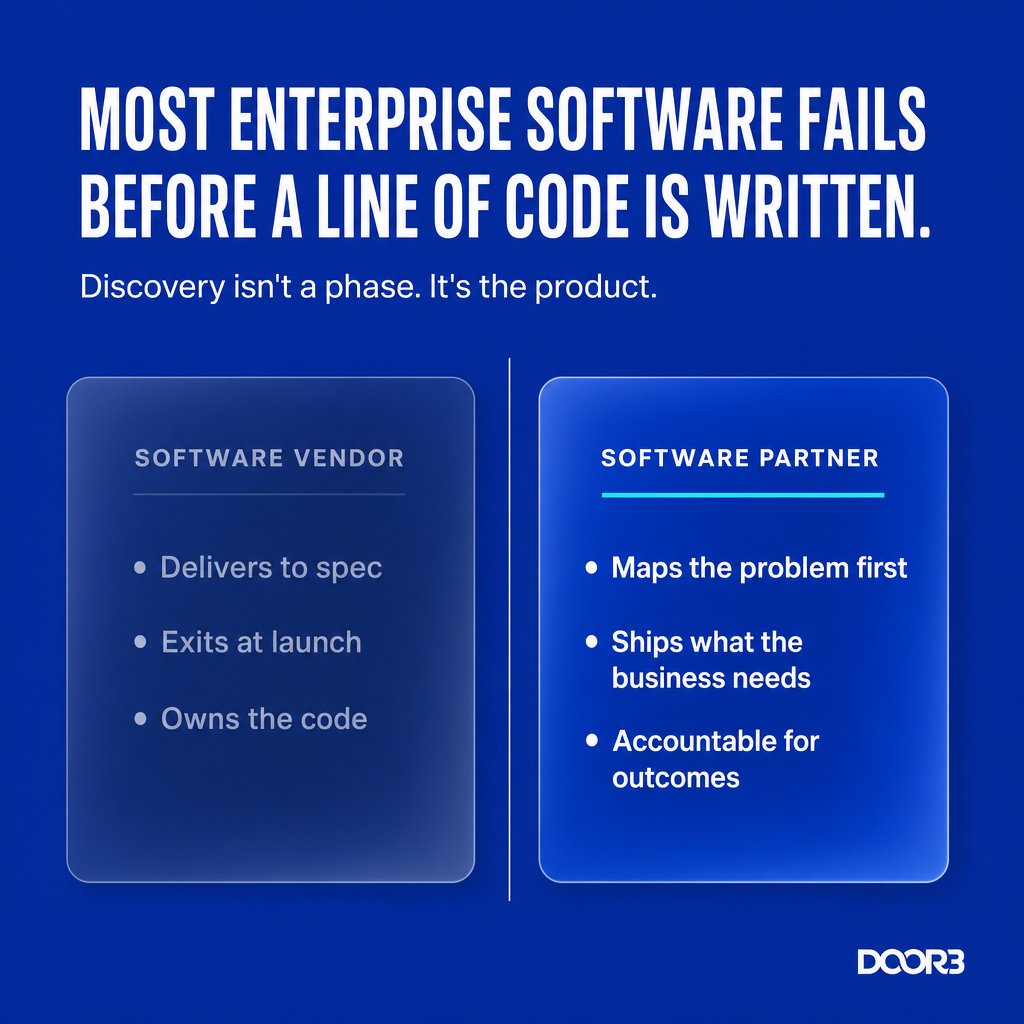
Most enterprise software fails before a single line of code is written.
The requirements document looked comprehensive. The vendor's proposal was detailed. The timeline seemed reasonable. And then six months after launch, the platform is technically live and functionally abandoned, because the team that built it and the team that runs the business were never truly aligned on what the software was supposed to do.
Custom software development is a translation problem more than a technical one. The hardest work is not building the feature. It is agreeing on precisely what the feature needs to accomplish, for which users, in what sequence, and how you will know when it is working.
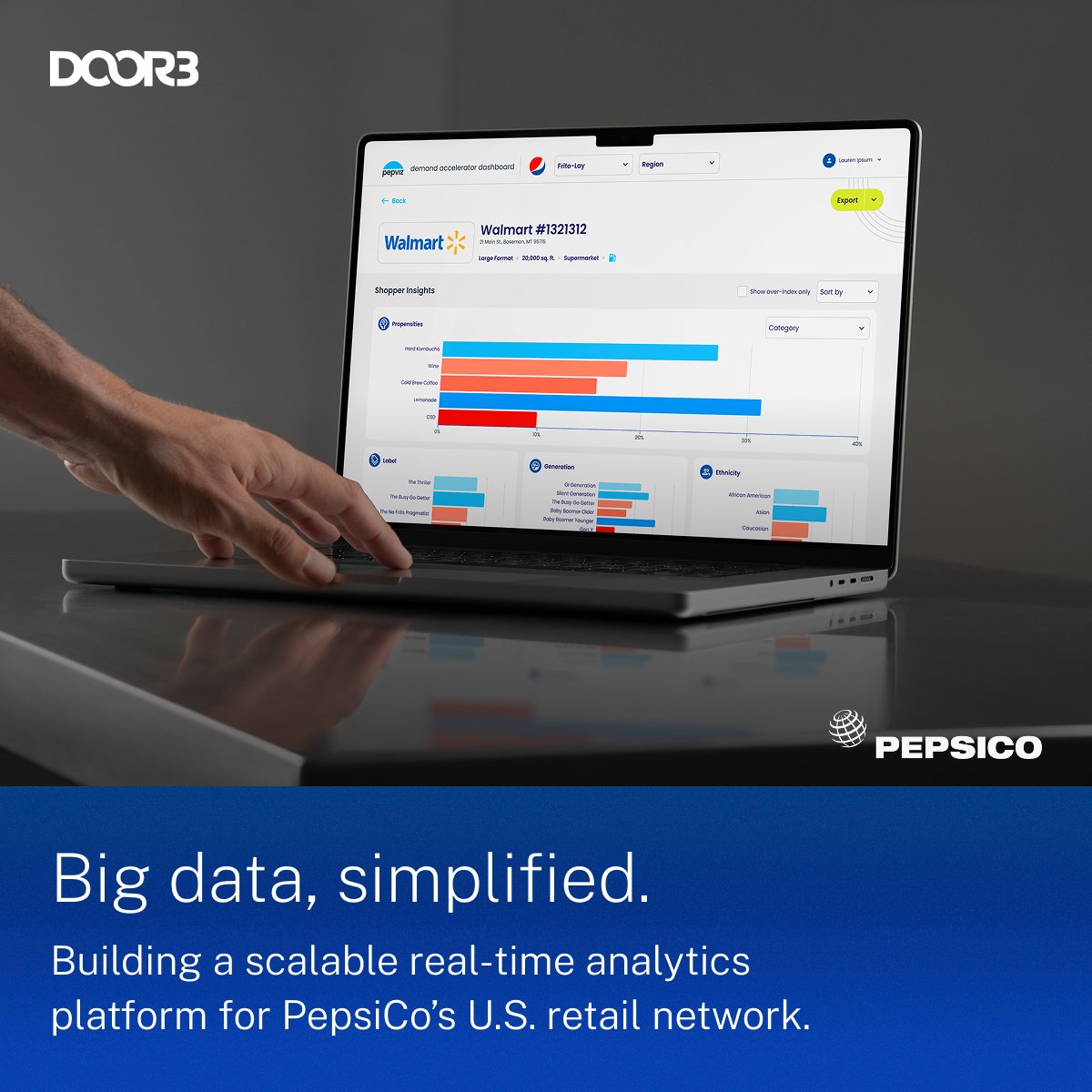
In 22+ years of building platforms for organizations like AIG, PepsiCo, Munich Re, and J&J, the pattern in every failed engagement is the same: discovery was treated as a formality rather than the most important phase of the project.
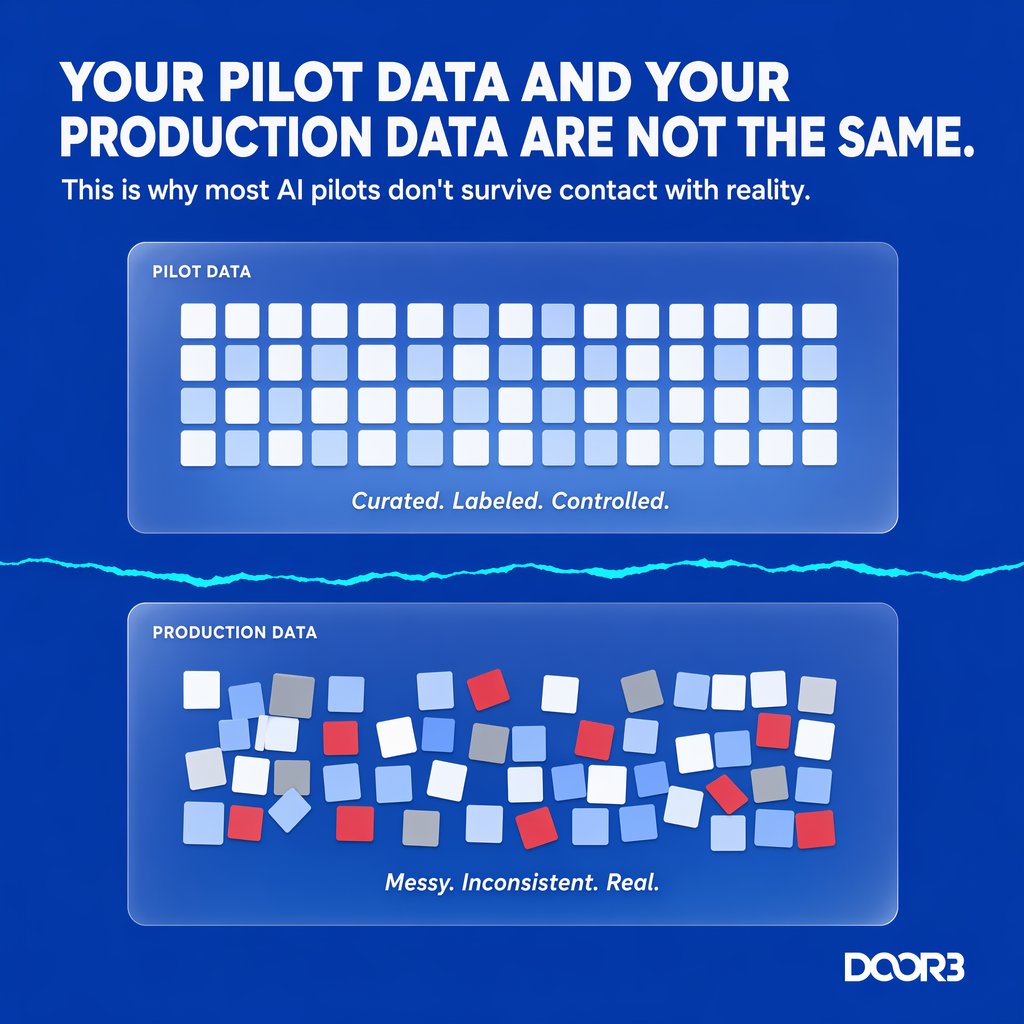
Discovery is where you learn that the "simple interface" the stakeholder described actually handles 11 edge cases no one documented. That the daily users are different from the people who signed off on requirements. That the data model has inconsistencies that will surface the moment real users touch the system.
Teams that invest properly in discovery ship software that gets used. Teams that skip it ship software that gets worked around.
If you are evaluating a custom software build, the most important question to ask any vendor in the first meeting is not about their tech stack. Ask how long their discovery phase takes and what it produces.
That answer will tell you everything about whether the engagement will succeed.
#CustomSoftwareDevelopment #SoftwareDevelopment #SoftwareDevelopmentAgency #EnterpriseAI #DigitalTransformation #TechLeadership #ProductManagement #CTO #SoftwareEngineering
English