Dennis Smithers

317 posts

Dennis Smithers banner
Dennis Smithers

Dennis Smithers

@DSmithersJr

Natural born citizen of the Southern United States. Descended from patriots who conquered, established, and built the greatest nation in the world. | Writer

Arkansas, USA Katılım Nisan 2017
268 Takip Edilen184 Takipçiler
Dennis Smithers
Dennis Smithers@DSmithersJr·
Not only should we bring back public executions, they should be entire events! I'd damn sure buy the ticket and the t-shirt!
Dennis Smithers tweet media
English
0
0
0
6
Anti Left Memes
Anti Left Memes@AntiLeftMemes·
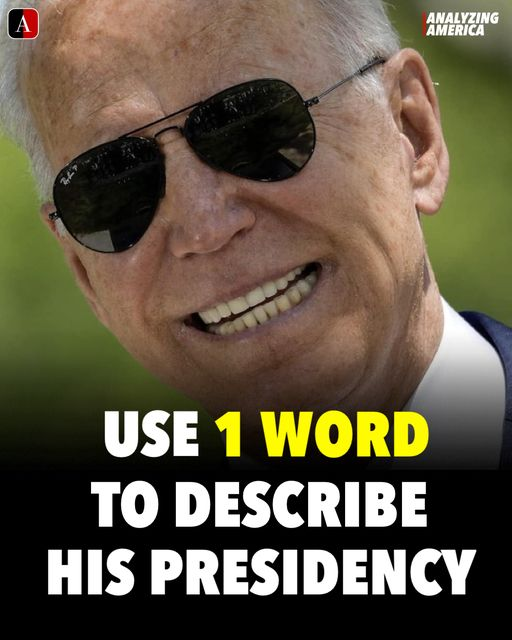
Which word best describes Biden's Presidency?
Anti Left Memes tweet media
English
1.1K
17
98
12.3K
j glick
j glick@jglick67480691·
@DSmithersJr @MAGANEWS_X The worst bunch of crooks they are all total loosers they have donr nothing but hurt Americans total liars
English
1
0
1
45
MAGA NEWS
MAGA NEWS@MAGANEWS_X·
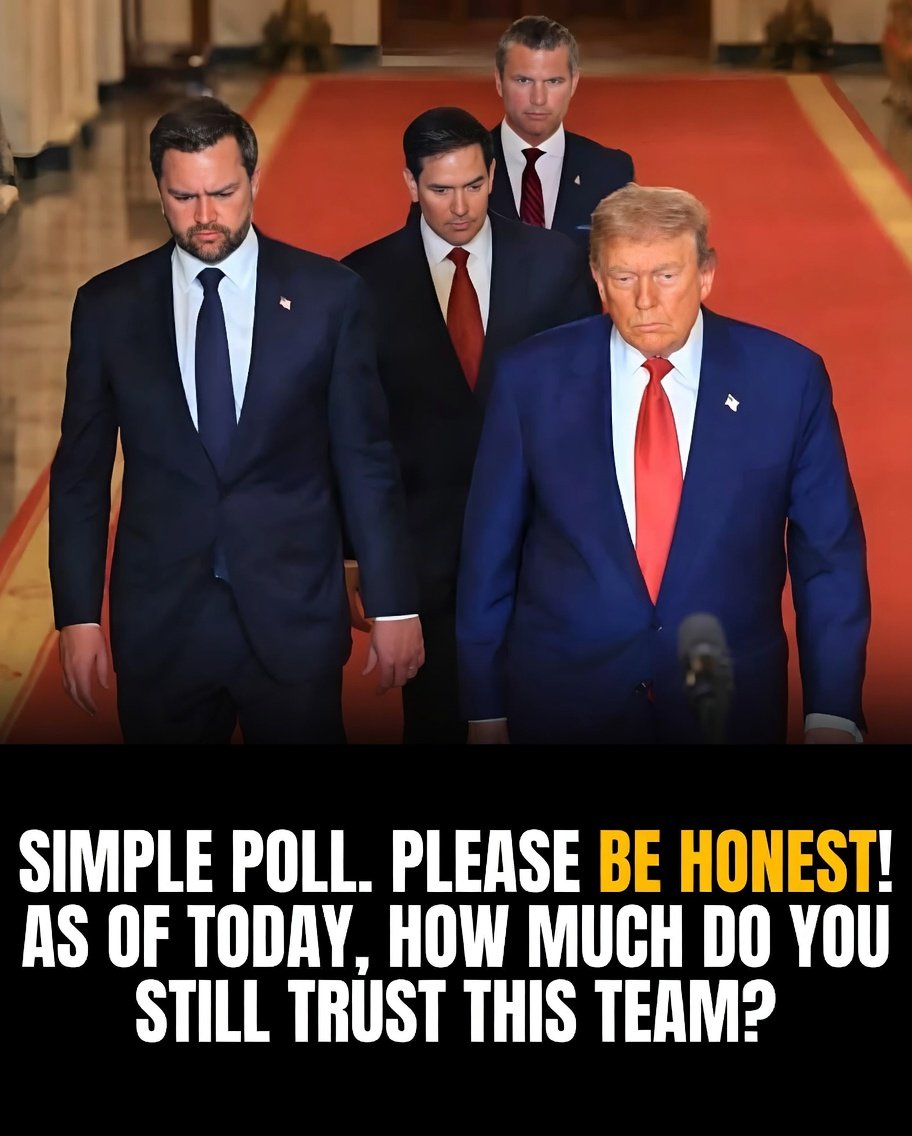
Simple poll. Please be honest! As of today, how much do you still trust this team? A. 100% B. 75% C. 50% D. 25% E. 0%
MAGA NEWS tweet media
English
14.8K
907
8K
631.1K
Dennis Smithers
Dennis Smithers@DSmithersJr·
@DyerbolicalDB Now, I can't have just one--let's get that outta the way! I'll take the General Lee, the Delta, and Christine, please.
English
0
0
0
40
Marc
Marc@MarcMarc246719·
@DSmithersJr @MAGANEWS_X JESUS CHRIST ! ARE YOU FUCKING KIDDING ME ! WHAT DID YOU DO JUST CRAWL OUT FROM UNDER A ROCK ? HE HAS THE LOWEST APPROVAL RATING IN HISTORY OF ALL PRESIDENTS! HE'S A PEDIFIAL...A THIEF ........ HAS NO RESPECT FOR ANYONE(INCLUDING HIMSELF )
English
2
0
0
43
MAGA NEWS
MAGA NEWS@MAGANEWS_X·
Simple poll. Please be honest! As of today, how much do you still trust this man? A. 100 % B. 75% C. 50% D. 25% E. 0%
MAGA NEWS tweet media
English
6.6K
593
3.7K
200.5K
Dennis Smithers
Dennis Smithers@DSmithersJr·
I'd like to share with you my rendition of "The Monkey's Paw," a single from my story collection That Which Follows. Rewriting W.W. Jacobs’ legendary tale in my own voice was an honor. I approached it with deep respect for the original. ONE Outside, the night pressed close—cold, wet, and restless, as though the dark itself had found voice in the wind. It moved in long, grieving sighs about the lonely house, worrying at its corners, slipping unseen along the sodden road. But within the small parlor of Laburnam Villa, the blinds were drawn fast against it, and the fire held the gloom at bay with a steady glow. Father and son sat opposite one another at the chessboard. The elder Mr. White leaned forward with a certain reckless intensity, his fingers lingering too long upon the pieces, as though persuasion alone might alter their fate. His play bore the marks of a man who believed in bold turns and sudden reversals—yet more often than not invited ruin where none had been required. Time and again, he pressed his king into needless peril, until even the quiet observer by the fire was stirred to remark upon it. Mrs. White, white-haired and mild, sat knitting with patient hands, the soft click of her needles marking the passing moments with calm that seemed at odds with the uneasy wind beyond the walls. “Listen to it out there,” said Mr. White, lifting his head, though his eyes did not leave the board. There was something eager in the distraction, as though he welcomed any interruption that might undo what he had already done. “I hear it,” said Herbert, without looking up. The young man’s gaze remained fixed upon the pieces before him. After a moment, he moved. “Check.” Mr. White started faintly, then frowned at the board, seeing—too late—the misstep that had led him there. “I hardly think he’d come tonight,” said the old man, his hand hovering uncertainly over the board. Herbert’s reply came with quiet finality. “Mate.” For a moment, the only sound was the wind, rising in a low, hollow moan about the house. Then Mr. White pushed back from the table with sudden irritation. “This place is a damned misery,” he burst out, his voice louder than the room required. “Of all the blasted, out-of-the-way places to settle, this is the worst of ‘em. The path’s a bog, the road’s a river... ” “Never mind, dear,” said Mrs. White gently, not looking up from her work. “Maybe you’ll win the next one.” He glanced at her sharply, just in time to catch the flicker of amusement that passed between her and their son. The protest he had been ready to make faltered and died. Instead, he gave a small smile, half-hidden beneath his thin grey beard, and busied himself with rearranging the pieces. “There he is,” said Herbert with a faint lift of his brow. The words had scarcely left him when the gate outside struck hard against its post. Then came the tread of heavy footsteps upon the path. Mr. White rose at once, all irritation forgotten, and hastened to the door. It opened upon a gust of cold air and damp, and his voice was heard greeting the newcomer. The reply came in rough tones, as though the night had taken its toll upon the speaker. Mrs. White offered a polite smile as her husband returned, bringing the knocker with him. “Sergeant Major Morris,” said Mr. White, with a note of pride in the introduction. The man who entered filled the doorway as much by presence as by size—tall and broad of shoulder, his face flushed by the weather, his eyes bright beneath heavy lids. There was something of the world about him—and not altogether gentle. He shook hands in turn, his grip firm and lingering, then accepted the seat offered him by the fire. There he settled, stretching his hands toward the warmth, while Mr. White busied himself with a kind of cheerful ceremony—producing whiskey, setting out tumblers, and placing a small copper kettle upon the fire. A chair was drawn closer, and for a time the three men spoke easily enough—of roads and weather, of distances poorly measured and worse maintained. The storm outside made a ready subject, and the fire, the whiskey, and the company soon worked their small comforts upon the newcomer. His tongue became loose with story—adventures near and far. “Twenty-one years of it,” said Mr. White, nodding toward his wife and son. “When he left, he was barely more than a boy in the warehouse. Now look at him.” “He doesn’t seem to have suffered much for it,” said Mrs. White politely. “I’d like to see India myself,” said the old man. “Just to have a look around.” “Better where you are,” said the sergeant major. He set his empty glass down, then turned it idly between his hands. “I’d like to see those old temples,” Mr. White went on. “Fakirs... jugglers... all that. What was it you started telling me the other day? Something about a monkey’s paw?” “Nothing,” said the soldier too quick. “Nothing worth hearing.” “A monkey’s paw?” said Mrs. White. The sergeant major shifted slightly in his chair. “Well... it’s just a bit of what you might call... magic, I suppose.” The three of them leaned in, drawn more by his reluctance than by the words themselves. Morris lifted his glass without thinking, found it empty, and set it down again. Mr. White refilled it. “To look at,” the sergeant major said at last, fumbling in his pocket, “it’s nothing special. Just a small paw. Dried—like a mummy.” He drew it out and held it toward them. Mrs. White recoiled slightly, a faint grimace touching her face, but Herbert reached out and took it, turning it over in his fingers. “And what’s so special about it?” said Mr. White, taking it from his son and placing it upon the table after a brief inspection. The thing lay there—dark, shriveled, oddly contorted. “It had a spell put on it,” said Morris, “by an old fakir—a holy man. He wanted to prove that fate ruled people’s lives... and that those who interfered with it did so to their sorrow.” The crackling wood shifted in the fireplace. “He set it so that three separate men could each have three wishes from it.” There was a pause. Then Herbert gave a short, uncertain laugh. “Well... why don’t you take your three, then?” The soldier looked at him in a way that quieted the young man’s smile before it had fully formed. “I have,” he said. The color drained, for a moment, from the sergeant major’s face. Mrs. White leaned forward slightly. “And they were granted? All three?” “They were.” His glass touched his teeth with a faint, sharp click as he drank. “And has anyone else used it?” she pressed. “The first man had his wishes,” said Morris. “Yes.” He hesitated. “I don’t know what the first two were. But the third... ” He paused. “ ...the third was for death.” The words settled into the room with weight. “That’s how I came by it.” No one spoke. “If you’ve had your wishes,” said Mr. White at last, “then it’s no use to you now. Why keep it?” The soldier gave a slow shrug. “Fancy, I suppose. Or something like it. I thought about selling it... but I don’t think I will.” The military man looked at the thing on the table with something close to distaste. “It’s caused enough trouble already. And people don’t believe it anyway. Those who are interested want to try it first and pay later.” Mr. White’s eyes lingered on it. “If you could have another three wishes,” he said in near whisper, “would you?” Morris did not answer at once. “I don’t know,” he said finally. “I don’t know.” He reached out, picked up the paw— and tossed it into the fire. Mr. White cried out and sprang forward, snatching it back before the flames could take it. “Better let it burn,” said Morris, his voice low, steady. “If you don’t want it,” said Mr. White, turning it over in his hand, “give it to me.” “I won’t,” said the sergeant major sharply. “I threw it away for a reason. If you keep it, don’t blame me for what happens.” He leaned forward. “Throw it back in the fire, James. That’s the sensible thing.” Mr. White hesitated—then shook his head. Instead, he examined the thing more closely. “How do you use it?” he asked. The sergeant major remained silent for some time. His eye twitched occasionally as he stared at the mummified object. Finally— “Hold it in your right hand... and speak your wish aloud.” He held silent a moment. “But I warn you—there are consequences.” The fire popped, sending embers out onto the hearth. Mrs. White rose, moving toward the table. “It sounds like something out of the Arabian Nights,” she said. “Why not wish me four extra hands to help set this supper?” Mr. White laughed and gripped the paw in his right hand. The sergeant major reached out suddenly, catching him by the arm. “If you’re going to wish,” he said gruffly, “wish for something sensible.” Mr. White nodded, a little abashed, and motioned his friend toward the table. They ate. And for a time, the paw was forgotten. Later, they sat again by the fire, listening as the sergeant major spoke of travel—of places strange and distant, of things half-told and better left so. His voice filled the room, but the warmth had changed, and though no one remarked upon it, each of them was aware of the thing that lay just out of sight. At last, the visitor rose to leave, the last train through town pressing him on. “If that story about the paw is as true as the rest,” said Herbert, once the door had closed behind Sergeant Major Morris, “we won’t get much out of it.” “Did you pay him for it?” said Mrs. White, watching her husband closely. “Just a little,” he said, coloring faintly. “He didn’t want it, but I made him take it. He urged me again to throw it away.” “Of course he did,” said Herbert, with mock solemnity. “Why, we’re going to be rich now. Famous, too. Happy. You’d better wish to be an emperor, father—then you won’t have to answer to any woman.” He dodged away as his mother made a playful swipe at him. Mr. White stepped to the mantel and drew up the paw. “I don’t know what to wish for,” he said. “Seems to me I’ve already got what I want.” “If you paid off the house, that’d be a burden gone,” said Herbert, resting a hand on his father’s shoulder. “Go on—wish for two hundred pounds. That ought to do it.” Mr. White hesitated—then, with a self-conscious smile, raised the thing in his right hand. Herbert crossed to the piano and struck a few low, dissonant chords. He watched his father with a grin, throwing a wink to his mother as the dark notes shivered into silence. “I wish for two hundred pounds,” said Mr. White. The final chord rang— and broke sharply as Mr. White cried out. The paw slipped from his hand and fell to the floor. His wife and son rushed to him. “It moved,” he said, staring at it with a look of revulsion. “As I wished—it twisted in my hand. Like a snake.” “Your imagination,” said Mrs. White, though her eyes lingered on the thing. Mr. White shook his head. “Maybe,” he said. “No harm done, I suppose. Still... it gave me a turn.” “Well, I don’t see any money,” said Herbert, picking it up and setting it on the table. “And I don’t expect I will.” They settled again by the fire. The wind had risen higher than before. Somewhere above, a shutter slammed. Mr. White started at the sound. A silence fell then—strange, and heavy, and not easily shaken off. At last, the old couple rose and made their way upstairs. “You’ll find the money in a bag at the foot of your bed,” Herbert called after them, “and something ugly sitting on top of the wardrobe watching while you count it.” He remained below alone. The fire had sunk low, its glow dim and ominous. He sat watching it, idly at first—then more intent—as shapes formed and shifted among the embers. Faces. One of them lingered. It was twisted, its features drawn into something grotesque. Herbert stared at it. It seemed to grow clearer the longer he watched, to the point it finally appeared to be staring back. With a short, uneasy laugh, he reached for a glass of water to throw over the coals— and his hand closed instead upon the monkey’s paw. He flinched, as though stung, and quickly wiped his hand against his shirt. Then, without looking back at the fire— he went upstairs to bed. TWO In the brightness of the winter sun the next morning, as it spilled across the breakfast table, Herbert laughed at his unease of the night before. The room, so troubled in darkness, now seemed plain and harmless again—its shadows gone. The paw had been cast aside upon the sideboard, where it lay neglected, like some trivial thing no longer worth notice. “I suppose old soldiers are all alike,” said Mrs. White. “The idea of us sitting here listening to such nonsense. Wishes. As if anything like that could happen. And if it could—how would two hundred pounds do you any harm?” “Might drop straight out of the sky,” said Herbert. “Morris said it happens naturally,” said his father. “So that you might call it coincidence.” “Well, don’t spend it before I get back,” said Herbert as he rose from his chair. “I’m afraid it’ll turn you into a miser, and we’ll have to disown you.” His mother laughed, following him to the door and watching him down the road until he vanished from sight. When she returned, she resumed her place at the table with a faint smile—amused at her husband’s lingering belief, though not entirely free of it herself. It sent her, quicker than usual, to the door at the postman’s knock. But it was only a bill. Her mood shifted at once. “Soldiers and their stories,” she said shortly, folding the paper with unnecessary force. “A fine lot of nonsense.” At dinner, she spoke of it again. “I expect Herbert will have plenty to say about it when he comes home,” she said. “I expect he will,” said Mr. White. “But all the same... the thing moved in my hand. I know it did.” “You thought it did,” said his wife. “I say it did,” he replied. “There was no mistaking it. I had just—” He broke off. “What is it?” Mrs. White did not answer. She was looking out the window. A man stood outside the gate. The stranger lingered there, uncertain, glancing toward the house and then away again, as though debating whether to approach. His clothes were neat—well kept—and upon his head he wore a silk hat, new and carefully brushed. Three times he moved as if to enter. Three times he turned away. At last, with a kind of sudden resolve, he opened the gate and came up the path. Mrs. White rose. Almost without thinking, she slipped her hands behind her back, hastily loosening the strings of her apron and tucking it beneath the cushion of her chair before going to the door. She admitted him. He entered with a slight bow, his manner restrained, and his eyes moved about the room with a careful, uneasy attention. Mrs. White spoke quickly, apologizing for the room, for her husband’s coat—still the one he wore in the garden—and for small things that did not require apology. The man listened, but not entirely. It was clear he had come for something else. For a moment, he said nothing. Then— “I was asked to call,” he said at last, brushing an imaginary speck from his sleeve. “I come from Maw and Meggins.” Mrs. White stiffened. “Is something wrong?” she said. “Has something happened to Herbert?” “What is it?” she pressed. “What is it?” Mr. White raised a hand. “There, now,” he said. “Sit down. Don’t jump to conclusions. I’m sure you haven’t brought bad news, sir.” But he watched the man closely as he spoke. “I’m sorry—” the visitor began. “Is he hurt?” cried Mrs. White. The man inclined his head. “Yes,” he said quietly. “Badly hurt. But there is no pain.” Mrs. White clasped her hands together. “Oh, thank God,” she said. “Thank God for that. At least he’s not in pain—” She stopped. The words settled. The meaning followed. Slowly, she raised her eyes to the man again. He had turned his face aside. Her breath caught. She reached out blindly, finding her husband’s hand and gripping it hard. Neither spoke. At last, the visitor did. “He was caught in the machinery,” he said. Mr. White repeated the words slowly, as though testing them for sense. “Caught... in the machinery.” He stared out through the window, unseeing. Then, almost absently, he took his wife’s hand between his own and pressed it gently—just as he had done for years, when the gesture meant something certain. “He was the only one left to us,” he said quietly. The visitor coughed and turned toward the window. “The firm asked me to express their sincere sympathy,” he said. “I hope you understand—I’m only doing as I’ve been told.” Mrs. White did not move. Her face had gone pale. Her eyes remained fixed on nothing. “I was also to say,” the man continued, “that Maw and Meggins accept no responsibility. They admit no liability.” He paused. “But in consideration of your son’s service... they wish to offer you a sum in compensation.” Mr. White let go of his wife’s hand. His legs became unsteady, as though the floor beneath him had tilted. His lips mouthed: How much? Two hundred pounds was the answer. Mrs. White gave a cry, but Mr. White did not hear it. An odd smile formed on his face. He reached out his hands—as though feeling for something in the dark— and then, without a word, fell forward to the floor. THREE In the cemetery some two miles away, the Whites laid their son to rest. Then they returned to the house— and found it waiting with an unbearable silence that settled into the walls, into the corners, into the very air. The rooms felt larger—emptier. It had all happened so quickly that neither of them could fully take hold of it. They moved through the days in a kind of suspended expectation, as though something more must follow—something yet to arrive that would ease the weight that had fallen upon them. But nothing came. Time passed. And expectation gave way to something else— a quiet, hopeless resignation. They spoke little now. There was nothing left to say that had not already been said. Days stretched, slow and tiresome. Then one night, Mr. White awoke suddenly. He reached out— and found the space beside him empty. The room lay in darkness. From the window came the faint, stifled sound of weeping. He pushed himself up on one elbow and listened. “Come back to bed,” he said softly. “It’s cold.” “It’s colder for my son,” said the old woman. Her voice broke, and the quiet sobbing began again. Mr. White lay back. The bed was warm. His eyes, heavy. The sound of her grief faded at the edges of his hearing as sleep crept over him once more—uneven, troubled. Then— a cry. Sharp. Wild. He started upright. “The paw!” she cried. “The monkey’s paw!” “What—where?” he said, struggling to wake. “What is it? What’s happened?” She came toward him in the dark, stumbling, her breath quick. “I want it,” she said. “You didn’t destroy it, did you?” “It’s downstairs,” he said, bewildered. “On the bracket in the parlor. Why?” She gave a bizarre sound—half laughter, half sob—and leaned down, pressing a hurried kiss against his cheek. “I only just thought of it,” she said. “Why didn’t I think of it before? Why didn’t you?” “Think of what?” “The other wishes,” she said quickly. “We’ve only used one.” He stared at her. “Wasn’t that enough?” he said, his voice tightening. “No,” she cried. “No—we’ll have another. Go and get it. Wish our boy back!” The words struck him like a blow. He threw back the covers. “Good God, Edith” he said. “You’re not thinking clearly.” “Go and get it,” she said, catching at him. “Quickly—wish it. Wish him back. Oh, my boy—my boy!” Mr. White fumbled for a match and lit the candle with shaking hands. “Get back into bed,” he said. “You don’t know what you’re saying.” “We had the first wish granted,” she said. “Why not the second?” “That was chance,” he said. “Nothing more.” “Go and wish!” she cried. He looked at her fully then— and something in her face made him falter. “He’s been dead ten days,” he said, his voice low. “And... I didn’t tell you everything. I couldn’t. I... I only knew him by his clothes.” The words hung between them. “If he was too terrible to look at then...” he said, “what would he be now?” “Bring him back,” were her words. She seized his arm and pulled him toward the door with a strength that startled him. “Do you think I’d be afraid of my own child?” Reluctantly, he went. Down into the darkness. He moved slowly, his hand trailing along the wall, finding his way by memory more than sight. Through the pounding of his broken heart, he heard in his mind Herbert teasing him about being henpecked—a long-running badger by his son that secretly vexed him because of the truth in it. The parlor. The mantel. The paw lay where it had been left. He reached for it— and hesitated. A thought came to him then, sudden and cold: That the wish might already be forming. That before he could turn— before he could escape— his mutilated son might already be standing behind him. His breath caught. He fumbled, losing his sense of direction for a moment, striking against the table. The room seemed to shift around him, unfamiliar in the black. At last he found the door again, and with the thing clutched tightly in his hand, made his way back into the passage and up the stairs. When he reentered the bedroom— his wife was waiting. Her face, pale and intent, looked changed to him—drawn tight with expectation, lit by something that did not belong to grief alone. He felt, suddenly— afraid of her. “Wish,” she said. “It’s wrong,” he said. “It’s foolish and wicked.” “Wish!” The old man raised his hand. The paw felt foul. Profane. It seemed to pulse with a cold, borrowed heartbeat against his palm. He forced the words out through a clenched throat: “I wish my son alive again.” The talisman slipped from his fingers and dropped to the floor. He stared at it. Then sank slowly into the chair beside the bed, trembling. His wife moved to the window at once and pulled up the blind. Mr. White sat there for a long time. The cold crept in around him. The candle burned low, its light unsteady, throwing restless shadows across the ceiling and walls until, with a final flicker, it died. Darkness. At last, with an exhausted sense of relief, he rose and made his way back to bed. Eventually, she came and lay down beside him. Neither spoke. They lay in silence, listening... The ticking of the clock. A creaking somewhere. The faint, dry rustle of something moving within the walls. After a time, he reached for the matches, struck one, and rose, going down to fetch another candle. At the foot of the stairs, the match went out. He paused— struck another— And at that moment— a knock came at the door. Soft. So soft it might have been imagined. He froze. The matches fell from his hand, scattering across the floor. He stood there, not breathing. The knock came again. Then— he turned— and fled back up the stairs, dashed into the bedroom and slammed the door behind him. A third knock sounded. This time— there was no mistaking it. “What was that?” cried the old woman. “A rat,” said the old man, his voice in shake. “A rat... it ran past me on the stairs.” She sat upright, listening. Then— a knock. Loud. Heavy. “It’s Herbert!” she screamed. “It's Herbert!” She threw herself from the bed and ran for the door, but her husband was quick. He caught her by the arm and held her fast. “What are you doing?” he said, his voice breaking. “It’s my boy—it’s Herbert!” she cried, struggling against him. “I didn’t think—it’s two miles away. Why are you holding me? Let me go! I have to open the door!” “For God’s sake—don’t let it in,” he said, trembling. She turned on him. “You’re afraid of your own son? Let me go! I’m coming, Herbert—I’m coming!” Another knock. And another. She wrenched herself free and fled from the room. He followed to the landing, calling after her in a desperate voice as she hurried down the stairs. He heard the chain fall back. The slow, stubborn scrape of the lower bolt drawn from its socket. Then her voice— strained, breathless— “The bolt,” she cried. “Come down—I can’t reach it!” But he was on his knees. The darkness swallowed the floor before him as he groped wildly, his hands sweeping over the boards in frantic search. The paw. Where had it fallen? The knocking— rapid now. Insistent. A hammering that thundered through the house. He heard the scrape of a chair dragged across the passage—the dull thud of its legs set hard against the door. The bolt creaked. Slowly. Reluctantly. Sliding back. His fingers struck something— dry— twisted— He seized it. The monkey’s paw. He clutched it tight in his right hand, his breath catching— and spoke— not loud— but with all that remained of him— “I wish my son dead again.” The knocking stopped. At once. As though it had never been. Only the echo of it lingered. Then— the chair moved. The door opened. A rush of cold air swept up the stairway. And from below— a long, miserable wail hollowed out by grief. He rose. He went down to her. And then past, through the open door. Out into the night. The streetlamp across the way flickered as wind moved softly along the empty road. THE END The Monkey’s Paw—#SmithersRendition | #Gothic
Dennis Smithers tweet media
English
0
0
0
93
Genius Tech
Genius Tech@Geniustechw·
What is your first thought when you see this?
Genius Tech tweet media
English
3.8K
131
436
66.5K
Sappy 🖤
Sappy 🖤@sappy_satanica·
@DSmithersJr @Rightanglenews They're not dragging a child into it they're simply raising the child. The child is unaffected. Only way they'd be dragging the child into it is by trying to convert it to be gay.
English
4
0
1
306
Right Angle News Network
Right Angle News Network@Rightanglenews·
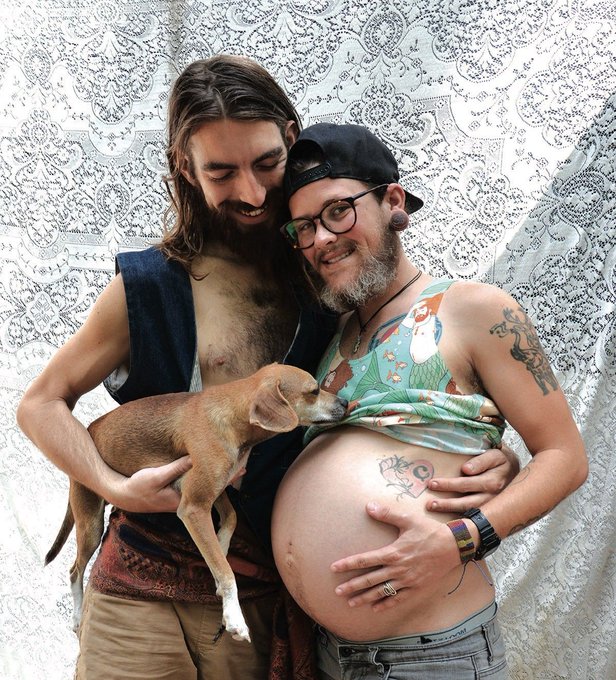
Two gay men in Nashville are sparking nationwide outrage after recording a video of themselves mocking the baby they had via surrogacy as it cries for its mother for content. Man: “Who do you want, Dada or Pop?” Baby: “Mama” Man: “No, there is no mama.” Baby: cries
English
10K
13.9K
67.8K
14.3M