Duke

692 posts

Duke

Duke

@DangitShaun

free

Katılım Şubat 2015
171 Takip Edilen44 Takipçiler
Duke
Duke@DangitShaun·
@AAmerica111 Intermediate of West Afr and Euro sure, leaning towards West Africa Avg Black American is barely 0.5% Amerindian
English
1
0
6
135
Heritage Black American 🇺🇸
Genetically, and anthropological, Black Americans are typically intermediate between Western Africans, Europeans, and Amerindians. This directly contradicts those forcing a generic pan West African identity on us out of envy. Empirical data overrides anyone’s personal opinion.
Heritage Black American 🇺🇸 tweet mediaHeritage Black American 🇺🇸 tweet mediaHeritage Black American 🇺🇸 tweet media
English
5
0
16
982
Duke
Duke@DangitShaun·
@AdhaM3240 @Greenjousee Cushitic’s eurasian ancestry (45%? of it) is Egyptian-related It came from predynastic Egypt but hard to say how much of it was carried by the Ancient Egyptians Medieval Kulubnarti Nubians were 60% Egyptian related in ancestry 40% Nilotic SSA
Duke tweet media
English
0
0
0
29
totalcairoandeath🇪🇬
@Greenjousee Nubians are around 30% egyptian, while ancient nubians were 60% Egyptian by ancestry. They might be 50% SSA on an average scale
totalcairoandeath🇪🇬 tweet mediatotalcairoandeath🇪🇬 tweet media
English
2
0
4
242
totalcairoandeath🇪🇬
All three of them have the same ancestors and all three of them believe that they're the only descendants of ancient Egyptians and that the others are a result of migration and colonialism
totalcairoandeath🇪🇬 tweet media
English
15
6
32
5.9K
Duke
Duke@DangitShaun·
@Maqitzara @motalamematska @afrojudaic @yvessaiintty1 I’d say the 1st migration is not as gender biased as the 2nd, especially considering the eurasian maternals in Ethio-Semites is close in # to their autosomal the 2nd migration Sabaeans happened in the 1000-800BC interval The 1st one perhaps 2000-1500 BC
English
0
0
1
19
Duke
Duke@DangitShaun·
@Maqitzara @motalamematska @afrojudaic @yvessaiintty1 Ethio-Semitic does not descend from Sabaic The modern Ethio-Semitic languages descend from a previous migration of Arabians into Horn of Africa So at least two migrations from Arabia and it is hard to say how much ancestry Ethio-Semites have from Sabaeans, the 2nd migration
English
1
0
2
35
Duke
Duke@DangitShaun·
@rahowaii Expand on forehead , orbits , nose shape differences between ANA and SSA groups
English
1
0
0
210
Saturn ♦️
Saturn ♦️@rahowaii·
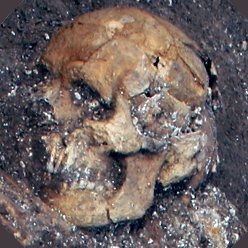
Nazlet Khater is possibly an ANA (ancestral north african) individual. His skull has many generalized features, which most africans lack, tho he is prognathic. As you can see, niger congo africans have foreheads completely different, and specialized orbits, nose shapes.
Saturn ♦️ tweet media
Ancestral Whispers@Sulkalmakh

Facial Reconstruction of a 37,000-Year-Old Man from Egypt In 1980, excavations of a hill near the village of Nazlet Khater in Upper Egypt uncovered two burials. The first skeleton was poorly preserved, but the second, located on the summit of the hill, survived almost intact - only the feet were missing. The grave was shallow and had been eroded by Nile flooding, causing the skull to become exposed on the surface. The skeleton of an adult male was found lying on his back, accompanied by a large flint axe. The Nazlet Khater 2 skeleton is one of the few complete human skeleton from the Early Upper Paleolithic of North Africa. The remains belonged to a man aged approximately 20-29 years who stood around 160 cm tall. Not far from the hill was a flint quarry where prehistoric people extracted raw material. Evidence of intensive mining activity includes trenches, shafts, and narrow tunnels no more than 50 cm high, apparently dug around the same period as the burials. The stone axe found in the Nazlet Khater 2 grave was probably used for quarrying, as identical tools have been discovered in the ancient mines. The skeletal pathologies are particularly revealing in this regard. Multiple injuries and degenerative changes in the spine and limbs indicate extremely heavy physical labor, typical of mining activities and the regular lifting of heavy loads. Severe arthritis of the cervical vertebrae suggests that this man habitually carried heavy burdens on his head or with the aid of a forehead strap, as some traditional peoples do today. Damage to the arms indicates extensive use of percussion tools, especially with the right hand. He also had healed fractures of the hands. Evidently, he began performing strenuous labor in adolescence, while his bones were still developing. Physically, Nazlet Khater 2 differs from other African and European Upper Paleolithic humans, although they share a number of archaic features. His primary morphological characteristics are clearly equatorial, resembling those of the Epipaleolithic inhabitants of Nubia as well as the South African remains from Springbok Flats and Kalomo, which were once considered very ancient (Pinhasi & Semal, 2000) but are now known to be much more recent. The large cranial vault of Nazlet Khater 2 is typical of Upper Paleolithic humans. The expansion of the braincase in its lower portion is particularly archaic, as are the highly placed temporal lines, resulting in a very narrow minimum frontal breadth relative to the maximum frontal breadth (although the minimum breadth is average in absolute terms and the maximum breadth is large). This configuration likely reflects the powerful development of the chewing musculature, which is also evident in the structure of the mandible. The pronounced brow ridges and rather sloping forehead are likewise typical of Upper Paleolithic people. The shape of the upper margin of the temporal squama - strongly convex in the front but flattened behind and lacking a parietal notch - may be regarded as primitive, though it could also be described as “Bushmanoid,” since it occurs among San populations and on the skull from Fish Hoek. The overall facial form of Nazlet Khater 2 is relatively low and especially broad across the cheekbones, with a well-developed canine fossa and maxillary notch, while the broad upper jaw exhibits noticeable alveolar prognathism. Compared with many Upper Paleolithic and all ancient African skulls, Nazlet Khater 2 is distinguished by a moderately high face (despite its great breadth) and by very large, rounded, and relatively high eye orbits. Unusual for Africa is his mesorrhine nose - a nose of intermediate width - resulting from a not particularly wide nasal aperture combined with a very great nasal height. The nasal bones are equatorial: straight, nearly vertical, and rounded in cross-section. The alveolar process of the upper jaw is flattened in the front and bends markedly at the level of the canines, a distinctly archaic trait. In terms of mandibular features, Nazlet Khater 2 is fully anatomically modern, although the jaw is exceptionally large and robust, as is typical of the earliest Homo sapiens. (Antropogenez, S.V. Drobyshevsky, 2010)

English
8
9
71
5K
Duke
Duke@DangitShaun·
@moduscrap @some1somwhr @Sulkalmakh Increase in ANA = Swarthier Not entirely sure NK2 is ANA tho If NK2 is not ANA, I wonder if any population has ancestry from his people
English
0
0
0
112
Ancestral Whispers
Ancestral Whispers@Sulkalmakh·
Facial Reconstruction of a 37,000-Year-Old Man from Egypt In 1980, excavations of a hill near the village of Nazlet Khater in Upper Egypt uncovered two burials. The first skeleton was poorly preserved, but the second, located on the summit of the hill, survived almost intact - only the feet were missing. The grave was shallow and had been eroded by Nile flooding, causing the skull to become exposed on the surface. The skeleton of an adult male was found lying on his back, accompanied by a large flint axe. The Nazlet Khater 2 skeleton is one of the few complete human skeleton from the Early Upper Paleolithic of North Africa. The remains belonged to a man aged approximately 20-29 years who stood around 160 cm tall. Not far from the hill was a flint quarry where prehistoric people extracted raw material. Evidence of intensive mining activity includes trenches, shafts, and narrow tunnels no more than 50 cm high, apparently dug around the same period as the burials. The stone axe found in the Nazlet Khater 2 grave was probably used for quarrying, as identical tools have been discovered in the ancient mines. The skeletal pathologies are particularly revealing in this regard. Multiple injuries and degenerative changes in the spine and limbs indicate extremely heavy physical labor, typical of mining activities and the regular lifting of heavy loads. Severe arthritis of the cervical vertebrae suggests that this man habitually carried heavy burdens on his head or with the aid of a forehead strap, as some traditional peoples do today. Damage to the arms indicates extensive use of percussion tools, especially with the right hand. He also had healed fractures of the hands. Evidently, he began performing strenuous labor in adolescence, while his bones were still developing. Physically, Nazlet Khater 2 differs from other African and European Upper Paleolithic humans, although they share a number of archaic features. His primary morphological characteristics are clearly equatorial, resembling those of the Epipaleolithic inhabitants of Nubia as well as the South African remains from Springbok Flats and Kalomo, which were once considered very ancient (Pinhasi & Semal, 2000) but are now known to be much more recent. The large cranial vault of Nazlet Khater 2 is typical of Upper Paleolithic humans. The expansion of the braincase in its lower portion is particularly archaic, as are the highly placed temporal lines, resulting in a very narrow minimum frontal breadth relative to the maximum frontal breadth (although the minimum breadth is average in absolute terms and the maximum breadth is large). This configuration likely reflects the powerful development of the chewing musculature, which is also evident in the structure of the mandible. The pronounced brow ridges and rather sloping forehead are likewise typical of Upper Paleolithic people. The shape of the upper margin of the temporal squama - strongly convex in the front but flattened behind and lacking a parietal notch - may be regarded as primitive, though it could also be described as “Bushmanoid,” since it occurs among San populations and on the skull from Fish Hoek. The overall facial form of Nazlet Khater 2 is relatively low and especially broad across the cheekbones, with a well-developed canine fossa and maxillary notch, while the broad upper jaw exhibits noticeable alveolar prognathism. Compared with many Upper Paleolithic and all ancient African skulls, Nazlet Khater 2 is distinguished by a moderately high face (despite its great breadth) and by very large, rounded, and relatively high eye orbits. Unusual for Africa is his mesorrhine nose - a nose of intermediate width - resulting from a not particularly wide nasal aperture combined with a very great nasal height. The nasal bones are equatorial: straight, nearly vertical, and rounded in cross-section. The alveolar process of the upper jaw is flattened in the front and bends markedly at the level of the canines, a distinctly archaic trait. In terms of mandibular features, Nazlet Khater 2 is fully anatomically modern, although the jaw is exceptionally large and robust, as is typical of the earliest Homo sapiens. (Antropogenez, S.V. Drobyshevsky, 2010)
Ancestral Whispers tweet mediaAncestral Whispers tweet media
English
61
128
650
92K
Duke
Duke@DangitShaun·
@surgekat12 @mar_10234 @7t2py @Tasrmunt I’ve seen an average of 50-60% AE for Muslims tjough and around 80-90 for Christians Lets say Copt-like is 80-90% AE + small Levantine and Nubian
English
1
0
0
63
Duke
Duke@DangitShaun·
@surgekat12 @mar_10234 @7t2py @Tasrmunt More of both, also slightly more Berber And the occasional 0-5% Arab However I honestly wouldn’t be surprised if some Egyptian Muslims were like 40% Copt-like and the rest is Levantine and SSA. Their genetic profiles are more heterogenous than Copts
English
1
0
0
69
Duke
Duke@DangitShaun·
@zagrebbi Went to a different Ivy but test optional policy brought some of the weakest students here I went to an elite high school (>1400 SAT avg) and felt like the people I went to high school with were significantly smarter than the people from my undergrad
English
0
0
24
1.4K
Duke
Duke@DangitShaun·
@jej_k1234455 @ReemAmirIbrahim يعود تدفق الجينات المصرية إلى المجتمع النوبي إلى ما قبل عصر الأسرات، وقد تزايد بشكل ملحوظ خلال فترة الوجود العسكري المصري في النوبة، واستمر مع توافد الأقباط في العصر المسيحي keep coping
العربية
1
0
0
114
🏴
🏴@jej_k1234455·
@DangitShaun @ReemAmirIbrahim النوبيين سكان جنوب مصر ما لهم علاقه بمصر وكانوا تحت حكم كوش
العربية
1
0
0
57
Duke
Duke@DangitShaun·
@hassannaje28104 @ReemAmirIbrahim Well Sudan is a very ethnically diverse nation Generally hard for those kinds of countries to be stable The country doesn’t really matter for my argument, as 60% Egyptian > 45% Egyptian
English
0
0
0
49
Duke
Duke@DangitShaun·
@HimothyPhro @aurochtamer imo it is flawed to use sample from very different time periods Ancient Egypt and Phoenecian samples are much older than Makuria Nubians Makuria is also collinear with Ancient Egyptian since they share a lot of sncestry
English
0
0
1
128
Himothy
Himothy@HimothyPhro·
@aurochtamer I don’t fw this website but this is what I got
Himothy tweet mediaHimothy tweet media
English
1
0
4
525
m
m@u__uuuuuuuuuu·
@CordedKemite What’s even funnier is black Africans never once ruled egpyt when even arabs did before they ever will
m tweet media
English
2
0
21
1.6K
Duke
Duke@DangitShaun·
@tnjlas It’s Neolithic European migration for Berbers Egyptians mostly descend from different waves of Levant Migrations
English
0
0
10
1.5K
🇲🇦 ⵣ
🇲🇦 ⵣ@tnjlas·
They think it's European colonialism or Arab migration, It's neither. And nothing pisses me off more than someone saying "but Morocco is in Africa, why wouldn't there be black people"
English
11
2
348
29K
🇲🇦 ⵣ
🇲🇦 ⵣ@tnjlas·
It's actually so fucking scary how 99% of the world don't know why North Africans have light skin complexion
English
75
22
578
326.2K
Dylan
Dylan@Mr__Dylan95·
If she is Egyptian. I thought she was Moroccan, I was wrong. Then I don't see an issue with this. I've been to Egypt & saw Egyptians in all shades of colour. Those in the North are lighter skinned whilst those in the South are darker skinned. It makes sense due to the geography.
Reem Ibrahim@ReemAmirIbrahim

My ancestors built some cool stuff 🇪🇬

English
20
9
323
19.1K
edo
edo@edogoldm·
@DangitShaun @ReemAmirIbrahim Yeah, and black Americans have zero connection to ancient Egypt since the vast majority are descendants of west african slaves. But I dont see you correcting them hoteps.
English
1
0
2
149
Duke
Duke@DangitShaun·
@shmr50 @ReemAmirIbrahim Well it seems like that now but the AE samples available post Old Kingdom seem pretty uniform tbh
English
0
0
1
35
Shuan Rose🇯🇲🌎🇺🇸
@ReemAmirIbrahim The reality is that Egypt is a cline, starting from the fair skinned people of eastern Mediterranean and the North African coast and moving south to the dark-skinned people of Upper Egypt. They are all Egyptians
English
1
1
7
591
Duke
Duke@DangitShaun·
@aurochtamer To be fair, Makurian has a decent amount of Ancient Egyptian and Egyptian related ancestry The sum of those two is slightly more than their SSA ancestry
English
0
0
1
81