Daniel C. Diaddigo

3.4K posts

Daniel C. Diaddigo banner
Daniel C. Diaddigo

Daniel C. Diaddigo

@DanielDiaddigo

Director Strategic Initiatives I Trading time for things that matter | Author Sterling’s Path 📘 | up to $300 mil access to capital |

Katılım Aralık 2009
343 Takip Edilen711 Takipçiler
Daniel C. Diaddigo
Daniel C. Diaddigo@DanielDiaddigo·
@BiblicalBeauty And… The widow’s life is in the balance. She gives everything she has left to a system that enriches its leaders. Then goes home to die. The irony - the system is death.. Its leaders are merchants of death.
English
0
0
3
102
Melissa the Hopeful🏠Homemaker
That feeling when you hear kids being taught to give their all like the widow who gave her last two mites and then went home to die, but John MacArthur blew your mind on the passage’s actual meaning years ago… 😬 "The Lord makes no comment about giving except that she gave more than everybody else relative to what she had. She is not commended. They are not condemned. No one's attitude or spirit in the giving is discussed. And no principle regarding giving is drawn by our Lord. The narrative is not intended to deal with any of those matters. The reason the Lord doesn't say anything about it is that's not what it's about. And if you look at the context before and after, this is all about the condemnation of wicked spiritual leaders and a corrupt religious system that is about to be destroyed... How would you feel if you saw a destitute widow who only had two coins left to buy her food for her next meal give those two coins to a religious system? How would you feel? You would say, 'Something is wrong with that system when that system takes the last two coins out of a widow's hand.' That's what you would say and you would be right to say that. Giving your last two coins to a false religious system! How would you feel if you saw a destitute, impoverished person give to her religion her last hope for life to go home perhaps and die? You'd be sick. You'd feel terrible. You would be repulsed. Any religion that is built on the back of the poor is a false religion. What a sad, misguided, woeful, poor victimized lady. It's tragic, painful. And I think that's exactly how Jesus saw it, exactly. He saw that corrupt system taking the last two pennies out of a widow's pocket." Full link below
Melissa the Hopeful🏠Homemaker tweet media
English
37
64
464
20.4K
Daniel C. Diaddigo
Daniel C. Diaddigo@DanielDiaddigo·
A disjointed storyline with flat character arcs. Emily Blunt is the lone bright spot - carrying a bad script. Spielberg took a “something for everybody” approach and created a “nothing for anybody” cocktail of confusion. Once again Hollywood demonstrates its complete theological ignorance of Christian doctrine. Spielberg traded thoughtfulness for hype and comes off like a student cramming for a test in a subject he barely understands. And seriously - what's up with the moose and why does Rocket the raccoon look more realistic?
English
1
0
1
93
Daniel C. Diaddigo
Daniel C. Diaddigo@DanielDiaddigo·
A disjointed storyline with flat character arcs. Emily Blunt is the lone bright spot - carrying a bad script. Spielberg took a “something for everybody” approach and created a “nothing for anybody” cocktail of confusion. Once again Hollywood demonstrates its complete theological ignorance of Christian doctrine. Spielberg traded thoughtfulness for hype and comes off like a student. cramming for a test in a subject he barely understands. And seriously - what's up with the moose and why does Rocket the raccoon look more realistic?
English
0
0
6
341
Mike Winger
Mike Winger@MikeWingerii·
For those who have seen it, is Disclosure Day “so bad it’s good” or not?
English
26
0
34
5.6K
Mike Winger
Mike Winger@MikeWingerii·
Is it strange that only after hearing Steven Spielberg’s Disclosure Day is really poorly done that I am interested in watching it? I admit it. I find analyzing badly done films very interesting. I’d rather watch a great film or a really bad one than the middling ones.
English
50
6
362
19.9K
Daniel C. Diaddigo
Daniel C. Diaddigo@DanielDiaddigo·
Just saw Disclosure Day. Best part about it was the popcorn.
English
1
0
0
90
Daniel C. Diaddigo
Daniel C. Diaddigo@DanielDiaddigo·
Review: A disjointed storyline with flat character arcs. Emily Blunt is the lone bright spot - carrying a bad script. Spielberg took a “something for everybody” approach and created a “nothing for anybody” cocktail of confusion. Once again Hollywood demonstrates its complete theological ignorance of Christian doctrine. Spielberg traded thoughtfulness for hype and comes off like a student cramming for a test in a subject he barely understands.
English
0
0
13
846
Jeenal Shah
Jeenal Shah@Jeeen04·
Please somebody give me genuine review of Disclosure Day.
English
167
1
66
49.8K
Ramin Nasibov
Ramin Nasibov@RaminNasibov·
Name a book that you think is 10/10. But only one.
English
3.6K
255
2.4K
1.6M
The Kobeissi Letter
The Kobeissi Letter@KobeissiLetter·
What just happened? The S&P 500 just erased nearly -$2 TRILLION of market cap just hours after 3rd strongest US jobs report in 18 months. Meanwhile, Bitcoin is officially down over -50% from its record high in October 2025. What's happening? Let us explain. (a thread)
The Kobeissi Letter tweet media
English
735
2.2K
16.5K
5.6M
Megan Basham
Megan Basham@megbasham·
@RealCandaceO Are you SERIOUS right now!? You have shared so private texts from Charlie in an attempt to smear his reputation and destroy his legacy. Everyone sees it, everyone knows it, and no one’s going to forget it.
English
29
53
1.3K
15.2K
Candace Owens
Candace Owens@RealCandaceO·
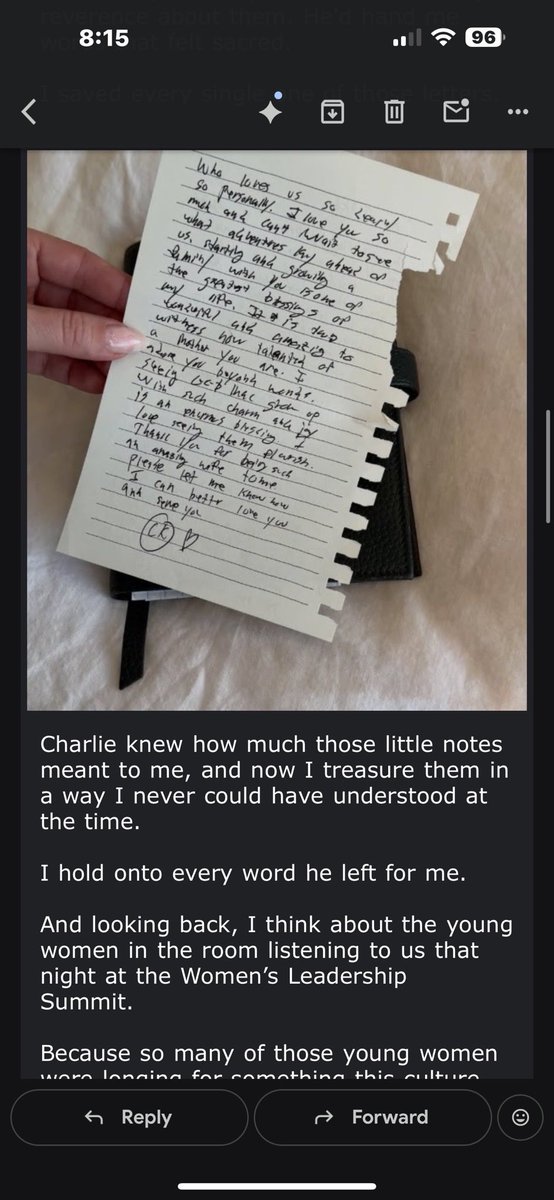
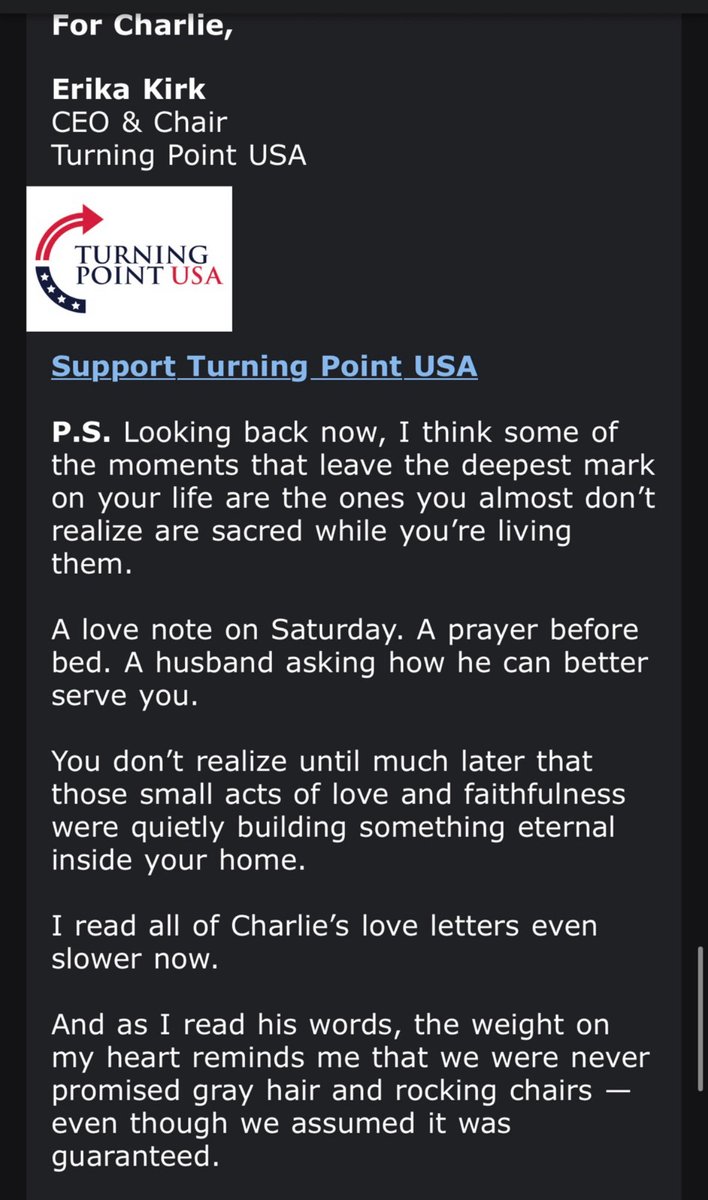
Sharing private letters from your dead husband for the express purpose of fundraising is as tasteless as it is classless and I am without patience for those pretending otherwise. There is nothing beautiful about this. It is shameless emotional-manipulation for money, made worse by the fact that these e-mails are not even authored by her.
Candace Owens tweet mediaCandace Owens tweet mediaCandace Owens tweet mediaCandace Owens tweet media
English
3.7K
2K
16.1K
1.4M
Daniel C. Diaddigo
Daniel C. Diaddigo@DanielDiaddigo·
@WesleyLHuff Option 3. Women’s unique capacity to bear children is testimony to God’s design. (Men can’t). Having a child also rearranges and serves to more align a family’s worldview with that design. At issue is orderliness - seeing the world as God created it.
English
0
0
0
82
Wes Huff
Wes Huff@WesleyLHuff·
What on earth is Paul talking about when, in 1 Tim. 2:15, he says: “Yet she will be saved through childbearing—if they continue in faith and love and holiness, with self-control.” Let’s tackle a tricky passage together! Paul’s statement about women being “saved through childbirth” is walked through in a few different ways, and the ambiguity stems from whether he refers to a specific childbirth or childbearing in general. Some of the first in-depth analysis comes in the 4th century. Gregory of Nyssa understood the text literally, interpreting it as referring to the salvation of mothers who bear spiritually regenerated children. Whereas Theodore of Mopsuestia, extended this to all women saved through childbearing. Ambrosiaster qualified this by specifying that salvation applies only when children are “reborn in Christ.” Augustine, however, departed from this literal reading, arguing that Paul’s teaching should be understood “figuratively and mystically.” Contemporary scholarship divides into two primary camps: 1) identifying “the woman” as Eve and “the childbirth” as the birth of the Messiah, reading “τῆς τεκνογονίας” as a reference to a specific childbirth rather than childbearing in general. The verses prior do say: “For Adam was formed first, then Eve; and Adam was not deceived, but the woman was deceived and became a transgressor” (2:13-14). Under this messianic reading, even transgression of God’s ordained male/female roles can be redeemed through Christ’s birth, an event contrasted with Adam’s sin, where one brought death and the other brought life. 2) focuses on literal childbearing. Tom Schreiner argues that “saved through childbirth” refers to women being preserved physically when they give birth, since childbirth was a major concern for women in the first century, whereas spiritual salvation doesn’t appear to address the specific concerns of 1–2 Timothy (see Schreiner’s “Paul and Gender”). Under this view, childbirth becomes a metaphor for dangers in a fallen world, and the promise of protection functions similarly to other biblical assurances that don’t guarantee literal preservation. A third option interprets childbearing as representative of women’s acceptance of their proper role in family and church, signaling their rejection of false teaching and return to traditional domestic values (this is argued in Douglas Mangum and E. Tod Twist’s Logos Research commentary). The passage’s meaning ultimately depends on which interpretive framework best accounts for Paul’s theological purpose in 1 Timothy. What are your thoughts?
English
138
34
548
68.6K
Daniel C. Diaddigo
Daniel C. Diaddigo@DanielDiaddigo·
@DavidLimbaugh Also - God allows evil to run its course so that one day every opposition to His will shall be found to have resulted in futility. No creature (including the anointed cherub) can govern independently of God. One day this will be not a thesis but historical fact.
English
0
0
0
130
David Limbaugh
David Limbaugh@DavidLimbaugh·
I don’t wonder much anymore why God allows evil/suffering & it’s no longer an obstacle to my faith. In fact, it strengthens it, paradoxically. For me, a slightly more difficult, but related question is why he allows Satan to exist, to tempt us , and wreak havoc, but that too no longer bothers me much. I think I get that as well, though I won’t elaborate here. Evil, free will, the spiritual realm. …
English
136
50
869
33.9K
Glen Bradley
Glen Bradley@GlenBradley·
I've been around for a minute, and I remember that between around 1970 and 2000 it was a common trope among Christians when discussing the end times that the government would go full disclosure on space aliens in order to provide cover for actual demons roaming the Earth. I remember this being a pretty common topic. People haven’t really talked about it for quite a while, and I was surprised the subject did not come up recently when they started making hints at alien disclosure. Does anyone else remember this being talked about back in the day?
Glen Bradley tweet media
English
20
1
31
3.5K
Tlye𝓻 🌺
Tlye𝓻 🌺@Ximena_Noir·
The absolute lack of empathy here is wild. Do you think killers like this are born this way, or did something create them?
English
142
13
1K
153.2K
Daniel C. Diaddigo
Daniel C. Diaddigo@DanielDiaddigo·
“For five hundred years, philosophy built a conceptual category it could not fill. Then God…”
Faithfulness Okom@AttorneyF_

Galatians 4:4 looks like a transition verse. “But when the fullness of time had come, God sent forth His Son.” If you read it fast, it sounds like a timestamp. But if read slowly, it is the most staggering sentence in the Bible. ‘Fullness of time’. Paul isn't saying God picked a convenient moment. He is saying God declared a moment complete. “The preparation is finished and everything I have been building across centuries is exactly where I need it to be”. God looked at human history and said: now. Which forces the question. Why then? Why not a thousand years earlier, when Moses was fresh? Why not a thousand years later? What was so perfect about the first century? I started looking into it and I have not recovered. God needed a people with the theology. He spent 2000 years forming Israel; the covenant, the sacrificial system, the prophets, Isaiah 53 written seven centuries before Calvary, the framework of a coming Messiah who would bear the sin of the world. The Jews were shaped by wilderness, exile, and divine discipline, until the theological infrastructure for substitutionary atonement was fully in place. But theology alone could not travel. God needed a language. Not a tribal dialect, but a universal tongue. So five hundred years before the Gospel, He let the Greek philosophers begin. Heraclitus sat in Ephesus and concluded the universe was governed by an invisible rational principle. He called it the Logos. The Stoics built on it. Philo of Alexandria stood at the intersection of Greek thought and Hebrew scripture and said the Logos was the mind of God in creation. For five hundred years, philosophy built a conceptual category it could not fill. Then God sent a conqueror with no interest in theology. Alexander the Great wanted glory and empire. God let him want it. In satisfying his ego across three continents, Alexander Hellenized the ancient world and forged Koine Greek, the common tongue of the docks, markets, soldiers, and slaves. A language stripped of complexity, simple enough for anyone, universal enough for everyone. The Hebrew scriptures were translated into it. The Septuagint was born. God used a pagan conqueror’s ambition to translate His own Word. Then Rome came and paved the road. The Pax Romana. Piracy cleared. Stone highways stretching from Spain to Syria. A framework for movement the ancient world had never seen. None of them knew they were collaborating. Heraclitus thought he was doing philosophy. Alexander thought he was building a monument to himself. Rome thought it was building an empire for Rome. Not one of them understood they were stagehands. God was with Heraclitus in his pondering, with Alexander in his conquest, with Roman engineers laying stone, quietly requisitioning their work for a purpose none of them could see. And then, when the covenant people were in place, the language primed, the roads built, and the category ready, when everything He had been quietly assembling was finally set, God stepped into the room they had unknowingly prepared. John picked up his pen and wrote: “In the beginning was the Logos.” Every Greek philosopher in the Mediterranean felt the ground shift. “And the Logos became flesh.” The category they spent five centuries constructing was not a principle. It was a Person. The ‘fullness of time is not a timestamp’. It is God’s signature on a completed work. And the humbling thing is that this work was not built by saints. It was built by conquerors, philosophers, and emperors who thought they were writing their own story. God let them think that. And used every word. If this is not amazing then I don’t know what is.

English
0
0
0
82
Josh Barzon
Josh Barzon@JoshuaBarzon·
You get to pick one book to never have been written. Which one are you picking?
Josh Barzon tweet media
English
448
9
111
185K
Daniel C. Diaddigo
Daniel C. Diaddigo@DanielDiaddigo·
“[D]eath means judgement and this is a good thing. It gives my present actions meaning and weight, and it gives my experienced losses and injustices a voice in God’s presence.” Living Life Backward David Gibson
English
0
0
0
25