Daniel Pink

19.9K posts

Daniel Pink banner
Daniel Pink

Daniel Pink

@DanielPink

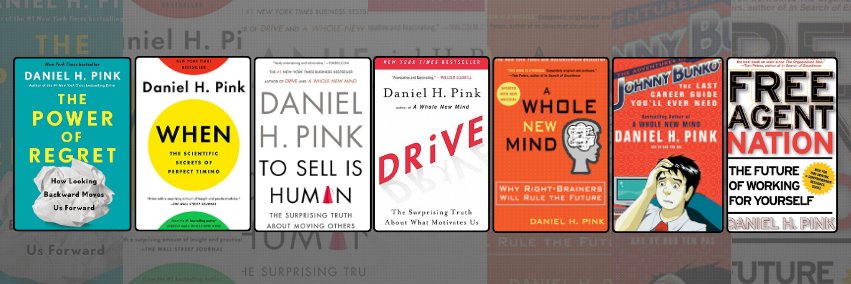
#1 New York Times Bestselling author of 7 books.

Washington, DC, USA Katılım Nisan 2008
2K Takip Edilen441.4K Takipçiler
Sabitlenmiş Tweet
Daniel Pink
Daniel Pink@DanielPink·
For the last 20+ years, I’ve been studying work, creativity, science, and the human condition. Over the next few months, I’ll be sharing the best of what I’ve learned about living a life that matters. Stay tuned!
English
24
19
244
50.8K
Daniel Pink
Daniel Pink@DanielPink·
"Without intention, AI makes it easier to do more — but harder to stop." The question isn't whether AI will change how you work. It's whether you'll shape that change — or let it quietly shape you. What's one norm your team has set — or needs to — around AI use? ⬇️
English
3
3
36
9.4K
Daniel Pink
Daniel Pink@DanielPink·
The fix isn't willpower. Instead, it’s what researchers call an "AI practice" — organizational norms for when to use AI, when to stop, and how scope should expand. ⏸ Intentional pauses before major decisions 📋 Sequencing over constant reaction 🤝 Human grounding — protect time for actual conversation
English
2
1
27
10K
Daniel Pink
Daniel Pink@DanielPink·
The whole thing is self-reinforcing. AI speeds tasks up → raises expectations → workers rely on AI more → scope widens → more work, more density. One engineer: "You don't work less. You just work the same amount or even more."
English
1
4
30
10.5K
Daniel Pink
Daniel Pink@DanielPink·
🤹 3. More Multitasking Multiple AI threads running simultaneously felt like momentum. The reality was constant attention-switching and a growing pile of open tasks. Workers described "a sense of always juggling, even as the work felt productive."
English
3
0
20
11.4K
Daniel Pink
Daniel Pink@DanielPink·
🌙 2. Blurred Boundaries AI makes starting a task frictionless. No blank page. Just type a line. So workers slipped work into lunch, into meetings, into the minute before leaving their desk. Over time: fewer pauses, more ambient work, downtime that no longer recovered anything.
English
2
0
21
12.7K
Daniel Pink
Daniel Pink@DanielPink·
🔁 1. Task Expansion AI filled knowledge gaps — so people stopped outsourcing. PMs started writing code. Researchers built data pipelines. Individuals absorbed work that "might previously have justified additional headcount." Old jobs didn't shrink. New jobs got added.
English
1
0
24
13.5K
Daniel Pink
Daniel Pink@DanielPink·
Three mechanisms explain why.
English
1
0
9
13.4K
Daniel Pink
Daniel Pink@DanielPink·
UC Berkeley's Haas School embedded researchers inside a 200-person tech company from April to December 2025. Two days a week, on-site. 40+ interviews. They published their results in Harvard Business Review, February 2026.
English
1
2
21
15K
Daniel Pink
Daniel Pink@DanielPink·
The core finding: Workers equipped with AI took on broader tasks, worked faster, and extended into more hours of the day. Nobody told them to. AI just made "doing more" feel possible, accessible, and rewarding.
English
1
2
43
14.5K
Daniel Pink
Daniel Pink@DanielPink·
Every AI pitch promises the same thing: Do more in less time. Finally get to the important stuff. Work less. New research from Berkeley followed real workers for 8 months. That's not what happened. 👇
English
28
73
363
124K
Daniel Pink
Daniel Pink@DanielPink·
"Without intention, AI makes it easier to do more — but harder to stop." The question isn't whether AI will change how you work. It's whether you'll shape that change — or let it quietly shape you. What's one norm your team has set — or needs to — around AI use? ⬇️
English
1
1
2
1.5K
Daniel Pink
Daniel Pink@DanielPink·
The fix isn't willpower. Instead, it’s what researchers call an "AI practice" — organizational norms for when to use AI, when to stop, and how scope should expand. ⏸ Intentional pauses before major decisions 📋 Sequencing over constant reaction 🤝 Human grounding — protect time for actual conversation
English
1
0
3
1.6K
Daniel Pink
Daniel Pink@DanielPink·
The emotional benefit of generosity isn't unlocked by the thought. It's unlocked by the act. Question worth sitting with: How many times this week did you intend to be generous and stop there?
English
1
1
3
1.3K
Daniel Pink
Daniel Pink@DanielPink·
And if that warmth requires action, not just intention — planning to give, meaning to donate, thinking about being generous — none of that counts.
English
1
0
1
1.3K
Daniel Pink
Daniel Pink@DanielPink·
We assume generosity is a habit adults build over years of moral instruction. New research says the emotional reward of giving shows up before a child can form a sentence. 👇
English
2
6
27
6.4K