Jeffrey B retweetledi
@NashTalksTexas Saw that one coming from a mile away. That was one-sided from the jump.
English
Jeffrey B
13.8K posts

@DataDoesMatter
Married to ⬛️⬛️⬛️⬛️⬛️⬛️⬛️ with ⬛️⬛️⬛️ kids. Loves to serve the Lord & my community. Here for fun. Subscribed because of Elon & to support 1A.
Will he or won't he? At a recent U.S. Sen. Mark Kelly town hall for veterans in Chandler, four different people pushed the Democratic senator to run for president in 2028. tinyurl.com/yxd534hn


Israeli security forces made a list of thousands of militants who participated in the Oct. 7, 2023, attacks. One by one, they are being tracked down, captured and killed. 🔗 on.wsj.com/4uwA952



Oh please You got into this to be famous


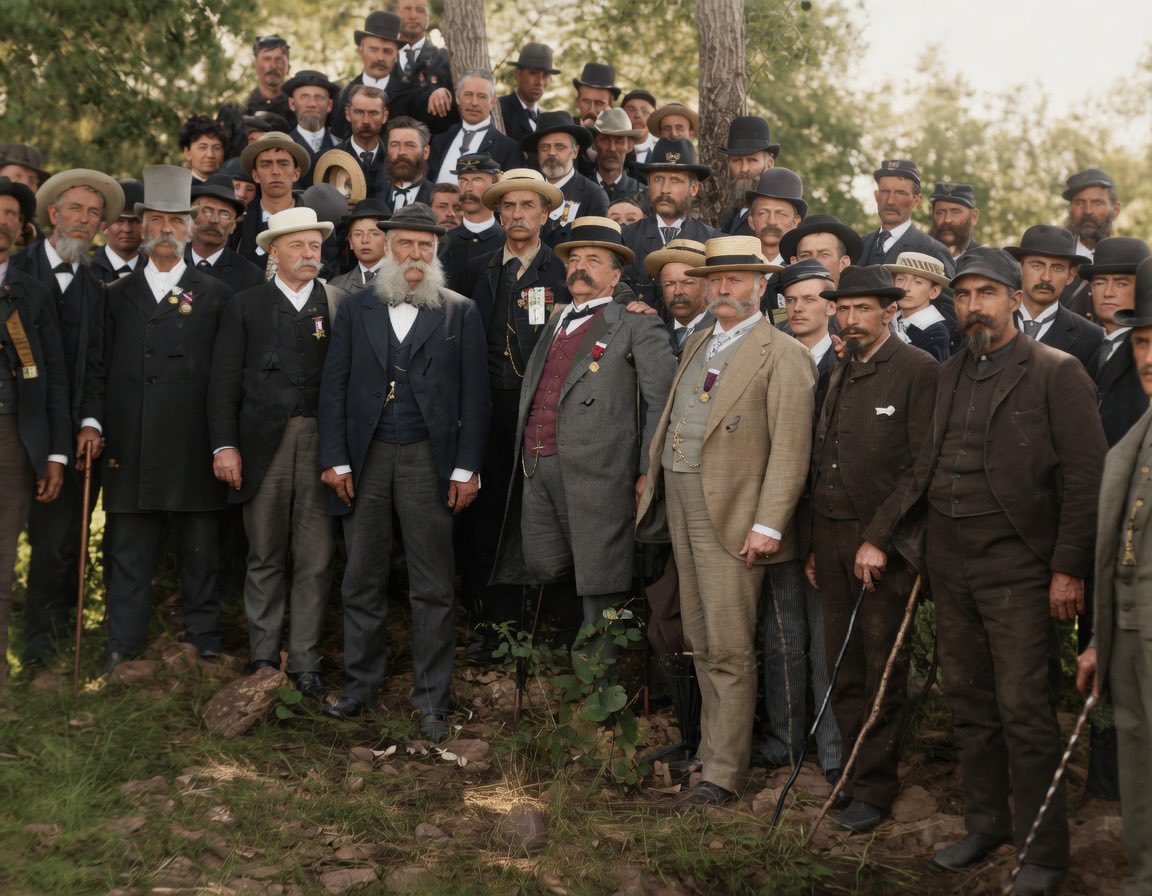
Almost no one knows the full story of Ulysses S. Grant and Robert E. Lee. In 1847, during the Mexican War, a young Lieutenant Grant served as an obscure regimental quartermaster. Robert E. Lee, already famous, served on General Winfield Scott's elite staff. They crossed paths once. Lee did not remember it. Eighteen years later, they met again. April 9, 1865. Appomattox Court House, Virginia. Lee arrived first, in an immaculate gray dress uniform, red sash, embroidered gauntlets, and a presentation sword with a jeweled hilt. He looked like an emperor walking to his coronation. Grant rode up an hour later, alone, splattered head to boot in Virginia mud, wearing a private's field blouse with no sword, no sash, and no insignia except the dirty shoulder straps of a lieutenant general. The first thing he did was apologize to Lee for his appearance. The surrender happened in the parlor of a farmer named Wilmer McLean. McLean had fled his old home near Manassas because the first major battle of the war had literally been fought across his front yard in 1861. Four years later the war followed him 120 miles and ended in his front parlor. He later said he could have wallpapered his house with the war. Before any terms were discussed, Grant tried small talk. He asked Lee if he remembered him from Mexico. Lee politely said he did not. Grant said he had remembered Lee perfectly for almost twenty years. Then came the terms, and they stunned everyone present. Officers could keep their sidearms and personal horses. Enlisted men who owned their mounts could take them home for the spring plowing. No prison. No trials. Every Confederate soldier would be paroled and allowed to walk home, on his honor, unmolested by U.S. authority for as long as he kept his parole. Lincoln had asked for leniency. Grant gave him more than he asked for. When Lee mentioned, almost in passing, that his men had not eaten in days, Grant ordered 25,000 rations sent across the lines from his own supply trains that same afternoon. The Union army fed the army it had just defeated. As Lee rode back to his lines on his old gray horse Traveller, Union batteries began firing celebratory salutes and Grant's men started to cheer. Grant rode out himself and shut it down on the spot. "The war is over," he said. "The rebels are our countrymen again, and the best sign of rejoicing after the victory will be to abstain from all such demonstrations." He later wrote that he felt "sad and depressed" the rest of that day, not triumphant. He could not bring himself to rejoice over the downfall of a foe who had fought so long, so well, and had suffered so much for his cause. Then came the chapter history almost forgot. Two months after Appomattox, a federal grand jury in Norfolk indicted Robert E. Lee for treason. The penalty on the books was death by hanging. Lee wrote a single letter to Grant, citing the parole he had been given. Grant was furious. He went directly to President Andrew Johnson and told him plainly that if the indictment moved forward, he would resign his commission as commanding general of the entire United States Army. He had pledged his personal word to Lee at Appomattox, and no civilian politician was going to break that word while Grant still wore the uniform. Johnson backed down. The indictment was quietly killed. The man who beat Lee in war saved him from the gallows in peace. Twenty years later, Grant was dying of throat cancer in a cottage on Mount McGregor, racing in agony to finish his memoirs before bankruptcy and death caught up with his family. He won by four days. The book sold 300,000 copies and made his widow rich. At Grant's funeral procession in New York in August 1885, his pallbearers walked side by side: Union generals William Tecumseh Sherman and Philip Sheridan, and Confederate generals Joseph E. Johnston and Simon Bolivar Buckner. The same men who had spent four years trying to kill each other carried the coffin together through a million and a half mourners lining the streets. Six years later, when Sherman himself died, the old Confederate Johnston traveled to New York again to serve as a pallbearer for his former enemy. It was a freezing February day with cold rain. Johnston, 84 years old, stood through the entire outdoor ceremony with his hat held over his heart. A friend pleaded with him to put his hat back on. Johnston refused. "If I were in his place," he said, "and he were standing in mine, he would not put on his hat." Johnston caught pneumonia that day. He died a few weeks later. That is the real ending of the American Civil War. Not at Appomattox. In the rain, at a funeral, with an old Confederate refusing to cover his head out of respect for the Union general he had spent his youth trying to destroy.




If that addict on your street were your own son, what would you do? That is the defining question that guides my 5 step plan to fix the homelessness problem in LA. We *must* end this evil racket of corrupt politicians and NGOs who profit off the misery of these poor souls. They launder money and feed them more drugs, so they can keep their customers locked in this hell on our streets. We have a moral obligation from God to help them and make our city safe and clean for everyone. Karen Bass and Nithya Raman have forsaken this city. Time for real leadership. Time for real compassion.