@DazeTrader @maoxian I've suggested this. Immediate and forceful no lol.
English
Dave Mabe
5.5K posts
@davemabe
I help systematic traders make more money from their trading strategies. Created and trade 25+ strategies. Creator of the Line Your Own Pockets podcast.



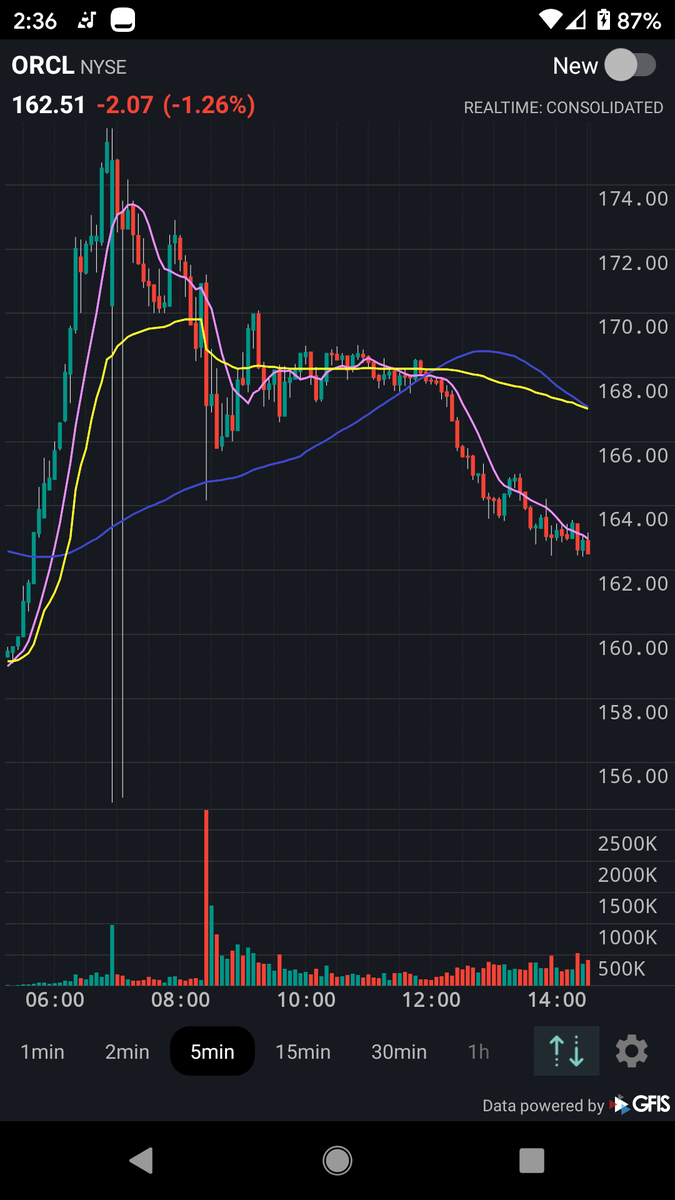
THE SHORTEST TIMEFRAMES HAVE THE MOST EDGE! This is a view I’ve mentioned before in interviews, but I’ve never taken the time to fully expand on. In general, you want to be an expected value maximalist (within risk constraints). And the shortest human timeframes offer that. Yes, I mostly do bigger picture trades now but that’s due to scalability and quality of life, not bc they offer the most edge. The paradox of markets is this: -The shortest timeframes often have the biggest dislocations (most “edge per minute”) -The longest timeframes often have the biggest tailwind (asset prices tend to rise over time) -The middle is where many traders get chopped up This principle is the reason why there were traders at Trillium that could be positive hundreds of days in a row. You’ll never see that with a swing trader or value investor. 1. Why short timeframes can have so much edge At very short horizons, markets can be temporarily inefficient because of: -forced behavior (stops, liquidations, margin pressure) -delayed human interpretation of information -mechanical flows around opens/closes -short-lived supply/demand vacuums Those create moments where price can be “wrong” for seconds/minutes relative to where it’s about to reprice. In fact, at the extreme short end of human discretionary trading like the two following examples, you can find opportunities that approach 100% win rate with a profit factor of 10+. Of course there is a trade-off which I’ll get into. 2. Order flow imbalances One of the biggest short-term edges is understanding order flow imbalance. Yes, these happen far less of the now than they used to as discussed in my interview yesterday with Serge. But they still exist particularly during times of market extremes. -aggressive buyers/sellers temporarily overwhelm passive liquidity -one-sided flow causes price to overshoot or stall -liquidity can disappear at key moments, then refill at new levels You’ll see this around: -opening auctions -panic flushes / squeezes -large fund rebalancing windows -crowded positioning unwinds This is where the tape can get dislocated from “fair” value in the short run and where active traders can extract edge. It is also why some of those hyperscalpers like @EdBarry4 are positive so many days in a row. 3. Breaking news is where discretionary human traders still have the edge over algos in interpreting novel headlines. There’s usually a sequence: -headline reaction -second-order interpretation -positioning unwind/chase -stabilization If you’re prepared and fast, these windows can be highly asymmetric. In fact, breaking news can offer some of the best opportunities in existence, especially when applied to liquid instruments (think April 2025 tariff headlines!). In fact, I’d argue tariff headlines due to their massive impact on global markets are some of the best expected value opportunities I’ve ever seen. 4. But there’s a tradeoff: liquidity + scalability The shorter the timeframe, the more your edge depends on: -execution speed -order optimization -fee minimization -slippage minimization So yes, edge can be highest in short windows but liquidity becomes the constraint. Many short-duration edges don’t scale without degrading returns. That is why many traders post eye-watering returns in small caps but then you constantly see them doing their dumb small account challenges. It’s because their strategies don’t scale! 5. Beware the middle ground. Take this thought experiment. Let’s say $AAPL flash crashes 90%. With near-certainty, Apple will bounce within minutes close back to the unaffected price. What happens overnight is more of a toss-up. What does the market do? Does news come out? Yet over the course of 5-10 years, it’s likely the $AAPL goes up. In that middle ground, you take on variance from overnight risk, headline risk, and market risk. But don’t benefit much from the fact that over years, markets go up. It’s much more of a coin flip whether we go up or down any given day. If I had to guess, the most edge is in tenths of seconds and seconds for humans. The least edge is in the window of weeks. Why not compete at even faster timeframes? Bc then you fight with HFT, commission structures, co-location, and more. 6. So how to apply this? First, this is useful for the sniff test. Understanding that there is a trade-off between edge and liquidity is critical! There is a reason why you see small cap traders that can scale a small account over 1,000% in a year (think early days of @theshortbear). There is also a reason why Warren Buffett has approached market returns. It’s that trade-off between edge and scale. Similar to the general trade-off between win-rate and profit factor, it’s a safe assumption that these often tend to move inverse to each other. It’s the reason why that if I managed $1B my returns would probably get quartered and if I managed $10B my returns would approach market returns or worse. This framework is also useful for finding the most edge and understanding your strategies. If you’re moving to a higher timeframe, you generally SHOULD expect more variance. That comes with the benefit of scalability. Similarly, if you want to study micro-inefficiencies, particularly in less efficient markets like crypto, you can find some insane edges there.





Can't wait to be able to code this... $XYZ