The Islamic Republic of Iran has just been nominated to the UN Committee for Programme and Coordination to shape policy on women's rights, human rights, disarmament and terrorism prevention.
The British government, of course, did not object to Iran’s appointment — even though the Iranian regime has been massacring thousands and thousands of protestors this year.
At least it shows satire is not dead.
NEXT UP> Satan nominated to investigate sin.
t.co/bW6aEBBLoK
Absolute panic erupted among Palestinian UN staffers during this brutal takedown by British Colonel Richard Kemp.
He refused to play along with the disgusting false narrative that paints Israel as the evil “Islamophobic aggressor” and Palestinian-Muslim terrorists as poor “victims” of oppression.
This was a rare historic moment at the UN: one honest British colonel stood up and silenced the entire room of hypocrites who cheer Hamas’s baby-killing, rape, and murder of Jews — then scream “genocide” the second Israel defends its people.
The sheer absurdity of UN bureaucrats losing their minds when someone dares to tell the truth about Islamic terror is peak clown world. Colonel Kemp spoke facts they can’t handle.
Share this widely. The world needs more voices like his.
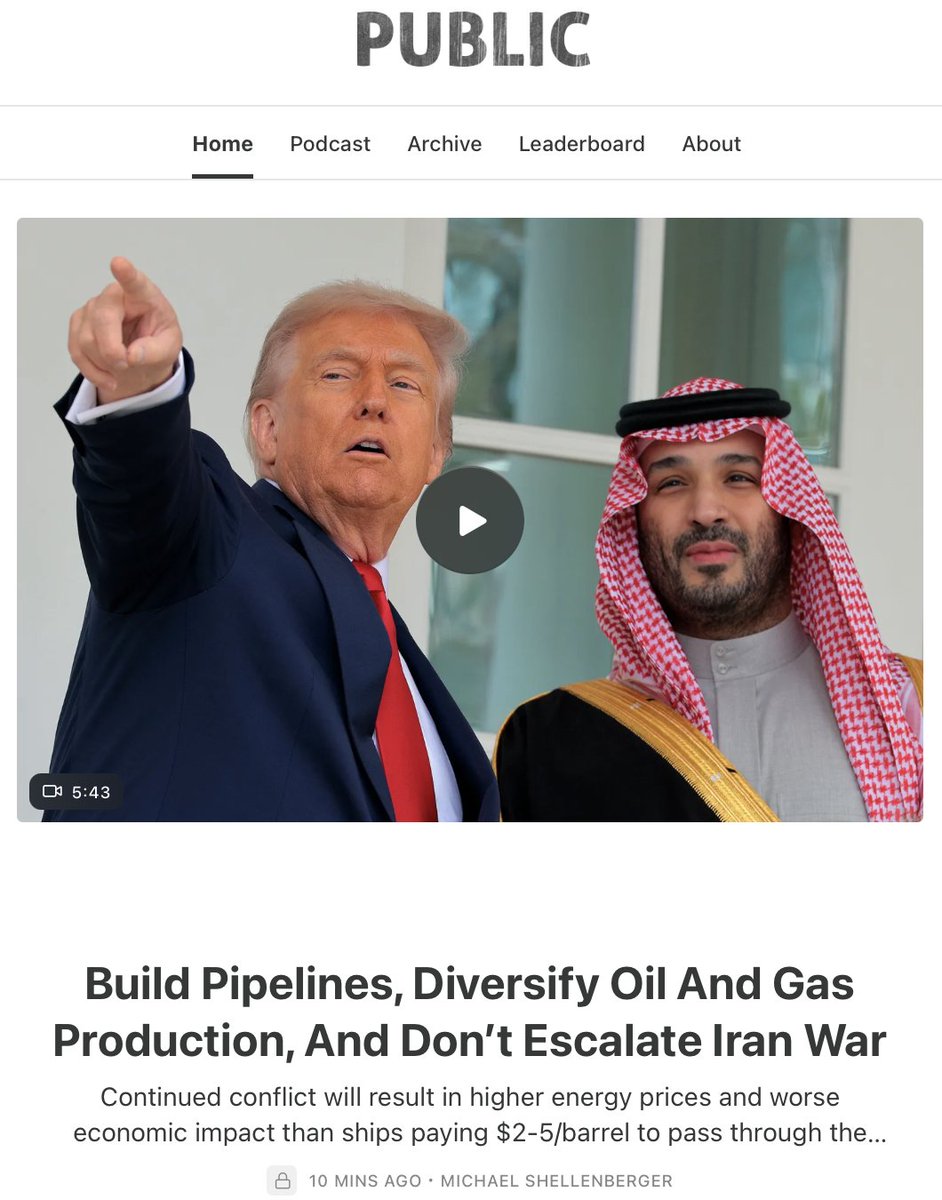
The Trump administration underestimated Iran’s willingness to close the Strait of Hormuz, note many in the media. CNN reported that while the Departments of Energy and the Treasury participated in pre-war planning meetings, “the agency analysis and forecasts that would be integral elements of the decision-making process in past administrations were secondary considerations.”
But the Strait of Hormuz was a catastrophe waiting to happen. A few years from now, people will look back on this moment and find it incredible that the world allowed the global economy to be dependent on moving so much oil and natural gas through such a dangerous bottleneck.
Part of the solution is for the world to reduce its dependence on Persian Gulf oil and gas. That will require expanding production outside the Persian Gulf. Another part is to help Persian Gulf nations move more of their oil and gas through new or expanded pipelines to the Red Sea and perhaps even the Mediterranean. The faster the world builds those alternatives, the less leverage Iran retains.
Many believe that the United States must not allow Iran to control the Strait under any circumstances, and the instinct to fight for Hormuz is understandable. It has been a central artery of global energy for over half a century.
But instead of fighting to reopen the Strait, the world should build around it. The infrastructure to do so already exists in embryonic form. Saudi Arabia’s East-West pipeline, built during the Iran-Iraq war in the 1980s, carries crude 750 miles across the kingdom from the Gulf coast to the Red Sea port of Yanbu, with a design capacity of 7 million barrels per day. The UAE’s Abu Dhabi Crude Oil Pipeline runs to Fujairah on the Gulf of Oman, bypassing the Strait entirely. And Iraq’s Kirkuk-Ceyhan pipeline connects to the Mediterranean coast of Turkey.
Gulf states are already exploring a broader network of pipelines, railways, and roads, including the U.S.-backed India-Middle East-Europe Economic Corridor (IMEC), that would create multiple export routes to the Red Sea and the Mediterranean. Kuwait, Bahrain, and Qatar, which have no bypass pipelines at all, should build routes through Saudi Arabia or Iraq, argued The National, a UAE newspaper. And Japan, South Korea, and India should, the paper argued, invest alongside Gulf sovereign wealth funds.
Iran will almost certainly impose tolls on vessels transiting the Strait, as its parliament has already passed a bill to formalize fee collection. A toll of $2 to $5 per barrel, the range analysts expect Iran to charge, would add roughly $40 to $100 billion per year to global energy costs.
But more war will cause far more harm than simply building alternatives because every escalation destroys infrastructure that the world needs to produce and export energy. While “all roads” may lead to “structurally higher oil prices,” as one analysis of future scenarios concluded, one of those roads leads to far less damage to people and energy infrastructure.
Iran’s strikes on Ras Laffan, Qatar’s LNG hub, will take three to five years to repair. The strikes on South Pars threaten the world’s largest natural gas reserve. Iran’s attacks on Gulf neighbors have damaged refineries, desalination plants, and port facilities across Saudi Arabia, the UAE, Bahrain, and Kuwait.
And consider how much more damage is possible. After the US struck Kharg Island, Iran’s main oil export hub, and Israel hit Iran’s largest petrochemical complex at South Pars, the world’s largest natural gas reserve, Iran’s military threatened to “deprive the U.S. and its allies of the region’s oil and gas for years.”
As such, the $40 to $100 billion is a fraction of the $2 trillion or more that Goldman Sachs has estimated the war has already cost the global economy in lost output, destroyed infrastructure, and elevated energy prices.
And continued war could lead Iran to cut off the flows of existing Saudi oil flows through its East-West pipeline. Iranian adviser Aliakbar Velayati warned that Iran views the Bab al-Mandab Strait off Yemen “with the same intensity as Hormuz” and that “the flow of energy and global trade can be disrupted with a single signal.”
x.com/shellenberger/…
Please subscribe now to support Public's award-winning investigative journalism, read the rest of the article, and watch the full video.
x.com/shellenberger/…
The Hormuz Strait was a disaster waiting to happen. The only solution is to diversify energy production and for Gulf nations to build pipelines to export their oil and gas via the Red Sea and Mediterranean. More war will result in more harm and higher energy prices for longer.
If you think Easter is nonsense, you’re not alone.
This morning in my Easter reading, something hit me.
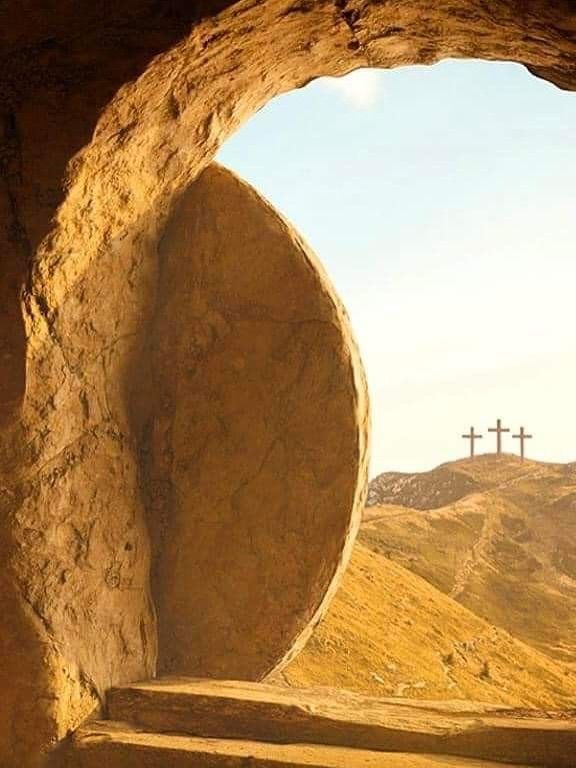
In Luke, when the women came back from the empty tomb and told the eleven what they saw, Scripture says the disciples thought it was nonsense.
And honestly, if any of us witnessed a brutal, violent death like Jesus’, we’d probably call it nonsense too if someone told us that person was alive again.
But here’s the part we miss:
At the tomb, the angels didn’t give the women a new revelation. They said:
“Remember how He told you, while He was still in Galilee, that the Son of Man must be delivered into the hands of sinful men, be crucified, and on the third day rise.”
They weren’t announcing something new.
They were reminding them of something Jesus had already said.
Which puts the disciples’ reaction in a different light.
We don’t know if they forgot His words or simply didn’t believe them — but either way, they didn’t receive them.
Then in John, we read that later that same day — Sunday night, after Mary had already told them the news that morning — the disciples were behind a locked door out of fear. They heard the message, but it didn’t move them.
Jesus appears to them, shows them His hands and His side, breathes peace on them… and you’d think that would settle it.
But eight days later?
They’re back behind a locked door when Jesus appears to Thomas.
We give Thomas the nickname “Doubting Thomas,” but the truth is:
all of them doubted.
All of them hid.
All of them called it nonsense.
All of them stayed behind locked doors.
And here’s the detail we forget:
In Matthew, Jesus had already told the women to tell the disciples:
“Go to Galilee, and there they will see Me.”
Meaning — staying in that room for over a week wasn’t just fear.
It was staying somewhere Jesus had already told them to leave.
They were supposed to be moving toward Him.
Instead, they were hiding from the world.
But Jesus — in grace — walked through the locked door anyway.
So here’s the message this Easter:
If you think the idea of God becoming man, dying for your sins, and rising three days later is nonsense — you’re standing exactly where His own disciples stood.
If you believe Jesus can move in other people’s lives but you still keep yourself behind a locked door of fear, shame, doubt, or self‑protection — the disciples were right there too.
But Easter is your invitation.
This can be the year you leave the room Jesus already told you to leave.
This can be the moment you step out of fear, out of hiding, out of the locked places — and go where He’s calling you.
Whatever your locked door is — fear, doubt, sin, shame, disappointment, control — Jesus is appearing to you the same way He appeared to them.
Not to scold you.
Not to shame you.
But to say:
“Peace be with you.
You don’t have to stay here.
Come meet Me where I’m calling you.”
Survivors of the Easter Sunday terrorist attack are speaking out.
Islamic terrorists drove a truck into a crowd of Christian worshippers. Multiple dead. At least 57 injured.
“Christians have no rights in Pakistan. We had no security. No police. No help.”
But the West is silent
BREAKING: Thousands of Muslim jihadis are on their way to the Christian town of Al-Suqaylabiyah, Syria, following yesterday’s pogrom.
They are hunting for Christian blood and want to commit a massacre.
It’s crazy how little the world cares about Christians in the Middle East.
Raviv Drucker, an Israeli journalist who presents an investigative program on Israel’s Channel 13, doesn’t mince his words and offers what must be said by those who actually care about Israel’s democratic ethos and rule of law: "When dozens of masked people beat Palestinians for no reason, other than wanting to expel them, that's Jewish terrorism. When there's a Telegram group where they proudly boast about the number of houses set on fire and cars burnt every week, that's Jewish terrorism. Arab terrorism is much more serious. The number of victims from Palestinian terrorists is immeasurably high. But at least the state is fighting Arab terrorism. Against Jewish terrorism, we’re not so sure.
"The Shin Bet, with or without connection to the identity of the organization’s new head, is not felt. The Judea and Samaria District Police is not involved. The Minister of Defense forbids the issuance of administrative orders, and the army seems to be content with lip service."
When you hear “execution,” you might assume a serious crime was committed even if you’re against the death penalty.
But no, Mohammadreza Abdollahpour, 28, a healthcare worker, was arrested on January 8 while helping an injured person in the street. And for that, he has been sentenced to death by the Islamic Republic. Where in the world is saving a life punishable by execution?
Speak up. Be his voice.
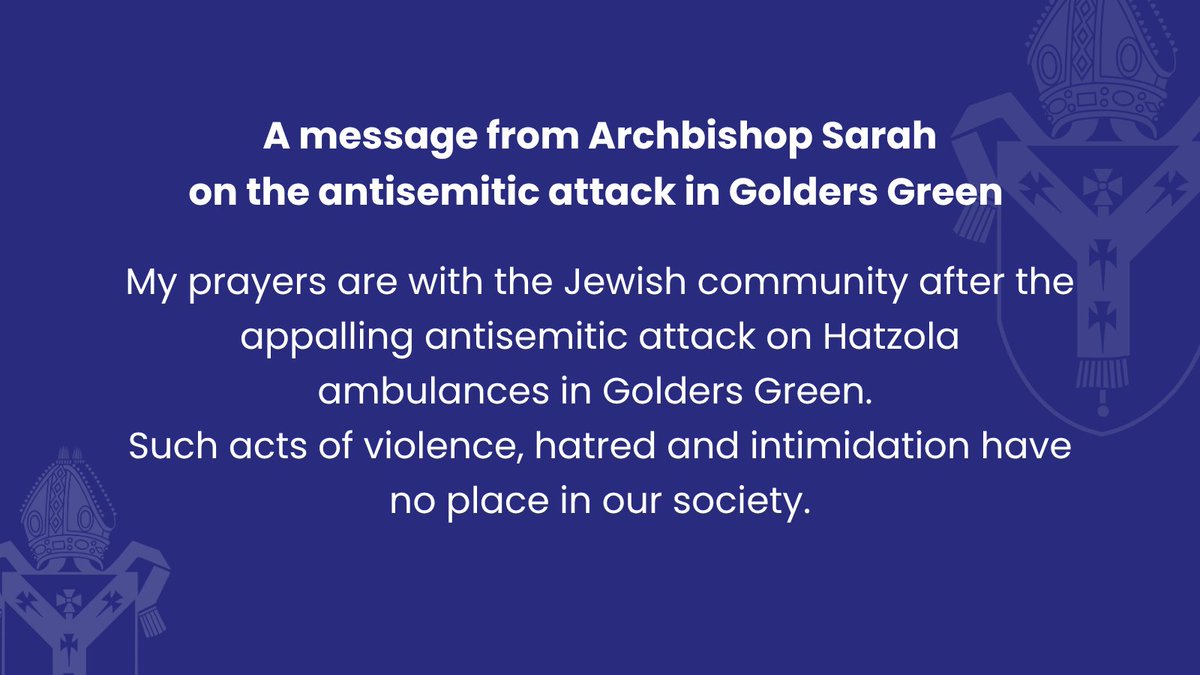
My prayers are with the Jewish community after the appalling antisemitic attack on Hatzola ambulances in Golders Green.
Such acts of violence, hatred and intimidation have no place in our society.