

Dawit King
653 posts

Dawit King
@Dawitking
Love My Fam, Crypto and Arsenal. No Financial advice 🚀🚀
World Katılım Kasım 2011
928 Takip Edilen105 Takipçiler

Without additional funding, Session's doors will close next month.
Please read this appeal from Session co-founder Chris McCabe.
getsession.org/donation
English
Dawit King retweetledi

Dawit King retweetledi

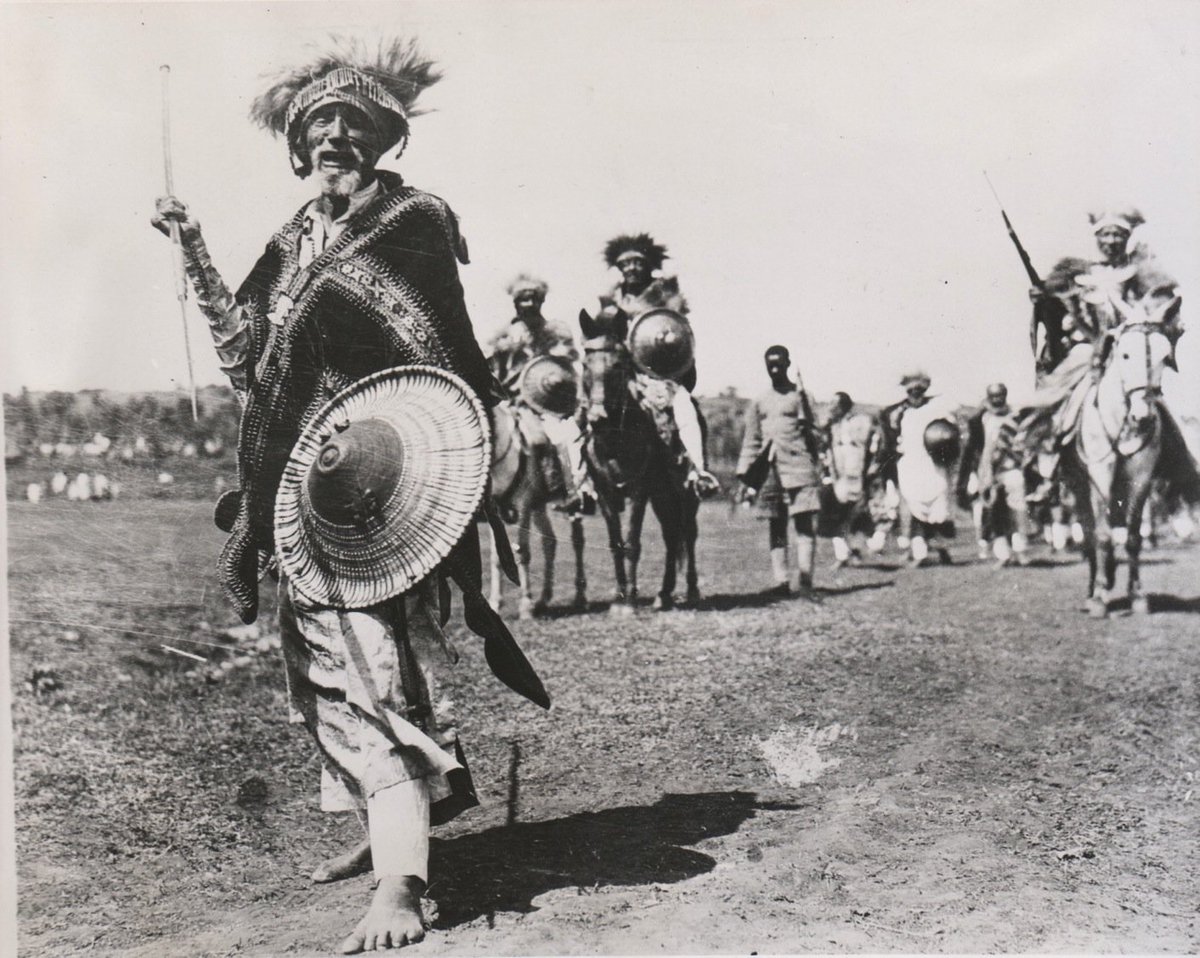
Ethiopia 🇪🇹 celebrates the 130th anniversary of its 1896 victory over Italy at the Battle of Adwa, becoming the only African country to fully resist coIonization.
English


Dawit King retweetledi

Dawit King retweetledi

If signing the 2020 Washington draft would damage Ethiopian people by up to 95%, then I have to ask myself: what was the point of building GERD in the first place? Why build a national lifeline with Ethiopian hands and Ethiopian sacrifice, only to hand the keys to Egypt?
A dam is supposed to be a lamp, not a leash. A reservoir is supposed to be a shield, not a ransom note.
The idea of becoming Egypt’s water colony is disgusting even to imagine. If that draft is the “deal,” then the honest answer would be this: stop building GERD and admit we chose surrender.
Thank God Ethiopia did not sign it.
Anyways, i think most experts and politicians who argue about this have never read Egypt’s actual clauses.
They argue about “cooperation,” and “win win” and “regional stability.” But they never open Egypt’s Exhibit A.
They never read Egypt’s line that says “not dependent upon future hydrological conditions.”
They never do Egypt’s math: 34.04 BCM release when inflow is 20 BCM.
They never ask: what happens to Ethiopian children when their dam is legally required to empty its storage to protect Egyptian farms in a multi-year drought?
So I did it for them. I read every clause Egypt wrote. I circled every trap Egypt designed. I will finish the rest of the articles too, line by line, including the dark and ugly ones that haven’t come yet. And now you have the receipts.
Enjoy it.
The Asrat Blog@RenaissanceDam
Part One Title: THE DROUGHT TRAP: How Egypt Tried to Turn Weather into a Water Quota In The 2020 Washington Draft. Without Ever Saying “Historic Rights” Trump(Jan 16, 2026): “Predictable water releases during droughts and prolonged dry years for Egypt and the Sudan.” Today I’m doing one thing only: unpacking “drought” and “prolonged dry years” in the 2020 Washington draft. I’ll return later to the rest of the text, which is even worse for Ethiopia. Why this matters: in negotiations, “drought” is not just weather. It becomes a technical trigger. A trigger becomes a forced release. And forced releases become a quota, without ever writing the words “historic rights.” Here’s the deeper trap: if drought is defined against downstream baselines, then Ethiopian development itself gets framed as “drought.” Ethiopia irrigates to feed its people, or builds upstream power and regulates flows, and the reduced inflow is labeled “drought.” The trigger clauses activate not because nature failed, but because Ethiopia developed. That’s the strategy: freeze Ethiopian development without openly stating a quota. Now the receipts. The draft was “Initialed by the Arab Republic of Egypt on February 28, 2020 (Washington, D.C.).” Ethiopia did not sign it. Egypt initialed it. So I will use only Egypt’s own clauses and numbers, line by line. Read this slowly: the draft turns “drought” into a switch. When that switch flips, GERD stops being Ethiopia’s tool and becomes downstream drought insurance. FIRST RECEIPT: Egypt defines “Flow” in a way that can punish Ethiopia for development This draft defines Flow like this: Article 2(d): “Flow” means the total volume of water entering the GERD reservoir in any given Hydrological Year. Read that again. It does NOT say “Flow of the Blue Nile at the border.” It says what enters GERD. This is Egypt’s first move: control the definition, control the outcome. So if Ethiopia builds upstream projects in the future that reduce what enters GERD (irrigation, storage, regulation), that reduction shows up in the treaty’s math as low Flow at GERD. And low Flow is the trigger that activates the drought handcuffs you’ll see below. Think about what that means: Any future dams use that reduces inflow into GERD (even for Ethiopia’s own farms and people) pushes the dam closer to the <37 BCM trigger and Egypt’s drought matrix. The draft doesn’t need to write “Ethiopia may not develop.” It writes: “If your inflow drops, you must release according to our table.” This is how Egypt tried to freeze Ethiopian development without ever saying “you cannot develop.” or " You can not build dam." This is how “development” becomes “drought” on paper. This is how a treaty becomes a cage disguised as cooperation. In My Assessment Ethiopia Future Development Risk (under this draft): 70–85% (high). Under this design, every time Ethiopia tries to use more of its own water upstream, the treaty can punish it by shouting “drought” at GERD and forcing extra releases. Development becomes a crime. Drought becomes the punishment. SECOND RECEIPT: The drought trigger is a hard number, not “cooperation.” Annex A (Filling Period, Section A, Drought) is blunt: “If the Flow at the GERD is <37 BCM… the release from the GERD will be according to the Drought Conditions Release Matrix (Exhibit A).” This applies both during filling and long term operation. Translation for you: Not “consult,” not “coordinate.” The draft says the release WILL follow a table. A table controls the dam. This isn’t “consultation.” This isn’t “dialogue.” This is a switch: Flow < 37 BCM to Egypt’s matrix controls Ethiopia’s release. Egypt doesn’t need to declare drought. Egypt doesn’t need to ask permission. The number does it automatically. And the matrix is where the ugliness lives. THIRD RECEIPT: The drought matrix can force Ethiopia to release MORE than the river brings in Open Exhibit A, Drought Conditions Release Matrix. It literally gives releases (in BCM) based on the Flow and the GERD level. Here is a clean example straight from the table: • If the GERD level is 49.3 BCM (625 m) • and the Flow of River is 20 BCM • the required release is 34.04 BCM Stop and feel the meaning: Inflow = 20 BCM. Release = 34.04 BCM. That means Ethiopia must drain about 14 BCM from storage in one year just to satisfy the matrix. That is 170% of inflow (34.04 ÷ 20). That means Egypt gets more water during Ethiopia’s drought than nature itself provided. That is not “shared pain.” That is Egypt using Ethiopian storage as Egypt’s insurance policy. That is Ethiopia’s dam forced to bleed for Egypt benefit. This isn’t “cooperation.” This is a drought tax on Ethiopia paid out of Ethiopia’s storage. And that is the heart of the trap: A dam built to lift Ethiopia out of poverty gets converted, on paper, into a tank that protects Egypt from drought. Egypt’s security. Ethiopia’s sacrifice. Ethiopia Harm Meter (from this clause): Drought matrix trap severity: 95% harm. Every kilowatt GERD fails to generate in drought is a school without light, a clinic without power, a factory that never opens. This draft makes sure that when the river suffers, Ethiopian development suffers first so Egypt can feel it last. FOURTH RECEIPT: “Prolonged drought” and “dry years” create a multi-year WATER DEBT Ethiopia must pay regardless of future suffering Now the draft goes from “drought year” to “drought era.” In the filling period, Annex A says: • If the average release over the previous 4 years is <37 BCM, the GERD “will release a total of 62.5% of the storage above 603 meters” over the following 4 Mitigation Release Years. • If the average release over the previous 4 years is <40 BCM, the GERD “will release a total of 50% of storage above 603 meters” over the following 4 Mitigation Release Years. Then comes the line that should make every Ethiopian feel a chill: The release… “is not dependent upon the hydrological conditions… in future Hydrological Years.” Allow me to translate that into plain language: Once you trigger it, you owe it, even if the future is still dry. Even if Ethiopian children need that water. Even if Ethiopian hospitals lose power. Even if Ethiopian factories shut down. Egypt gets paid. Ethiopia pays. The future doesn’t matter. This is not drought “management.” This is Egypt turning drought into a debt contract, and Ethiopia into the debtor. This is how Egypt tried to make Ethiopia’s stored water Egypt’s legal entitlement. This is drought turned into debt. The 603 m line: why it matters (and why Egypt chose it) Exhibit A includes a reference point showing 24.7 BCM at 603 m and 49.3 BCM at 625 m, meaning the storage “above 603 m” at 625 m is about 24.6 BCM. That’s roughly half of GERD’s total storage. So if Ethiopia fills to around 625 m (the draft’s own completion benchmark), “storage above 603 m” is about 24.6 BCM. Now apply the draft’s own percentages: • 62.5% of that ≈ 15.4 BCM • 50% of that ≈ 12.3 BCM And the draft requires a minimum annual release (no “pause” button). It forces that debt to be paid across the mitigation years.multi-year Egypt didn’t pick 603 m randomly. Egypt picked it to maximize what Egypt can force out. 603 m isn’t simply a technical level in this draft. It becomes a legal harvesting point, a place where Ethiopia’s stored water gets treated like a pile of money Egypt can claim when Egypt says “drought.” Ethiopia Harm Meter (from the multi year debt clauses): Filling period prolonged drought/dry years debt: 90% harm. Because it turns Ethiopia’s stored water into something Ethiopia can be forced to “pay out” later, regardless of future conditions, regardless of Ethiopian need, regardless of Ethiopian sovereignty. Ethiopia’s children will grow up in a hotter, more unpredictable climate. They will need more electricity, more food, and more resilience than we did. This draft does the opposite: it trades away their flexibility in crisis so that another country can lock in comfort. Part 1 showed you the mechanism. Now I’m going to show you the blade Egypt tried to hold over Ethiopia’s throat. FIFTH RECEIPT: In long term operation, Egypt demands 100% of storage above 603 m Annex A, Long Term Operation, says: • If the average release over the preceding 4 years is <39 BCM, the GERD “will release a total of 100% of the storage above 603 meters” over the following 4 Mitigation Release Years. • And if the average release over the preceding 5 years is <40 BCM, the GERD “will release a total of 100% of storage above 603 meters” over the following 5 Mitigation Release Years. Then again, it repeats the debt logic: The release… “is not dependent upon the hydrological conditions… in future Hydrological Years.” Let that sink in. 100%. Not 50%. Not 62.5%. One hundred percent. Egypt wrote a clause that would force Ethiopia to drain all storage above 603 m, spread over 4 to 5 years, regardless of what happens to Ethiopia during those years. This is not subtle. This is not “coordination.” This is Egypt writing a rule that strips Ethiopia’s dam of its essential buffer, on paper, by force, on a schedule, for Egypt’s benefit. If we use the draft’s own reference numbers (about 24.6 BCM above 603 m when GERD is around 625 m), then “100%” means all of it becomes exposed to mandatory release across 4 to 5 years. That’s half of GERD’s total capacity, forced out, to protect Egypt. This is the draft openly telling Ethiopia: “Store it… and when drought hits, you will empty it for us.” Ethiopia Harm Meter: Long term 100% clause: 98% harm. Because it converts Ethiopia’s stored water into Egypt’s insurance policy, not an Ethiopian asset. Because it treats Ethiopian sovereignty like Egyptian property. SIXTH RECEIPT: Egypt wrote the draft so obligations can stack. Yes, stack. Exhibit B removes all doubt: “Releases from the Drought Conditions Release Matrix… shall be in addition to these other releases.” So picture what that means: • You can be in a mult year “prolonged drought / dry years” mitigation obligation AND • still be forced into the annual drought matrix on top of it. “In addition.” That is not poetry. That is a trapdoor. Egypt built a system where Ethiopia can be hit twice, in the same year, for the same drought. That is how Egypt tried to turn Ethiopia’s dam into a treadmill: you run, but the belt drags you backward, and Egypt controls the speed. Ethiopia Harm Meter: Stacking (“in addition”) risk: 90–95% harm. Because it opens the door to compounding release pressure when Ethiopia needs flexibility the most, and Egypt knows it. SEVENTH RECEIPT: Egypt’s own draft admits the truth that these obligations reduce Ethiopia’s retention Exhibit B, Section II, says plainly: “A release obligation… reduces the amount of water retained by the GERD…” And it even gives an example: • Retention value: 10 BCM • Mitigation obligation: 2 BCM • Net retention: 8 BCM (10 – 2) So Egypt’s own draft confesses the logic: Your retention is not yours. It is subtractable. It belongs to the matrix. It belongs to Egypt’s security. That is the draft confessing the design: The “mitigation” mechanism eats Ethiopia’s storage. Egypt wrote that line. Egypt knew what it meant. EIGHTH RECEIPT: Egypt built a brake into Ethiopia’s filling timeline The Stage I table sets: • Definition of drought (annual flow at GERD): 31 BCM • Release rule: Lower of 31 BCM or Flow • Postponement rule: “If Flow < 31 BCM, Stage I is postponed.” That is a direct brake on Ethiopia’s timeline, exactly when Ethiopia needs momentum. Egypt designed this so a dry year doesn’t just slow Ethiopia down. It stops Ethiopia completely. While Egypt’s Aswan continues operating. While Egypt’s farms continue irrigating. Ethiopia waits. Egypt flows. Ethiopia Harm Score: 85% (severe). Because the first years are when Ethiopia needs power and economic return most. NINTH RECEIPT: Egypt built an enforcement machine to make the drought clauses legally binding and punishable A bad clause is one thing. A bad clause backed by monitoring, data pipelines, and binding arbitration is a cage with a lock. This draft builds enforcement around the drought triggers: • Monitoring & verification: the TCC shall “monitor and verify the implementation of the rules” governing filling/operation. (Article 5.4(f)) Egypt gets to watch Ethiopia’s every move, in real time. • Daily data pipeline: the Parties exchange daily data including “water level and water release from GERD.” (Article 6.1(b)) Egypt gets the numbers. Every single day. To check if Ethiopia is “complying.” • Binding arbitration: the arbitral award “shall be final and binding.” (Article 9.5) If Ethiopia resists, Egypt drags Ethiopia to court. And the court’s decision is final. • No reservations: you cannot sign “with exceptions.” “reservations… shall not be made.” (Article 14) Egypt made sure Ethiopia couldn’t sign and exclude the ugly parts. • Hard to terminate: “only terminated upon a subsequent agreement…” (Article 15) Once Ethiopia signs, Egypt holds the exit door shut. • Immediate bite: “applied provisionally upon signature…” (Article 12) Egypt wanted the chains on Ethiopia before the ink dried. Once you sign, you cannot say “I accept cooperation but reject Annex A.” You cannot cross out the 100% clauses. You cannot walk away alone. The exit door opens only when everyone else agrees to open it. In practice, that means never. So if Ethiopia signed, this wouldn’t be “words on paper.” This would be a monitored, measured, enforceable regime with Egypt holding the enforcement tools. Ethiopia Harm Meter: Enforcement cage severity: 90% harm. Because it turns drought triggers into a legal weapon Egypt can use against Ethiopia, not a technical guideline. If this draft had been signed, it would not just have chained Ethiopia. It would have told every African country: if you try to rise using your own rivers, someone else will write the rules, watch your reservoirs, and drag you to court when you protect your own people. “WHAT IF” SCENARIOS, so you can WITNESS the darkness Egypt tried to create for Ethiopian children What if #1: A true drought hits when GERD is full Flow = 20 BCM, GERD level around 625 m. Egypt’s matrix says release 34.04 BCM, meaning Ethiopia must pull about 14 BCM from stored water. Imagine what that means in real life: • Ethiopian turbines lose head • Ethiopian power drops • Ethiopian factories shut down • Ethiopian children sit in darkness • While Egypt’s lights stay on, powered by water drained from Ethiopian storage The country pays drought twice: once from nature, once from Egypt’s paper. What if #2: Ethiopia tries to retain water to protect its own people This draft punishes “low releases” with multi year obligations. If the moving average release drops below 39 or 40, the draft demands 100% of storage above 603 m over 4 to 5 years. So the more Ethiopia tries to save its own people, the more Egypt’s treaty writes a bill. Ethiopia’s self protection becomes Ethiopia’s legal violation. What if #3: Future development reduces inflow into GERD Remember: Flow = what enters GERD. If Ethiopia uses more water upstream (irrigation for Ethiopian farmers, water for Ethiopian cities), Flow into GERD can fall below 37 BCM, triggering Egypt’s drought matrix. Consequence: the project’s benefit is partially cancelled by forced releases, creating a chilling effect on Ethiopian development. That is how Egypt’s treaty becomes a silent veto on Ethiopia’s future: Ethiopia develops to Flow drops to Egypt’s drought clauses activate to Ethiopia is forced to release anyway. Egypt grows. Ethiopia is frozen. What if #4: The obligations overlap (because Egypt designed them to) Egypt’s draft says drought matrix releases “shall be in addition.” So Ethiopia can be locked into multi year mitigation and get hit with annual drought releases on top. That’s not “sharing.” That’s Egypt compounding pressure on Ethiopia until Ethiopia breaks. What if #5: Ethiopia needs to modify operations for a domestic emergency Article 4.5 says: Even “minor adjustments” require TCC approval by consensus. Consequence: Ethiopia’s domestic emergency planning becomes exposed to Egypt’s veto. Ethiopian mothers wait for power. Egyptian bureaucrats decide if Ethiopia can adjust. What if #6: The “paper to court pipeline” Egypt built What if Ethiopia deviates from Egypt’s matrix because reality doesn’t match the table? TCC monitors/verifies (Egypt watches). Data is exchanged (Egypt has proof). Disputes go to arbitration with final binding awards (Egypt sues). Consequence: constant risk of legal escalation becomes Egypt’s political weapon against Ethiopia. FINAL VERDICT Egypt’s draft does not need to say “historic rights.” It doesn’t need to say “quota.” Egypt did something more sophisticated and more dangerous: • Egypt turned the word “drought” into a technical trigger that forces extra releases from Ethiopian storage… • and Egypt made that trigger enforceable with monitoring, data exchange, and binding arbitration… • and Egypt made the debt payable even when future years are still dry and Ethiopians are suffering. Ethiopia Harm Index (if signed): 90–95% in drought and prolonged dry years scenarios. Because Egypt’s own numbers convert Ethiopia’s stored water into Egypt’s entitlement. This is why I call it what it is: • A paper leash written by Egypt. • A technical trap designed by Egypt. • A slow, sophisticated attempt to turn Ethiopia’s dam into Egypt’s insurance policy. Now read it yourself. And ask one question that matters: Who benefits when Ethiopia’s drought becomes Ethiopia’s legal debt to Egypt? Egypt. It’s written in the numbers Egypt chose. In Annex A Egypt drafted. In the 100% clause Egypt inserted. Most people who argue about this have never read Egypt’s actual clauses. They argue about “cooperation,” and “win win” and “regional stability.” But they never open Egypt’s Exhibit A. They never read Egypt’s line that says “not dependent upon future hydrological conditions.” They never do Egypt’s math: 34.04 BCM release when inflow is 20 BCM. They never ask: what happens to Ethiopian children when their dam is legally required to empty its storage to protect Egyptian farms in a multi-year drought? So I did it for them. I read every clause Egypt wrote. I circled every trap Egypt designed. And now you have the receipts. To be continued.... #Egypt #Sudan #SouthSudan #Ethiopia #Eritrea #Uganda #Kenya #Tanzania #Rwanda #Burundi #DRC #China #Russia #UAE #GERD #NileRiver #WaterRights #Sovereignty #BlueNile #NileDam #EthiopiaRising #AfricanWaters #NoToColonialism #ReadTheDraft
English
Dawit King retweetledi

Monero keeps your transactions and holdings private and secure!
English
Dawit King retweetledi

Insane FUD across the board right now against Monero with little to no substance.
The reality? Someone wants to attack Monero via 51% attack and so far is failing.
Want to help protect Monero? Get started mining below.
Otherwise, just keep using and enjoying Monero 🤷♂️
Seth For Privacy@sethforprivacy
English
Let's run it
$10 to $10000 starts NOW
Every call, every move, posted live
if you’re in, like, rt, and drop a comment
Invites dropping to followers only

English



Dawit King retweetledi


Dawit King retweetledi

BREAKING: Israel is now bombing 1.7 million civilians trapped in Rafah, threatening an imminent invasion of the last “safe place” in Gaza.
Israel is committing the worst crimes in modern history, and Western regimes are calling it “self-defense”.
Never forget. Never forgive.

English
Dawit King retweetledi

Dawit King retweetledi

Content warning.
Children in Gaza right now while the world debates antisemitism and flags on college campuses between brunch and movie nights.
English
Dawit King retweetledi
Dutch political commentator, Eva Vlaardingerbroek (@EvaVlaar): CBDCs will be programmable, in a way that will enable governments to dictate how, when, where, on what and by whom they can be spent, including the imposition of a personal carbon allowance, "to save the planet".
"It's all about control... When politicians, or Klaus Schwab, or anybody who is a globalist speaks about digital currencies, what they mean is a financial monetary system that is governed on a global level."
"It's not really money. You are basically a serf to a neo-feudalist system... CBDCs are, in essence, programmable, so the government could potentially decide what you can spend your money on, and what you can not spend it on."
Source: youtube.com/watch?v=F81_wL…
Subscribe to us on Telegram: t.me/realwideawakem…
For more content like this, visit: wide-awake-media.com

YouTube
English

Dawit King retweetledi

"Once acquired, the skill of proficient stock trading can never be taken from you. No one can fire you from your craft the way a boss can from a job; it's just you and the market. All you have learned and the experience you have gained can bear fruit for man years to come."
English