Defiant Politics
10.6K posts

Defiant Politics
@DefiantPolitic
Easy Times Create Weak Men, Weak Men Create Hard Times, Hard Times Create Strong Men. I Choose to Focus on creating the BEST Life and Escape the Matrix. Join Me

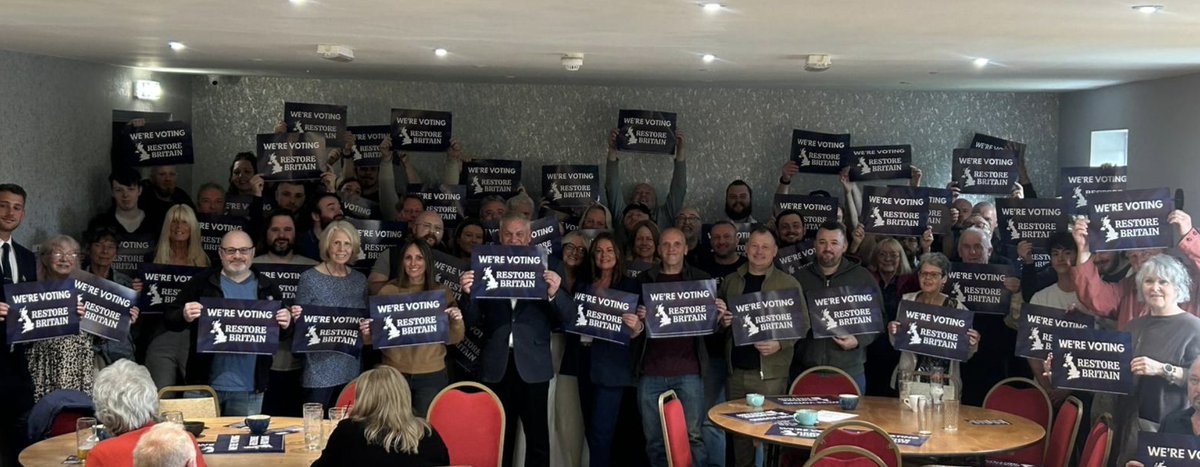
I believe this goes to the heart of the matter, and its why Kezia Noble was fishing for an answer as to whether or not Restore represents a single ethnicity or not. So that Reform could then start their media campaign branding restore racists and suing the pants off them. No — not under Electoral Commission rules. The EC has zero role in enforcing candidate selection based on ethnicity.However, the Equality Act 2010 (enforced by courts and the Equality and Human Rights Commission, not the Electoral Commission) does prohibit racial/ethnic discrimination by political parties in these areas:Membership (s.101): It is unlawful to refuse membership, apply discriminatory terms, or subject someone to detriment because of race/ethnicity (a protected characteristic). Parties cannot restrict membership to people sharing a protected characteristic (e.g., no "whites-only" rule) — Schedule 16, para 1(5). Candidate selection: Parties must not discriminate when selecting candidates for local elections, Parliament, etc. Explicitly excluding people of certain ethnicities from standing would be direct race discrimination. Positive action is allowed (s.104): Parties can take proportionate steps to address under-representation of ethnic minorities (e.g., mentoring, training, or reserving places on shortlists for under-represented groups). But this is voluntary encouragement — it does not permit excluding others. Consequences of an Equality Act breach:An affected individual (or the EHRC) can bring a civil claim in court (County Court in England/Wales). Remedies: compensation, injunctions to change rules/practices, or declarations of unlawfulness. No automatic "shutdown" or deregistration of the party. The party continues to exist; it just has to stop the discriminatory practice (or face repeated lawsuits). The new party is exercising extreme caution to avoid Equality Act-related "lawfare" — i.e., complaints, investigations, or lawsuits that could tie them up in court, drain resources, or create negative publicity during the vulnerable early registration/launch phase.


I believe this goes to the heart of the matter, and its why Kezia Noble was fishing for an answer as to whether or not Restore represents a single ethnicity or not. So that Reform could then start their media campaign branding restore racists and suing the pants off them. No — not under Electoral Commission rules. The EC has zero role in enforcing candidate selection based on ethnicity.However, the Equality Act 2010 (enforced by courts and the Equality and Human Rights Commission, not the Electoral Commission) does prohibit racial/ethnic discrimination by political parties in these areas:Membership (s.101): It is unlawful to refuse membership, apply discriminatory terms, or subject someone to detriment because of race/ethnicity (a protected characteristic). Parties cannot restrict membership to people sharing a protected characteristic (e.g., no "whites-only" rule) — Schedule 16, para 1(5). Candidate selection: Parties must not discriminate when selecting candidates for local elections, Parliament, etc. Explicitly excluding people of certain ethnicities from standing would be direct race discrimination. Positive action is allowed (s.104): Parties can take proportionate steps to address under-representation of ethnic minorities (e.g., mentoring, training, or reserving places on shortlists for under-represented groups). But this is voluntary encouragement — it does not permit excluding others. Consequences of an Equality Act breach:An affected individual (or the EHRC) can bring a civil claim in court (County Court in England/Wales). Remedies: compensation, injunctions to change rules/practices, or declarations of unlawfulness. No automatic "shutdown" or deregistration of the party. The party continues to exist; it just has to stop the discriminatory practice (or face repeated lawsuits). The new party is exercising extreme caution to avoid Equality Act-related "lawfare" — i.e., complaints, investigations, or lawsuits that could tie them up in court, drain resources, or create negative publicity during the vulnerable early registration/launch phase.


Tommy Robinson is bragging about the fact that there will be “Many, many, many” foreigners at his event. My genuine question to his supporters: Is this actually what YOU want? Diversity and multiculturalism?


I believe this goes to the heart of the matter, and its why Kezia Noble was fishing for an answer as to whether or not Restore represents a single ethnicity or not. So that Reform could then start their media campaign branding restore racists and suing the pants off them. No — not under Electoral Commission rules. The EC has zero role in enforcing candidate selection based on ethnicity.However, the Equality Act 2010 (enforced by courts and the Equality and Human Rights Commission, not the Electoral Commission) does prohibit racial/ethnic discrimination by political parties in these areas:Membership (s.101): It is unlawful to refuse membership, apply discriminatory terms, or subject someone to detriment because of race/ethnicity (a protected characteristic). Parties cannot restrict membership to people sharing a protected characteristic (e.g., no "whites-only" rule) — Schedule 16, para 1(5). Candidate selection: Parties must not discriminate when selecting candidates for local elections, Parliament, etc. Explicitly excluding people of certain ethnicities from standing would be direct race discrimination. Positive action is allowed (s.104): Parties can take proportionate steps to address under-representation of ethnic minorities (e.g., mentoring, training, or reserving places on shortlists for under-represented groups). But this is voluntary encouragement — it does not permit excluding others. Consequences of an Equality Act breach:An affected individual (or the EHRC) can bring a civil claim in court (County Court in England/Wales). Remedies: compensation, injunctions to change rules/practices, or declarations of unlawfulness. No automatic "shutdown" or deregistration of the party. The party continues to exist; it just has to stop the discriminatory practice (or face repeated lawsuits). The new party is exercising extreme caution to avoid Equality Act-related "lawfare" — i.e., complaints, investigations, or lawsuits that could tie them up in court, drain resources, or create negative publicity during the vulnerable early registration/launch phase.


I believe this goes to the heart of the matter, and its why Kezia Noble was fishing for an answer as to whether or not Restore represents a single ethnicity or not. So that Reform could then start their media campaign branding restore racists and suing the pants off them. No — not under Electoral Commission rules. The EC has zero role in enforcing candidate selection based on ethnicity.However, the Equality Act 2010 (enforced by courts and the Equality and Human Rights Commission, not the Electoral Commission) does prohibit racial/ethnic discrimination by political parties in these areas:Membership (s.101): It is unlawful to refuse membership, apply discriminatory terms, or subject someone to detriment because of race/ethnicity (a protected characteristic). Parties cannot restrict membership to people sharing a protected characteristic (e.g., no "whites-only" rule) — Schedule 16, para 1(5). Candidate selection: Parties must not discriminate when selecting candidates for local elections, Parliament, etc. Explicitly excluding people of certain ethnicities from standing would be direct race discrimination. Positive action is allowed (s.104): Parties can take proportionate steps to address under-representation of ethnic minorities (e.g., mentoring, training, or reserving places on shortlists for under-represented groups). But this is voluntary encouragement — it does not permit excluding others. Consequences of an Equality Act breach:An affected individual (or the EHRC) can bring a civil claim in court (County Court in England/Wales). Remedies: compensation, injunctions to change rules/practices, or declarations of unlawfulness. No automatic "shutdown" or deregistration of the party. The party continues to exist; it just has to stop the discriminatory practice (or face repeated lawsuits). The new party is exercising extreme caution to avoid Equality Act-related "lawfare" — i.e., complaints, investigations, or lawsuits that could tie them up in court, drain resources, or create negative publicity during the vulnerable early registration/launch phase.