Solid-earth deformation, geodesy, ice sheets, and sea level. Director @AntarcticSciAus. Professor at U Tasmania. Comments mine. Flawed follower of Jesus.
🌊 An important new study led by ACEAS PhD researcher Annika Oetjens from @UTAS_ shows the Southern Ocean may be storing 40 to 60 per cent less carbon at certain depths than many climate models assume.
Learn more ▶️ antarctic.org.au/southern-ocean…
Antarctic Geopolitical Myths: an occasional series. No. 1: I have decided to run a series of threads to counter incessant basic mistakes made by #Antarctic analysts – especially those who should either know better, or who should have done just the minimum of research. 1/5
Australia’s Tasmania Delegation Visits Korea’s Polar Research Institute — Exploring New Paths for Antarctic Cooperation
ikld.kr/news/articleVi…
A trade delegation from Tasmania, led by Deputy Premier Guy Barnett, visited the Korea Polar Research Institute (KOPRI) to discuss collaboration in Antarctic research and infrastructure.
Tasmania is one of the world’s key Antarctic gateway cities—home to the Australian Antarctic Division, the CCAMLR Secretariat, and the University of Tasmania’s Institute for Marine and Antarctic Studies. With direct flight and icebreaker links to Antarctica, the delegation introduced their port and aviation systems and explored opportunities for joint work.
KOPRI and Tasmania have maintained active exchanges since 2019, supported by the Korea–Australia Foundation. This visit brought together policymakers, scientists, and infrastructure managers to deepen cooperation across Antarctic logistics, science, and environmental research.
#Antarctica#KOPRI#Tasmania
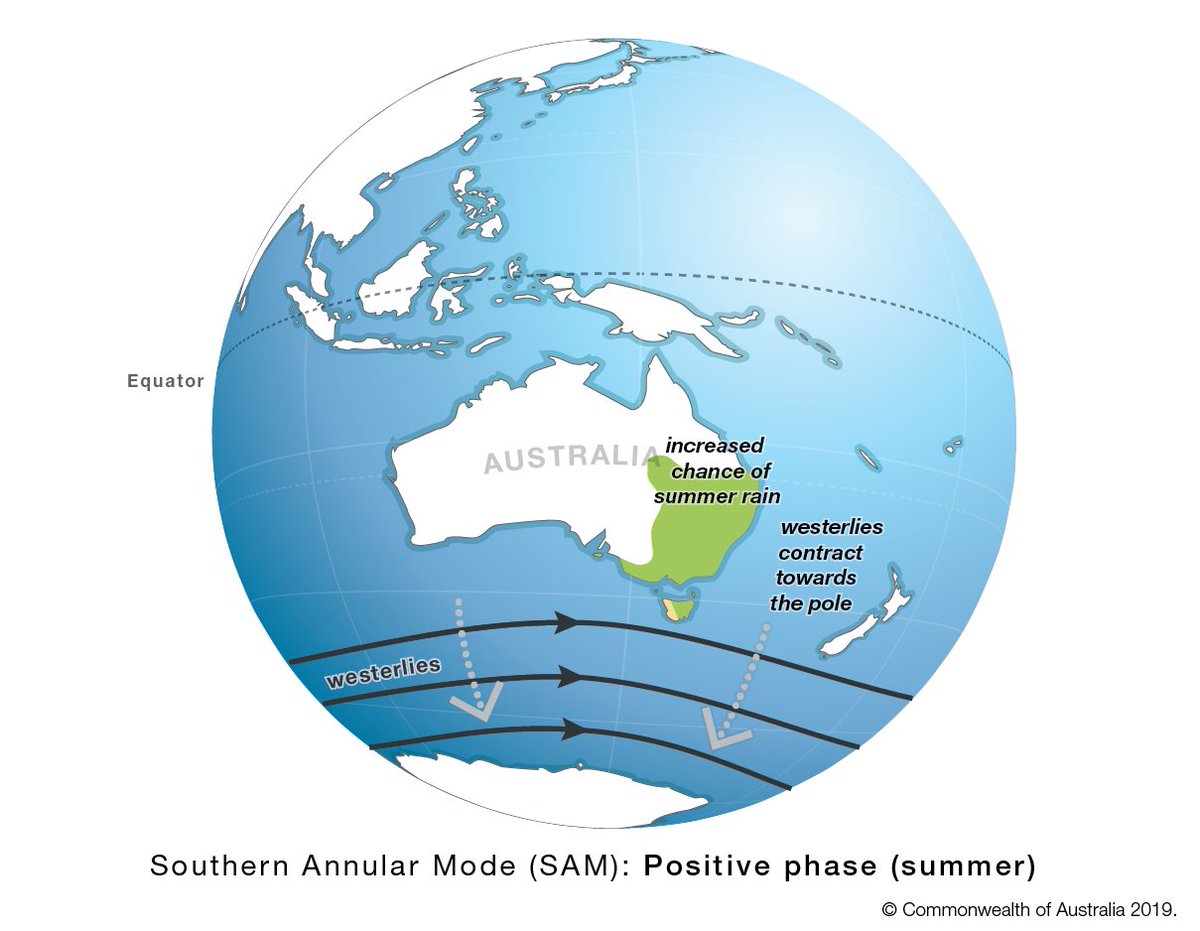
1/ Meet SAM.
The Southern Annular Mode (SAM) is the Southern Hemisphere’s most influential #climate driver. When the SAM is in positive phase, the westerly winds tighten and move towards #Antarctica. In the negative, these winds expand back towards Australia.
(@BOM_au)
🌏 Happy Antarctica Day! ❄️
Today we celebrate global cooperation in protecting and understanding one of Earth’s most unique and fragile environments.
A huge thanks to all our researchers for driving this work forward every day.
Learn more: youtube.com/watch?v=AGg3... 🎥
We're recruiting an Academic Director ⬇️
This role is ideal for someone with strong academic and strategic research management expertise, and who is a respected researcher in the Mathematics, Physics, Chemistry or Earth Sciences domains. Closing 21 Dec: arc.gov.au/about-arc/work…
🌊 What is the Meridional Overturning Circulation
and why is it important?
The Meridional Overturning Circulation (MOC) – critical for transporting heat, carbon, oxygen and nutrients across the globe – is weakening under climate change.
🎥 On-camera media training at UNSW yesterday with our early career researchers Fabio Boeira Dias and @ZhiLi_Ocean! Great questions, plenty of enthusiasm, and lots of behind-the-scenes action📸 #AntarcticScience#EarlyCareerResearchers#ACEAS
CCAMLR starts in just 4 weeks! 🐧🌊 Join us every Monday for bite-sized lessons on Antarctic governance 101. This week, learn who governs Antarctica and discover the unique treaty ensuring the continent remains dedicated to peace and science. Read more in our blog: ow.ly/AVzB50WURj4
❄️ What’s changing in Antarctica and the Southern Ocean?
📨 Discover the latest insights and research in our quarterly Seasonal Newsletter, out next week.
🖊️ Subscribe here: confirmsubscription.com/h/y/236931A8CD…
The ARC is seeking views on the use of AI in research grant assessment. Your input will help shape updates to our generative AI policy.
The short survey is open to anyone with an interest in this space and closes on 10 Oct 2025 surveymonkey.com/r/X7PY5GL
🌍 New research in @Nature shows Antarctica is undergoing abrupt changes. Sea ice is shrinking, ice shelves are melting, and deep ocean currents are slowing. These shifts threaten wildlife and the global climate. Rapid emission cuts are critical. theconversation.com/from-sea-ice-t…
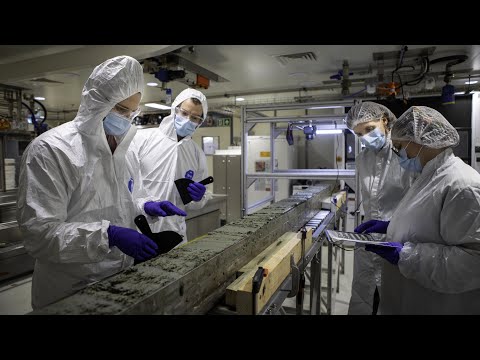
“In our four metre long core barrel we might have 200,000 years of sediment…” - Dr Taryn Noble, #DMV sediment core lead
Find out how cores are extracted from beneath the #Antarctic seafloor and why it’s important to go so far back in time ⬇️ @IMASUTASyoutu.be/lXMEsfVjfGU?fe…
New self-heating battery design could boost Antarctic scientific instruments’ runtime by 90% at −40 °C. Combines self-heating with optimized thermal management for extreme cold.
sciencedirect.com/science/articl…