Adrian del Rio

335 posts

Adrian del Rio banner
Adrian del Rio

Adrian del Rio

@Delrio_Adri

@MSCActions postdoc at @UniOslo_SVfak. Research: Dictatorship, elite divisions, business, government, education, democracy. bluesky: @adridelrio.bsky.social

Oslo, Norway Katılım Kasım 2022
446 Takip Edilen379 Takipçiler
Adrian del Rio
Adrian del Rio@Delrio_Adri·
@lectocratas Check out Stefano bartolini's book the political. That's a groundbreaking contribution to the concept :D
English
0
0
1
46
Lectócratas
Lectócratas@lectocratas·
📖 El concepto de lo político — Carl Schmitt (1932) DESCARGA GRATUITA dokumen.pub/el-concepto-de… Introducción "Lo político se define así sin referencia específica a objeto alguno; aparece como una relación que se caracteriza meramente por su intensidad, en último extremo por la posibilidad de que en ella se llegue al uso de la coacción, de la fuerza." 🧵1/8
Lectócratas tweet media
Español
2
108
273
10.1K
Adrian del Rio retweetledi
Daron Acemoglu
Daron Acemoglu@DAcemogluMIT·
On Iran and Anthropic: Robert Mugabe, Zimbabwe’s dictatorial president since 1987, won the big prize in the country’s lottery in 2000. Why did he go out of his way to concoct such a charade? A surface-level answer: Because he could. Once you destroy institutions constraining your power and behavior, you can act in largely unrestricted fashion, whether it is for personal enrichment, personal aggrandizement, or simply projecting even greater power. But there is a deeper, more problematic answer as well: What better way to further decimate institutional checks on your power than showing how much of a farce the existing system of rules is. It is not just a coincidence that such behavior can do damage to norms, institutions and security and stability of the country. It is part of the design. Mugabe’s lottery win echoes in two fateful decisions by the Trump administration, which will have long-lasting and troubling implications, are just. Trump and his allies are pursuing these actions because they can and because these actions are consistent with their agenda of upending all rules and constraints on their future behavior. The first problematic action is the US-Israeli attack on Iran and the killing of the country’s supreme leader Ayatollah Khamenei. Leave aside the loss of life and the immediate chaos, it should be obvious that such a move will trigger a long period of instability in the Middle East. There should be no doubt that the Iranian regime was repressive, murderous and bad news for its own people’s economic and social well-being. The supreme leader, leading Iranian elites and the country’s feared Revolutionary Guard had blood in their hands and the repression had intensified lately. But none of this justifies the United States and Israel initiating a war in the Middle East, without support from international allies or from the public in the United States (still considered a democracy where people’s views should in principle matter). But even worse, this act violates the sovereignty of another nation and risks plunging the entire region into carnage. And however awful Ayatollah Khamenei’s track record may be, he’s no Nicolas Maduro (who had only a few diehard supporters even in the Venezuelan military). By virtue of his religious role, Khamenei enjoyed respect and authority among the Shiites and even the broader Muslim mission community, and his killing risks turning him into a martyr, which is the last thing that Iran or the region needs. The second is the Department of Defense (it is still painful to call it the Department of War even if recent actions confirm that this change of name wasn’t just for optics) designating the AI company Anthropic a supply-chain risk. The official designation is typically used for companies from foreign adversaries, such as China’s Huawei. It bars federal contractors using the Anthropic’s models and heralds major restrictions on what the company can do in the future. The Secretary of Defense Pete Hegseth announced “Effective immediately, no contractor, supplier, or partner that does business with the United States military may conduct any commercial activity with Anthropic.” The reason? Because Anthropic wanted safeguards against its models being used for mass surveillance of Americans and autonomous weapon systems. Neither of these two provisions would have put meaningful restrictions on the DoD in practice. Mass surveillance is illegal under US law and autonomous weapon systems are a not near-term possibility. Yet, it is the showdown that matters, just like Mugabe’s lottery winning. This action will also have major consequences, perhaps more far-reaching than the attack on Iran. Regardless of what one might think of current AI capabilities, there is little doubt that who controls AI will have momentous implications for democracy, business, communication and privacy. This designation can be interpreted by many in the industry that it will be the US government, not the private sector, that controls AI. Even more far-reaching are the broader implications of this action: this administration, and perhaps future administrations, can now bring hugely disproportionate penalties on any contractor they disagree with. Security of private property rights, which has been a mainstay of American state-business relations for centuries, is now looking much shakier. It also sends exactly the wrong signal to the world that Pentagon is intent on mass surveillance and the development of autonomous weapon systems (why else bother about these two ineffective provisions in the contract?). The absurdity of both actions is what harkens back to Mugabe’s lottery win. Trump came to power promising no foreign adventures, and now has spearheaded a potentially riskier one than the Iraq war, with even flimsier justification. There would have been no bite to the provisions that Anthropic wanted in the contract, since current AI systems are nowhere near reliable to be used in autonomous weapon systems and the US government has plenty of other tools that can be (and sometimes are) used for mass surveillance. The shock value and the norm breaking are part of the intent. Mugabe’s lessons continue.
English
83
431
1.8K
470.3K
Adrian del Rio
Adrian del Rio@Delrio_Adri·
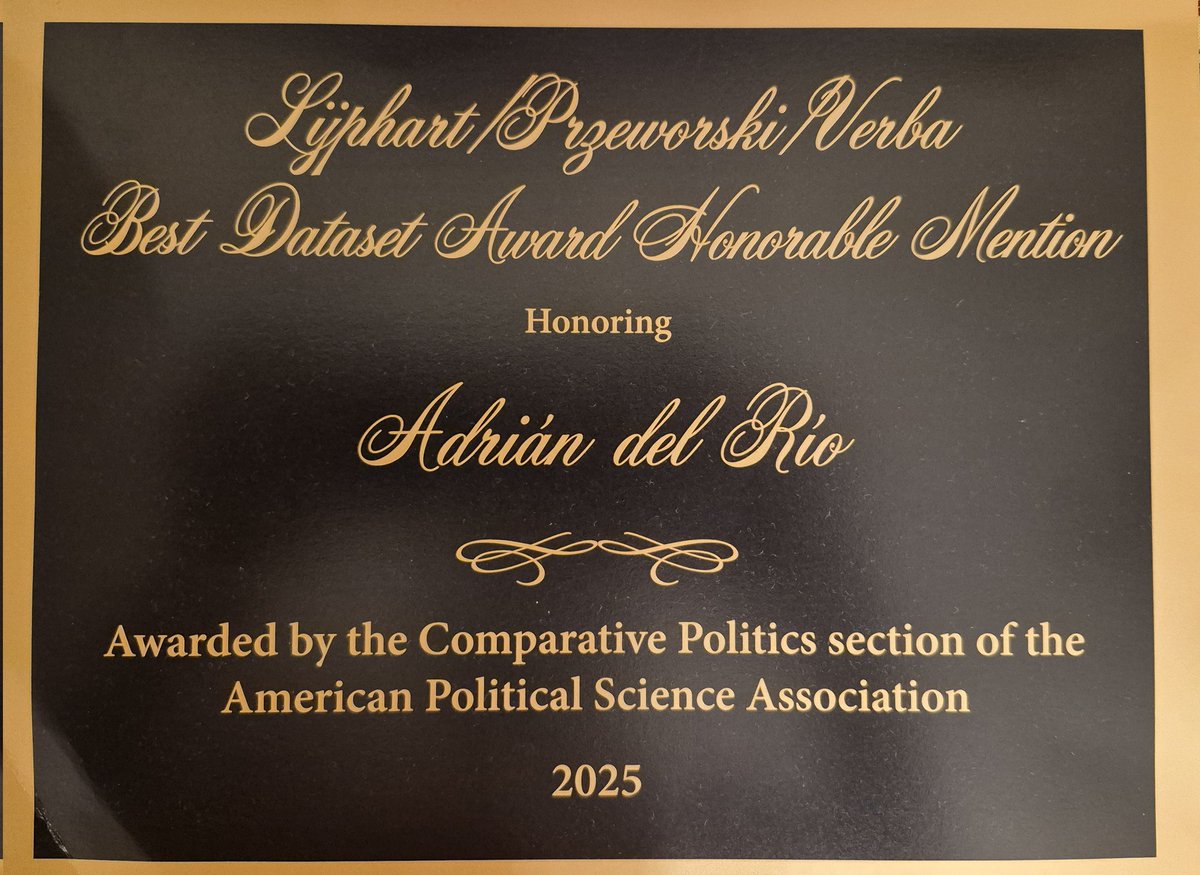
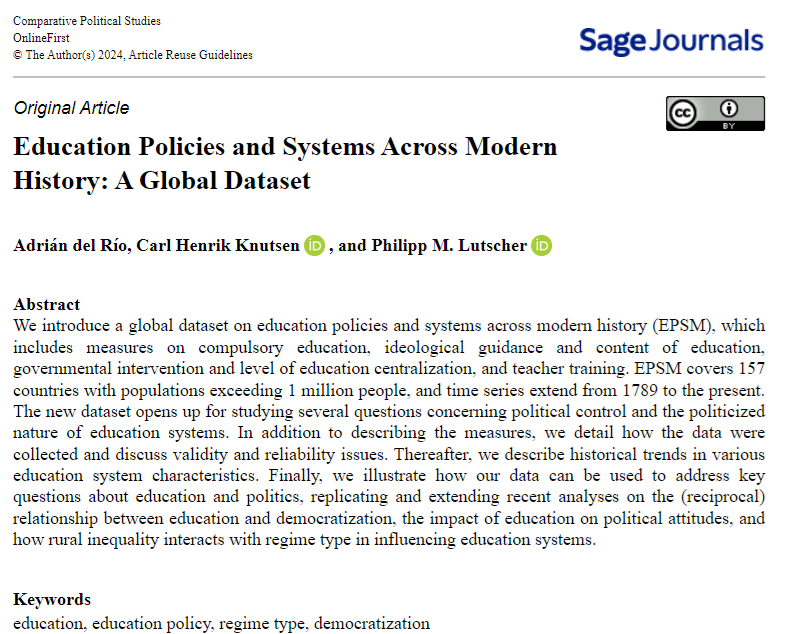
Special thanks to all colleagues and RAs who made the dataset possible. I hope it will be useful to all of you. Please contact me for any questions!
English
0
0
0
13
Semuhi Sinanoğlu
Semuhi Sinanoğlu@semuhi·
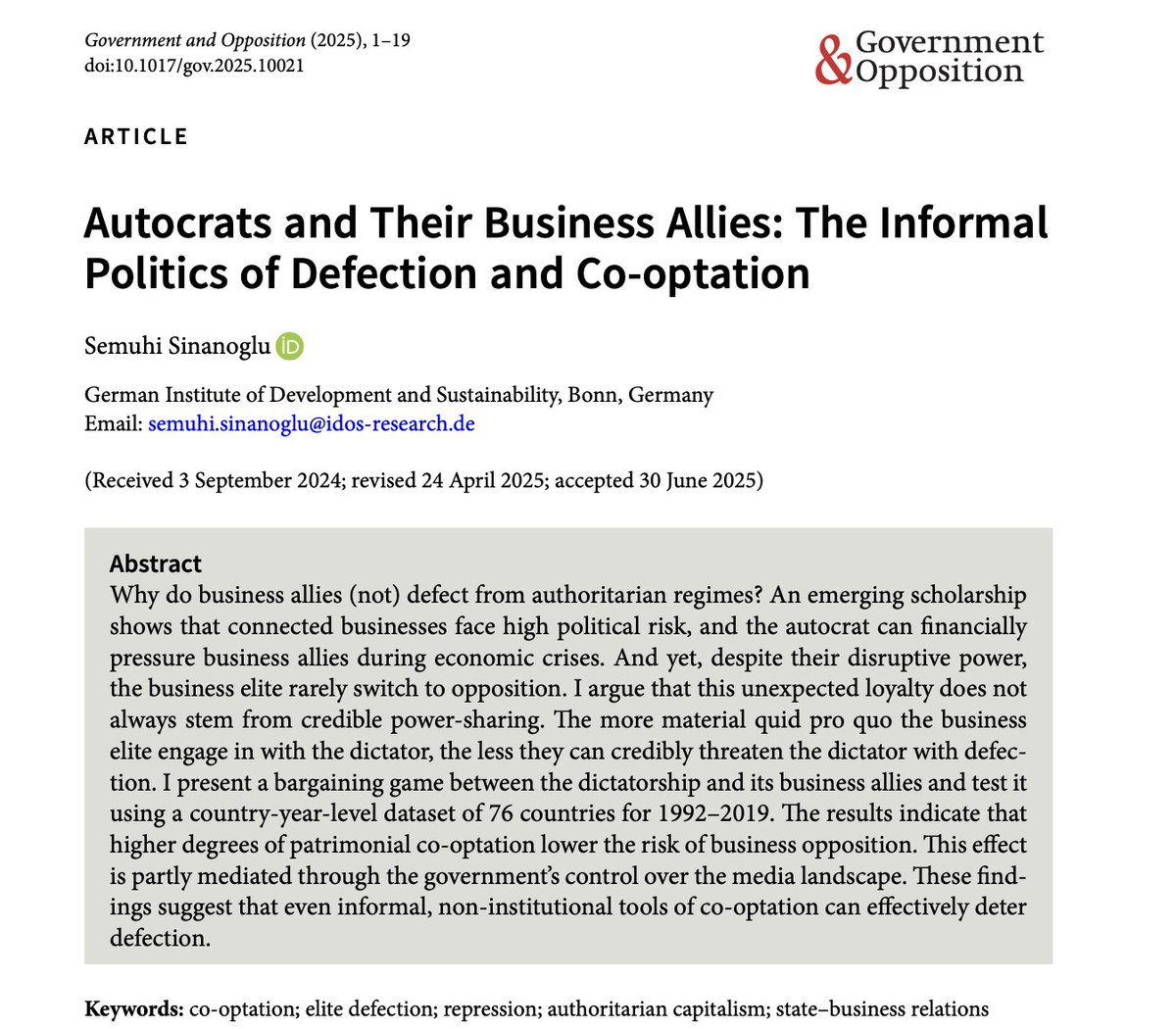
Why don't business elites defect from authoritarian regimes? They face huge risks, especially during economic crises, when dictators choose to financially extort or purge their business allies. And yet, despite their power to disrupt, business elites rarely switch sides. My research shows why. The deeper the quid pro quo with the dictator, the weaker their threat of defection. 🧵 Put simply: once you’re tied into the system, you can’t credibly walk away. Using a bargaining game and data from 76 countries, I find that material benefits from the government prevent the business elite from switching to the opposition, partly due to the extensive government control over the media landscape. doi.org/10.1017/gov.20… 🔑 𝐏𝐨𝐥𝐢𝐜𝐲 𝐭𝐚𝐤𝐞𝐚𝐰𝐚𝐲: It may be too late to expect systematic defection from co-opted elites, unless the autocrat's propaganda power gets diminished. Instead, democracy protection must focus on convincing and encouraging the business community to preemptively defend democratic institutions, rather than siding with authoritarian populist leaders. Thanks @LucanWay @timothymfrye @m_j_donnelly for useful advice! @govandopp Might be of interest (cc): @mikealbertus | @amypond_ps | @Delrio_Adri | @MaiOHassan | @reutertweets
Semuhi Sinanoğlu tweet media
English
1
57
199
23.7K
Ning Leng
Ning Leng@leng_ning·
My new book, *Politicizing Business*, releases today @CambridgeUP! Central theme: in China’s political economy, the Party-state systematically enlists businesses to serve its political needs and those of its officials. The politicization of business is rooted in authoritarianism and often follows sectoral patterns. A🧵 amazon.com/Politicizing-B…
English
14
50
212
26K
Adrian del Rio
Adrian del Rio@Delrio_Adri·
Cuidados con los bulos. En tiempos de caos como el que #España y #Portugal están sufriendo por el #apagón, grupos y gente promueven bulos para potenciar el caos y el odio. Leer y evaluar la info que recibes antes de compartir
Español
0
1
7
2K
Adrian del Rio retweetledi
Daron Acemoglu
Daron Acemoglu@DAcemogluMIT·
Trump’s attack on US institutions, even if fully expected, is dispiriting, discombobulating and dangerous. In this very difficult time, we have to remember one thing: This is not normal, and it should not be normalized. If, as I hope, the US democracy survives and (somehow) recovers, then history books will judge those working with Trump and Republican lawmakers in the Senate and Congress enabling him harshly (and so should we). If US democracy does not survive, I don’t know what history books will be like.
English
121
481
2.3K
297.2K
Adrian del Rio
Adrian del Rio@Delrio_Adri·
@schafuggeddit @DimaKortukov Exactly. Still there are 4 years of Trump. Let's see how things go. But the future does not look bright...yet, it is to early to say that there is a regime change, as the polity 4's abrupt coding change suggests...
English
1
0
2
30
Dean Schafer
Dean Schafer@schafuggeddit·
@DimaKortukov @Delrio_Adri I hope you're right. I'm not sure if I agree with "no evidence," though I might have agreed with saying their interpretation was alarmist. I think how the Supreme Court weighs in on his attempt to gather more power to the executive will be consequential, for example
English
1
0
1
36
Dean Schafer
Dean Schafer@schafuggeddit·
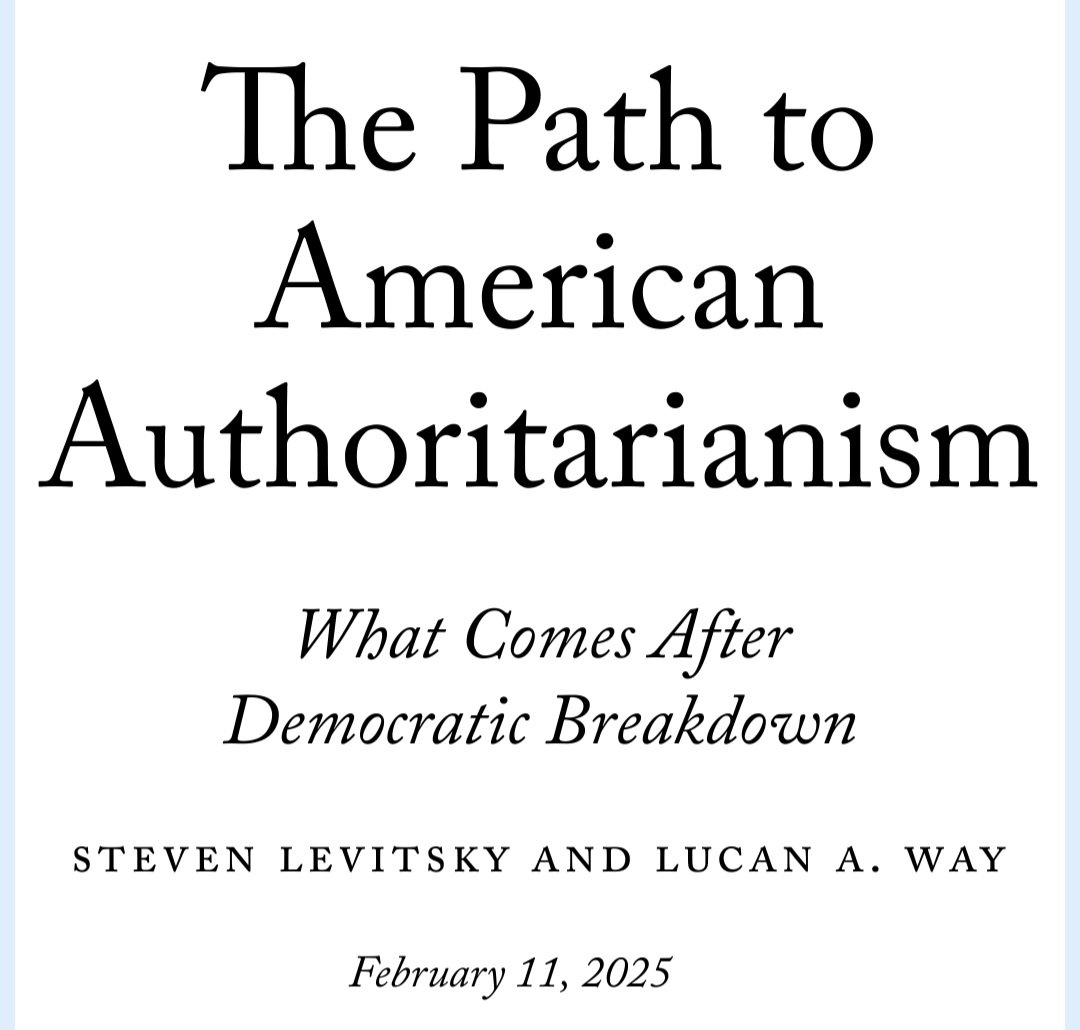
It's painful to see democratic breakdown in the US described so clearly We knew the threat was real. Trump ran an openly authoritarian campaign after trying to overthrow the last election. In the last 3 weeks, he's followed the Project 2025 plan for consolidating executive power
Dean Schafer tweet media
English
2
1
3
759
Dima Kortukov
Dima Kortukov@DimaKortukov·
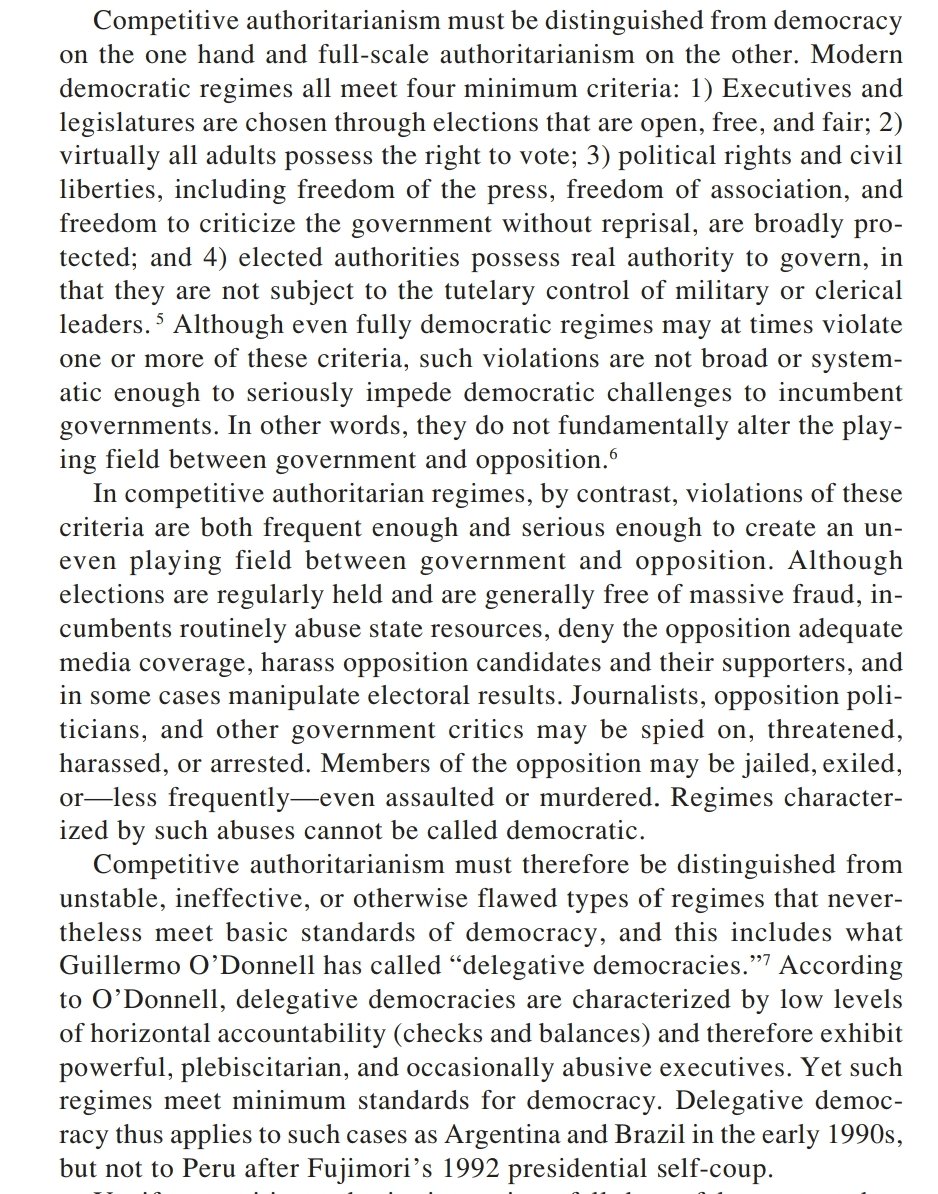
@schafuggeddit I love L&W scholarly work, but this essay is wild conceptual stretching. None of the defining features of CA regimes as outlined in their original piece is applies to US 2025.
Dima Kortukov tweet media
English
1
0
2
56
Adrian del Rio retweetledi
Yiqing Xu
Yiqing Xu@xuyiqing·
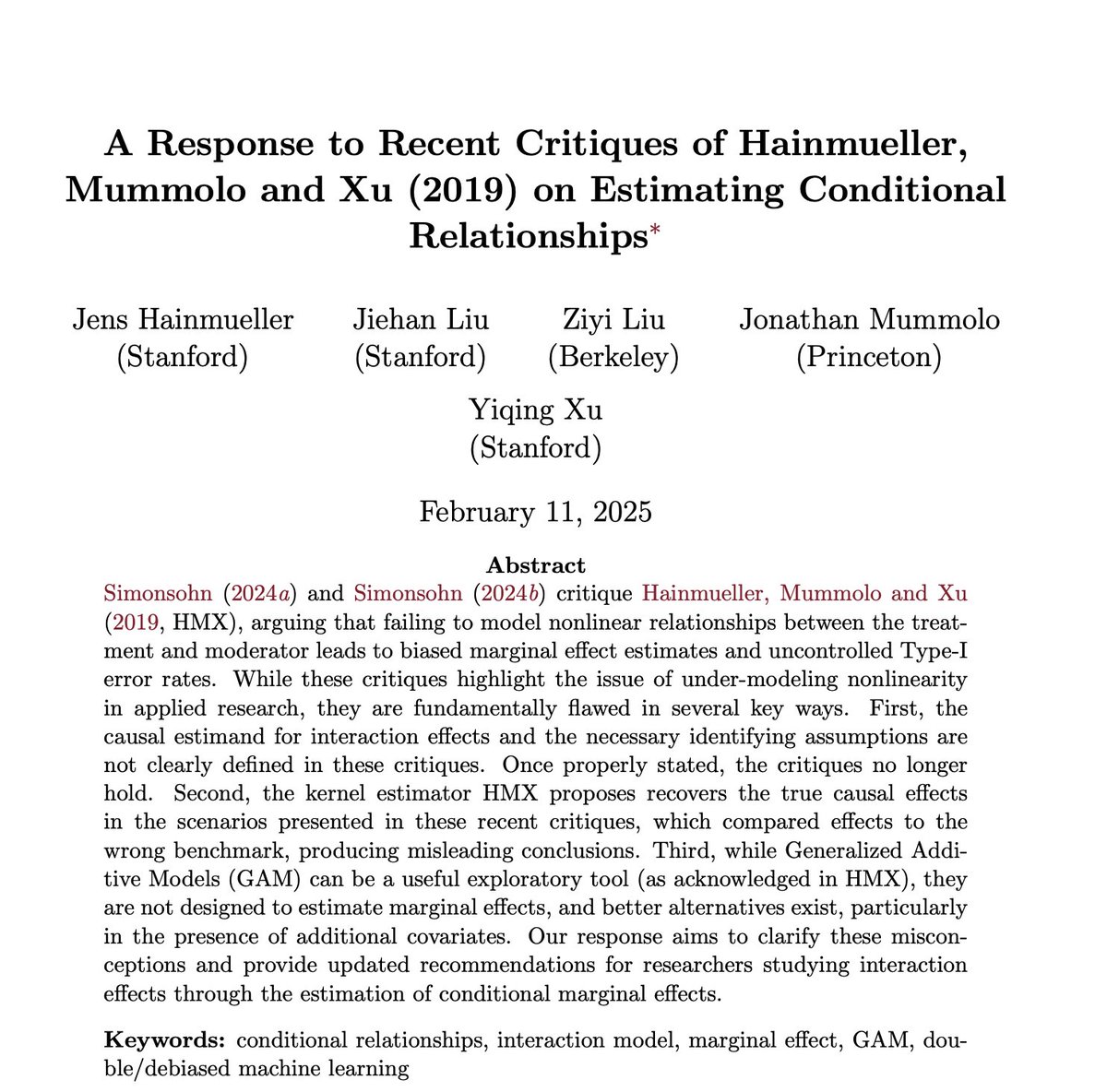
1/ Recently, Professor Uri Simonsohn critiqued Hainmueller, Mummolo & Xu (2019), arguing that the proposed methods fail to recover the conditional marginal effect (CME): datacolada.org/121 We appreciate the critique and offer this response: arxiv.org/pdf/2502.05717 🧵
Yiqing Xu tweet media
English
3
25
131
30K