Olivier Blanchard@ojblanchard1
Re Grade inflation and Harvard rules (@jasonfurman):
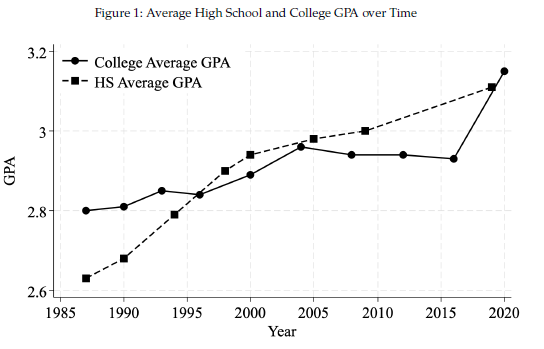
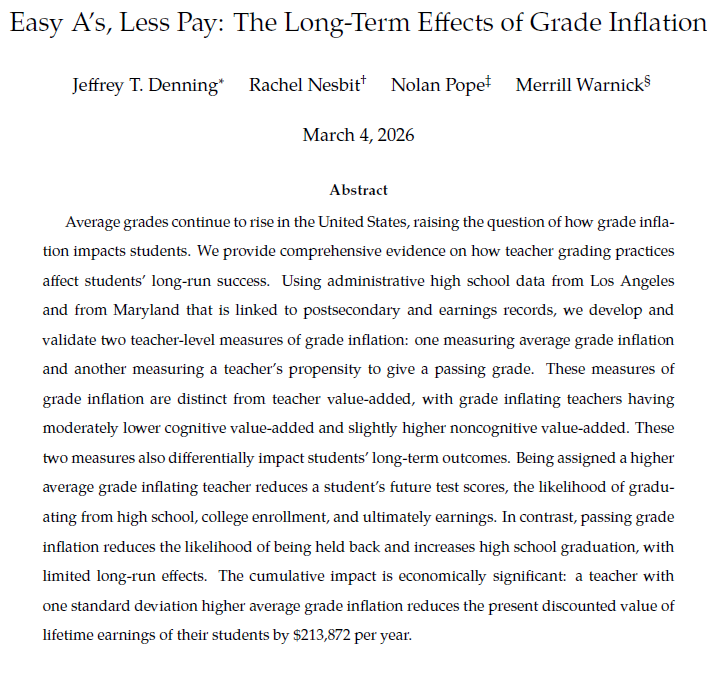
The mechanism behind grade inflation is the same as the mechanism behind inflation. Inflation comes from price setters trying to increase their relative price, leading all prices to go up. Grade inflation comes from teachers trying to increase or maintain their relative grade, leading all grades to go up.
In the case of inflation, what limits the increase is lower aggregate demand, which leads price setters not to want to increase their relative price and stabilizes inflation (this is what the Taylor rule does). In the case of grade inflation, the feedback mechanism is not there. But it could be introduced. University rules smoothly penalizing consistently high grades, at the university level or at the individual grader level? Actually, the University can do something that the Fed cannot do: adjust the grade distribution and the average grade level down if needed. (Fed cannot adjust the average price level directly...) Fun to think about it.