

Derek Tee
2.8K posts

Derek Tee
@DerekTeeTV
Movie night with live chat, every Saturday 9PM Eastern. Intermittent gaming. No reruns; miss it and you miss it. RT ≠ agreement
Katılım Kasım 2021
191 Takip Edilen151 Takipçiler
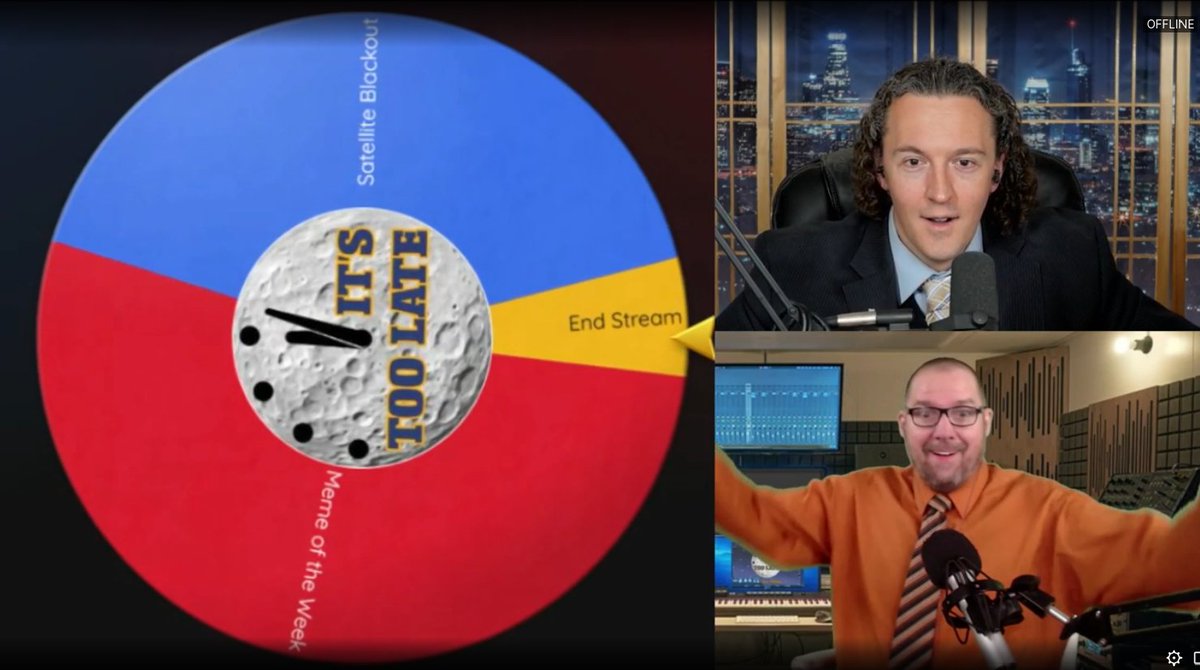



@DarthBaneIRL Because the President told me it was obliterated 9 months ago, in no uncertain terms:

English
1/ I’m recording a 5-10 min YouTube video to be released later this week; pls drop some questions below & I’ll touch on as many as I can on a best efforts basis. Thx! (Also, pls feel free to subscribe to my YouTube channel.)
English


If you're left brained you'd see a rabbit and if you're right brained you'd see a cat

English

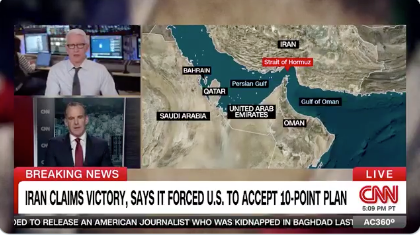
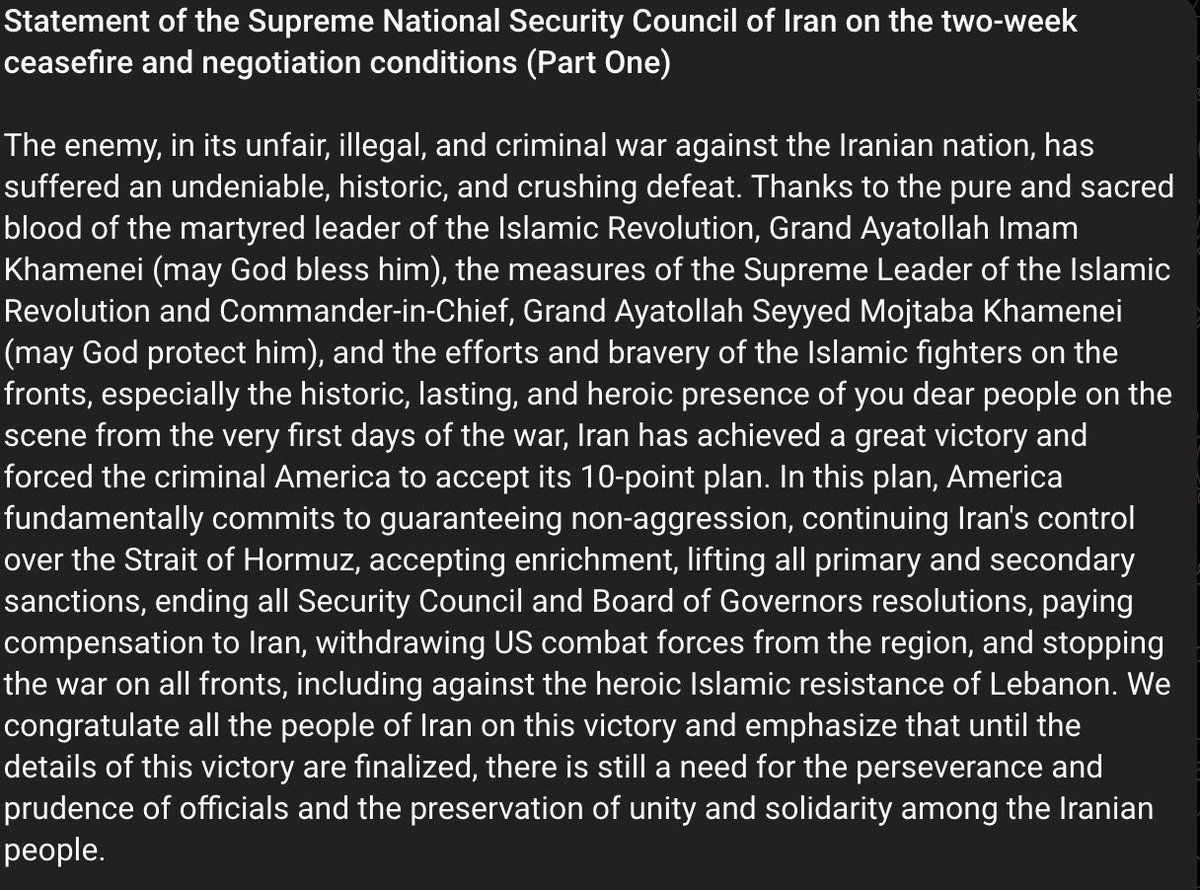
Hormuz under IRGC control is now Iran's Panama Canal
Iran is now the official gatekeeper of the world's oil, LNG & fertilizer supply
Such a deal!
English
Derek Tee retweetledi

I feel like the oil market has already crossed the point of no return, regardless of how this war plays out.
At first this wave just swallowed up everything East of Suez. We saw force majeures popping up all over Asia and premiums going through the roof.
But now the Atlantic wall has officially crumbled. Only oil nerds like us are checking this stuff lately, but seriously—just look at the North Sea Platts window and the USGC diffs.
This is nowhere near normal. I know some ppl are getting all hyped up every time a single Handy tanker or LPG carrier squeaks through Hormuz, even claiming there’s a secret fleet of tankers slipping through.
I highly doubt it. If supply was actually fine, Atlantic physical diffs wouldn't be screaming like this. These numbers only happen when you're hitting a massive supply shock.
Like some of smart guys have noted, once you pass a certain threshold, it doesn't even matter if Hormuz reopens—the logistical bottlenecks will make it impossible to absorb the shock anytime soon.
I’m pretty sure we’ve already crossed that line.
#oott #iran
English
@aeberman12 @CRUDEOIL231 Ouch. Consequences are forthcoming. It'll be interesting to see how many war supporters change their tune when it hits everyday life in a serious way.
English
The oil shock has gone global, writes @CRUDEOIL231
A ceasefire or even peace won't stop that train.
JH@CRUDEOIL231
I feel like the oil market has already crossed the point of no return, regardless of how this war plays out. At first this wave just swallowed up everything East of Suez. We saw force majeures popping up all over Asia and premiums going through the roof. But now the Atlantic wall has officially crumbled. Only oil nerds like us are checking this stuff lately, but seriously—just look at the North Sea Platts window and the USGC diffs. This is nowhere near normal. I know some ppl are getting all hyped up every time a single Handy tanker or LPG carrier squeaks through Hormuz, even claiming there’s a secret fleet of tankers slipping through. I highly doubt it. If supply was actually fine, Atlantic physical diffs wouldn't be screaming like this. These numbers only happen when you're hitting a massive supply shock. Like some of smart guys have noted, once you pass a certain threshold, it doesn't even matter if Hormuz reopens—the logistical bottlenecks will make it impossible to absorb the shock anytime soon. I’m pretty sure we’ve already crossed that line. #oott #iran
English
@AlanMosleyTV I knew he was crazy but damn. This is a moment where destruction of ALL civilization is on the line. God help us if orders get followed.
English

This psychopath should be removed *before* another atrocity, not after.
Disclose.tv@disclosetv
JUST IN - Trump on Iran: "A whole civilization will die tonight, never to be brought back again."
English

@aeberman12 I just meant too late to TACO or unblow up the damage. Seems pretty serious from what I've heard from you and others.
English
What’s too late @DerekTeeTV ?
Context please. There’s nothing in my post about time.
Derek Tee@DerekTeeTV
@aeberman12 It's too late already; my guess is the reality truly sets in, in 3-4 weeks tops.
English
Derek Tee retweetledi

Corn requires 140 to 180 pounds of synthetic nitrogen per acre. Soybeans require near zero because rhizobia bacteria in their root nodules fix atmospheric nitrogen directly from the air. This biological fact is now the most consequential variable in American agriculture because the synthetic nitrogen that corn needs is manufactured through the Haber-Bosch process, the Haber-Bosch process runs on natural gas, and one third of the world’s seaborne fertiliser trade transits the Strait of Hormuz, which has been effectively closed for five weeks.
The USDA’s March 31 Prospective Plantings report confirmed the shift. Corn planted intentions fell to 95.3 million acres, down 3.45 million from 2025. Soybean intentions rose to 84.7 million acres, up four percent. Anhydrous ammonia hit $1,035 per tonne at retail, the first time above $1,000 since April 2023. Urea hit $826, the first time above $800 since November 2022. The urea-to-corn price ratio reached 126 bushels per tonne against a historical average of 75. At that ratio, planting corn on marginal land is a guaranteed loss. The farmer is not making a philosophical choice. The farmer is doing arithmetic. And the arithmetic says soybeans.
America produces 75 to 94 percent of its ammonia domestically. It is not Bangladesh, which shut four of five state urea plants within a week. It is not Sri Lanka, which reactivated military-escorted QR fuel rationing. The United States will not have a nitrogen famine. What it will have is a nitrogen price trap that alters the composition of what is planted, how much nitrogen is applied to what remains, and what that means for the 6.2 billion bushels of corn that the USDA projects will be consumed as animal feed this marketing year.
The chain is linear and each link is verified. Strait closed. Gas trapped. Haber-Bosch plants offline or repriced. Urea surges. Corn margins collapse. Farmers shift acres to soybeans. Fewer corn acres at harvest. Tighter supply against sticky feed demand and inelastic ethanol mandates under the Renewable Fuel Standard, which alone consumes 5.6 billion bushels annually regardless of price. Higher corn prices transmit into feed costs for cattle, hogs, and poultry. Livestock producers absorb, pass through, or liquidate herds. Meat, dairy, and egg prices rise 10 to 25 percent by early 2027 according to commodity analysts tracking the acreage shift.
India says its stockpile is “comfortable.” American farmers face a different test: not whether they can get nitrogen, but whether they can afford it before the biological window closes in mid-May. Every acre that shifts from corn to soybeans removes a feed grain acre. Every pound of nitrogen skipped on remaining corn reduces yield on a quadratic curve: the first 20 pounds cut cost far more in lost bushels than the last 20 applied.
The war is in Iran. The strait is in the Gulf. The molecule is methane. The reaction is Haber-Bosch. The product is urea. The crop is corn. The consumer is a chicken in Arkansas, a hog in Iowa, a dairy cow in Wisconsin, and every American who buys what they produce. The strait and the steak are connected by a single chemical reaction that was invented in 1909 and has fed half the world’s population ever since. When the feedstock for that reaction is trapped behind a naval blockade, the steak reprices. Not today. At harvest. And harvest does not wait for diplomacy.
open.substack.com/pub/shanakaans…

Shanaka Anslem Perera ⚡@shanaka86
BREAKING: The world spent fifty years and hundreds of billions of dollars building Strategic Petroleum Reserves so that no geopolitical shock could starve civilization of energy. Nobody built the equivalent for fertilizer. That is the most expensive oversight in the history of modern statecraft, and you are about to pay for it at the grocery store. The Strait of Hormuz does not merely carry 20% of global oil. UNCTAD estimates roughly one-third of all seaborne fertilizer trade passes through it. The Fertilizer Institute estimates that conflict-exposed exporters account for nearly 49% of global urea exports and nearly half of global sulfur trade. Since February 28, daily ship transits have collapsed by 97%. Here is what almost nobody understands about why this is not "just another commodity spike." It was not the missiles that closed the strait. It was the insurance. Multiple P&I clubs cancelled war-risk extensions for the Gulf after 26 months of Red Sea losses had already depleted their Solvency II capital buffers. War-risk premiums surged from 0.25% to as high as 5% of hull value per transit. A urea cargo cannot absorb that. The economics of fertilizer shipping through Hormuz became impossible before a single mine needed to detonate. The Trump administration announced a $20 billion sovereign-backed reinsurance facility with Chubb as lead underwriter. There is no confirmed public evidence that a single fertilizer vessel has used it. Insurance pays for financial loss. It does not intercept anti-ship missiles. Physical security remains the binding constraint, and the US Navy confirmed on March 12 it is "not ready" for commercial escorts. Now here is the part that should terrify every allocator on Earth. Agriculture runs on biological deadlines. Corn Belt farmers need nitrogen applied by mid-April. Indian Kharif season prep starts in May. Australian winter crop needs urea by June. These are not financial deadlines that reprice. They are photosynthetic deadlines that, once missed, produce irreversible yield loss. A diplomatic breakthrough on April 15 does not help a farmer who needed fertilizer on April 1. And the yield math is nonlinear. Wall Street models fertilizer-to-output as proportional. It is not. The response is quadratic. In developed systems that over-apply nitrogen, a 15% reduction costs 2-5% of yield. In the Global South where farmers already under-apply, the same reduction pushes crops off a biophysical cliff. Sri Lanka proved this in 2021 when a sudden fertilizer ban collapsed rice production 40% in a single season and brought down the government. The market is pricing a 45-day disruption. The insurance architecture says 120 days minimum. Even after a hypothetical ceasefire, Solvency II capital rebuild, reinsurance treaty renegotiation, and vessel re-underwriting take months. The Red Sea precedent: 26 months after Houthi attacks began, war-risk premiums never returned to pre-crisis levels. Both sides are rejecting negotiations. Trump rebuffed ceasefire mediation March 14. Iran's foreign minister on March 15: "We never asked for a ceasefire." Meanwhile: 51% of US corn areas in drought. El Nino favored by June at 62% probability. Skymet assigns 60% chance of below-normal Indian monsoon. Bangladesh has shut five of six urea factories. India formally asked China for urea on March 12. Egypt faces $28 billion in debt repayments while importing 12.7 million tonnes of wheat. WFP identifies 318 million people already at crisis-level hunger. The world stockpiled oil but forgot to stockpile the molecules that produce half its food. The clock is the position. Full analysis in the link! open.substack.com/pub/shanakaans…
English
@aeberman12 It's too late already; my guess is the reality truly sets in, in 3-4 weeks tops.
English
A few mines—or just the threat—is enough to close Hormuz
Ships stop. Insurers pull back. Flows collapse.
Clearing takes weeks to months.
That’s the strategy: disruption without closure.
#IranWar #OilMarkets #EnergyCrisis #Hormuz #Geopolitics #SupplyChains
arabnews.jp/en/middle-east…
English
@SantiagoAuFund @FinanceLancelot A pretty grim way for Brent to be proven right.
English


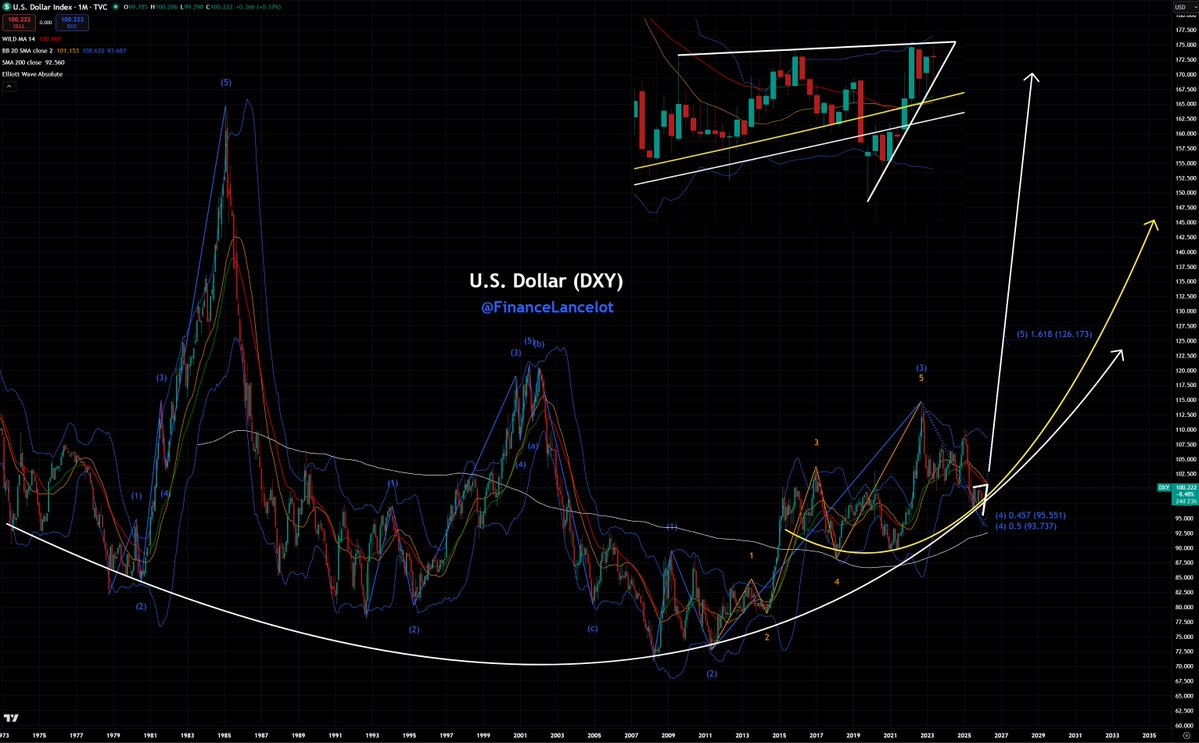
THE NIGHTMARE SCENARIO NOBODY IS TALKING ABOUT
AN OIL + DOLLAR SHORTAGE
The nightmare scenario nobody is talking about right now is what happens if the Dollar skyrockets at the same time as oil.
Since the world's oil supply is purchased in Dollars, they are typically inversely correlated. A lower Dollar = increased international demand for oil.
The only time we've seen a brief period of oil 🔼 Dollar 🔼 was in 2022, during the economic slowdown.
The nightmare scenario we're facing is a global oil supply shortage at the same time as an economic crisis.
Both of these compound the demand for Dollars because not only are nations forced to liquidate greater assets to purchase oil, but servicing sovereign debt becomes much more expensive because it's denominated in Dollars.
This energy crisis could very well be the beginning of Brent Johnson's @SantiagoAuFund Dollar Milkshake Theory and the United States' plan to take a large portion of its debt out of circulation.
Financelot@FinanceLancelot
The plan is to retire US Treasuries & take them out of circulation. Steve Keen & @paulbuitink get it 🤫👇 Forcing nations to sell them below face value requires a $ shortage (deflationary spiral) which triggers a global insolvency crisis similar to 1929. youtube.com/watch?v=9TDSGS…
English
The intelligence was clear:
Iran would retaliate asymmetrically, target regional assets, and weaponize Hormuz.
Trump dismissed Pentagon concerns.
The President has that right.
But don't say “no one told me” when everyone did.
theatlantic.com/national-secur…
#IranWar #Geopolitics #EnergyCrisis #Hormuz #OilMarkets #Strategy
English
Of Mice and Men (1992); live chat @ twitch.tv/derekteetv x.com/i/broadcasts/1…
English
Derek Tee retweetledi

This is false. At this time, nobody has contacted me to be the new AG.
Gain of Fauci@DschlopesIsBack
BREAKING: Donald Trump expected to name Saul Goodman as new Attorney General
English
Derek Tee retweetledi


Derek Tee retweetledi


Derek Tee retweetledi

BREAKING - Passengers on an American flight from Atlanta to Puerto Rico captured one of the closest videos of the Artemis II launch from their plane, and it’s going massively viral, with some commenters expressing concern about how close the plane was to the rocket.
English