Jack

1.1K posts

Jack banner
Jack

Jack

@DetailSZN

Building trading tools & systems @PoetTrading - 4jnqfSMWE1opwNT9m98s5QFKyNasypjeoieJsGsdjupx

Katılım Ocak 2025
472 Takip Edilen364 Takipçiler
Jack
Jack@DetailSZN·
I have decided to COMPLETELY overhaul the @PoetTrading branding. I'm just not that into the current theme. I'm sat here just looking at everything and thinking, I can do better, I can aim higher.
English
0
0
0
69
Jack
Jack@DetailSZN·
Vday long weekend complete. Mrs happy. Omw back to the @PoetTrading lab.
GIF
English
0
0
0
51
Jack
Jack@DetailSZN·
⤵️
Stoic Trader@StoicTA

Someone repackaged trading concepts that have been free for 100 years, gave them new names, and convinced an entire generation of traders that they discovered something new. They didn't… Wyckoff wrote about accumulation and distribution in the 1920s. Jesse Livermore said Wall Street never changes because human nature never changes. All markets only do 3 things, they break out and they either continue or reverse. That was true then and it's true right now while you're reading this. So why are you sitting there with 15 variables in your head trying to figure out where "the draw on liquidity" is going? Premiums, discounts, arrays, sweeps, draws, imbalances, inversions, runs, gaps, hunts… Every variable you add makes you more confused, not more profitable. You can't make a clear decision with all of that noise competing for attention on a 1 minute chart. And that confusion is the product. The more complicated it feels, the more you think you need another video, another course, another model. Here's what nobody selling you complexity wants you to realize. You're either buying low or selling high. Two setups. That's the whole game. It happened last week, it's happening this week, and it will happen next week on every single market. The real edge was never the model. It was sitting on your hands, waiting for the same repeating setup, and having the discipline to scale it up when it shows up. But you've been told the opposite, that the more you trade, the better you'll get. That's not an education, that's a casino business model. There is nothing new under the sun… The only variable is you and only you.

ART
0
0
0
15
Jack
Jack@DetailSZN·
@rScotty_V Core memory creation, also possibly lifelong trauma for mom.
English
0
0
1
11
Jack
Jack@DetailSZN·
I would be forever grateful if you took a look @PoetTrading I don't profess to be a great programmer/designer/operator. I do profess to be a seasoned trader/ideator/builder. If you know why you love it or hate it, I would love your feedback.
Poet Trading@PoetTrading

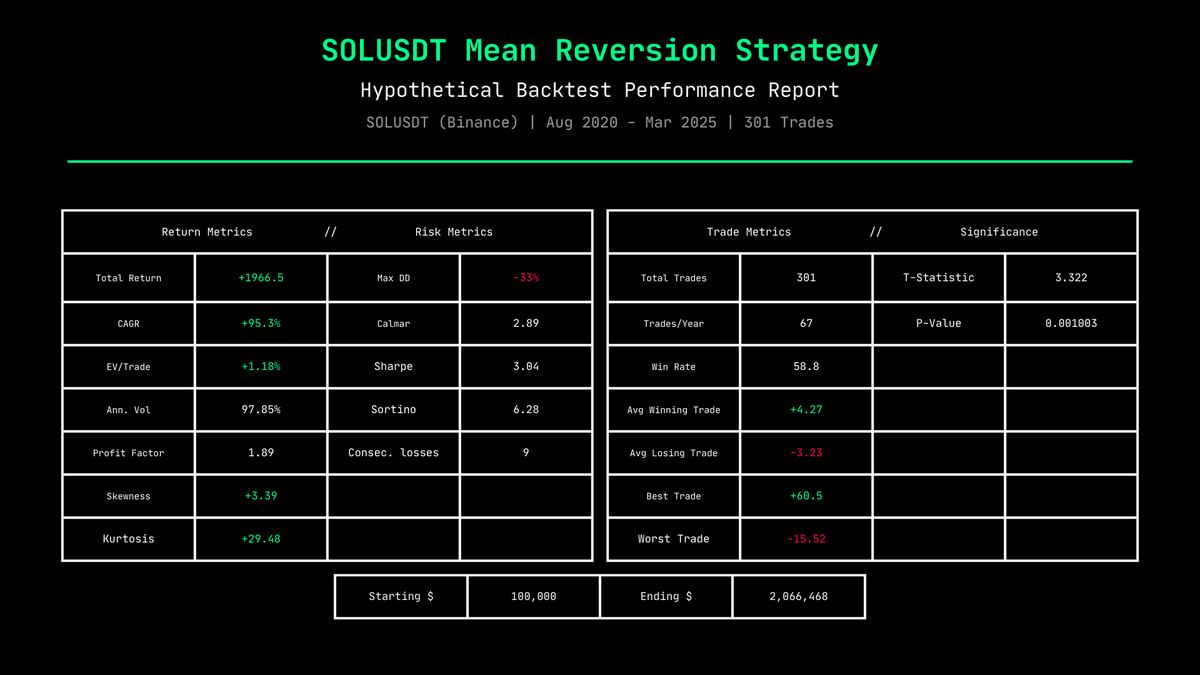
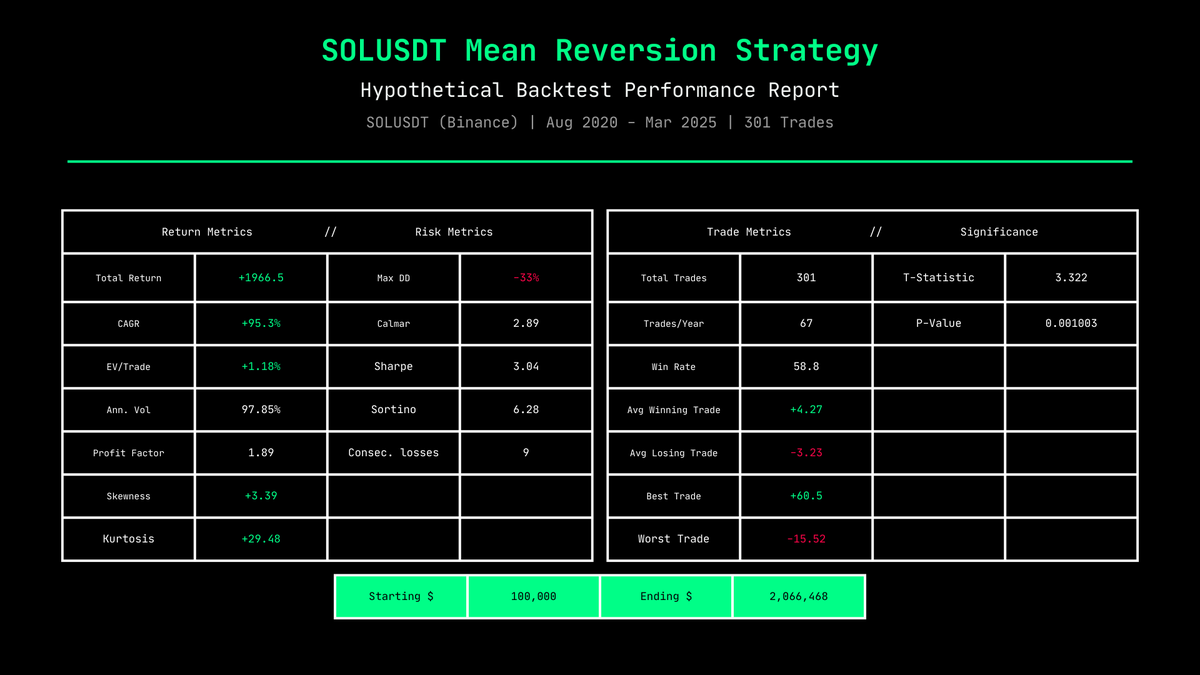
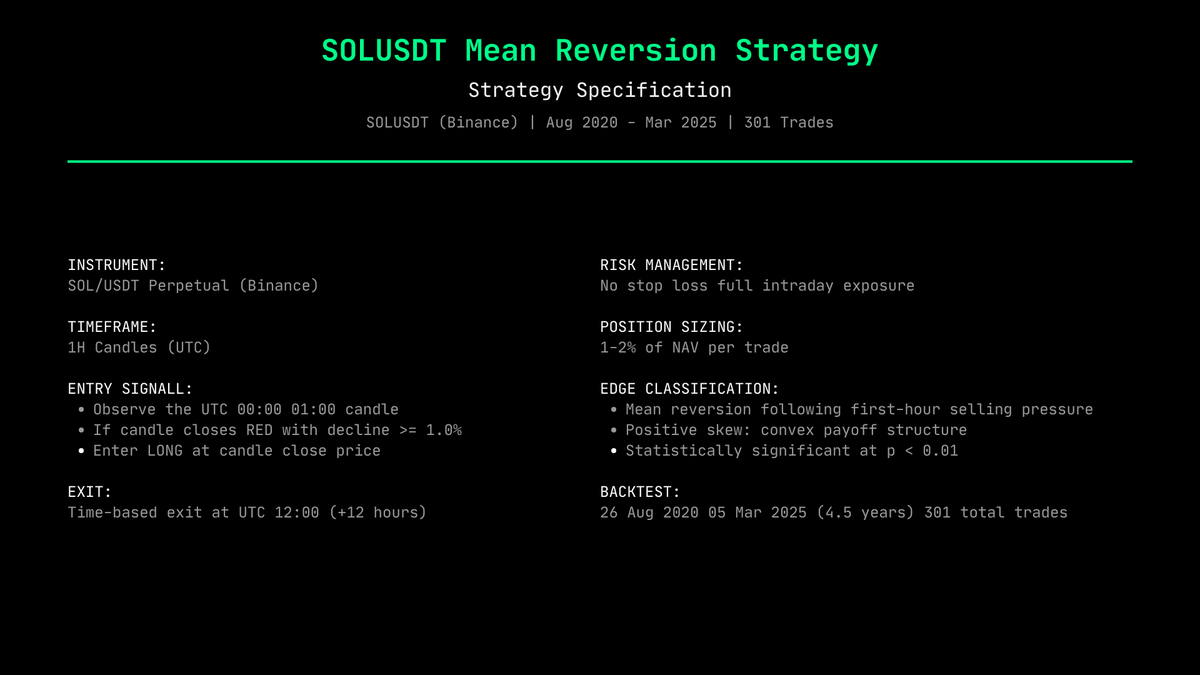
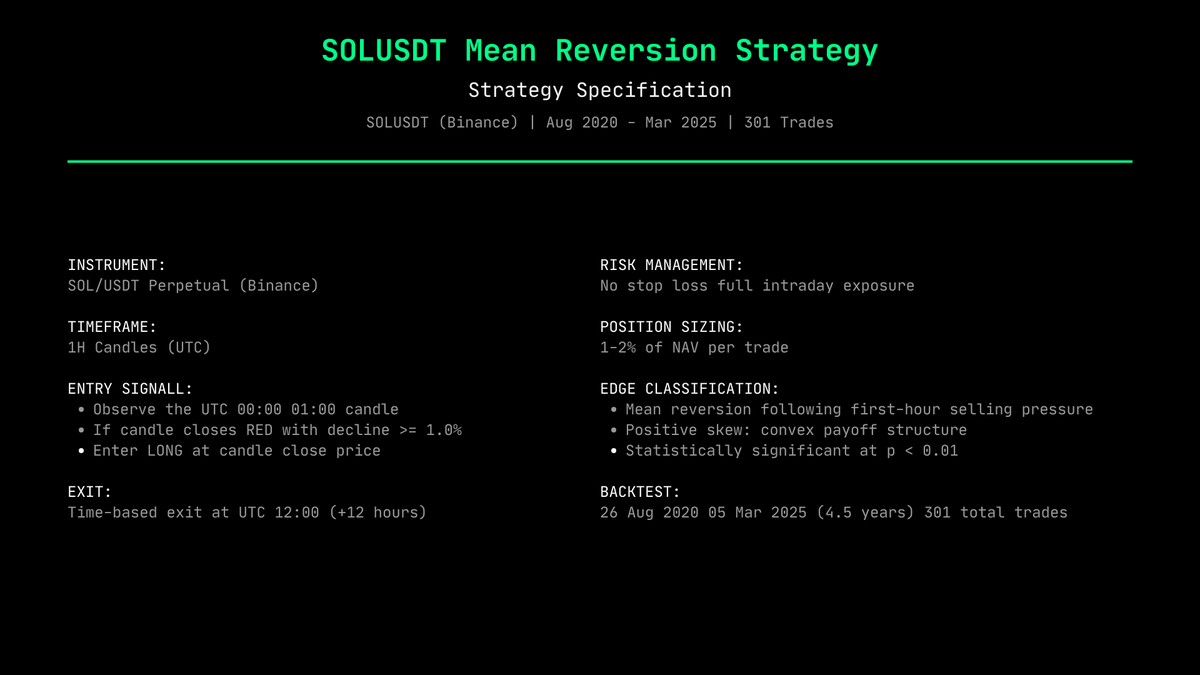
We found a mean reversion edge on SOL that's held for 4.5 years. The first hourly candle of the day closes red by >=1% → long → exit 12h later. One condition. No discretion. +1966% Total Return | Sharpe 3.04 | 301 trades | p < 0.01 Strategy + research paper LIVE now

English
0
0
1
68
Jack
Jack@DetailSZN·
Still tweaking the @PoetTrading UI/UX rather than working on the actual main features. Probably a waste of time right now but honestly... Balance between elements is a big deal for my small brain. It's not perfect but it's much better...
Jack tweet media
English
0
0
1
27
Jack
Jack@DetailSZN·
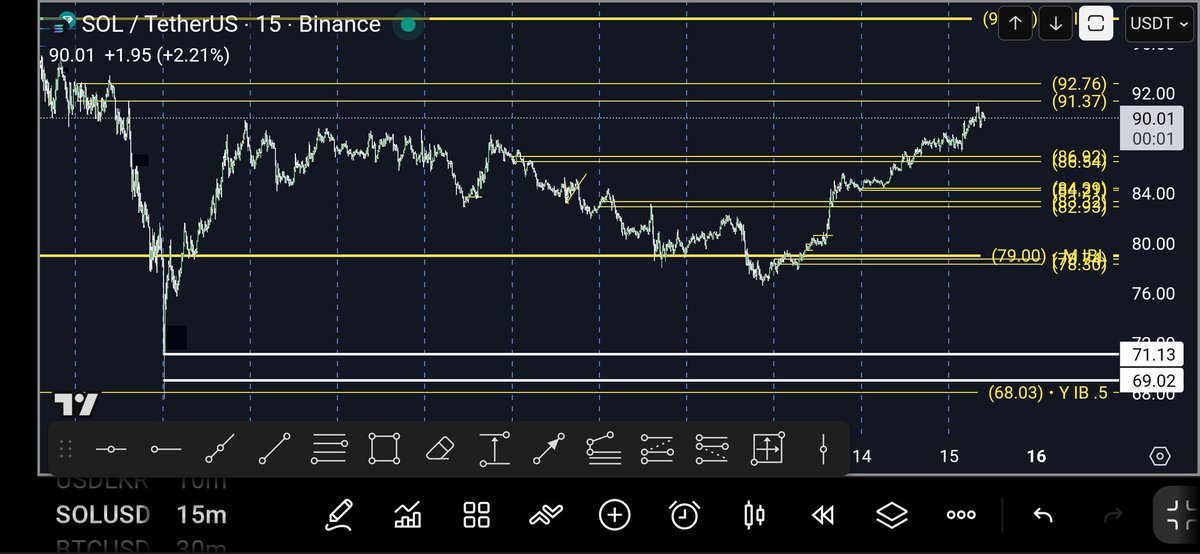
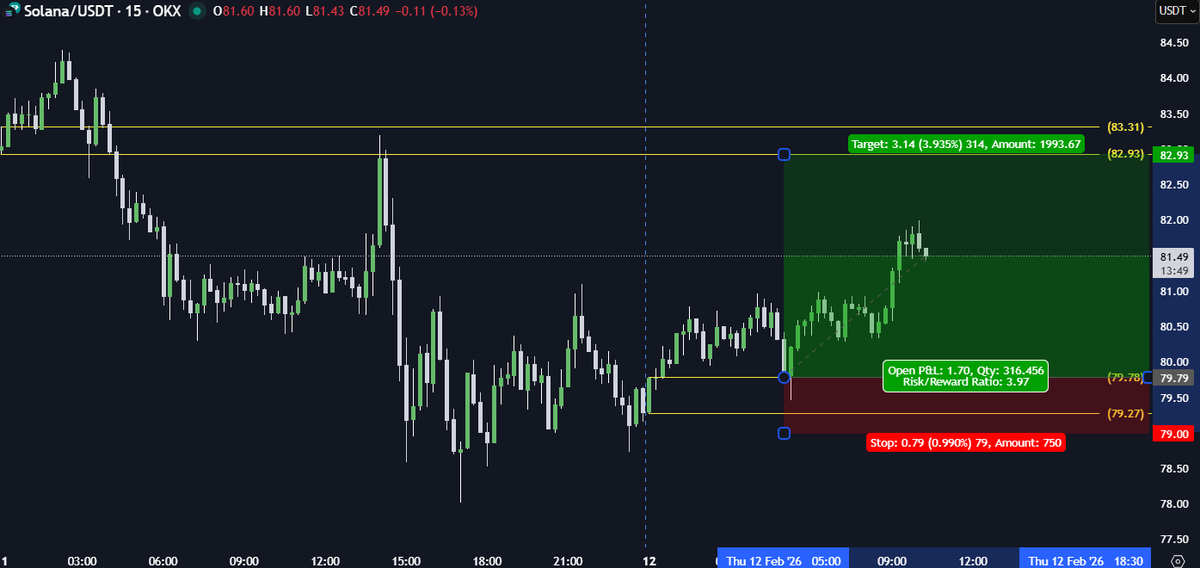
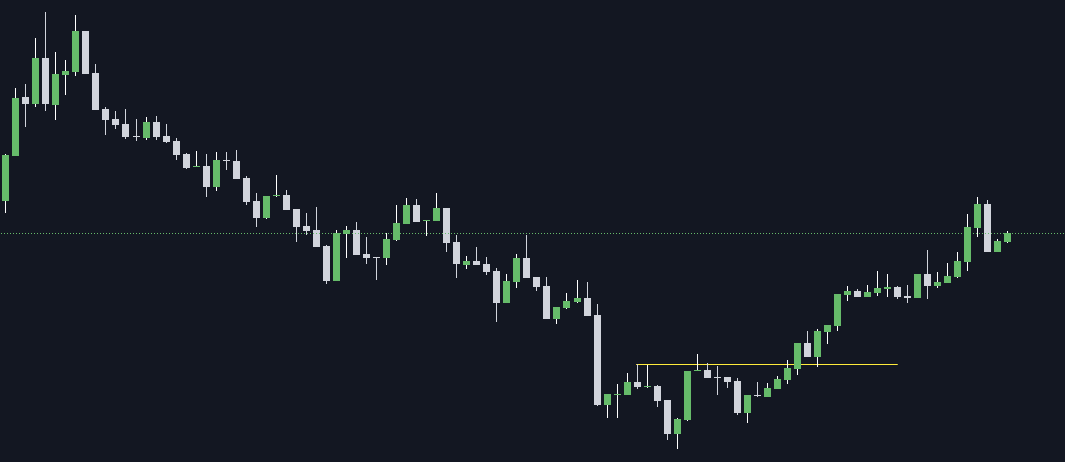
The type of Opening Range Retest we love to see. $SOL
Jack tweet media
English
0
0
0
26
Jack
Jack@DetailSZN·
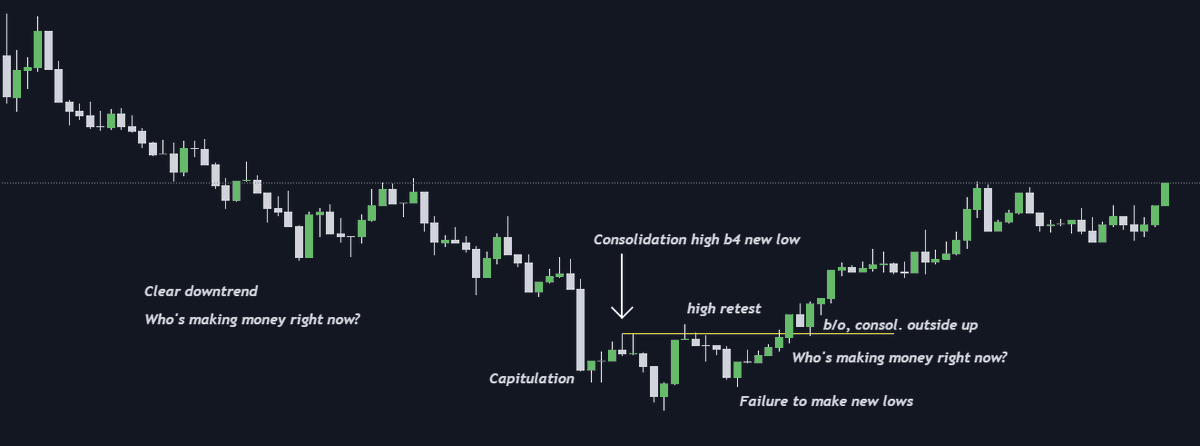
A truly useful question to ask yourself as a trader. In relation to this Open of every bar. "Who is making money right now?" --- This question has both saved and made me significant amounts of money... Bar by bar, ask yourself the question. "Who is making money right now?"
Jack tweet media
English
0
0
0
15
Jack
Jack@DetailSZN·
Describe this thoroughly. You don't need to know the instrument or timeframe. Find and save 100 examples of it. Annotate every example. You have a solid setup for you playbook. It really can be that easy. We just love to overcomplicate this job.
Jack tweet media
English
0
0
1
13
Jack
Jack@DetailSZN·
Quietly building tools and strategies in public. The SOLUSDT Mean Reversion trade is strong in and of itself, but from experience I know I can reduce the drawdown and the research paper I just pushed to the docs on GitHub outlines a few methods that I'll attack it.
Poet Trading@PoetTrading

New strategy live on Poet: $SOL Mean Reversion +1,966% total return 3 Sharpe 59% win rate 300 trades over 4.5 years p-val: 0.001 One rule. First hourly candle closes red by 1%+, go long, exit 12 hours later. Backtest, method, and research paper live. poet-drab.vercel.app

English
0
0
2
72
Jack
Jack@DetailSZN·
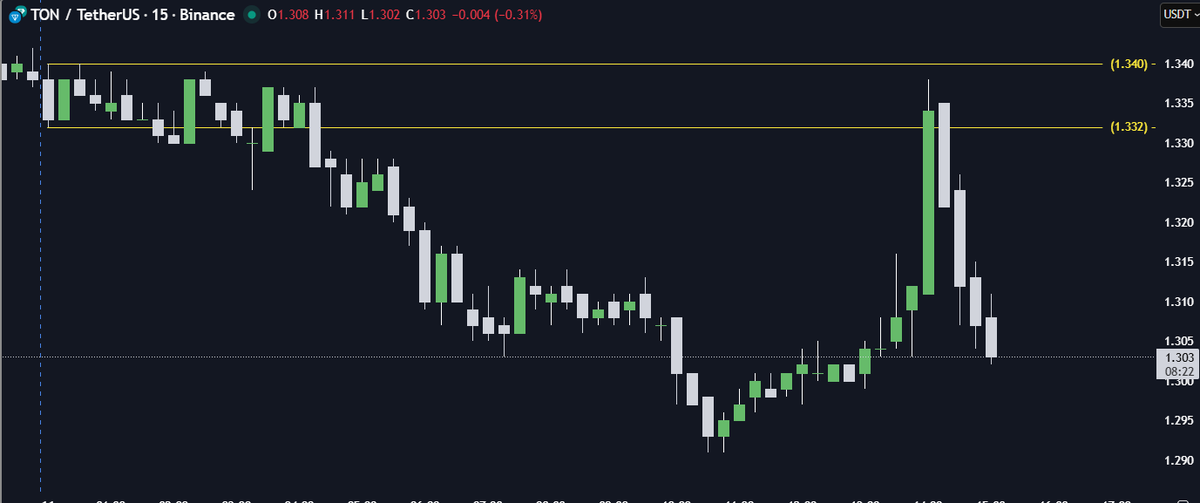
Perfect Opening Range Retest in $TON
Jack tweet media
English
0
0
1
22
Jack
Jack@DetailSZN·
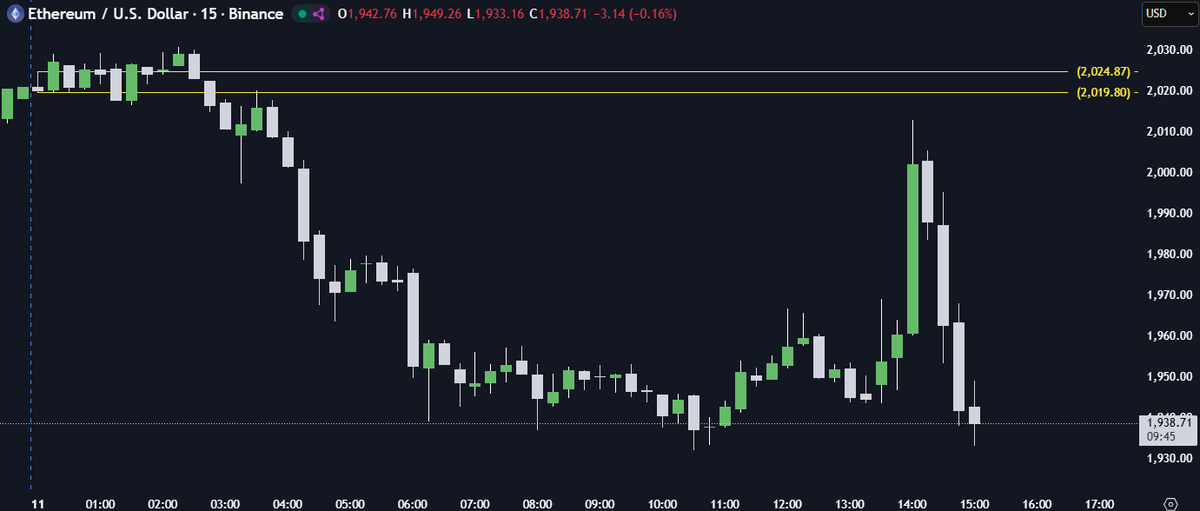
Didn't quite make it to the Opening Range in $ETH
Jack tweet media
English
0
0
1
20
Jack
Jack@DetailSZN·
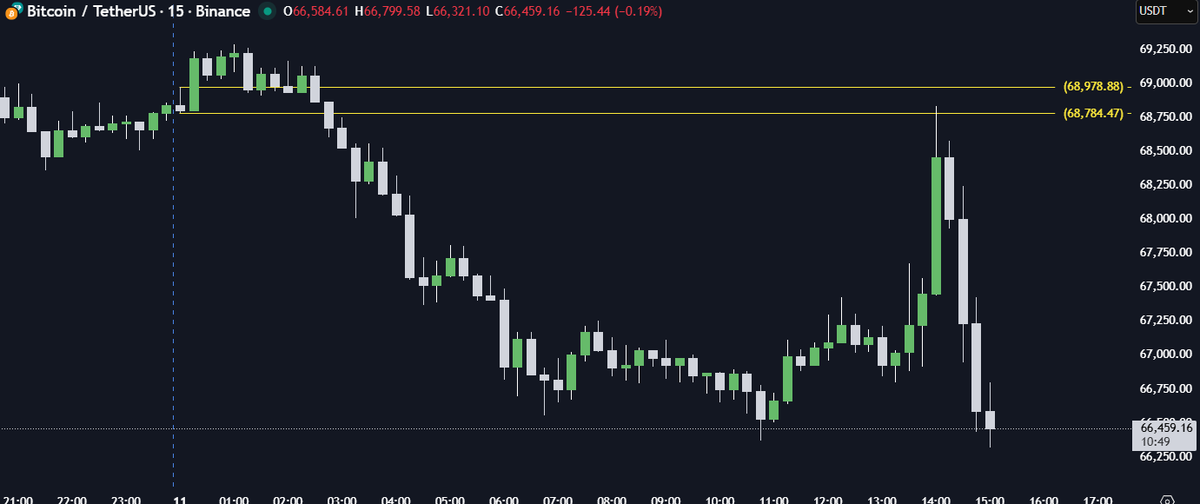
Perfect Opening Range Retest $BTC
Jack tweet media
English
0
0
1
21
Jack
Jack@DetailSZN·
Perfect Opening Range Retest $SOL
Jack tweet media
English
0
0
0
12
Jack
Jack@DetailSZN·
Strategy Spec and some metrics for the $SOL First Hour Mean Reversion Strategy above
Jack tweet mediaJack tweet media
English
0
0
1
22
Jack
Jack@DetailSZN·
I ran a Monte Carlo and got a green light for forward testing. Here's the simulation Measure the real setup: We take our 306 trades (red 1H ≥1%, long at close, exit +12h, no stop) and calculate the average return: +1.16% per trade, Sharpe 2.97. Build a "pool" of random returns: We take ALL 12-hour returns from 1H close to +12h close across every single day in the dataset. This pool represents "what happens if you just randomly go long at UTC 01:00 and exit at UTC 12:00 on any day." 3. Simulate 10,000 random strategies: Each simulation randomly picks 306 returns from that pool (same number of trades as our setup). This is like saying "what if a monkey randomly picked 306 days to trade?" We calculate the mean return and Sharpe for each of those 10,000 fake strategies. 4. Compare: Out of 10,000 random strategies, how many achieved a mean return ≥ +1.16% or a Sharpe ≥ 2.97? 5. Results: - Random strategies averaged +0.266% per trade (go long any random 12h window and you average +0.27%) - Only 3 out of 10,000 random strategies matched our mean return → p = 0.0003 - Only 52 out of 10,000 matched our Sharpe → p = 0.0052 What this means: The red 1H filter is genuinely selecting for something. It's not just that SOL goes up over time (the random pool captures that). The specific condition, buying after a ≥1% first hour drop, produces returns that are 4.7x the random baseline. There's a 0.03% chance this happened by luck. Importantly: This doesn't guarantee the edge persists forward. Market structure changes. This doesn't account for fees. If SOL enters a multi-year bear market, the edge will weaken.
English
1
0
1
18
Jack
Jack@DetailSZN·
Possibly the most interesting part of looking at the first of hour of trading on $SOL is that the first hour does provide a small edge in discerning if the day closes higher/lower than the opening price. Green Hour = 56% chance of Green Day Red Hour = 57% chance... But... There is no edge (over the past 5 years) in the day closing higher/lower than the close of the first hour. Green Hour = 48% chance of closing above Green Hour Close Red Hour = 50% chance... What we do find though, is that there may be greater edge in a mean reversion trade based on the close of Red Hour. More to come... $SOL
English
1
0
0
44
Jack
Jack@DetailSZN·
Been working on the @PoetTrading "Factsheet Generator" (working title) this evening, (and in between dad duties) Lot's more to come: Monthly Composite Returns, Drawdown Reports, VAMI etc etc etc How are we looking? (Noting there will be a portrait version for mobile devices)
Jack tweet mediaJack tweet media
English
0
0
0
12