Devi Rosari (❖,❖)

457 posts

Devi Rosari (❖,❖) banner
Devi Rosari (❖,❖)

Devi Rosari (❖,❖)

@DeviRosariii

Crypto enthusiast | Testnet enthusiast | Web3 innovator 🧙‍♂️,🧙‍♂️

Medan Katılım Mart 2025
306 Takip Edilen23 Takipçiler
Sabitlenmiş Tweet
Devi Rosari (❖,❖)
Devi Rosari (❖,❖)@DeviRosariii·
Can I get a good night and a good rest tonight?
Devi Rosari (❖,❖) tweet media
English
1
0
2
48
Nasbela
Nasbela@Nasbelaeth·
im nasbela NO ( Nasient ) 💀 you have 96hrs nasient.xyz
Nasbela tweet media
English
3.7K
3.2K
4.4K
577.9K
Devi Rosari (❖,❖) retweetledi
Adi.eth
Adi.eth@JulfryadiP·
Have you seen what @KAIO_xyz has been building lately, anon? Many people still think they are just another RWA project, but what they are creating goes far beyond simple asset tokenization. They are building the core infrastructure that could become the foundation connecting traditional finance and DeFi. @KAIO_xyz is bringing institutional capital, including instruments like money market fund tokens, fully on chain. This opens the door for large traditional funds to integrate directly with DeFi in a transparent and efficient way. They are not just moving assets they are building stable, non volatile liquidity that DeFi has been missing for years. DeFi has always struggled with one key issue: liquidity that is deep, consistent, and reliable. Most liquidity pools depend on speculative capital that moves with the market. @KAIO_xyz -backed assets have the potential to become compliant, credible collateral, usable across multiple protocols without sacrificing stability or regulatory alignment. With this kind of structure, we start to see real composability taking shape. Credit, yield, and access to DeFi can now be connected directly to liquidity sourced from traditional finance. It is no longer just about interoperability it is about merging two worlds that used to be separate: the blockchain economy and the institutional financial system. That is what makes @KAIO_xyz so different. They are not chasing hype, but building the financial plumbing that keeps everything flowing. Capital, data, and ownership can move freely once the infrastructure is in place. And when that happens, institutional adoption stops being a dream and starts becoming reality. We are already seeing the early signs of that shift. Institutions are starting to enter through on chain rails that are more efficient, secure, and transparent. @KAIO_xyz is setting up the ecosystem that allows DeFi and TradFi to work together in one continuous stream of liquidity. What they are building is the hidden backbone of the next generation of digital finance. Not a loud project seeking attention, but a quiet transformation changing how institutional money flows on-chain in a safer and more productive way. This is not just RWA this is the infrastructure that will make the entire DeFi ecosystem finally work as intended.
Adi.eth tweet media
English
35
2
44
192
Devi Rosari (❖,❖) retweetledi
Adi.eth
Adi.eth@JulfryadiP·
gm @KAIO_xyz gateway and the future of real world assets in crypto i have been wondering how real world assets like mutual funds or stocks can actually live on chain. i have been studying the kaio gateway and the concept is actually brilliant. think of it like an airport, but for traditional assets wanting to enter the crypto world. here is how it works? first, you check in by investing in a traditional fund. then comes the security check where all kyc and aml compliance gets handled. finally you get your boarding pass when your token is created, ready to go anywhere. now here is the interesting part. once you have that token, you can use it as collateral on arbitrum, go yield farming on solana, or stake it on ethereum. all of this can happen in just minutes. what i appreciate about this is how it opens up new opportunities for institutions. they can operate safely on established chains while accessing higher yields on faster, cheaper ecosystems. it reminds me of that saying, the most liquid outcome might be the most profitable one. reality check, this is still very early. but with rwas already surpassing 25 billion dollars, this could become a major narrative in 2025. what makes me optimistic is that kaio seems to understand that compliance is mandatory but flexibility is essential, and cross chain functionality represents the future. i am curious what you think. what traditional asset would you most want to see live on chain? mutual funds, stocks, or maybe real estate.
Adi.eth tweet media
English
38
1
47
191
Devi Rosari (❖,❖) retweetledi
Adi.eth
Adi.eth@JulfryadiP·
asset tokenization: serious play in crypto so i've been noticing everyone's talking about tokenizing traditional assets. apparently, coinbase and apollo are collaborating to create credit products using stablecoin. for real? they want to make: loans with over collateral direct corporate credit store credit as tokens funny, we used to just talk about bitcoin, now we're discussing tokenized mutual funds and corporates. the market is definitely growing up. here's the exciting part just last month, laser digital and hamilton lane tokenized funds through @KAIO_xyz . the value has already touched over $200 million! for those who don't know, kaio is a special platform for tokenizing real world assets. they're now working with the sei blockchain, which is supposedly super fast and cheap. i'm curious if stablecoins have already hit $300 billion and are projected to rise to $3 trillion by 2030, what other traditional assets do you think will jump on chain? has anyone here invested in tokenized mutual funds? how was the experience? reality check even though it looks fun, apparently only 15% of asset managers offer tokenized funds. but another 41% are planning to join in. so we're actually still super early! the optimistic part is that regulations are becoming clearer thanks to the genius act. so big institutions like apollo and blackrock are getting braver. what i like. tokenization isn't just about moving assets to the blockchain; it creates new efficiencies. assets can be used as collateral in defi, 24/7 transactions, and are accessible to global investors. but yeah, don't expect instant results. olivier dang from kaio said, "the first billion is the hardest." they're still working towards that $1 billion target. question for you all what do you think is the biggest obstacle for tokenizing traditional assets? regulations? technology? or just people's mindset? and more importantly, when can we tokenize real estate? i really want a digital apartment
Adi.eth tweet media
English
78
2
79
252
Devi Rosari (❖,❖) retweetledi
Adi.eth
Adi.eth@JulfryadiP·
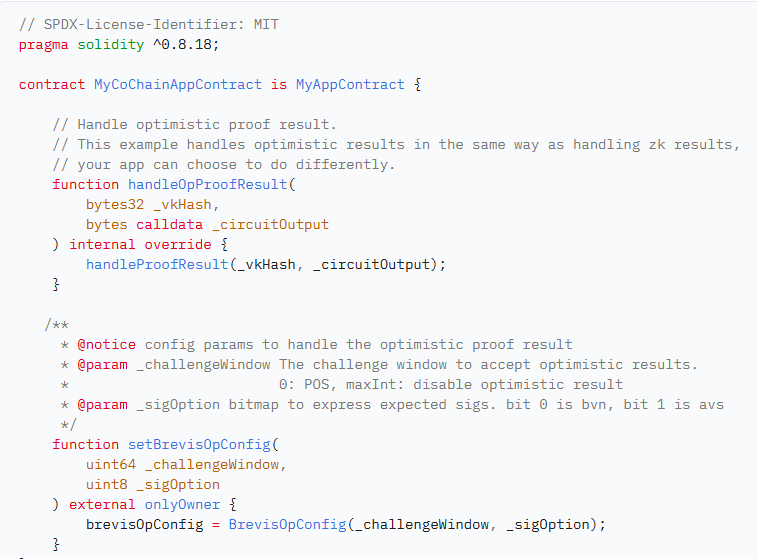
i was just reading through the @brevis_zk docs and found a feature that's seriously interesting, the cochain mode. here's the thing, building zk apps has always been a hassle because you constantly have to generate proofs. well, cochain is basically @brevis_zk shortcut, it uses an optimistic model like a rollup but specifically for zk apps. the way it works is super simple. you build your circuit like normal. you send it to @brevis_zk to be wrapped as a go plugin. their validators will handle the verification. you just wait for the challenge window to finish and that's it, it's done. the awesome parts are, the gas fees are much cheaper unless someone challenges it. the process is faster. it's still secure because it uses proof-of-stake. it's a perfect fit for when you need proof-of-completeness. integrating it into a contract is easy too, you just need to add handleopproofresult and set the challenge window. you can even reuse the circuit logic you already have. i think this is the right move to make zk development more accessible. developers now have a choice. need insane security, use pure-zk. want something more cost-effective and faster, use cochain. it's great to see a project that understands real developer needs, not just building features for the sake of it. brevis gives you the flexibility to choose the right trade-off for your use case. i feel like with an approach like this, more and more developers will be willing to experiment with zk. who knows, maybe next they'll have an auto-switch between zk and op.
Adi.eth tweet media
Adi.eth@JulfryadiP

is @brevis_zk really being used in production, not just theoretical? yes, absolutely. just recently at token2049, @brevis_zk showed concrete proof. they're not just talking about concepts, but are already helping many applications run complex computations off-chain, create zk proofs, and verify them cheaply on-chain. but how exactly does @brevis_zk deliver on all these promising claims? the secret lies in the concept of "instances." think of an "instance" like a container or standalone virtual machine for each of your zk applications. each instance has its own logic, state, and lifecycle. this is what enables complex computations to run in an isolated and secure manner. what's even cooler is that these instances can interconnect! with cross-instance calls and proof composition features, proofs from several different computations can be combined into one. the result? on-chain verification costs become much more efficient. so when brevis says they're ready for production applications, it's because their architecture is designed for real-world scale. each instance can be configured with clear resource limits and data schemas, ensuring stability and security. in conclusion, the claim that @brevis_zk is not theoretical" isn't empty talk. behind it lies a mature, ready-to-use technical architecture, with "instances" at the core of how brevis brings complex zk computations into applications that are truly alive and running. follow: @brevis_zk
English
51
1
57
315
Devi Rosari (❖,❖) retweetledi
Adi.eth
Adi.eth@JulfryadiP·
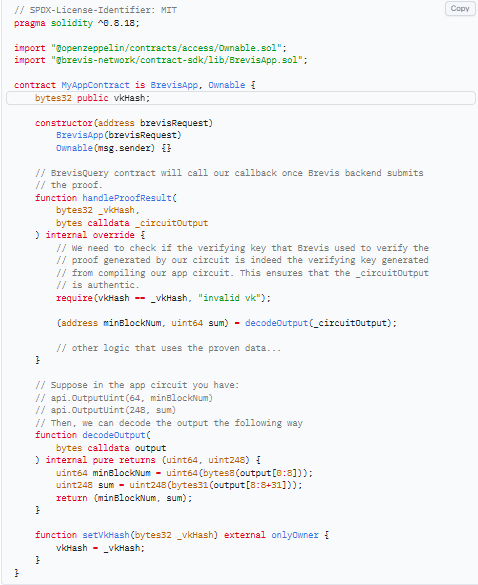
Brevis: ZK Computing That's Finally Usable for Everyday Developers Just tried playing around with @brevis_zk and I have to say, this is one ZK platform that truly understands developers' needs. What makes it different? They make ZK proofs as simple as calling an API. Imagine being able to: Access historical blockchain data without running nodes Perform heavy computations without crazy gas fees Get results that are mathematically proven correct with ZK proofs What I really love: Setup is super easy No headaches setting up infrastructure. Just focus on writing business logic, @brevis_zk handles the rest. Contract integration in just 3 steps Install package Create contract inheriting from BrevisApp Override one function Clear fee structure Two options: pay on-chain or use the cheaper partner program. No hidden costs guaranteed. Security first Every proof is verified with vkHash, so you know it's genuinely from your circuit, not manipulated. Timeout protection If proofs take too long, you can get a refund. No more stuck funds. What I appreciate most: They abstract all the ZK complexity. You don't need to understand Snarks, Starks, or Groth16. Just call functions and get verified results. This genuinely opens up possibilities for regular developers to leverage ZK without becoming cryptographers first. For those who've tried other ZK platforms, you'll feel how different the development experience is with @brevis_zk . Everything is intuitive and developer-friendly. @brevis_zk proves ZK is ready for mass adoption. It's no longer just theoretical research paper stuff. If you haven't tried it yet, you're missing out. This is a game changer for building more powerful dApps without the technical complexity nightmares.
Adi.eth tweet media
Adi.eth@JulfryadiP

i was just reading through the @brevis_zk docs and found a feature that's seriously interesting, the cochain mode. here's the thing, building zk apps has always been a hassle because you constantly have to generate proofs. well, cochain is basically @brevis_zk shortcut, it uses an optimistic model like a rollup but specifically for zk apps. the way it works is super simple. you build your circuit like normal. you send it to @brevis_zk to be wrapped as a go plugin. their validators will handle the verification. you just wait for the challenge window to finish and that's it, it's done. the awesome parts are, the gas fees are much cheaper unless someone challenges it. the process is faster. it's still secure because it uses proof-of-stake. it's a perfect fit for when you need proof-of-completeness. integrating it into a contract is easy too, you just need to add handleopproofresult and set the challenge window. you can even reuse the circuit logic you already have. i think this is the right move to make zk development more accessible. developers now have a choice. need insane security, use pure-zk. want something more cost-effective and faster, use cochain. it's great to see a project that understands real developer needs, not just building features for the sake of it. brevis gives you the flexibility to choose the right trade-off for your use case. i feel like with an approach like this, more and more developers will be willing to experiment with zk. who knows, maybe next they'll have an auto-switch between zk and op.

English
2
1
11
101
Devi Rosari (❖,❖) retweetledi
Adi.eth
Adi.eth@JulfryadiP·
Monitoring @KAIO_xyz Overview At @KAIO_xyz we prioritize the reliability and security of our platform through comprehensive real time monitoring and proactive system management. Here's how we ensure optimal performance and protection for our users: Real-time Monitoring We continuously collect performance data across our platform, tracking service uptime, HTTP request metrics, and blockchain block production. This allows us to immediately identify any service degradation or functionality issues, enabling proactive scaling when necessary. System Health Checks Our monitoring tools conduct regular health assessments on all platform components. We consistently verify the status of servers, databases, and other critical infrastructure to ensure proper operation and responsiveness. Security Oversight We maintain vigilant security monitoring to detect and respond to potential threats. Our team ensures customer data remains protected through continuous security surveillance and rapid incident response protocols. Alerts and Notifications When issues are detected, our system automatically generates alerts to our technical team. This enables swift problem resolution before any impact reaches our customers. Performance Trends We analyze long-term performance patterns to understand platform usage and identify improvement opportunities. This data-driven approach ensures continuous enhancement of our services to meet evolving customer needs. Error Tracking Our system captures detailed error information when issues occur. This comprehensive logging enables our developers to quickly investigate and resolve problems, often addressing them before users become aware. Compliance and Standards We regularly verify our platform's adherence to industry standards and best practices for security and performance. This commitment to compliance helps maintain a high-quality, reliable service for all users.
Adi.eth tweet media
Adi.eth@JulfryadiP

KAIO Security Framework Security forms the foundation of @KAIO_xyz architecture. Every component, from frontend interfaces to backend infrastructure, has been designed with security first principles to prevent potential vulnerabilities. The platform implements industry best practices to maintain a secure and robust system. Multi Layered Security Approach @KAIO_xyz integrates both Web2 and Web3 security principles with equal importance. The conventional Web2 components are protected using established security frameworks, specifically the CIS Critical Security Controls v8, which provides a defense in depth strategy against common cyber threats. Comprehensive Security Controls The platform maintains continuous assessment across multiple security domains: Software asset inventory and control Data protection protocols Secure configuration management Account and access control management Vulnerability management Audit log maintenance Network infrastructure security Application software security Regular penetration testing Data Protection and Encryption Customer data confidentiality, integrity, and availability are ensured through multiple security layers. AWS cloud security services provide native protection, while all sensitive data is encrypted and stored in secure vaults. The platform utilizes AWS Key Management System for wallet key management, maintaining strict confidentiality of user credentials. Infrastructure Security @KAIO_xyz operates on a highly secure infrastructure using multiple VPC instances with external load balancing. Containerized applications run on AWS ECR and EKS, ensuring high availability and traffic handling capability. The platform implements strict network segmentation with IP whitelisting and firewall protection. Access Management Administrative access requires multi-factor authentication, preventing password-only compromises. Kubernetes network policies enforce service segmentation, while the Web3 platform remains internally protected without external exposure. Secure Development Lifecycle The sSDLC process incorporates code quality checks and Static Application Security Testing during CI phases. Rigorous code review processes ensure security standards are met before deployment. Additional measures include input validation and secure error handling to prevent common vulnerabilities like SQL injection and XSS attacks. Continuous Security Validation Regular penetration testing identifies potential vulnerabilities throughout the development lifecycle. This continuous security validation ensures the platform maintains its security integrity during ongoing development and deployment cycles. Security Commitment @KAIO_xyz security strategy represents a comprehensive approach to platform protection, combining established security frameworks with blockchain-specific safeguards to create a trusted environment for all users and transactions.
English
43
1
49
184
Devi Rosari (❖,❖) retweetledi
Adi.eth
Adi.eth@JulfryadiP·
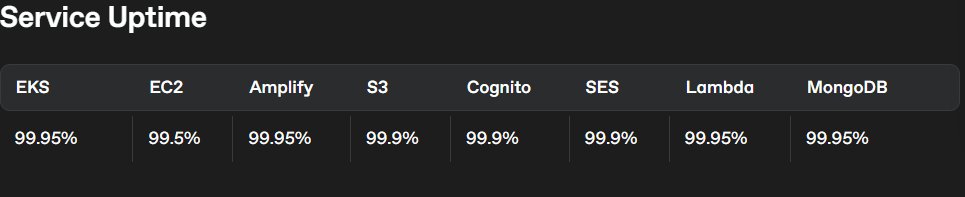
The Foundation: KAIO's Infrastructure & Reliability @KAIO_xyz is built on a modern, cloud-based infrastructure designed for reliability and scalability. Its core systems run on Amazon Web Services (AWS) and use MongoDB Atlas for data management. Both providers offer Service Level Agreements (SLAs) that guarantee a high level of service availability, which is crucial for a financial platform. High Availability Architecture on AWS AWS provides high availability through its global network of data centers, which are organized into Regions and Availability Zones (AZs). An AZ is a physically separate data center with independent power and networking, allowing systems to be resilient to failures in a single location. KAIO's Current & Future State: Currently: @KAIO_xyz services are deployed within a single Availability Zone. This provides a solid foundation, with the SLAs listed above. Future-Proofing: The architecture has a clear path to higher resilience. By distributing services across multiple Availability Zones in the future, @KAIO_xyz can achieve even higher availability, such as the 99.99% SLA offered for multi-AZ EC2 deployments. Service Breakdown: What Powers @KAIO_xyz EKS (Elastic Kubernetes Service): This is the orchestration brain of the operation. It manages the blockchain network infrastructure, the API backend, and the subgraph that indexes blockchain data. EC2 (Elastic Compute Cloud): These are the virtual servers that run the applications. They are managed automatically by the EKS service. MongoDB Atlas: @KAIO_xyz uses a "three-node replica set" distributed across AZs. This means data is copied to multiple servers simultaneously, ensuring it remains safe and accessible even if one node fails. In summary, @KAIO_xyz leverages a robust and industry-standard cloud infrastructure. Its current setup provides a high level of guaranteed reliability, with a clearly defined architectural path to achieve even greater fault tolerance in the future as the platform scales.
Adi.eth tweet media
English
37
1
46
552
Devi Rosari (❖,❖) retweetledi
Adi.eth
Adi.eth@JulfryadiP·
Just caught the @KAIO_xyz x Laser Digital news this is legit institutional adoption in motion Laser Digital (Nomura's crypto arm) is tokenizing their carry fund on Sei, and the details are interesting: They're not just parking stablecoins running actual quant strategies for funding rate arb and staking yields while staying market neutral. Real trading desks going onchain. Sei makes sense here. Fast finality and DeFi optimized chain : what institutions need for serious tokenization. What's wild is this isn't isolated. @KAIO_xyz already has $200M+ from BlackRock, Brevan Howard onboard. The pipes are being built right now. And it's properly regulated with CIMA in Cayman. No cowboy stuff compliant, institutional grade finance. We're past the "will they/won't they" phase. The infrastructure is maturing fast and the big players are moving beyond experimentation. Who's next to jump in? My bet's on more asset managers realizing the composability advantage. Either way, this brings new liquidity and legitimacy that lifts the whole ecosystem. Game is changing fast.
Adi.eth tweet media
Adi.eth@JulfryadiP

The Foundation: KAIO's Infrastructure & Reliability @KAIO_xyz is built on a modern, cloud-based infrastructure designed for reliability and scalability. Its core systems run on Amazon Web Services (AWS) and use MongoDB Atlas for data management. Both providers offer Service Level Agreements (SLAs) that guarantee a high level of service availability, which is crucial for a financial platform. High Availability Architecture on AWS AWS provides high availability through its global network of data centers, which are organized into Regions and Availability Zones (AZs). An AZ is a physically separate data center with independent power and networking, allowing systems to be resilient to failures in a single location. KAIO's Current & Future State: Currently: @KAIO_xyz services are deployed within a single Availability Zone. This provides a solid foundation, with the SLAs listed above. Future-Proofing: The architecture has a clear path to higher resilience. By distributing services across multiple Availability Zones in the future, @KAIO_xyz can achieve even higher availability, such as the 99.99% SLA offered for multi-AZ EC2 deployments. Service Breakdown: What Powers @KAIO_xyz EKS (Elastic Kubernetes Service): This is the orchestration brain of the operation. It manages the blockchain network infrastructure, the API backend, and the subgraph that indexes blockchain data. EC2 (Elastic Compute Cloud): These are the virtual servers that run the applications. They are managed automatically by the EKS service. MongoDB Atlas: @KAIO_xyz uses a "three-node replica set" distributed across AZs. This means data is copied to multiple servers simultaneously, ensuring it remains safe and accessible even if one node fails. In summary, @KAIO_xyz leverages a robust and industry-standard cloud infrastructure. Its current setup provides a high level of guaranteed reliability, with a clearly defined architectural path to achieve even greater fault tolerance in the future as the platform scales.

English
34
2
41
282
Devi Rosari (❖,❖) retweetledi
Adi.eth
Adi.eth@JulfryadiP·
Why Holding Stablecoins Is No Longer Enough But simply holding them isn't enough the real game is leveraging them to create actual value. That's the gap @KAIO_xyz fills. Moving assets across chains isn't just "possible" anymoreit's seamless, secure, and compliant. We're talking deep liquidity and real control, without the usual friction. This is the part of the on chain future that truly matters for everyone. Finance is no longer exclusive to institutions and whales. With platforms like @KAIO_xyz , it's becoming an open, accessible ecosystem where anyone can participate meaningfully. The rails are here. The tools are ready. Now it's about putting them to work.
Adi.eth tweet media
Adi.eth@JulfryadiP

Just caught the @KAIO_xyz x Laser Digital news this is legit institutional adoption in motion Laser Digital (Nomura's crypto arm) is tokenizing their carry fund on Sei, and the details are interesting: They're not just parking stablecoins running actual quant strategies for funding rate arb and staking yields while staying market neutral. Real trading desks going onchain. Sei makes sense here. Fast finality and DeFi optimized chain : what institutions need for serious tokenization. What's wild is this isn't isolated. @KAIO_xyz already has $200M+ from BlackRock, Brevan Howard onboard. The pipes are being built right now. And it's properly regulated with CIMA in Cayman. No cowboy stuff compliant, institutional grade finance. We're past the "will they/won't they" phase. The infrastructure is maturing fast and the big players are moving beyond experimentation. Who's next to jump in? My bet's on more asset managers realizing the composability advantage. Either way, this brings new liquidity and legitimacy that lifts the whole ecosystem. Game is changing fast.

English
3
1
15
333
Devi Rosari (❖,❖) retweetledi
Adi.eth
Adi.eth@JulfryadiP·
is @brevis_zk really being used in production, not just theoretical? yes, absolutely. just recently at token2049, @brevis_zk showed concrete proof. they're not just talking about concepts, but are already helping many applications run complex computations off-chain, create zk proofs, and verify them cheaply on-chain. but how exactly does @brevis_zk deliver on all these promising claims? the secret lies in the concept of "instances." think of an "instance" like a container or standalone virtual machine for each of your zk applications. each instance has its own logic, state, and lifecycle. this is what enables complex computations to run in an isolated and secure manner. what's even cooler is that these instances can interconnect! with cross-instance calls and proof composition features, proofs from several different computations can be combined into one. the result? on-chain verification costs become much more efficient. so when brevis says they're ready for production applications, it's because their architecture is designed for real-world scale. each instance can be configured with clear resource limits and data schemas, ensuring stability and security. in conclusion, the claim that @brevis_zk is not theoretical" isn't empty talk. behind it lies a mature, ready-to-use technical architecture, with "instances" at the core of how brevis brings complex zk computations into applications that are truly alive and running. follow: @brevis_zk
Adi.eth@JulfryadiP

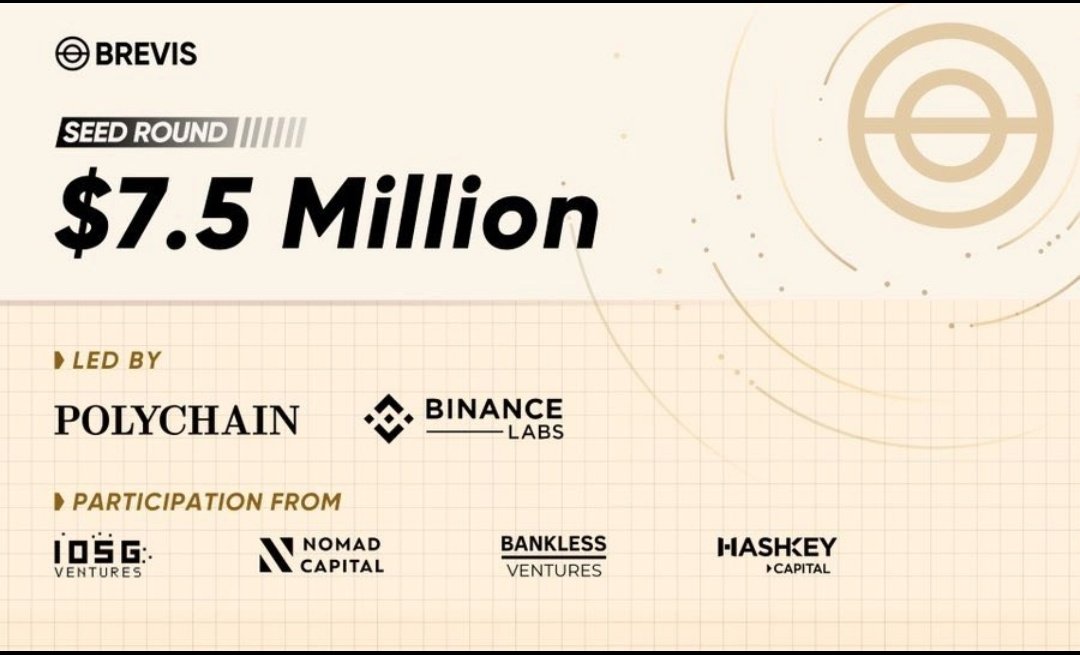
GM brevis farm @brevis_zk A New Era of Cross-Chain Trust The blockchain world keeps evolving and the days of relying on a single network are long gone. That’s where @brevis_zk steps in and completely changes the game. Through its Cross Chain ZK Proofs approach, @brevis_zk makes it possible for different blockchains to share data without needing bridges or centralized validators. Every activity or transaction on one blockchain can now be securely verified on another, using Zero Knowledge Proofs fully private and cryptographically protected. So, what does this mean for the ecosystem? Transactions on Ethereum can be instantly and securely verified on Polygon or Arbitrum. Bridge risks, hacks, and delays become a thing of the past. DeFi, GameFi, and liquidity protocols can finally move freely across chains without friction. @brevis_zk vision is crystal clear: to rebuild trust between blockchains through the power of cryptography. ZK Proofs don’t just protect privacy they also ensure authenticity, accuracy, and data integrity across every connected chain. In short, @brevis_zk enables cross chain interaction that’s safer, faster, and more transparent. Interoperability is no longer an optional feature it’s becoming the new standard for Web3.
English
83
2
81
872
Devi Rosari (❖,❖) retweetledi
Adi.eth
Adi.eth@JulfryadiP·
Brevis & Real-Time ZK: Akhir dari Bottleneck Ethereum Let's talk about @brevis_zk . They're solving a massive bottleneck in crypto. Right now, every node on a blockchain has to re-run every single transaction. It's inefficient and limits what we can build. @brevis_zk introduces a ZK coprocessor. Think of it as an external brain for blockchains. It does the heavy computation off-chain and delivers a tiny, verifiable proof back on-chain. The smart contract just checks this proof. It doesn't need to redo the work. The result? Drastically lower gas costs. Faster execution. And suddenly, complex features become possible. Here's what this unlocks: Historical data queries become cheap and provable. A DEX can now ask "what's this wallet's 30-day volume?" and get a cryptographically guaranteed answer. This enables dynamic fees and real loyalty programs. It kills the need to trust oracles and bridges. Instead of trusting a third-party bridge, you get a proof that an event actually happened on another chain. This makes cross-chain communication fundamentally safer. Airdrops and rewards get a major upgrade. No more flawed snapshots. Brevis enables continuous, proof-based incentive systems that measure real user behavior over time. For developers, the nightmare of writing custom ZK circuits is over. You write normal code. Brevis handles the proving. This massively lowers the barrier to building with ZK. How does it actually work? The flow is simple: 1. Your dApp makes a request. 2. @brevis_zk fetches the necessary blockchain data. 3. Your logic runs off-chain in their zkVM. 4. A ZK proof is generated. 5. Your contract verifies the proof and uses the result. They have two main products: Pico zkVM is their general-purpose engine for any custom logic you can imagine. The ZK Data Coprocessor is a pre-built module optimized for heavy data tasks, like aggregating entire histories of on-chain activity. This isn't just theoretical. It's live in production: PancakeSwap uses it to automatically adjust trading fees and rewards based on proven user activity. Linea used it to distribute 1 billion LINEA tokens, calculating rewards based on proven metrics like position duration and volume. Usual CPI runs a continuous incentive system where USUAL tokens are distributed daily based on proven participation across multiple DeFi protocols. Why does this matter? We are moving from a trust-based system to a proof-based system. This is foundational. @brevis_zk is building the compute layer that will enable fair incentives, scalable applications, and a more secure multi-chain future. It's not just an incremental improvement; it's a fundamental shift in how blockchain computation works.
Adi.eth tweet media
English
89
1
87
342
Devi Rosari (❖,❖) retweetledi
Adi.eth
Adi.eth@JulfryadiP·
Kite AI: The Economic Layer for Autonomous Agents We're entering the internet's next phase. It's not about users clicking buttons anymore. It's about AI agents making independent decisions, moving value, and interacting directly with blockchain networks. @GoKiteAI built a dedicated Layer-1 for this exact purpose. It's where AI agents can earn, spend, and cryptographically verify their work in a self-sustaining digital economy. The Problem With Current AI Systems Today's AI operates in closed environments. Models make decisions, but there's no way to audit their reasoning or measure performance accurately. More critically, there's no native infrastructure for value exchange between autonomous systems. Kite addresses this with a new architecture that enables agents to: Cryptographically prove their work using zero-knowledge attestations Conduct transactions without human approval Operate across multiple ecosystems seamlessly Form self-governing economic networks How It Actually Works The platform consists of several key components: Proof of Attributed Intelligence represents a new consensus approach that rewards verifiable intelligent output rather than just computational power. The verification system uses zk-proofs to ensure AI workloads are executed correctly, providing transparency at scale. Built-in payment rails specifically designed for micro-transactions between agents, models, and data providers create an agent-native settlement layer. The modular network allows developers to deploy and combine different AI components as interoperable units within the ecosystem. Why This Changes Everything @GoKiteAI essentially transforms AI from an opaque system into a transparent economic participant. Each inference becomes a verifiable proof. Every interaction becomes a settled transaction. This combination of intelligence and verifiable computation creates the foundation for a true agentic economy where trust and settlement occur natively at the protocol level. Looking Forward Kite isn't just building another blockchain. It's creating a new economic foundation for the internet one where AI agents become significant value creators alongside humans. The result is an environment where intelligence becomes liquid, transactions happen autonomously, and every action maintains cryptographic verifiability. This represents the core of what Kite is building the economic foundation for machine intelligence.
Adi.eth tweet media
English
75
1
81
316
Devi Rosari (❖,❖) retweetledi
Adi.eth
Adi.eth@JulfryadiP·
@brevis_zk just dropped a massive update to their zk compute stack. introducing pico prism. a next-gen zkVM that straight up breaks ethereum’s compute limits. this thing proved 99.6% of an ethereum L1 block. that’s 45 million gas. in under 12 seconds. twelve. seconds. most zk teams are still years away from this. brevis did it with 64 rtx 5090s. no datacenter. no custom silicon. just consumer gpus running in parallel. average proving time. 6.9 seconds. hardware cost slashed by nearly 50 percent. 128k vs 256k. verifiable compute just got cheaper. faster. more accessible. why it matters. traditional nodes re execute every tx to validate a block. pico prism flips that. execution is proven offchain with zk proofs. validators only verify a tiny proof. not the whole block. massive efficiency gains. this unlocks 10k tps on ethereum. no trust assumptions. no decentralization tradeoffs. zk modular compute is real. high throughput. verifiable. cost efficient. @brevis_zk isn’t just scaling ethereum. they’re rebuilding the compute layer from scratch. real time block proving. modular infra. consumer grade hardware. this isn’t theory. this is the new zk standard.
Adi.eth tweet media
English
28
4
33
144
Devi Rosari (❖,❖) retweetledi
Adi.eth
Adi.eth@JulfryadiP·
Kite x @brevis_zk : Strategic Vision for Verifiable AI Payments Imagine a world where trillions of AI agents are working together non-stop, executing tasks, analyzing data, and trading services 24/7. Right now, most of these agents operate in a black box. How can we be sure they’ve actually done the work they claim? How can billions of micropayments be settled instantly, securely, and at near-zero cost? Kite AI and @brevis_zk are tackling this challenge head on. The goal isn’t just trust it’s verifiable trust. They’re building the world’s first infrastructure where every AI computation, transaction, and decision is provably authentic and accountable. @brevis_zk handles verifiable computation. Every AI agent uses zero knowledge proofs to confirm it followed the rules and completed its work without exposing sensitive information. Kite AI manages cryptographic authorization and settlement. Each agent’s identity, permissions, and payment activity is tracked through an Agent Passport, with automatic on-chain settlement. Economic activity is handled through stablecoin micropayments. Every verified action can be compensated fairly in real time at extremely low cost even fractions of a cent. This system turns opaque, black-box automation into a fully auditable and accountable network. This isn’t just theory. It’s the blueprint for a verifiable AI economy, where trust is guaranteed by design, not assumed. Kite and @brevis_zk are creating a foundation for a future where autonomous AI activity scales safely, efficiently, and transparently, unlocking the true potential of the Agentic Internet.
Adi.eth tweet media
English
36
2
42
227
Devi Rosari (❖,❖) retweetledi
Adi.eth
Adi.eth@JulfryadiP·
Kite x @brevis_zk : To Enhance Verifiable Trust for AI Payments AI agents are about to explode across the digital economy. Autonomous agent-to-agent payments, microtransactions in stablecoins, and nonstop decision-making are coming fast. The problem? Trust. Most AI agents are still black boxes. How do we confidently let them handle payments or economic activity if we can’t verify what they’re actually doing? That’s where Kite AI and @brevis_zk come in. Kite AI is building a Layer-1 blockchain purpose-built for AI agents. It acts as identity, banking, and governance for autonomous agents, enabling programmable trust and micropayments at scale. Every agent can transact, prove its behavior, and follow cryptographic spending and governance rules across ecosystems like Google’s AP2 or Anthropic’s MCP. @brevis_zk adds the missing piece: verifiable computing. Using zero-knowledge proofs, it mathematically verifies that an AI’s computations are authentic and trustworthy without revealing sensitive data. @brevis_zk has already shown how off-chain proofs can massively scale blockchains while keeping integrity intact. Its work with BNB Chain turned traditional, monolithic execution into a modular, scalable system. Together, Kite and @brevis_zk create a full trust stack for the AI economy. From computation to verified settlement, every decision, every microtransaction, and every payment can be audited, verified, and trusted. The black box disappears. What was opaque becomes fully accountable. Imagine trillions of AI agents working 24/7. Every action they take, every micropayment they issue, is verifiable in real-time with negligible cost. This isn’t just theoretical. Kite and @brevis_zk are laying the foundation for an Agentic Internet, where autonomous AI activity can safely scale and the AI economy can truly flourish. The future is here: AI-driven payments that are autonomous, verifiable, and scalable. Kite and @brevis_zk are building the infrastructure to make trustless, accountable automation a reality. The age of verifiable AI finance is about to begin.
Adi.eth tweet media
English
45
2
52
277