
Simon() retweetledi
Simon()
19.4K posts


Simon()
@dickson_oche
-Software | Data | Building Systems | Member @Cohere_Labs Open Science Community | Rx
👨🏽💻 Katılım Haziran 2017
1.7K Takip Edilen1.7K Takipçiler

Simon() retweetledi

Simon() retweetledi

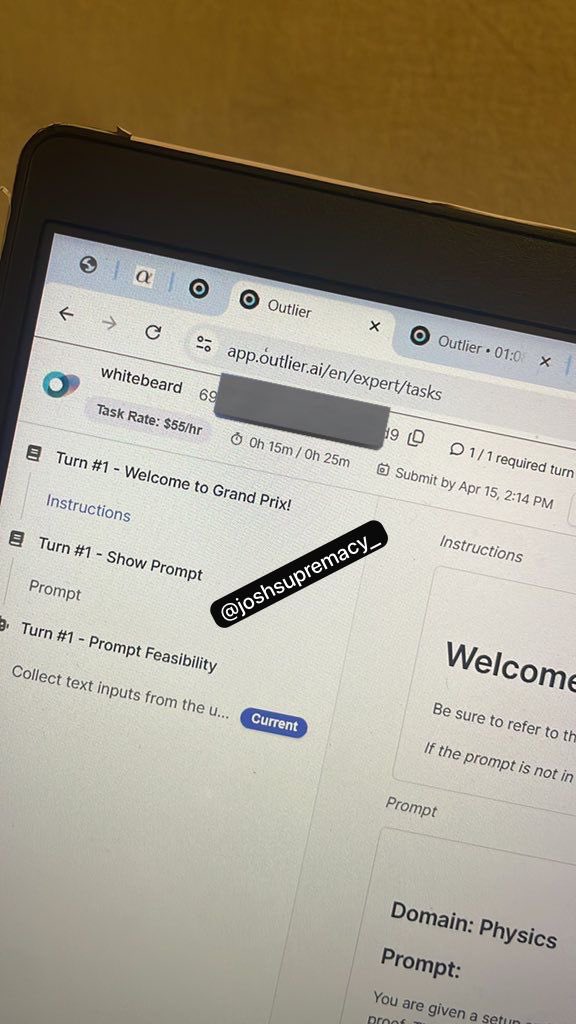
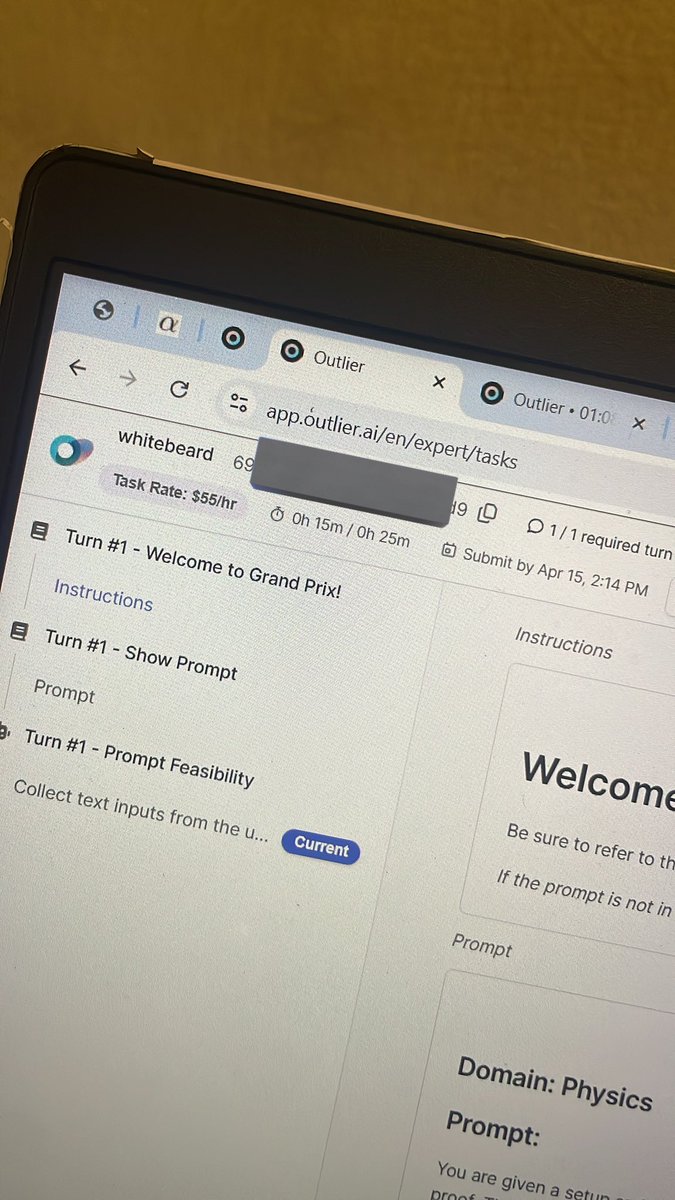
Do you need any help with your OUTLIER project?
I offer full-service:
✅ Onboarding and Assessments
✅ Account Management and Tasking
I handle Whitebeard, Blackbeard, Voice Mission, Almanac, & Aether.
If you need help with any or to create acc, DM me! 📥
Evidence dey!✅



English
Simon() retweetledi


Simon() retweetledi

“you need to be unemployed, locked in 24/7, and on 3 hrs of sleep a day just to keep up with all these Claude updates”
klöss@kloss_xyz
English
Simon() retweetledi

Part 2. The engineering side.
So the brain is absurdly efficient. Naturally, everyone is now trying to copy it. Three separate races are happening at once, and they barely overlap.
Race 1 is developing computer chips that work like neurons rather than traditional processors. Normal computers waste most of their energy shuttling data between two separate places: the part that stores information and the part that does calculations. Your brain doesn't do this. Every connection point stores memory AND processes information in the same spot. Intel built the largest brain-inspired system to date, called Hala Point. It fits 1.15 billion artificial neurons into a box the size of a microwave oven. On certain tasks, it runs 20 times faster than a human brain. But it still uses 2,600 watts. Compare that to the brain's 20. IBM and BrainChip are running their own versions of this. The gap is closing, but it's still enormous.
Race 2 is the one that gets weird. Instead of building chips that imitate neurons, some labs are just using actual living neurons. An Australian startup called Cortical Labs grew about 800,000 human neurons on a silicon chip in 2022, and the neurons taught themselves to play Pong within minutes. No code. No training data. Just cells figuring out a game. In March 2025, they launched a product called CL1, a box that wires lab-grown neurons to electrodes. Costs $35,000. A Swiss company called FinalSpark went further, they host tiny clusters of neurons in the cloud so researchers can rent access over the internet. An Indiana University team built something called Brainware that hit 78% accuracy on speech recognition and cut training time by 90% compared to regular computers. The ethical lines here are genuinely unresolved. Thirty scientists published a joint letter pushing back on claims that these neuron clusters show signs of awareness. Nobody agrees on where the moral boundary is, or even how to measure it.
Race 3 is about copying the brain's software rather than its hardware. One reason the brain is so efficient is that only about 1-1.5% of your neurons fire at any given moment. It's an incredibly sparse system. Most AI today does the opposite. Everything activates, all the time, burning through power. Europe's Human Brain Project (a 10-year initiative that ended in 2023) developed two chips, BrainScaleS and SpiNNaker, that mimic the brain's sparse firing pattern. BrainScaleS uses analog circuits rather than digital ones, the same type of electrical signals that neurons actually use. Early results showed 100x power savings over traditional chips. TDK and the French Atomic Energy Commission are building something called spin-memristors that combine memory and processing in one device, using the same principle the brain uses at the smallest scale anyone's tried so far.
I keep coming back to the same thought. We spent decades building AI systems that can beat us at chess, write essays, and generate images. Collectively, they eat gigawatts of electricity. And the answer to making them sustainable might be sitting in the same 1.4 kilograms of wet tissue that led to the problem in the first place.
English
Simon() retweetledi
Operating in stealth mode is almost always a mistake.
Talk publicly about what you're building. You’ll build momentum, get real feedback, and someone will reach out with the other half of your idea you didn’t realize you were missing.
English
Simon() retweetledi

Simon() retweetledi

In 20 years, vibe coders will look at the Linux kernel repo the way we look at the pyramids. In awe, unable to imagine how they managed to drag all those giant stones and pile them up in the middle of the desert.
English
Simon() retweetledi


Simon() retweetledi

Simon() retweetledi
If Claude Code or Codex just one-shotted an app for you, Read this.
Now you gotta go through every screen and find the 47 edge cases that break it. Users will do things you never imagined. Then comes auth, database setup, API rate limits, error handling for when the server goes down at 2am. You need analytics to figure out what users actually do vs what you think they do. App Store optimization, screenshots, descriptions, review responses. Privacy policies, terms of service, data compliance. Push notifications that actually work without being annoying. Performance optimization because that smooth demo gets real laggy with real data. State management across the whole app. Caching strategy. Offline support. Responsive design across 15 different screen sizes. Testing on older devices that somehow still exist. CI/CD pipeline so deploys don't eat your weekends. Then users start requesting features you never planned for and suddenly your clean architecture needs a rewrite.
The first version is maybe 10% of the actual work. Building is easy. Shipping and maintaining is where it gets real.
CG@cgtwts
pov: Claude one shotted a project i planned to make over several months
English
Simon() retweetledi

Simon() retweetledi

The Premier School of Pharmacy has finally shown who is King.
News reaching us has it that Ogunmakinwa Faith of Ife pharmacy is the new winner of the SYA.
In other news, the first and the best provided a candidate who had a negative mark in the competition, while Unilag lagged

English
Simon() retweetledi

Simon() retweetledi

Simon() retweetledi

Simon() retweetledi

But, it’s not wrong that that occurs.
gerf (fred)@achingkneejoint
as English speakers we have to sort out the 'had had' situation. it's frankly embarrassing to the language
English
Simon() retweetledi
