The Geneva Learning Foundation

5.8K posts

The Geneva Learning Foundation banner
The Geneva Learning Foundation

The Geneva Learning Foundation

@DigitalScholarX

Official account for the Geneva Learning Foundation https://t.co/c532zT5JpR

Geneva, Switzerland Katılım Haziran 2016
17 Takip Edilen1.6K Takipçiler
Sabitlenmiş Tweet
The Geneva Learning Foundation
The Geneva Learning Foundation@DigitalScholarX·
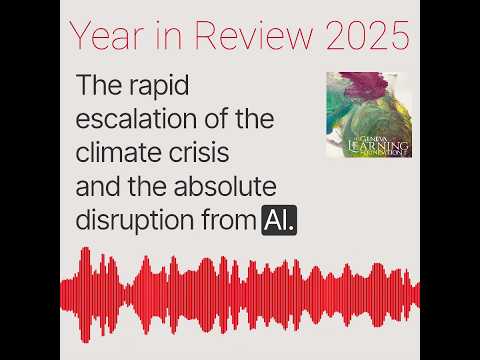
In 2025, global health funding fell off a cliff. Most organizations contracted. We connected 60,000 health practitioners across 137 countries. Peer learning networks cost 86% less than flying in outside experts. [doi](doi.org/10.59350/redas…) Implementation rates were seven times higher. The traditional model sends an expert to deliver a workshop, then leaves. The knowledge often leaves with them. In a peer network, knowledge comes from the people closest to the problem. It sticks. 82% of participants continued their work after the program ended. That is the sustainability funders seek but rarely find. When the gender equity backlash hit, we did not shelve the work. We launched a certificate program and 6,592 practitioners joined. The demand came from the ground, not from outside. The expertise the sector needs is not missing. It is waiting to be connected. Watch our 2025 Year in Review.
English
0
1
5
69
The Geneva Learning Foundation
The Geneva Learning Foundation@DigitalScholarX·
The World Health Organization just evaluated the Alliance for Transformative Action on Climate and Health. What can we learn from this evaluation? Read the full article: “The road to transformative action on climate and health: what we can learn from the ATACH evaluation” redasadki.me/2026/03/31/the… In October 2024, patients in Mali used makeshift boats to reach health centers cut off by floods. That same year in Cameroon, a midwife named Geh Raphaela Agwa saved a cord presentation and a twin bradycardia during a storm so severe the roads were underwater. Afterward, she wrote it down. Not for a journal. For the Teach to Reach peer learning platform, where health workers share what climate change is doing to their communities and how they are responding. What they document is so much more than a collection of individual misfortunes. The consequences of climate change that practitioners manage daily are often different from, and more severe than, the indicators tracked by global frameworks. And the gap between what community-level workers observe and what global systems report is wide and consistent enough, across countries and contexts, to constitute a measurement problem. At the same time, a global alliance called ATACH has been doing something real and important at the other end of this chain. It helped secure the Belém Health Action Plan at COP30. It produced WHO guidance on measuring health system emissions. It built a membership of over 200 countries and partners. A recent evaluation is honest that country-level implementation remains the hardest unsolved problem. The evaluation contains no health outcome data. Not as a failure. As an honest account of where the evidence currently stops. Geh Raphaela Agwa is still working in Cameroon. The woman whose twin pregnancy she saved is raising two children in a region where the storms are getting worse. None of this appears in the Belém Health Action Plan. All of it is what the Belém Health Action Plan is ultimately for. The distance between those two sentences is the work that remains.
English
1
0
0
12
The Geneva Learning Foundation
The Geneva Learning Foundation@DigitalScholarX·
World Tuberculosis Day reminds us that tuberculosis is not an accident of nature, but a mirror of power. In colonized Algeria, TB flourished because inequality and dispossession were built into the system. Read the full article: redasadki.me/2001/09/26/col… Land theft, forced displacement, and overcrowding created the perfect environment for the disease to spread. Then the same colonial authorities blamed “backward” culture instead of their own policies of exclusion. The science of TB control already existed, but it was not deployed to protect colonized people. Only after independence, when Algeria chose to invest in its own people, did TB rates collapse. Free care, vaccines, and treatment worked once they were aligned with sovereignty and social justice. This history matters for World TB Day 2026 and the theme, “Yes, we can end TB. Led by countries, powered by people” is not a slogan, it is a condition for success. If colonial rule could manufacture an epidemic, decolonization shows that political will can dismantle it. Ending TB today means confronting the same patterns of inequity and the legacies of colonial thinking. It means trusting communities, resourcing national programmes, and refusing narratives that blame the vulnerable. World TB Day is a reminder that the end of TB will be decided in the realm of justice, not biology. That is why the struggle against TB is inseparable from the struggle to decolonize global health.
English
0
2
5
42
The Geneva Learning Foundation
The Geneva Learning Foundation@DigitalScholarX·
A new paper in the International Review of Psychiatry argues something uncomfortable. The humanitarian mental health response in Gaza may be causing harm. Not because therapy is useless. Because Western frameworks treat structural violence as individual pathology. Palestinian clinicians describe suffering as suffocation, imprisonment, hopelessness. These are not symptoms awaiting a clinical label. They are precise descriptions of life under blockade. 96 percent of children felt death was imminent before the latest escalation. 49 percent expressed a wish to die. The authors call for “capacity exchange” instead of “capacity building.” Local teams should set funding, training, and evaluation priorities. Our peer learning work with IFRC in Ukraine points in the same direction. Across a network of over 300 organizations, locally-led response outperformed imported protocols. Practitioners inside the crisis provided the most effective support. This evidence calls for a different model for funding MHPSS. One that measures community agency, not just symptom reduction. Read our summary and some implications for practice: redasadki.me/2026/03/22/you…
English
0
2
3
33
The Geneva Learning Foundation
The Geneva Learning Foundation@DigitalScholarX·
Most people assume that if AI boosts performance, learning must follow. The research presented at the OECD Digital Education Outlook 2026 conference on artificial intelligence (AI) shows the opposite. Read the full commentary here: redasadki.pulse.ly/bhsshrbcqu Students using large language models wrote better essays, yet 80 percent could not recall what they wrote. In another study, learners solved more maths problems with AI, but their mathematical thinking declined. Generative AI is reducing the productive friction that makes real learning happen. It makes work look better while quietly eroding metacognition and human capability. For The Geneva Learning Foundation, this is not an abstract concern. Frontline health workers already use AI tools to draft plans, analyse data, and summarise guidance. If we optimise only for speed and output, we risk weakening exactly the local expertise communities depend on. The OECD evidence points to a different path. AI can help when it is embedded in peer learning systems that protect agency and reflection. In our global immunisation and humanitarian networks, we are treating AI as a co worker in a community of practice. It supports pattern spotting and connection at scale, while humans keep responsibility for judgment and meaning. The question is no longer whether to use AI in learning, but how to do so without hollowing out human intelligence. We explore what day one of the OECD conference taught us, and what it implies beyond K 12, in our latest reflection.
English
0
1
2
32
The Geneva Learning Foundation
The Geneva Learning Foundation@DigitalScholarX·
The Geneva Learning Foundation (TGLF), in collaboration with Dr Shanthi Mendis, is pleased to announce the first Certificate peer learning programme for noncommunicable diseases (NCDs). Read the full announcement: linkedin.com/pulse/new-peer… The first primer course is for everyone who works for health and wants to better support living with NCDs during a humanitarian emergency. In a crisis, most responders plan for trauma and infections. NCDs are rarely part of that plan. Yet 74% of all deaths worldwide come from noncommunicable diseases. A person with Type 1 diabetes can die in days without insulin. In 2024, conflicts doubled across 50 countries. Nearly 300 million people needed humanitarian help. When the pharmacy is destroyed, who helps the patient with asthma? Most health workers have never been trained for that moment. Dr. Shanthi Mendis changed that. She led the development of WHO PEN and PEN-H over two decades. Now, she has partnered with The Geneva Learning Foundation to design a free, open-access primer. It covers eight critical NCD emergencies and a simple triage method. It is text only, works on any device, and respects your bandwidth. You do not need to be an NCD expert to save a life. But you do need to know what to look for. The primer also connects you with peers from around the world. That network is what no guideline document can give you.
English
1
2
5
67
The Geneva Learning Foundation
The Geneva Learning Foundation@DigitalScholarX·
How do we measure the value of peer learning for malaria national programme staff? A single two-hour peer learning event outperformed a four-month programme on key measures. Read the full article about our collaboration with RBM Partnership to End Malaria here: redasadki.me/2026/03/22/how… That is what our data from Teach to Reach 11's special event on malaria showed. Over 1,700 health workers from 46 countries gathered to share their malaria experiences. We compared their results to a global baseline of more than 10,000 health workers. That baseline came from an intensive, four-month peer learning program. Professional influence rose 49 percent above the global baseline. Professional practice impact rose 41 percent and worldview change rose 45 percent. This happened because participants shared lived experiences rather than received expert presentations. A health worker from Nigeria lost a pregnancy at seven weeks due to malaria. A health worker from Senegal reported that riverside communities used bed nets as fishing nets. These are not anecdotes. They form an early warning system that quantitative surveillance cannot capture as quickly. Lived experience, organized into a network, becomes actionable data. Local health workers see what global systems detect only later. Peer learning at this scale helps them act on what they already know.
English
0
2
3
43
The Geneva Learning Foundation
The Geneva Learning Foundation@DigitalScholarX·
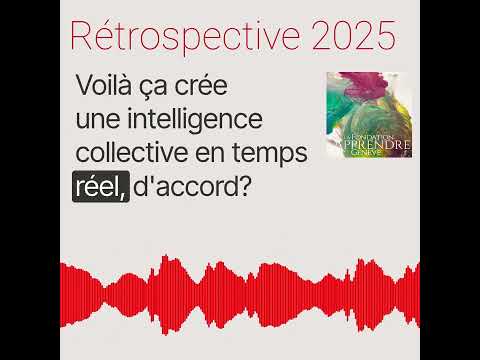
En 2025, le financement de la santé mondiale s’est contracté. La Fondation Apprendre Genève a continué de faire grandir son réseau. Pas parce que nous avons plus de moyens que les autres. Parce que le modèle coûte moins cher et tient mieux dans le temps. Regardez notre Rétrospective 2025. youtu.be/XzdrMNoH2cw Depuis 2016, nous connectons des professionnels de santé entre eux. En dix ans, ce réseau a atteint 70 000 praticiens dans 137 pays. Le principe est direct. L’expertise mondiale fournit le cadre scientifique. L’expérience locale dit comment l’appliquer sur le terrain. Les deux sont indispensables. Quand on les fait dialoguer dans un réseau de pairs structuré, les résultats changent. Les coûts baissent de 86%. Les taux de mise en oeuvre sont multipliés par sept. 82% des participants continuent de manière autonome après le programme. Aucun per diem. Aucun déplacement. De la motivation intrinsèque. C’est ce qui rend le réseau résilient quand les budgets se resserrent.
YouTube video
YouTube
Français
0
1
2
30
The Geneva Learning Foundation
The Geneva Learning Foundation@DigitalScholarX·
At Teach to Reach, a humanitarian volunteer from Northern Nigeria shared that young girls drink from larvae-infested pools. Their streams have dried out. She tried to supply clean water but could not sustain it. At Teach to Reach, health and humanitarian workers from local communities shared accounts like this one. In Togo, a river that never dried up is now drying up. In Uganda, flooding contaminated the water sources that survived the droughts. Too little water, then too much. Women and girls are disproportionately affected. In Tanzania, drought forced them to walk further, losing time for childcare. Yet these communities are not waiting for rescue. They are drilling boreholes, deploying solar pumps, and harvesting rainwater. They know what works because they live the problem every day. What they lack is sustained investment. Read our message for World Water Day: redasadki.me/2026/03/22/a-t…
English
0
2
2
40
The Geneva Learning Foundation
The Geneva Learning Foundation@DigitalScholarX·
Dear Scholars of The Geneva Learning Foundation, For those among our global community of Scholars who celebrate the end of the holy month of Ramadan, we would like to extend our warmest wishes to you and your loved ones. Ramadan is a time of spiritual reflection, self-improvement, and heightened devotion to Allah, and we hope that this month has brought you peace, joy, and fulfilment. We also want to commend you on your commitment to learning and development which is a noble pursuit, and one that is greatly valued in Islam. As a global community that celebrates diverse beliefs and cultures, we work in unity in the pursuit of knowledge and understanding to make a better world. Eid Mubarak to you and your families!
The Geneva Learning Foundation tweet media
English
0
1
2
28
The Geneva Learning Foundation
The Geneva Learning Foundation@DigitalScholarX·
Aux Scholars de la Fondation Apprendre Genève, À ceux et celles qui célèbrent la fin du mois du Ramadan Ramadan, nous tenons à vous adresser nos meilleurs vœux ainsi qu’à vos familles. Ce mois est un temps de réflexion spirituelle, d’amélioration de soi et de dévotion accrue, et nous espérons qu’il vous a apporté paix, joie et accomplissement. Nous tenons également à saluer votre engagement en faveur de votre développement professionnel dans le cadre des programmes de la Fondation. Apprendre est une poursuite noble et fortement valorisée dans l’Islam. Nous constituons une communauté internationale d’apprentissage, qui célèbre notre diversité de croyances et de cultures, tout en étant unis dans la quête de la connaissance pour faire la différence. Eid Mubarak à vous et à vos familles !
The Geneva Learning Foundation tweet media
Français
0
0
1
24
The Geneva Learning Foundation
The Geneva Learning Foundation@DigitalScholarX·
The Geneva Learning Foundation (TGLF) is pleased to announce the first Certificate peer learning programme on ageing and society. Learn more and enroll now: linkedin.com/pulse/learn-le… Join a new kind of global dialogue between health professionals from high- and low-income countries. In Goma, only 3.2 percent of older people can afford a public clinic. In Berlin, nearly half of older people receiving care still risk poverty. Different countries, different demographics, one shared crisis. When the formal system falls short, someone fills the gap. That someone is almost always a woman. She is often in midlife, sometimes navigating menopause herself. She provides daily care with no recognition and no pay. She is the invisible foundation of every health system on earth. If you work for health, you can make a difference.
English
0
3
5
50
The Geneva Learning Foundation
The Geneva Learning Foundation@DigitalScholarX·
Journée mondiale contre la rougeole: une nouvelle formation par les pairs partage « ce qui fonctionne » pour prévenir les épidémies de rougeole et riposter aux flambée #VaccinesWork #Rougeole Pour en savoir plus et vous inscrire dès maintenant: go.learning.foundation/tglf/c/20397 Cette formation par les pairs débutera le 31 mars 2025. Les professionnels de la santé du monde entier sont confrontés à des épidémies de rougeole de plus en plus fréquentes, qui mettent les populations en danger. À l’occasion de la Journée mondiale contre la rougeole, la Fondation Apprendre Genève (TGLF) annonce sa nouvelle formation: « Épidémies de rougeole: prévention, riposte, et rétablissement » – apportant des connaissances pratiques directement de ceux qui ont réussi à gérer des épidémies à ceux qui en ont le plus besoin. Qu’est-ce qui rend cette formation unique? Il ne s’agit pas d’une formation théorique. Grâce à la plateforme d’apprentissage par les pairs Teach to Reach de la Fondation Apprendre Genève, des centaines de professionnels de la santé ont partagé leurs expériences vécues des épidémies de rougeole. Cette intelligence collective a été soigneusement analysée pour révéler quelles approches éprouvées qui fonctionnent dans des communautés réelles. La formation fournit des informations fondées sur l’expérience de terrain sur: 1️⃣ La détection précoce des cas de rougeole 2️⃣ Des stratégies efficaces d’engagement communautaire 3️⃣ La gestion des stocks de vaccins pendant les épidémies 4️⃣ S’assurer que les enfants reçoivent les deux doses requises 5️⃣ Méthodes pratiques de préparation aux épidémies Si les directives nous indiquent ce qui doit être fait et si la formation classique donne des indications techniques, les agents de santé doivent ensuite déterminer comment traduire cela en pratiques efficaces sur le terrain. Le expériences partagées dans cette formation peuvent faire la différence entre: 1️⃣ Des plans qui semblent bons sur le papier et des actions efficaces 2️⃣ Des idées qui semblent prometteuses et des solutions qui aident vraiment les gens 3️⃣ Ce que les experts pensent pouvoir fonctionner et ce qui marche vraiment Les apprenants étudient non seulement ces expériences de terrain authentiques, mais échangent également des idées avec des pairs confrontés à des défis similaires, créant ainsi de précieuses relations professionnelles qui peuvent se prolonger au-delà de la formation.
Français
0
1
2
19
The Geneva Learning Foundation
The Geneva Learning Foundation@DigitalScholarX·
We asked health workers in India, Pakistan, and other countries one question: What single strategy would have improved your hardest HPV vaccination moment? More than one in three chose the same answer. Listening to the community’s fears before speaking. This was one of seven strategies presented with equal weight. The convergence was not designed into the course. It was discovered in the data. The course was focused on India and Pakistan, part of The Geneva Learning Foundation’s ongoing partnership with UNICEF. Health workers from both countries enrolled weeks after national HPV launches. Pakistan, Nigeria, India, Kenya, the Democratic Republic of the Congo, Cambodia. Different contexts, different cultures, the same diagnosis. The obstacle is not necessarily ignorance. It is the experience of not being heard. When the same finding surfaces independently across so many different countries, it is more than an anecdote. It names a structural feature of vaccine hesitancy. Health workers turned this insight into concrete tools. A Listen First Protocol, a Fear-Listening Circle, a 48-hour pre-planning checklist. These are new procedural elements in vaccination campaign design. But campaigns end. The real test is sustaining coverage when the tents are packed away. This course is the first step in a larger programme. The next is the Impact Accelerator, where health workers turn plans into weekly action, track results, and prove impact to their peers. Read the full article here: redasadki.pulse.ly/uagmjx3wkd
English
1
2
3
23
The Geneva Learning Foundation
The Geneva Learning Foundation@DigitalScholarX·
A head of nursing in Ghana had never taught female genital schistosomiasis. After joining one of our peer learning programs, she revised the entire nursing curriculum. She did not do this because she gained new information. She did it because the program engaged her as a leader. That distinction is the core of everything we have built at The Geneva Learning Foundation. Most training programs measure what participants know immediately after training ends. We measure what changes in how they work, how they connect with peers, and how they lead. We do this through a five-dimension framework benchmarked against 10,095 global health and humanitarian workers. The framework produces both quantitative scores and participant narratives documenting specific professional changes. In Ukraine, we went further: we linked specific practitioner actions to documented improvements in child mental health outcomes. We were able to show that those improvements would not have happened without the learning intervention. That is what attribution looks like. It is not a score on a quiz administered two days after a workshop. This piece explains how we do it, and why it matters for anyone measuring the impact of complex professional learning. Read the full article: redasadki.me/2026/03/15/how…
English
0
0
1
20
The Geneva Learning Foundation
The Geneva Learning Foundation@DigitalScholarX·
In 2025, global health funding fell off a cliff. Most organizations contracted. We connected 60,000 health practitioners across 137 countries. Peer learning networks cost 86% less than flying in outside experts. doi](doi.org/10.59350/redas…)) Implementation rates were seven times higher. The traditional model sends an expert to deliver a workshop, then leaves. The knowledge often leaves with them. In a peer network, knowledge comes from the people closest to the problem. It sticks. 82% of participants continued their work after the program ended. That is the sustainability funders seek but rarely find. When the gender equity backlash hit, we did not shelve the work. We launched a certificate program and 6,592 practitioners joined. The demand came from the ground, not from outside. The expertise the sector needs is not missing. It is waiting to be connected. Watch our 2025 Year in Review. youtu.be/dD3ldTQgVoc
YouTube video
YouTube
English
0
0
1
17
The Geneva Learning Foundation
The Geneva Learning Foundation@DigitalScholarX·
Every global health training program we know runs a knowledge quiz before and after. The scores go up. The report gets written. The funder is reassured. But sixty years of assessment research say the number proves almost nothing. Not because the test was poorly designed, but because the design itself is broken. A well-designed training can produce a lower post-test score than a poor one. When learning works, it raises participants' awareness of how much they did not know. The construct measured before training is not the same construct measured after. The comparison between them is therefore invalid. And even when scores do rise, they tell you nothing about whether anyone changed how they work. Research on learning transfer puts the application rate at around 10 to 12 percent. Knowing something and doing something are not the same act. We keep measuring the wrong thing, at the wrong time, with a broken instrument. We wrote this piece for everyone who has ever put a pre and post test result in a donor report. Full article link: redasadki.me/2026/03/15/wha…
English
0
0
1
20