DirectDemocracy in New Zealand

780 posts

DirectDemocracy in New Zealand banner
DirectDemocracy in New Zealand

DirectDemocracy in New Zealand

@DirectDemocraNZ

#DirectDemocracy empowers the people, removing the political layer. Proposing a better way of running #NewZealand #IndividuallyTogether

New Zealand Katılım Ağustos 2024
353 Takip Edilen335 Takipçiler
DirectDemocracy in New Zealand
DirectDemocracy in New Zealand@DirectDemocraNZ·
@winstonpeters It should have been the raising of questions and concerns by billions of members of public that put the WHO into disrespect. Not the eventually political withdrawal of the US. Too much politics not enough listening to people.
English
0
0
1
89
Winston Peters
Winston Peters@winstonpeters·
The US has just officially withdrawn from the WHO. This is what happens when a bunch of unelected globalist bureaucrats are not accountable or responsible with worldwide taxpayers money. With the US withdrawing its membership it puts into question the current state of the WHO, its effectiveness, and if our taxpayers money is being responsibly spent overseas instead of here at home.
English
693
361
3.1K
141.3K
DirectDemocracy in New Zealand
DirectDemocracy in New Zealand@DirectDemocraNZ·
@elonmusk If you have female human DNA and chromosomes and are older than a girl then you are a woman. The chances are pretty good you'll also have a womb but if you don't then you are still a woman
English
0
0
0
21
Elon Musk
Elon Musk@elonmusk·
If you have a womb, you are a woman. Otherwise, you are not.
English
33K
68.4K
632.6K
72.9M
DirectDemocracy in New Zealand retweetledi
Andrew Bridgen
Andrew Bridgen@ABridgen·
The big question is WHO is funding the W.H.O. ? These anonymous donors will want something in return. The World Health Organisation is still seeking total control without accountability of everyone on the planet in the event that they ( The W.H.O. ) declare another Public Health Emergency of International Concern ( such as a pandemic) Power without accountability is tyranny, their funding without transparency is corruption .
Camus@newstart_2024

The WHO is facing a credibility crisis, and a tidal wave of "dark money" is at the door. New research reveals the WHO Foundation, created to fund the UN health agency, is increasingly bankrolled by anonymous corporate donors. The stats are staggering: • ~$83M in total donations since 2020. • 60% is "dark money" from hidden sources. • Anonymous funding jumped from 15% in its first year to 80% in 2023. While the WHO is primarily funded by nations and the Gates Foundation, the U.S. funding halt is forcing it to rely more on private cash. Critics warn this exposes the WHO to undue influence & reputational risk. The core problem? Public health runs on trust. If we don't know who's funding the policies, how can we trust the science? Big brands like Sanofi, Novo Nordisk, and Meta are public donors, but even these raise red flags. Why is Meta funding the WHO's digital health program while concerns about its impact on teen mental health rage? The WHO Foundation CEO defends anonymity, saying some donors don't want to be "targeted." But the question remains: What are they buying? With the WHO's transparency rating now on par with right-wing dark money think tanks, the agency's greatest asset—its credibility—is on the line.

English
88
701
1.5K
29K
Calvin Perrins
Calvin Perrins@CalvinPerr26876·
@DirectDemocraNZ @2FreeMike @d_peter17473 @priest_rebel @thecoastguy Only tyrants advocate for leaving citizens defenceless. I shared the article with you in the hope that you may want to educate yourself about real democracy and its origins, which is trial by jury, the people governing themselves through conscience, not collectivist voting.
English
1
0
0
8
DirectDemocracy in New Zealand
DirectDemocracy in New Zealand@DirectDemocraNZ·
@TownLiberation @brianhund Yes we can help. Our software gets managed by a trust that's managed locally in the area democratically. The system enables each individual in a given area or organisation to have a vote plus many other components in everything that happens. The trust can also manage assets.
English
0
0
1
20
Brian Hund 🎙 Libertarian since ‘92
Let me know if I miss something, @TownLiberation, but the only services a municipality should provide or contract are: Transportation infrastructure Permits (these need to be streamlined) Sanitation Water Police Dep’t Fire Dep’t Parks (yes, these are important)
Brianna Davis@BrucesDesert

@Cartel_Cal @KarenBassLA @GavinNewsom @RobBonta The job of government is to maintain emergency services, municipal services, and licenses/permits. Residents and private businesses are the ones who provide tax revenue and fees, and expect to get these things in return. Government needs to get out of the housing game.

English
2
0
1
110
DirectDemocracy in New Zealand retweetledi
Infideliter 🇳🇿✖⚖✖🇳🇿
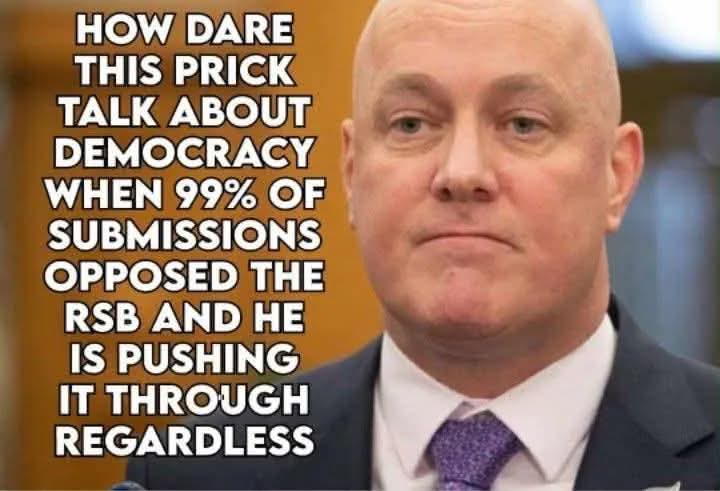
How to lose an election. Arrogance beyond belief. Loyal to his NWO masters - NOT NZ citizens.
Infideliter 🇳🇿✖⚖✖🇳🇿 tweet media
English
43
111
487
7.5K
Commander DC
Commander DC@nzpoliticsgroup·
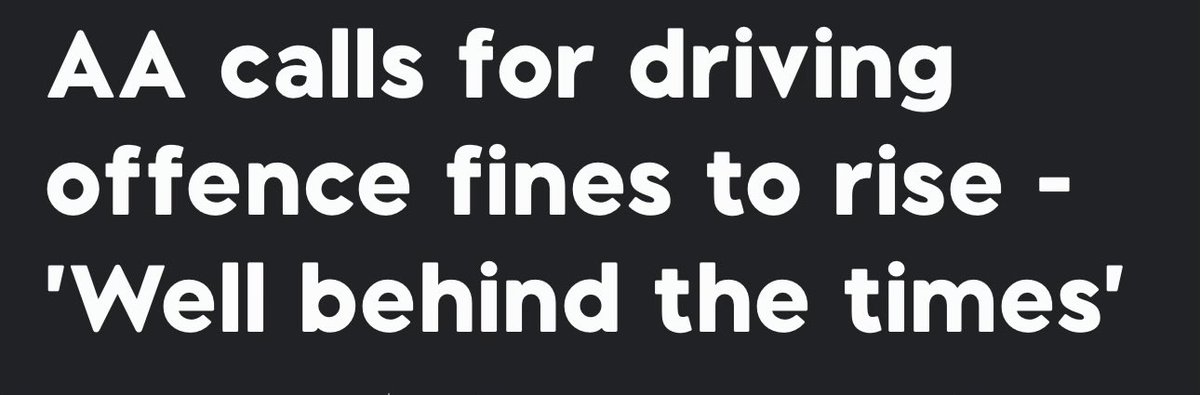
AA wants to increase fines for driving offences 🚨🚨🚨 Another hit to NZ citizens during challenging economic times !! As usual kiwis just tolerate rising costs and abuse. The damn government is behind this for REVENUE reasons. Bad. @NZNationalParty
Commander DC tweet media
English
59
21
158
4.6K
The Salty One
The Salty One@the_salty_one_·
What needs to happen in NZ for us all to get along?
English
192
3
110
8K
DirectDemocracy in New Zealand
DirectDemocracy in New Zealand@DirectDemocraNZ·
@NZNationalParty Just so everyone is clear. No political party spends anything. Taxpayers do and they never get consulted. Taxpayers also never get to see what really happens to their money. The money trail, it just disappears. Lets see what goes on and let taxpayers decide. #DirectDemocracy
English
0
0
0
7
NZ National Party
NZ National Party@NZNationalParty·
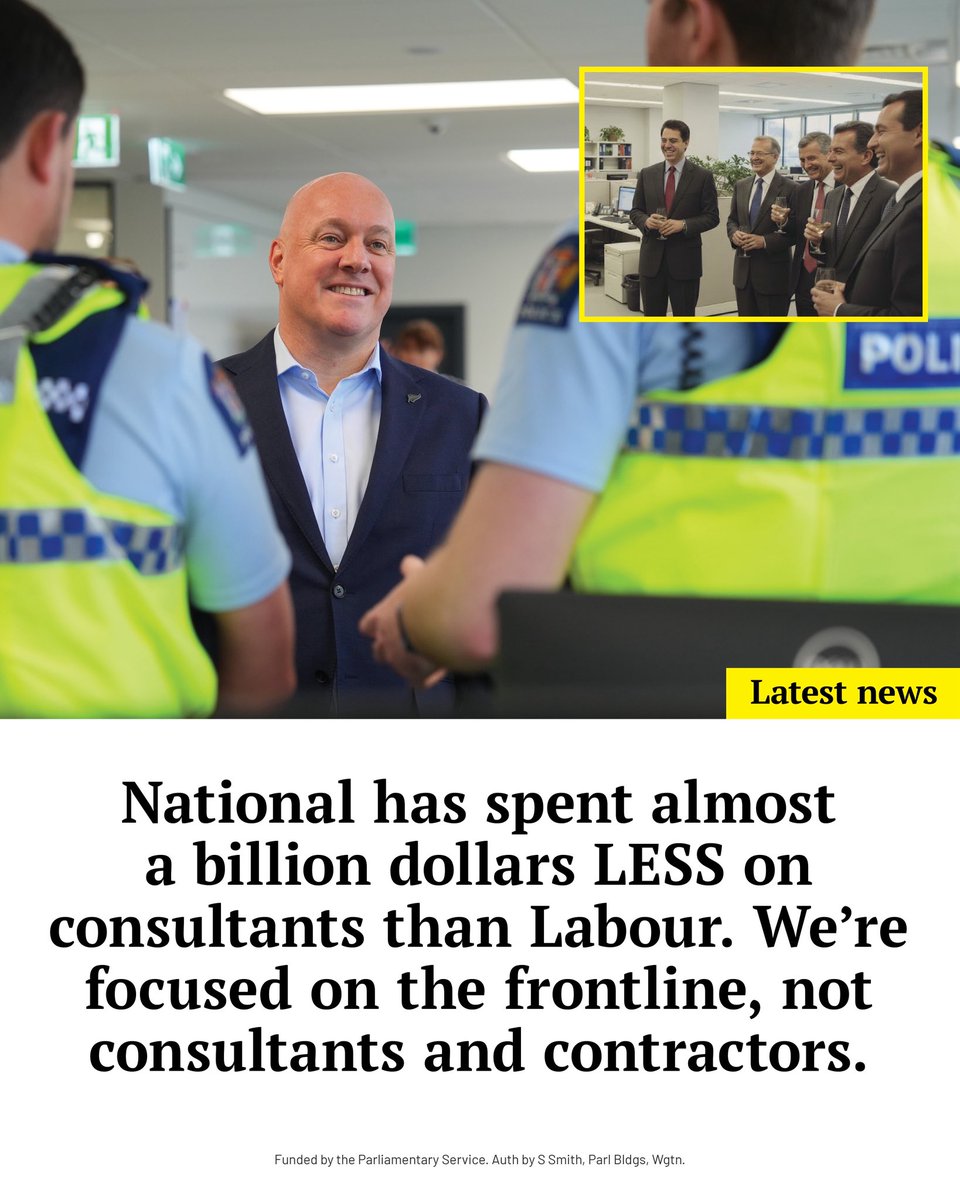
LATEST: National has spent almost a billion dollars less on consultants than Labour. We’re focused on spending money where it matters. Like 430 more classrooms, 33 more cancer drugs, $7 billion worth of infrastructure before Christmas, 2000 more nurses and more Police on the beat.
NZ National Party tweet media
English
120
13
147
5.6K
DirectDemocracy in New Zealand
DirectDemocracy in New Zealand@DirectDemocraNZ·
@2FreeMike @jeffcharlesjr Yeah.. Putting decision making power in the collaborative hands of locals means that the council will be doing as the people collaboratively want. Not as one council guy thinks he can operate... And that everything is in the public eye.
English
0
0
1
30
Jeff Charles, Asker of Questions🏴
𝙈𝙚𝙚𝙩 𝙂𝙚𝙣𝙚 𝙖𝙣𝙙 𝘿𝙚𝙗𝙗𝙞𝙚 𝙒𝙚𝙞𝙚𝙧𝙗𝙖𝙘𝙝. Gene has spent decades fixing cars for his community while caring for his severely autistic son. But after a township supervisor complained about the price of his auto repairs, everything changed. Suddenly, the local government began weaponizing zoning laws against him. A cease-and-desist order. Appeals. Hearings. Denials. Now his family is at the center of a lawsuit exposing how politicians abuse power to crush ordinary people. Read the article below.
Jeff Charles, Asker of Questions🏴 tweet media
English
24
106
387
33.6K
DirectDemocracy in New Zealand retweetledi
We All Decide
We All Decide@We_All_Decide·
Can we? Or no?
English
1
1
1
88
Penny Marie NZ
Penny Marie NZ@pennymarienz·
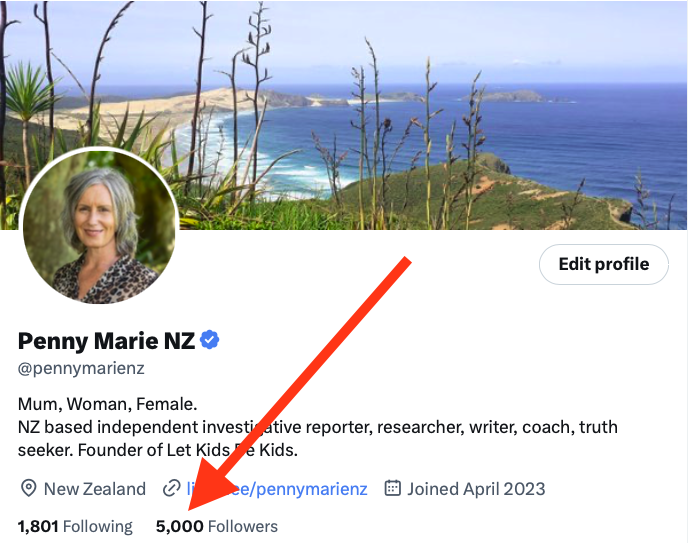
Thanks for the follows everyone! I just hit 5,000! I love that there are some REALLY cool real people to engage with on here. 😚
Penny Marie NZ tweet media
English
32
20
419
6.4K
DirectDemocracy in New Zealand retweetledi
GREGORY Simon
GREGORY Simon@DirectDemToday·
DON'T HATE - DEBATE - HOW SWISS STYLE #DIRECTDEMOCRACY SEARCHES FOR THE BEST SOLUTIONS In the Swiss system of direct democracy, debate is not an accessory to the political process—it is its very foundation. Switzerland’s unique model is shaped not only by regular votes and referenda, but by a deeply embedded culture of dialogue that extends from the federal government, where seven federal councillors govern by consensus, to the cantonal and communal levels where ordinary citizens are empowered to directly shape policy. This structure reflects an enduring commitment to discussion over confrontation, participation over delegation, and consensus over partisanship. At the federal level, the Swiss Federal Council, comprised of seven ministers from different political parties, operates as a collective executive without a dominant head of state. Collegiality The collegiality principle ensures that decisions are made jointly, behind closed doors, requiring debate, compromise, and a shared responsibility that discourages political grandstanding. Adversarial Unlike the often adversarial nature of parliaments in representative systems, where opposition parties frequently resort to rhetorical attacks or obstruction and where debate can resemble theatre rather than genuine dialogue, the Swiss system fosters a quieter but deeper negotiation. Common Ground Ministers do not campaign against one another or attempt to score political points in public; they must instead find common ground. This not only tones down hostility but also models a deliberative process to the rest of the political structure. Citizens at the heart In the cantons and communes, this ethos is reflected in mechanisms that bring political participation directly to citizens. Every Swiss citizen has the right to propose changes to laws or the constitution through initiatives, and to challenge parliamentary decisions through referenda. These tools are not simply procedural; they are democratic invitations to public debate. Before every vote, a broad public campaign unfolds, often featuring extensive media coverage, informational booklets from the government outlining both sides of an issue, and spirited but civil debates in town halls, newspapers, television, and increasingly on social media. The people as sovereign The right to launch a referendum or initiative is not limited to the political elite. It is this dispersal of power—where sovereignty truly resides with the people—that ensures a continual churning of ideas from every level of society. Historically, the Swiss tradition of deliberative democracy finds its roots in the medieval Landsgemeinde, open-air assemblies in alpine valleys where free farmers gathered to debate and vote by a show of hands. This model has been modernized but not abandoned. The spirit of the Landsgemeinde—deliberation among equals—survives in the communal assemblies still held in some cantons, and more broadly in the national political psyche. Citizens have the FIRST & LAST word These assemblies underline a profound belief that policy must be shaped with the direct input of those it affects, and that disagreement is not a sign of dysfunction but a step toward consensus. Central to this is the principle of free speech. Without freedom of expression, no meaningful debate is possible. In Switzerland, this freedom is not merely a legal right; it is a civic necessity. Public debates, citizen forums, and political campaigns thrive in a space where opposing views can be aired respectfully and taken seriously. Mere theatre This stands in sharp contrast to many representative democracies where the parliamentary floor often becomes a battleground of rehearsed soundbites and pre-scripted outrage, and where meaningful engagement with alternative viewpoints is rare. In such systems, the appearance of debate often masks a lack of genuine deliberation. Democratic tool-box Switzerland’s tools of direct democracy—initiatives, referenda, and communal assemblies—are powerful not only because they give people a say, but because they compel debate at all levels of society. Issues must be explained, justified, and defended. Structured ongoing dialogue rather than once every four years engagement with citizens Politicians must engage with the public not just during elections, but continuously. This regular and structured dialogue enhances transparency and accountability, fostering a level of trust that is increasingly rare in modern democracies. The highest ranked in trust levels globally Swiss citizens trust their government at national, cantonal and communal levels more than in many countries, not because it is infallible, but because the mechanisms exits within the Swiss system whereby government at the three levels listens, adjusts, and reflects the diverse voices of its people. In summary, Swiss-style debate is a living process spread across the federal, cantonal, and communal levels. However, it is clearly enabled by democratic tools that prioritize citizen involvement, grounded in historical practices of public assembly, and kept alive through a deep respect for free expression. This environment of constant, constructive debate ensures that decisions are better informed, more legitimate, and widely accepted. It transforms governance from a spectacle of division into a practice of shared responsibility, benefitting society by creating a resilient democratic culture where every voice has the space to be heard. In Swiss-style direct democracy, citizens are not only voters but active participants in shaping laws and policies, which ensures that public debate lies at the core of decision-making. Because initiatives and referendums allow people to bring forward issues of genuine concern, political engagement is anchored in real-life questions that matter to communities rather than abstract party agendas. The process of open discussion, persuasion, and compromise across society leads to outcomes that reflect a broader consensus and are therefore more legitimate, durable, and closely aligned with the needs of citizens. Although not perfect, it is hardly surprising that Switzerland consistently ranks at the very top of most global indices—whether in crime reduction, citizen happiness, health, economic strength, safety, wealth, or trust in government—often taking first place, sometimes third, and occasionally fourth. It suggests the Swiss may hold lessons from which we could all benefit.
GIF
English
0
6
9
421
DirectDemocracy in New Zealand retweetledi
We All Decide
We All Decide@We_All_Decide·
Real democracy isn't a left or right construct, it's not an "ism". It's simply The Rule Of The People it always has been the definition. It isn't capitalism, socialism, communism, or any divisive construct. It also isn't "being able to vote for who you like to represent you". That's a construct that evolved when rulers of the day capitalised on the popular emerging concept of "democracy" and added this side branch called "Representative Democracy" in to take power back.
English
0
2
3
245