Sabitlenmiş Tweet
The Margin of Safety Investing
1.6K posts

The Margin of Safety Investing
@DirtyCheapStock
I’m a Value Investor serving Family Offices and Professional Investors. Sharing investment ideas of companies at stupid prices. Best ideas in the link ⬇️
Blumenau, Brasil Katılım Ekim 2024
633 Takip Edilen2.1K Takipçiler

@torionevini Legal. Aquela bandeirinha da Suíça é animal.
Português
The Margin of Safety Investing retweetledi

The Beauty of Value Investing And the why its the only way of Smart Investing.
themarginofsafety.substack.com/p/the-beauty-o…

English
The Margin of Safety Investing retweetledi

@Cleisson_bt Os Caras sempre rebaixam quando a ação cai. Incrível kkkkk. Depois que sobe dão upgrade.
Português

Nem é meu aniversário e mesmo assim o BOFA me deu esse baita presente, poder voltar a comprar #SUZB3

Português
The Margin of Safety Investing retweetledi

@rodrigohelbinho Exatamente a mesma função de ações de dividendos.
Não vejo diferencial nisso.
Português

@DirtyCheapStock FII é pra manter renda e segurar carteira enquanto ela sacode, dividendos se alternam etc
Papel estrategico e emocional total
Português

Porque eu quase desisti de fundos imobiliários (exceto um único tipo):
Antes de mais nada, sei que muita gente gosta dos FIIs por previsibilidade, isenção de IR, e que é uma forma melhor de investir em imóveis.
Agora o que não te contam:
1- Conflito entre gestor e cotista. Para gestora quanto maior o patrimônio do fundo, maior a Taxa de administração dela. O que cria incentivos para emitir novas cotas (o que causa diluição dos cotistas).
2- Fundos Imobiliários são uma versão PIORADA dos REITS. Esse ponto é muito importante de entender, pois lá fora, os REITS podem tomar dívida, se alavancar, reter a receita dos aluguéis (enquanto os FIIs são obrigados a distribuir 95% dos aluguéis).
Existem alguns prós e contras desse modelo, mas essas restrições dos FIIs eventualmente criam barreiras para o bom gestor trabalhar, e coloca todo mundo no mesmo nível.
3- Quase toda oportunidade de aquisição de novos imóveis se torna diluição para o cotista. Dado que o fundo geralmente emite novas cotas para financiar a compra dos imóveis.
Agora os fundos que estou escolhendo são basicamente os fundos de papel que na verdade são uma forma disfarçada de fundos de renda fixa
Outros ponto que eu acho importante mencionar é que o investidor inteligente ele não fecha as portas para uma classe inteira de ativos. O meu ponto aqui é que estou mais crítico com relação ao investimento nesta classe e também se torna um ponto onde eu vou exigir mais prêmio para investir nos mesmos ativos de antes.
Qual a sua opinião sobre isso?
Português

The whole Dilema around AI companies is that the CAPEX for the next years is going to be huge.
The uncertainty of this is:
1- What's the return on this massive investments? (hard to tell)
2- Does this create a Moat against competitors? (doesn't seem so)
3- How should we value this? (Nobody Knows)
Since this is a lot of uncertainty I prefer invest in companies at:
3x Earnings
Growing 15%/Year
20% FCF Yield
Cheap usually pays off.
#AI #MSFT #AMZN #APPL #NVDA #TSLA
English

@Bieldomaul Bela carteira.
A depender do volume financeiro vale a pena olhar pra umas coisas lá fora.
Português

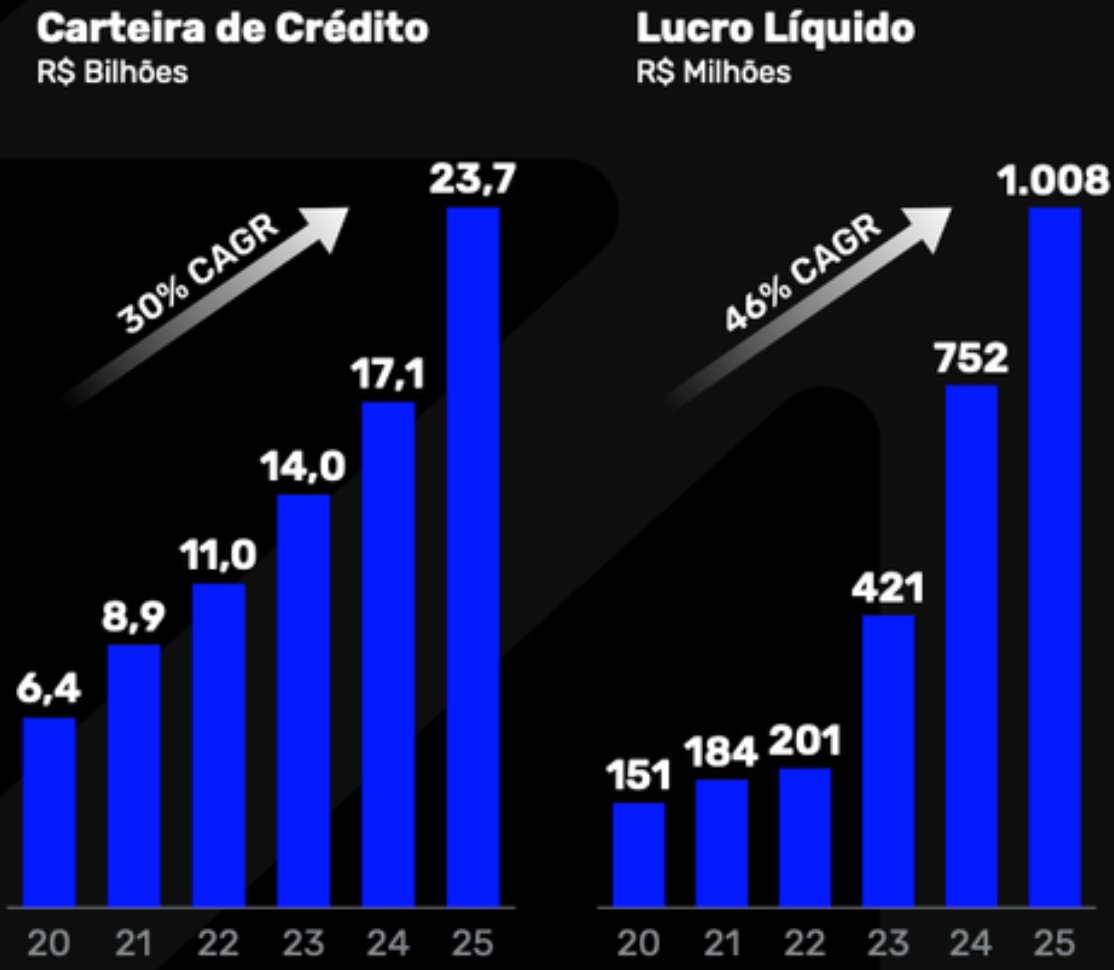
My Top pick: This Bank Delivers 43% ROE at Just 5x Earnings. And Absolutely Nobody Is Talking About👇
open.substack.com/pub/themargino…
#BMEB4

English

The best investments I’ve made are usually the most obvious. But not in the way you are thinking.
When people talk about “obvious” investments, they usually mean whatever is getting the most attention like the Magnificent 7, AI stocks, And the names everyone already agrees are great.
That’s not what I mean.
For me, the best investments feel obvious because they’re easy to understand.
The business makes sense. The story makes sense. And most importantly, how I’m going to make money makes sense.
I don’t want to rely on a random narrative. I want to be able to look at something and say, very straight forward:
I’ll get paid through dividends, or the company will shrink the share count through buybacks, or the market will eventually re-rate the multiple.
Ideally, some combination of those.
If I have to stretch to explain it, or if the return depends on too many assumptions, I simply start to lose interest.
That’s another thing I’ve learned the hard way: when a thesis needs everything to go right, it usually doesn’t and the investment is most likely to fail.
If you need macro to cooperate, management to execute perfectly, sentiment to shift, and timing to line up… that’s a lot of moving parts. And a lot of ways to be wrong.
The investments that worked best for me were much simpler than that.
Value investing, at least how I see it, isn’t about finding something complex. It’s about noticing when something straightforward is being ignored.
A lot of the time, that means looking at “boring” businesses.
But boring is fine when:
the cash flows are steady, capital allocation is sensible, and the price already gives you some margin for error.
In the end, the best opportunities I’ve found didn’t required a higher IQ. They just required good stable company at a ridiculous price.
They were obvious. Just not popular.
And that’s usually where the edge is.
Peter Lynch said this in a brilliant way “If you can explain this investment to a kid, you probably understood it enough”
If you are like me looking for these type of companies, I strongly recommend you to follow me on substack.
open.substack.com/pub/themargino…
English