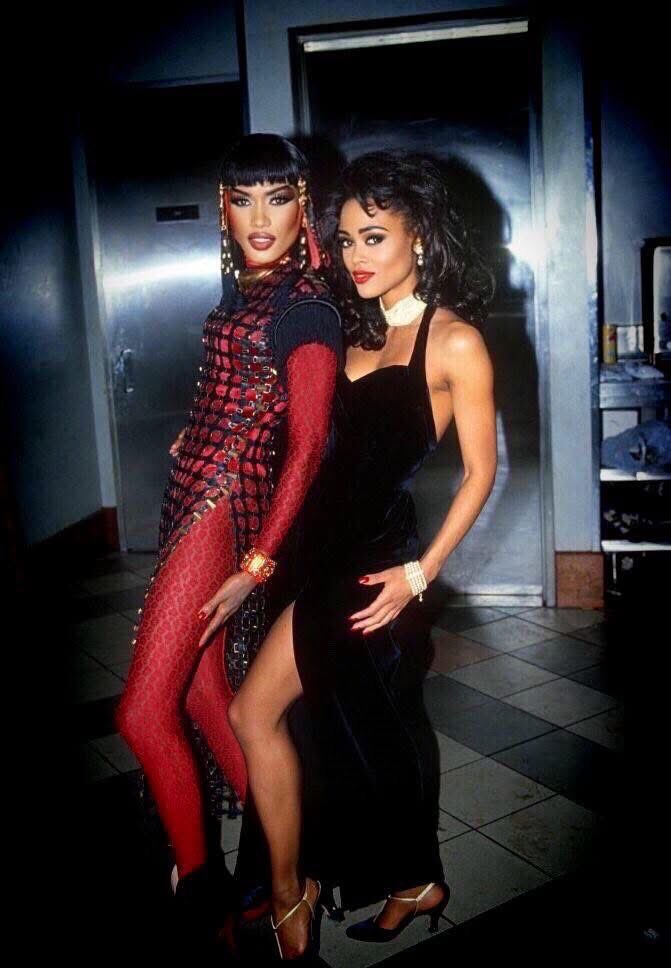
THIS SONG was the reason to finish my homework. I got them assignments done so that I could tune into Rap City and see this video🔥 a criminally underrated MC
English
J. Nicole Brooks
71.8K posts
@DoctaSlick
Multidisciplinary Artist, Mellon Playwright, film & tv Actor, Triathlete, Fashion Stylist in the making with Law Roach School of Style 🏎️44




Remembering Dorothy Ashby, Saturday, August 6, 1932 to Sunday, April 13, 1986 Born Dorothy Jeanne Thompson in Detroit, Dorothy Ashby came up in a deeply musical environment shaped in part by her father, guitarist Wiley Thompson. At Cass Technical High School, she encountered the harp and began turning an instrument many people associated with the concert hall into something agile, modern, and unmistakably her own. Scholarly work on her early training also notes that she was the only Black member of the Cass Symphony orchestra in the late 1940s, a detail that says a great deal about both her discipline and the barriers surrounding her from the beginning. Ashby belongs in jazz history not as a curiosity, but as a builder of form. She helped establish the harp as a true jazz instrument, capable of bebop phrasing, rhythmic drive, and harmonic seriousness. Records such as “The Jazz Harpist,” “Hip Harp,” “Afro-Harping,” and “The Rubáiyát of Dorothy Ashby” remain the clearest proof. Her reach also extended far beyond her own albums, through work connected to artists such as Louis Armstrong, Stevie Wonder, and Bobby Womack. In Detroit, she and her husband John Ashby also developed the Ashby Players, a Black theater company whose productions addressed community life directly. Her career moved through overlapping barriers of race, gender, and instrument. Even so, she kept expanding the vocabulary around the harp, refusing the idea that it belonged only to refinement, background texture, or novelty. What Dorothy Ashby proved was larger than technique. She proved that the instrument could swing, speak, improvise, and carry intellectual weight inside modern Black American music. Her legacy has only widened since then. Contemporary harpists, especially Brandee Younger (@harpista_), who said this back in 2023: “Dorothy Ashby was the pioneer harpist who opened up the instrument to Black musicians like me.” — Brandee Younger Ashby died at home in Santa Monica on April 13, 1986, after a long battle with cancer. She was 53.