Monique van Hoek

3.1K posts

Monique van Hoek

Monique van Hoek

@DoctorMVH

Bacteriologist, Professor. Bacteria are my specialty! Views are my own.

Virginia, USA Katılım Ocak 2011
276 Takip Edilen323 Takipçiler
Monique van Hoek
Monique van Hoek@DoctorMVH·
Sometimes, bacterial names are just funny! Looking at a member of the Neisseriales family: the bacterial name is "Snodgrassella alvi wkB2". Who was Dr. Snodgrass and why does he have this bacteria named after him!? en.wikipedia.org/wiki/Snodgrass….
English

0
0
0
90
Monique van Hoek
Monique van Hoek@DoctorMVH·
@tangming2005 Tommy, how does RefSeq capture or hide slight differences between related bacterial strains, which often have highly similar genome sequences, but could have crucial differences also. Are these lost in the RefSeq?
English
0
0
0
31
Monique van Hoek retweetledi
Alex Rives
Alex Rives@alexrives·
Introducing ESM Cambrian. Unsupervised learning can invert biology at scale to reveal the hidden structure of the natural world. We’ve scaled up compute and data to train a new generation of protein language models. ESM C defines a new state of the art for protein representation learning.
English
26
161
637
206.2K
Monique van Hoek retweetledi
Alice Ting
Alice Ting@aliceyting·
Could one envision a synthetic receptor technology that is fully programmable, able to detect diverse extracellular antigens – both soluble and cell-attached – and convert that recognition into a wide range of intracellular responses, from transgene expression and real-time fluorescence to modulation of innate cell behavior (excitation or inhibition of neurons, induction of cell migration, etc.)? Today we report in Nature a new technology platform that provides a step in that direction: PAGERs, for Programmable Antigen-gated G protein-coupled Engineered Receptors, convert recognition of extracellular soluble or cell-attached antigens into diverse user-selected responses. PAGERs are based on G-protein coupled receptors (GPCRs), which themselves are not structurally modular, but we were able to build in modular antigen gating by fusing an antagonist peptide to the extracellular N-terminal end, and then gating the antagonist with a fused antigen-binding nanobody.  When antigen binds, it sterically interferes with the antagonist, leading to relief of receptor inhibition. Drug or agonist can then turn on PAGER. nature.com/articles/s4158…
Alice Ting tweet media
English
61
249
959
124.7K
Monique van Hoek retweetledi
Jonathan Jacobs 🧬🦠🕹️🏕️
someone said on a call today that @Illumina's iSeq are cheap enough that they basically are at the bottom of kids' cereal boxes now. LMAO... a few minutes later they posted this in the meeting chat... everyone like💀
Jonathan Jacobs 🧬🦠🕹️🏕️ tweet media
English
2
5
29
3.1K
Monique van Hoek retweetledi
BGPT
BGPT@bioloGPT·
Answer any biology question with AI insights from over 122k full papers biologpt.com
English
33
192
1.7K
4.1M
Monique van Hoek retweetledi
Samuel Hume
Samuel Hume@DrSamuelBHume·
Big Nature paper this week on improved lifespan (in mice!) using an antibody to block IL11 Old mice without IL11 even look healthier 🧵
Samuel Hume tweet media
English
96
893
5.2K
1.4M
Monique van Hoek retweetledi
Kortemme Lab
Kortemme Lab@KortemmeLab·
We’re thrilled to share our new pre-print exploring how we can design and control dynamic proteins! (1/6) biorxiv.org/content/10.110…
Kortemme Lab tweet media
English
5
115
503
61.9K
Monique van Hoek retweetledi
Leo Zang
Leo Zang@LeoTZ03·
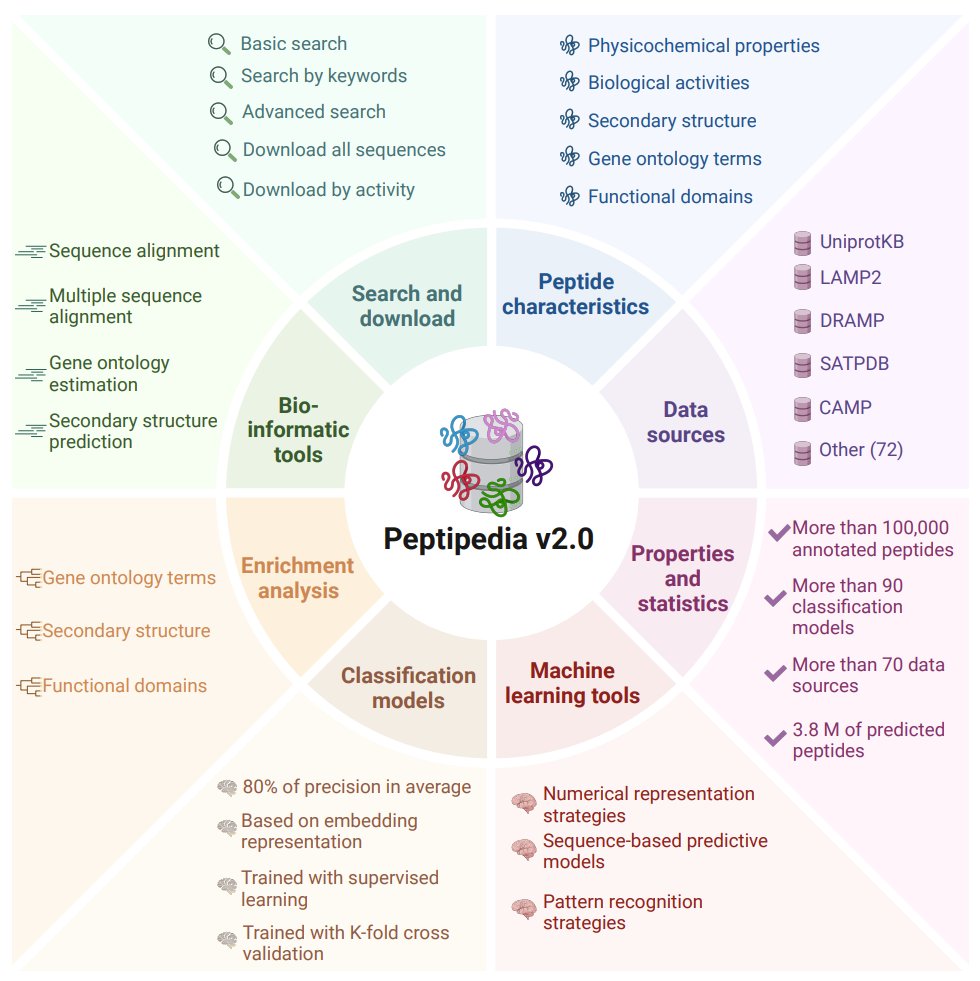
Peptipedia v2.0: A peptide sequence database and user-friendly web platform. A major update - Expand collection by over 45%, improved functional biological activity tree (managed by managed by PostgreSQL) - Train over 90 binary classification models using protein language models and machine learning. Over 100,000 peptides with biological activities and 3.8 million sequences with predicted activities Preprint: biorxiv.org/content/10.110…
Leo Zang tweet media
English
0
20
76
2.5K
Monique van Hoek retweetledi
Jonathan Jacobs 🧬🦠🕹️🏕️
Advice my graduate advisor gave me over 20 years ago... When writing a technical document: never use the word "very" - it smacks of opinion. You can do better than very. I can still hear his voice saying this ... like every single time I read a paper and see "very" 😂
English
6
4
24
2K
Monique van Hoek
Monique van Hoek@DoctorMVH·
Perhaps it is the other way around, and metabolic syndrome/obesity/diabetes is throwing off peoples circadian rhythm, leading to difficulties sleeping, cognitive challenges, emotional challenges and more poor eating habits, further eroding the circadian rhythm.
Eric Topol@EricTopol

Our circadian rhythm and how its disruption is linked to metabolic syndrome, obesity, Type 2 diabetes and cardiovascular disease. A first-rate review @jclinicalinvest jci.org/articles/view/… @thelaschrader @MaleckiKristen

English
0
0
1
99