Dogs4Wildlife
619 posts

Dogs4Wildlife
@Dogs4Wildlife
Registered Charity - 1215809 Elite Conservation Dogs, Advanced Ranger Training and Focused Community Initiatives Canines - Conservation - Community
Carmarthen, Wales Katılım Mayıs 2019
298 Takip Edilen329 Takipçiler

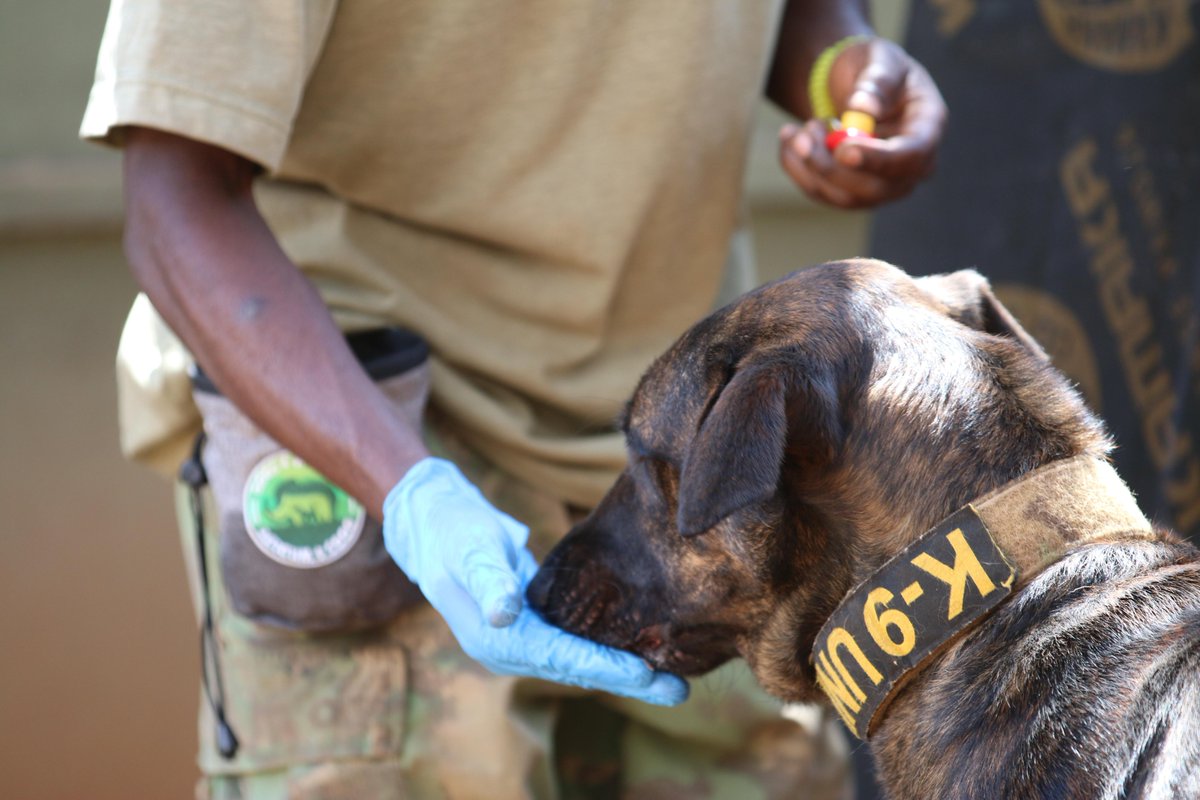
Operational human scent tracking is not simply about a dog following a trail, it is a structured system that combines both ground-based tracking and air scenting capability, allowing K9 units to move efficiently, adapt to changing conditions, and operate effectively across challenging environments.
At Dogs 4 Wildlife, the dogs we develop are trained to work with speed, purpose, and clarity, but their true capability is shaped through real-world operational exposure alongside the wildlife rangers who handle them. It is this partnership - dog and handler - that defines success.
A key component of our system is developing consistent, reliable responses to what we refer to as “lost spoor procedure”. In operational environments, losing the track is inevitable. What matters is how the dog and handler respond. Through structured training, the unit learns how to problem-solve, re-acquire odour, and continue with control and intent rather than uncertainty.
Equally important is the handler’s ability to recognise and respond to proximity alerts - often subtle behavioural changes that indicate the dog is closing in on the target. These moments are critical. Correct interpretation and safe, controlled handling at this stage can determine both operational success and the safety of the unit.
As capability develops, the aim is to progress towards off-lead operational deployment, where dog and handler move as one through the bush. This is an advanced level of work that requires significant conditioning, trust, and experience, but when achieved, it allows for a level of efficiency and fluidity that cannot be replicated on lead.
This system is always developed in context. Terrain, climate, operational pressure, and the specific demands of the environment all shape how the dog is trained and deployed. Throughout, we prioritise welfare, safety, and clarity of communication, ensuring that both dog and handler are working within a framework that supports long-term effectiveness.
Our role is to build more than just capability; we aim to develop complete operational K9 units. Units that are confident, controlled, and adaptable. Units that understand the work, trust the process, and can perform consistently in demanding environments.
The goal is simple: a best-practice standard of K9 capacity, capability, and operational success, built on experience, structure, and a commitment to doing things properly.
dogs4wildlife.org
info@dogs4wildlife.org
UK Registered Charitable Company: 1215809
English

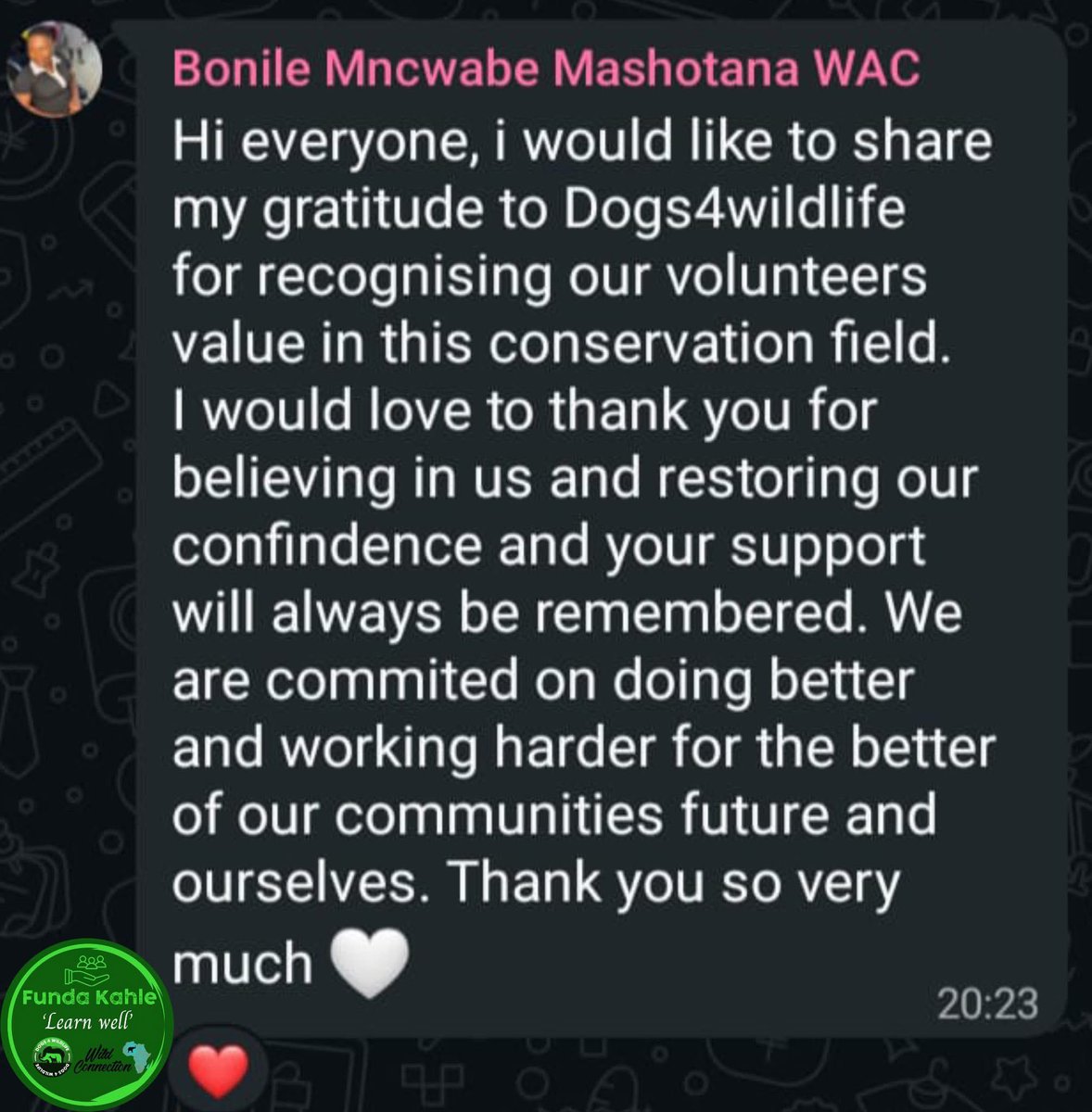
🌱Funde Kahle (Learn Well)
The feedback we continue to receive from participants of our Funda Kahle programme is a powerful reminder of why this work matters.
Delivered in partnership with Wild Connection in KwaZulu-Natal, South Africa, Funda Kahle was created to address a simple but often overlooked barrier facing rural youth: without formal, certificated training, access to meaningful employment is simply out of reach -regardless of motivation or potential.
To date, the programme has so far supported 24 young people by fully funding certificated skills training aligned to real employment opportunities within surrounding wildlife reserves. For many participants, this has been their first opportunity to gain a recognised qualification and, crucially, secure paid employment in environments they are deeply connected too but previously excluded from.
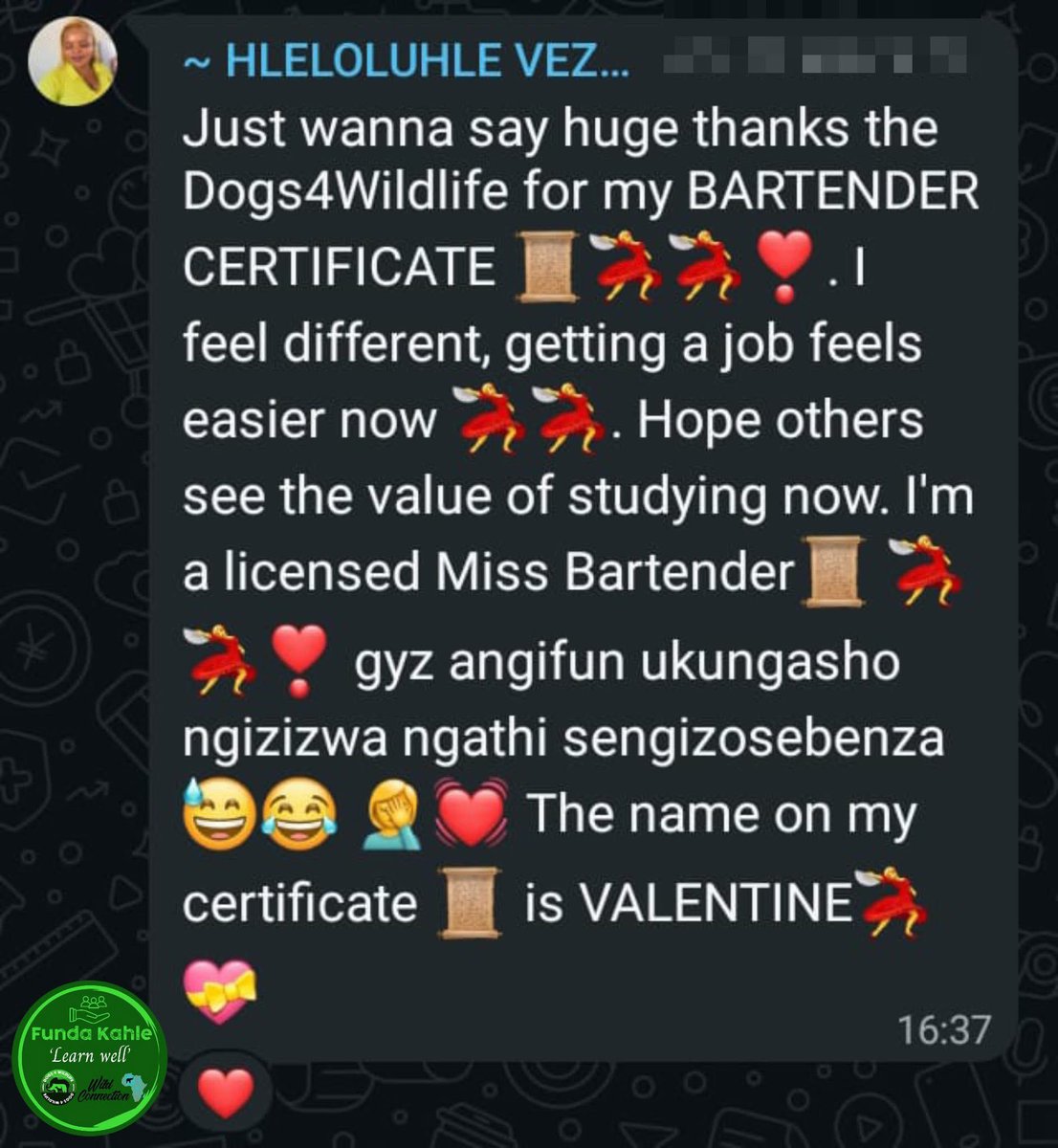
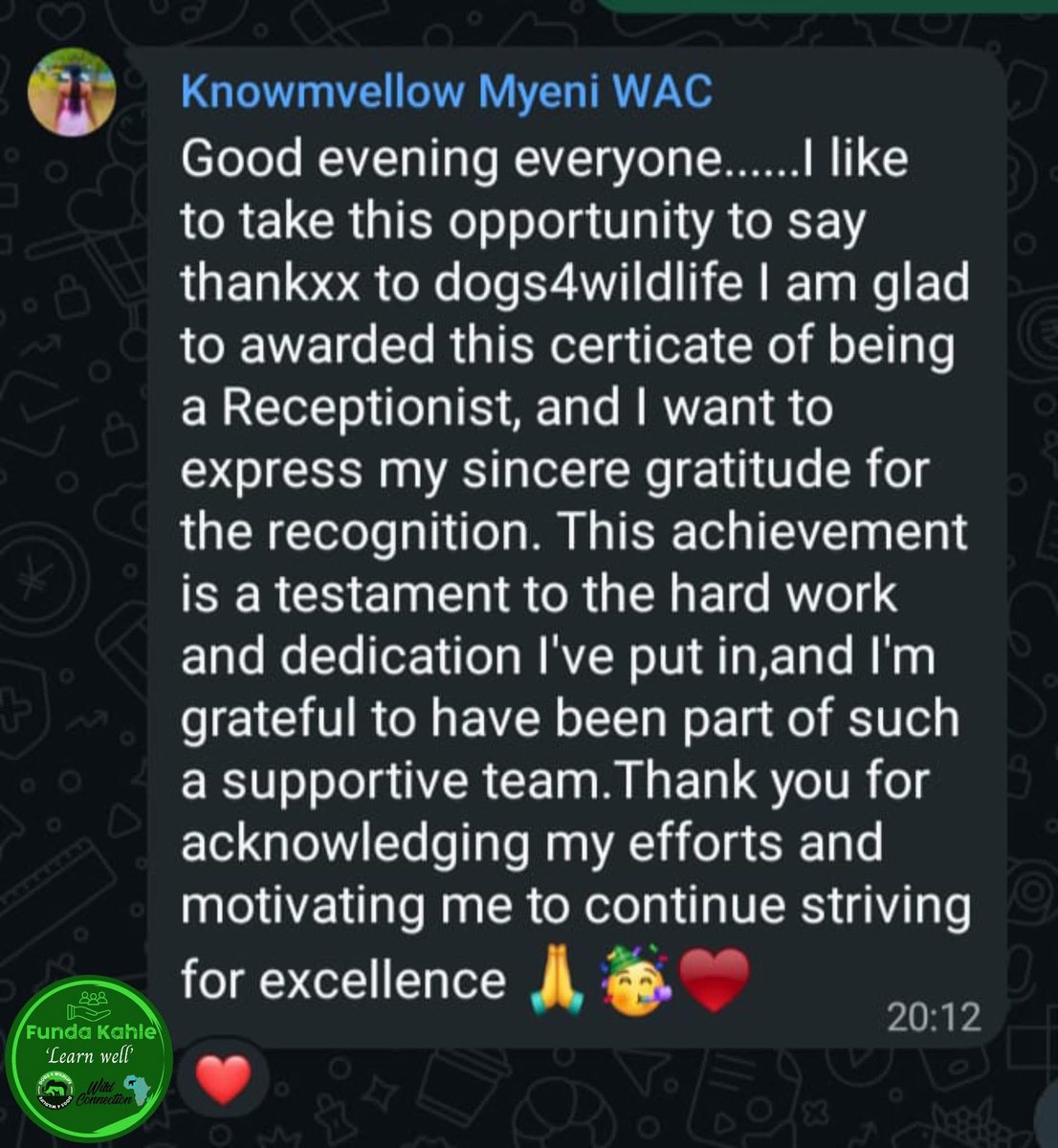
The feedback has been humbling. Participants speak of increased confidence, pride, stability, and hope, not just for themselves, but for their families as well. Several are now employed in full-time roles within wildlife environments, something that would not have been possible without access to accredited training.
While Funda Kahle is still in its early stages, it is already changing lives. By linking education directly to employment, the programme improves livelihoods, strengthens communities, and builds a meaningful connection between people and the landscapes they live alongside.
This is conservation that works because it puts people at the centre-creating opportunity, dignity, and long-term resilience.
We’re proud of what’s been achieved so far, and even more excited about what’s to come.
The Funda Kahle programme is about creating real opportunity where very little exists. It focuses on supporting young people from rural, wildlife-adjacent communities by funding certificated, practical skills training that leads directly to employment within surrounding wildlife reserves and associated sectors.
By removing the barrier of access to recognised training, Funda Kahle improves livelihoods, builds confidence and dignity, and strengthens the connection between communities and conservation, ensuring that protecting the natural world also delivers tangible benefit to the people who live alongside it.
To help us scale this programme to reach even more rural communities please contact us info@dogs4wildlife.org


English

🚨2025 Rhino Poaching figures released
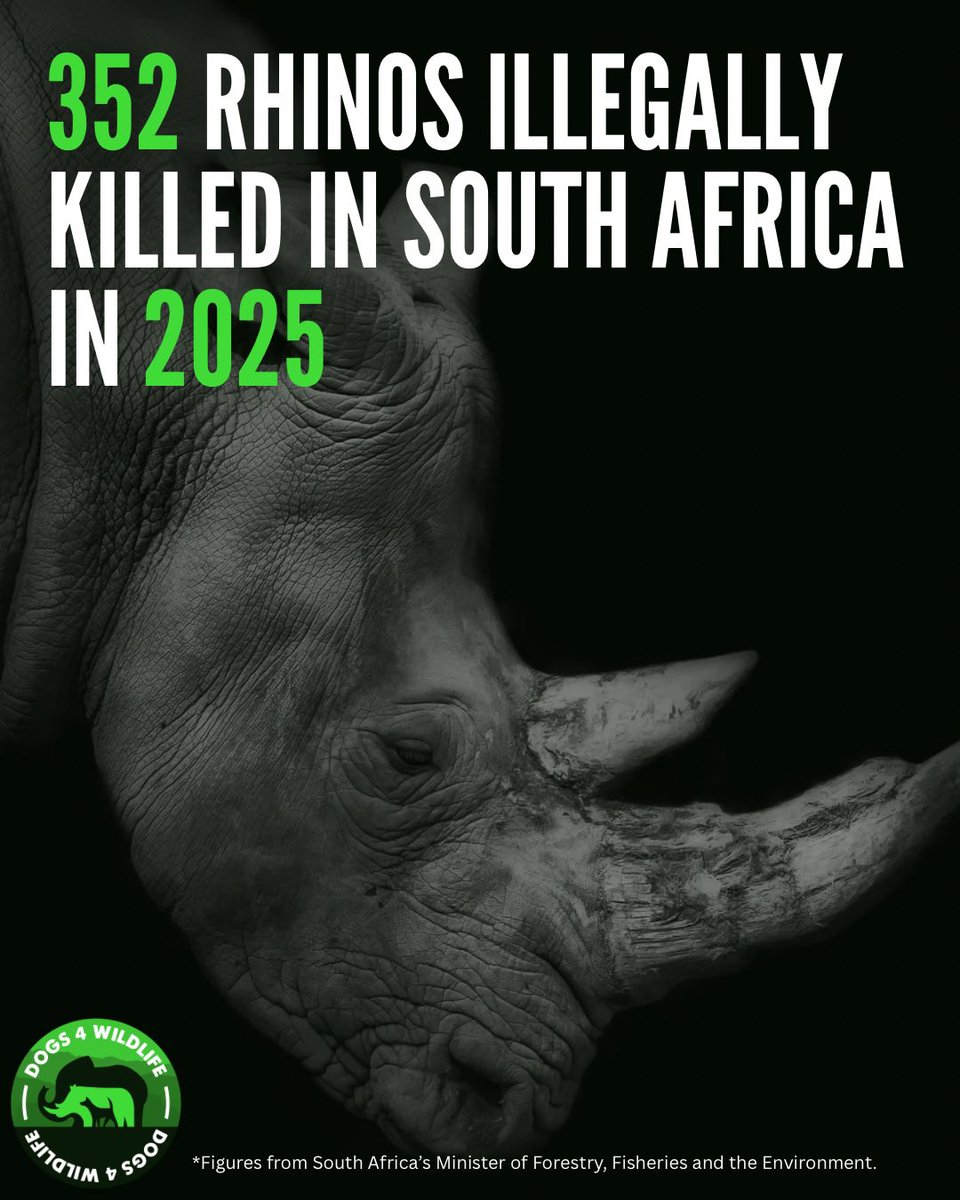
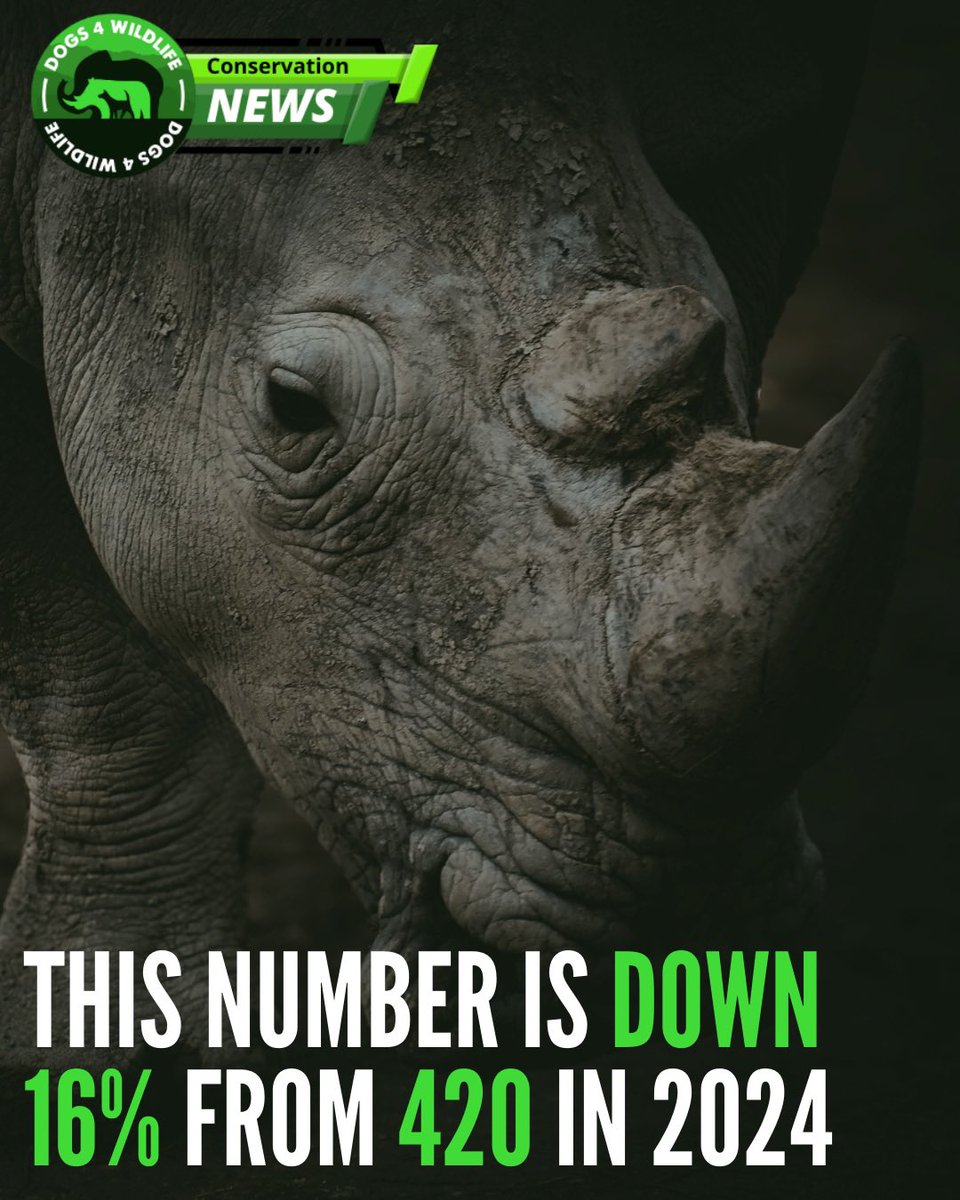
South Africa recorded 352 rhinos illegally killed in 2025, down 68 animals (16%) from 420 in 2024, according to the Department of Forestry, Fisheries and the Environment. Of these, 266 were killed on state properties and 86 on private reserves.
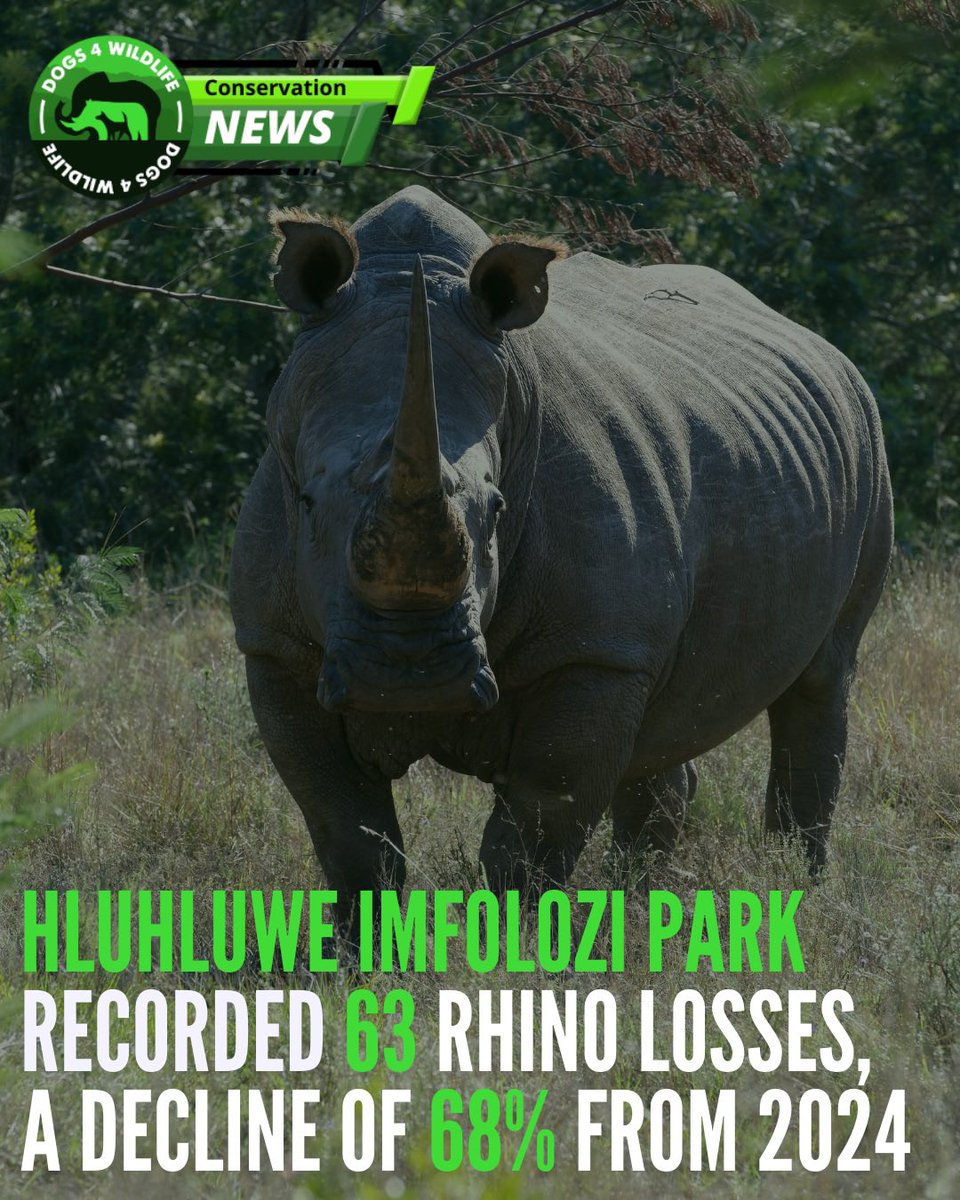
Hluhluwe-iMfolozi Park (KwaZulu-Natal) saw a major improvement, with poaching dropping by over two-thirds, from 198 rhinos in 2024 to 63 in 2025.
This decline is credited to sustained investment in dehorning, camera-trap technology, ranger welfare, and stronger collaboration through the Integrated Wildlife Zones (IWZ) Programme, supported by partners such as WWF, Save the Rhino International, Wildlife ACT, and Peace Parks Foundation.
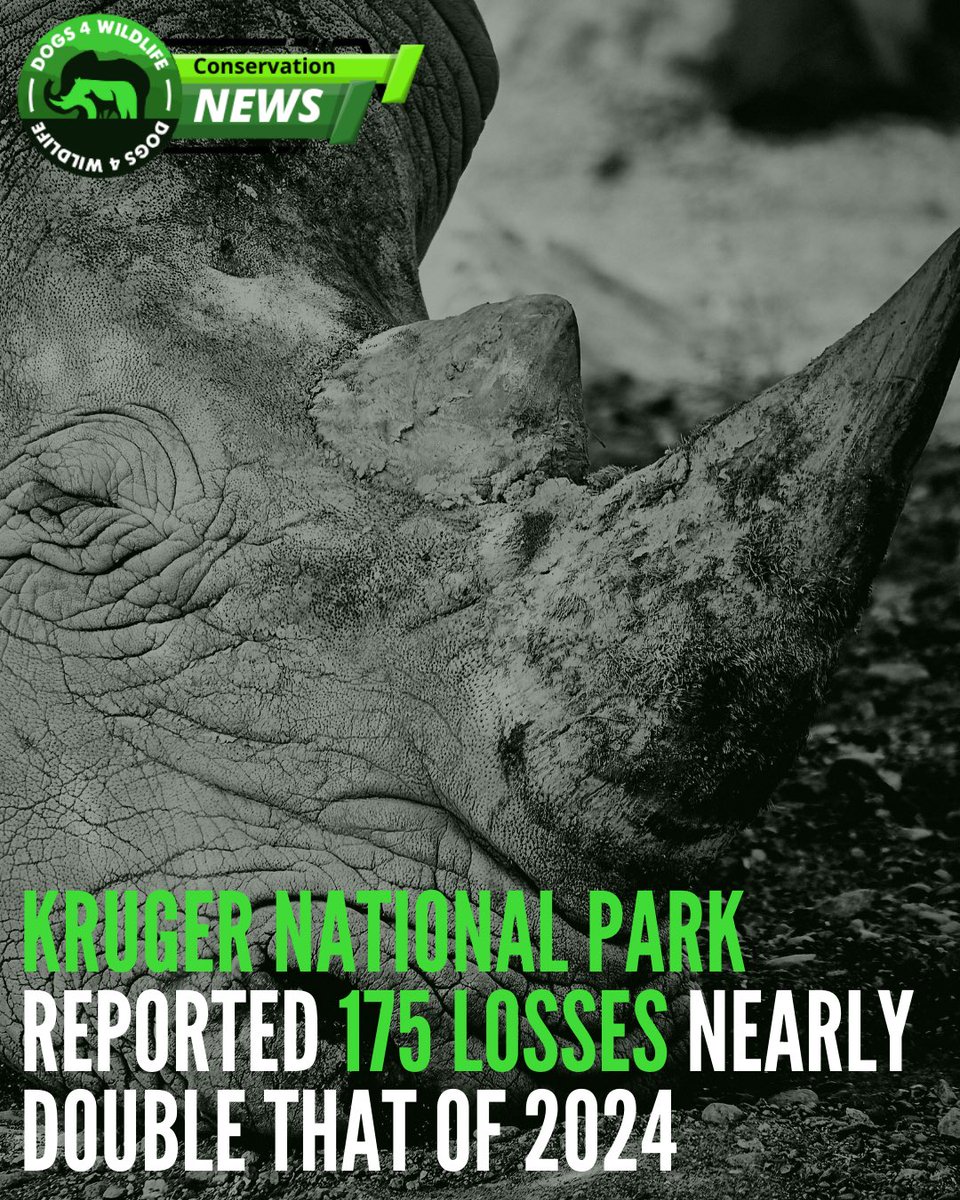
⚠️ In contrast, Kruger National Park experienced a sharp rise in poaching, with rhino deaths almost doubling from 88 in 2024 to 175 in 2025, highlighting the evolving tactics of organised criminal networks involved in rhino horn trafficking.
Minister Willie Aucamp stressed the importance of private-sector involvement, holistic solutions, and transboundary cooperation, including the role of law-enforcement bodies such as the SAMLIT Illegal Wildlife Trade Task Force, the Financial Intelligence Centre, and the banking sector in disrupting criminal networks.
The Department of Forestry, Fisheries and the Environment warned that reduced funding, political will, or international cooperation could quickly reverse gains.
Kruger continues to implement strategic dehorning, layered security, technology, ranger training and capacity building, with polygraph testing of staff ongoing.
🐕 Support our frontline canines in the fight against wildlife crime.
👊🏽 Together, we can make a difference
🌐 dogs4wildlife.org


English

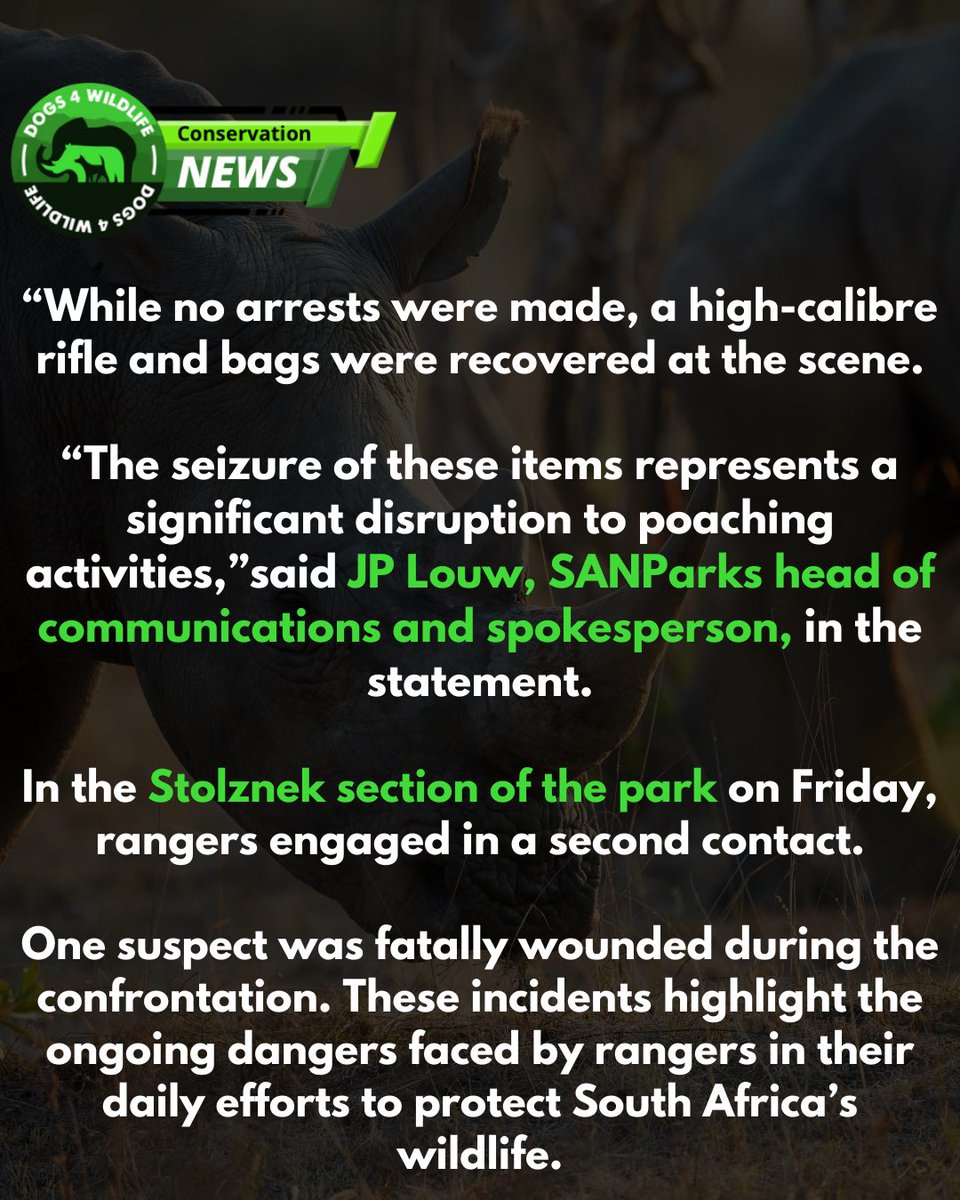
🚨CONSERVATION NEWS
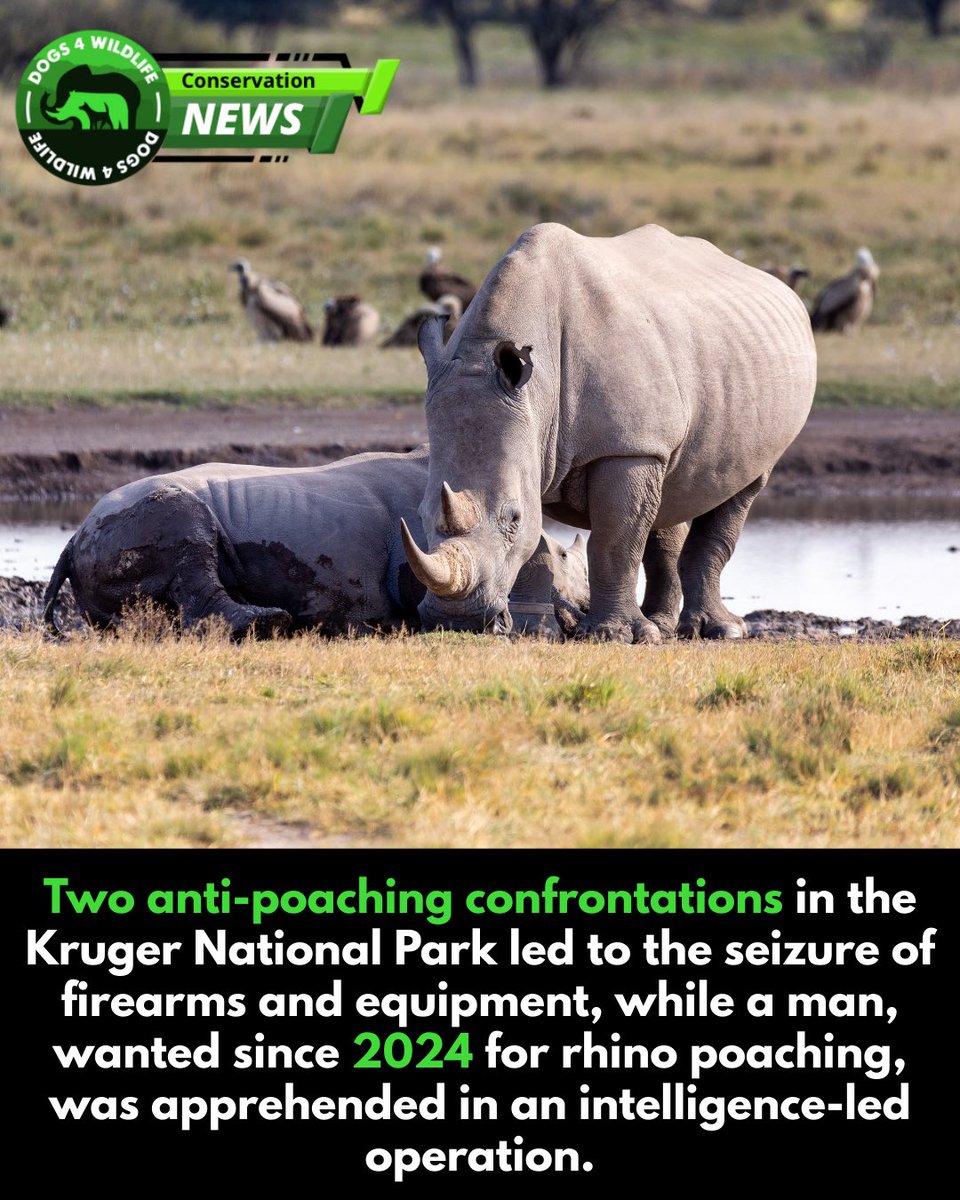
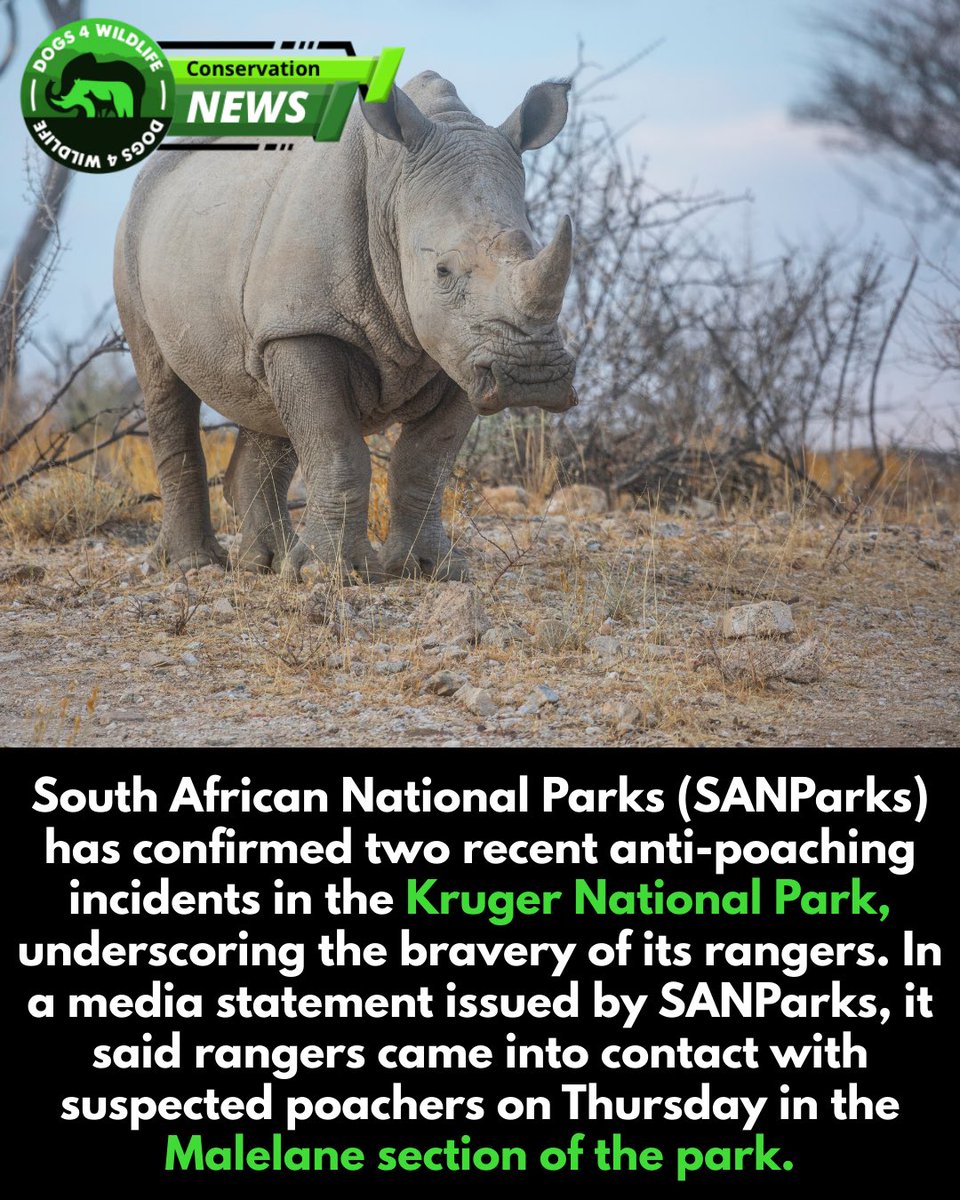
Rangers have successfully thwarted two poaching attempts in Kruger National Park, resulting in the seizure of firearms and equipment.
In a related operation in Limpopo, a suspect wanted since 2024 for rhino poaching was apprehended.
These actions highlight both the relentless efforts to safeguard South Africa’s endangered wildlife and the daily risks faced by rangers in the field.
👊🏽TOGETHER we can make a difference.
✅Support our front line canines in the fight against wildlife crime.
🌐 Dogs4Wildlife.org


English

As we move further into 2026, we’re reflecting on the multifaceted impact Dogs4Wildlife is making across conservation, community empowerment and frontline protection.
Over the past years we’ve stood beside wildlife rangers across southern Africa, working shoulder-to-shoulder with them to develop skills, capability and confidence in some of the toughest environments on the planet. Our conservation dogs and advanced ranger training programmes have supported hundreds of patrols, helped locate over 3,500 active snares and contributed to more than 500 operational responses to combat wildlife crime. This combination of canine and human effort strengthens ranger units and enhances the resilience of protected areas at a time when pressures on wildlife have never been greater.
But conservation is not just about protection; it’s also about people. Through community initiatives such as our Siyafunda Ngemvelo (We Learn in Nature) programme, partnered with the incredible The Connected Planet Foundation, we’ve been privileged to bring hundreds of rural school children into the natural environments they help protect, sparking curiosity, pride and stewardship for the natural world. We’ve also supported vital animal welfare work, including rabies vaccination and community dog health, with over 2,500 dogs vaccinated and 500 community animals spayed or neutered across Zimbabwe.
Our partnerships with organisations, rangers and supporters around the world continue to deepen. From formal training collaborations to community education and empowerment, we’re building a collective force for change that is as diverse as the challenges we face.
Looking ahead, our mission remains clear: to deliver sustained, responsible conservation impact through best-practice canine and ranger support, to uplift local communities as champions of their own natural heritage, and to inspire the next generation of wildlife guardians.
We are grateful to everyone who supports this journey - from the dedicated rangers and dogs in the field, to our community partners and global supporters.
Together we are bridging the gap between protection and empowerment, creating lasting impact where it matters most.
dogs4wildlife.org
English

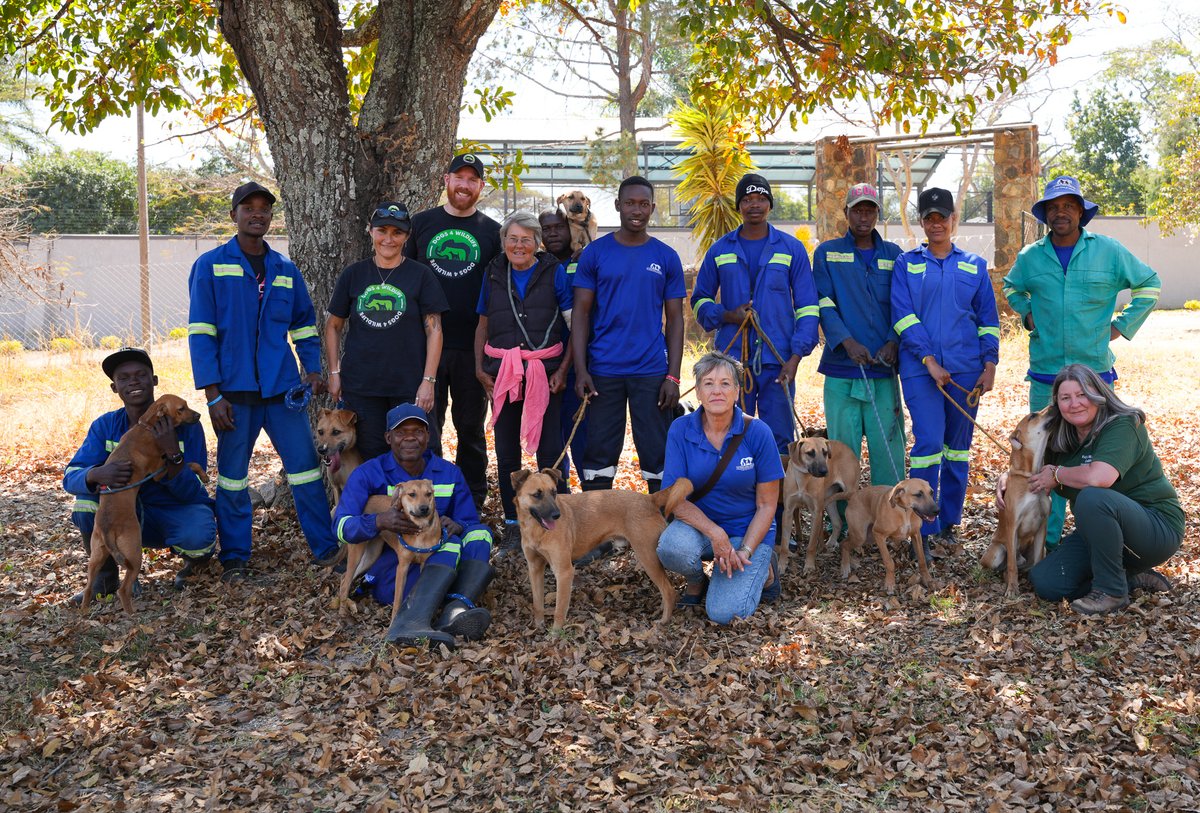
Recently, we had the privilege of spending time in the incredible country of Zimbabwe, working alongside some truly exceptional people and organisations who are deeply committed to protecting wildlife on the ground.
A particular highlight was our continued collaboration with the Friend Animal Foundation, where the conservation dogs currently in development are progressing extremely well. Seeing the dogs mature in confidence, capability and purpose reinforced exactly why Zimbabwe is such a critical environment for this work and why it deserves a best-practice standard in conservation dog training and deployment.
Zimbabwe’s landscapes, wildlife pressures and operational realities demand more than good intentions. They require well-trained dogs, well-trained handlers, and structured systems that prioritise welfare, safety and effectiveness.
That is why we are working closely with strategic partners to develop a standardised conservation dog programme, paired with certificated ranger training and long-term mentorship, ensuring skills are embedded, sustainable and locally led.
This work is not about quick wins. It’s about building robust, ethical systems that last. Supporting rangers, strengthening conservation outcomes, and giving dogs the clarity and structure and management oversight they need to flourish.
We’re excited about what’s ahead and grateful to be working with partners who share the same commitment to doing conservation properly. Keep an eye out for updates regarding our projects in Zimbabwe and the partners we will be working with and alongside. Exciting times ahead.
dogs4wildlife.org

English

🚨 Conservation News 🚨
CITES Update: Regional Action Plan for West African Pangolins Launched.
In some positive news to end 2025, West Africa has adopted a landmark Regional Pangolin Action Plan- a 30-year roadmap to safeguard pangolins, the world’s most trafficked wild mammal and reverse their decline across the region. It directly addresses the drivers of pangolin decline:
✔️ A 30-year strategic roadmap for pangolin conservation
✔️Supports implementation of CITES Appendix I protections
✔️Targets illegal wildlife trade, poaching & habitat loss
✔️Strengthens cross-border cooperation, law enforcement & community action
✔️Protects white-bellied, black-bellied & giant pangolins
This long-term plan turns regional commitments into coordinated, lasting action for pangolins in West Africa.
📢 Protect pangolins. Stop illegal wildlife trade.
👊🏽TOGETHER we can make a difference!
✅Support our front line canines in the fight against wildlife crime.
🌐 Dogs4Wildlife.org


English

@elonmusk 👏👏👏Excellent. Now lets talk about using this infrastructure to provide accurate location ping data for endangered species, a double game changer in one. To discuss this project, please reach out here info@dogs4wildlife.org :)
English

Starlink is providing Internet connectivity to schools and hospitals in Africa that had nothing or very expensive and bad connectivity before.
This will do more to lift people out of poverty than all the NGOs combined.
Sawyer Merritt@SawyerMerritt
NEWS: SpaceX's @Starlink has reached a new milestone in Kenya, recording 19,460 active users as of September 2025, marking the satellite provider’s highest subscriber count since entering the Kenyan market.
English

@rickygervais This should become a standard practise for those able, well done Ricky for setting the bar. Some incredible charities selected, Merry Christmas All
English

@elonmusk Shame, as we could certainly make use of such infrastructure to provide more efficient location data for endangered species under threat of wildlife crime.
English


Every day across Africa, wildlife rangers stand on the frontline of a fight most people will never see, experience or fully understand.
But they’re not standing alone.
They’re standing beside one of the most powerful tools in conservation today:
A highly trained dog.
A single conservation dog can:
• Track poachers over vast distances and at night
• Detect snares hidden deep in the bush
• Find firearms, bushmeat and illegal wildlife products
• Save the lives of rangers who rely on them
Their noses don’t lie. Their loyalty doesn’t waver.
And their impact is measurable, immediate and life-changing.
At Dogs4Wildlife, we’ve seen first-hand how a dog can completely transform the effectiveness of an anti-poaching unit.
They are fast.
They are efficient.
They are precise.
They are fearless.
And, unlike technology, they can work consistently in environments where nothing else can.
But scaling this impact takes more than skilled trainers and dedicated volunteers.
It takes you.
As a newly registered UK charity (1215809), Dogs4Wildlife is ready to expand our footprint across African landscapes that desperately need support — but we cannot achieve this alone.
If you believe in a world where rhinos, elephants, pangolins and countless other species survive beyond the headlines…
If you believe in the bravery of the rangers who protect them…
If you believe in the extraordinary partnership between humans and dogs…
Then we’re asking for your help.
Your support - whether through sharing our mission, connecting us with potential partners, fundraising, volunteering, or donating — makes a direct and tangible difference on the ground.
One dog can change the future of an entire region.
Imagine what we can do together.
To everyone who stands with us: thank you.
To everyone hearing about our mission today: we’d love you by our side.
Animals saving animals.
And you can help them do it.
dogs4wildlife.org
info@dogs4wildlife.org
@JeffBezos @elonmusk @StevenBartlett @richardbranson @mackenziescott @gatesfoundation

English

We are extremely proud to share a major milestone:
Dogs 4 Wildlife is now officially a registered UK Charity - number: 1215809
This journey has taken years of persistence, learning, setbacks and continued belief.
What began as a vision to support wildlife conservation, reduce wildlife crime and develop wildlife rangers using highly trained dogs is now a legitimately recognised organisation with the structure to grow, scale and protect more wildlife and support more rangers than ever before.
Charitable status allows us to expand our reach, strengthen our partnerships and increase our impact across frontline conservation projects.
This isn’t the end of a journey - it’s the foundation for a much bigger one.
Thank you to everyone who helped make this possible. The mission continues, with stronger roots and further reach.
dogs4wildlife.org

English

The Elephant in the Room 🐘
We all see it. We all know it’s there. But few want to talk about it.
In the world of impact - whether you’re an individual, a corporation, an NGO or a charity - there’s a quiet tension that sits beneath the surface. It’s the tug-of-war between collaboration and competition.
We say we’re working for the same cause; better outcomes for both people and planet. Yet too often, we fall into the trap of competing; for funding, recognition, visibility, or simply the sense of winning.
Here’s the truth; meaningful, lasting impact doesn’t come from competition. It comes from connection.
We need to shift our mindset from scarcity to synergy, from “my project” to “our purpose”. Funding is vital, yes - but not at the expense of collaboration, trust, or shared success.
Ego, ownership, and the need to be “the one who did it” are human, but they’re also the very barriers holding back the change we all claim to want.
The most effective solutions are rarely built in isolation - they’re born from open minds, joined forces, and the courage to let go of personal credit in pursuit of collective progress.
Let’s talk about the elephant in the room—and more importantly, let’s all start moving it together.
#strongertogether
dogs4wildlife.org

English

🚨CONSERVATION NEWS: South Africa Stands Firm on Ivory & Rhino Horn Trade
South Africa’s Department of Forestry, Fisheries and the Environment (DFFE) has reaffirmed the country’s commitment to the global ban on the commercial trade in elephant ivory and rhino horn.
The department dismissed reports suggesting that South Africa planned to support reopening the trade, calling them “without basis.”
Officials stated that South Africa remains aligned with the international consensus under the Convention on International Trade in Endangered Species of Wild Fauna and Flora (CITES).
Minister Dion George said South Africa would not back any proposal to lift the ban, emphasising that the government’s priority is to protect the country’s wildlife and uphold conservation commitments.
The reaffirmation comes ahead of the CITES COP20 meeting, where wildlife trade policies are expected to be a key topic.
South Africa reiterated its focus on science-based and ethical conservation practices, working with regional and international partners to combat poaching, strengthen enforcement, and safeguard threatened species.
The DFFE concluded that South Africa’s policies are guided by long-term sustainability and global cooperation, ensuring that elephants and rhinos remain protected for future generations.
👊🏽Be the change. Be their voice.
Support our canine heroes on the front line against wildlife crime.
👇🏼Help us spread the word:
✅ Like
✅ Share
✅ Comment
✅ Donate
✅ Speak up
🌐 Dogs4Wildlife.org
dogs4wildlife.org/donate
#news #conservation #wildlife


English

Conservation cannot begin and end at the fence line.
If our models focus only on wildlife and ecosystems, we miss half the solution. Real, lasting protection must intricately include and motivate local rural communities - and of course their children, so stewardship is rooted at home, not flown in.
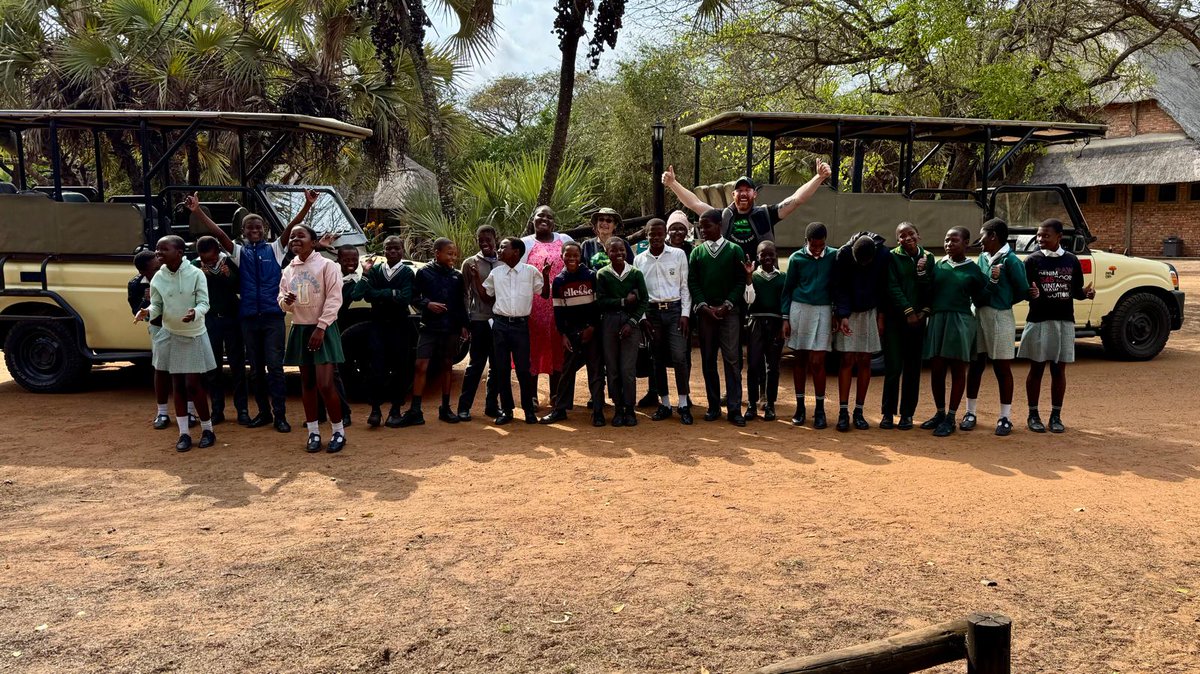
That’s why in partnership with The Connected Planet we run Siyafunda Ngemvelo (We learn in nature); a programme that brings local community children who would otherwise never set foot in a reserve the opportunity to experience nature, wildlife and biodiverse habitats first-hand, while learning why they matter, how they work, and how they can be protected.
Inspiration is powerful, but we pair it with practical learning and continued engagement so curiosity becomes confidence and confidence becomes action.
Future generations, local communities and conservation should be treated as a single package; build access, build understanding, build pride, and you build protection.
This is how we create conservation that endures - through lasting relationships, shared purpose and opportunities that outlive any single grant cycle.
If you knew that less than 2% of rural community children across Africa have ever seen the wildlife that surrounds them you start to understand our mission.
Thank you to all of our current sponsors and donors who help support this vital project.
dogs4wildlife.org

English

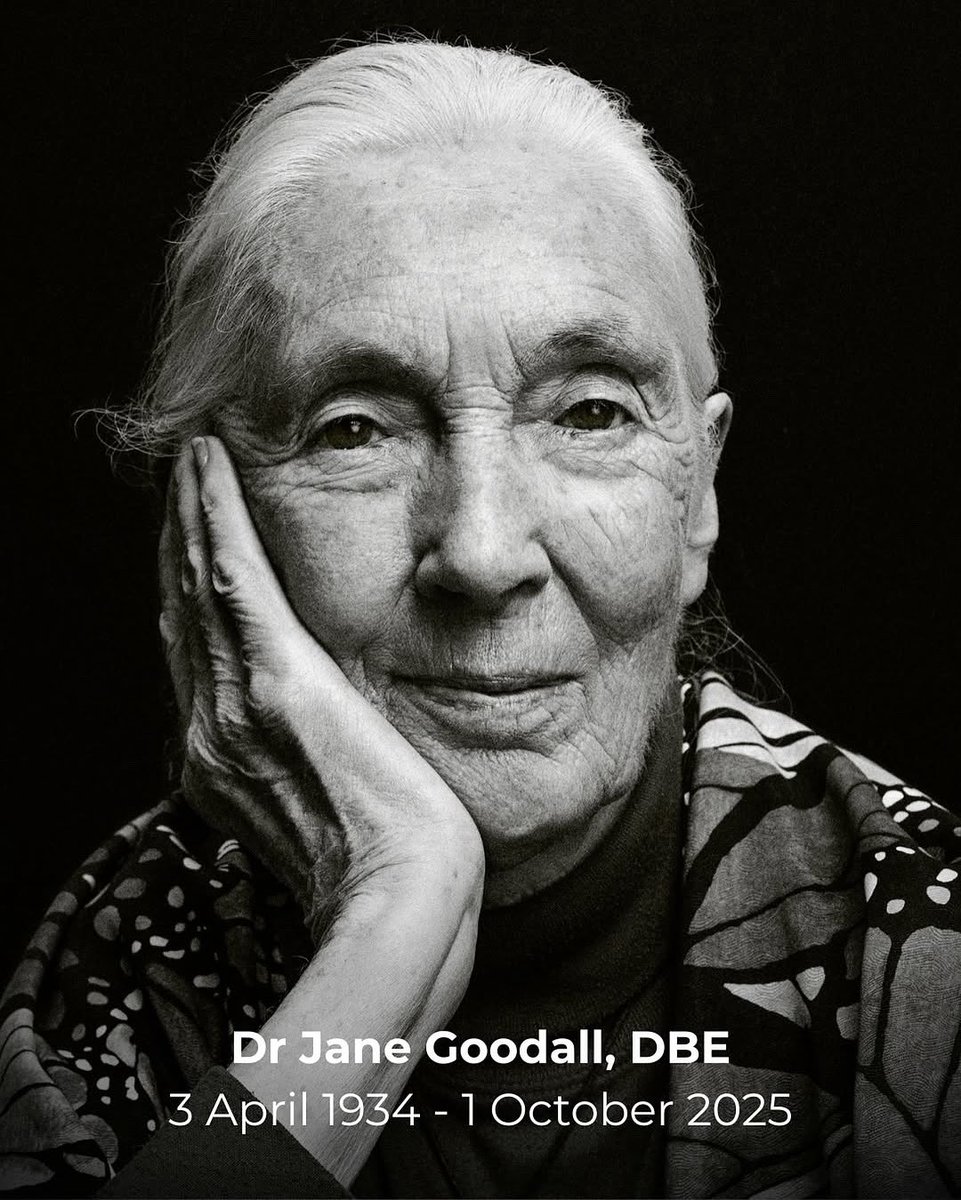
🤍Our hearts are broken at the passing of Dr. Jane Goodall- A shining light and beacon of hope. Jane forever changed the way the world understands animals, people, and the natural world.
Dr. Jane touched millions with her wisdom, compassion, unwavering hope and tireless global work for conservation.
Because of her, each and every one of us was called to recognise the interconnectedness of all life, to open our eyes and hearts and see that the fate of animals, people, and the environment are completely woven together.
She reminded us that compassion is not limited to our own species and that the wellbeing of nature is the wellbeing of humanity… that even the smallest action can ripple outwards to create lasting change.
Her influence lives on through the Jane Goodall Institute, Roots & Shoots, and the countless young people she has empowered and inspired to make a change and create a better future.
“What you do makes a difference, and you have to decide what kind of difference you want to make.”
🕊️ Rest peacefully, Dr. Jane. Thank you for everything you did for conservation.
Your light will never fade- it lives on in all of us who carry your vision forward.
#ThankYouDrJane

English

Technology is a force multiplier for a well-skilled nose, not a substitute for it.
A highly skilled and well supported K9 unit already brings precision, tempo and deterrence; GPS, first response drones and smart data simply extend that edge.
Can you help support our mission of developing 'best practise' dog units across Africa to conserve wildlife?
If so, reach out to us at info@dogs4wildlife.org
dogs4wildlife.org
@elonmusk @JeffBezos @mackenziescott

English

🦏 Today is World Rhino Day.
⚠️ OUR RHINOS ARE RUNNING OUT OF TIME.
‼️ In just the first six months of 2025, 195 rhinos were brutally slaughtered in South Africa. That’s more than one rhino killed every single day.
💔 Each death is a devastating loss for this iconic species and a step closer to extinction if we do not act NOW.
✅ With more frontline rangers and Specialist Conservation Canines, we can stop poachers in their tracks and give rhinos, and countless other threatened animals, a fighting chance. But right now, we urgently need to expand patrol teams, train more K9s, and fund vital protection projects.
🫶🏼 You can help today. Donate, adopt a conservation canine or rhino, or shop with us… every contribution helps us directly on the front lines of conservation. (Links below.)
For the price of a coffee or a sandwich today-you can save a life.
💚 Every action counts. Every donation matters. And every one of us has a role to play in defending these majestic creatures.
👊🏽 BE THE CHANGE. BE THEIR VOICE.
Support our frontline canine heroes in the fight against wildlife crime.
💚 Donate:
paypal.com/donate/?hosted…
🐕 Adopt a D4W dog:
dogs4wildlife.org/adopt-a-dog/
🦏 Adopt a rhino:
dogs4wildlife.org/adopt-a-rhino/
🛒 Shop:
dogs4wildlife.org/shop/
✅ Become a member:
dogs4wildlife.org/shop/#!/Become…
#worldrhinoday #rhino #savetherhinos
English

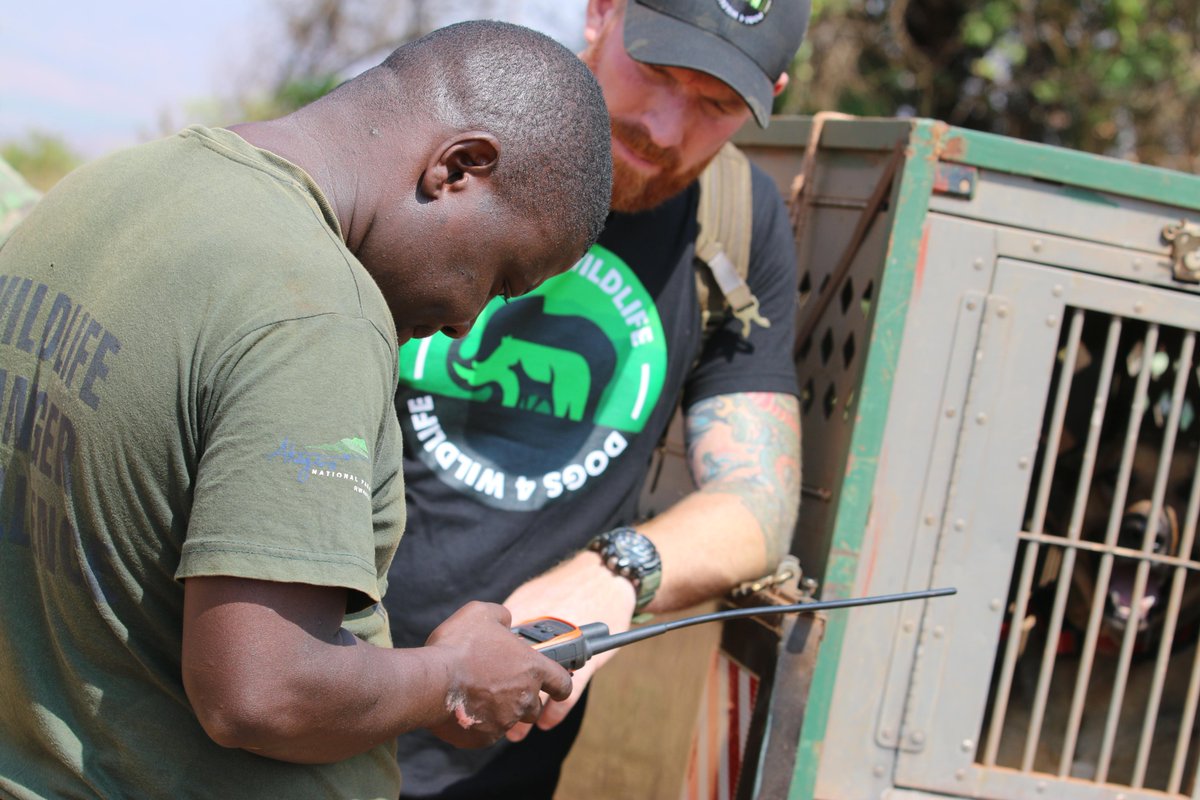
This video taken with the unit at Imire, captures Dogs 4 Wildlife providing technical advice and guidance on operational deployment tactics using suitable formations (we were missing the ranger that covers the left flank in this session) that prioritise the safety of both handler and dog, whilst establishing a system of silent control that enables the unit to assess proximity alerts given by the dog on track and react accordingly, with the priority in these moments being the safety and security of the unit as a whole.
The unit moves as one; handler slows down - dog slows down, handler picks up the pace, so does the dog - the handler is taught to access the environment in front of them and decide whether it is clear and safe to move at a faster pace - we condition the dog to also not break unit formation through a system of habitual training processes that create muscle memory in how the unit functions as a whole.
At Dogs 4 Wildlife, we are deeply honoured and privileged to have supported the development of this unit to the standard they operate today. Considering this unit was completely inexperienced with the use of K9 when we first met, to seeing how elite and unified they now operate is simply inspiring.
The bond between man and dog is unrivalled at his level, no need for communication - the handler knows his dog intricately and the dog knows her job 👊🏽
Whilst this video is only a very short picture in respect of the units and dog capability working together, this is the standard we are so passionate about setting across the use and deployment of conservation K9.
💚BE THE CHANGE
Together, let’s fight the good fight. 🐕
🫶🏼To donate to protect the world’s most endangered animals, please visit: dogs4wildlife.org/donate
English

This video taken with the unit at Imire, captures me overseeing and providing technical advice and guidance on operational deployment tactics using suitable formations (we were missing the ranger that covers the left flank in this session) that prioritise the safety of both handler and dog, whilst establishing a system of silent control that enables the unit to assess proximity alerts given by the dog on track and react accordingly, with the priority in these moments being the safety and security of the unit as a whole.
The unit moves as one; handler slows down - dog slows down, handler picks up the pace, so does the dog - the handler is taught to access the environment in front of them and decide whether it is clear and safe to move at a faster pace - we condition the dog to also not break unit formation through a system of habitual training processes that create muscle memory in how the unit functions as a whole.
I am deeply honoured and privileged to have supported the development of this unit to the standard they operate today. Considering this unit was completely inexperienced with the use of K9 when we first met, to seeing how elite and unified they now operate is simply inspiring.
The bond between man and dog is unrivalled at his level, no need for communication - the handler knows his dog intricately and the dog knows her job 👊
Whilst this video is only a very short picture in respect of the units and dog capability working together, this is the standard we are so passionate about setting across the use and deployment of conservation K9.
dogs4wildlife.org
English