King Lab

241 posts

King Lab banner
King Lab

King Lab

@DustinTKing

Exploring how microbes sense and respond to metabolites. Assistant Professor, Simon Fraser University

Burnaby B.C. Katılım Şubat 2022
168 Takip Edilen146 Takipçiler
King Lab
King Lab@DustinTKing·
The King lab is recruiting two graduate students to join our team of researchers exploring the biochemical basis of CO2 sensing in health and disease. See our website (kinglab.ca) for details on how to apply.
King Lab tweet media
English
0
2
3
162
King Lab retweetledi
Dr. Esther Verheyen
Dr. Esther Verheyen@EstherVerheyen·
I'm looking for a grad student(s) to start in 2025! Students can gain broad experience in developmental genetics, signal transduction, and disease modeling. Located in beautiful Vancouver. Check out our website for details. verheyenlab.weebly.com Please R/T
English
0
38
49
13.9K
King Lab
King Lab@DustinTKing·
Thanks Ryan - it was great to have you and to hear about your amazing work on #glycoRNA
English
0
1
6
690
King Lab retweetledi
Ku-Lung Hsu
Ku-Lung Hsu@Hsu_Lab_UVa·
A huge congrats to my graduate student Andy Heindel for publishing his work on developing PACCE for global quantification of protein-RNA binding activity in live cells. We thank our collaborators Markus Hafner @NIH_NIAMS & Thurl Harris @uvapharmacology. disq.us/t/4jhbf7b
English
0
19
84
14.5K
King Lab retweetledi
Veera Rajagopal 
Veera Rajagopal @doctorveera·
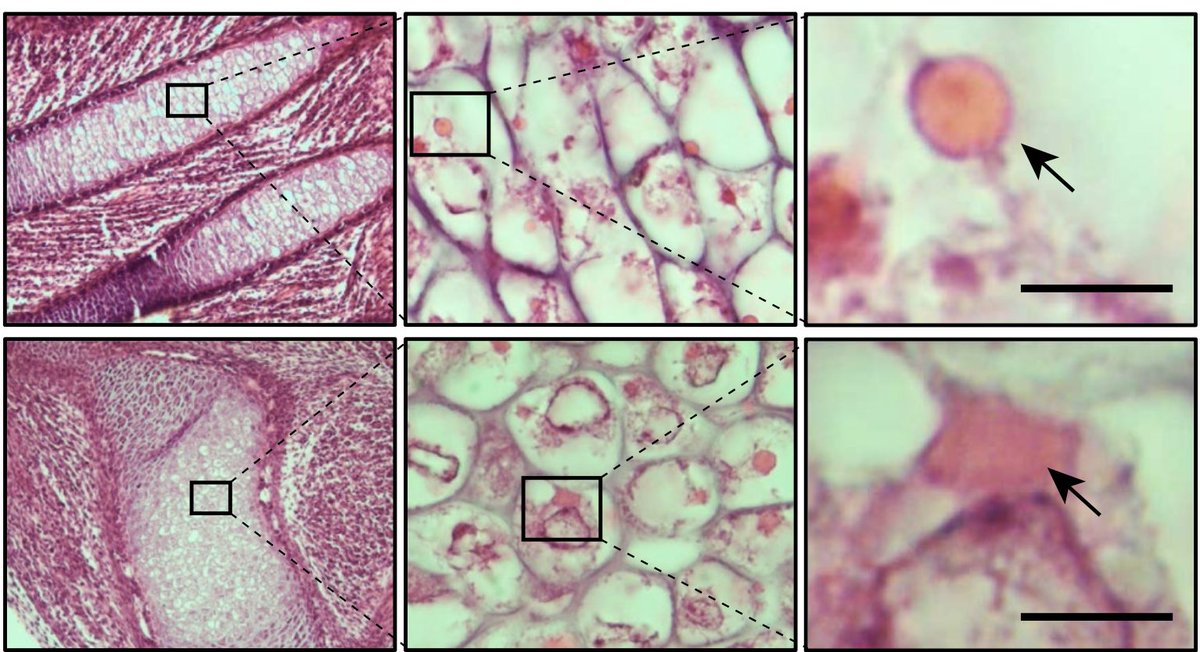
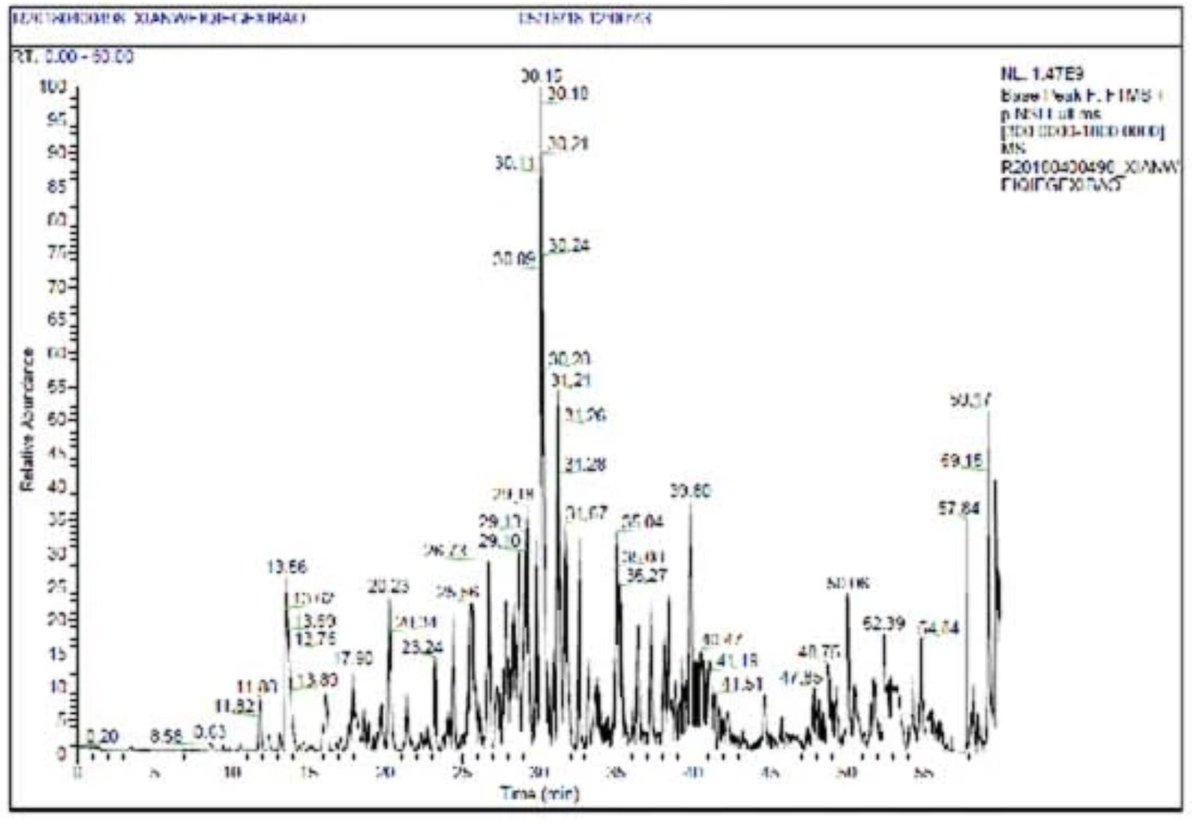
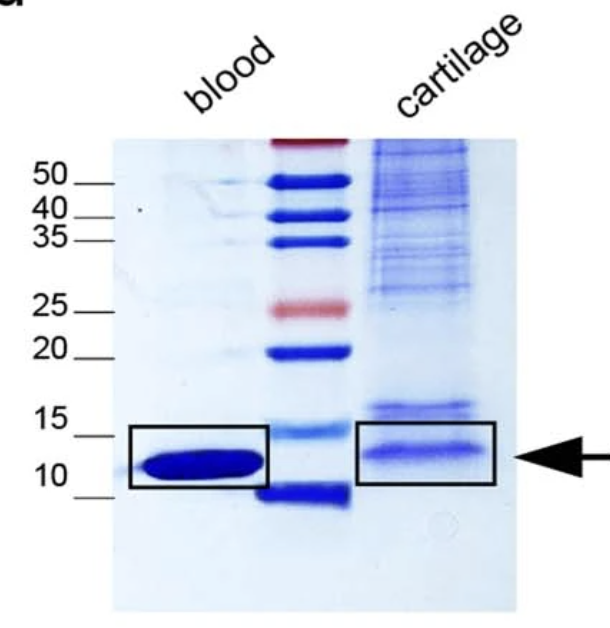
A fascinating work is published today @Nature by Zhang & Zhang et al. on a serendipitous discovery of haemoglobin expression outside the RBC cells--in chondrocytes--and their critical role in keeping our cartilage alive under an oxygen-deprived environment. nature.com/articles/s4158… Our school teachers taught that haemoglobin (Hb) is an oxygen-transporting protein expressed exclusively in the red blood cells. Although there exist occasional sporadic reports of Hb expression outside the RBCs (e.g. neurons, retinal cells etc.), no one would have guessed Hb would play a critical role (required for survival) outside the RBCs. The discovery When studying the cartilage growth plate of neonatal mice, the authors noticed eosin-positive structures in the chondrocytes (cartilage cells) that resembled structures seen in RBCs. Out of curiosity, the researchers went on to stain and examine the chondrocytes of different cartilage tissue types both from mice and humans. They realized that no matter the source or species, the cells always displayed eosin-positive structures under the microscope. The curious researchers were determined to find out what these structures are made of. They carefully dissected these structures out and studied the protein components using mass spectrometry and were surprised to learn the results: the top hits were Hb proteins. Unable to believe the results, they went on to study the proteins using different methods--western blotting, immunohistochemistry--and every time they ended up with the same results: the cytoplasm of cells was loaded with organelles-like bodies made of haemoglobin proteins. Finally, they came to the realization that Hb is abundantly produced in chondrocytes. They named these cytoplasmic Hb bodies as "Hedy". Structure of Hedy The authors studied the structure and formation of Hb bodies floating in the cytoplasm. Are they like an organelle? Do they have a membrane? Through various experiments, the researchers found that the Hedy structures do not have a membrane. The Hb proteins condense together by phase separation to form organelle-like structures in the cytoplasm. This condensation is itself an evolved process, requiring specific sequence structures of the Hb protein. Globin switching We know that there are different forms of Hb each expressed during different developmental stages: embryonic, fetal and adult Hb. There exists a sophisticated molecular machinery (which was believed to be RBC-specific) that switches one Hb type to the other at appropriate times. Using gene silencing experiments, the authors were further awestruck to find that the chondrocytes too switched their Hb types from embryonic to fetal to adult stages, just like RBCs! Regulation of chondrocyte Hb production It is well known that hypoxia induces Hb production via upregulating hypoxia-inducible factors (HIFs), an evolutionarily conserved molecular mechanism (Nobel Prize 2019; nobelprize.org/prizes/medicin…). But it turned out that chondrocytes have evolved to increase their Hb expression not via HIF proteins, but through a different protein, the same protein that is required for fetal to adult Hb switching: KLF1 (nature.com/articles/ng091…). How important is Hb for chondrocytes? Such a high Hb expression in chondrocytes with similar globin switching behaviour as RBCs would mean that this Hb is critical for chondrocytes' survival. By deleting the Hbb gene specifically in the chondrocytes, the authors found that without Hb the chondrocytes die killing the animal a few days after birth. Conclusion Continuous oxygen supply is a prerequisite for the survival of cells in all tissues. The only way the cells can receive oxygen is through RBCs in the blood, which requires the tissue to be highly vascularized. When demand exceeds the supply, the cells evolve to survive an oxygen-depriving environment. Muscles evolved to produce their own globin--myoglobin which has a higher affinity to oxygen than Hb thereby withholding O2 during oxygen excess states and releasing it back during oxygen-deprived state (during exercise). Likewise, the brain has its own globin: neuroglobin (nature.com/articles/35035…). Today, we are learning that cartilage (an avascular tissue), too, has its own globin. But unlike muscle and brain, have evolved to store oxygen not by making a new type of globin but by making just the same type as the ones in RBCs, but with a higher affinity than RBC Hb. When it comes to fundamental biology, we often assume that we have found everything and then one day a discovery like this drops, hitting us on the head to make us realize that there is a whole universe of hidden biological secrets waiting to be discovered. Some recent posts: 1. Gene x sex interaction of PNPLA3 I148M variant (x.com/doctorveera/st…) 2. Effect of consanguineous marriage on the risk of common diseases in offsprings (x.com/doctorveera/st…) 3. Whole genome vs. Whole exome sequencing. Which is more cost-effective for genetic association studies? (x.com/doctorveera/st…)
Veera Rajagopal  tweet mediaVeera Rajagopal  tweet mediaVeera Rajagopal  tweet mediaVeera Rajagopal  tweet media
English
26
290
1K
380.4K
King Lab retweetledi
Filip Van Petegem
Filip Van Petegem@FilipPetegem·
Well-deserved, but a missed opportunity to also acknowledge the other part of the equation: the development of Lipid Nanoparticles, equally crucial for the mRNA vaccines. Decades of work by Pieter Cullis and colleagues.
The Nobel Prize@NobelPrize

BREAKING NEWS The 2023 #NobelPrize in Physiology or Medicine has been awarded to Katalin Karikó and Drew Weissman for their discoveries concerning nucleoside base modifications that enabled the development of effective mRNA vaccines against COVID-19.


English
2
1
23
3.4K
King Lab retweetledi
proteinsociety
proteinsociety@ProteinSociety·
Webinar Alert: October 6, 2:00 PM EST Protein Dynamics - the Key for Biological Function, featuring Dr. Dorothee Kern and Dr. Lewis Kay. TPS webinars are always free. Register here: us06web.zoom.us/webinar/regist…
proteinsociety tweet media
English
2
33
107
24.1K
King Lab retweetledi
Simon Fraser University
Join Phyllis Webstad, founder of Orange Shirt Day and #SFU honorary degree recipient, for a special Burnaby campus event Oct. 4. Continue to raise awareness of the legacy and ongoing impacts of Indian Residential School system and honour those impacted. eventbrite.ca/e/10th-anniver…
English
0
13
27
4.7K
King Lab retweetledi
Chenxin Li, PhD (@chenxinli2.bsky.social)
I am not sure. If I were a PI I would try to preserve my mentee’s writing as much as possible-light edits only. If substantial changes are needed, I leave a comment instead. This is their writing, and they should express their individuality, not mine.
Julie Bastarache@JulesBass6

If I could give aspiring scientists and trainees one piece of advice it would be this: Find a mentor who cares enough about you to do this 👇 #Mentorship #AcademicChatter #PhysicianScientist #CareerAdvice


English
93
104
1.8K
605.2K
Sha
Sha@Sha_Zhu_HgS·
Accepted and online now! A Fixable Fluorescence‐Quenched Substrate for Quantitation of Lysosomal Glucocerebrosidase Activity in Both Live and Fixed Cells - Zhu - Angewandte Chemie International Edition - Wiley Online Library onlinelibrary.wiley.com/doi/full/10.10…
English
2
2
19
1.5K
King Lab retweetledi
Filip Van Petegem
Filip Van Petegem@FilipPetegem·
Joint academia/industry postdoc position available
Filip Van Petegem tweet media
English
0
11
19
3.6K
King Lab retweetledi
Peter Dynes
Peter Dynes@PGDynes·
Lough Neagh is just another victim of rising global temperatures. Climate change increases the growth of harmful algae and cyanobacteria in fresh water. Runaway growths of algae strangle water ecosystems and devastate them.
English
146
824
2.1K
762.2K
SFU Research
SFU Research@SFUResearch·
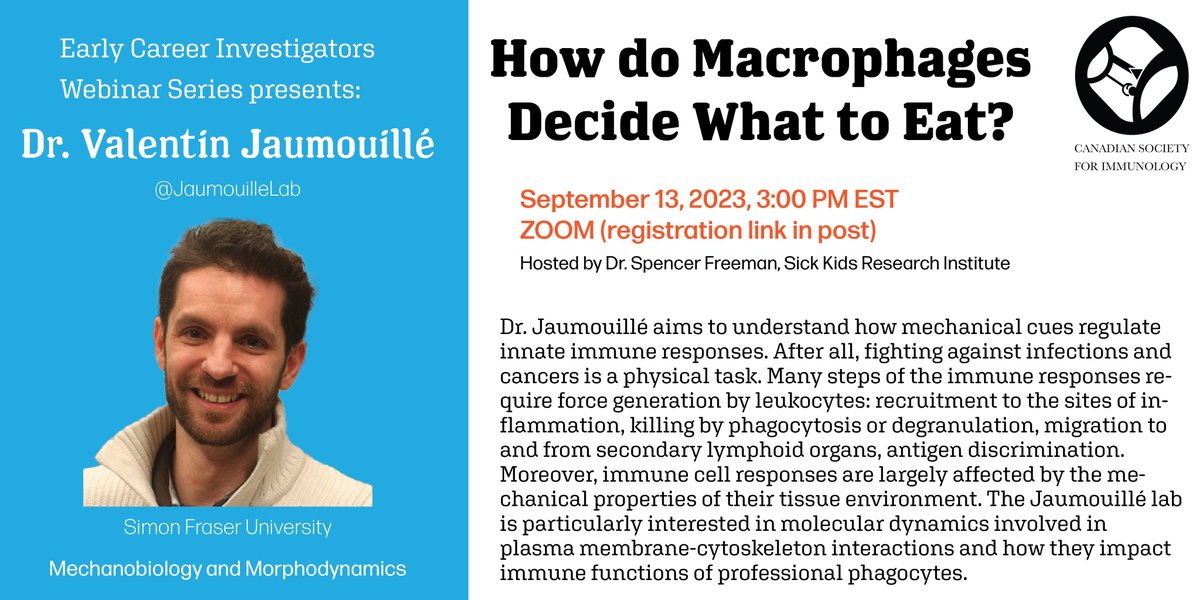
6 researchers from @SFU_Science and @FAS_SFU have been #CFIfunded 🎉 Congratulations to Vahid Hosseini, John Shen, Shawn Sederberg, Vincenzo Pecunia (@V_Pecunia), Xing-Dong Yang (@umyangxd) & Dustin King (@DustinTKing)!
CFI / FCI@InnovationCA

📣 Great news for #ResearchInfrastructure in Canada: $113M has been awarded to support 396 innovative #CFIFunded projects through #JELF. Congratulations to researchers in 56 universities across the country! 👏 Details [LINK]: bit.ly/3OHGeYz #UnivResearch @CDNScience

English
1
2
7
781
King Lab retweetledi
Rosie Redfield
Rosie Redfield@RosieRedfield·
Total evidence for 'immutable target': "No spontaneous resistant mutants of S. aureus ATCC29213 were obtained when plating 1.2X10^10 cells on agar media with 4xMIC clovibactin." So one-step high-level resistance is rare - I'm still betting on the bacteria.
Host-Microbe Interactions@HostMicrobeLit

An antibiotic from an uncultured bacterium binds to an immutable target | Cell New antibiotic dropped. "we report the discovery of clovibactin.... efficiently kills drug-resistant Gram-positive bacterial pathogens without detectable resistance" cell.com/cell/fulltext/…

English
9
20
72
21K
SFU Science
SFU Science@SFU_Science·
Congratulations to @DustinTKing on receiving $350,000 towards infrastructure to support King Lab's research on antibiotic resistance and engineering bacteria to support greenhouse-gas reduction!
SFU Research@SFUResearch

The BC Knowledge Development Fund has announced $700k for 4 @SFU research projects 🌟 This funding supports @FAS_SFU & @SFU_Science researchers to make vital breakthroughs in quantum technologies, medical therapies, greenhouse gas reduction & more. news.gov.bc.ca/releases/2023J…

English
1
4
9
1.1K