Sabitlenmiş Tweet

THE PALACE THIEF
How does a man with multiple publicized and judicially proven deficiencies in character, a man without virtue, void of moral and ethical ideology and wrong from right discernment, election seize a return to the White House? This is a question the millions of Americans who didn’t vote for him and honorable and principled government officials, representatives of the law and civilians worldwide have perplexedly wrestled with. The definitive answer to this question… there’s a crisis of character in America.
America has long been praised to be the land of opportunity, offering a chance for anyone to succeed in business and acquire wealth and possession. People all over Earth have been immigrating to the United States for hundreds of years with the dream of achieving a better standard of living than the lands they were born to. It is this better-life ambition and the diversity of culture, race and faith that came with it, that propelled America into being a diversely rich, equal opportunity, diplomatic, just and dignified, progressive, forward-thinking country. The men of profound character who imagined and fought for the creation of American democracy and the spirit of all the men and women who blood, sweat and tears, mind, body and soul contributed to building America into the great nation she became, have all been washed away in a rip tide of government official, representative of the law and civilian moral and ethical compromise. America’s now sitting executive branch of government and all the Americans responsible for granting them the power of racist, sexist, bullying, tyrannical, regressive, backwards thinking rule are living lives founded on doing whatever they need to do to get what they want, justifying that if such requires lying and cheating or breaking the law, then so be it.
As with a lighthouse, it was the lure of business opportunity and acquisition of wealth and possession that drew the variance of human culture, race and faith to America’s shores. Excessive desire for wealth and possession and the lying, cheating and unlawful acts that have accompanied their acquisition has been steadily rising since the onset of the industrial revolution business boom. This lying, cheating and disrespect of the law, success at any cost mindset has perilously escalated to the point of a substantial number of Americans knowingly choosing a sexual deviant character flawed felon to run the White House. The extensive government official, representative of the law and civilian gross disregard of visibly observable character defect, America has hit character crisis climax and so now commences the correction process that comes with all excess.
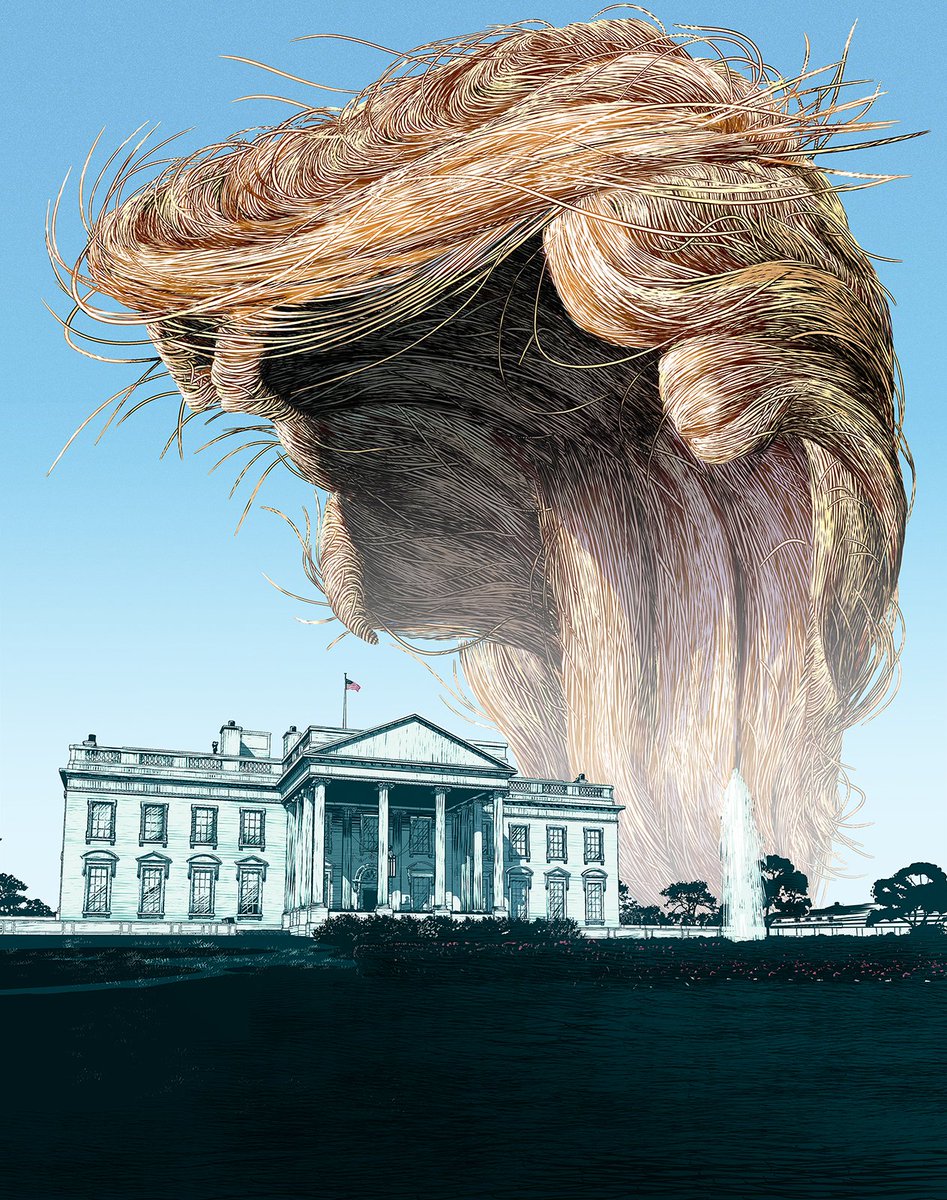
“The Palace Thief” is an amalgamation of all the government officials, representatives of the law and civilians responsible for America hitting this “do whatever it takes-success at any cost” climax, the multitudes of Americans who are thought/choice/action living their lives operating under the immoral and unethical ideological toupee illustrated in German artist Florian Bayer’s image. Excess in all its forms, whether this destabilizing overload takes place in the natural world or in human civilization, is an “as you sow, so shall you reap” karmic correction sovereignty that ultimately trumps all wrongdoing. Balance is the invincible law of nature that also presides over mankind. The path to restoring balance in America, that which shall truly make America great again; lies in making “Americans” great again. Whereby, the collective majority of her government officials, representatives of the law and civilians alike, fashion a better-life ambition construct founded on the integrity of hard work, honesty, temperance of need and want, and upholding moral and ethical principle no matter the challenge, hardship or roadblock that comes with the pursuit of prosperity.
There’s a red flag synchronicity here in relation to “restoring balance” that demands expression. In the realm of being five years out from breaching an environmental and societal game changing 1.5 degrees Celsius Global Warming tipping point, though an autocratic dictatorial Trump Regime threatens to destroy America’s constitutional foundation of life, liberty and the pursuit of happiness tenet, there exists an autocratic dictatorial global power that supersedes all human authority. Present is a five-year expiration date for Americans to make themselves great again. If America’s majority of government officials, representatives of the law and civilians fail to morally and ethically discipline their excesses in misconduct and consumption within this time frame, Mother Nature, with her natural disaster might; without discrimination of gender, race, color, creed, fiscal class or geological location, will unmercifully force misconduct and consumption correction by leveling America’s excess playing field.
Though this story is set on an American stage, America isn’t the only country plagued by monumental numbers of lying, cheating and unlawfully active government officials, representatives of the law and civilians. Nor is America the only country on Earth living under the threat of Mother Nature, with her natural disaster might, leveling their excess playing field. All countries on Earth are sanctioned under the five-year 1.5 degrees Celsius Global Warming tipping point countdown. Frightfully distraught the instant I learned a man without virtue, void of moral and ethical ideology and wrong from right discernment shall be manning the oval office seat of power at this fateful environmental and societal juncture in human civilization; I set to praying for a lemons-into-lemonade remedy to alleviate my psychological distress. In answer to my prayer, supernatural guidance whispered the suggestion of this story. I now pray this cautionary tale serves to empower the honorable and principled government officials, representatives of the law and civilians of America and beyond, that they may rise with Greater Good purpose; rise with uncompromised resolute fervor to establish moral, ethical and environmental balance on Earth before Mother Nature vehemently forces her form of correction upon us all.
Lying and cheating and breaking the law
Success at any cost character flaw
Palace Thief operators, infamy will find its way to you
For the bill of wrongdoing always comes due
Five years to instill righteousness across the land of the free and home of the brave
Political, societal and ecological balance only the power of unity can save
Honorable Americans, it’s on us to redeem the soul of our Nation
Principled and virtue strong upon the Constitution’s foundation
🦋LJC
@BarackObama @JoeBiden @harryjsisson @KamalaHarris @BillClinton @LePapillonBlu2 @mmpadellan @GovPressOffice @CalltoActivism @AntiTrumpCanada @ProjectLincoln @krassenstein @princess_kim_k @acnewsitics @mjfree @michaelt5656 @MicPop8 @MarkBallabon
English