ElectronicsNotes by Ian Poole

26.5K posts
ElectronicsNotes by Ian Poole banner
ElectronicsNotes by Ian Poole

ElectronicsNotes by Ian Poole

@ElecNotes

Clear electronics/RF guides, videos & downloads by Ian Poole | Resource hub for engineers & hobbyists | Shop: https://t.co/ClrsfjiAbA

South East, England Katılım Kasım 2016
265 Takip Edilen16.5K Takipçiler
ElectronicsNotes by Ian Poole
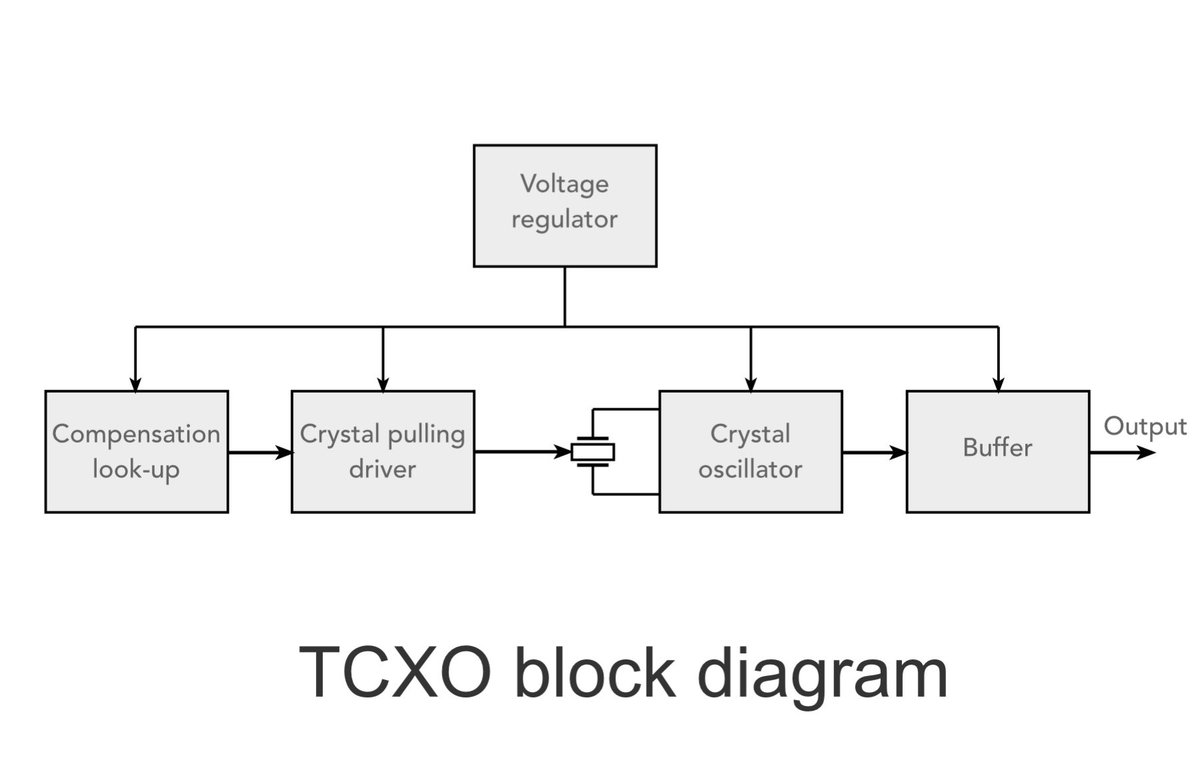
Precision meets practicality: Why TCXOs offer a great option for frequency control. If you’re designing RF circuits, mobile devices, or high-speed digital systems, you know that standard crystal oscillators are very good, but have a small frequency change with temperature. As the ambient temperature shifts, a standard quartz crystal’s resonant frequency drifts. In high-precision applications, this drift can cause synchronization errors or signal loss. This is where the TCXO (Temperature Compensated Crystal Oscillator) shines. Based on the excellent insights from Electronics Notes, here is a breakdown of why they are essential for modern electronics. 🔍 How does it work? A TCXO doesn’t try to stop the temperature from changing (like an OCXO/Oven-Controlled oscillator does). Instead, it compensates for it. 1. Sensing: A built-in temperature sensor monitors the environment. 2. Correction: A compensation network generates a voltage that is the exact inverse of the crystal's temperature-frequency curve. 3. Pulling: This voltage is applied to a VCXO (Voltage Controlled Crystal Oscillator) to "pull" the frequency back to its target. Key Advantages: • Stability: While a standard crystal might drift ±25 ppm, a TCXO can achieve stability as tight as ±1.5 ppm or better. • Efficiency: They offer a massive performance boost over standard oscillators without the high power consumption or large footprint of an Oven-Controlled (OCXO) alternative. • Instant-On: Unlike OCXOs, which need time to "warm up" the internal oven, TCXOs provide stabilized frequency almost instantly, and they are much smaller, cheaper and consume much less current. Types of TCXOs: Not all TCXOs are built the same. Depending on your design, you might encounter: • ADTCXO (Analogue Digital): Uses analogue technology for smooth correction without "phase jumps"—ideal for cellular applications. • DTCXO (Digital): Uses a temperature sensor and a look-up table for high-precision digital linearisation. • MCXO (Microprocessor): Uses a microprocessor for even more advanced compensation logic. The Takeaway TCXOs provide a really great balance between cost, size, and precision. They can be found in everything from test equipment to wireless communication systems and much more, ensuring that whatever the need the timing is good. Are you working on a design that requires high frequency stability? What’s your go-to solution for temperature drift? Let’s discuss in the comments! 👇 #ElectronicsEngineering #RFDesign #EmbeddedSystems #TCXO #FrequencyControl #WirelessTech #ElectronicsNotes #HardwareDesign
ElectronicsNotes by Ian Poole tweet media
English
2
2
24
879
ElectronicsNotes by Ian Poole
What should you look for when buying? ✅ Variable Voltage/Current: Essential for different projects. ✅ Linear vs. Switching: Linear is quieter (less noise), Switching is lighter/more efficient. ✅ Display Accuracy: You need to trust the numbers you see. ✅ Channels: Dual or triple outputs allow you to power multiple rails (like 3.3V and 5V) simultaneously.
English
1
0
1
93
ElectronicsNotes by Ian Poole
Why your workbench needs a dedicated Bench Power Supply.** Batteries are great until they die mid-test, and wall warts are often noisy or provide the wrong voltage. If you’re serious about electronics, a Bench Power Supply is the heartbeat of your lab. It provides clean, reliable, and adjustable power so you can focus on your circuit, not your battery level. #Electronics #Engineering #Maker #powersupplies #benchpsu #TestEquipment #electronicsnotes
ElectronicsNotes by Ian Poole tweet media
English
1
5
18
282
James May
James May@MrJamesMay·
For those of you interested in the Flemish single-manual harpsichord after Ruckers project, I’ve done a dry clamp-up of the front case. I’m too scared to glue it.
James May tweet media
English
63
19
698
63.4K
ElectronicsNotes by Ian Poole
Why Material Choice Matters: Understanding Electrical Resistivity Have you ever wondered why we use copper for wiring instead of iron, or why some materials are perfect insulators? It all comes down to a fundamental property called Resistivity (ρ). Unlike resistance, which depends on the shape and size of an object, resistivity is an intrinsic property of the material itself. It tells us how strongly a material opposes the flow of electric current. Definition: “The electrical resistivity is the electrical resistance per unit length and per unit of cross-sectional area at a specified temperature." Key Takeaways from the Infographic: ✅ The Formula: ρ = R A / l Understanding this helps engineers calculate the expected resistance of any component based on its dimensions. ✅ The Range: From Silver (1.6 10^-8 ohm m) to Quartz (7 10^+17 ohm m), the difference in resistivity across materials is staggering—spanning over 25 orders of magnitude! ✅ Practical Application: Whether you are designing a high-efficiency PCB or selecting insulation for high-voltage cables, knowing your material’s resistivity region (Metals vs. Semiconductors vs. Insulators) is crucial. Check out the infographic below for a quick breakdown of common material values and the core physics behind the measurement. For a useful summary of the science of resistance, check out the infographic here: 🔗 electronics-notes.com/articles/summa… #ElectricalEngineering #Electronics #Physics #EngineeringDesign #Resistivity #STEM #CircuitDesign #electronicsnotes #electroniccomponents
ElectronicsNotes by Ian Poole tweet media
English
0
5
24
785
W5AUG
W5AUG@w5aug_radio·
@ElecNotes @ZSsixSHN I deemed the Quansheng UV-K5 the “UV5r killer” a while ago when I got about 6 of them for $10 each pre tariffs. Better performance. Better aesthetica. Easy to use. USBc. More memories. Hackable.
English
1
0
2
173
ElectronicsNotes by Ian Poole
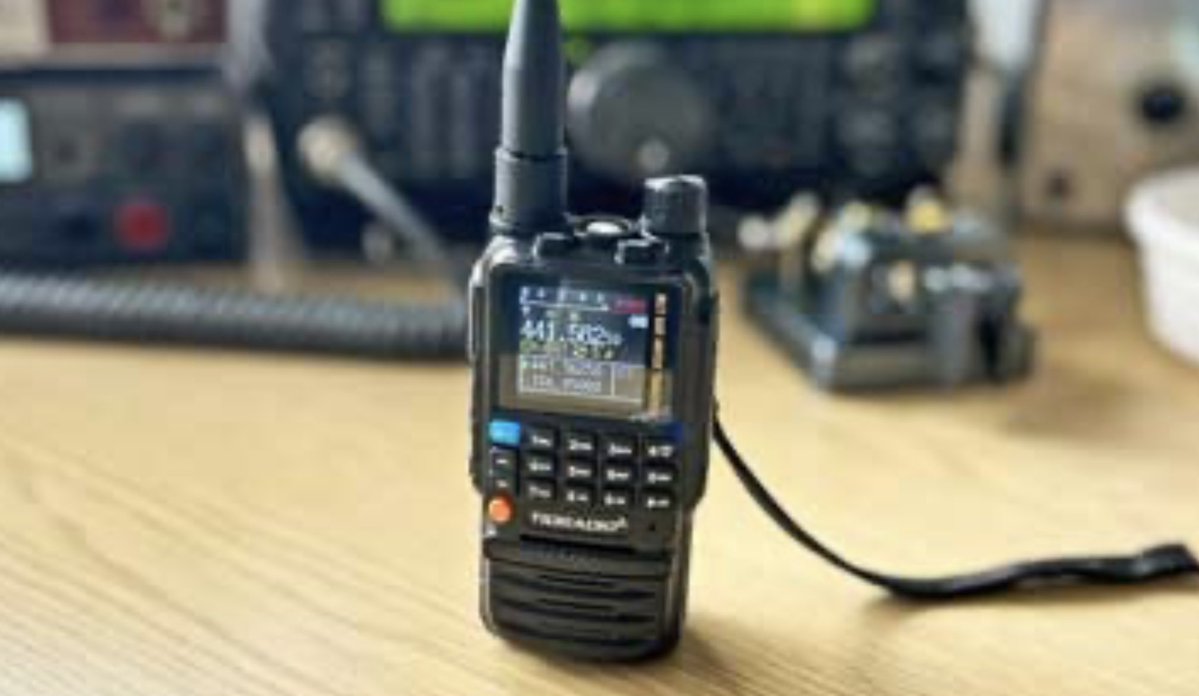
Watch Out - There’s a New Ham Radio HT! For years, the Baofeng UV-5R has been the undisputed king of budget handhelds. But it’s starting to show its age. After putting the new TIDRADIO TD-H3 through its paces, I think we finally have a "Baofeng Killer" that brings modern, professional utility to the budget price point. In my latest review, I explore why this compact dual-bander is rapidly becoming the go-to choice for Hams, hikers, and SOTA/POTA enthusiasts. Here are 3 reasons why the TD-H3 stands out: ✅ Revolutionary Programming: Forget hunting for specialized "K-plug" drivers. The TD-H3 features native Bluetooth for field programming via your smartphone and a direct USB-C port that handles both charging and data (CHIRP compatible!). ✅ Superior Display & Build: It’s more compact than the UV-5R but feels significantly more solid. The 1.44-inch color TFT display is vibrant and high-contrast—a massive leap forward from the dated, segmented LCDs of the past. ✅ Better Receiver Performance: While it’s not a high-end Icom or Yaesu, the TD-H3 handles local interference and "de-sensing" noticeably better than its predecessors. Plus, the AM Airband reception is surprisingly clear. The Verdict? If you’re looking for a "glovebox" radio or a reliable hiking companion that doesn’t feel like a toy, the TD-H3 is arguably the best value on the market today at the $30–$35 price bracket. Read the full technical breakdown, including comparisons with the Quansheng UV-K8 and detailed performance specs, over on Electronics Notes: 🔗 electronics-notes.com/store-shop/ham… #HamRadio #AmateurRadio #TIDRADIO #TDH3 #SOTA #POTA #RadioReview #TechReview #ElectronicsNotes #hamr
ElectronicsNotes by Ian Poole tweet media
English
7
18
109
8K
R de Groot
R de Groot@Rdegroot11·
@ElecNotes It's rubbish, lots of "de-sensing" and overloading due to the absence of decent frontend bandfiltering and the use of a single chip transceiver ... have you do some real measurements ? , i guess not, it's simple: quality for 30 $ is not possible.
English
1
0
0
158
ElectronicsNotes by Ian Poole
@_rish11 That’s really great. The Baofeng needed to improve their RF performance, so that’s great news. I confess I really like the Bluetooth programming for the TD-H3.
English
0
0
0
90
Rish11
Rish11@_rish11·
@ElecNotes Baofeng has the UV-5RM now, by the way. Similar price point and similar performance to the TD-H3. It still needs that darned FTDI adapter to program, though.
English
1
0
0
134
Riou du Cosquer (bis)
Riou du Cosquer (bis)@dupontinc·
@ElecNotes I think @MurataEurope makes the best SMD capacitor. Here a 1 pF in 0201 case that can be used for filtering, like a DC block in RF with low parasitic elements in a bias T, or can act as a secondary power supply due to the excellent advantage of their rapid-moving charge.
English
1
0
0
5
ElectronicsNotes by Ian Poole
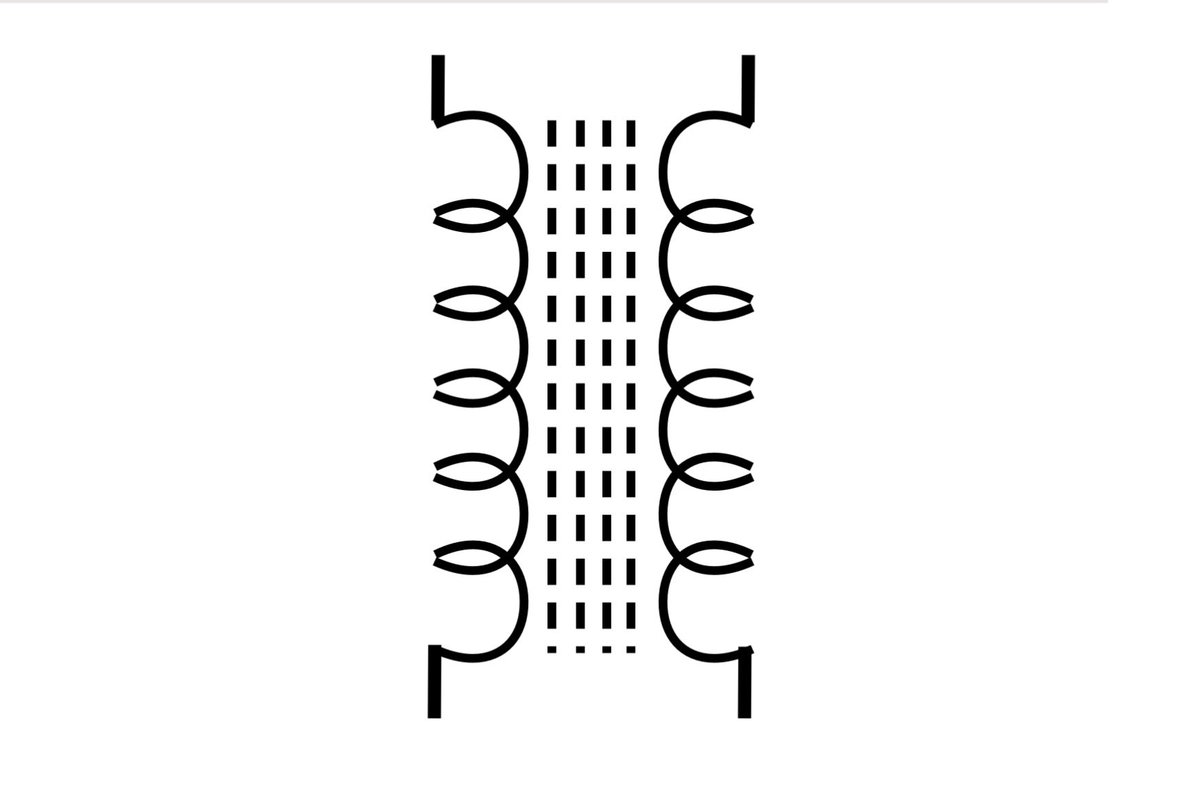
Why the transformer is still an essential component for modern electronics While digital technology gets all the headlines, the "analogue" transformer remains a really key electronic component for many circuit designs. From the power grid to the many domestic devices, transformers are performing key roles behind the scenes. In my latest read via Electronics Notes, I took a deep dive into how these components function beyond just changing voltage. Key takeaways include: 🔹 More than Voltage: While we often think of them for step-up/step-down tasks, transformers are vital for galvanic isolation, keeping users safe from high-voltage mains. 🔹 Impedance Matching: In RF and audio design, transformers are essential for maximizing power transfer between different stages of a circuit. 🔹 Diverse Applications: Whether it’s pulse transformers for digital signals or resonant transformers for frequency selectivity, the variety of types (toroidal, ferrite, air-core) is vast. Even as circuit designs evolve, understanding the magnetic coupling and theory behind these components is a must for any engineer. Check out the full breakdown in the link in the comments. #ElectronicsEngineering #ElectricalEngineering #CircuitDesign #TechEducation #electronicsnotes #electroniccomponents
ElectronicsNotes by Ian Poole tweet media
English
2
12
63
1.9K
An NCO in the war on entropy - The BeeDude
@ElecNotes I've two of 'em here - both with the nicFW Helped a few of the local crew get theirs 'updated' as well To a one, they're pretty happy with it Biggest gripe is just finding all the pertinent info and how-to in one place - it's pretty scattered Feel free to holler and enjoy!
English
1
0
0
17
Bruce Bower
Bruce Bower@BruceBowerlab·
@ElecNotes Ever get one with the band on the wrong end? Then build a prototype with it and try to figure out what is going on, yup been there, done that, about 45 yrs ago.
English
1
0
0
12
ElectronicsNotes by Ian Poole
We all use them, but how do they work: the PN junction diode. The PN junction diode is arguably one of the most important building blocks in modern electronics. I’ve just put together this summary of the PN Junction Diode based on my resources at Electronics Notes. Whether you’re a student, a hobbyist, or a seasoned engineer, understanding the "why" behind the "how" of this component is essential. The Discovery The diode or PN junction was the first form of semiconductor device to be investigated in the early 1940s when the first real research was undertaken into semiconductor technology. It was found that small point contact diodes were able to rectify some of the microwave frequencies used in early radar systems and as a result they soon found many uses. How It Works: The Basics At its core, a PN junction is formed by joining P-type (positive charge carriers/holes) and N-type (negative charge carriers/electrons) semiconductor materials. • The Depletion Region: When joined, electrons and holes near the junction neutralize each other, creating a "barrier" with no free charge carriers. • Forward Bias: Apply a positive voltage to the P-type (Anode) and negative to the N-type (Cathode), and you "push" the carriers across the barrier. Current flows! • Reverse Bias: Flip the polarity, and you pull the carriers away from the junction, widening the depletion region. The result? The diode acts as an insulator, blocking current. Why It Matters While we often think of diodes as simple "one-way valves" for electricity, their impact is much broader: 1. Rectification: Converting AC to DC—the heart of every power supply. 2. Signal Demodulation: Essential for radio communications. 3. The Foundation of Everything: The PN junction isn't just in discrete diodes; it’s the fundamental element inside Bipolar Transistors (BJTs), FETs, and billions of transistors within integrated circuits. Pro-Tip for Circuit Designers When selecting a diode, don't just look at the current rating. Remember the Forward Voltage Drop (typically 0.6V for the turn on voltage for Silicon) and the Peak Inverse Voltage (PIV). Running a diode too close to its maximum ratings can significantly impact the long-term reliability of your PCB. If you want to brush up on the full physics, IV characteristics, and invention history, check out the full article in the link in the comments. #Electronics #electroniccomponents #diode #PNjunction #Semiconductors #ElectricalEngineering #LearningElectronics #STEM #electronicsnotes
ElectronicsNotes by Ian Poole tweet media
English
3
6
33
1.3K
ElectronicsNotes by Ian Poole
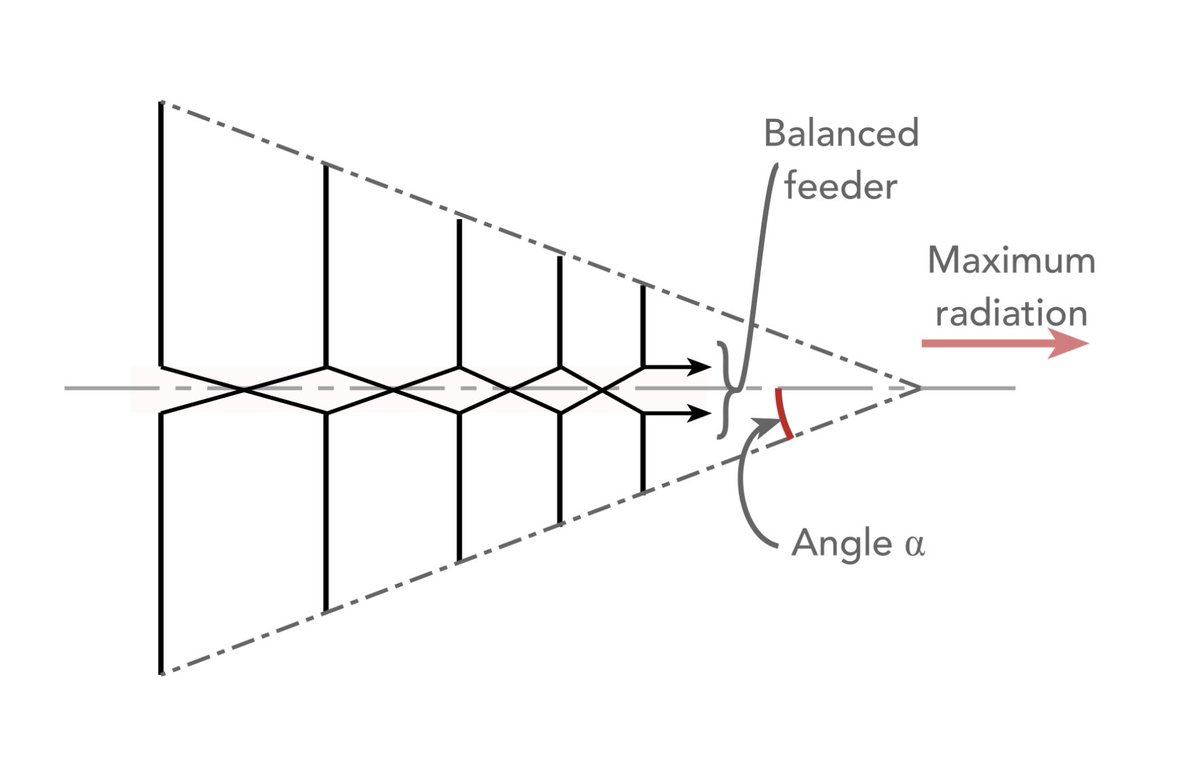
Exploring the World of Log Periodic Antennas: Wideband Wonders in RF Engineering! As an electronics enthusiast, I've always been fascinated by antennas that deliver reliable performance across broad frequency ranges without constant tweaking. That's where the Log Periodic Dipole Array (LPDA) shines! These antennas feature a clever design with multiple dipole elements that gradually decrease in size from back to front, allowing the active region to shift seamlessly with frequency changes. The result? Consistent gain (typically 3-6 dB over a dipole), excellent front-to-back ratio, and low VSWR – all over a wide bandwidth, often 2:1 or more. Advantages include their versatility for applications like HF communications (perfect for diplomatic setups adapting to ionospheric variations), UHF TV reception, EMC testing, and any scenario needing directivity without sacrificing bandwidth. While they're larger than equivalent Yagi antennas and offer slightly lower gain, their wideband capabilities make them indispensable in modern RF designs. Curious about the history (dating back to 1957 innovations by Isbell and DuHamel) or diving deeper into variants like the V log periodic? Check out my full article - link in the comments. What's your go-to antenna for wideband applications? Share your experiences in the comments! 👇 #Antennas #RFEngineering #Electronics #WirelessCommunications #LogPeriodicAntenna
ElectronicsNotes by Ian Poole tweet media
English
2
6
43
1.6K