Electrical Engineering

647 posts

Electrical Engineering banner
Electrical Engineering

Electrical Engineering

@Electrical_4u_

Electrical Engineering knowledge ⚡💡 Daily Threads, Quizzes, Posts related to Electrical Engineering.

Katılım Haziran 2021
25 Takip Edilen16K Takipçiler
Electrical Engineering
Electrical Engineering@Electrical_4u_·
Various Full Forms used in Electrical Engineering. 🔥 Can you reply with full form of below mentioned without searching on google? 1) VCB 2) KVL 3) RMS 4) MI See More..
Electrical Engineering tweet media
English
1
2
10
463
Electrical Engineering
Electrical Engineering@Electrical_4u_·
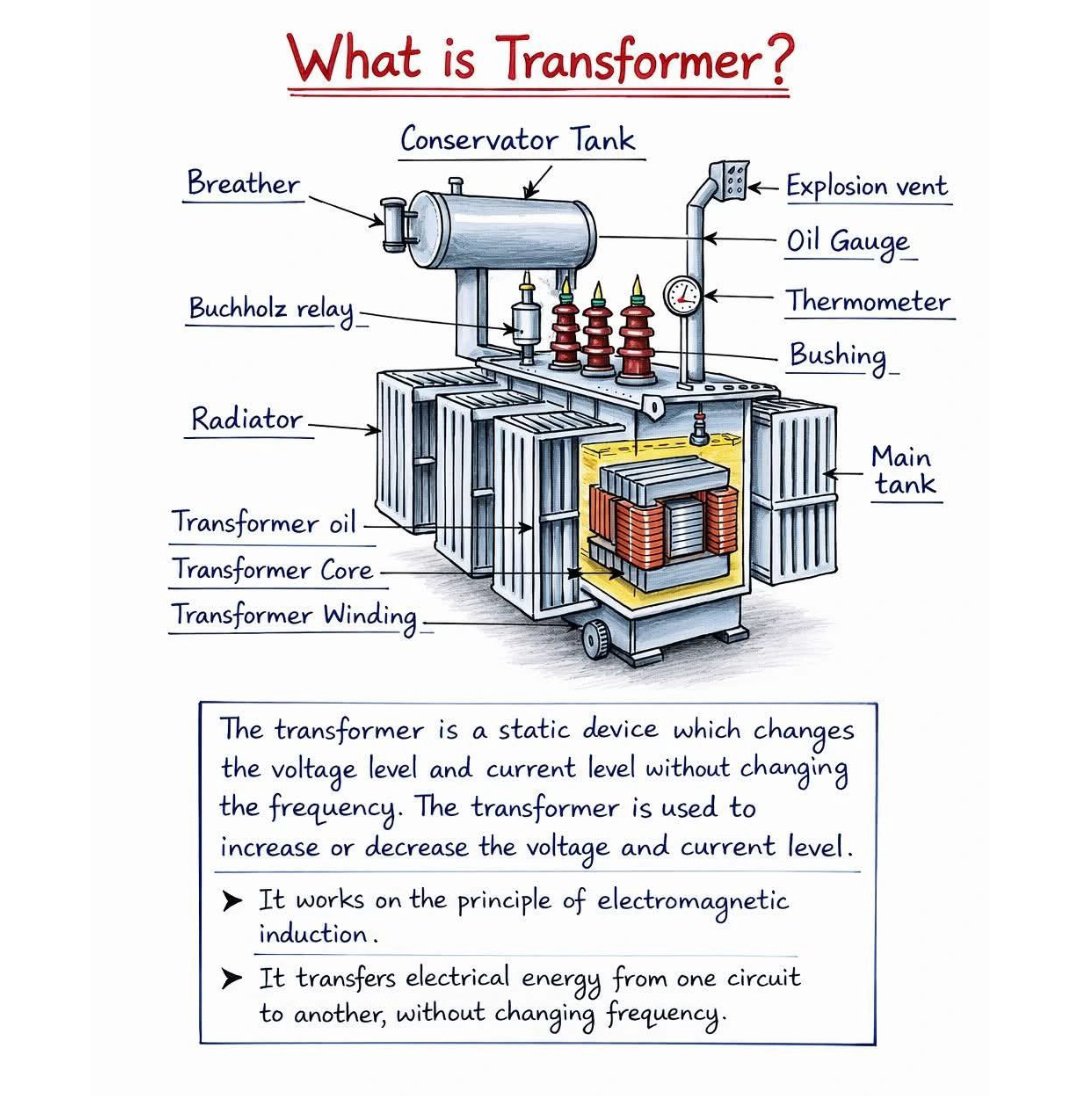
Basic components of a Transformer. Explained 🔥 Conservator Tank – Stores extra transformer oil and allows it to expand or contract with temperature changes. • Breather – Removes moisture from the air entering the transformer to keep the oil dry. • Buchholz Relay – Detects internal faults and gives an alarm or trip signal before major damage occurs. • Radiator – Cools the transformer by releasing heat into the surrounding air. • Transformer Oil – Provides insulation and helps carry heat away from the core and windings. • Transformer Core – Provides an easy path for magnetic flux and improves energy transfer. • Transformer Winding – Copper or aluminium coils that transfer electrical energy through electromagnetic induction. • Main Tank – Houses the core, windings, and transformer oil, protecting them from the environment. • Bushing – Safely carries high-voltage current through the transformer tank without electrical leakage. • Thermometer – Monitors the temperature of the transformer oil. • Oil Gauge – Shows the oil level inside the conservator tank. • Explosion Vent (Pressure Relief Device) – Releases excess pressure during a fault to protect the transformer from bursting.
Electrical Engineering tweet media
English
3
11
50
1.8K
Electrical Engineering
Electrical Engineering@Electrical_4u_·
What is a Ceramic Capacitor? A ceramic capacitor is a non-polarized electronic component that stores electrical energy in an electric field. It uses a ceramic material as the dielectric, making it compact, reliable, inexpensive, and ideal for high-frequency circuits, filtering, decoupling, timing, and noise suppression. How to decode 2-digit and 3-digit ceramic capacitor markings: The formula: First two digits = significant value, third digit = multiplier (in pF) • Common codes like 102 = 1 nF, 103 = 10 nF, 104 = 100 nF, 105 = 1 µF • Unit conversions between pF, nF, and µF • Quick reference examples for students, technicians, and electronics enthusiasts. Save this guide for your next electronics project. #Electronics #ElectricalEngineering #Capacitor #CeramicCapacitor
Electrical Engineering tweet media
English
1
16
96
2.7K
Electrical Engineering
Electrical Engineering@Electrical_4u_·
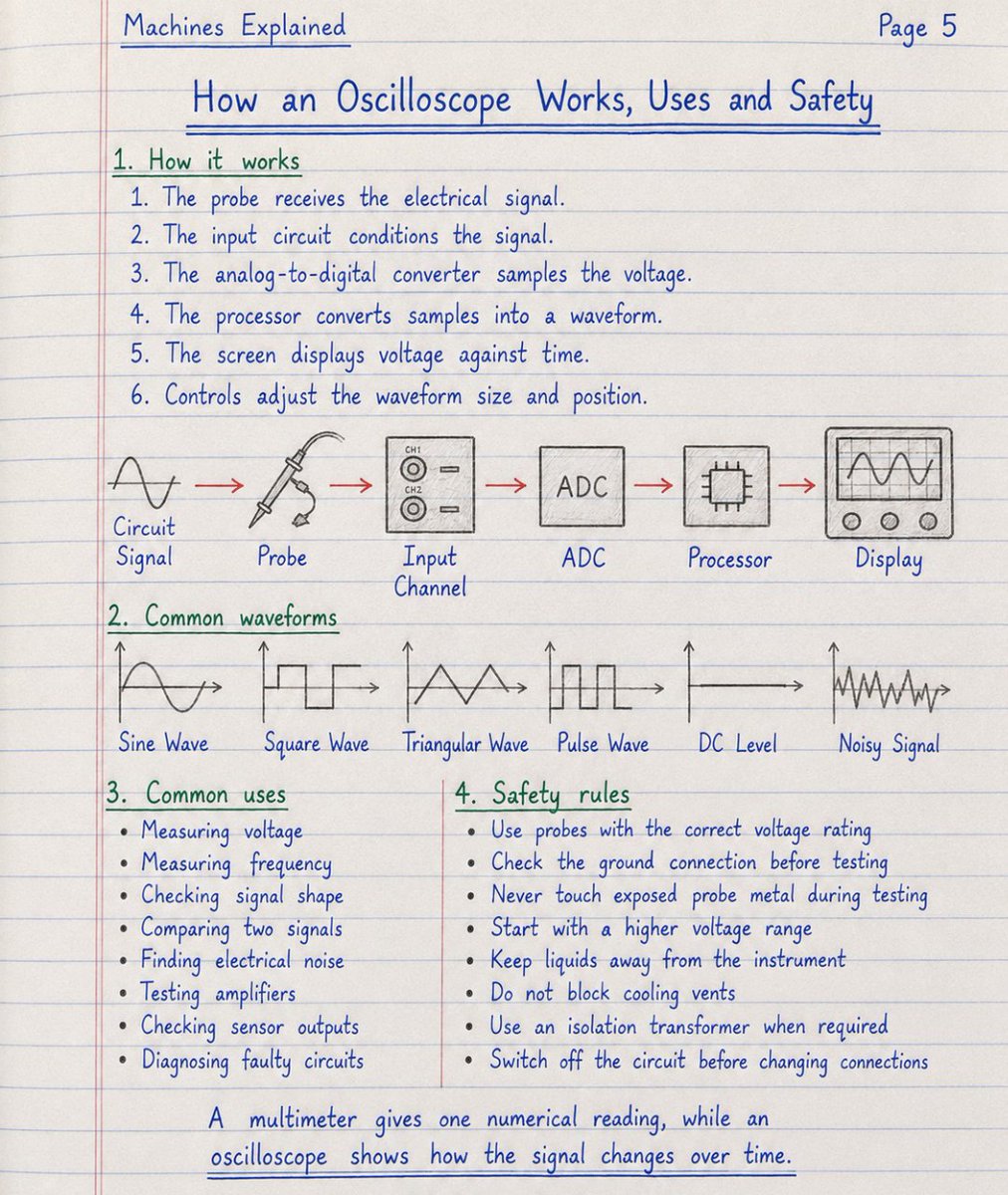
Complete Oscilloscope Working and Operation Explained 🔥. See more....
Electrical Engineering tweet mediaElectrical Engineering tweet mediaElectrical Engineering tweet mediaElectrical Engineering tweet media
English
2
4
22
795
Electrical Engineering
Electrical Engineering@Electrical_4u_·
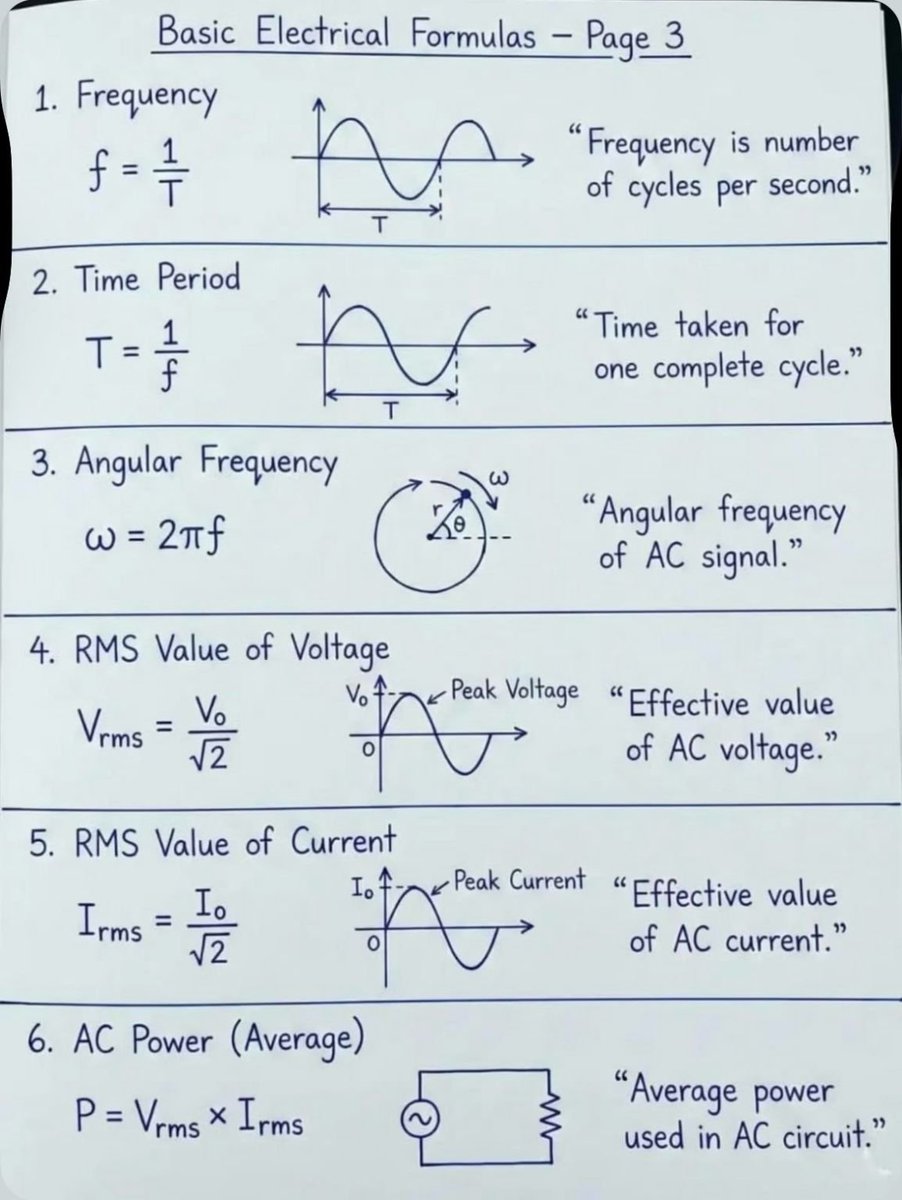
Easy way to calculate the basic values of electrical engineering 🔥
Electrical Engineering tweet media
English
0
57
309
8.2K
Electrical Engineering
Electrical Engineering@Electrical_4u_·
What could be theWhat if the diode had never been invented? How different would today's world be?
English
1
1
3
1.1K
Electrical Engineering
Electrical Engineering@Electrical_4u_·
Various Types of Insulators Explained 🔥🔥 1. Shackle Insulator: A shackle insulator is mainly used in low-voltage distribution lines. It supports the conductor while providing electrical insulation from the pole. It can be mounted either horizontally or vertically. 2. Pin Insulator A pin insulator is commonly used in overhead lines up to 33 kV. It is mounted on a steel pin fixed to the pole and provides both mechanical support and electrical insulation to the conductor. 3. Suspension Insulator A suspension insulator is used in high-voltage transmission lines above 33 kV. It consists of multiple disc insulators connected in series, allowing it to handle higher voltages and making maintenance easier. 4. Line Post Insulator A line post insulator is used in transmission lines and substations. It provides strong mechanical support to the conductor while maintaining reliable electrical insulation. 5. Spool Insulator A spool insulator is used in low-voltage distribution systems. It is mounted on poles or walls to support conductors and keep them electrically isolated. 6. Stay Insulator A stay insulator is installed in stay (guy) wires. Its main purpose is to prevent fault current from reaching the lower part of the stay wire, ensuring safety for people nearby. 7. Strain Insulator A strain insulator is used at points where the conductor experiences high mechanical tension, such as dead ends, sharp bends, and river crossings. It is designed to withstand heavy pulling forces. 8. Busbar Support Insulator A busbar support insulator is used in substations and switchgear. It supports the busbar mechanically while providing electrical insulation from the grounded structure. 9. Tubular Insulator A tubular insulator is commonly used in high-voltage equipment and bushings. Its hollow design allows a conductor to pass through while providing excellent electrical insulation. #powersystem #electrical #electrician #lineman
Electrical Engineering tweet media
English
1
15
56
1.9K
Electrical Engineering
Electrical Engineering@Electrical_4u_·
Can you spot the mistakes? Let's see how many answers are correct #quiz
Electrical Engineering tweet media
English
2
45
232
6.8K
Electrical Engineering
Electrical Engineering@Electrical_4u_·
@FredPenjowski In AC, due to skin effect the current flows majorly through outer portion/shell of the conductor. That's why each strand of a conductor will take large amount current as compared to single solid conductor.
English
1
0
0
83
SparkED
SparkED@Afghan_Engineer·
ZXX
6
72
437
19.5K
Fred Penjowski
Fred Penjowski@FredPenjowski·
@Electrical_4u_ Stranded and solid wires are rated for the same current, assuming they are the same size and made from the same material
English
1
0
2
310
lukardi
lukardi@ddlucardi·
@Electrical_4u_ For DC , both wires will have the same maximum current, for AC the stranded wire allows a higher current due to the skin effect
English
1
0
6
338