Enemy

9.2K posts

Enemy banner
Enemy

Enemy

@EnemyMen

PMs. Commodities. RT ≠ endorsment. Haiku: Winni, winni, winni. Larum, o wy obdarci ze złudzeń. Albowiem czeka was los Kasandry.

Lodz, Poland Katılım Ekim 2020
172 Takip Edilen3K Takipçiler
Sabitlenmiş Tweet
Enemy
Enemy@EnemyMen·
1/ Drodzy obserwujący, nadszedł chyba czas pożegnania. Trzeba napisać rzeczowo i na temat. Konto na Twitterze stworzyłem bez żadnego konkretnego celu założonego. Nie miałem inklinacji do zostania gwiazdą medialną, nigdy tego nie chciałem. Chciałem natomiast dzielić się wiedzą
Polski
22
3
52
29.5K
Enemy retweetledi
Dr Andreas Krieg
Dr Andreas Krieg@andreas_krieg·
Israel needs to get sanctioned by the international community should they further push the world economy into the abyss Every cent, dollar, euro, or pound we pay extra at the pump and on food inflation, we pay for Israel’s desperate attempt to turn a losing war around
Al Jazeera Breaking News@AJENews

BREAKING: Israel is preparing to attack Iranian energy facilities but is awaiting a green light from the US and any such attacks would likely come within the next week, reports Reuters, citing an Israeli military official.

English
125
2.1K
5.1K
214.8K
Enemy retweetledi
Andrey Sizov
Andrey Sizov@sizov_andre·
Bad analysis spreads fast. “Global food prices are rising because of: * Surging energy costs (fair) * Freight costs (wrong - higher freight is bearish) * Disrupted grain flows through the Strait of Hormuz (wrong again - the Gulf is an importer, so disruption should be bearish) * Disrupted fertilizer flows (OK) So two out of four points are wrong - and fintwit still runs around with its hair on fire shouting that wheat should double next week… #oatt #sizovreport
The Kobeissi Letter@KobeissiLetter

Global food prices are rising as energy costs spike: The World Food Price Index jumped +2.4% in March, to 128.5 points, the highest since September 2025. This index tracks the cost of grains, sugar, meat, dairy, and vegetable oils globally. This marks the 2nd consecutive monthly increase, after February ended a 5-month streak of declines. Surging energy and freight costs, along with disrupted flows of grains and fertilizers through the Strait of Hormuz, are the major drivers. The energy crisis is spreading into food.

English
11
9
63
12.8K
Enemy
Enemy@EnemyMen·
@Jakub_moscicki Slave mentality. Niektórzy rodzą się czarnuchami i takowymi umierają.
Polski
0
0
4
231
Jakub Mościcki
Jakub Mościcki@Jakub_moscicki·
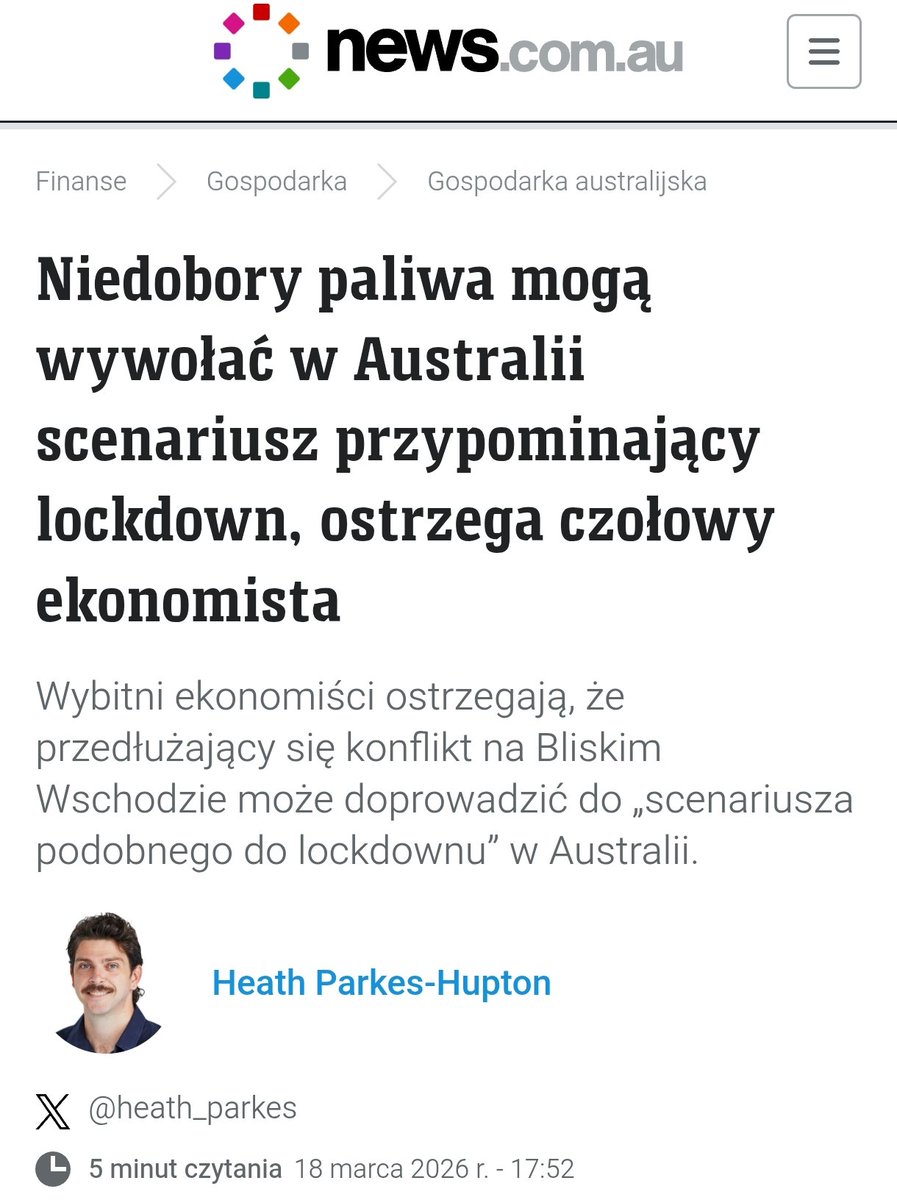
Bycie kolonią karną tak im mocno weszło w świadomość, że wyciągają bat na samych siebie przy każdej możliwej okazji.
Jakub Mościcki tweet media
Polski
8
1
80
3.6K
Enemy retweetledi
Krishan Gopaul
Krishan Gopaul@KrishanGopaul·
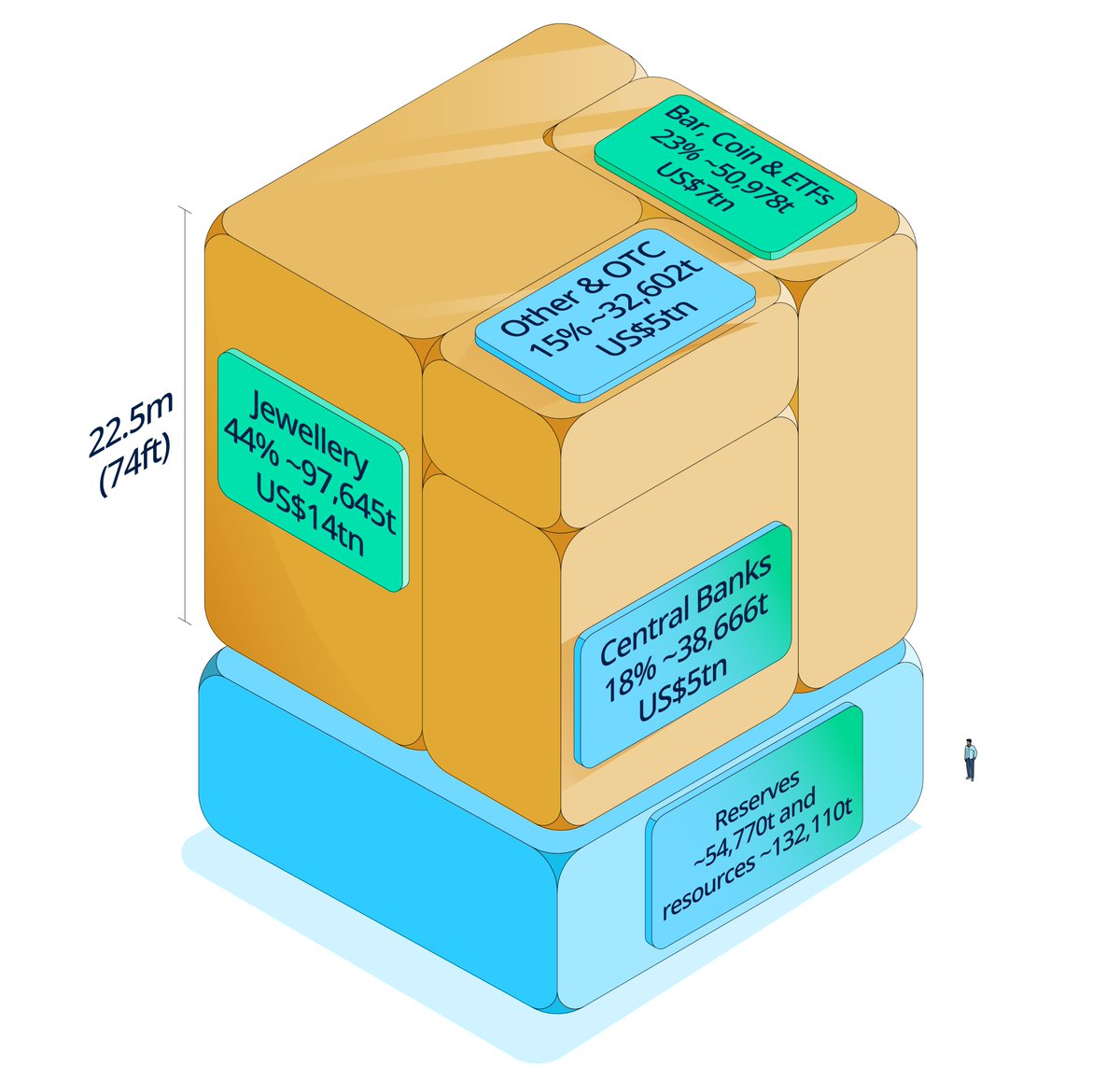
If the above‑ground stock of #gold - everything mined throughout history - were melted down it would fit into a cube with sides of roughly 22.5 metres (74 ft). Get to know the cube, and it's impact on the gold market, here: gold.org/goldhub/resear…
Krishan Gopaul tweet media
English
1
11
29
4.4K
Quantum Ascend
Quantum Ascend@quantum_ascend·
The Strait of Hormuz isn’t just a global chokepoint… It’s Iran’s economic lifeline. ~90% of their oil exports pass through it Oil = ~60–80% of export revenue They can weaponize it short-term… But keeping it closed long-term = cutting off their own cash flow. If the U.S. steps away… Iran won’t keep it closed. Chess, not checkers.
English
22
5
87
7.1K
Enemy
Enemy@EnemyMen·
@wszewko A zna pan utwór Everlasta „Kill the Emperor”;)
Polski
0
0
0
573
Wojciech Szewko
Wojciech Szewko@wszewko·
8+ milionów ludzi, 300 demonstracji, 50 stanów - w proteście pod hasłem "No Kings" przeciwko Trumpowi
Polski
70
207
3K
88.2K
Enemy retweetledi
Rob Kientz | The Freedom Report
I posted a YT video last night on how gold and silver crashed Jan 30th and who the players were. It was not Jane St or JP Morgan directly. It was a massive, margin-call-fueled, long selloff. The data is clear. I am going to post a video this weekend on how manipulation works on COMEX. I am qualified to do this because I’ve published how it works more than anyone on X and I have actually interviewed the lead CFTC investigator on the JP Morgan $920 million spoofing case at the Silver Symposium conference in front of the likes of Jeffrey Christian and may other market players. This weekends’ video will examine how the markets are moved by big players and what role they could have (and likely did) take in both that market rise and the smash. This difference in my presentation will be that I will present a strong case, based on examination of data and potential motives, that you will very rarely see on social media. I am not gaslighting. I am not pumping my products. I am not in a secretive Metals investigative group that claims anyone and everyone are part of the conspiracy (yes many of your popular metal commenters are parts of these secretive groups and may even actively spread misinformation, knowingly, to the market because they hate JP Morgan, etc.) My motivation, as it ALWAYS has been an ALWAYS will be, is to find the TRUTH, no matter wha it looks like. I am not an idealogue who will try to get you to see “my side”. My side is the truth, because the truth is what will set us all free. I have thoroughly documented commodities (including gold and silver) manipulation for 17 years, starting with a series of 5 articles published in financial mainstream site Seeking Alpha in 2010. I have written for major publications and for dealers in the space in their blogs. And I also do social media. All as to say, I am not a newbie at this. I don’t like how the metals markets trade more than anyone else, but to change them requires truth and perseverance in working with legislators. Hence my role at @4SoundMoney And also in rebuilding US precious metals infrastructure in my role as the Executive Director of the new Sound Money Trade Association. In this role, I am going to help the miners, refiners, mints, tool and die makers, wholesalers, and dealers to he the resources the need to serve YOU, with market best practice standards defined. I am not just a pundit like 99% of gold/silver commenters here. I am deeply imbedded in the industry, working daily to solve problems that that we can bring back sound money to the US. And that includes less manipulation and more true price discovery. Come join me in the journey. I want your feedback in what you want and need to see. I cannot solve every issue, but am going to tackle the biggest ones in time. Have a great weekend everyone.
English
25
34
363
22.5K
Enemy retweetledi
Patrick Boyle
Patrick Boyle@patrickB0YLE·
Yes, Permian oil production creates associated gas that contributes to the Waha glut. That's a structural basin issue. But the reason Waha has stayed negative for 35 consecutive days is bc the exit pipelines are saturated by LNG demand running at 100%. Normally, excess Permian gas finds its way to HH and the coast. Now, the pipes are full because terminals are pulling maximum volumes. It's two forces compounding: more gas coming in (oil-driven production) AND less room going out (LNG terminals maxing pipeline capacity). The crisis didn't cause the production. It blocked the relief valve.
English
1
1
8
695
Enemy
Enemy@EnemyMen·
Ja szczerze myślę że irańscy negocjatorzy powiedzieli raczej „żadnego zawieszenia. Będziemy się napier…ć” ;)
Giovanni Staunovo🛢@staunovo

Iran hasn’t requested a 10-day pause on strikes on its energy plants and is yet to deliver a final response to a 15-point plan to end the war, peace talk mediators said. President Trump said earlier Thursday he was pausing strikes on Iran’s energy sector for 10 more days, to April 6, so peace negotiations can take place. Trump’s previous deadline was Friday. He said the extension was at Iran’s request. Iranian officials have told the mediators that they are interested in negotiations but the country’s leadership is yet to weigh in and give a final decision, the mediators said. The U.S. has offered a 15-point plan that essentially would swap an end to crippling sanctions for Iranian concessions on every point of conflict between the two sides, including its nuclear and missile programs and support for regional militias. Iranian officials already have demanded that the U.S. scale its excessive demands outlined in the 15-point plan before it agrees to meet to discuss a potential cease-fire, the mediators said They also ruled out discussing Iran’s missile program as a starting point to the talks and doesn’t want to commit to ending enrichment of uranium forever, they added. The odds of success for a cease-fire remain low, with Iran and the U.S. staking out maximalist demands that are unacceptable to the other side, the mediators said wsj.com/livecoverage/i… via @wsj

Polski
2
0
5
376
Enemy retweetledi
Patrick Boyle
Patrick Boyle@patrickB0YLE·
Javier — Waha is negative BECAUSE of the crisis, not despite it. LNG terminals are running at 100% pulling every molecule to ship at $50/MMBtu to Asian/Euro buyers. The pipeline to the Gulf Coast is maxed. Negative Waha is proof export demand is so extreme the infrastructure is physically overwhelmed. $3 Henry Hub and €55 TTF means a $15/MMBtu spread that hasn't even begun to reflect 6% Dutch storage, zero Qatari LNG, a closed Hormuz, and an EU injection rate 43x below mandate requirements. This is like saying the Titanic is fine because the swimming pool is still full.
English
8
4
87
7.9K
Enemy retweetledi
Andrzej Szczęśniak
Andrzej Szczęśniak@SzczesniakA·
W gazie ziemnym koszty tej wojny są nierówno rozłożone. Dla USA są one zerowe, żadnych perturbacji – ceny gazu ani drgnęły, eksport rośnie. Dla Azji i Europy skutki są katastrofalne. Europejskie ceny gazu od początku wojny wybiły w górę o 90%. ➡️ myslpolska.info/2026/03/25/ira…
Andrzej Szczęśniak tweet media
Polski
5
30
72
2.3K
Enemy retweetledi
Shanaka Anslem Perera ⚡
Shanaka Anslem Perera ⚡@shanaka86·
BREAKING: The nitrogen trap just closed. Three locks snapped shut simultaneously. The planting window is closing behind them. And the food the world eats next year is now being decided by molecules that cannot reach the soil in time. Lock one: the Strait of Hormuz. The IRGC permissioned corridor allows oil tankers from friendly nations to pay $2 million in yuan and pass. It does not allow fertiliser vessels to pass at any price. Zero approved fertiliser transits in 24 days. The Gulf supplies 49 percent of the world’s exported urea and roughly 30 percent of traded ammonia. That supply is not delayed. It is denied. The gate opens for molecules that fund the gatekeeper. It stays closed for molecules that feed the planet. Lock two: Russia. The world’s largest exporter of ammonium nitrate just halted all AN exports until after April 21. Three to four million tonnes per year, gone from global markets at the exact moment the Northern Hemisphere needs it most. The official reason is “domestic priority.” The strategic effect is leverage. Russia earns windfall revenue from the oil price spike its ally’s war created, then removes the fertiliser that farmers need to plant through the crisis. The disease and the cure, again, from the same address. Lock three: China. Beijing has banned exports of nitrogen-potassium blends and phosphate fertilisers through August 2026. China is the world’s largest phosphate producer and a major nitrogen supplier. The ban removes the last alternative source that could have compensated for Hormuz and Russia. Three locks. Three countries. Three deliberate decisions timed to the same biological calendar. The biological calendar does not negotiate. Corn requires nitrogen at the V6 to VT growth stage or kernel set is permanently reduced. Wheat requires it at tillering and jointing or grain fill collapses. Rice requires it at transplanting or yield drops 20 to 40 percent in low-input systems. These are not economic models. They are cellular processes. The plant either receives nitrogen during the window or it does not. If it does not, no subsequent application, no price increase, no policy reversal can recover what was lost. The damage is written into the biology of the seed. The US Corn Belt window closes mid-April. European top-dressing is happening now. Indian Kharif preparation begins in May. Bangladeshi Boro rice transplanting is underway this week. Every one of these windows is closing while the three largest sources of nitrogen on Earth are simultaneously locked: Hormuz by military blockade, Russia by export decree, China by trade ban. The USDA Prospective Plantings report arrives March 31. The FAO Food Price Index publishes April 3. These will quantify what the molecules already know: the nitrogen did not arrive. The yield loss is locked in. The 5 to 10 percent global drag will concentrate where the buffers are thinnest: subsistence farms in Bangladesh, Sub-Saharan Africa, South Asia, where a 20 percent shortfall does not mean lower profits. It means hunger. Sri Lanka banned synthetic fertiliser in 2021. Rice yields collapsed 40 percent. The government fell. In 2008, fertiliser and oil spiked simultaneously and food riots erupted across 30 countries. In 2026, the strait blocks fertiliser while Russia and China withdraw the alternatives, and the planting windows close on a planet with nowhere else to turn. The war is fought with missiles. The famine is fought with molecules. The molecules are trapped behind three locks on three continents, timed to the one calendar that cannot be paused, extended, or negotiated: the calendar written into the DNA of every seed in the soil. Full analysis: open.substack.com/pub/shanakaans…
Shanaka Anslem Perera ⚡ tweet media
Shanaka Anslem Perera ⚡@shanaka86

JUST IN: The most irreversible consequence of this war is not happening in Tehran. It is happening in a barn in Iowa. A farmer is standing over a kitchen table looking at two seed catalogues. One is corn. One is soybeans. Corn needs 180 pounds of nitrogen per acre. Nitrogen costs $610 per ton on the CBOT March futures settlement as of yesterday, up 35 percent in a month. Soybeans fix their own nitrogen from the atmosphere through root bacteria called rhizobia. They need nothing from the Strait of Hormuz. The farmer is choosing soybeans. Millions of acres are choosing soybeans. And once the planter rolls into the field, the choice cannot be reversed until next year. USDA projected corn at roughly 94 million acres for 2026, down from 98.8 million. Soybeans at 85 million, up from 81.2 million. Those projections were published February 19, before urea surged past $683 at New Orleans. The actual shift will be larger. USDA Prospective Plantings reports March 31. By then the seeds will be in the ground. This is the transmission channel the world is not watching. A 21-mile strait enforced by provincial commanders with sealed radio orders just rewrote the planting economics of 90 million acres of the most productive farmland on Earth. Not through sanctions. Not through diplomacy. Through the price of a single molecule that corn cannot grow without and soybeans do not need. Now follow the cascade. The Renewable Fuel Standard mandates 15 billion gallons of corn ethanol annually. That consumes roughly 43 percent of the entire US corn crop. The mandate is set by the EPA. It does not flex when corn acres shrink. It is inelastic demand consuming a fixed share of a declining supply. When supply tightens against a fixed mandate, the remaining corn reprices upward. Corn above $5 per bushel compresses every margin downstream. The US cattle herd stands at 86.2 million head, a 75-year low per USDA NASS. Poultry and pork operations face compression from higher corn prices. Feed is the single largest cost in livestock production. When feed reprices, protein reprices. When protein reprices, every grocery shelf in America absorbs the increase. This is the protein cascade. Corn to feed to meat to eggs to dairy to the checkout counter. Each link tightens because the link before it tightened. The originating cause is a urea molecule that cannot transit a strait because a provincial commander’s sealed orders say it cannot. The farmer did not start this war. The farmer cannot end it. The farmer responds to the price on the screen and the biology of the two crops in front of him. Corn needs the molecule. Soybeans do not. At $610 the arithmetic is settled. The planter rolls. The season is locked. Israel just authorised the assassination of every Iranian official on sight. The US has spent $16.5 billion. South Pars is burning. The Fed is holding rates because oil inflation will not break. Gold touched $5,000. Bitcoin is bleeding. China is running exercises near Taiwan. Sri Lanka shut down on Wednesdays. And underneath all of it, a man in a barn is making the decision that determines whether four billion people pay more for food this year. He has never heard of the Mosaic Doctrine. He does not know what a sealed contingency packet is. He knows what nitrogen costs. And he is planting soybeans. Full analysis - open.substack.com/pub/shanakaans…

English
131
1.2K
2.9K
389K
Disclose.tv
Disclose.tv@disclosetv·
JUST IN - British Royal Navy will take the lead in forming an alliance to reopen the Strait of Hormuz — British Times
Disclose.tv tweet media
English
710
617
3.4K
2.4M
DOXBOX
DOXBOX@DOXboki·
@EnemyMen @vtchakarova change your name to FairyFart and they'll believe you next time. Enemy is hostile to all their 3 braincells.
English
1
0
1
34
Enemy retweetledi
Art Berman
Art Berman@aeberman12·
The Strait of Hormuz is the fuse for mass starvation This is World War III, says @Michael_Yon This is a serious situation but hyperbolic rhetoric is designed to stoke fear & panic Block the predators who sponsor this kind of garbage like @WeTheBrandon #EnergyCrisis #Hormuz #FoodSecurity #OilMarkets #Geopolitics
Brandon Weichert@WeTheBrandon

Hormuz shuts, fertilizer vanishes, shipping freezes—and famine stops being a Third World story. Close that choke point for weeks, and hunger goes global fast. The Strait of Hormuz isn’t just an energy crisis. It’s the fuse for mass starvation. @Michael_Yon joins me ⬇️

English
2
3
14
2.6K
Enemy retweetledi
Andrey Sizov
Andrey Sizov@sizov_andre·
“Don’t expect cheap fertilizer or diesel anytime soon” even is he TACOs… That’s the (underpriced imo) problem We are in higher for longer environment already…and every addition week of this mess makes this more problematic
Fabian Wierczoch@FabianWierczoch

Fuel for planting corn and soybeans is expensive, but what you read below tells you this will be a thing for the next 1-2 seasons. Drilling is stopped, production is cut more and more while some infrastructure is destroyed. The longer the war goes, the longer the restart will take. Don’t expect cheap fertilizer or diesel anytime soon (unless Trump TACOs)

English
4
3
32
10.1K
Enemy
Enemy@EnemyMen·
@vtchakarova Somehow they managed to omit the root cause.
English
0
0
1
252
Enemy
Enemy@EnemyMen·
@rafalhubert @Tomasz5ek Panie, błagam. Skasuj pan tweeta. Jeszcze ktoś z zagranicy zobaczy i znowu będzie wstyd.
Polski
1
0
3
454