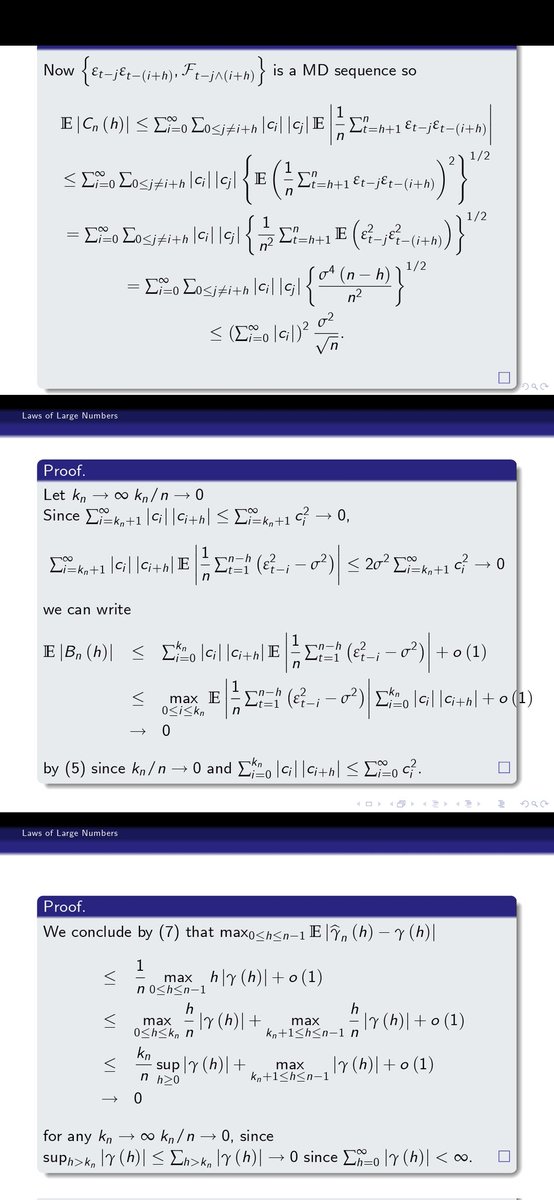
@lianda_edu Economics attracts a certain share of individuals who enjoy suffering and making students suffer, once they reach a position of power
English
Enrico
357 posts

There is something to be said about path dependency and self-rationalization in choices (or preferences) being more endemic than most economists portray, but I’d like to give an example that shows you can probably write those things as being about constraint anyways. I wanted to do academic economics since early high school, but I was never great at focusing on learning math or coding. I could read old papers, think about the economy, and write about it, but I never could model or identify well. When I got to college, I knew I had to study hard and learn those things, take the hardest classes, work for the best professors, etcetera so I could break into the field, but I also knew that I wanted to make friends, socialize, go to parties, find love, etcetera. None of those things happened, of course. So what gives? Certainly a lot of that was running into constraints on my feasible choice set, id est, people really despising me as a person, cliqueness, difficulties socializing whilst autistic, short, and ugly, people being very type-insular, etc. However, I’d argue that at some point, because substitution in skill investment is at least partially irreversible, my choice set became endogenously further constrained on a permanent basis. I took harder classes that took up more time. I moved far from campus. I took PhD classes because being around other undergrads when none of them wanted to talk to me was really painful. This lead to further time constraints and further isolation, and a further warping of my mind and a decline in my social skills. This made me relate far less to others, more resentful, and less able to do anything but work. Spiral. No attenuation. Never did my underlying preference change, but my ability to express them got worse as I settled into a Pareto-inefficient system. This is all to say, GARP says a lot more about budget set than preferences.

A parasitic cuckoo chick at work. It'll throw the other eggs and chicks out of nest and the predisposed parental urge of the victim birds will ensure it'll have food and care.

Dimmi cos'è il coping. Al pari delle slides sull'inflazione della BCE.
1952 年,芝加哥大学。一个 25 岁的博士生在做毕业答辩。 他叫哈里·马科维茨。 他的论文不长,只有 14 页。题目叫《投资组合的选择》。 他的核心想法是:投资人不应该只看一只股票预期回报多少,应该看它和其他股票之间的相关性。把不相关的股票放在一起,整体风险会下降——这就是"分散投资"的数学定义。 论文写完,答辩委员会都陷入了短暂的沉默。 其中一位评委米尔顿·弗里德曼说:"哈里,这不是经济学。这是数学。我们没法把经济学博士学位发给一个写数学的人。" 马科维茨没说话,他以为自己拿不到博士学位了。 但到最后,——委员会投票通过了。 他的 14 页论文,几十年后被叫做"现代投资组合理论",是今天全世界几乎所有养老金、保险资金、机构投资人组合管理的数学地基。 1990 年,他拿到了诺贝尔经济学奖。 获奖词里写:他重新定义了"风险"这个词在经济学里的含义。

From the latest missive from the striking Harvard graduate student union, sent to all faculty:
Se sei single con 2 milioni liquidi + casa di proprietà stai effettivamente bene. Se hai una famiglia di 4 persone sei poco più di ceto medio.