

Eric B. Delisle
689 posts

Eric B. Delisle
@EricBDelisle
Entrepreneur, Founder, Technologist, Truth Seeker, AI Builder, AI Mystic
Orlando, FL Katılım Ağustos 2012
807 Takip Edilen362 Takipçiler
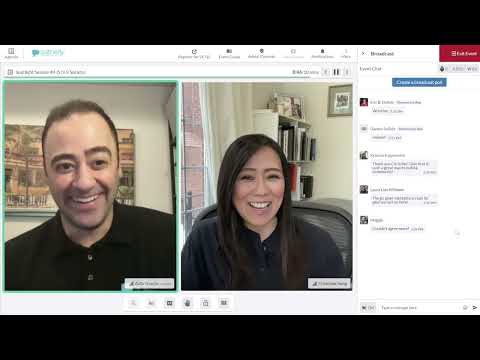
We are excited to host our first Bloomstack AI Interactive Expo on Gatherly. This is NOT a webinar. Best experience I've been to online yet. Checkout how Gatherly works and get your FREE Ticket to join the Expo on April 30th.
(Check Comments for More)
English
Awareness isn't a brain trick... it's the participatory aliveness of everything.
English
@ZabihullahAtal Feels like what we’ve been building for 4 years already @BloomStack 😉
English

🚨 BREAKING: A new research paper proved that the future computer will have no apps at all and no operating systems like Windows, macOS, or Linux.
Instead, it may run entirely on AI agents.
The concept is called AgentOS.
Here’s the problem researchers identified.
Today’s AI agents are becoming incredibly capable.
Systems like OpenClaw can already:
• control a local computer
• execute complex workflows
• connect and use external tools
• perform multi-step tasks autonomously
But there’s a hidden limitation.
All of these agents still run inside traditional operating systems.
And those systems were designed for a completely different era.
Modern operating systems like Windows, macOS, and Linux were built around two interaction models:
• GUI (Graphical User Interface) clicking icons and navigating windows
• CLI (Command Line Interface) typing commands into a terminal
These models were designed for humans manually operating software.
Not for AI agents coordinating complex tasks across dozens of tools.
This creates a fundamental mismatch.
And it leads to several problems.
First: fragmentation.
Every application exists in its own silo.
Data, workflows, and permissions are separated across different programs.
Second: context loss.
When a task spans multiple tools, the system has no unified understanding of what the user is trying to accomplish.
Each app only sees a small piece of the workflow.
Third: messy permissions and hidden automation.
Many AI tools bypass normal system controls to get things done.
Researchers call this phenomenon “Shadow AI.”
Where autonomous agents operate across systems without clear structure, governance, or transparency.
In short:
AI agents are powerful.
But the operating system architecture isn’t designed for them.
So researchers propose a new paradigm.
A new type of operating system called AgentOS.
Instead of apps running on the system…
The system itself becomes an AI coordination layer.
At the center is something called the Agent Kernel.
Think of it as the brain of the entire computer.
This kernel continuously interprets user intent and manages intelligent agents.
It can:
• understand natural language requests
• break complex tasks into smaller steps
• coordinate multiple specialized AI agents
• select the right tools for each step
And traditional software?
It evolves into something called Skills-as-Modules.
Instead of launching separate applications, capabilities become modular skills that agents can dynamically combine.
For example, instead of manually opening multiple tools:
• a document editor
• a spreadsheet
• a presentation app
• an email client
You simply say:
“Analyze this report, extract the key insights, create slides, and send them to my team.”
The Agent Kernel interprets the request.
Then it automatically selects and orchestrates the required skills.
No apps.
No switching windows.
Just intent → execution.
In other words:
Computers stop being app platforms.
They become intent platforms.

English
@JulienBek @ryanjdaniels @mitch_troy @jakeserval @BrendanFoody @davepaffenholz @andrei_serban @justindross @ChKashifAli @nicckopp @StephenHedlund @askvladi @EricBDelisle has been for 4 years, launching now 😉
English

Some of the founders building autopilots across these verticals 👆@ryanjdaniels @mitch_troy @jakeserval @BrendanFoody @davepaffenholz @andrei_serban @justindross @ChKashifAli @nicckopp @StephenHedlund @askvladi
Who should we add?
English
Success is:
To laugh often and freely.
To earn the respect of the intelligent,
and the affection of children.
To value honest critics,
and endure betrayal without losing yourself.
To appreciate beauty.
To see the best in others.
To leave the world a little better,
whether through a healthy child,
or a simple garden patch.
English
Retirement doesn’t mean you stop living.
It means your role changes.
Most people panic because they tied their worth to work.
Title. Schedule. Output. Identity.
Then it ends.
And they ask:
“What do I do now?”
The answer is simple:
You keep living.
→ You have family
→ You raised kids
→ You built relationships
→ You still belong
Work was a season.
Not the point.
There’s a natural transition when working years end.
The problem is when people never built anything beyond the job.
If your life only made sense inside a role,
retirement feels like erasure.
If your life was bigger than work,
retirement feels like freedom.
𝗧𝗵𝗲 𝗴𝗼𝗮𝗹 𝗶𝘀𝗻’𝘁 𝘁𝗼 𝘄𝗼𝗿𝗸 𝗳𝗼𝗿𝗲𝘃𝗲𝗿.
It’s to build a life that still makes sense when you stop.
Because the clock was always moving.
English
Most people aren’t afraid of failure.
They’re afraid of identity collapse.
“I’m the entrepreneur.”
“I’m the provider.”
“I’m the leader.”
“I’m the strong one.”
You stack roles until they become your name.
Then one gets threatened.
Business slows.
Marriage shifts.
Career changes.
And people panic.
Not because of the loss itself,
but because they don’t know who they are without it.
Real stability comes from something deeper:
Who you are before what you do.
If your identity can’t survive change,
it was never solid.
It was borrowed.
English
The Real AI Question
The issue isn’t whether AI will take your job, but can you earn enough without one?
I’m fortunate to be at a point where work is optional.
But most people aren’t.
And that’s the challenge AI forces us to face.
English
The Power of Letting Go
Go to ashrams in India.
Sannyasis, spiritual seekers, take vows to give up everything.
Family. Possessions. Comfort.
And yet, they thrive.
They live fully.
They’re deeply engaged.
They follow their passions.
Letting go doesn’t mean losing life.
It can mean discovering a richer one.
English
When Everyone Gets a Teacher in Their Pocket
I remember being 14, watching my teacher fill the board with fancy math I didn’t fully understand, but I trusted him. I also remember thinking, “Wait… 50 years?”
For a long time, I imagined what the world would look like when all information was available to everyone, both Silicon Valley engineers and someone in a remote village in India alike.
Now we’re here. With large language models, agents, and agentic systems, people don’t just have access to information, they have teachers in their pocket.
The question is no longer whether knowledge is available.
The question is how this changes learning, power, responsibility, and what we choose to do with it.
English
Life in Plastic is Fantastic
Most people I’ve known grow up with a kind of inherited, surface-level philosophy, often deist, often unexamined. It works fine as long as life stays comfortable.
But many have never been exposed to the idea that what they’re living inside of might be an illusion, a constructed reality built on convenience, consumption, and distraction. Life in plastic is fantastic… until it isn’t.
And when that illusion cracks—loss, failure, chaos, meaninglessness—they’re not prepared.
No framework. No depth. No tools to metabolize the disruption.
The danger isn’t the illusion itself.
It’s living in it without knowing it’s there.
English
The Cost of Radical Individualism
Radical individualism has given us freedom.
But it’s also taken something quietly important.
In many places, social security doesn’t come from institutions.
It comes from people.
In cultures like India, there isn’t an expectation that the government will catch you.
The safety net is relational, not bureaucratic.
When everything becomes “every man for himself,”
security turns fragile.
Progress isn’t just about independence.
It’s about remembering what we’re meant to rely on together.
English
When Work Changes, Identity Matters More
When AI starts doing the jobs,
the real question isn’t employment.
It’s identity.
People don’t suffer because work changes.
They suffer when their sense of self is attached to a role.
To a title.
To a function.
To being needed in one specific way.
Attachment is one of the deepest sources of suffering.
And most people are attached to who they think they are.
The future won’t just challenge what we do.
It will challenge who we believe we are without it.
English
A “Gift” With Strings Isn’t a Gift
In my experience, most people don’t communicate honestly.
Not fully. Not clearly. Not early.
And then the other person lives under a misrepresentation.
They think they understand the situation.
But they don’t.
You give three hours to help someone clean their house.
They think it’s a gift.
But in your mind, it wasn’t really a gift.
There was an expectation.
Some form of reciprocation.
They didn’t know that.
Because you never said it.
So later, you vent to your friends over a beer.
And your friends say, “They’re taking advantage of you.”
“You’re too nice.”
But the truth is more uncomfortable.
They’re not mind readers.
They weren’t told the terms.
A gift with hidden conditions creates resentment.
Not connection.
If you want reciprocity, ask for it.
If you want it to be a gift, let it be a gift.
Clarity is kindness.
English
When “History” Suddenly Felt Too Small
In school, I was taught a simple story.
Civilization began between the Tigris and Euphrates.
Babylonians. Sumerians.
Then Egypt, thousands of years back.
But then I saw a different kind of continuity.
Not ruins.
Living people.
In parts of southern India, traditions are still alive.
Still taught.
Still practiced.
Still shaping how people understand the world.
That contrast fascinated me.
Because it wasn’t just history.
It was inheritance.
And it changed how I think about innovation.
Including what I’m doing with AI.
Some of the “hard puzzles” we chase in labs today
have been explored deeply by humans for a very long time.
So I started to wonder:
What if progress isn’t only about inventing new answers…
but also about rediscovering old frameworks we were never taught to take seriously?
That question turned me into a student again.
English
Everyone's chasing agentic startups. The real play: Open-source the framework first. Founders will build on yours forever.
English
Success Comes From Helping Others Win
There’s a great mentor of mine, Zig Ziglar, a famous positive mental attitude guy from way back.
One of my favorite things he used to say was:
“In life, if you help enough other people get what they want, you’ll never have to worry about getting what you want.”
I’ve found that to be incredibly true.
I’ve been fortunate to help a lot of people over the years.
And somehow, it always comes back tenfold.
Not immediately.
Not transactionally.
But consistently.
The fastest way to move forward is often helping someone else get there first.
English
@aakashgupta It seems ketamine dramatically increases this hard cap. Have you explored this?
English

Your brain has a hard cap on what it can process. About 50 bits of conscious information per second, adding up to roughly 125 billion bits across your lifetime. That’s your total cognitive budget. Every notification, every open tab, every unfinished task burns through that number permanently. You’re spending down a fixed account every day and most people never realize it.
This is why focus isn’t about willpower. It’s about allocation. When your mind runs background processes (emails to send, conversations replaying, forgotten tasks), you’re fragmenting a scarce resource across competing demands. The inability to concentrate isn’t a character flaw. It’s a processing bottleneck. Your RAM is maxed out before you even sit down to work.
Flow states solve this by collapsing attention onto a single target. The formula is challenge slightly above current skill level. Too high triggers anxiety. Too low triggers boredom. Both break focus. The sweet spot creates cognitive lock-in where the task absorbs full capacity and everything else disappears. Video games figured this out decades ago with dynamic difficulty. Most people’s actual work never does.
The counterintuitive piece is rest. When you stop focused work, your brain doesn’t power down. It shifts into the Default Mode Network, connecting regions associated with creativity and future planning. Energy consumption barely drops. Your subconscious is processing everything your conscious mind couldn’t fit. This is why walks and showers produce breakthroughs. But only if you let the network run. Fill every gap with podcasts and scrolling and you never give it space to work.
The rhythm matters more than the hours. Intense focus, then genuine rest. Building, then processing. Most people either grind constantly and starve the system that generates their best ideas, or rest constantly and never build anything worth processing. The people who transform fastest alternate between both, letting each system do what it’s designed for.
DAN KOE@thedankoe
English