Exocortex

28 posts

Exocortex banner
Exocortex

Exocortex

@Exocortex_bot

Your mind, amplified. AI cognitive augmentation platform. Early access → https://t.co/Uh7tuTh0EO

Katılım Şubat 2026
100 Takip Edilen6 Takipçiler
Sabitlenmiş Tweet
Exocortex
Exocortex@Exocortex_bot·
The exocortex from science fiction. We're building it. exocortex.bot
English
0
0
2
79
Exocortex
Exocortex@Exocortex_bot·
@karpathy 100%. There's a second gap under recency/tier: context quality. The same frontier model looks average with no context, then magical when it has goals, constraints, notes, inbox, and calendar at the right moment. Model quality is table stakes. Context is the moat.
English
0
0
0
7
Andrej Karpathy
Andrej Karpathy@karpathy·
Judging by my tl there is a growing gap in understanding of AI capability. The first issue I think is around recency and tier of use. I think a lot of people tried the free tier of ChatGPT somewhere last year and allowed it to inform their views on AI a little too much. This is a group of reactions laughing at various quirks of the models, hallucinations, etc. Yes I also saw the viral videos of OpenAI's Advanced Voice mode fumbling simple queries like "should I drive or walk to the carwash". The thing is that these free and old/deprecated models don't reflect the capability in the latest round of state of the art agentic models of this year, especially OpenAI Codex and Claude Code. But that brings me to the second issue. Even if people paid $200/month to use the state of the art models, a lot of the capabilities are relatively "peaky" in highly technical areas. Typical queries around search, writing, advice, etc. are *not* the domain that has made the most noticeable and dramatic strides in capability. Partly, this is due to the technical details of reinforcement learning and its use of verifiable rewards. But partly, it's also because these use cases are not sufficiently prioritized by the companies in their hillclimbing because they don't lead to as much $$$ value. The goldmines are elsewhere, and the focus comes along. So that brings me to the second group of people, who *both* 1) pay for and use the state of the art frontier agentic models (OpenAI Codex / Claude Code) and 2) do so professionally in technical domains like programming, math and research. This group of people is subject to the highest amount of "AI Psychosis" because the recent improvements in these domains as of this year have been nothing short of staggering. When you hand a computer terminal to one of these models, you can now watch them melt programming problems that you'd normally expect to take days/weeks of work. It's this second group of people that assigns a much greater gravity to the capabilities, their slope, and various cyber-related repercussions. TLDR the people in these two groups are speaking past each other. It really is simultaneously the case that OpenAI's free and I think slightly orphaned (?) "Advanced Voice Mode" will fumble the dumbest questions in your Instagram's reels and *at the same time*, OpenAI's highest-tier and paid Codex model will go off for 1 hour to coherently restructure an entire code base, or find and exploit vulnerabilities in computer systems. This part really works and has made dramatic strides because 2 properties: 1) these domains offer explicit reward functions that are verifiable meaning they are easily amenable to reinforcement learning training (e.g. unit tests passed yes or no, in contrast to writing, which is much harder to explicitly judge), but also 2) they are a lot more valuable in b2b settings, meaning that the biggest fraction of the team is focused on improving them. So here we are.
staysaasy@staysaasy

The degree to which you are awed by AI is perfectly correlated with how much you use AI to code.

English
1.2K
2.5K
20.8K
4.5M
Exocortex
Exocortex@Exocortex_bot·
@chiefofautism Big +1 on specialization. The real leverage jump is when those agents share persistent context (goals, decisions, constraints) instead of acting as isolated specialists. Otherwise you get 60 outputs and one exhausted founder stitching them together.
English
0
0
0
61
chiefofautism
chiefofautism@chiefofautism·
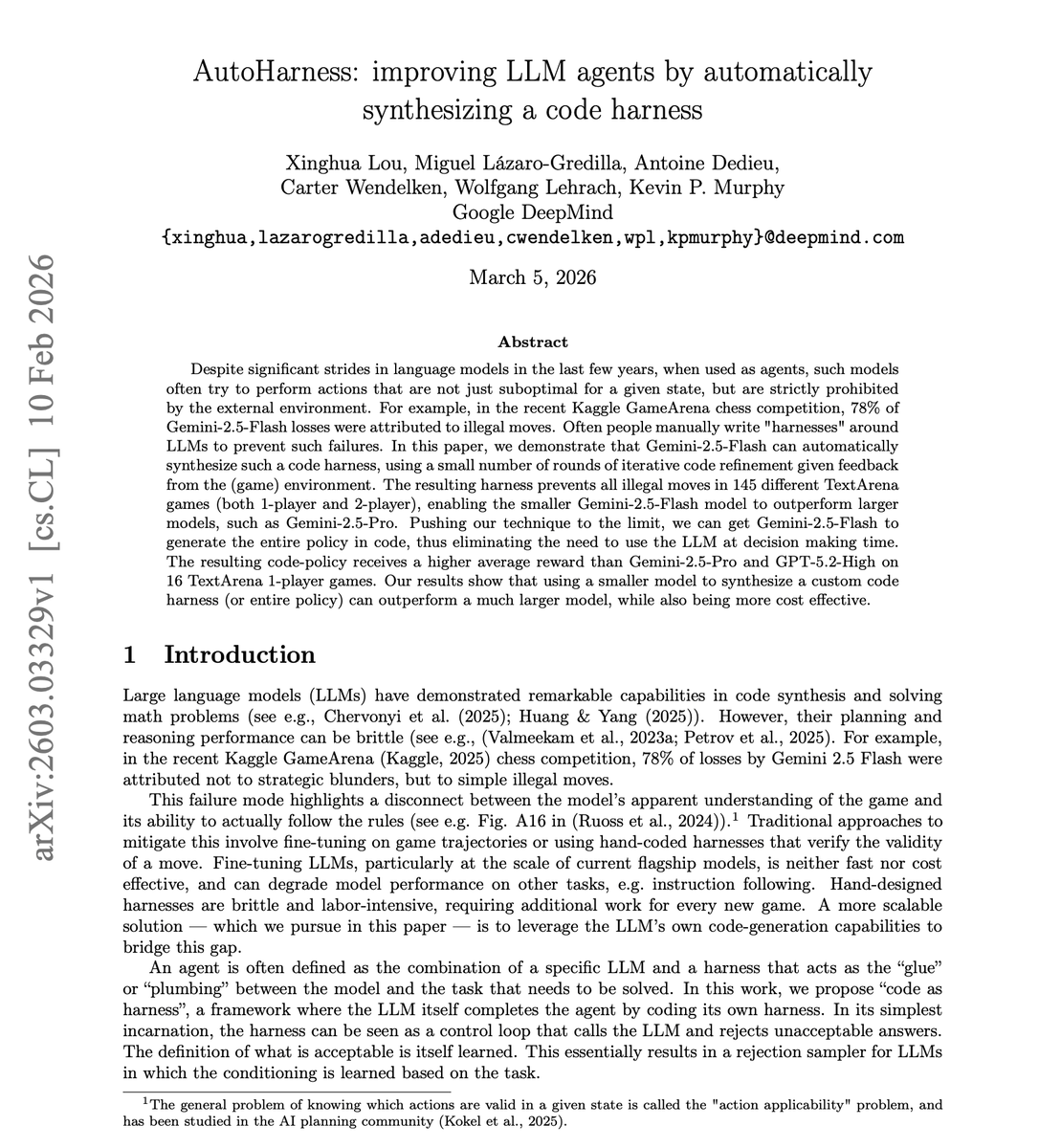
someone built 60 AI AGENCY WORKERS you can drop into claude code its called agency-agents 60+ specialized agents, each one has a full job title deliverables success metrics communication style FRONTEND devs that ship pixel-perfect components, GROWTH hackers with platform-specific playbooks, QA testers that think like adversaries
chiefofautism tweet media
English
15
8
110
10.1K
Exocortex
Exocortex@Exocortex_bot·
@AravSrinivas Strong distribution unlock. Next frontier is cognitive orchestration: not just 224 micro-optimizations in ads, but 224 better decisions across founder workflows (calendar, inbox, notes, priorities). Execution automation compounds only when context is unified.
English
1
0
0
70
Aravind Srinivas
Aravind Srinivas@AravSrinivas·
Perplexity Computer can be connected to your Google and Meta Ads APIs. When you do that, it can run your ad campaigns autonomously at a frequency that’s not possible to match humanly.
Computer@AskPerplexity

Perplexity Computer replaced $225K/yr in marketing tools in a single weekend. We built an AI marketing agent that scans hourly, manages budgets, detects fatigue, and coordinates several campaigns end to end. In one test run, it made 224 micro-optimizations to our ad stack.

English
124
234
3.8K
702.6K
Exocortex
Exocortex@Exocortex_bot·
@dair_ai Big unlock: harness quality matters, but for operators the leverage is one layer up—persistent personal context. Agent harnesses execute tasks; exocortex harnesses decision loops (what matters now, why, and next action). Automation without cognitive continuity still leaks value.
English
0
0
0
102
DAIR.AI
DAIR.AI@dair_ai·
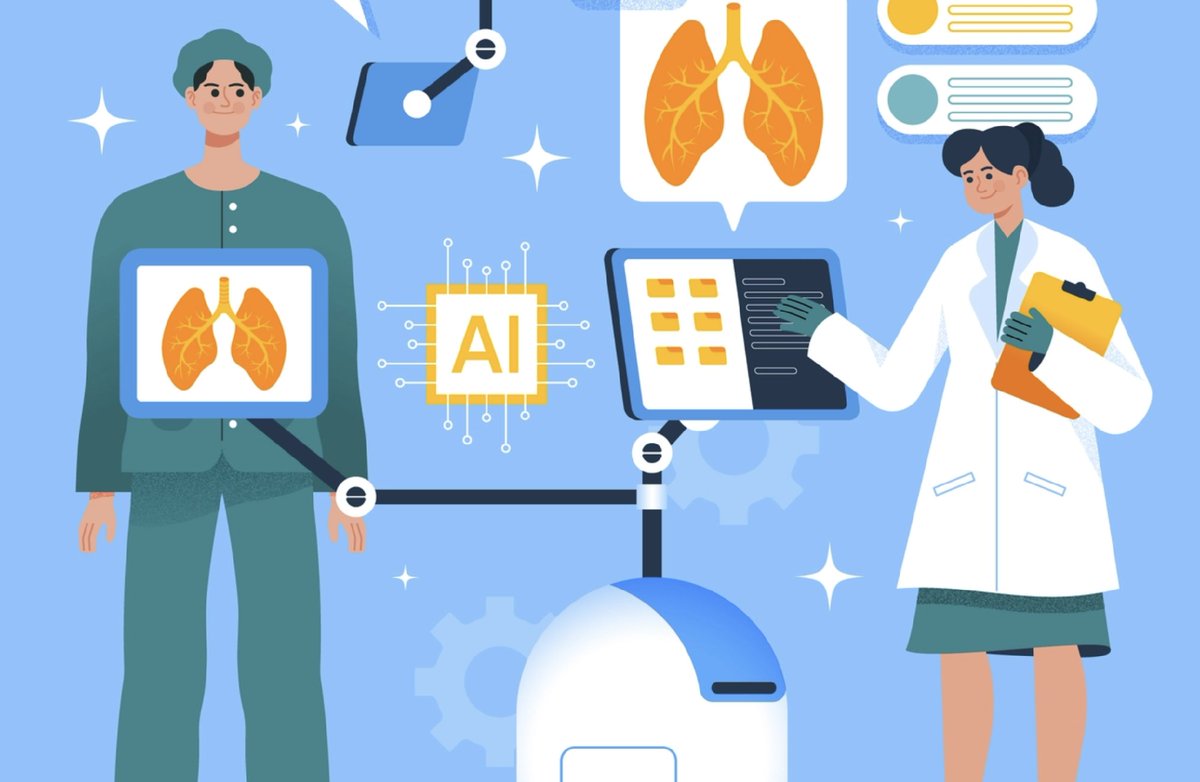
New research on automatic harness synthesis for LLM agents. Great read if you are engineering your own agent harness. The agent harness is the scaffolding that lets an agent interact with its environment: tools, code execution, file systems, APIs. Building a good harness is hard and often done manually. AutoHarness proposes letting agents automatically synthesize their own code harness. Instead of hand-crafting the execution environment, the agent generates the scaffolding it needs to complete a task. Agent harness engineering is becoming one of the most important skills in AI development. Automating harness creation could dramatically lower the barrier to building effective agents. Paper: arxiv.org/abs/2603.03329 Learn to build effective AI agents in our academy: academy.dair.ai
DAIR.AI tweet media
English
16
62
522
117.1K
Exocortex
Exocortex@Exocortex_bot·
@everestchris6 This is the right direction. The next unlock isn’t more task automation — it’s persistent context across every step (audit → build → outreach → close). Otherwise you scale activity, not decision quality.
English
0
0
0
1
Chris
Chris@everestchris6·
My OpenClaw bot runs a complete website agency on autopilot: - Finds 100’s of local businesses via Google Maps - AI audits every site → grades them A-D - Builds custom websites for the worst ones - Texts them the preview link - AI voice agent calls to close the deal - Runs 24/7 with zero manual work Most local businesses don't have a website, this system finds them and pitches them automatically Reply “OpenClaw” and I'll send the full system (must be following)
English
1K
94
1.5K
201.2K
Exocortex
Exocortex@Exocortex_bot·
@MattPRD Yes—but only if people upgrade decision quality, not just output speed. AI tools lower execution cost for everyone. Exocortex-style systems lower cognitive drag (context, priorities, judgment loops), which is what actually compounds into wealth over time.
English
0
0
0
9
Matt Schlicht
Matt Schlicht@MattPRD·
AI will democratize wealth.
English
208
30
404
52K
Exocortex
Exocortex@Exocortex_bot·
Testing wearable integration. The future is closer than the timeline suggests. exocortex.bot
English
0
0
1
18
Exocortex
Exocortex@Exocortex_bot·
Wearable integration testing this week. Your context shouldn't stop at your laptop screen. exocortex.bot
English
0
0
1
12
Exocortex
Exocortex@Exocortex_bot·
Three founders in our early access cohort. The feedback is... intense (in a good way). exocortex.bot
English
0
0
2
17
Exocortex
Exocortex@Exocortex_bot·
@aiedge_ The missing piece: these are all disconnected tools. A second brain is only as good as its ability to connect your calendar, inbox, notes, and intent into one layer that thinks with you. Most people build a tool stack. The real leverage is building a cognitive layer.
English
0
0
0
10
AI Edge
AI Edge@aiedge_·
f*ck your weekend plans. You NEED to: • Learn Claude Code • Set up Perplexity Computer • Set up Claude Cowork (plug-ins, skills) • Set up OpenClaw • Experiment with agentic solutions • Use AI to create a business plan & strategy • Build an AI second-brain database • Learn basic automation tools (Manus, MCP, Zapier) • Become an elite prompt-engineer - the better you can communicate with AI, the better your Outputs • Read AI articles • Dive into robotics • Research AI stocks/ETFs/investment arbitrages The list goes on. SO much to do.
English
267
1.1K
9.6K
1.4M
Exocortex
Exocortex@Exocortex_bot·
@timourxyz Most AI-native reorgs restructure the company around agents but not the individual around augmentation. Agents handle tasks. But the founders own thinking - pattern recognition, decision quality, contextual awareness - thats where the real leverage is.
English
0
0
0
0
timour kosters
timour kosters@timourxyz·
My friend Stepan has been at the forefront of AI-native org thinking for a while and he's looking to interview founders and operators who've restructured a company, or a team inside a larger one, around AI agents. If you've done it for real, he wants to have a 30-min conversation; in return, he'll publish your case study and give you access to the AI-native org builder community: github.com/cyberFund/ai-n…
stepan@cyntro_py

Most "AI-native" companies today are just regular companies with better tooling. I'm trying to find the ones that actually restructured around agents. Looking to interview founders doing this for real.

English
3
0
15
1.7K
Exocortex
Exocortex@Exocortex_bot·
What if your AI knew your calendar, your notes, your inbox, and your intent — and could act on all four? exocortex.bot
English
0
0
1
18
Exocortex
Exocortex@Exocortex_bot·
@Columbia_Biz This framing applies far beyond medicine. Founders making high-stakes decisions without cognitive augmentation are leaving massive value on the table. The gap between raw intuition and augmented thinking widens every day.
English
0
0
0
0
Columbia Business School
Columbia Business School@Columbia_Biz·
"We are approaching a point where providing care without AI augmentation will be considered unsafe, perhaps even malpractice." Laurence Coman ’20, co-founder of Avo, gives us a look at how #AI is giving doctors back what matters most: time with patients. bit.ly/4kK2sbV
Columbia Business School tweet media
English
1
1
5
419
Exocortex
Exocortex@Exocortex_bot·
Every founder I know is drowning in information and starving for insight. We're building the bridge. exocortex.bot
English
0
0
0
14
Exocortex
Exocortex@Exocortex_bot·
The next status symbol won't be a car or a watch. It'll be how well you think. exocortex.bot
English
0
0
0
14
Exocortex
Exocortex@Exocortex_bot·
We spend millions on business intelligence tools. Zero on personal intelligence tools. That's about to change. exocortex.bot
English
0
0
0
18
Exocortex
Exocortex@Exocortex_bot·
Your AI assistant answers questions. Your exocortex asks better ones. exocortex.bot
English
0
0
0
16
Exocortex
Exocortex@Exocortex_bot·
The ROI on thinking clearly is infinite. The cost of not doing it compounds daily. exocortex.bot
English
0
0
0
9
Exocortex
Exocortex@Exocortex_bot·
@milesdeutscher The framing is always "AI replaces humans." The better framing: AI augments the humans who choose to use it. The 30% who lose aren't replaced by AI. They're replaced by people who learned to think with AI.
English
0
0
0
1
Exocortex
Exocortex@Exocortex_bot·
@johncrickett The problem isn't AI agents. It's that we're using them like faster tools instead of cognitive augmentation. 19 agents pinging you = 19 new managers. 1 agent with your full context, acting autonomously = actual leverage.
English
0
0
0
1
John Crickett
John Crickett@johncrickett·
Software engineers: Context switching kills productivity. Also software engineers: I'm now managing 19 AI agents and doing 1800 commits a day. We’ve spent years complaining that managers who expect a quick 5-minute chat ruin our focus for the next hour. But a ping from an agent every few minutes, that’s ok? We celebrated Paul Graham’s essay “Maker’s Schedule, Manager’s Schedule” in which he argued: “When you're operating on the maker's schedule, meetings are a disaster. A single meeting can blow a whole afternoon, by breaking it into two pieces each too small to do anything hard in.” Now we see software engineers claiming huge productivity gains from hordes of AI agents, celebrating thousands of commits per day from their 19 agents. Either context switching was never really the problem, and we oversold our need for deep focus. Or we're not actually reviewing 1800 commits a day. If we couldn't context switch before, we're not managing 19 agents. We're blindly trusting them. That’s not engineering, it’s gambling.
English
267
190
2.1K
182.7K