Exploit-Forge

457 posts

Exploit-Forge banner
Exploit-Forge

Exploit-Forge

@ExploitforgeLTD

Industry-leading penetration testing and offensive security services to protect your digital assets and ensure your business stays secure.

Global 🌍🌎🌏 Katılım Mart 2025
0 Takip Edilen1.7K Takipçiler
Sabitlenmiş Tweet
Exploit-Forge
Exploit-Forge@ExploitforgeLTD·
In the race to build, launch, and scale, security often gets pushed aside for “more urgent” priorities but one breach is all it takes to undo years of innovation, customer trust, and investor confidence. The cost of a breach goes beyond dollars, it disrupts operations, damages reputation, and slows growth. Penetration testing isn’t just about uncovering vulnerabilities, it’s about protecting growth, preserving trust, and ensuring resilience. If penetration testing feels expensive, consider this: The average data breach costs over $4.4 million, while a comprehensive pentest averages $15K–$50K, less than 1% of that. At Exploit Forge, we help organizations identify weaknesses before attackers do, enabling secure, confident growth.
Exploit-Forge tweet mediaExploit-Forge tweet mediaExploit-Forge tweet mediaExploit-Forge tweet media
English
1
30
71
32.4K
Exploit-Forge
Exploit-Forge@ExploitforgeLTD·
@KwubeghariP Seems someone has been listening to the preaching of the Tech Prophet💯💯
English
1
0
0
6
Exploit-Forge
Exploit-Forge@ExploitforgeLTD·
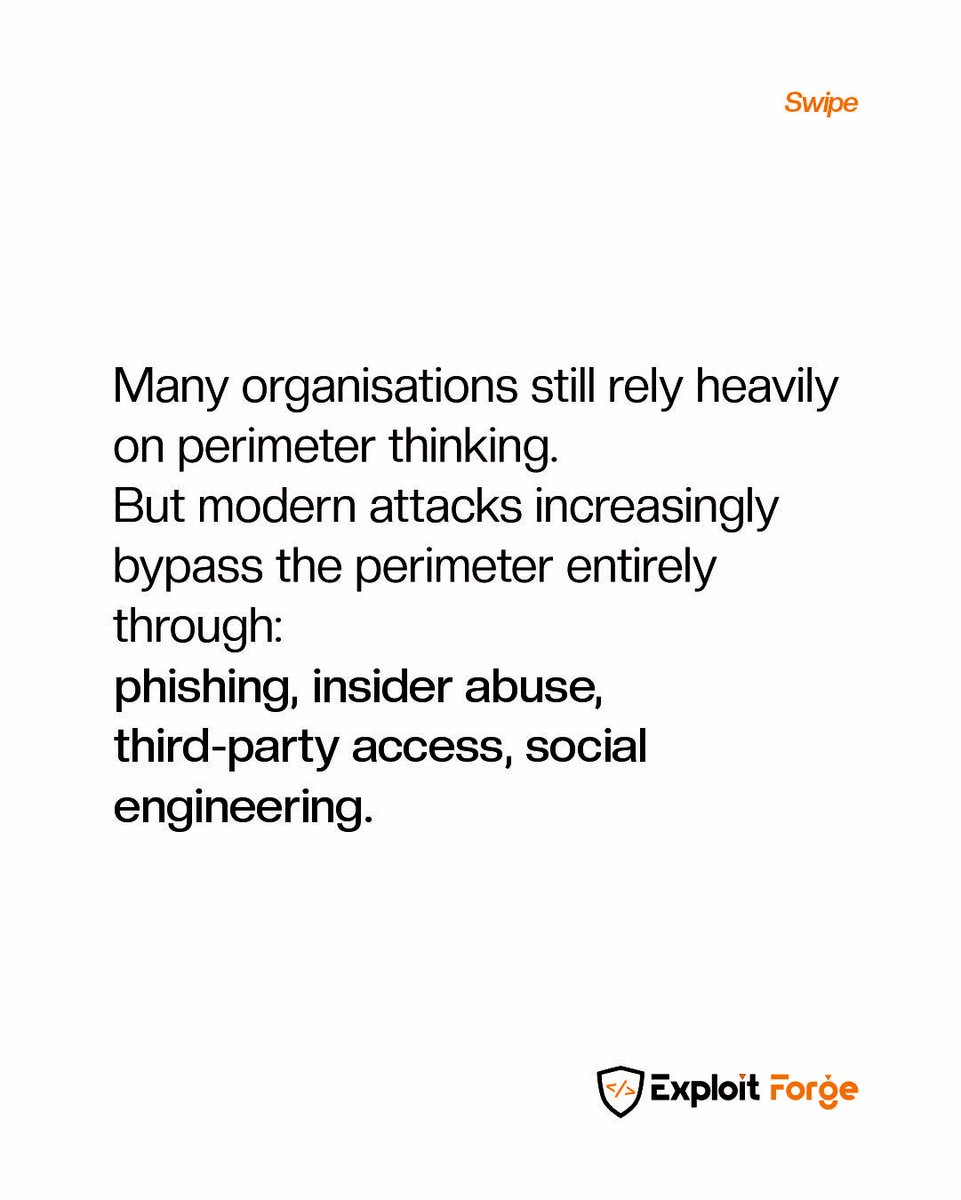
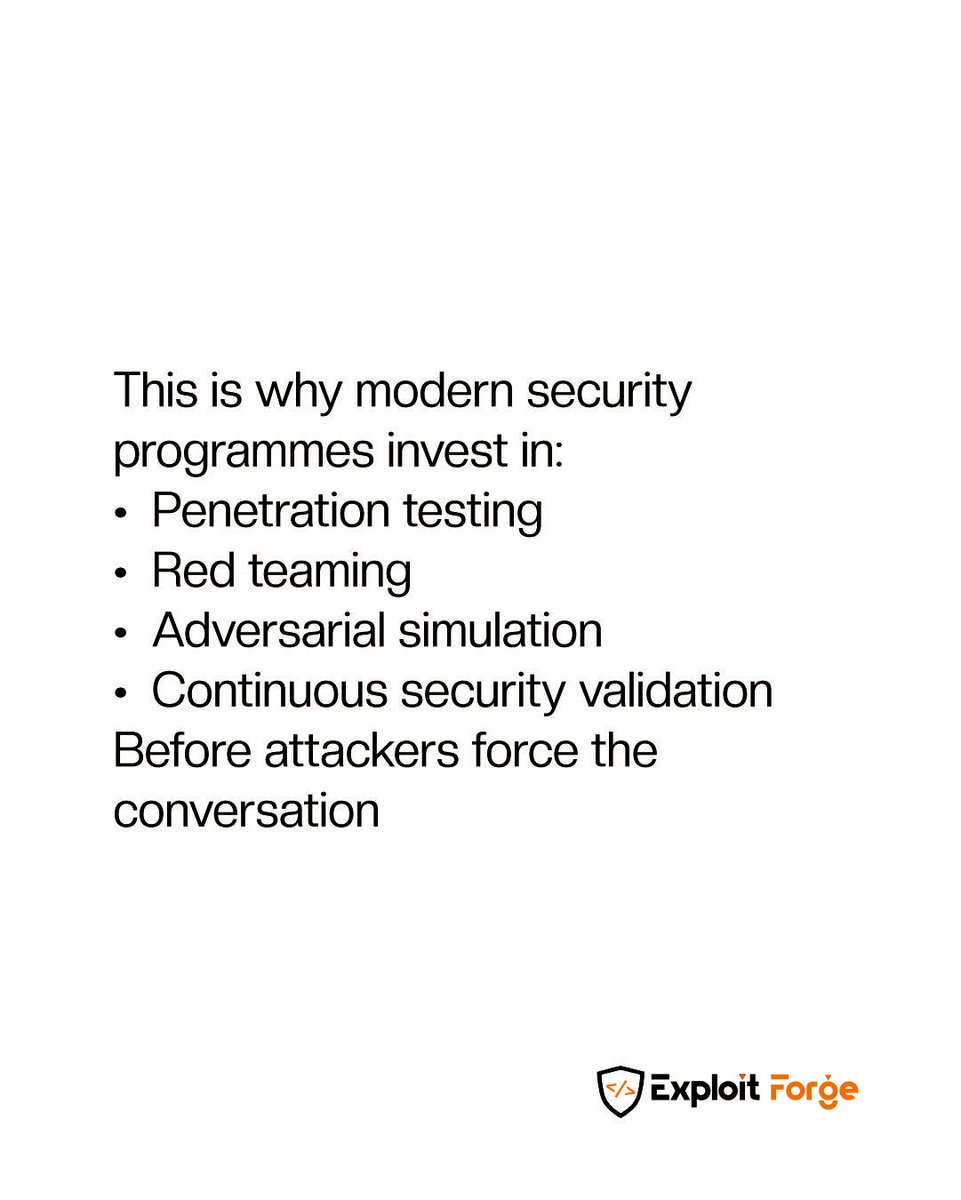
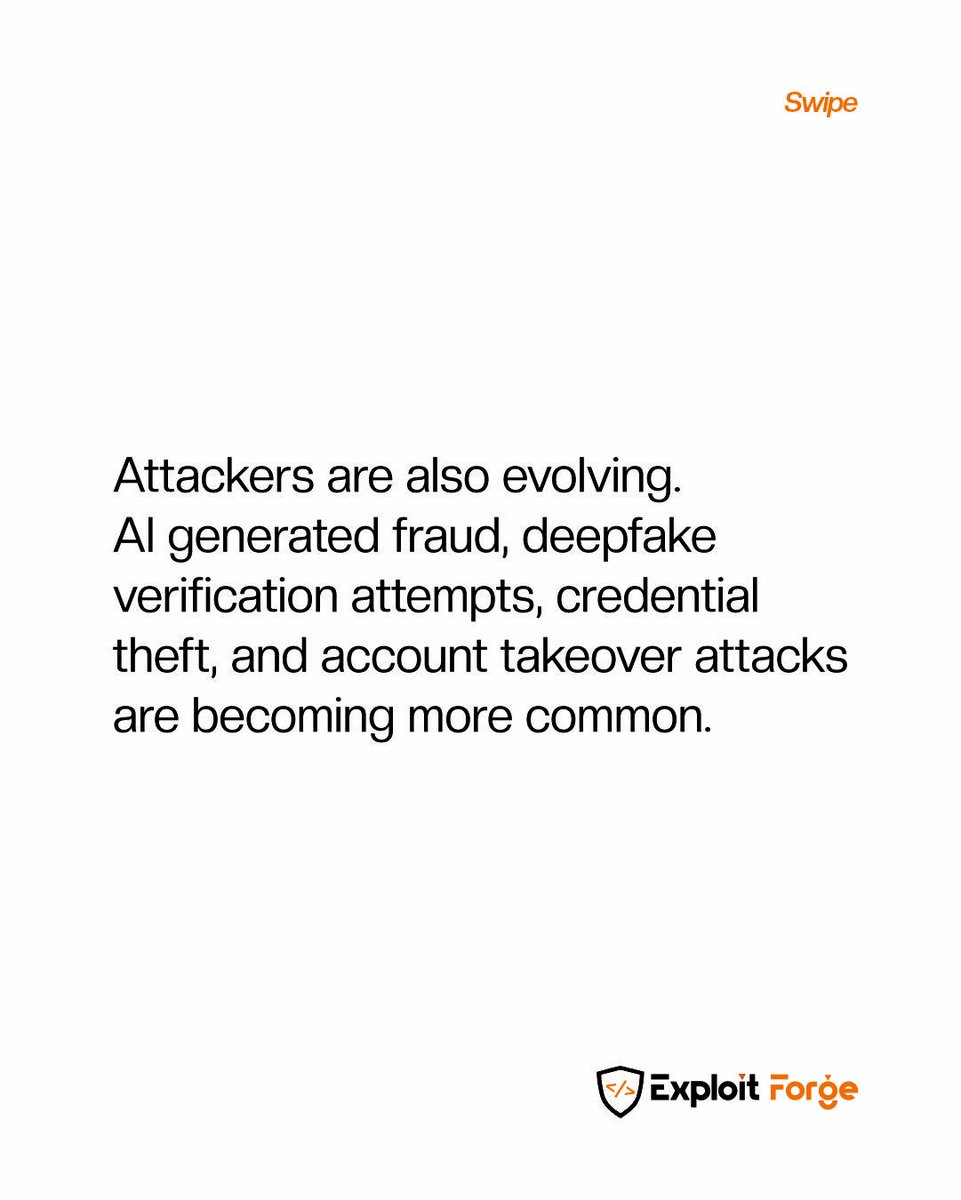
Today’s attackers increasingly rely on trusted access, stolen credentials, phishing, social engineering, and overlooked systems to move quietly inside environments for long periods before detection. The uncomfortable reality is that many organisations do not discover weaknesses until after business impact has already occurred. Security is no longer just about keeping attackers out.
It is about visibility, detection, response readiness, and continuously validating assumptions before adversaries do. Swipe through.
Exploit-Forge tweet mediaExploit-Forge tweet mediaExploit-Forge tweet mediaExploit-Forge tweet media
English
0
1
1
49
Exploit-Forge
Exploit-Forge@ExploitforgeLTD·
@Amospikins Attackers really out here treating company infrastructure like “push to open” doors😭… Well, na there we come in. At ExploitForge, we shake locks, trace overlooked access paths, and uncover the trails security teams didn’t even realise they left behind.
English
0
0
1
34
Exploit-Forge
Exploit-Forge@ExploitforgeLTD·
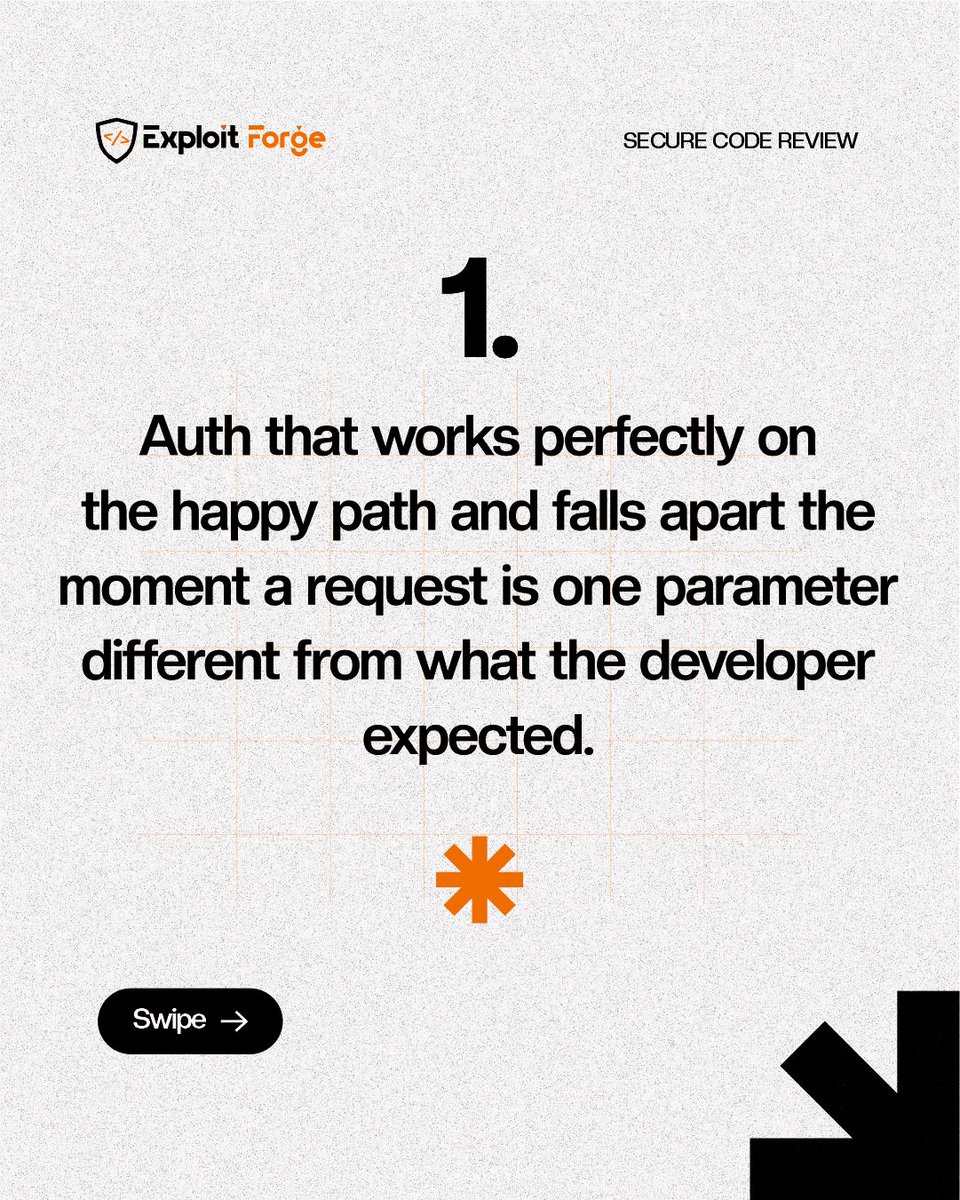
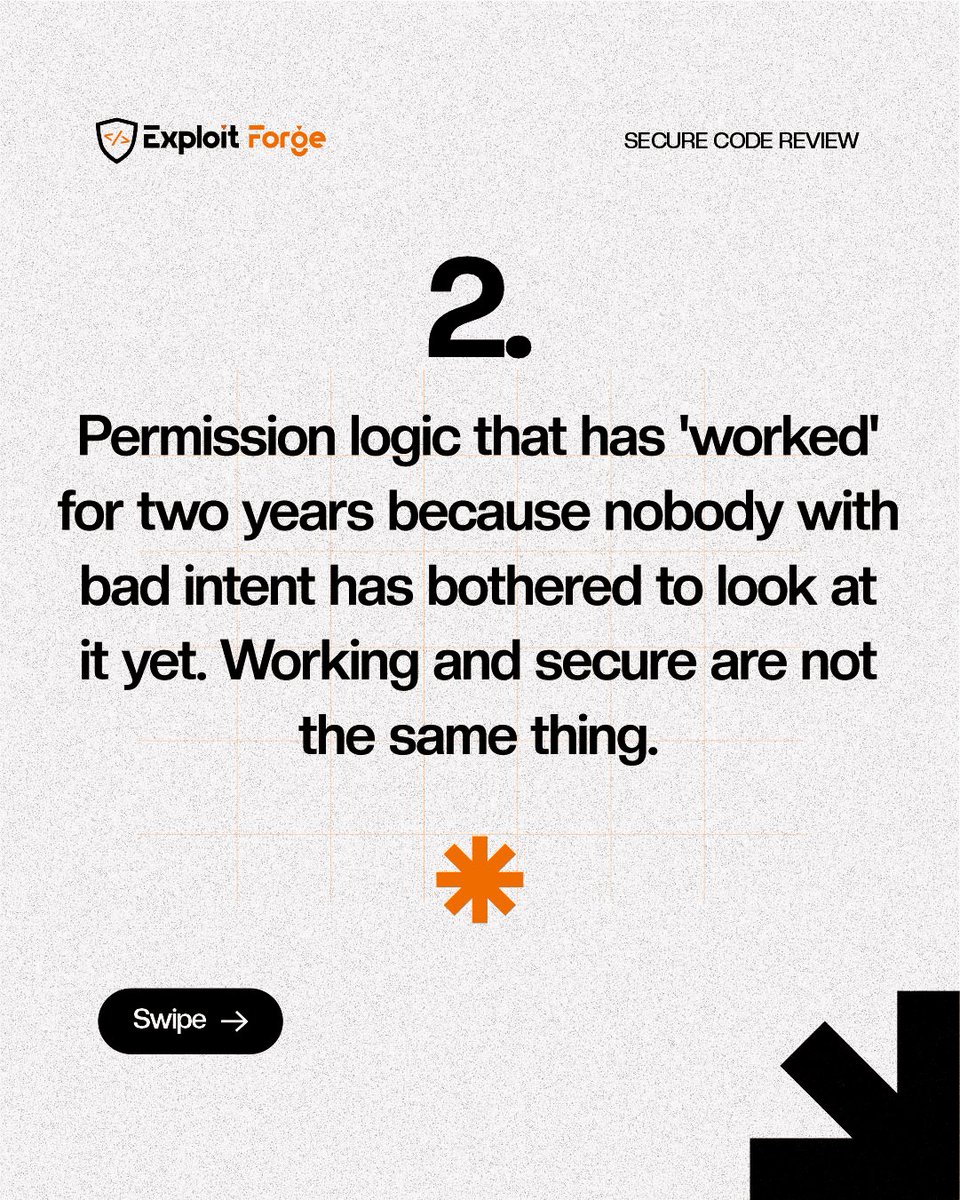
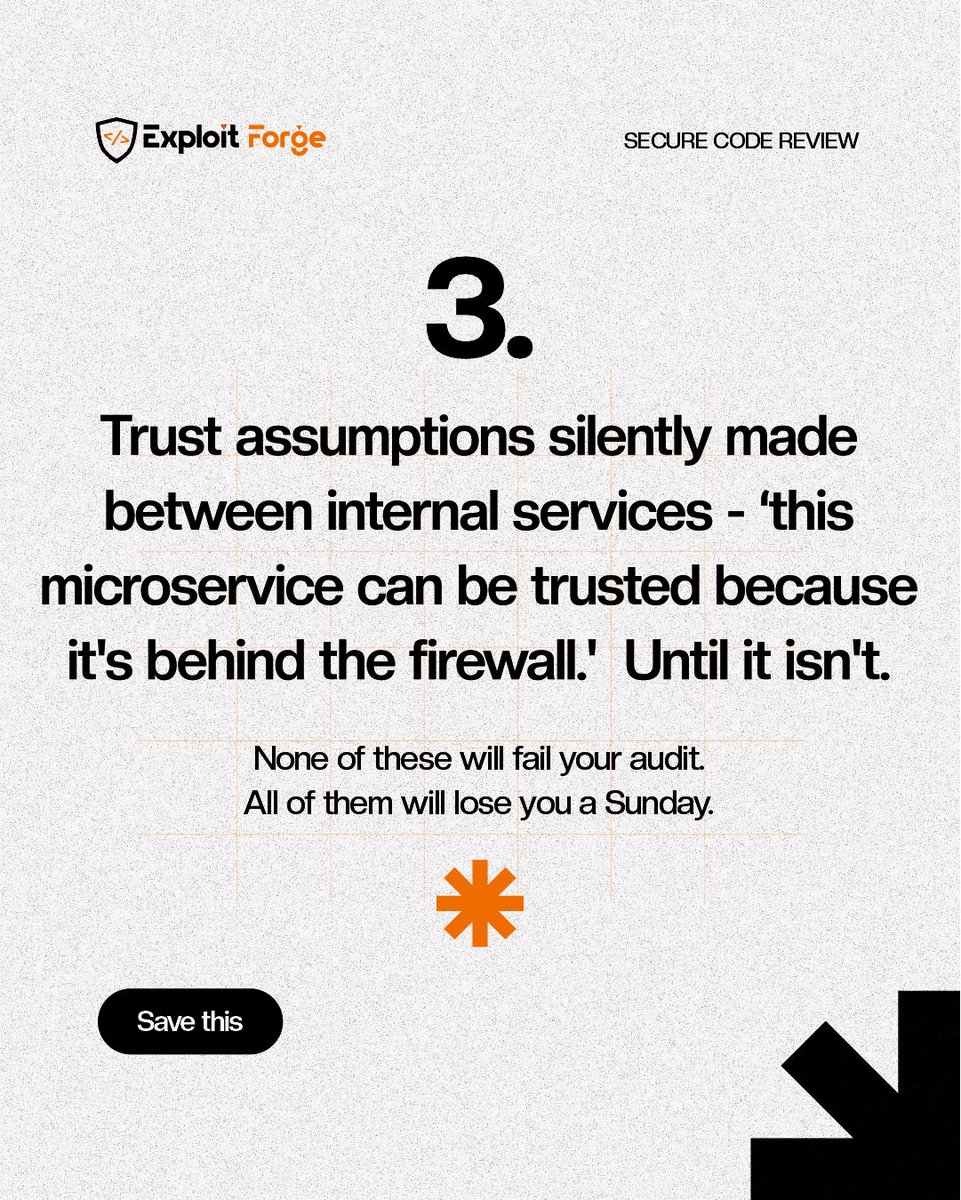
1.  Auth that works perfectly on the happy path and falls apart the moment a request looks one parameter different from what the developer expected. 2.  Permission logic that has "worked" for two years because nobody with bad intent has bothered to look at it yet. Working and secure are not the same thing. 3.  Trust assumptions silently made between internal services. "This microservice can be trusted because it's behind the firewall." Until it isn't. None of these will fail your audit. All of them will lose you a Sunday. If you're shipping code right now, take ten minutes today and look at one of those three. The exercise is uncomfortable in the right way.
English

0
1
1
40
Exploit-Forge
Exploit-Forge@ExploitforgeLTD·
That gap is where business logic vulnerabilities live. And business logic vulnerabilities are consistently among the most impactful and least detected weaknesses in production applications. A secure code review brings a security engineer into your codebase with the same intent a skilled attacker would have. We're not looking for typos. We're tracing data flows, mapping authentication logic, probing state management, identifying what breaks when someone pushes the boundaries of expected behaviour. If you're a developer reading this….what's the worst bug you've ever seen ship past a scanner? We want to hear it.
Exploit-Forge tweet mediaExploit-Forge tweet media
English
0
1
2
61
Exploit-Forge
Exploit-Forge@ExploitforgeLTD·
Automated scanners are a starting point. They're not a finish line. They're excellent at known vulnerability patterns, outdated dependencies, SQL injection in obvious forms, missing security headers. They operate on pattern-matching logic. They cannot reason about what your application is supposed to do versus what it actually does when someone deliberately misuses it. #zerotrust #CyberSecurity #codereview
Exploit-Forge tweet mediaExploit-Forge tweet mediaExploit-Forge tweet mediaExploit-Forge tweet media
English
1
1
4
408
Exploit-Forge
Exploit-Forge@ExploitforgeLTD·
@cyber_rekk Cybersecurity people that don’t believe in ‘we’re probably fine’. We also help organisations discover vulnerabilities before X does.
English
0
0
0
17
Exploit-Forge
Exploit-Forge@ExploitforgeLTD·
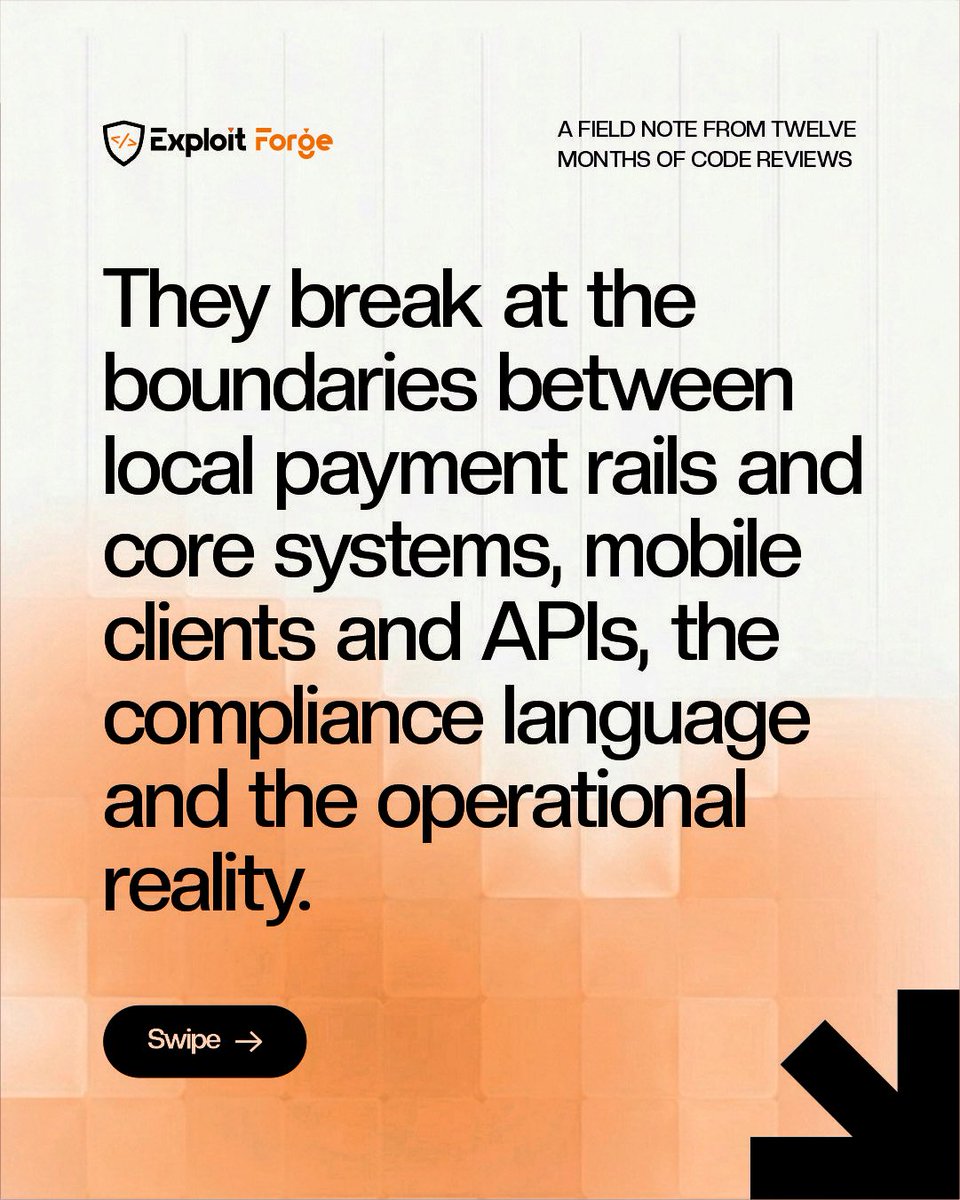
The codebases we review locally break at the joints. The integration with USSD or local payment gateways. The mobile-first APIs designed before anyone imagined them being scraped from a desktop. The internal tools are assumed to be unreachable, until a misconfigured Nginx says otherwise. None of this is a complaint about frameworks. The frameworks are doing what they're built to do, they're general. The work is in being specific. In bringing the framework to the environment, instead of expecting the environment to look like the framework. This is something we think the African security industry can lead on, not catch up to. Our context is genuinely different. The vulnerabilities we surface most often aren't the ones the standard checklists are loudest about. What's the thing your team sees in your code that no framework warned you about? Tell us below….we're collecting these.
Exploit-Forge tweet mediaExploit-Forge tweet media
English
0
0
0
34
Exploit-Forge
Exploit-Forge@ExploitforgeLTD·
A pattern we've watched across the code reviews we've delivered over the last twelve months. The standard frameworks; OWASP, ASVS, the major guides, are good. They're also written largely against threat models that don't quite match the environments we work in. Western fintech assumes a different infrastructure stack, different payment rails, different regulatory architecture, different attacker profile. #CyberSecurity #fintechccs
Exploit-Forge tweet mediaExploit-Forge tweet media
English
1
1
5
87
Exploit-Forge
Exploit-Forge@ExploitforgeLTD·
@Amospikins Exactly this.
Hackers no dey discriminate by company size. In fact, small and medium-sized businesses are often the easiest entry point because security assumptions are still very outdated.
These are things we consistently see at ExploitForge.
English
0
0
4
89
The Tech Prophet (Amospikins)
Cybersecurity for Nigerian Businesses [PART 1]. Your business no need be bank before hackers show you love...lol Make sure say you mama, sister or brother wey you know say dey do business for Nigeria watch this video. Many Nigerian business owners think cybersecurity is only for banks, fintechs, big companies, and government agencies. But hackers no dey reason like that. #Cybersecurity #NigerianBusinesses #BusinessSecurity #CyberSecurityNigeria #SmallBusinessSecurity #TechInPidgin #Amospikins #TechProphet #DataProtection #OnlineSafety #BusinessTips #NaijaBusiness #DigitalSecurity #Hackers #CyberAwareness #SMEProtection #FintechSecurity #informationsecurity #NigeriaTech #TechEducation @ExploitforgeLTD
English
5
39
222
5.2K
Exploit-Forge
Exploit-Forge@ExploitforgeLTD·
@elormkdaniel This shift is one of the most important realities organisations need to understand. Attackers increasingly rely on trusted access, valid credentials, and legitimate-looking activity rather than noisy perimeter attacks.
English
0
4
3
395
Elorm Daniel
Elorm Daniel@elormkdaniel·
A lot of organizations still believe a firewall alone is enough to keep them secure, but modern attacks have evolved far beyond perimeter-based defense. Phishing, insider threats, compromised credentials, and supply chain access now bypass traditional security models by appearing legitimate from the start. The real challenge today is visibility, verification, and continuous monitoring after access is granted. Posts like this from forward-thinking cybersecurity brands are important because they push conversations beyond outdated security assumptions and toward how modern defense actually works.
Exploit-Forge@ExploitforgeLTD

"We're behind a firewall" is not a security posture. The perimeter has been irrelevant as a primary defense for years. Modern threats - phishing, insider risk, compromised credentials, supply chain access, don't come through the front door. They arrive looking legitimate, and they move quietly once they're inside. #cybersecurity #infosec #cyberawareness #zeroday #internalnetwork #Security

English
4
0
10
1.2K
Exploit-Forge
Exploit-Forge@ExploitforgeLTD·
This is the difference between validating vulnerabilities and validating resilience. A penetration test can confirm that weaknesses exist. A red team exercise reveals whether your organisation can detect, understand, and respond to realistic adversarial behaviour before critical impact occurs.
English
0
0
0
65
Abdulkadir | Cybersec
Abdulkadir | Cybersec@cyber__razz·
I watched a security manager brag about their annual penetration test. He showed me the report. Forty-seven findings. All fixed. He said they were airtight. I asked him if he'd ever run a red team exercise. He looked confused and said a pen test was the same thing. I told him a pen test finds holes. A red team finds out if anyone would notice someone climbing through them at 2 AM on a Tuesday. He shrugged and said their SIEM was world-class. I asked the CISO for permission. Two weeks later, my 'red team' of one person walked past the front desk wearing a borrowed hoodie, plugged a rogue device into an unlocked network jack in the breakroom, and pivoted to their certificate authority. Nobody noticed. Not the SIEM. Not the SOC. Not the security guard who held the door for me. I printed the CA private key and left it on the CISO's keyboard with a sticky note that said 'your pen test passed. your red team failed.' The security manager stopped confusing compliance with capability. Then he asked me to run the real exercise.
Exploit-Forge@ExploitforgeLTD

Honest question, ahead of the weekend. Has your organisation ever run a red team exercise? The distinction matters. A penetration test tells you where the weaknesses are. A red team exercise tells you whether your defences would catch a determined adversary exploiting those weaknesses in sequence.  Drop your answer below. The split is usually more telling than people expect. #redteam #cybersecurity

English
3
0
13
2.8K
Exploit-Forge
Exploit-Forge@ExploitforgeLTD·
@T3chFalcon Exactly the mindset more organisations need to adopt. Security is not a one-time exercise…it is an ongoing process of validating assumptions, improving visibility, and strengthening resilience against evolving threats.
English
0
0
0
12
IT Guy
IT Guy@T3chFalcon·
Has your organization ever run a red team exercise? If you answered "Yes, within the last 12 months," that's a good start. Still, it's important to stay alert. Threats change quickly and can outpace yearly reviews. Check your results again, make sure all issues are fixed, and start planning your next test. Red teaming works best as a regular practice, not just a single event. If your last exercise was more than a year ago, a lot has probably changed. There may be new attack methods, vulnerabilities, or areas at risk. Fixes you made before might not be enough now. It's a good time to run another assessment, since attackers are always active. If you've only done penetration testing, that's a solid first step, but it's not the same as red teaming. Penetration tests find weaknesses, while red teaming checks if your team can spot and handle real threats. Your systems may be tested, but are you sure your team is ready for a real attack? If you've never done a red team exercise, now is a good time to start. Unknown risks are especially dangerous in security. It's not a matter of if you'll be targeted, but when. No matter where you stand, @ExploitForgeLTD can help with red teaming, penetration testing, and similar services. Reach out before an attacker forces your hand. exploit-forge.com
Exploit-Forge@ExploitforgeLTD

Honest question, ahead of the weekend. Has your organisation ever run a red team exercise? The distinction matters. A penetration test tells you where the weaknesses are. A red team exercise tells you whether your defences would catch a determined adversary exploiting those weaknesses in sequence.  Drop your answer below. The split is usually more telling than people expect. #redteam #cybersecurity

English
1
0
8
1.2K