Exploring Eliot

379 posts

Exploring Eliot banner
Exploring Eliot

Exploring Eliot

@ExploringEliot

A project exploring the fantastic George Eliot collections at Nuneaton Museum & Art Gallery, Nuneaton Library and Herbert Art Gallery & Museum.

Katılım Mart 2020
184 Takip Edilen380 Takipçiler
Exploring Eliot
Exploring Eliot@ExploringEliot·
Today marks 30 years since filming started on Andrew Davies' adaptation of Middlemarch and our latest blog is now live! Justin Smith of @dmuleicester writes about the project which links the novel to the BBC adaptation Tinyurl.com/transforming-m…
English
0
8
14
1.5K
Exploring Eliot
Exploring Eliot@ExploringEliot·
For a woman born in 1819, George Eliot led an extraordinarily progressive & independent life. Yet Middlemarch’s women find no such freedom. Why is this? Find out at #FindingMiddlemarch🔎 exploringeliot.org/FM/7 feat. an assortment of Eliot's writing tools...
Exploring Eliot tweet mediaExploring Eliot tweet mediaExploring Eliot tweet media
English
0
14
33
2.3K
Exploring Eliot retweetledi
Rosie White
Rosie White@DrRosalindWhite·
A fav. #FindingMiddlemarch🔎 exhibit… there is no entry for Marian Evans in the 1861/71 census. But there is a Mrs Marian E. Lewes. For occupation George Eliot ignores the fact she's a bestselling author so that she can defiantly put ‘wife’ exploringeliot.org/FM/7
Rosie White tweet media
English
1
4
15
1.9K
Exploring Eliot retweetledi
Rosie White
Rosie White@DrRosalindWhite·
Also of note, the word lace is derived from the Latin for noose & is related to the term lacere, meaning to entice or ensnare. A fitting accessory for Rosamond - whose feverish weaving is indicative of the dextrous manner she manipulates her own fate, esp in her relations w/ men.
Exploring Eliot@ExploringEliot

Both “textile” & “text” derive from the Latin for weaving “texare”. Explore how George Eliot’s weaving of words parallels the needlework practiced by her female characters at #FindingMiddlemarch ... feat. this beautiful box used by Eliot to store lace. exploringeliot.org/FM/7

English
0
1
3
414
Exploring Eliot
Exploring Eliot@ExploringEliot·
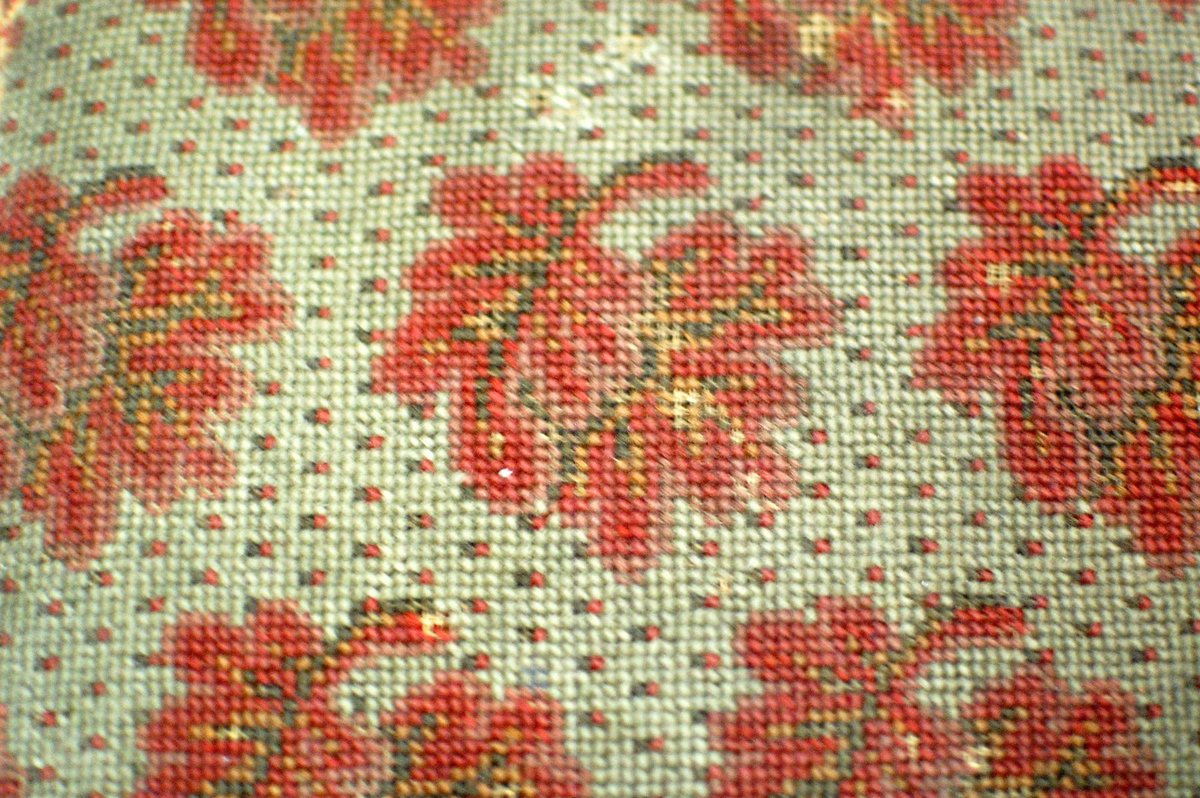
This footstool, thought to have been embroidered 🪡 by George Eliot, exemplifies the kind of intricate needlepoint that would have served as a suitable demonstration of feminine refinement in the 19thC. exploringeliot.org/FM/7 Find out more at #FindingMiddlemarch🔎
Exploring Eliot tweet mediaExploring Eliot tweet mediaExploring Eliot tweet media
English
0
6
12
1.9K
Exploring Eliot
Exploring Eliot@ExploringEliot·
This sewing 🪡 reticule of George Eliot's consists of a buttonhook, a file, a penknife & a crochet hook, all with mother-of-pearl handles. Find out more about 19thC needlework in our latest ch. of #FindingMiddlemarch🔎 exploringeliot.org/FM/7
Exploring Eliot tweet media
English
0
16
27
2.1K
Exploring Eliot retweetledi
Exploring Eliot
Exploring Eliot@ExploringEliot·
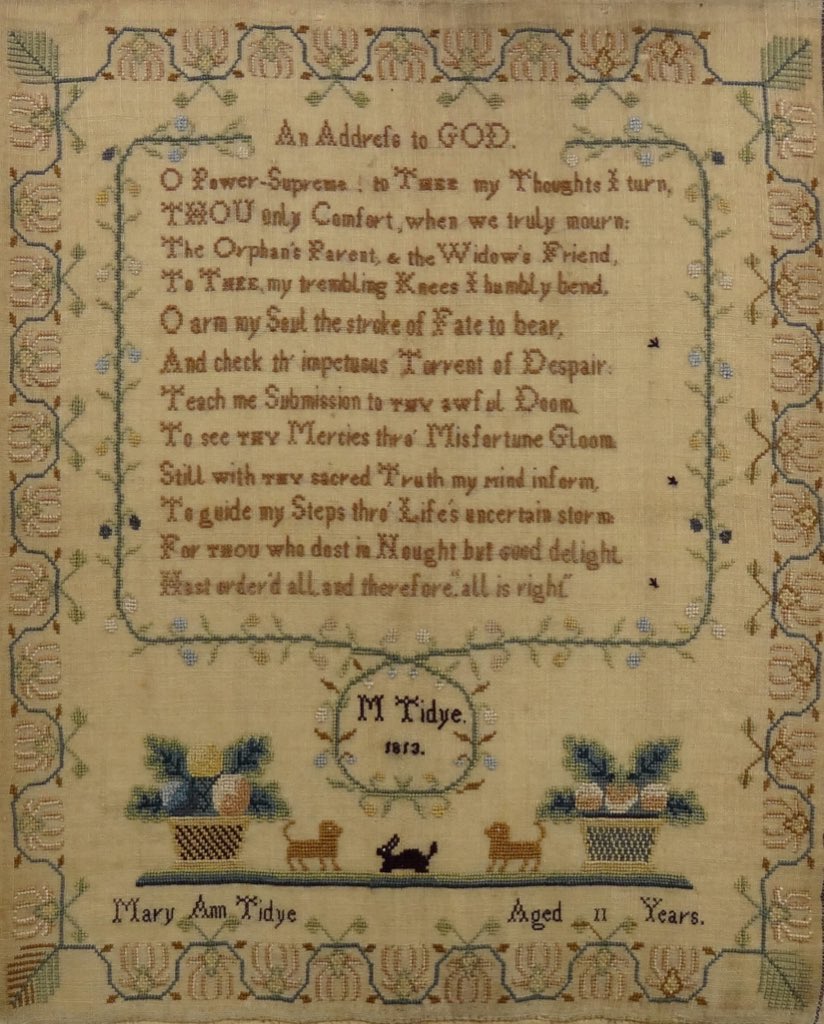
This sampler was made by Mary Ann Tidye in 1813 at age 11. @The_Herbert houses an impressive collection of samplers stitched in the 19thC by girls as young as nine. As a child, George Eliot would have produced comparable work. 🪡🧵#FindingMiddlemarch🔎 exploringeliot.org/FM/7
Exploring Eliot tweet media
English
0
6
21
3.1K
Exploring Eliot
Exploring Eliot@ExploringEliot·
Both “textile” & “text” derive from the Latin for weaving “texare”. Explore how George Eliot’s weaving of words parallels the needlework practiced by her female characters at #FindingMiddlemarch ... feat. this beautiful box used by Eliot to store lace. exploringeliot.org/FM/7
Exploring Eliot tweet mediaExploring Eliot tweet media
English
0
4
5
1.3K