
Sabitlenmiş Tweet
ّ
3.7K posts

ّ
@Exquisitorius
Ahlul Hadith | Competitive Shooter | Engineer
Katılım Ağustos 2011
226 Takip Edilen657 Takipçiler




@abaibraheem I don't believe any of them should be illegal, the concept of IP does not make sense islamically and it genuinely goes against human history and nature.
English
This is on the publishing houses.
If your business model is no longer working, its innovate and take on risks and survive, or you shut shop.
Risk aversion and begging for intervention is the reason the Muslim world has fallen behind in business and technology.
Farid@Farid_0v
Summary: Islamic publishing houses are closing. The publishing house INVESTS in a whole team, along with a linguistics specialist and reviewers, to revive and publish a manuscript. It costs them tens of thousands. Then, some rando turns it into a PDF and puts it out for free.
English
@SchnitzelKroos @getman900 @AhmedTayy You have the lowest reading comprehension I’ve ever seen on this app— zionist levels of retardation
English

@getman900 @AhmedTayy i am not a wahhabi MIAW did such things u should expose such things from his works first before calling out others
English
Where are the 'Asharis on this app to denounce this Jaahil for his lies and fabrications?
Are none of you upright enough to do so?
Or perhaps are you also liars happy for him to spread lies?
Mourad 🇲🇦@SchnitzelKroos
Mujjasim Ibn Taymiyyah said: "There remains on the Throne a space of 4 fingers upon which Allah does not sit. This is a strange meaning with no witness in any sahih narrations. It implies the Throne is greater than the Lord in (size)." So literal that he said Allah has a size💀
English
@MathFort74631 @xavierjp__ A revert who walked into the religion 5 minutes ago will have more honor than daniel
English

This male (not a man, because that’s being generous) is a disgraced ape
- he posts a video which is clearly AI
- he slanders a scholar and accuses him of saying what he did not say
- Doesn’t delete it for near enough 24 hours
- gets refuted by many people *including the scholar he lied against*
- he then eventually deletes the post
- still doesn’t apologise TO THE ONE WHOSE RIGHTS HE VIOLATED by lying against them
It’s not just ignorance
It’s also arrogance, wickedness and a sickness of the heart chucked in a blender to make a great big shaytaan smoothie
His justification? SHEIKH “ruhayli gave a fatwa that boycotting McDonald’s is forbidden”
1) Daniel has grossly twisted the fatwa and deliberately left out context
2) the sheikh is clearly referring to mcdonalds IN MUSLIM LANDS like KSA, where it is run by, owned by, and staffed by Muslims. If those restaurants shut down, what happens to the workers?
3) if you want to boycott in the west as a personal choice, go ahead - he isn’t stopping you from doing that, he didn’t say that’s forbidden
I am free from this rafidhi sympathising “da’ee” and all who associate and take from him whilst knowing what he is upon

English

No dawg, it has no connection to deen whatsoever, and therefore in fiqhi masail would fall into the mubah category,
However excess could lead to makruh or haram.
zāād al-Ma’aād@Alghurabaaaaaa
Did you know that celebrating birthdays is bid'ah ?
English

Timely reminder Ustadh. Barakaallahu feek.
Allahua'lam, but when I was living in the UK, one of the main problems we saw amongst us youth was the eagerness to get involved in any and every fitnah that occurred.
Some would take the statements of Shaykh Rabee (hafidhahullah) about the one who is silent about a fitna, that "he is a mute devil" out of context (or misapply it) and thus rush to excommunicate others from Salafiyyah, not realising how much damage it was causing.
None of us are perfect and we all fall short from time to time, but we ask Allah to increase us in good manners, and to increase us in wisdom.
English

Dear brothers & sisters: Avoid gossip & unnecessary speech. Our tongues can destroy us. Speak good or keep silent, a timeless Sunnah. Pray for your teachers, leaders, communities & families, for their guidance & uprightness. Ask Him for guidance in matters that you do not understand. Don't feel you have to say something about everything. Silence is true wisdom, yet few realize it.
English

@NarekHakobyan is hating bun the new wave or something what's been going on
English

I used to believe that Bun is going to be faster alternative to Nodejs
Bun@bunjavascript
In the next version of Bun Bun's builtin `WebSocket` client supports unix domain sockets
English

After years of unjustly attacking scholars and students of knowledge…
SPubs now find their own comrades and Shuyukh turning against them and suddenly they want to jump ship.
How ironic.
Abu Khadeejah SP@AbuKhadeejahSP
🎙️ Ash-Shaikh al-ʿAllāmah, Sālih al-Fawzān (may Allāh preserve him): Advice to students of knowledge who busy themselves with Takfīr, Tabdīʿ and seeking out the slips of the scholars and the Salafi callers to Allāh, claiming that this is the path of Shaikh al-Fawzān and others from the people of knowledge. A summary of the Shaikh al-Fawzān’s speech: This is a trial, and not permissible: busying oneself with the mistakes of the people, and causing people to flee from the scholars, the students of knowledge, and from the callers to Allāh. This is a fitnah—it is not permissible to act upon that, nor to follow the one who does that. Rather, it is obligatory for there to be mutual advising—the Religion is sincere advice—and cooperation upon righteousness and piety between the Muslims, and to act with knowledge. As for busying oneself with this person and that person, that is backbiting and repelling—and backbiting is among the major sins—and it does not rectify anything; instead, it corrupts and splits. If we see something in a person, we advise him, either by writing to him or by speaking to him. As for sitting and backbiting, that is harām. This leads to the splitting of the Muslims and causes people to flee from seeking knowledge. This behaviour is not permissible at all. They are lying, those who say that this is our way, or the way of others [from the scholars]—indeed, we warn against this in our lectures, our books, and we warn against this path. —Recorded about 12 years ago. “And remind, for verily, the reminding benefits the believers.” (Adh-Dhariyat: 55)
English
@ShakWarner @mohammed_hijab @Leafywashere00 So by your logic, regardless if a man or woman reaches puberty, they aren’t accountable for their deeds? How can they be accountable if they’re not ready yet? Who gets to decide when?
English

@Exquisitorius @mohammed_hijab @Leafywashere00 Also in regards to the age, it’s already explained but you’re looking for specific numbers.
Birthdays & counting exact ages weren’t a thing during the Prophet’s ﷺ time, which means it should be done a case by case basis, in any circumstance mental & practical maturity ≠ 9
English

In the broader scholarly discourse concerning the historical details of Sayyidah Aisha radiyallahu anha at the time of her marriage and its consummation the narration appearing in the Sahihayn that places these events at the ages of six and nine respectively remains the position affirmed by the vast majority of classical authorities. Yet the present discussion is strictly methodological in nature and does not endorse any alternative chronological proposal such as the figure of eighteen sometimes advanced in modern academic analyses of the sirah and maghazi literature. The sole purpose here is to illustrate through the words of the ulema themselves that the layman Neo Salafi assertion namely that every single narration contained within Sahih al Bukhari and Sahih Muslim must be accepted without the slightest academic reservation is not the nuanced position upheld by the Salaf or by the broader Sunni tradition of hadith scholarship. On matters that are purely historical and biographical rather than constitutive of legal rulings or articles of creed the classical authorities have always permitted a measured degree of critical engagement.
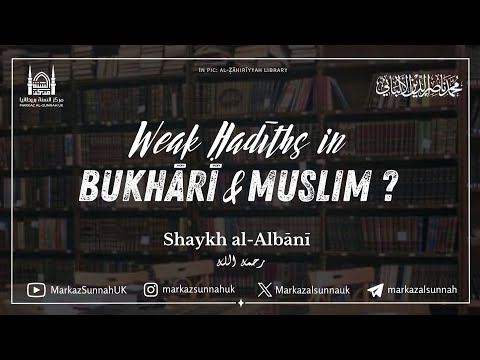
The foundational distinction drawn by the early muhaddithun is instructive in this regard. Imam Abd al Rahman ibn Mahdi a towering figure of the second century and teacher of Imam Ahmad ibn Hanbal articulated the principle with characteristic clarity: “When reports reach us from the Prophet peace be upon him concerning the lawful and the prohibited and the legal rulings we are severe with the chains of transmission and we scrutinise the narrators. But when reports concern the virtues of actions their rewards and punishments or permissible exhortations and invocations we show leniency with the chains.” This statement recorded by al Hakim in al Mustadrak and echoed in al Suyuti’s Tadrib al Rawi reflects a consensus among the Salaf that historical and biographical akhbar precisely the category into which the age of Aisha falls allow greater flexibility than those deployed for deriving ahkam. Imam Ahmad ibn Hanbal expressed a similar view when he remarked that extreme strictness is reserved for what pertains to halal and haram while leniency befits reports of virtues stories and narratives. On purely historical questions therefore the acceptance or rejection of a particular report after due academic examination has always been far less consequential than on matters touching usul al din or fiqh.Even within the Sahihayn themselves the classical tradition never treated every narration as immune to scholarly discussion. Consider first the muallaqat those suspended reports in which Imam al Bukhari deliberately omits part or all of the opening chain for the sake of brevity. While the overwhelming majority of these are corroborated elsewhere in the Sahih with complete isnads a significant subset approximately one hundred and sixty unique instances stand alone in suspended form. Al Hafiz Ibn Hajar al Asqalani devoted an entire monograph Taghliq al Taliq to tracing their external supports and evaluating their authenticity according to rigorous criteria. He and other luminaries such as Ibn al Salah and al Dhahabi subjected these reports to independent scrutiny demonstrating that their inclusion in the Sahih did not exempt them from further verification. This labour alone refutes any notion that the mere presence of a narration in al Bukhari rendered further academic inquiry impermissible.A still more pointed illustration emerges from the work of Imam al Daraqutni whose Kitab al Tatabbu systematically examined roughly seventy eight narrations in Sahih al Bukhari one hundred in Sahih Muslim and thirty two common to both. His critique focused on subtle ilal hidden defects in precision of transmission inversion of wording or minor interruptions without ever impugning the overall stature of the two collections. Later authorities such as Imam al Nawawi engaged these points directly sometimes accepting and sometimes rebutting them yet always within the framework of legitimate scholarly discourse. Such exchanges were regarded as the natural outworking of the science of hadith not as an assault upon the Sahihayn. Concrete examples of these ilal include his observation concerning a narration in Sahih al Bukhari on the topic of Heaven and Hell complaining to Allah where one particular chain transmitted by Ubaydallah ibn Sad inverts the order of divine destiny in its wording an issue of narrator precision that later critics such as Abu Hasan al Qabisi also highlighted. Another instance involves reports that al Daraqutni judged were not transmitted in fully mawsul form as presented but only through specific limited routes such as those of Makhramah ibn Bukayr or Abu Burdah thereby introducing a subtle discontinuity in the chain that required separate verification.Nor was this critical spirit confined to earlier centuries. Shaykh Nasir al Din al Albani whose methodology is frequently invoked by those who champion an uncompromising view of the Sahihayn himself acknowledged that his own research led him to conclude that certain narrations within these collections fall short of the sahih or even hasan standard. In a recorded statement he explained: “Allah the Exalted has granted me firmness in the study of Hadith I applied this study to some of the Hadiths that appear in Sahih al Bukhari. Thus I found that there are some Hadiths that are not considered to be on the grade of Hasan much less the level of Sahih in Sahih al Bukhari not to mention Sahih Muslim.” He reiterated that “during my knowledge based research I passed over some Hadiths in Sahih al Bukhari and Sahih Muslim and it was revealed to me that there are some Hadiths that are weak.” He reinforced this position by quoting Imam al Shafi'i who stated “Allah didn't want to complete anything except His Book.” Al Albani’s position was not a wholesale rejection of the Sahihayn but a continuation of the classical practice of evaluating individual reports on their merits even when they appear in the most authoritative compilations as heard in his lecture available at youtube.com/watch?v=9VuoM-… same principle of critical engagement is evident when one examines mawquf reports statements attributed to the Companions rather than directly to the Prophet peace be upon him that are nonetheless included in Sahih al Bukhari. A particularly illuminating example concerns Sayyidah Aisha’s declaration that no one should believe the Messenger of Allah urinated while standing for she had never seen him do so except while sitting. Despite the sound chain supporting this mawquf transmission the scholars of the ummah did not accept her testimony as an absolute and unqualified rule. It stands in direct tension with the explicit report of Hudhayfah ibn al Yaman in the same Sahih al Bukhari who personally witnessed the Prophet urinate while standing during a journey at a place of refuse. Rather than discarding one narration or the other the hadith scholars undertook detailed reconciliation concluding that Aisha spoke of the Prophet’s habitual practice in the domestic setting while Hudhayfah recorded a specific concession made under the necessity of travel. Her sentiment though conveyed through a sound chain was therefore qualified and not taken at face value. This case demonstrates that even a soundly transmitted statement from Aisha within the Sahihayn is subjected to scrutiny cross referencing and qualification rather than uncritical endorsement.This pattern of scholarly engagement extends directly to other reports transmitted by Aisha herself in Sahih al Bukhari including the well known narration concerning her age at the time of marriage and consummation. Just as her mawquf testimony on the Prophet’s manner of urination was weighed against parallel evidence rather than accepted at face value so too are her statements about her own early life placed in conversation with additional historical indicators. In one narration she describes herself as a young girl who had not yet committed much of the Qur’an to memory when Surah al Qamar was revealed placing the event in the context of the early Medinan period after the Hijrah. This is juxtaposed by scholars with the chronological data surrounding her sister Asma bint Abi Bakr who was consistently reported to be ten years her senior. Asma’s own death at the advanced age of one hundred in the year seventy three after the Hijrah supplies an independent timeline that some classical and later analysts have brought to bear on the broader question of Aisha’s birth year and the precise dating of the marriage. In yet another narration Sahih al Bukhari 2297 Aisha states that since she reached the age when she could remember things she has seen her parents worshipping according to the right faith of Islam and she recounts events from the period of early persecution before the Hijrah including Abu Bakr’s attempted emigration to Ethiopia. This recollection of conscious memory from the pre Hijrah era implies that she must have been well beyond the age of one at the time of those events yet under the strict traditional calculation tied to consummation at nine shortly after the Hijrah she would have been no more than an infant during that persecution. The point is not to reject any single report but to illustrate that the ummah’s hadith scholars have routinely subjected even Aisha’s own transmissions soundly chained as they are to this kind of comparative historical analysis exactly as they did with her statement on the Prophet’s urination. The presence of such ikhtilaf within the pages of the Sahihayn themselves shows that academic discussion of these details has always been part of the Sunni tradition.Comparable caution appears in cases involving transmissions that carry Israelite content. A striking instance is the narration found in Sahih Muslim describing the days of creation land on Saturday mountains on Monday and so forth which certain major authorities including Imam al Bukhari and Yahya ibn Ma’in explicitly identified not as a statement of the Prophet but as originating from Ka’b al Ahbar the learned Jewish convert. Despite an apparently sound chain the content itself prompted its reclassification away from the Prophetic corpus. In Sahih al Bukhari itself hadith 7361 Muawiyah radiyallahu anhu remarks of Ka’b that he was among the most truthful of those who transmit from the People of the Book yet sometimes his words turned out to be false. Such examples underscore that even reports supported by strong chains were not immune to rejection or qualification when historical and biographical scrutiny revealed Israelite influence or internal inconsistencies.It is also important to recognise why many of the classical scholars of the past did not delve more deeply into this particular historical question. In their time there was simply little impetus or external pressure to do so the age of Aisha was not a major point of polemical attack against the Prophet peace be upon him or Islam as it has become in certain modern contexts. Had a scholar of the calibre of al Hafiz Ibn Hajar al Asqalani been aware that this matter would one day constitute one of the primary lines of attack upon the character of the Holy Prophet peace be upon him it is entirely conceivable that he and others would have approached the issue with even greater scrutiny and produced a more exhaustive analysis.In sum the tradition of the Salaf and the classical Sunni muhaddithun has consistently maintained that rigorous academic discussion of individual narrations even those appearing in the Sahihayn remains both permissible and necessary particularly when the material in question belongs to the domain of history and biography. Such discussion in no way undermines the overarching reliability of these collections nor does it constitute rejection of the Sunnah as a whole. Applied to the historical question of Sayyidah Aisha’s age any conclusion reached through sincere evidence based inquiry whatever that conclusion may be carries no implication whatsoever for a Muslim’s aqeedah. It remains a matter of ikhtilaf in the realm of akhbar not a challenge to the foundations of iman. This is not a moral issue the Prophet’s marriage to Aisha fourteen hundred years ago is very much fully defensible within its historical cultural and revelatory context. Rather the discussion serves to show those who disbelieve in Islam that even if they hold a strong view on the perceived immorality of this practice it does not undermine the religion itself. The ummah’s scholars have always distinguished between what touches the core of religion and what pertains to the details of sirah on the latter scholarly difference has been tolerated without the slightest accusation of deviation. May Allah grant us all the guidance to pursue knowledge with integrity and to preserve the unity of the community.
YouTube
English
@ShakWarner @mohammed_hijab @Leafywashere00 You still didn’t answer my question about age specificity.
Care to also explain the 3 year gap between the aq’d and the dukhul of the marriage between A’isha (RA) and Muhammad ﷺ ?
English
@Exquisitorius @mohammed_hijab @Leafywashere00 Quran has the concept of Rushd - intellectual and practical maturity inc managing property & financial affairs, not easily manipulated or deceived, etc - Puberty ≠ mental & practical maturity
A 9yo wouldn’t have these traits regardless of the era
English
@ShakWarner @mohammed_hijab @Leafywashere00 Where in the Quran does it give an age for mental maturity?
English
@mohammed_hijab @Leafywashere00 JazakhAllah bro. The Ummah have put Sahih Hadiths at the same level as the Quran which is wrong.
The Quran is preserved, we use the Quran to judge over the Hadith. 9 ≠ mental Maturity
Otherwise it’s a Sunnah, they would never do themselves!
Aishah RA was 18 or 19. Alahu alam.
English
@qesbah @leBukk @mohammed_hijab @Leafywashere00 Because you’re positing that the majority of Muslims believe the report in Sahih Bukhari at face value *because* they desire it to be that range
English

@leBukk @mohammed_hijab @Leafywashere00 We're just having a conversation. Not trying to be your beacon for morality.
Many great thinkers from The West are not rapists. Neither are Eastern thinkers.
This is why you never learn, you're unable to even sit down and have a basic conversation without getting angry.
English
@BanjoAtheist @IjazTheTrini The conversion away from Islam isn’t the right of the athiest trying to sway him, so which right are you exactly referring to; the expression or the change of religion?
English

@IjazTheTrini Thank you. That’s very clear.
But one question remains.
Can US Muslim in the United States support the right of an atheist to convert a US Muslim to atheism?
English
As an immigration lawyer, I wondered how Muslims could take a citizenship oath to support the constitution.
Islam is inconsistent with the First Amendment.
I got all huffy about it.
Then I realized, that’s true for Christianity also.
English
@SchnitzelKroos So you label all those who called out your inability to read a liar, a takfir a scholar of Islam
Keep surrendering your good deeds buddy
English


@nomadtawhid @Farid_0v @SollyLucid > video is about addressing a violation in Tawhid
> “dudeee why are u dividing the people!?”
English

@Farid_0v @SollyLucid Dude, why is it that every time I see one of your posts, it’s either gossip, slander or something meant to divide people? What is the matter with you?
I’m starting to think there’s a qira’a that says
إذا جاءكم فريد بنبأ فتبينوا
English

New video uploaded onto my channel.
The video title:
The Greatest Betrayal in Dawah Scene History
Thumbnail by @SollyLucid.

English
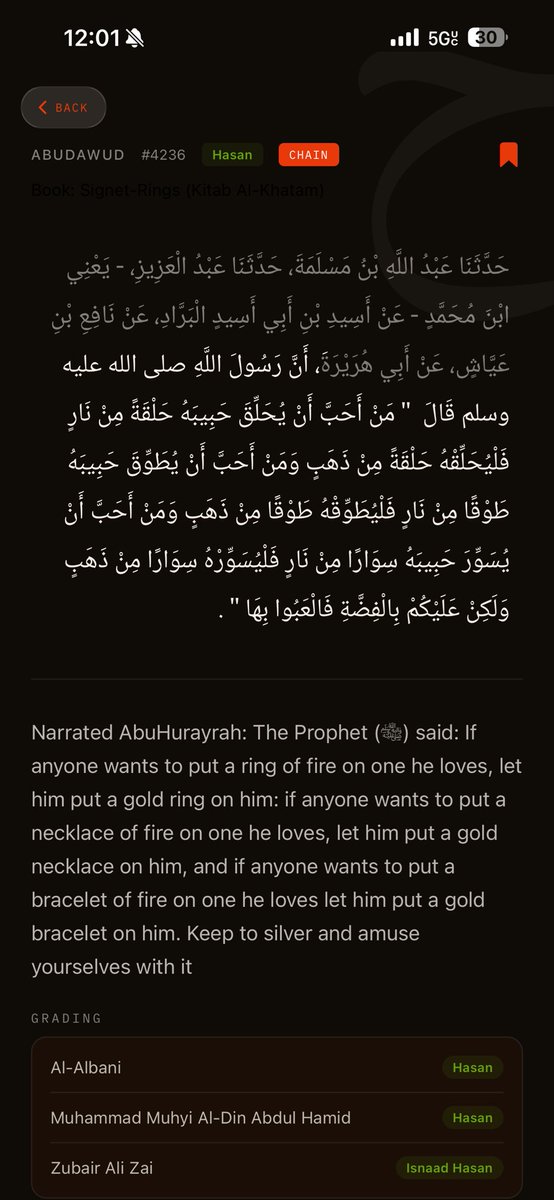
@LateNightsInThe @superflanke @hashimiyy_ It’s not as unilateral for the woman be she can initiate a khula’ if she fears she legitimately won’t be able to uphold the rights of her husband (as was the case for the wife of Thabit Ibn Qays (RA))
English

@superflanke @hashimiyy_ Not as a man
English

A man wanted to divorce his wife.
He was asked, “What was her fault?”
He said, “Does a man speak about the faults of his own wife?”
After he divorced her, they asked him again, “What was her fault?”
He replied, “She is now another man’s woman; what concern is it of mine?”
[Rabīʿ al-Abrār]
Mustafa@Maksimiilyan
"Bir adam Eşini boşamak istedi. Ona: “Onun kusuru ne?” diye soruldu. Dedi ki: “İnsan kendi eşinin ayıbını söyler mi?” Onu boşadıktan sonra yine sordular: “Kusuru neydi?” Şöyle dedi: “Artık o başkasının kadınıdır; beni ne ilgilendirir?” ||Rebîu’l-Ebrâr||
English
@IbnMahbub_ His view is sound for the wujub of Jummah, though I don’t think he gave much substance to Eid prayer being a sunnah and not wajib also
English

This is the best answer I’ve heard on the issue of the Eid and Jummah Prayers coinciding, backed by evidence and Fiqhi principles which Shaykh Uthmān clearly explains. Makes total sense. Jummah is NOT dropped due to Eid
The view he aligns to is the view of the majority, including the Hanafi’s, Malikis, and Shafi’is.
Shaykh Uthmān is generally Hanbali but he often makes tarjih based on what he believes to be the strongest views. Here he gives precedence to the Non-Hanbali and majority view.
English
@grandiserswe @aspiringabd Barakallahufeekum, May Allah allow me to finish it
Indonesia

@Exquisitorius @aspiringabd Mashallah looks nice, will be waiting for release
English
The Prophet ﷺ said
“Recite the Qur’ān and weep; and if you do not weep, then make yourself weep.”
Narrator: Sa‘d ibn Abī Waqqāṣ
Grading: Al-‘Irāqī said in Takhrīj al-Iḥyāʾ (1/368): Its chain of transmission is good.
اتْلوا القرآنَ وابْكُوا فإنْ لمْ تَبْكُوا فَتَباكَوْا
Català