Francesco A. Fabozzi

27 posts

Francesco A. Fabozzi banner
Francesco A. Fabozzi

Francesco A. Fabozzi

@FAFabozzi

Education & Research on LLMs and Quant Finance | Research Director @ Yale ICF | Managing Editor @ Journal of Financial Data Science | Data Science PhD

Katılım Mayıs 2020
176 Takip Edilen135 Takipçiler
Francesco A. Fabozzi retweetledi
himanshu
himanshu@himanshustwts·
this is lit. so satisfying to see conv nets in action man!
English
27
386
3K
265K
Santiago
Santiago@svpino·
The more I think about the increase in LLM-generated content worldwide, the more convinced I am that "human proof" is necessary. I think we need a straightforward way to determine if a piece of content was generated by a human or not. Is this even possible?
English
117
15
316
49.9K
Mattias Lamotte
Mattias Lamotte@MattiasLamotte·
a lot. The dataset I built had approximately 1650 features, and I usually try to trim them to between 100 and 200 features. Many of the 1650 features are correlated/cointegrated so part of the work is to find a method to trim them. Implied vols, realised vols, bond yield movements, underlying market movements etc...
English
2
2
18
54K
Mattias Lamotte
Mattias Lamotte@MattiasLamotte·
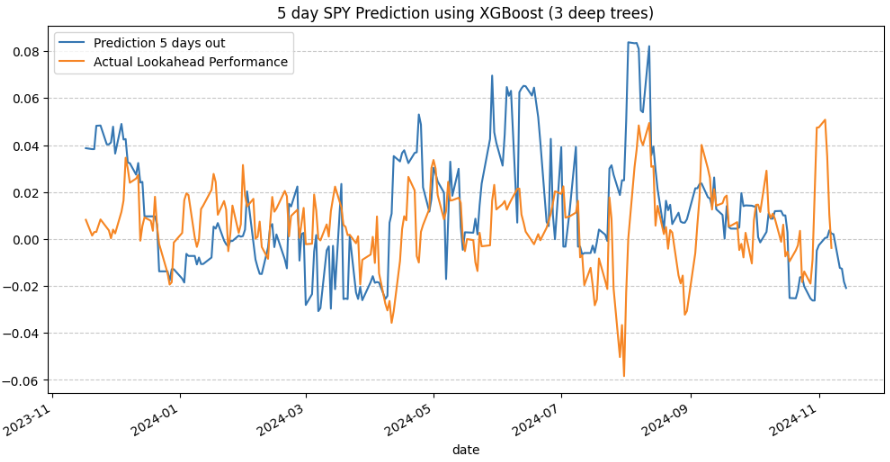
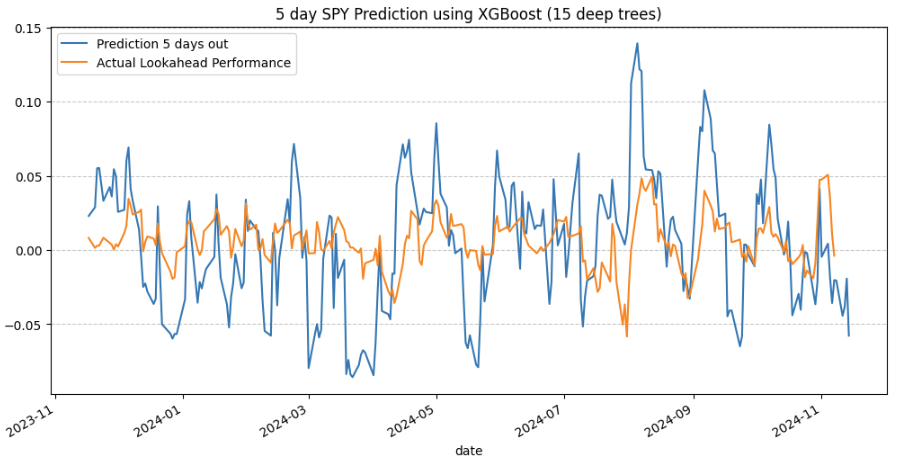
My 5 day models have turned bearish in last 48hrs (presumably, futures traders are trading similar signals as mine given that ES is down -0.3% since the close). I took a small short bet on ES on the open of the last session.
Mattias Lamotte tweet mediaMattias Lamotte tweet media
English
2
0
11
3.5K
Francesco A. Fabozzi
Francesco A. Fabozzi@FAFabozzi·
I often see researchers reaching for LLMs when smaller, embeddings-based models would not only suffice but could also outperform at a fraction of the cost. Before choosing an approach, ask if you have a well-labeled training dataset—sometimes a simpler model is the better fit.
English
0
0
0
112
Quant Science
Quant Science@quantscience_·
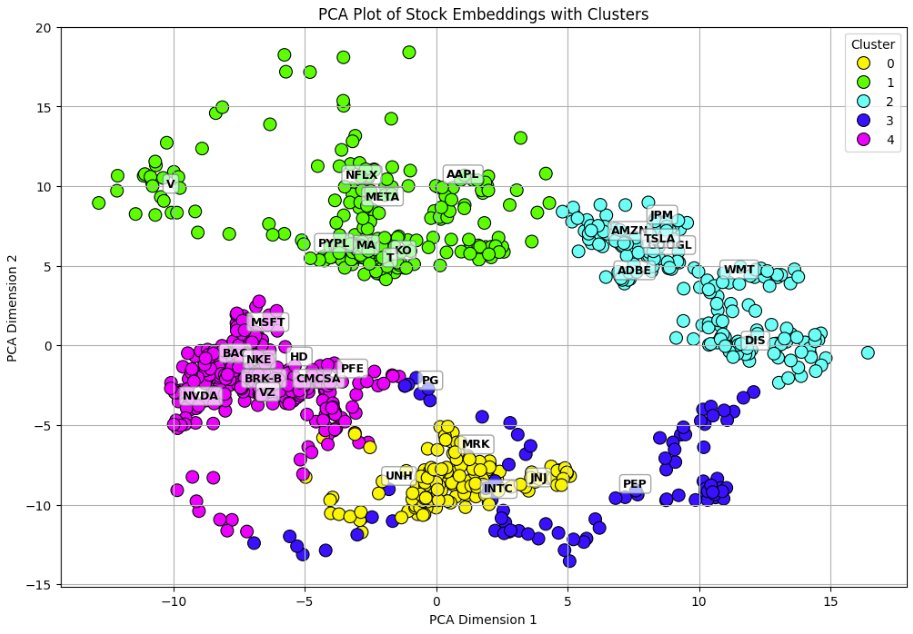
7. Event-Based Trading: Re-cluster stocks after major events (earnings, economic announcements) to observe any shifts 8. Anomaly Detection: Use autoencoder embeddings to spot outliers or anomalies
English
2
2
3
658
Quant Science
Quant Science@quantscience_·
Using Auto Encoders with Python for investing. This is how (Python Code):
Quant Science tweet media
English
1
27
198
17.3K
Quant Science
Quant Science@quantscience_·
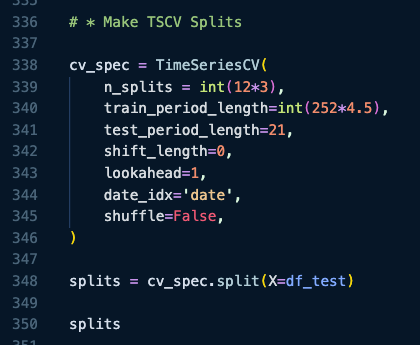
ML is not without risk. - Universe selection is critical - Volatility can be a double-edged sword - Overfitting can kill profitability That's why Time Series Cross-Validation is essential.
Quant Science tweet media
English
2
1
9
1.8K
Quant Science
Quant Science@quantscience_·
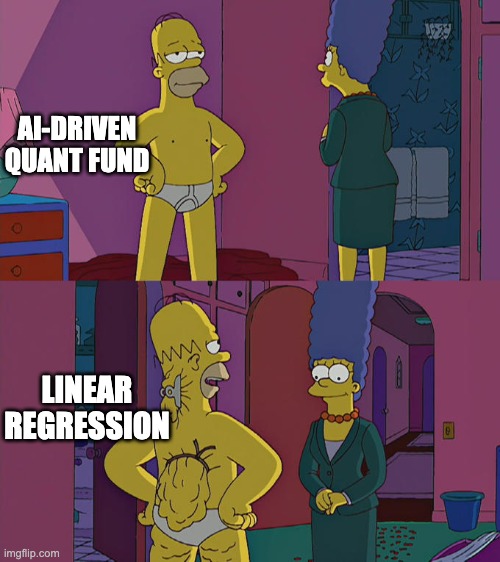
Why Machine Learning in Finance? This is why. 🧵
Quant Science tweet media
English
3
32
278
30K
PyQuant News 🐍
PyQuant News 🐍@pyquantnews·
What EVERY Python beginner forgets: Python is a tool to get a job done. And the job is probably not printing "Hello World" to the screen. Solve problems you can use in real life. Here's a primer:
PyQuant News 🐍 tweet media
English
1
7
35
7.1K
Francesco A. Fabozzi
Francesco A. Fabozzi@FAFabozzi·
When using LLMs in financial backtesting, a common question is: "Doesn't ChatGPT have forward-looking bias?" 🤔 Paul Glasserman and Caden Lin dive into this in their paper "Assessing Look-Ahead Bias in Stock Return Predictions Generated by GPT Sentiment Analysis." Their study backtests ChatGPT-based sentiment trading strategies, comparing portfolios with and without anonymized headlines (masking company identifiers). Interestingly, portfolios using anonymized headlines outperform those with original headlines. Why? 🧠 Their findings suggest that including company names creates a “distraction effect,” where the model fixates on names rather than sentiment—a stronger effect than any look-ahead bias! 📉 This work is critical for advancing GPT models in trading and portfolio construction. I’ve observed similar results in my own research too. Paper: pm-research.com/content/iijjfd…
Francesco A. Fabozzi tweet media
English
0
0
1
138
Francesco A. Fabozzi
Francesco A. Fabozzi@FAFabozzi·
1/ 🚀 Sentiment analysis in finance is evolving. As we move from encoder-only (i.e., embeddings) models to generative language models (GLMs), we must update the research toolset for leveraging this new and rapidly growing class of large language models.
English
1
1
2
187