Francis Mupah retweetledi
Francis Mupah
2.9K posts


@edmnangagwa Congratulations Your Excellency on a successful State Visit.
English

I have just concluded a productive three-day State Visit to Accra, Ghana. My counterpart and I have signed several key agreements, and we are both fully committed to ensuring these are implemented for the mutual benefit of our two nations.
Before my departure, I had the opportunity to tour the Sweden Ghana Cancer Medical Centre. This state-of-the-art facility, which utilizes nuclear energy for cancer treatment, is truly impressive. It is my vision to see a similar high-tech medical facility established in Zimbabwe to bolster our healthcare system.
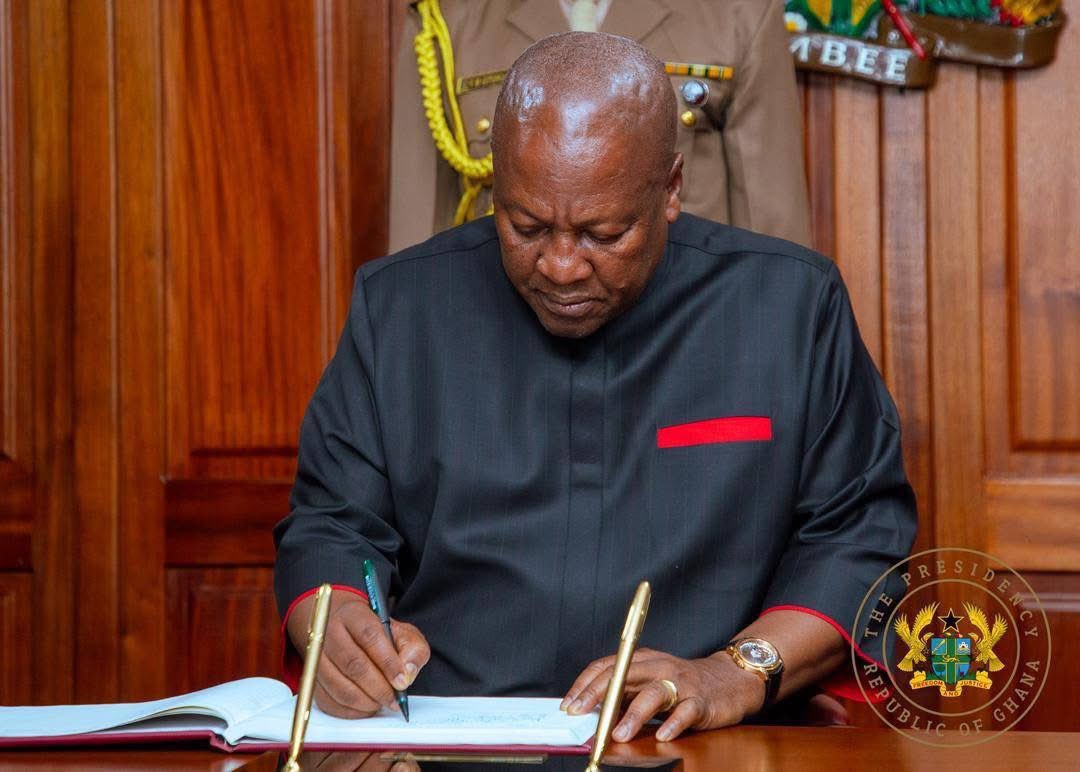
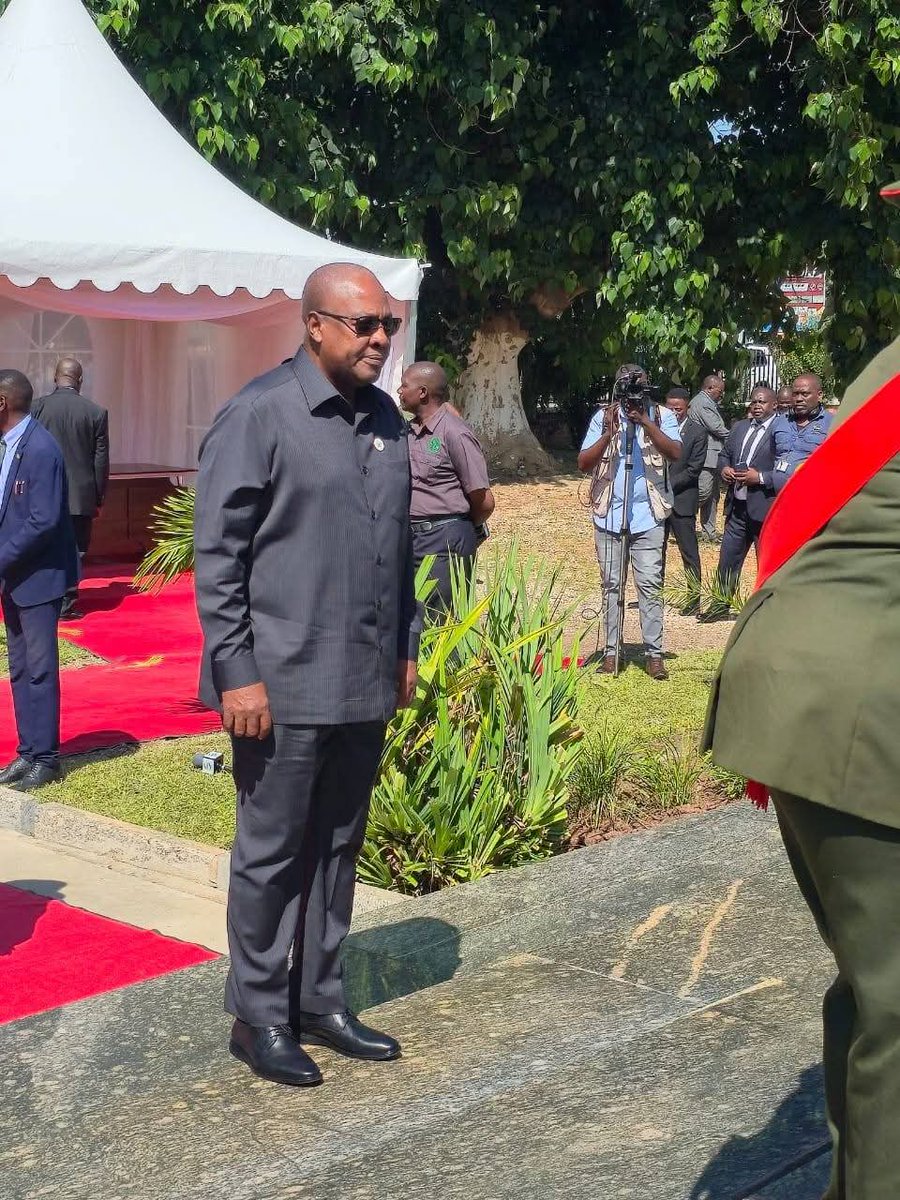
I want to extend my deepest gratitude to the people of Ghana for their exceptional hospitality. As I noted in the visitors' book, the warmth of this nation is remarkable. My thanks also go to President Mahama for the gracious send-off at Accra International Airport.
Together, we continue to build bridges and strengthen our pan-African ties.


English

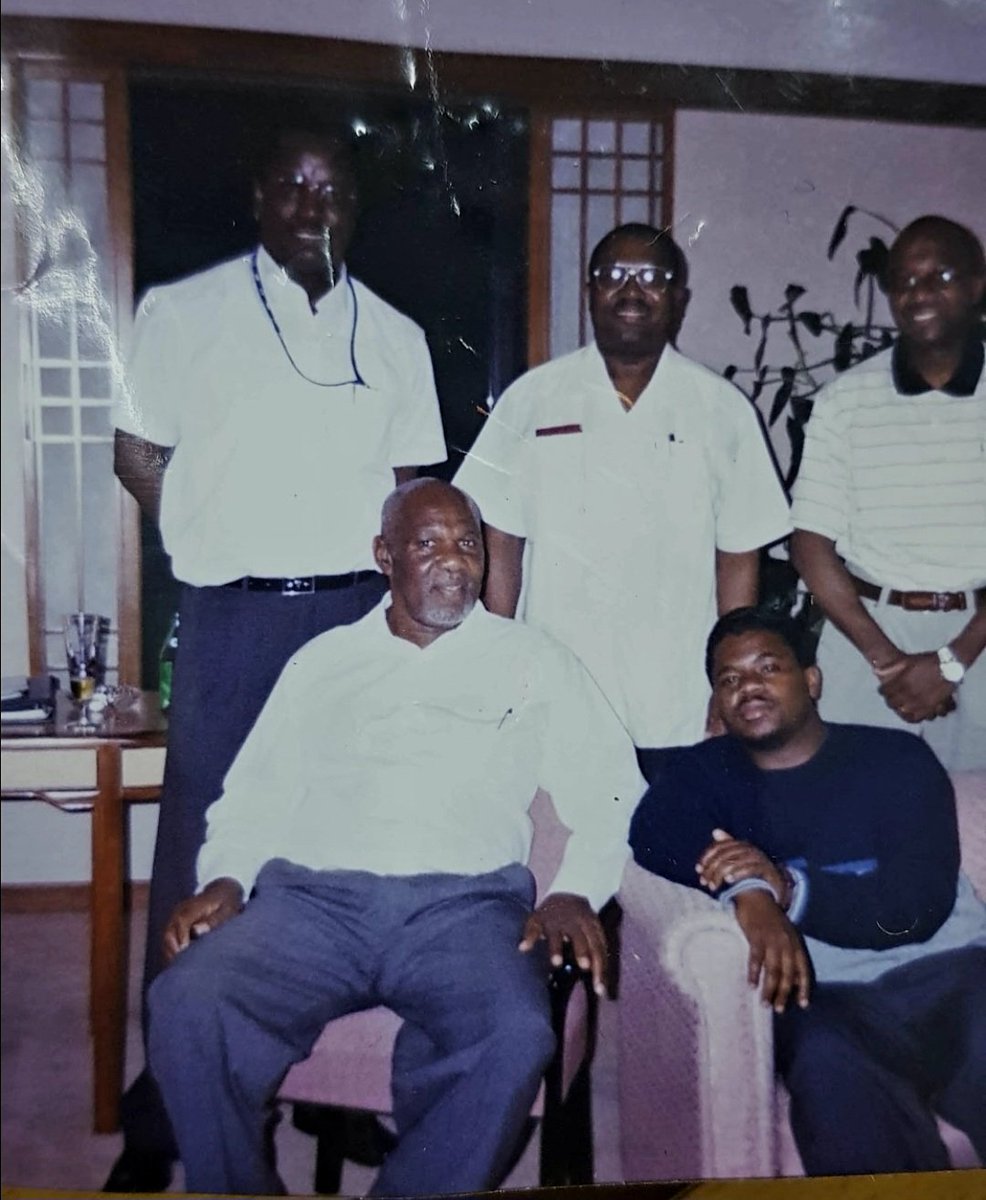
@rangamataire I also see Livas Zinyuke, then Wing Commander Dube and Dr Takaruza Munyanyiwa.
English

@KingJayZim One thing reading the headlines and another hearing the harrowing tale from a relative of one of the deceased. May Their Dear Souls Rest in Peace.
English

What began as a straight forward ceremony to invoke the water spirits of Clydesdale Dam took a tragic turn in an instant as the two men began to drown.
The deceased were part of a group of 15 people that had assembled at the dam, hoping to attract better fortunes through their ritual activities.
One of the ritual participants described a mysterious whirlwind that hovered over the waters moments before the two men were dragged under - The Herald.
The Herald Zimbabwe@HeraldZimbabwe
Traditional healer, cellphone dealer drown while conducting rituals at Clydesdale Dam heraldonline.co.zw/traditional-he…
English

@RexMidzi Wasn't declared a national hero, fought for black’s rights and offered medical assistance to Africans before independence and then served as minister with proficiency while especially helping in providing healthcare to those neglected (poor & rural) and eradicating polio etc.
English

@ChabzOfficial There was absolutely nothing wrong with his dress yday. Its very official in Ghana.
English

Breaking News ❤️❤️❤️
Lumumba is now GLOBAL . French professional player Sofiane Daouda Diop paid tribute to him after scoring a goal yesterday . According to him , no one should ever mock a football fan or Patrick Lumumba’s legacy.
This fan right here is gradually gaining grounds and loved by almost all players globally . Big teams are now inviting him to their games ❤️
Moral lesson : Always dare to be different.!

English

@Jamwanda2 @YouTube Will watch this. You should also read his book-Odyssey of Liberation: A Memoir of a Rebel Advocate, recently finished it, it echoes his profound Pan African views!
English

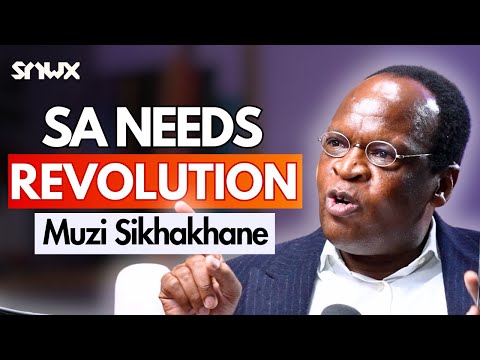
Muzi Sikhakhane speaks out: Mkhwanazi, Madlanga Commission, Black People... youtu.be/bN3Pe0W0Fvc?si… via @YouTube SOUTH AFRICA NEEDS A SECOND REPUBLIC AUTHORED BY AN ALL-BLACK CONVENTION, MUZI SIKHAKHANE. ENJOY THIS FASCINATING DISCUSSION TO EMERGE FROM DISENCHANTMENT AND DESPAIR WITH THE SOUTH AFRICA - NOT SOUTH AFRICAN - STATUS QUO!!!

YouTube
English


@dereckgoto @Zimpapers @HonJMuswereJnr @Jamwanda2 @nickmangwana @elias_mambo @DrMutambudzi @marapira_farai @richardrmahomva @dhonzamusoro007 @NewsDayZimbabwe First read this post on Fb. Well written.
English

The Alpha Media Holdings US$50 Salary Reckoning and the Zimpapers Digital Pivot Signal the End of Industrial Journalism in Zimbabwe
I have followed, with keen interest rather than shock, the public discussion around the disclosure that Alpha Media Holdings (AMH) Zimbabwe paid only US$50 of a January 2025 salary in December 2025. To me, this was not a scandal in the narrow sense. It was a long-delayed signal finally becoming visible. The warning lights have been flashing for years. What collapsed here is not journalism as a public good, but the industrial revenue architecture that once sustained it.
Traditional journalism was built on scarcity. Printing presses were capital-intensive. Distribution was controlled. Advertising channels were few. Newsrooms were unquestioned gatekeepers. That entire ecosystem has been dismantled, not by ideology, but by technology. Today, anyone with a smartphone and a modest laptop has access to production capacity that once belonged only to institutions. Productivity has been compressed into pocket-sized devices. Distribution is no longer owned by publishers but by platforms. Attention, not circulation, has become the currency - and attention obeys algorithmic logic, not editorial tradition.
This is why it is no longer heretical to say that a single, digitally fluent individual can now outperform an entire legacy newsroom in reach, speed, and sometimes even revenue. One could plausibly argue that a journalist of Blessed Mhlanga’s calibre, operating independently with nothing more than a phone, data, and platform literacy, could rival or exceed the institutional footprint of the organisation that employs him. Advertising itself has been unbundled, atomised, and algorithmically auctioned. The ground has shifted completely.
Artificial intelligence has accelerated this rupture - and it is still in its infancy. Automated transcription, summarisation, translation, video clipping, headline testing, audience segmentation, sentiment analysis, and rapid content repurposing have collapsed costs and timelines. What once required entire departments now requires coherent workflows. This is why many observers confuse technology-enabled agenda setters with journalists. The output may look similar, but the processes, incentives, and power dynamics are fundamentally different.
None of this means audiences have abandoned journalism. Quite the opposite. People still crave credible, researched, and contextualised information, especially in a polluted information environment. What they no longer subsidise is inefficiency, nostalgia, or formats designed for a world that no longer exists.
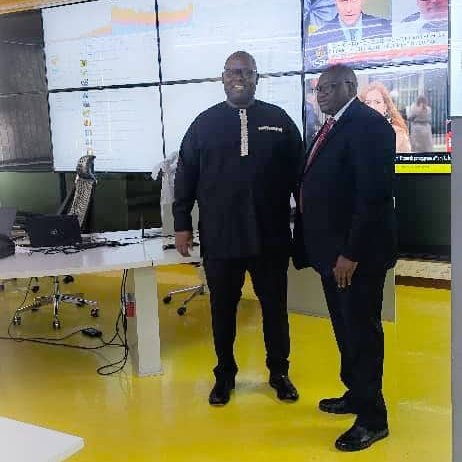
Against this backdrop, the efforts by Zimpapers Group deserve acknowledgement as directionally correct. A few weeks ago, I had the privilege of being taken through their new digital centre by the Group’s Editorial Executive (Acting), Elias Mambo. Digital migration, platform diversification, and institutional survival are never accidental. They reflect an understanding - particularly on the human-resource front - that scale alone no longer guarantees relevance, and that visibility must now be engineered, not assumed.
Both AMH and Zimpapers retain formidable assets: institutional memory, national footprint, and accumulated credibility. In an age of misinformation, these are not trivial advantages. But they only retain value if translated into contemporary digital logic. Legacy credibility cannot simply be inherited by new platforms; it must be operationalised within them.
This is where many media houses falter. They mistake digitisation for transformation. Uploading PDFs of newspapers, erecting paywalls without differentiated value, or treating social media as a mere marketing afterthought is not innovation. It is denial. Journalism will inevitably shrink if it continues to define itself by job titles rather than capabilities.
The dominant media practitioner of the next decade will not be “a reporter” in the old sense, but a hybrid operator fluent in algorithmic distribution, audience analytics, traffic attribution, SEO and headline testing, short-form video and audio repurposing, AI-assisted research and production, community cultivation, on-demand publishing, and personal trust signalling. These skills are already leading the market. This explains how platforms such as DJ Ollah Podcast and Friday Drinks Podcast, within their niches, have become influential. In truth, their success is less about institutional planning and more about timing, personality, and platform dynamics. But they illustrate a broader reality: institutions that fail to integrate these competencies will be outpaced by individuals who understand how platforms think.
The future for Zimbabwean media is not bleak. But it demands intellectual courage - and the more difficult courage to restructure organisations honestly. That means retraining, redeploying, and, where necessary, retiring redundant skill sets. Editorial independence must be defended not only as an ethical principle but recognised as a monetisable asset. Trust has become a competitive advantage. Availability on demand, rather than rigid daily cadence, must define output. Newsrooms must evolve from production lines into content engines.
Journalism is not dying. Traditional journalism economics are. AI, algorithms, and platform logic have rewritten the rules. Media institutions can either evolve into high-trust, high-output digital systems or fade into ceremonial relevance. The choice is not ideological. It is technical, organisational, and strategic.
The real tragedy would not be the closure of newsrooms. It would be their closure while still believing that the old model could have been saved by doing more of the same. If traditional media houses fail to confront these realities with urgency and honesty, they will be displaced by personality-driven voices operating at the speed of platforms. That future is not approaching. It is already here.
@TrevorNcube @bbmhlanga @djollah_7 @fridaydrinks_ @baba_nyenyedzi


English

@AfricaFirsts We can always market Africa's spleandour without unkowingly attaching perpetual- negative colonial inferences which tend to invalidate the import of the tweet!
English

@rangamataire And the irony, authors of the time wrote classics in their 20s! Wild imaginations, no google, chat gpt, nothing!
English

@AlexanderRusero Ndezvavo izvo lol. Ndo Master Science iyi [As Eldred always emphasized in lectures]
HT
Francis Mupah retweetledi

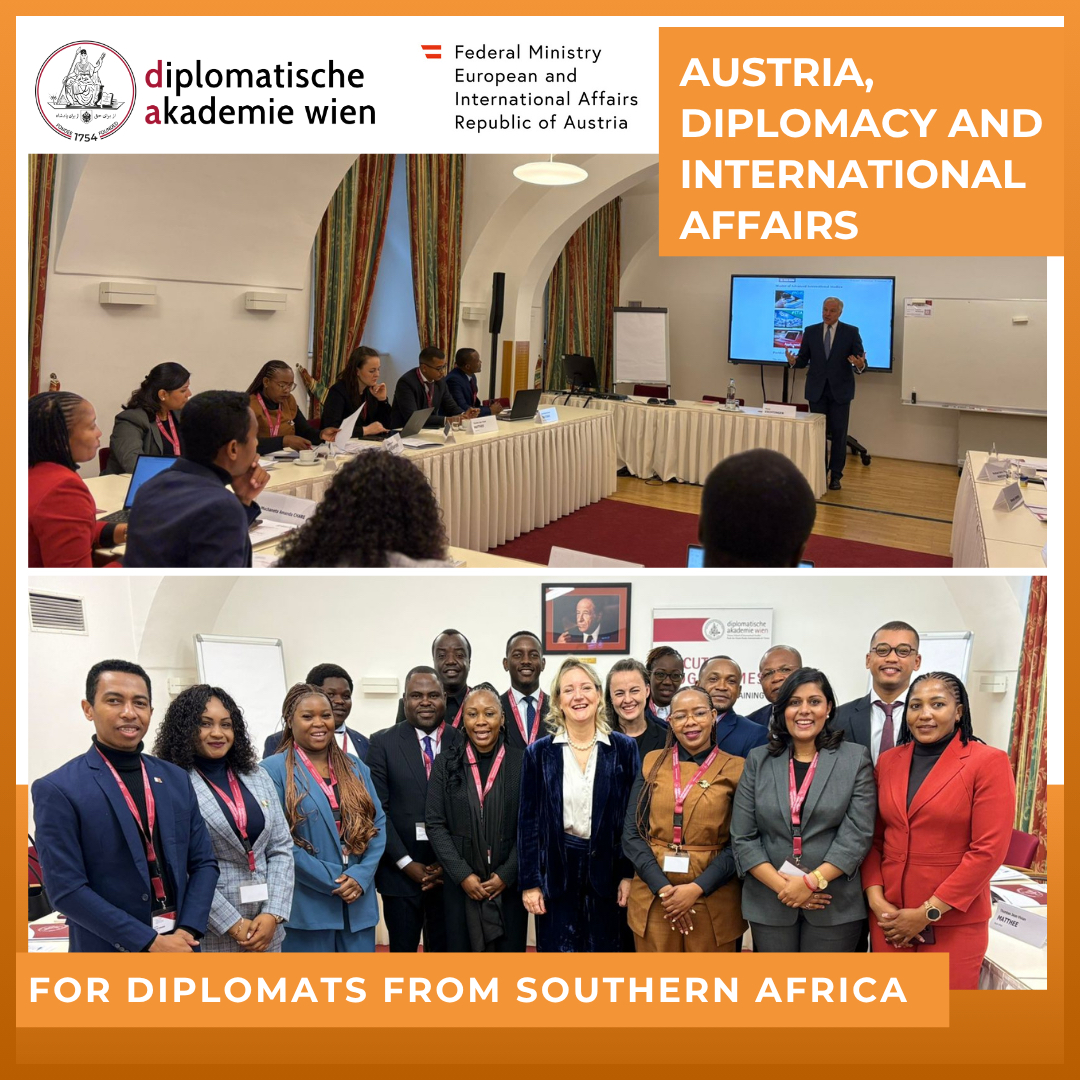
Director Martin Eichtinger and Deputy Director Martina Schubert of the DA welcomed today 17 diplomats from across Africa to the 2-weeks Executive Training Programme “Austria, Diplomacy and International Affairs”.
#Diplomacymatters #Africa #Austria #BMEIA

English

THANK YOU @snowballOfficia!!!!! As Presidential Spokesperson, I have watched with horror as some cadres - no doubt meaning well - publish details on the President’s Programmes well ahead of the event. In my long years in Govt and working under the Presidency, this never used to happen, except in respect of political meetings where prior mobilisation is the norm. Such disclosures compromise so many things, not least the President’s security. In the Department of Presidential Communications, we never publicise fixtures of the President beforehand; let alone release blow-by-blow programmes around the President’s activities. Hazviitwe! We DIARISE his programmes with the MEDIA, even then giving minimum information on the FOUR Ws - WHO, WHAT, WHERE and WHEN - and only to select persons on NEWSROOMS under the NEED-TO-KNOW BASIS, and in line with iron-clad rules of EMBARGOES. All Presidential Programmes are CONFIDENTIAL, a security classification done for a compelling reason. Yet they continue to be handled with LEVITY and shared without any stricture!! The zeal to go out with the word first is compromising Presidential Programmes. That must end. Actually it is a breach of security and thus a prosecutable offence. Each copy of programme has a DIGIT which is personal to the receiver for purposes of TRACEABILITY. Above all, each programme is the responsibility of the receiver who gets it out of need and trust, and on the understanding that it’s personal to him, and that he/she respects the security classification. That is no longer being respected and we might have to re-look at this sensitive matter.
Snowball Tongogara@snowballOfficia
Confidential? But how it ends up here on social media. There are people who are working very hard to undermine the President and this must stop. How come the President travel details end up leaking? This is No mhani
English