F. Schwab

13.5K posts

F. Schwab banner
F. Schwab

F. Schwab

@FSchwab6

Nothing in Media Psychology Makes Sense Except in the Light of Evolution

Würzburg, Bayern Katılım Nisan 2019
317 Takip Edilen299 Takipçiler
F. Schwab retweetledi
Steve Stewart-Williams
Steve Stewart-Williams@SteveStuWill·
Study after study shows that people raised in the same home are little or no more similar to each other than equally related people raised apart, at least by the time they’re adults (see “Shared environmental effect” column in the table). [Link below.]
Steve Stewart-Williams tweet media
English
8
29
209
12.5K
F. Schwab retweetledi
Steve Stewart-Williams
Steve Stewart-Williams@SteveStuWill·
“Many aspects of culture change rapidly; the world adopted smartphones in a matter of years, for instance, and fashions change in the blink of an eye. If sex differences were just down to culture, why would so many be so uniquely resistant to efforts to reform them?” stevestewartwilliams.com/p/three-lines-…
English
2
10
68
5.1K
F. Schwab retweetledi
Analog_Aficionado
Analog_Aficionado@OlafSudan·
@Perowinger94 Der maximale Wirkungsgrad eines Verbrennungsmotors beträgt 66% (Carnotscher Wirkungsgrad). Heute sind wir im Idealfall bei 35%. Wer heute für 100 Euro tankt bläst 65 Euro als Abwärme in die Umwelt…
Deutsch
7
8
33
914
F. Schwab retweetledi
Rob Sica
Rob Sica@robsica·
"Our results reinforce that females report more social content in dreams while males report more high-risk, competition-based content." sciencedirect.com/science/articl…
English
0
5
9
4.2K
F. Schwab retweetledi
Ingwar Perowanowitsch
Ingwar Perowanowitsch@Perowinger94·
Krass: Nach Norwegen bricht gerade auch der dänische Markt komplett für unsere Vebrenner-Autos weg. Der Anteil von E-Autos bei Neuzulassungen lag im Februar bei 81,6%. Bei Privatkunden sogar bei 94,4%! Der Grund: In Dänemark gibt eine „Luxussteuer“ für Verbrenner. Diese beträgt je nach Modell 25-150% des Fahrzeugswert. Für E-Autos fällt diese Luxussteuer (noch) weg, daher der Run. Die Dänen schaffen es so gut, mit klugen Anreizen, die Menschen zu klimanfreundlichem Verhalten und Kaufentscheidungen zu bringen. Warum muss das bei uns immer so ein völlig blöder Kulturkampf sein?
Deutsch
732
709
3.7K
131.1K
F. Schwab
F. Schwab@FSchwab6·
GIF
Rolf Degen@DegenRolf

Moral disagreement across politics revolves around the key question, “Who is a victim?” Although some suggest liberals and conservatives have different moral minds, more recent research suggests that all moral judgments revolve around concerns about harm and victimization. Moral disagreement across politics revolves around the key question, “Who is a victim?” Based on our theoretical framework, we focused on how perceptions of the vulnerability of moral patients (i.e., victims) help us understand moral judgment and political differences. Across twelve studies, we show that moral disagreement is closely tied to differences in who people see as especially vulnerable to harm. In general, liberals see vulnerability as group-based, dividing the moral world into groups of vulnerable victims and invulnerable oppressors. On the other hand, conservatives view vulnerability as more individual-based, dampening differences in vulnerability between groups and seeing everyone as similarly vulnerable to harm regardless of their social status. The real moral disagreement among people today is not about who really cares about authority or loyalty—or who invokes these keywords in speeches. Instead, moral disagreements arise from differences in who people perceive as especially vulnerable in society—who seems most vulnerable to victimhood, and who is a legitimate recipient of harm. These results further support the idea of a universal harm-based mind —one focused on victimhood—while also explaining important moral disagreement. A key reason why the left and right disagree about immigration, abortion, taxes, Black/Blue Lives Matter, environmental reforms, protections for the flag, and affirmative action is because they make different assumptions about who or what is especially vulnerable to victimization.

ZXX
0
0
0
16
F. Schwab retweetledi
Chris Ferguson 🐇✝️🥚🐰🍫🧺🌺🌷
This is very silly. Effects were near zero and the authors themselves acknowledge many of the effect sizes didn't control for the time 1 outcome variable, a very basic control, meaning even these are likely inflated. Meta-analyses as "gold standard?" Not at all. They have many problems. As a scholar once said "Meta-analyses are fucked." This is a great example of how they misinform. Besides many other metas conclude the opposite.
English
0
4
21
469
F. Schwab retweetledi
TeacherGoals
TeacherGoals@teachergoals·
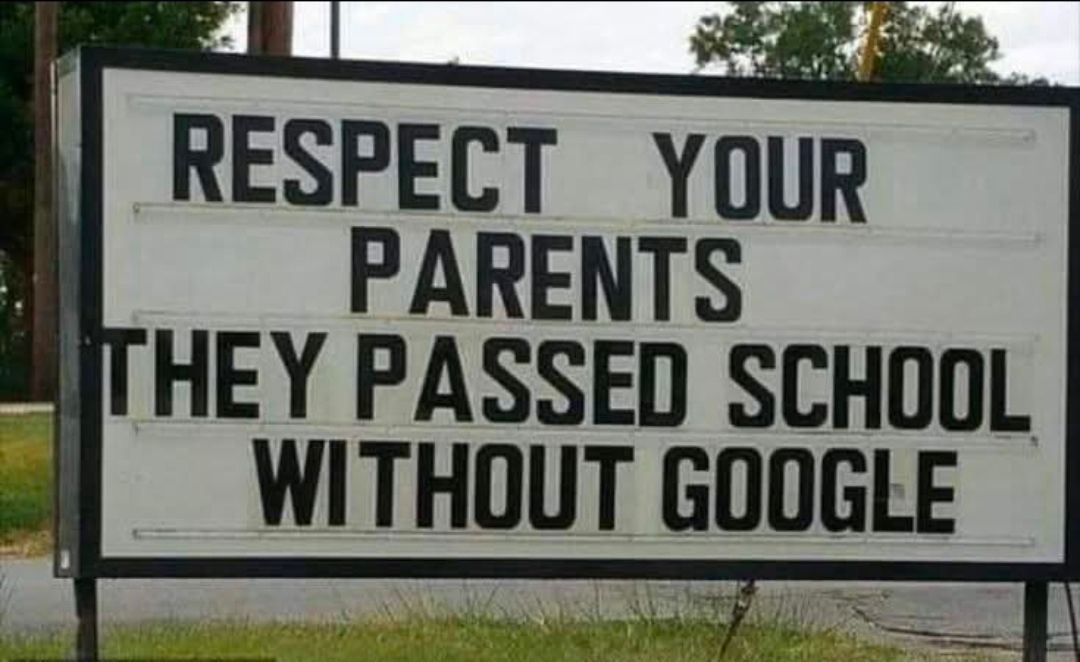
For real.
TeacherGoals tweet media
English
27
426
2.7K
53.1K
F. Schwab retweetledi
Siim Land
Siim Land@siimland·
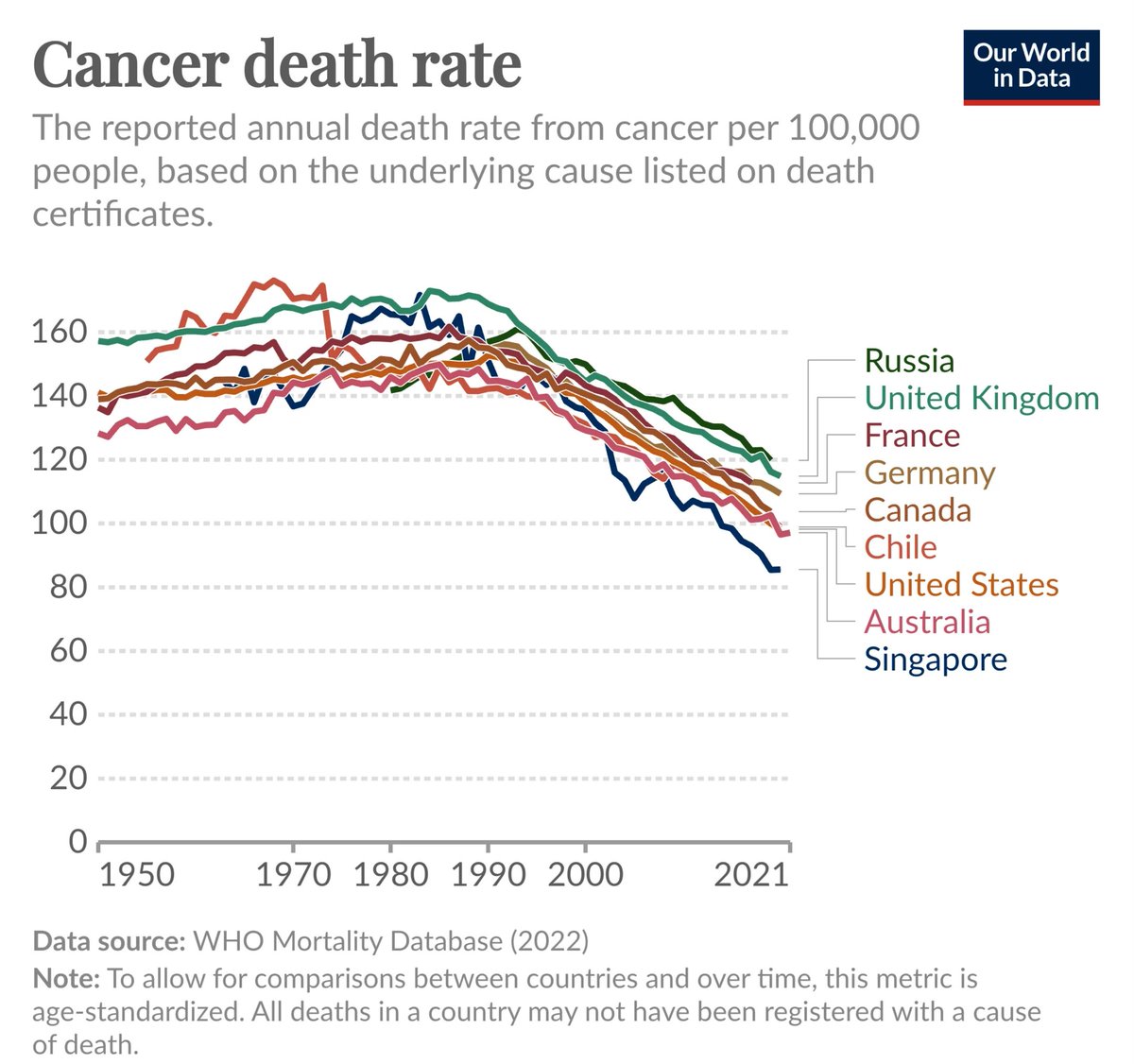
Cancer death rates have fallen dramatically since the 1990s across most developed countries. Despite aging populations and more diagnoses, mortality is down ~25–50%. The biggest drivers: • Less smoking • Better screening • Improved treatments One of the biggest public health successes of modern medicine. youtu.be/PRxZk2FhiRo
YouTube video
YouTube
Siim Land tweet media
English
37
337
1.6K
109.7K
F. Schwab retweetledi
Adam Grant
Adam Grant@AdamMGrant·
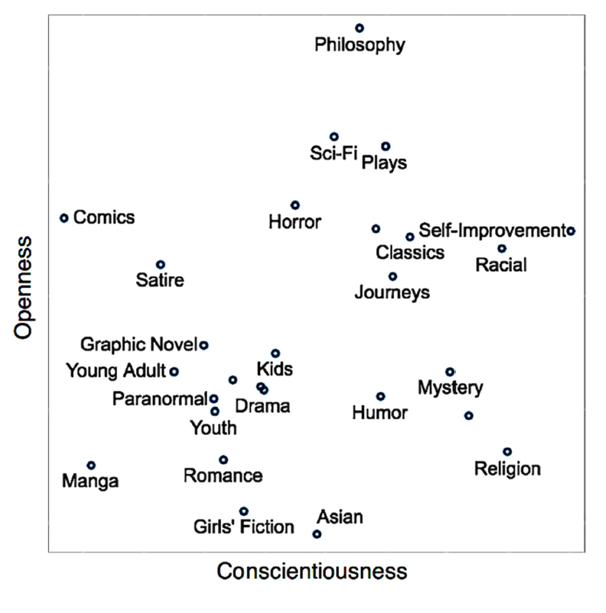
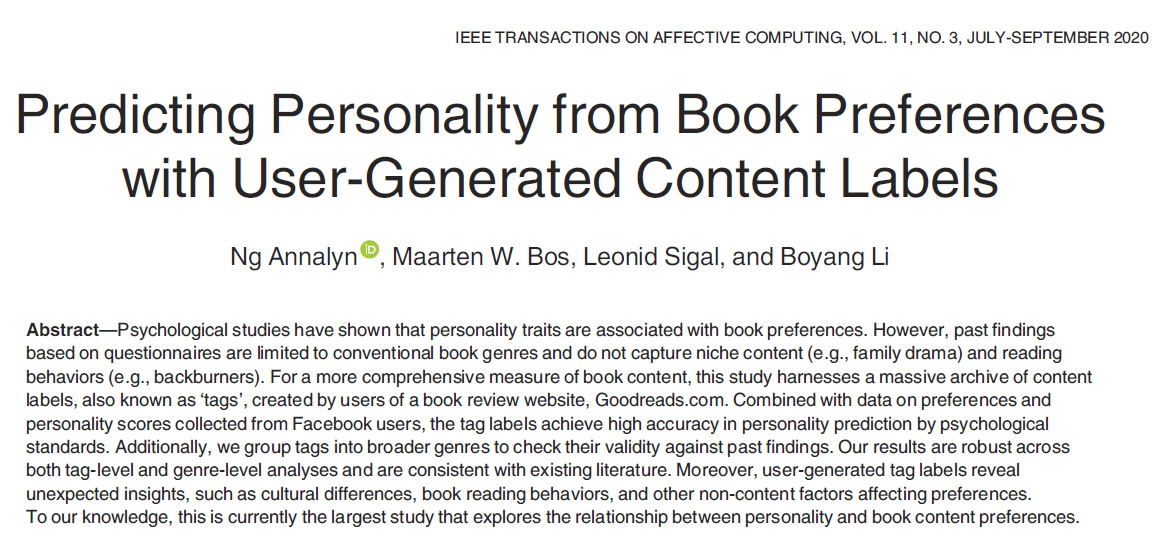
The books you love are a window into your personality. •Mystery & self-improvement attract conscientious people •Sci-fi, psychology, philosophy draw open-minded people •Memoir & horror appeal to neurotic people Reading doesn't just shape our views. It reveals what we're like.
Adam Grant tweet mediaAdam Grant tweet mediaAdam Grant tweet media
English
87
537
2.8K
185.8K
F. Schwab
F. Schwab@FSchwab6·
GIF
Rolf Degen@DegenRolf

"People overestimate the actual dishonesty of others." Do people believe that others are similarly, more, or less dishonest than they truly are? In this paper, Study 1 presents a research program on moral decision-making comprising 31 different effects from 11 experiments, where participants could anonymously lie for personal gain. Crucially, participants were also asked to estimate what percentage of other people would lie in the same situation. First, using an internal meta-analysis including all relevant data, we provide the first large-scale, multi-paradigm evidence that people systematically overestimate the dishonesty of others. Summarizing all belief-behavior comparisons revealed that people substantially overestimate others' dishonest behavior, by 13.6 percentage points on average. People are less dishonest than we tend to think. Second, we identify meaningful moderators, but also show that the overestimation is a general and majority tendency across samples and experiments, not driven by a small group of extreme responses. Third, we demonstrate that overestimating others' dishonesty has downstream consequences for general prosocial expectations and policy preferences. Providing correct information about actual honesty levels enhanced general prosocial expectations (e.g., trustworthiness, fairness). Study 3 revealed that professional managers have pessimistic beliefs also about people's real-world dishonesty (e.g., insurance fraud, workplace theft), and moral pessimism predicted greater support for freedom-restrictive countermeasures to reduce dishonesty. In conclusion, the pessimistic bias in dishonesty beliefs about others is robust, and it shapes prosocial expectations and policy preferences.

ZXX
0
0
0
17
F. Schwab
F. Schwab@FSchwab6·
GIF
Rolf Degen@DegenRolf

Sex differences in body dissatisfaction, with females being unhappier with their bodies, are more pronounced in more developed and gender equal countries. Body dissatisfaction is closely linked to low self-esteem, reduced well-being, as well as mental health issues, and eating-related pathologies, which are increasingly prevalent worldwide, particularly among women. Understanding gender differences in body dissatisfaction is therefore an important issue. Yet most prior studies rely on small, non-representative samples from single developed countries. This study’s overarching goal is to provide a cross-national assessment of the magnitude and potential drivers of these gender differences. We analyze gender differences in body dissatisfaction using two large-scale international surveys, covering over 70,000 teenagers across 9 countries and over 220,000 teenagers across 41 countries. Girls report significantly higher body dissatisfaction than boys, regardless of Body Mass Index, socioeconomic background, age, or country. Moreover, body dissatisfaction appears more central for girls, showing stronger negative associations with life satisfaction and self-efficacy. Within countries, the gender gap is larger among high-performing students, teenagers from higher socioeconomic backgrounds, older teenagers, and those with higher BMI. Notably, body dissatisfaction satisfies the Gender Equality Paradox. [The Gender Equality Paradox is the phenomenon where countries with the highest levels of gender equality and social welfare tend to have the largest gender difference in many psychological traits.] The gender gap in body dissatisfaction is stronger in more developed and gender equal countries, mainly due to the higher levels of body dissatisfaction among girls in these countries. We also examine the role of social norms. Stereotypes associating women more with physical appearance than abilities are stronger in developed countries. Our findings on the Gender Equality Paradox in body dissatisfaction, along with the stronger stereotypes about women’s physical appearance in more developed and gender-equal countries, suggest that gender gaps in body dissatisfaction are unlikely to diminish on their own as societies develop.

ZXX
0
0
0
20