Farm Action

3.3K posts

Farm Action banner
Farm Action

Farm Action

@FarmActionUS

We're farmers fighting corporate capture of American agriculture policy. Our political partner is @FarmActionFund.

Missouri Katılım Ocak 2020
432 Takip Edilen11K Takipçiler
Sabitlenmiş Tweet
Farm Action
Farm Action@FarmActionUS·
Bayer is threatening to pull Roundup from the U.S. market if Congress won’t give them total immunity to poison Americans with glyphosate. Let’s be clear: This is a foreign company waging a propaganda war to seize control over our food system and independent farmers. For the sake of our farmers’ independence and the sovereignty of our food system, Congress cannot fall for it. Bayer made $2.8B from U.S. glyphosate sales in 2024. They’re unlikely to walk away from that cash flow. Their threat to exit the U.S. market is likely a weapon to coerce lawmakers, not a genuine threat. If glyphosate actually vanished, our food supply would not fall apart. Organic farming provides real-world proof: These systems never use synthetic herbicides, yet they still produce substantial amounts of food every year. Organic corn yields tend to be around 25% lower than conventional yields, but even a sizable yield difference would not translate into empty grocery shelves. Why? Because most glyphosate-treated corn is not grown for human consumption. Over two-thirds of U.S. corn yield goes to ethanol and livestock feed. The bottom line is this: Bayer’s threats to pull Roundup are about leverage, not a looming food crisis. This is a political power play to tighten Bayer’s control over our food system. Read our full blog exposing Bayer’s coercive propaganda campaign below:🧵
Farm Action tweet mediaFarm Action tweet media
English
508
3.3K
6K
181.8K
Farm Action
Farm Action@FarmActionUS·
BREAKING: Trump’s USDA just postponed a major reform designed to empower poultry farmers against corporate monopolies. It was set to go into effect in July. Now, it’s postponed to December 2027. We fully supported this rule that would fix the broken “tournament system” used by corporations that dominate the poultry industry to pit small farmers against each other. Journalist Christopher Leonard broke down everything you need to know about the tournament system and why it needs to be reformed: “Just two companies, Tyson Foods and Pilgrim’s Pride—and Pilgrim’s is owned by JBS—control about half of the [poultry] market.” “And it’s not just that so few companies control it today.” “This business is vertically integrated.” “A company like Tyson Foods, for example, owns the feed mill, they own the slaughterhouse, they own the trucking line, they own the hatchery, and they work with farmers under contract.” “When we have an industry that’s consolidated like it is today, we see an old playbook that monopolies use to extract more profit than ever.” And the “most notorious” mechanism they use to extract profit and dominate the industry is the “payment regime that’s called the tournament system.” “These poultry companies… take information on all the farmers that deliver chickens during a given week, and then they rank the farmers against each other based on how fat those birds got on the amount of feed that the farmer was given.” “The companies will give a higher price per pound to the top performers and a lower price per pound to the lower performers whose birds didn’t gain as much weight.” “In a way, that sounds like your typical bonus system, but here’s the key: the bonus for the top performers is actually taken away from the pay of the lower performers.” This now-postponed USDA reform would have banned payment deductions from lower-performing farmers, eliminating these corporations’ key tool to pit small farmers against one another. We strongly urge the USDA to re-commit to implementing this reform by July 2026 for the sake of small farmers, who are struggling more than ever in the face of price spikes as a result of geopolitical conflict. @USDA @CLeonardNews
English
26
251
412
12.3K
Farm Action
Farm Action@FarmActionUS·
“We are seeing the hollowing out of our rural communities.” “In the last 10 years… the top five agriculture companies have made $150 billion in profit.” “At the same time, we’ve lost 200,000 family farms.” Regenerative farmer Zach Lahn breaks down how Big Ag is “extorting our farmers.” “I just yesterday had a meeting with 70 traditional farmers… just north of my farm here.” “Farmers actually do not like these companies in the first place.” “For many years, these companies have been buying up all the smaller companies, reducing competition and creating monopolies.” “If you ask any farmer what their biggest issue has been over the past couple years, they’re not gonna talk about tariffs.” “What they’re gonna talk about is that input companies keep driving their prices up and they have no choice of where to go to buy something different.” “Farmers are looking for a way out.” @ZachLahn @leah_wilson
English
17
213
373
4.4K
Farm Action
Farm Action@FarmActionUS·
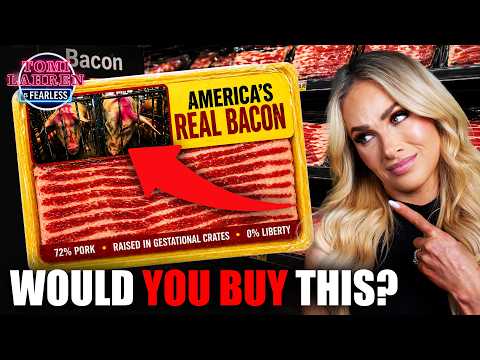
Rethinking the Farm Bill: Protect Prop 12 and Hog Farmers “If Prop 12 is overturned at the federal level, Bob Street said he likely won’t be able to stay in the hog business, threatening the livelihood his family has spent generations building.”  farmaction.us/rethinking-the…
English
0
5
6
160
Farm Action
Farm Action@FarmActionUS·
Independent farmer Bob Street just delivered an urgent plea to Congress: “Leave Prop 12 in place.” Big Ag lobbyists are using the 2026 Farm Bill to sneak in a provision overturning California’s Prop 12, a voter-approved law that gave small hog farmers a lifeline to compete against massive corporations. “The corporations probably would rather have fewer producers.” “But there’s a downside to that, as far as the rural communities are concerned.” Big Ag is hollowing out rural America to seize more and more power and control over the U.S. food supply. Dozens of independent farmers are going out of business every day. Prop 12 saved Bob’s hog farm, and countless small farms like his will be doomed to fail if Congress overturns Prop 12 with the 2026 Farm Bill. But there is still time to stop this disaster and save independent farmers. Read our full blog covering Bob’s story below, and use the link at the bottom of the blog to demand that Congress save Prop 12:🧵
English
1
61
125
1.1K
Farm Action
Farm Action@FarmActionUS·
Rethinking the Farm Bill: Protect Prop 12 and Hog Farmers “America’s rural communities have been on the frontlines as powerful corporations have tightened their grip on our food and farm system.” farmaction.us/rethinking-the…
English
0
4
8
213
Farm Action
Farm Action@FarmActionUS·
This independent farmer watched corporate power destroy his once-thriving rural town in Missouri since he started farming. “There’s just a handful of us left.” Bob Street is not just telling his story. He’s delivering an urgent plea to Congress: California voters approved Prop 12, a law to set basic space standards for hogs. It saved Bob’s business, and countless other independent hog farmers across America. It gave them a lifeline to compete against the massive corporations. Now, those corporations are lobbying Congress to overturn Prop 12 by passing the Save Our Bacon Act, a law they snuck into the 2026 Farm Bill that would block local and state governments from adopting their own regulations. This would be a fatal blow to hundreds of independent hog farmers. Bob just broke down what decades of Big Ag corporations’ takeover has meant for his small town, and this will only get worse if Congress overturns Prop 12 with the new Farm Bill: “When I considered the hog business to be alive in this area, it was a whole different thing.” “We used to have Pork Day at Bowling Green, Missouri.” “There were probably 150 producers there.” “It’s not that way anymore.” “At one time, our vet… said that this was one of the most concentrated areas of swine production in the state.” “There used to be three elevators in the area and their main occupation was hog feed.” “One is left.” “And the feed business isn’t anything like it used to be.” “Livestock equipment suppliers that aren’t there anymore.” “There used to be two vets in our local town.” “Now, there’s one.” Read our blog below to hear Bob’s full story and demand that Congress save Prop 12:🧵
English
13
171
296
3.9K
Farm Action
Farm Action@FarmActionUS·
Feed the world? We can’t even feed ourselves. In 2019, the U.S. ran an agricultural trade deficit for the first time in 50 years. In 2025, that deficit was estimated to reach almost $50 billion. And increased foreign competition is forcing U.S. producers out of business. Big Ag corporations perpetuate the myth that industrialized agriculture is necessary for the U.S. to “feed the world.” But it’s a lie. How can we even think about “feeding the world” if we can’t even feed our own country? We published a blog exposing this myth as a lie designed to serve the power and profits of massive corporations at the expense of independent American farmers. Read our full blog below:🧵
Farm Action tweet media
Dept. of Agriculture@USDA

Thank you to American farmers who continue to feed our country and the world! 🇺🇸🫛🌽🌰🐄🥩🐖🌾🐔👕➡️🌏 #NationalAgWeek

English
11
67
137
3.2K
Farm Action
Farm Action@FarmActionUS·
@SandorBogdan14 From Farm Action's lens, antitrust actions should be paired with investment in local agriculture to rebuild those systems—an action that we've called for in our 2026 Farm Bill priorities. Here's a link to learn more: farmaction.us/farm-bill-2026/
English
1
3
7
327
Sb75
Sb75@SandorBogdan14·
@FarmActionUS How do we transition off of that without being set up for a catastrophe? No one has the capital nor the timeline in any of those industries to step in and fill the void. So if there’s not ready to use alternatives in place those corps will say “see you couldn’t do it without us.”
English
2
2
4
472
Farm Action
Farm Action@FarmActionUS·
“Four grocers control 85% of the grocery market.” “Four meatpackers control 85% of meatpacking.” “Two seed companies control 90% of the seed genetics in farming.” “Three big [companies] control 85% of the inputs.” “We’ve allowed the consolidation of just about every industry to the detriment of the consumer.” Regenerative farmer Zach Lahn is calling for strong and swift antitrust action to break up Big Ag monopolies. “Community values, according to our ancestors and according to our Founders, were more important than shareholder value.” “Thomas Jefferson actually said in the early 1800s, right after they founded the country… I hope we kill in its infancy the aristocracy of our moneyed corporations who are already challenging us to a battle of wills.” “And in the 80s, we really took our eye off the ball.” “Now, we’re facing the repercussions of that.” @ZachLahn @leah_wilson
English
184
2.9K
5.9K
71.7K
Farm Action
Farm Action@FarmActionUS·
Rethinking the Farm Bill: Protect Prop 12 and Hog Farmers The 2026 Farm Bill will “determine the future of our food system and who it benefits—corporations or farmers.” farmaction.us/rethinking-the…
English
0
10
16
502
Farm Action
Farm Action@FarmActionUS·
Corporate power is destroying legacy family farms. This is not a hypothetical risk. Dozens of independent farmers are going out of business every day. Bob Street has been farming in rural Missouri for almost six decades. He hopes to pass on his farm to his grandson one day, but corporate consolidation in agriculture keeps eliminating every avenue he has to stay afloat. “It would just make my day if my grandson would have the same opportunity that I had.” Big Ag’s latest push to seize more power and control involves lobbying Congress to strip local and state governments of their ability to independently regulate agriculture. They snuck this disastrous provision into the Save Our Bacon Act, included in the 2026 Farm Bill. And it would effectively overturn California’s Prop 12, a voter-approved law that set basic space standards for hog farmers that saved Bob’s business and countless other independent farmers across the country. This is a threat not only to each state’s right to govern its food and farm system, but also to the remaining independent hog farmers in the country who depend on this law to survive. Prop 12 gave farmers like Bob a lifeline to compete against massive corporations. Now, Big Ag lobbyists are desperately trying to crush that lifeline. We just sat down with Bob for an interview covering Prop 12, how his farm has survived, and why the 2026 Farm Bill threatens to put him and other independent farmers out of business. Read our full blog below:🧵
English
15
193
352
4.8K
Farm Action
Farm Action@FarmActionUS·
You're right that some consolidation is normal, but in agriculture, it’s extreme. When just a few companies control meat, groceries, seeds, and other ag inputs, it hurts farmers and consumers and stunts innovation. Our Agriculture Consolidation Data Hub shows just how widespread this is, and why stronger antitrust action is needed: farmaction.us/agriculture-co…
English
5
8
43
802
Mark Davis
Mark Davis@glib_bastard·
It is fairly typical in mature industries to see competition result the concentration of sales to only a few independent companies. Economies of scale favor concentration, but monopolies should be avoided to prevent price gouging. There is some nuance to what is optimal for society. You want it to be possible for new tech startups to be able to compete, you want to avoid the big companies from using regulation to prohibit new entry.
English
8
2
7
964
Farm Action retweetledi
Josh Hawley
Josh Hawley@HawleyMO·
Sure looks to me like the giant fertilizer companies are price gouging farmers. Which drives farmers out of business and the price of food way up. Somebody needs to explain to them price gouging is illegal. So either stop or be investigated 👉
Josh Hawley tweet mediaJosh Hawley tweet media
English
547
1.9K
5.3K
98K
Farm Action
Farm Action@FarmActionUS·
Farm Action exists to fight corporate monopoly power in agriculture. Stay updated on our mission. Subscribe to our official newsletter below: farmaction.us/sign-up/
English
0
1
6
202
Farm Action
Farm Action@FarmActionUS·
Trump’s DOJ is investigating giant fertilizer corporations for possible “criminal antitrust violations.” This kind of antitrust enforcement is long overdue. American farmers are in a crisis. And it’s a direct result of corporate consolidation and control across the entire food supply. Our investigations have uncovered shocking levels of corporate consolidation in the U.S. fertilizer market: “Nutrien and Mosaic control about 90% of the production capacity of both potash and phosphate fertilizers.” And “Nutrien, CF Industries, Koch and Yara control about 82% of nitrogen-based fertilizers.” This egregious level of corporate consolidation is squeezing more and more independent farmers out of business every day. USDA Deputy Secretary Stephen Vaden accused Nutrien and Mosaic of “colluding to limit U.S. fertilizer supply and control prices.” “Vaden called the two companies a ‘duopoly.’” Now, conflict in the Middle East is “reigniting worries about reliance on foreign fertilizers.” Fertilizer prices are already starting to skyrocket for independent farmers. And the fertilizer market is just the tip of the iceberg. We have also uncovered that just four companies control “more than half of all beef, poultry and pork processed in the U.S.” And four other companies control “majorities of soybean and corn seeds.” President Trump has signed several orders to investigate “potential price fixing and other anti-competitive behavior that drives up costs of goods such as meat, seeds and fertilize.” Farm Action fully supports urgent investigation and action on this front, especially now that independent farmers are suffering from price hikes as a result of conflict in the Middle East. @USDA @DepSecVaden @realDonaldTrump @TheJusticeDept @joshua_sisco @ilenapeng
Farm Action tweet mediaFarm Action tweet media
English
2
19
63
1.6K
Farm Action
Farm Action@FarmActionUS·
Mr. President, American farmers are on the brink of crisis due to geopolitical conflict disrupting critical supply chains. Just a few massive corporations dominate our food system. And they take every chance they get to squeeze independent farmers for profit. The risk to American farmers is not hypothetical. It happened just a few years ago. Massive fertilizer companies used global supply chain disruptions as justification for outrageous price increases that far exceeded their underlying cost increases. We fully support your administration’s efforts to tackle corporate consolidation and anti-competitive behavior in America’s agricultural supply chains. And we respectfully urge you to take two actions to protect independent farmers from being squeezed by these corporate monopolies as a result of current geopolitical conflict: First, we urge you to immediately review whether key fertilizer inputs and materials should be designated as scarce or threatened resources under the Defense Production Act. Federal law does not broadly prohibit price gouging. Thus, such a review would equip your administration with powerful tools to deter an already concentrated market from squeezing independent farmers. Second, we urge the interagency task forces established under your Executive Order confronting market concentration and anti-competitive conduct in the agricultural supply chain to provide an accelerated public update on their work. Fertilizer prices are already rising and farmers are already making spring planting decisions. Timely public reporting would provide transparency to farmers, signal vigilance by federal enforcers, and reinforce confidence that concentrated supply chains are being closely monitored. These two actions could prevent temporary geopolitical disruption from escalating into sustained financial harm for independent farmers. Read our full letter explaining why independent farmers are on the brink of another crisis akin to the disruption that followed Russia’s invasion of Ukraine, and why these two steps are critical to protect farmers:🧵 @realDonaldTrump @USDA @FTC @TheJusticeDept
Farm Action tweet media
English
12
48
112
2.4K