Farmertype
2.9K posts

Farmertype
@Farmertype
Wake Up, Learn, Question, Teach, Grow, Share
Southern USA Katılım Aralık 2019
3.6K Takip Edilen1.7K Takipçiler


アメリカの猫が好きな皆さんへ
日本語が自動翻訳されて英語で表示される様になったみたいですね。
日本でも猫たちの可愛さは変わりません。
この写真の猫は今年21歳になりました。
あなたの飼っている猫見せてくれませんか?

日本語
Farmertype retweetledi

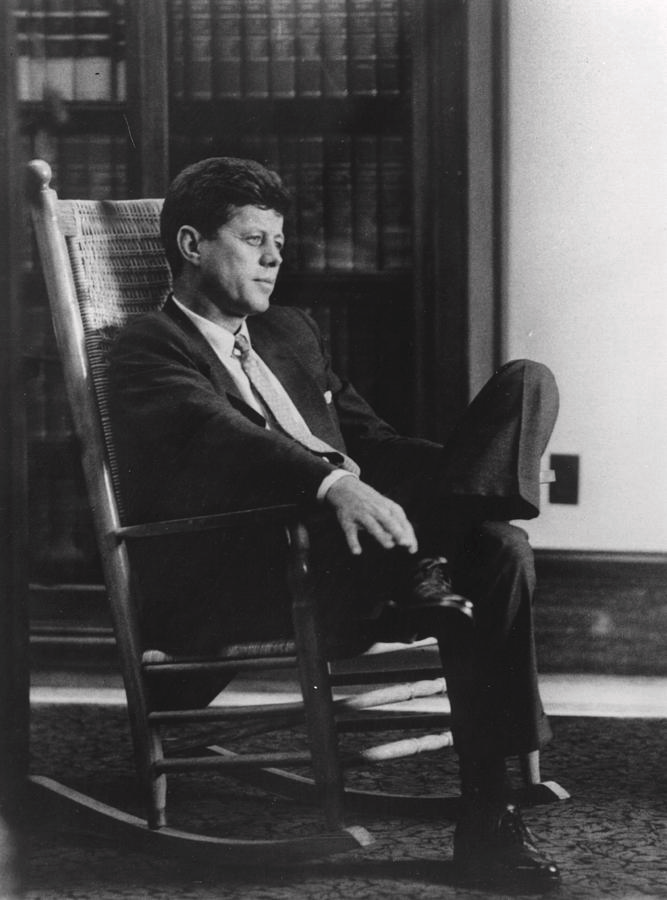
"Let us not despair but act. Let us not seek the Republican answer or the Democratic answer but the right answer. Let us not seek to fix the blame for the past — let us accept our own responsibility for the future."
—John F. Kennedy
English


I will judge you based on your opinion of this man

Michael McGill 🏛@mcgillmd921
I will judge you based on your opinion of this man
English
Farmertype retweetledi

Farmertype retweetledi

🧠 Scientists Discover How Eye Contact Instantly Connects Human Minds
Our eyes do more than see — they communicate. New research in social neuroscience reveals that the brain can instantly distinguish between a casual glance and a gaze filled with intent. Within milliseconds, neural circuits decode whether someone’s look expresses curiosity, empathy, or deeper emotion.
When two people make eye contact, the brain’s social and emotional centers light up — including areas like the amygdala and prefrontal cortex. These regions process subtle cues such as pupil dilation, micro-expressions, and gaze direction, creating a silent language that conveys trust, attraction, or alertness before any words are spoken.
Scientists found that this reaction happens faster than conscious thought, proving our brains are hard-wired to interpret visual intention instinctively. It’s why a loved one’s gaze can calm us instantly, while a stranger’s stare can feel uncomfortable — our neural circuits read meaning in every look.
This discovery deepens our understanding of human relationships. Eye contact isn’t just a social habit — it’s a neural handshake that bridges emotion and awareness. Even in our screen-filled world, it reminds us that genuine connection often begins with a single shared glance.
A look may be silent, but it speaks directly to the brain.
#Neuroscience

English
I can’t believe I’m just now hearing this story
Massimo@Rainmaker1973
Before we had silicon chips, we had needle and thread. In the 1960s, NASA didn’t ‘upload’ code; they sewed it. To get Apollo 11 to the moon, skilled weavers (often called ‘Little Old Ladies’) literally hand-stitched software into physical objects.
English
Farmertype retweetledi

Right now, in barns and equipment sheds across the American Midwest, farmers are making the most consequential decision of this war. Not generals. Not senators. Farmers.
At $683 per ton urea, corn economics have collapsed. Nitrogen is the single largest input cost for corn production. At pre-war prices a farmer could justify 180 pounds per acre and expect a margin. At $683 the math breaks. Soybeans fix their own nitrogen from the atmosphere through root bacteria. They do not need the molecule trapped behind the Strait of Hormuz. The seed decision is being made this week across roughly 90 million acres of American cropland. Once the planter rolls into the field, the choice is irreversible. Corn seed in the ground stays corn. Soy seed stays soy. The acreage allocation locks in.
USDA Prospective Plantings reports March 31. That report will tell the world how American agriculture responded to the Hormuz blockade. But the decisions it captures are being made now, in conversations between farmers and agronomists and seed dealers who are looking at nitrogen prices and making the rational economic choice: plant the crop that does not need the input you cannot afford.
Every acre that shifts from corn to soybeans tightens the corn balance sheet for the rest of the year. Corn feeds livestock. Corn feeds ethanol. The Renewable Fuel Standard mandates 15 billion gallons of corn ethanol annually, consuming roughly 43 percent of the US corn crop regardless of price. That demand is inelastic. If acres shift and production falls while the mandate holds, corn prices spike. Feed costs spike. The protein cascade reverses. The US cattle herd sits at 86.2 million head, a 75-year low. Poultry and pork margins that were benefiting from cheap feed compress when corn crosses $5 per bushel.
This is how a naval blockade 7,000 miles from Iowa reaches the American grocery shelf. Not through oil. Not through shipping. Through nitrogen. The farmer cannot afford the molecule. The molecule cannot transit the strait. The farmer plants soy instead. The corn supply tightens. The ethanol mandate consumes its fixed share. The remaining corn reprices. The feed reprices. The meat reprices. The grocery bill reprices.
The decision is not political. It is arithmetic performed on a kitchen table by a person who needs to plant in three weeks and cannot wait for a ceasefire, an escort convoy, or an insurance normalisation that the Red Sea precedent says takes years.
The deepest penetrator in the American arsenal cannot reach a sealed Iranian doctrinal packet. But the fertiliser price it failed to resolve is reaching every planting decision on 90 million acres of the most productive farmland on Earth.
The war’s most irreversible consequence is not happening in a bunker. It is happening in a barn. And by the time USDA publishes the data on March 31, the seeds will already be in the ground.
Full analysis in the link.
open.substack.com/pub/shanakaans…

English
Farmertype retweetledi

Posiblemente, lo más bonito que veas hoy en twitter🥹
Michael Caine recitando el poema “If”de Rudyard Kipling❤️❤️❤️❤️
Español
Farmertype retweetledi

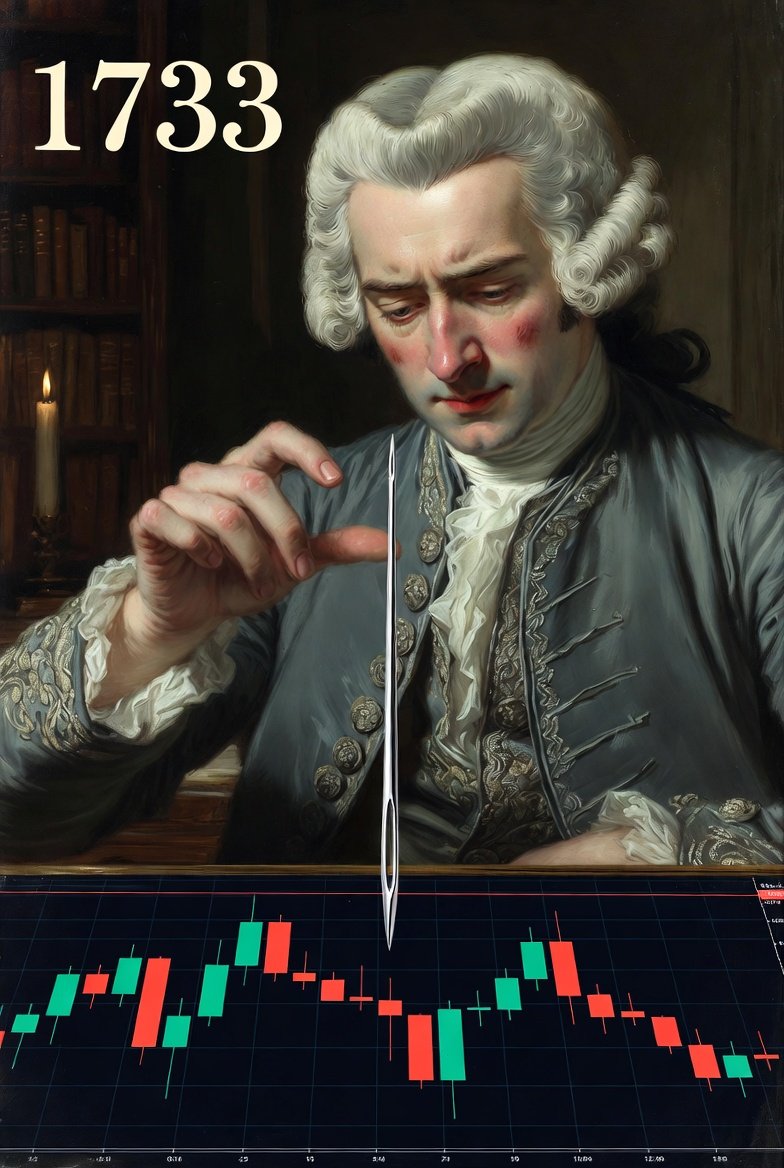
🚨In 1700s, French mathematician Georges-Louis Leclerc took a needle, a wooden floor, and a question that sounds almost childishly simple.
If you drop a needle randomly onto a surface ruled with parallel lines, and the needle's length equals the distance between those lines, what are the odds it crosses one of them?
The answer is 2 divided by pi.
No circles anywhere in that experiment. No curves, no arcs, no radii. Just a straight needle falling onto straight lines through pure chance. And pi crawls out of the probability like it was hiding there the entire time, waiting for someone to ask the right question.
Mathematicians call this Buffon's Needle, and it remains one of the most conceptually violent results in the history of probability. You can physically recreate it on your kitchen floor. Drop a needle 500 times, count the crossings, divide, and you will approximate pi to several decimal places through nothing but randomness and straight lines. The circle was never in the room. Pi showed up anyway.
This is what separates pi from every other mathematical constant. It doesn't stay inside its original context. It migrates. Euler discovered it hiding inside the sum of the reciprocals of all squared integers, a problem involving no geometry whatsoever. The Gaussian bell curve that governs how errors distribute in measurements, how heights vary in a population, how quantum particles spread across space, carries pi in its foundation even though the curve itself was never constructed from a circle.
Physicist Eugene Wigner wrote a paper in 1960 that never got the mainstream attention it deserved. He called it "The Unreasonable Effectiveness of Mathematics in the Natural Sciences." His central bewilderment was precisely this pattern: mathematical structures developed in complete abstraction, with zero intention of describing physical reality, keep turning out to be the exact language the universe was already using before anyone looked.
Pi is his strongest case. It wasn't engineered to fit physics. It was found already fitted, in places nobody thought to look for it, in systems that share nothing geometrically with a circle.
The needle doesn't know about circles. The universe apparently does.
The Curious Tales@thecurioustales
English
@Rainmaker1973 This one is down the road from me
Atlas Obscura@atlasobscura
Thorncrown Chapel is a beautiful glass church located in the Ozark Mountains that looks conversely like something that either came from the future or was built by elves. Built in 1980, the church is made almost entirely of materials taken from the local wilderness.
English



Farmertype retweetledi