Aaron Farmier retweetledi

I am pleased to have Jacob Rees-Mogg’s support for my legal action against an administrative body related to Parliament - my argument is aimed at empowering elected MPs over unelected officials.
On Tuesday 17 March my Barrister, Christopher Newman, and I were in the Administrative Court in London at a hearing in front of High Court Judge Martin Chamberlain.
It is a significant case for the power of parliament, and therefore the power of the voters.
As the MP for Great Yarmouth, I am seeking to challenge the legality of the processes of the ‘Independent Complaints and Grievance Scheme’, also known as the ICGS - importantly, it is entirely legally separate from Parliament. The scheme’s genesis is driven by the ‘Me Too’ movement in 2018.
The ICGS are seeking to use the doctrine of ‘Parliamentary Privilege’ to assert that they are, in effect, beyond the scrutiny of the law. Parliamentary privilege exists to allow MPs to do our job away from legal threats, it does not exist to protect bureaucratic bodies.
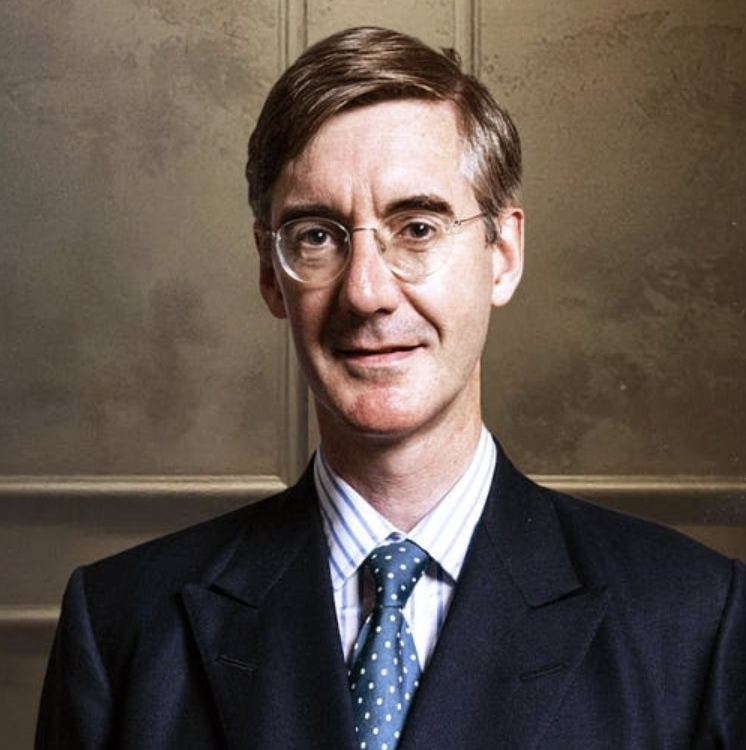
As Jacob Rees-Mogg, former Leader of the House of Commons, points out in his analysis:
“As the ICGS is independent, it cannot in its workings be a Commons body, as it would then not be independent. It is really very straightforward and Rupert Lowe seems to be right."
This is arguably the most significant constitutional case in years with the ICGS now arguing the polar opposite of the position the state took in the case of R v Chaytor where MPs unsuccessfully tried to use Parliamentary Privilege to avoid prosecution for abuse of expense claims.
ICGS staff are not legally qualified, and this administrative body is outside the orbit of the Chamber and has no link to MPs. It has not reported to a Parliamentary Committee of MPs since 2020 when all links were severed and a panel was inserted.
It is our argument that this body cannot claim to be above the law - it is not right that a bureaucratic body separate from Parliament is attempting to use parliamentary privilege, designed for elected politicians, to avoid reasonable scrutiny.
Rees-Mogg ends his article:
“Thus if Lowe wins, he will not have harmed Parliament, but defended it. For through cowardice we – and I was an MP at the time – abdicated our privileged responsibility and gave it to unelected boffins, who are not so much better than elected politicians after all, but much harder to eject.”
We expect a Judgment after Easter, around 14 April 2026.
For anyone interested, please find below links to the relevant Court documents and media coverage:
Our skeleton argument.
#wTfvSth2a99a" target="_blank" rel="nofollow noopener">drive.proton.me/urls/C66EX752H…
Jacobs Rees-Mogg article published - ‘Rupert Lowe and Parliamentary Privilege’.
letters.jacobreesmogg.com/p/rupert-lowe-…
English